📍 Murcia
Murcia sits as a sun-drenched sanctuary in southeastern Spain. Famous for dramatic Baroque architecture and deep-rooted agricultural traditions, the city offers a refreshing contrast to commercialized tourist hubs. If you seek a classic Mediterranean atmosphere, this historic destination delivers culture without the crowds.
Baroque Splendor: The skyline centers on a magnificent cathedral. Its intricate details define Murcia’s rich artistic heritage.
Orchard Soul: Known as “Europe’s Orchard,” the region supplies vibrant produce. Every local meal becomes a seasonal celebration.
Mediterranean Gateway: It serves as a perfect entry point to the Mediterranean. See how Murcia fits your plans in our Cities in Spain collection.
Murcia rewards travelers who value slow-paced exploration. You can wander historic squares where traditional life remains the standard. Moreover, the city’s blend of riverside walks and hidden taverns ensures a rewarding journey that stays true to its southern spirit.
📍 Murcia at a Glance

Murcia offers a grounded, vibrant escape in southeastern Spain. Before you start your exploration, keep our Spain Trip Checklist nearby. It ensures you have all essentials ready for your Mediterranean adventure.
City Vibe: Unspoiled, sunny, and rooted in custom. Murcia avoids modern mass-tourism gloss, providing a direct view into regional Spanish life.
Best Time to Visit: Spring (March–May) or autumn (September–November). You get perfect, mild temperatures for walking the historic center and river paths.
Average Stay: 2 days. This provides enough time to see the Cathedral, explore local markets, and enjoy the vibrant tapas tradition.
Accessibility: The historic core is mostly pedestrianized and flat. You can easily reach all major monuments on foot within minutes.
Cultural Pulse: Life here follows a relaxed, southern rhythm. Shops often close for a long afternoon break, making mid-day the perfect time for long, leisurely meals.
📍 Murcia vs. Alicante

Murcia offers a grounded, inland cultural experience compared to the coastal focus of Alicante. While Alicante leans heavily into resort-style tourism, Murcia preserves a deliberate, local atmosphere. In fact, our Why Visit Spain guide provides further perspective on choosing destinations that truly fit your personal travel style.
| Feature | Murcia | Alicante |
| Primary Vibe | Authentic & Historic | Coastal & Touristic |
| Main Focus | Baroque Art & Agriculture | Beaches & Marinas |
| Crowds | Manageable & Sparse | High & Constant |
| Pace | Slow & Traditional | Fast & Active |
Pace: Life in Murcia moves with the seasons. You spend your days exploring ancient sites rather than navigating crowded coastal promenades.
Vibe: Measured and serene. The city lacks the commercial “tourist-trap” energy often found in high-traffic seaside Mediterranean capitals.
Unique Identity: Murcia retains an agricultural, interior spirit. It functions as a crossroads of traditions, shaped by centuries of irrigation and inland human settlement.
🏰 Top 5 Landmarks in Murcia (The Icons)

Murcia preserves history in grand, weathered stone. Every plaza reveals stories of deep religious devotion and Baroque mastery. Keep our Spain Historical Monuments Guide handy to understand the architectural context behind these iconic structures.
Murcia Cathedral (Catedral de Santa María): Visit this masterpiece first. Its facade is a Baroque jewel, while the tower offers the best city views.
Real Casino de Murcia: Step inside this 19th-century social club. Its Moorish-inspired ballroom and library are hidden, opulent wonders you must see.
Plaza de las Flores: Relax in the city’s social heart. It features vibrant flower stalls, surrounded by bustling terraces and traditional facades.
Episcopal Palace: Admire this 18th-century landmark next to the Cathedral. Its brickwork and stone carvings represent the pinnacle of local Baroque design.
Puente de los Peligros: Walk this historic stone bridge. It crosses the Segura River and stands as a symbol of the city’s endurance.
Bonus attractions worth visiting: Specifically, explore the Monastery of Santa Clara la Real to witness its preserved Gothic cloister. Furthermore, stroll the Glorieta de España, a garden square connecting the City Hall to the riverbanks.
🎨 Hidden Gems & Local Secrets in Murcia

Most travelers stick to the Cathedral and the Casino. However, Murcia hides layers that reveal themselves only if you step away from the main tourist axis. If you are refining your master plan for the country, our Plan Trip to Spain Ultimate Guide helps you weave these unique, uncrowded stops into your broader journey.
Museo Salzillo: Visit this site for the world’s most intense collection of religious baroque sculptures. It is hauntingly beautiful and rarely crowded.
Calle de Platería: Wander this narrow artery. You will find tiny, overlooked shops where artisans still practice traditional crafts unchanged for many decades.
The Aljucer Orchards: Cycle just outside the city center. You will discover the huerta (orchard) landscape that earned Murcia its historic nickname of “Europe’s Orchard.”
La Merced Church: Skip the main cathedral for an hour. This smaller church offers a quiet, meditative space filled with local history and striking wood carvings.
Barrio del Carmen: Cross the river. You will find a neighborhood where life remains completely local, featuring taverns that never see a tour group.
Spanaly Insight: Many city doorways feature small, faded ceramic tiles with specific floral designs. These are not just decorations; they are historic markers of the city’s old water distribution system, a detail almost every guidebook skips, offering a tactile connection to the region’s agricultural past.
🏨 Where to Stay in Murcia

Choosing the right base allows you to experience the city’s quiet rhythm at night. Use our Accommodation in Spain guide to help identify properties that match your specific travel style and comfort needs.
Historic Boutique Stays (Old Town): Select a restored noble house. Hotel Palacio Almudí offers stone courtyards and antique features alongside essential modern comforts right in the historic center.
Modern Urban Comfort: Look for hotels near Plaza de las Flores. Hesperia Murcia Centro provides excellent access to the cafes and tapas bars frequented by local residents.
Riverside Retreats: Choose an establishment near the Segura River. Hotel Occidental Murcia Siete Coronas offers calm surroundings, river views, and proximity to the city’s main walking paths.
Traditional Guesthouses: Seek out family-run spots near the Cathedral. They provide a lived-in, warm atmosphere that connects you directly to the daily life of the Old Town.
Spanaly Insight: Murcia is a popular weekend destination for residents from Madrid and Valencia. If your travel dates fall on a weekend, secure your room at least three weeks in advance to avoid the “full occupancy” notices that occasionally hit the city’s historic core.
🍽️ Murcia Gastronomy & Dining Guide

Murcia is often called the “Orchard of Europe,” and its cuisine reflects this fertile abundance. It blends mountain-grown vegetables with fresh Mediterranean catch. Before you dine, read our Spanish Cuisine Guide to master the regional flavors that make this province a hidden culinary heavyweight.
Must-Try Dish (Zarangollo): This staple dish features scrambled eggs with zucchini and onions. It is simple, silky, and the soul of a Murcian breakfast or tapa.
The Food Market: Visit Mercado de Verónicas. It remains the premier location to source artisanal mountain cheeses, salted fish, and seasonal orchard produce.
The Tapas Tradition: Local taverns prioritize seasonal quality over complex presentation. Look for spots where residents stand at the bar, as this is where the freshest daily specials appear.
Spanaly Recommendations for Traditional Bites:
| Spot | Signature Bite | Why Go? |
| El Pasaje de Zabalburu | Tapas | High-quality ingredients in a historic setting that feels distinctly Murcian. |
| La Pequeña Taberna | Cod with Tomato | A classic institution celebrating rustic, hearty garden-to-table traditions. |
| Bar Alborada | Grilled Vegetables | Perfect for an unpretentious, local lunch surrounded by residents instead of crowds. |
| Restaurante Hispano | Arroz y Verduras | This kitchen focuses on pairing local rice with the finest orchard-fresh produce. |
Spanaly Insight: Never ask for bread at the start of a meal in a traditional tavern; it arrives automatically. Ordering it separately immediately flags you as someone unfamiliar with the standard local service rhythm.
🧳 Essential Logistics for Murcia

Navigating Murcia is straightforward and convenient. To ensure your broader regional transit is seamless, consult our Getting Around Spain guide for master tips on regional connectivity and transport networks.
Transport: The city is highly walkable. For longer distances, an extensive bus network connects all neighborhoods. Taxis are reliable and operate 24/7 throughout the city.
Safety & Neighborhoods: Murcia is exceptionally safe for travelers. The city center (near Plaza del Cardenal Belluga) is the ideal base for first-time visitors, keeping you minutes away from all major landmarks.
Best Time to Visit: Aim for spring (March–June) or autumn (September–November). These months offer mild, pleasant temperatures perfect for outdoor exploration and river walks.
Siesta Hours: Respect the local flow. Most shops close between 14:00 and 17:00. Plan your monument visits for the morning and your long, relaxed lunches for the afternoon pause.
Connectivity: While public plazas offer Wi-Fi, it is best to rely on a local data plan or eSIM if you plan to navigate the labyrinthine alleys or explore outside the city core.
Spanaly Insight: If you plan to travel beyond the city center, consider the “MuBici” bike rental system. It is a sustainable and efficient way to cover more ground, especially along the scenic paths that follow the Segura River.
📸 Best Photo Spots in Murcia
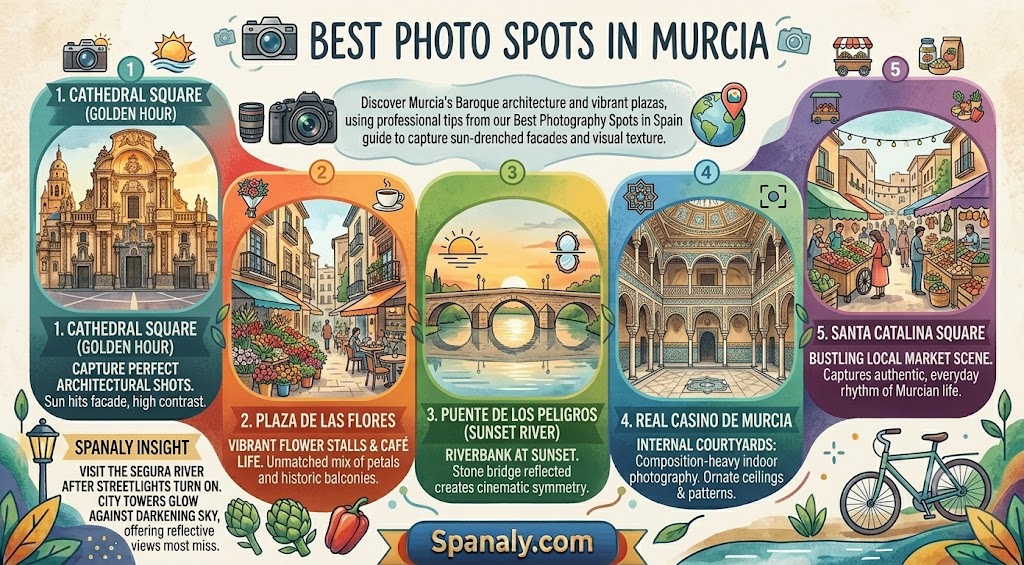
Murcia’s blend of Baroque architecture and narrow alleys offers endless visual texture. Our Best Photography Spots in Spain guide provides professional tips for capturing the city’s sun-drenched stone facades and vibrant plazas.
Cathedral Square: Visit during “Golden Hour.” Sunlight hits the intricate Baroque facade, creating perfect, high-contrast architectural shots.
Plaza de las Flores: Capture vibrant flower stalls and bustling café life. The mix of petals and historic balconies is unmatched.
Puente de los Peligros: Position yourself at the riverbank at sunset. The stone bridge reflected in the Segura River creates cinematic symmetry.
Real Casino de Murcia: Focus on internal courtyards. Moorish-style geometric patterns and ornate ceilings provide brilliant, composition-heavy indoor photography opportunities.
Santa Catalina Square: Frame the bustling local market scene here. It captures the authentic, everyday rhythm of Murcian life perfectly.
Spanaly Insight: For atmospheric shots, visit the Segura River after streetlights turn on. City towers glow against the darkening sky, offering reflective views most tourists miss.
🚗 Best Day Trips From Murcia

Murcia serves as an excellent base for exploring the diverse landscapes of southeastern Spain. A rental car provides the freedom to reach isolated historical sites and quiet natural parks. Additionally, refer to our Spain Travel Itineraries Plans guide to coordinate your base in Murcia with your wider regional route.
Cartagena: Drive 45 minutes to this historic port. Explore the stunning Roman Theater and its deep-rooted maritime heritage.
Caravaca de la Cruz: Travel to this holy city. It is famous for its majestic castle and profound historical significance.
Calblanque Park: Head to this protected nature reserve. You will find pristine beaches, golden dunes, and turquoise waters far from tourist crowds.
Lorca: Visit the “City of a Hundred Towers.” Its giant fortress overlooks the entire region, offering dramatic, unforgettable panoramic views.
Sierra Espuña: Venture into these rugged mountains. You will find incredible hiking trails, dense pine forests, and refreshing natural pools.
Spanaly Insight: If you plan to visit Cartagena, aim for a weekday morning. The Roman Theater crowds peak at midday; arriving early allows you to explore the port in total peace.
🗺️ Murcia Suggested Itineraries: The "Express" (24-Hour Plan)
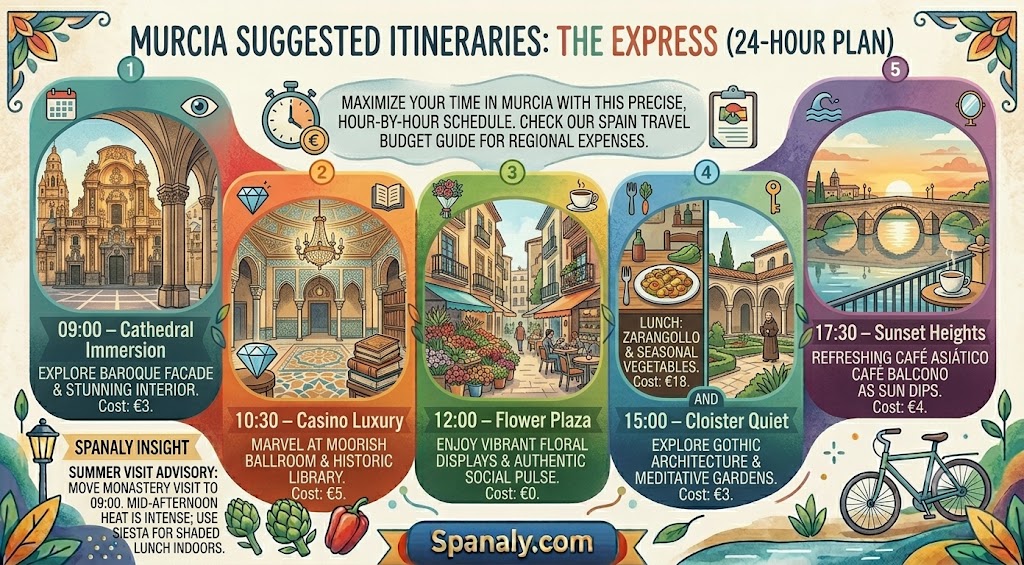
Maximize your time in Murcia with this precise, hour-by-hour schedule. To manage broader regional expenses, check our Spain Travel Budget guide.
09:00 – Cathedral Immersion: Start at the Cathedral of Santa María. Explore the intricate Baroque facade and the stunning interior. Cost: €3.
10:30 – Casino Luxury: Walk to the Real Casino de Murcia. Marvel at the Moorish ballroom and the historic library. Cost: €5.
12:00 – Flower Plaza: Visit Plaza de las Flores. Enjoy the vibrant floral displays and the authentic social pulse of the city. Cost: €0.
13:00 – Orchard Flavors: Stop for lunch at a traditional tavern. Order Zarangollo and local seasonal vegetables for an authentic taste. Cost: €18.
15:00 – Cloister Quiet: Explore the Monastery of Santa Clara la Real. Witness the preserved Gothic architecture and meditative garden spaces. Cost: €3.
16:30 – Bridge View: Walk to the Puente de los Peligros. Capture the classic view of the city reflecting on the Segura River. Cost: €0.
17:30 – Sunset Heights: Ascend to a local café balcony overlooking the river. Enjoy a refreshing Café Asiático as the sun dips. Cost: €4.
19:00 – Evening Ritual: Join residents at a local bar for montaditos and regional wine. Experience the city’s slow, deliberate pace. Cost: €10.
Spanaly Insight: If you visit during summer, move the Monastery visit to 09:00. Mid-afternoon heat is intense; use the siesta window for a long, shaded lunch indoors.
Need a Longer Murcia Itinerary?
This 24-hour route covers the essential highlights of Murcia, but many travelers stay longer to explore nearby neighborhoods, local food experiences, hidden gems, and day trips across the region.
Use the Spanaly Travel Planner below to instantly generate a personalized 1-day, 2-day, or 3-day itinerary for Murcia and hundreds of other destinations.
🚫 Common Mistakes to Avoid in Murcia
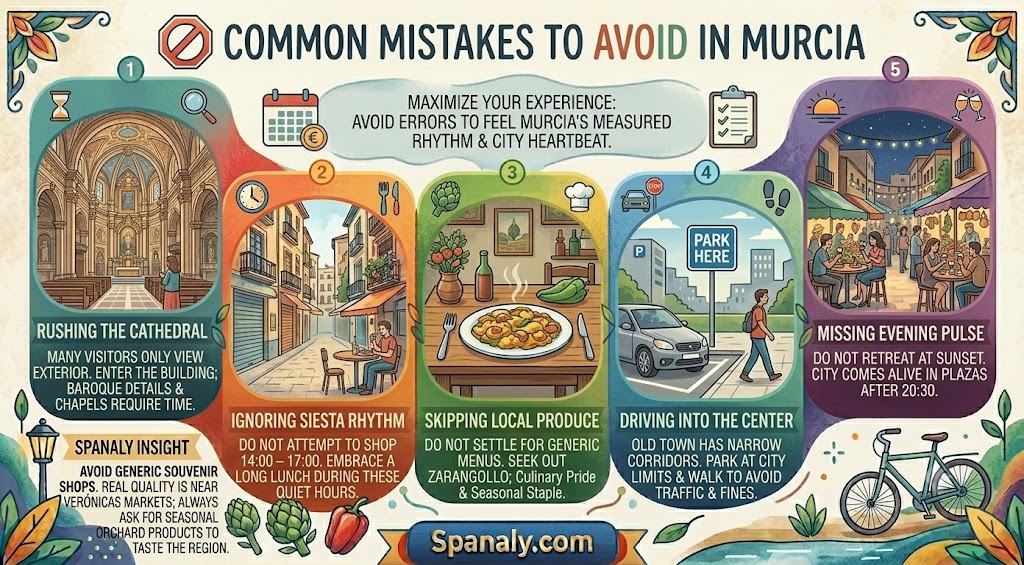
Many travelers treat Murcia as a quick stopover, missing the measured rhythm defining this inland gem. Avoid these errors to experience the city’s true heartbeat.
Rushing the Cathedral: Many visitors only view the exterior. Enter the building; its Baroque details and internal chapels require time to fully appreciate.
Ignoring Siesta Rhythm: Do not attempt to shop between 14:00 and 17:00. Follow the local flow—embrace a long lunch during these quiet hours.
Skipping Local Produce: Do not settle for generic tourist menus. You must seek out Zarangollo; it is the city’s culinary pride and seasonal staple.
Driving Into the Center: The old town consists of narrow corridors. Park at the city limits and walk to avoid traffic and parking fines.
Missing Evening Pulse: Do not retreat to your hotel at sunset. The city truly comes alive in the plazas only after 20:30.
Spanaly Insight: Many visitors buy gifts at generic souvenir shops. Real quality is found at smaller markets near Verónicas; always ask for seasonal orchard products to taste the region as intended.
💡 Spanaly Pro Tips

These insider insights capture Murcia’s heartbeat, gathered from local artisans and those who know the city’s unwritten rules.
The “Asiático” Secret: Order a Café Asiático like a local, but specifically ask for it “sin canela” (without cinnamon) at small bars near the river; it reveals the purity of the Licor 43.
The Cathedral’s Hidden Key: Look for the small, brass-inlaid symbols near the Cathedral’s side entrance. These are original medieval stonemason signatures, ignored by every major tour group.
Artisan Doors: Skip the main shopping streets. Look for tiny, unsigned wooden doors in the back alleys of the Barrio del Carmen; these are private home-workshops where traditional Murcian ceramicists still fire clay using ancient, forgotten techniques.
The “Huerta” Soundscape: If you want absolute silence, head to the Segura riverbanks at 07:00. The sound of the water against the ancient irrigation sluices is a sensory experience most guides never mention.
The Tapas Pact: Locals rarely sit at the main tables in Plaza de las Flores. They stand at the back bars of the tabernas. Order your tapa there; you get the freshest plate pulled directly from the kitchen window.
Spanaly Insight: Look for the small, metal plaques on the ground near the old city walls. They mark the boundary of the medieval expansion. Walking this “invisible line” is the fastest way to get a physical sense of the city’s original footprint.
Murcia stands as a testament to history carved in Baroque stone and nourished by a legacy of irrigation. It is a city that demands you slow your pulse to match the steady flow of the Segura River.
Architectural Mastery: Let the intricate geometry of the Cathedral guide your gaze. Its facade reveals centuries of religious devotion and artistic precision.
The Orchard’s Bounty: Feel the agricultural heartbeat of the city within the Huerta. Every seasonal bite connects you directly to the fertile landscape.
Living Heritage: Wander the streets where Baroque facades meet modern life. Discover why this sanctuary remains a tangible, historic experience.
Continue the Journey: If you appreciate cities where heritage is etched into every plaza, explore our Teruel Travel Guide to uncover another essential regional treasure.
Ultimately, Murcia rewards those who linger. It is more than a point on a map; it is a direct connection to the heart of southeastern Spain. Follow the river’s path, admire the carved stone, and let the city’s unique regional rhythm define your travel memories.