Table of Contents
Toggle🌊 Fuerteventura
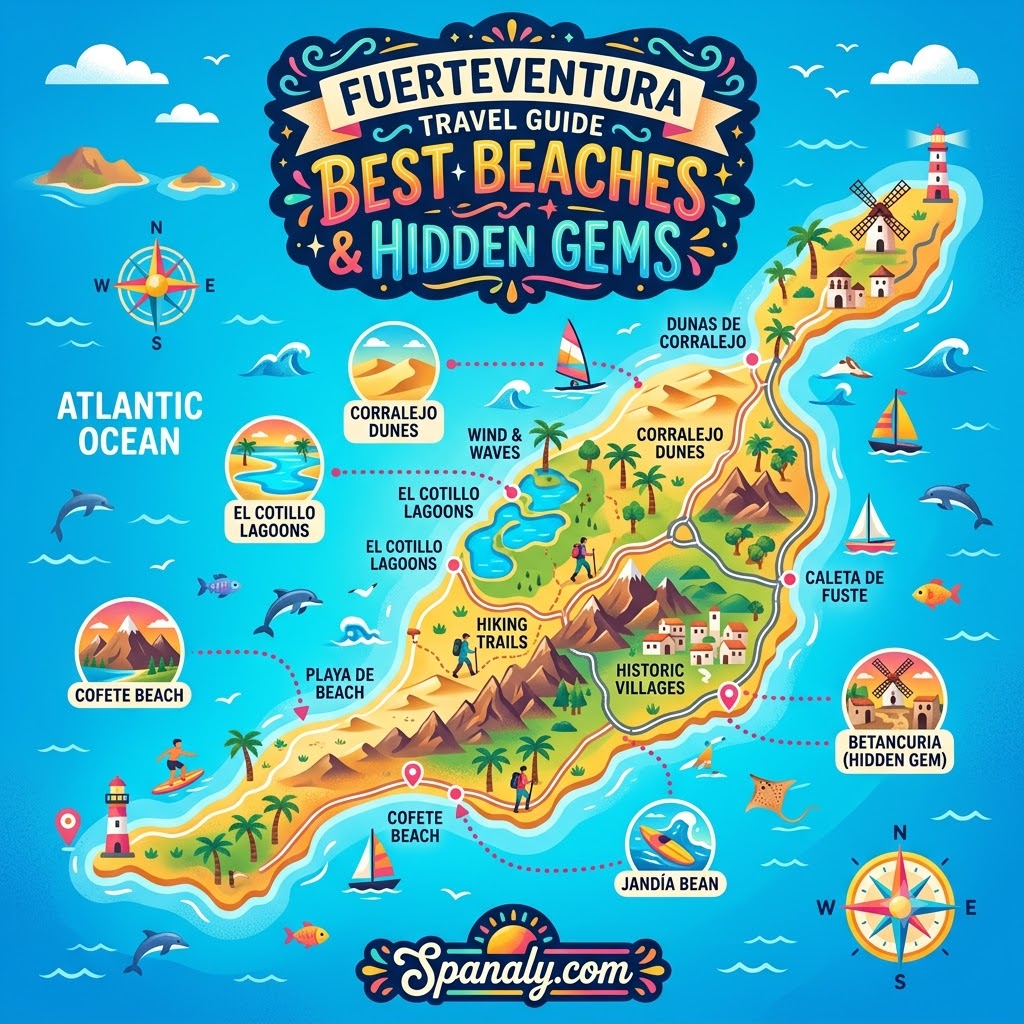
Fuerteventura is not a typical resort-filled island; it is a raw, volcanic masterpiece sculpted by Atlantic tides and Saharan winds. This UNESCO Biosphere Reserve offers a sun-drenched horizon where shifting dunes meet jagged, ancient craters.
🏖️ Pristine Shores: Traverse miles of untouched, golden sand dunes that spill into turquoise lagoons, rivaling the beauty of any tropical coastline.
🌬️ Atlantic Rhythms: Experience the perfect tension between surf-heavy northern breaks, rugged volcanic ridges, and silent, sun-baked interior villages.
⛰️ Nature-First Adventures: Discover dramatic mountain vistas that plummet into the sea, offering wind-cooled trails and viewpoints that define true island solitude.
Whether you seek adrenaline-fueled surf or a meditative desert retreat, this island provides the perfect backdrop. Still weighing your options between coastal adventures and mainland treasures? Browse our curated cities in Spain collection to find your perfect match.
Spanaly Insight: Focus your exploration on one region at a time—the rugged north offers world-class surf spots, while the southern dunes provide deep, restorative solitude.
📍 Fuerteventura at a Glance
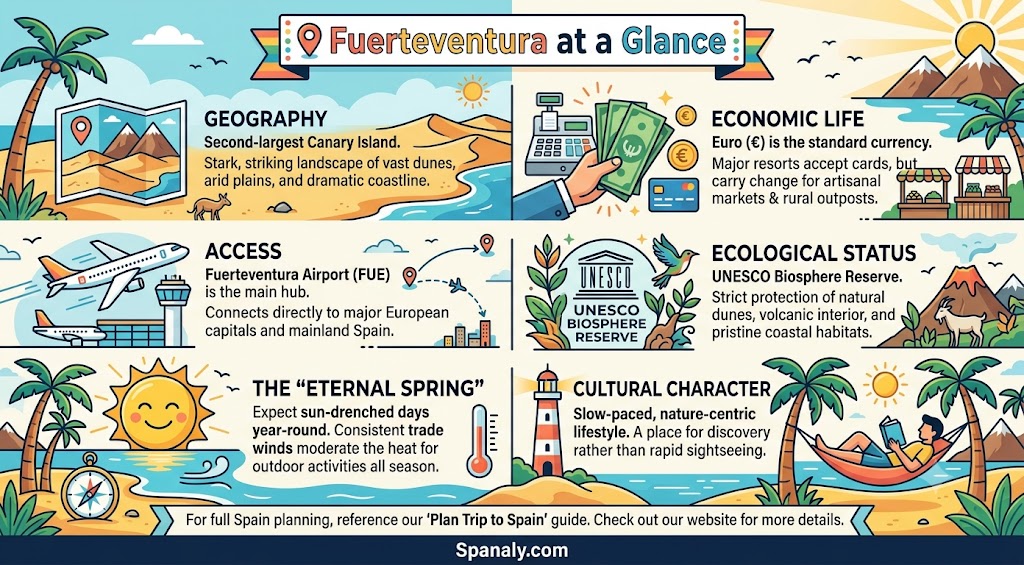
Understanding Fuerteventura’s unique rhythm is essential for a smooth island escape. Use these foundational facts to set your expectations for this wind-swept sanctuary.
Geography: As the second-largest Canary Island, it offers a stark, striking landscape dominated by vast dunes, arid plains, and dramatic coastline.
Access: Fuerteventura Airport (FUE) acts as the main hub, connecting the island directly to major European capitals and mainland Spanish cities.
The “Eternal Spring”: Expect sun-drenched days year-round. Consistent trade winds moderate the heat, creating a perfect climate for outdoor activities regardless of the season.
Economic Life: The Euro (€) remains the standard currency. While major resorts accept cards, carry small change for artisanal markets and rural outposts.
Ecological Status: As a UNESCO Biosphere Reserve, the island mandates strict protection of its natural dunes, volcanic interior, and pristine coastal habitats.
Cultural Character: Unlike bustling mainland cities, the island favors a slow-paced, nature-centric lifestyle. It is a place for discovery rather than rapid sightseeing.
Whether you are a first-time visitor or a returning explorer, preparation is the foundation of a successful journey. Reference our plan trip to Spain guide to ensure you handle the logistical foundations before your departure.
Spanaly Insight: Pack light, breathable layers, but always include a windbreaker. Atlantic breezes often sweep the island, providing a refreshing chill even on the sunniest afternoons.
📍 Fuerteventura vs. Tenerife: Choosing Your Canary Island
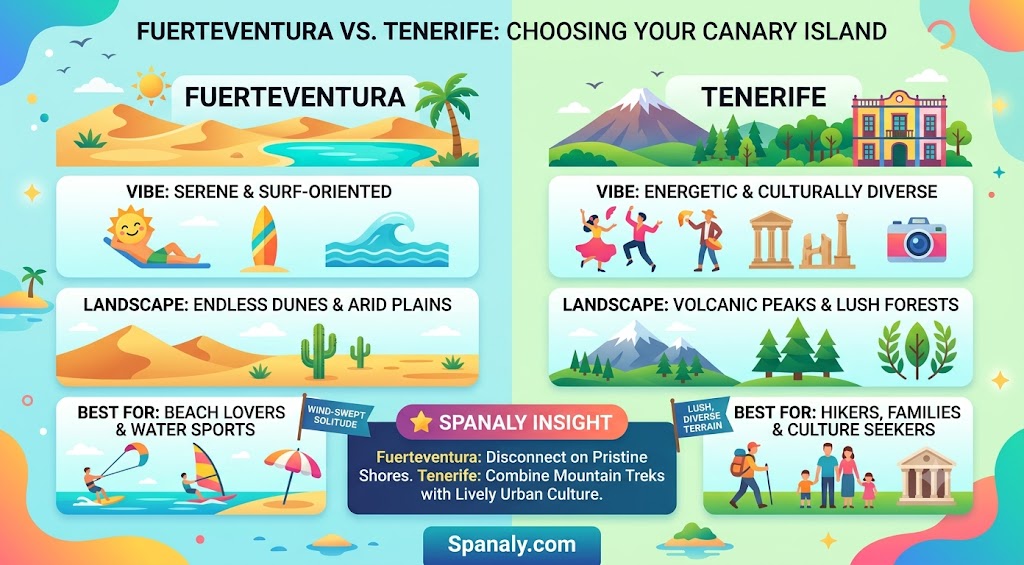
Deciding between Fuerteventura and Tenerife depends on whether you seek vast, wind-swept solitude or lush, diverse mountainous terrain.
Fuerteventura: Celebrated for its sprawling white-sand dunes and turquoise lagoons. It is a sanctuary for those craving space, consistent winds, and an unhurried, beach-centric lifestyle.
Tenerife: The “Island of Eternal Diversity.” It offers a dramatic contrast, featuring the towering Mount Teide, lush laurel forests, and vibrant, historic colonial towns.
| Feature | Fuerteventura | Tenerife |
|---|---|---|
| Vibe | Serene & Surf-oriented | Energetic & Culturally Diverse |
| Landscape | Endless Dunes & Arid Plains | Volcanic Peaks & Lush Forests |
| Activities | Kitesurfing, Swimming, Sunbathing | Hiking, History, Urban Exploration |
| Best For | Beach Lovers & Water Sports | Hikers, Families & Culture Seekers |
Choose based on your desired pace. Fuerteventura favors those who want to disconnect on pristine shores, while Tenerife suits travelers who want to combine mountain treks with lively urban culture.
Spanaly Insight: If you prefer wild, open landscapes and quiet shores, stick to Fuerteventura. If you want a mix of high-altitude adventure and historic city life, Tenerife is your ideal destination.
🏰 Top 5 Must-See Landmarks in Fuerteventura
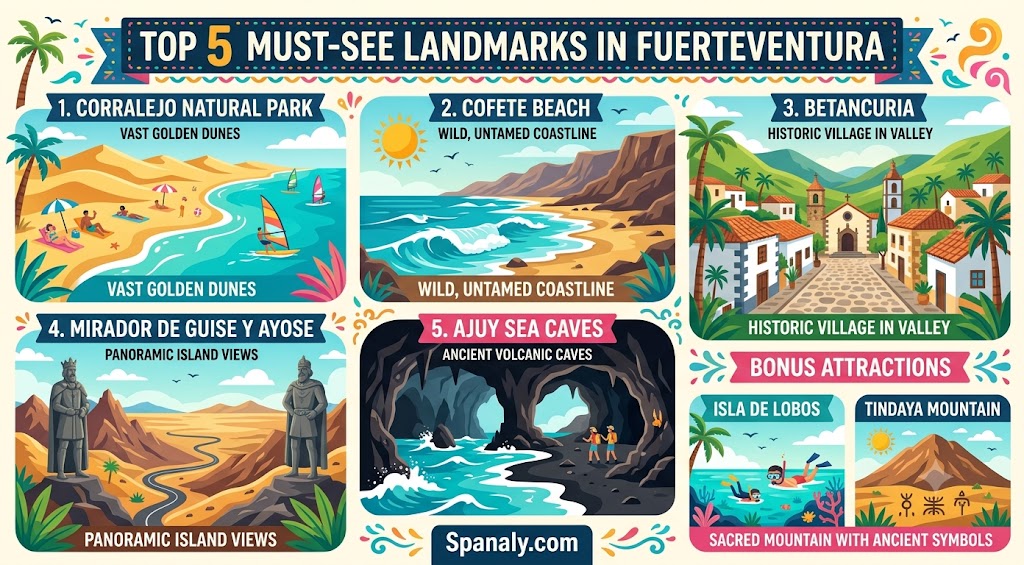
Fuerteventura’s landscape is a raw masterpiece of shifting sands and volcanic ridges. Explore these iconic sites to uncover the island’s true heart.
🏜️ Corralejo Natural Park: Wander through endless, golden sand dunes. These massive formations spill directly into the turquoise Atlantic, creating a dreamlike landscape.
🏝️ Cofete Beach: Discover this wild, untamed coastline. Massive cliffs protect this remote, rugged beach, offering a profound sense of total isolation.
🏺 Betancuria: Visit the former island capital. This historic village sits nestled in a valley, showcasing traditional architecture and quiet, cobblestone streets.
🔭 Mirador de Guise y Ayose: Stand atop these peaks for panoramic island views. You can see the vast, arid plains stretch toward the sea.
🌊 Ajuy Sea Caves: Explore ancient volcanic tunnels carved by time. These dark, dramatic caves contrast beautifully with the wild, crashing black-sand shoreline.
Bonus Attractions:
Isla de Lobos: A tiny, protected islet perfect for snorkeling in crystal-clear lagoons.
Tindaya Mountain: A sacred site for the original islanders, steeped in mystery and ancient history.
Spanaly Insight: Many popular sites require advance entry. To avoid disappointment and long queues, check our Spain attraction tickets guide for official booking tips.
🎨 Hidden Gems & Local Secrets
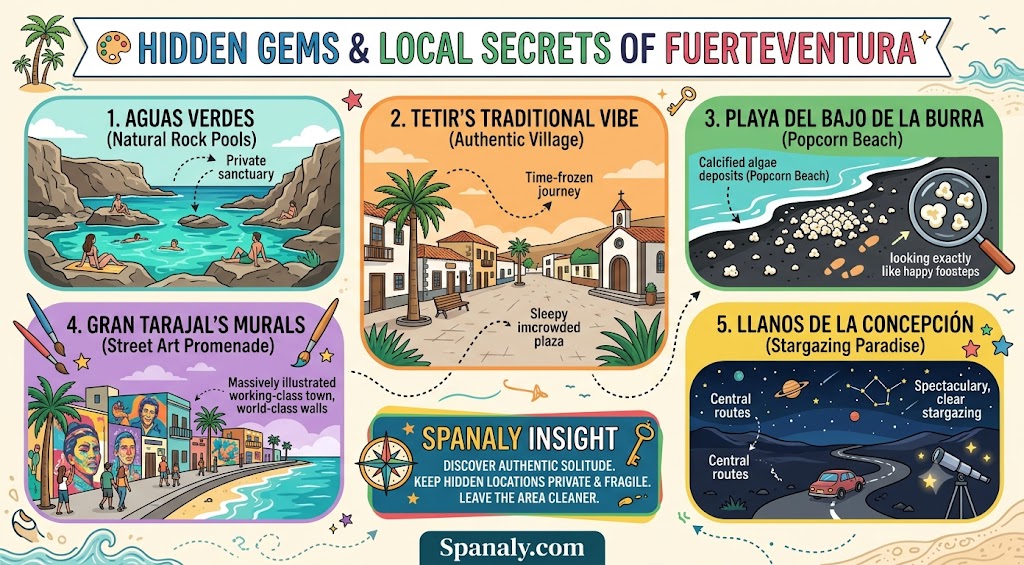
Escape the resort crowds by seeking out the quiet corners where Fuerteventura’s true, rugged character remains untouched.
🐚 Aguas Verdes: Located on the west coast, these natural rock pools emerge at low tide. They form a private, saltwater sanctuary shielded from heavy Atlantic swells.
🏺 Tetir’s Traditional Vibe: Venture inland to this sleepy village. It hosts charming, uncrowded plazas that feel frozen in time, far from the tourist-heavy coastlines.
👣 Playa del Bajo de la Burra: Skip the main dunes for these “popcorn beaches.” Small white calcified algae deposits look exactly like scattered popcorn across the black volcanic sand.
🌅 Gran Tarajal’s Murals: This working-class town features massive, world-class street art. Wander the sea promenade to find vibrant pieces that capture the island’s evolving creative identity.
🔭 Llanos de la Concepción: Drive these winding, central routes at night. This area offers some of the clearest, most spectacular stargazing spots in the entire archipelago.
Spanaly Insight: If you find a hidden cove, keep the location to yourself. Pure, undisturbed solitude on this island is a fragile gift; always leave the area cleaner than you found it.
🏨 Where to Stay in Fuerteventura
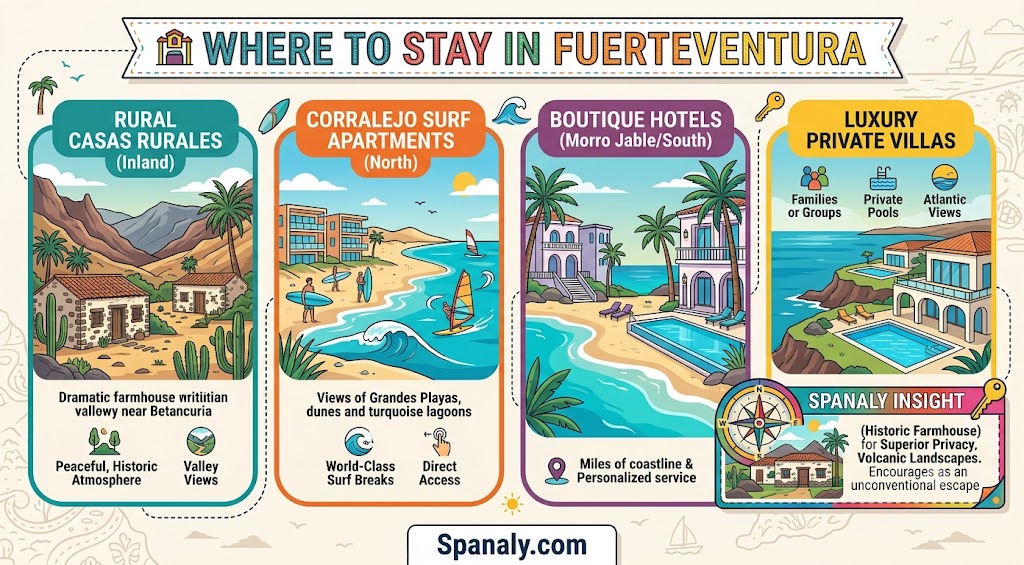
Fuerteventura offers diverse stays, from vibrant coastal surf hubs to secluded rural retreats. Choose your base based on your preferred island rhythm.
Rural Casas Rurales (Inland): Perfect for travelers seeking absolute tranquility. These stone-built traditional homes provide a profound, intimate bond with the island’s arid interior.
Recommendation: Explore the area around Betancuria for a peaceful, historic atmosphere set against dramatic valley backdrops.
Corralejo Surf Apartments (North): The premier choice for water sports enthusiasts. These units provide total independence and proximity to world-class surf breaks.
Recommendation: Look for properties near Grandes Playas for direct access to the dunes and turquoise lagoons.
Boutique Hotels (Morro Jable/South): Ideal for those prioritizing relaxation and pristine turquoise waters. These boutique properties focus on personalized service and ocean views.
Recommendation: The Jandía peninsula offers serene surroundings with miles of expansive, sun-drenched coastline.
Luxury Private Villas: Best for families or groups needing space. These often feature private pools and elevated positions overlooking the Atlantic horizon.
Before booking, ensure your location aligns with your activity goals. Our accommodation in Spain guide helps you select the best stay for your specific trip style.
Spanaly Insight: For an unconventional escape, choose a renovated “Finca”. These historic farmhouses offer superior privacy and allow you to wake up to volcanic landscapes invisible from standard hotels.
🍽️ Fuerteventura Gastronomy & Dining Guide
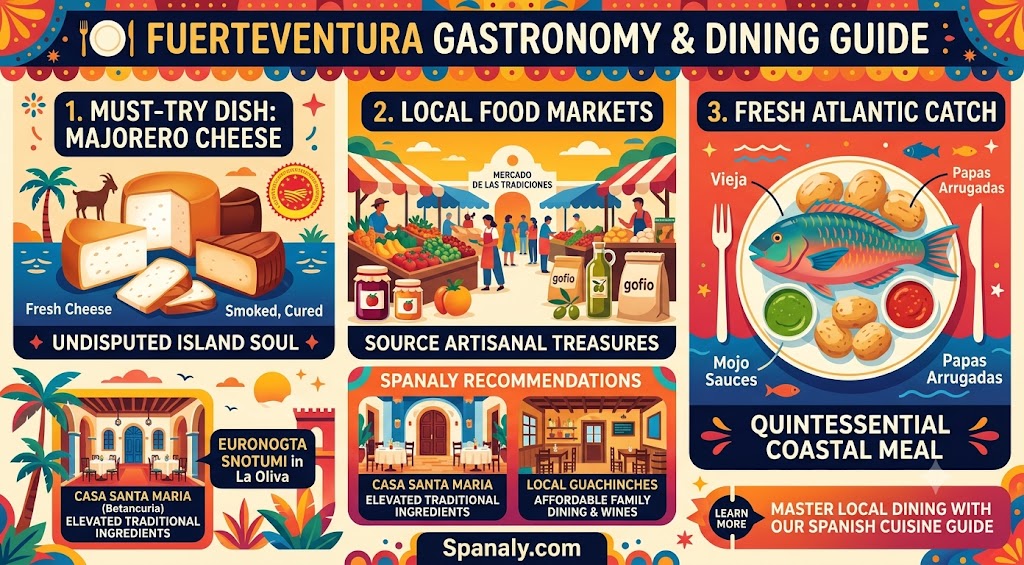
Fuerteventura’s culinary scene relies on resilient, island-grown ingredients and the fresh bounty of the Atlantic. It is simple, hearty, and deeply tied to the land.
Must-Try Dish (Majorero Cheese): This goat’s milk cheese is a protected treasure. Whether smoked, cured, or fresh, its complex flavor is the undisputed soul of the island.
The Food Market: Visit the Mercado de las Tradiciones in La Oliva. It is the best place to source artisanal jams, local gofio, and hand-pressed olive oil.
Fresh Atlantic Catch: Look for “vieja” (parrotfish) served with local “papas arrugadas” and spicy mojo sauce. It is the quintessential coastal meal.
Spanaly Recommendations:
Casa Santa Maria (Betancuria): A refined setting inside a historic building. It elevates traditional island ingredients to a world-class standard.
Local Guachinches: Venture into the rural interior to find family-run eateries. They serve generous, affordable portions paired with robust house wines.
To master the art of dining like a local, explore our Spanish cuisine guide. It covers regional etiquette, must-know ingredients, and cultural dining secrets.
Spanaly Insight: Always ask for “gofio” served with your soup or fish. This toasted grain flour is an ancient Canary staple that provides a unique, nutty depth to every meal.
🧳 Essential Logistics
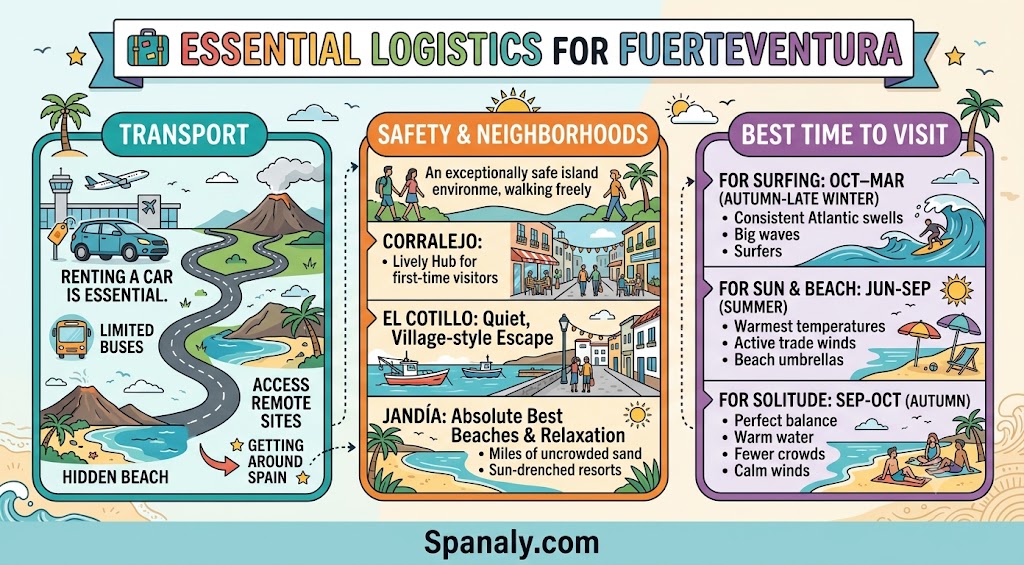
Navigating Fuerteventura requires careful planning. This island rewards those who prioritize preparation, especially regarding local transit and timing.
Transport: Renting a car is essential for true freedom. Buses are limited, and remote volcanic sites or hidden beaches remain inaccessible without a private vehicle. Check our getting around Spain guide for stress-free travel tips.
Safety & Neighborhoods: The island is exceptionally safe. Corralejo serves as a lively hub for first-time visitors, while El Cotillo offers a quiet, village-style escape. For the absolute best beaches, head south to the Jandía peninsula, where resorts are designed for relaxation rather than urban noise.
Best Time to Visit: * For Surfing: Autumn to late winter (October–March) delivers the most consistent Atlantic swells.
For Sun & Beach: June through September offers the warmest temperatures, though trade winds remain active.
For Solitude: September and October provide a perfect balance—warm waters, fewer crowds, and calmer winds.
Proper logistics transform your visit. Preparation minimizes stress, allowing you to fully immerse yourself in the island’s timeless, wind-swept atmosphere.
Spanaly Insight: Even in summer, the Atlantic wind is powerful. Keep a light windbreaker in your vehicle; it will keep you comfortable during sunset viewpoints or late-evening coastal walks.
📸 Best Photo Spots in Fuerteventura
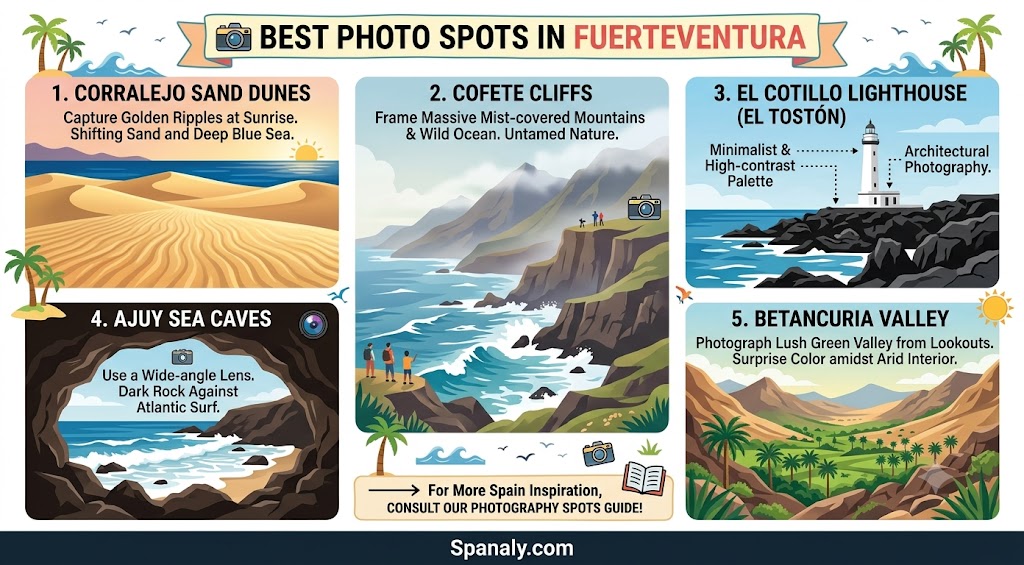
Fuerteventura is a photographer’s dream, offering dramatic contrasts between golden dunes, pitch-black volcanic rock, and neon-blue Atlantic waters. Capture the island’s raw spirit here:
Corralejo Sand Dunes: Capture the vast, golden ripples at sunrise. The soft morning light highlights the texture of the shifting sand against the deep blue sea.
Cofete Cliffs: Frame the scale of the massive, mist-covered mountains meeting the wild, roaring ocean. This is the ultimate shot of untamed nature.
El Cotillo Lighthouse (El Tostón): The stark white lighthouse against rugged black basalt rocks creates a minimalist, high-contrast palette perfect for architectural photography.
Ajuy Sea Caves: Use a wide-angle lens to capture the cavernous mouth of the caves. The framing of the dark rock against the Atlantic surf is stunning.
Betancuria Valley: Photograph the lush green valley floor from the mountain lookouts. It offers a surprising, vibrant splash of color amidst the arid island interior.
For more inspiration on capturing the country’s beauty, consult our best photography spots in Spain guide. It helps you find hidden angles and timing secrets.
Spanaly Insight: Use a circular polarizer to cut the Atlantic glare. It makes the water look incredibly clear and deep against the dark volcanic lava rocks.
🚗 Best Day Trips From Fuerteventura
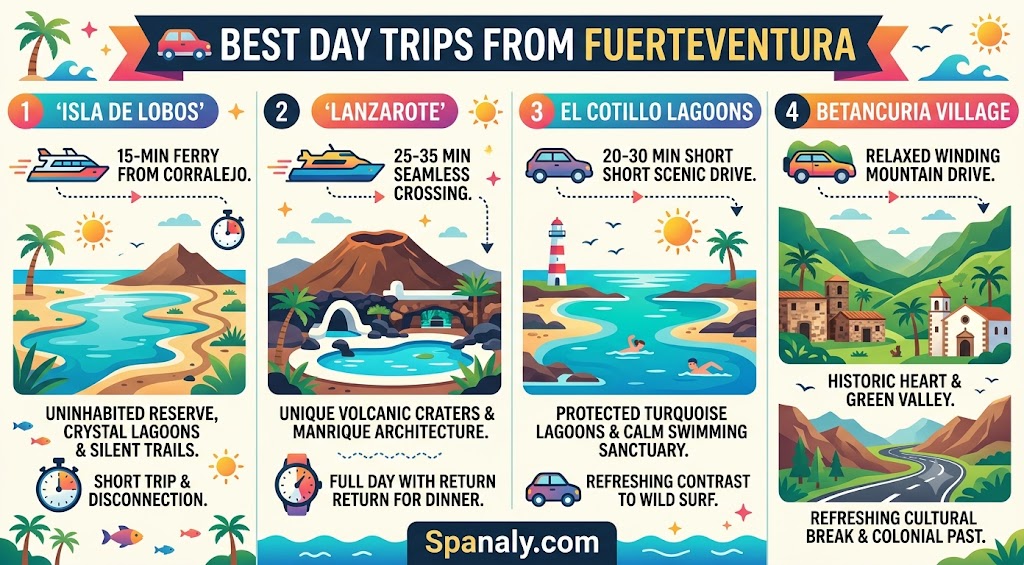
Fuerteventura serves as an ideal base for exploration. These excursions are short, stress-free, and maximize your time without long hours in transit.
Isla de Lobos:
The Trip: A lightning-fast ferry ride (approx. 15 minutes) from Corralejo harbor.
Why: This uninhabited nature reserve offers crystal-clear lagoons and silent hiking trails, perfect for a peaceful escape from the island’s main hubs.
Lanzarote:
The Trip: A seamless, high-speed ferry crossing (25–35 minutes) departing regularly from Corralejo.
Why: It allows you to witness unique volcanic craters and Manrique’s architectural masterpieces in a single, well-planned day before returning for dinner.
El Cotillo Lagoons:
The Trip: A short, scenic drive (20–30 minutes) from northern tourist zones.
Why: These protected, turquoise lagoons are a sanctuary for swimmers. They provide a calm contrast to the wild surf beaches found elsewhere on the coast.
Betancuria Village:
The Trip: A relaxed, winding drive through the island’s central mountain range.
Why: As the historic heart of the island, this green valley provides a refreshing cultural break and a glimpse into the island’s colonial past.
Focus on Isla de Lobos if you want the absolute shortest trip. It is effortless to organize and provides an immediate sense of total disconnection.
Spanaly Insight: Catch the earliest morning ferry to Lobos. You will have the lagoons entirely to yourself for several hours before the larger excursion crowds arrive.
🗺️ Fuerteventura Suggested Itinerary: (24-Hour Plan)
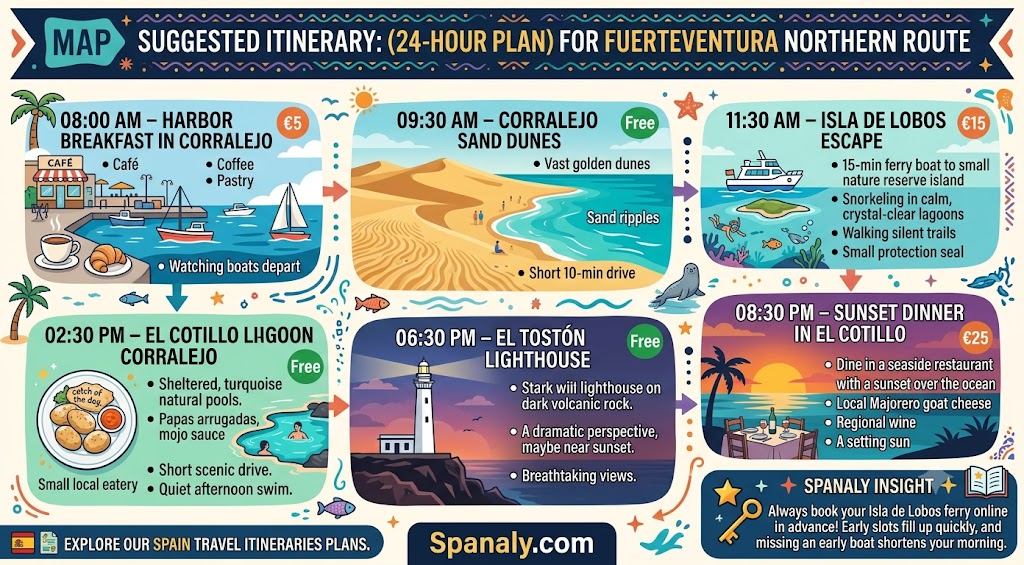
Maximize your day in this wind-swept sanctuary with this precision-timed, efficient route through the north. Costs are estimated per person.
08:00 AM – Breakfast in Corralejo (€5): Start at a harbor-side café. Enjoy a local coffee and fresh pastry while watching the morning boats depart.
09:30 AM – Corralejo Sand Dunes (Free): A short 10-minute drive. Wander the vast, golden dunes that spill directly into the turquoise Atlantic waters.
11:30 AM – Isla de Lobos Escape (€15): Take the 15-minute ferry. Spend your time snorkeling in calm, crystal-clear lagoons and walking the silent, protected trails.
02:30 PM – Coastal Lunch (€20): Return to Corralejo. Savor the “catch of the day” with local papas arrugadas and spicy mojo sauce at a local eatery.
04:30 PM – El Cotillo Lagoons (Free): A 25-minute scenic drive west. Relax in these sheltered, turquoise natural pools—perfect for a quiet, wind-free afternoon swim.
06:30 PM – El Tostón Lighthouse (Free): Explore the historic lighthouse. The contrast between the stark white building and dark volcanic rock is breathtaking at this hour.
08:30 PM – Sunset Dinner (€25): Dine in a seaside restaurant in El Cotillo. Pair local Majorero goat cheese with regional wine as the sun dips into the ocean.
This route minimizes driving time while maximizing your connection to the island’s unique landscapes. For more regional layouts, explore our Spain travel itineraries plans.
Spanaly Insight: Always book your ferry to Isla de Lobos online in advance. Early slots fill up quickly, and missing an early boat shortens your morning exploration significantly.
🚫 Common Mistakes to Avoid in Fuerteventura
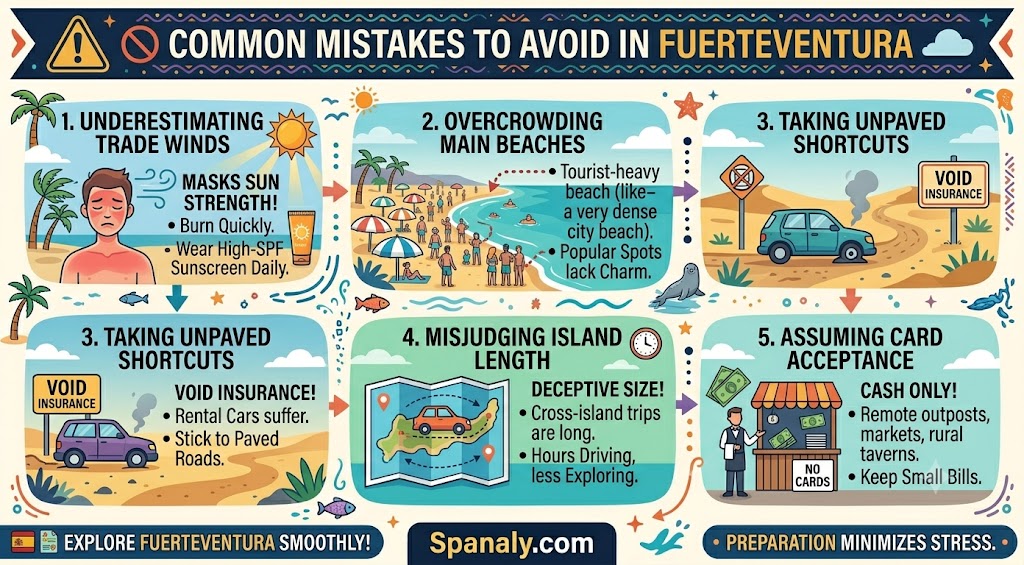
Many travelers ruin their escape by ignoring the island’s unique climate and geography. Avoid these traps to ensure a smooth trip.
Underestimating Trade Winds: The breeze masks the sun’s strength. You may burn quickly despite the cooling air. Always wear high-SPF sunscreen daily.
Overcrowding Main Beaches: Popular spots often lack charm. Seek out remote western coves for true beauty without the dense tourist crowds.
Taking Unpaved Shortcuts: Rental cars often suffer on unmarked, sandy trails. Stick to paved roads to avoid voiding your insurance or getting stranded.
Misjudging Island Length: Fuerteventura is deceptive in size. Avoid planning cross-island trips in one day; you will spend hours driving instead of exploring.
Assuming Card Acceptance: Remote taverns and scenic parking areas often require cash. Keep small bills handy for rural outposts and artisan markets.
Spanaly Insight: Always keep a physical map in your vehicle. Cellular signal drops frequently in the interior, making digital GPS unreliable for exploration.
🌟 Elite Spanaly Tips: Insider Secrets
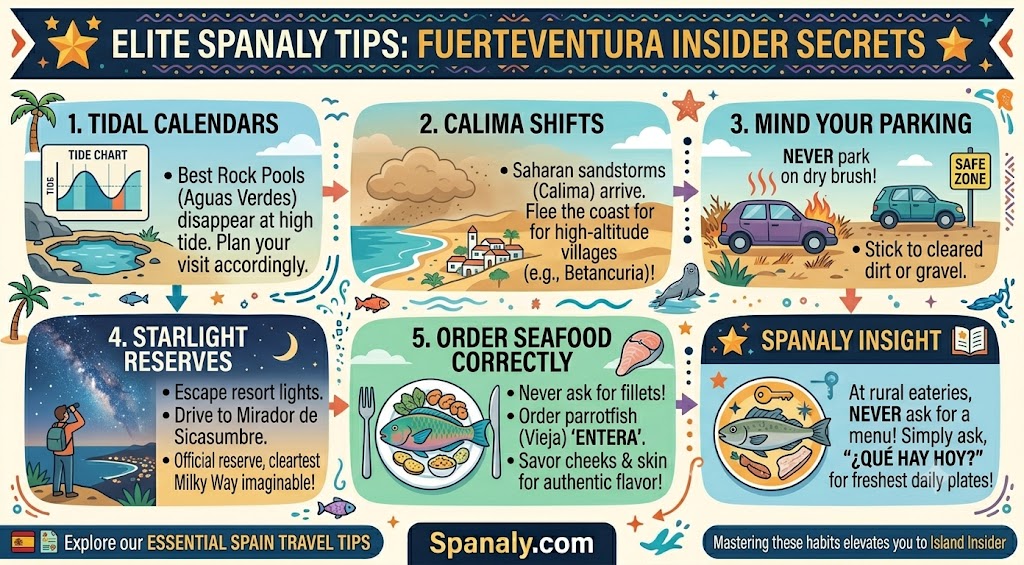
Move beyond standard advice with these high-level secrets curated from seasoned island explorers and local experts.
Check Tidal Calendars: Do not just check the weather. The best hidden rock pools at Aguas Verdes disappear during high tide. Plan your visit accordingly.
Master Calima Shifts: When air turns hazy, a Saharan sandstorm has arrived. Flee the coast immediately for the high-altitude interior villages like Betancuria instead.
Mind Your Parking: Never park on dry brush. Your car’s heat can easily ignite a brushfire. Stick strictly to cleared, packed dirt or gravel zones.
Find Starlight Reserves: Escape resort lights. Drive to the Mirador de Sicasumbre. This official reserve offers the clearest views of the Milky Way imaginable.
Order Seafood Correctly: When ordering parrotfish, never request fillets. Always ask for it “entera.” Locals savor the cheeks and skin for the true, unadulterated flavor of the catch.
Mastering these habits elevates you from tourist to island insider. Explore our essential Spain travel tips for deeper cultural wisdom.
Spanaly Insight: At rural eateries, never ask for a menu. Simply ask, “¿Qué hay hoy?” to receive the freshest, signature dish of the day prepared by the kitchen.
🛡️ Visitor FAQs – Fuerteventura Travel Guide
🚗 Is renting a car really necessary for Fuerteventura?
Yes, it is highly recommended. Public transport is infrequent and does not reach the most iconic hidden beaches or volcanic trails. Renting a vehicle grants you the freedom to explore the island's diverse landscapes at your own pace.
🌬️ Why is it always so windy on the island?
Fuerteventura’s location in the Atlantic exposes it to consistent trade winds. These winds are a blessing, as they naturally moderate the high temperatures, ensuring the island remains comfortable and pleasant for outdoor activities throughout the year.
🏄 Is Fuerteventura suitable for beginners in surfing?
Absolutely. The northern coast near Corralejo offers numerous surf schools and beaches with gentle, sandy bottoms ideal for learning. Professional instructors are available to guide you safely through your first waves in the Atlantic.
👕 What should I pack for my trip?
Pack light summer clothes, but always include a windbreaker. Even on the warmest days, the ocean breeze can provide a refreshing chill, especially in the evenings or while exploring higher, more exposed volcanic ridges.
⛴️ Can I visit other islands from Fuerteventura?
Yes, easily. The island is perfectly connected by high-speed ferries to Lanzarote, located just a short 25-minute crossing away. Additionally, daily boat trips to the protected nature reserve of Isla de Lobos are highly recommended for a quick escape.
Fuerteventura Guide by Spanaly.com
Fuerteventura offers far more than a fleeting stop on a map. It provides a grounded look into the raw, wind-swept heart of the Atlantic.
Master the Dunes: Spend your time wandering the shifting golden sands of Corralejo rather than rushing between crowded tourist sites.
Respect the Winds: Let the cooling Atlantic trade winds define your pace. They are the island’s pulse, shaping both the coastline and daily life on the island.
Seek the Horizon: Beyond the famous beaches, the remote majesty of Cofete awaits those willing to venture toward the wild Atlantic horizon.
Specifically, Fuerteventura rewards those who look closely at the rugged coastlines, the sharp shadows of volcanic craters, and the vast, open skies. Moreover, the island stays with you long after you leave. Pack your durable shoes, keep your plans flexible, and embrace the timeless, untamed character of this sanctuary.
If you enjoy Fuerteventura’s blend of wild nature and quiet horizons, explore our Lanzarote Travel Guide for another essential Canary Island gem.