Table of Contents
Toggle📍 Cadaqués
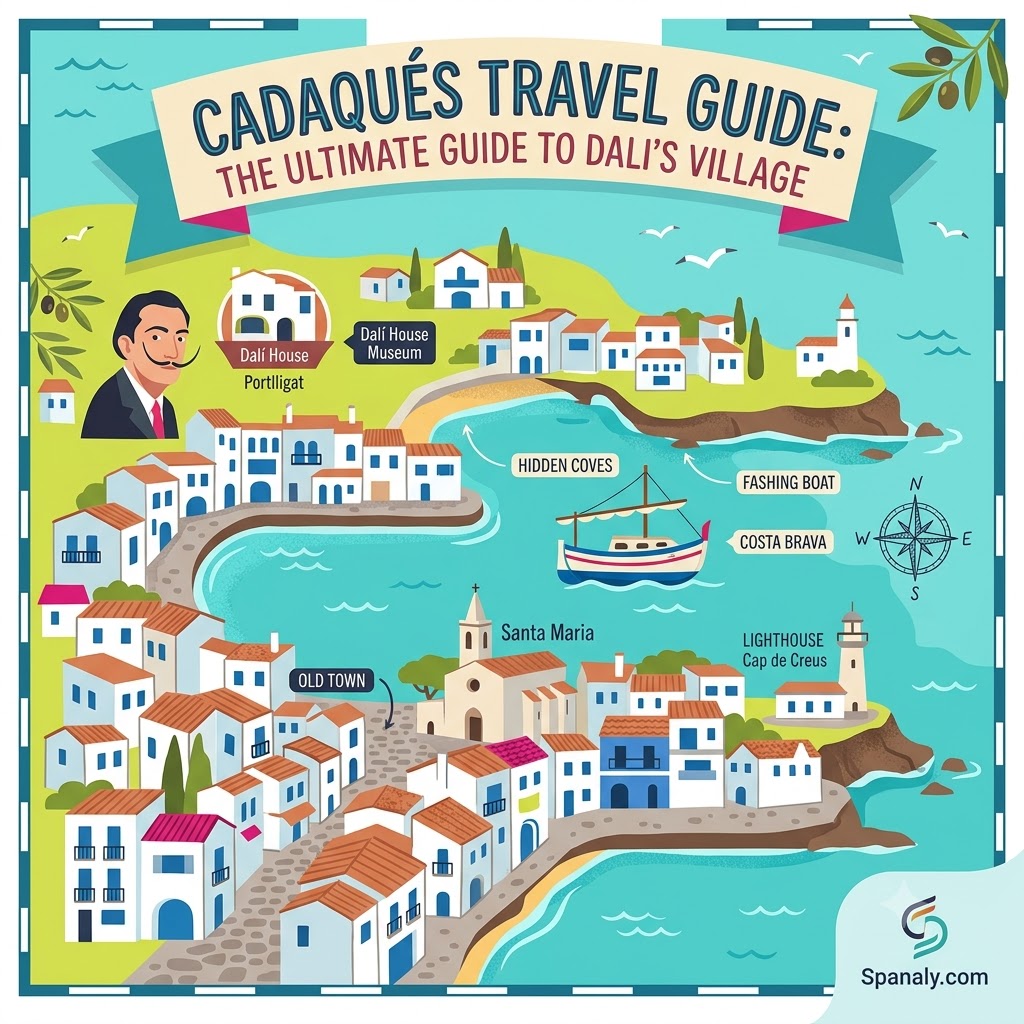
Cadaqués is not just a destination; it is a surrealist masterpiece carved into the rugged cliffs of the Mediterranean. Nestled at the edge of the Cap de Creus peninsula, this whitewashed village captures the heart of every traveler who seeks the authentic, untamed spirit of Catalonia.
This Cadaqués travel guide helps you navigate the winding alleys, famous Dali heritage, and crystalline coves that define this unique retreat.
The Artistic Soul: Walk the streets that inspired Salvador Dalí and discover why this remote village remains an eternal muse.
Coastal Serenity: Explore pristine hidden coves and sapphire waters tucked away from the crowded resort hubs of the Costa Brava.
Catalan Flavors: Savor fresh sea-to-table cuisine in intimate squares hidden within the town’s historic, labyrinthine old quarter.
Whether you seek the inspiration of famous painters or a quiet seaside escape, Cadaqués offers the perfect backdrop. Still deciding on your final destination? Browse our curated cities in Spain collection to find your perfect match.
Spanaly Insight: Visit the waterfront during the golden hour. As the sun dips behind the mountains, the white facades turn a soft, glowing gold that is impossible to replicate anywhere else on the coast.
📍 Cadaqués at a Glance

Cadaqués offers a unique blend of rugged maritime history and surrealist charm. Use these foundational facts to anchor your travel planning effectively.
Geography: Perched on the Cap de Creus peninsula, this secluded village is surrounded by wild, wind-swept landscapes and crystalline Mediterranean waters.
The Dali Connection: Life here is deeply linked to Salvador Dalí. His presence still defines the artistic atmosphere of the town’s harbor and streets.
Access: The journey involves winding mountain roads. Most travelers arrive by car from Barcelona or Girona. Follow our getting around Spain guide for the most efficient routes to reach this remote corner.
Currency: Spain uses the Euro (€). While boutiques and restaurants accept cards, keep cash on hand for small cafes and parking fees.
Local Tempo: Cadaqués follows a traditional Mediterranean rhythm. Many businesses observe a mid-afternoon siesta, so adjust your schedule to match this relaxed pace.
Cadaqués remains a sanctuary for those seeking a genuine, unhurried coastal experience compared to the larger, more commercial resort hubs nearby.
Spanaly Insight: Bring a light jacket even in summer. The “Tramuntana” wind often sweeps down from the mountains, cooling the evenings significantly, even after a hot day.
📍 Cadaqués vs. Roses: Which Coastal Town to Choose?
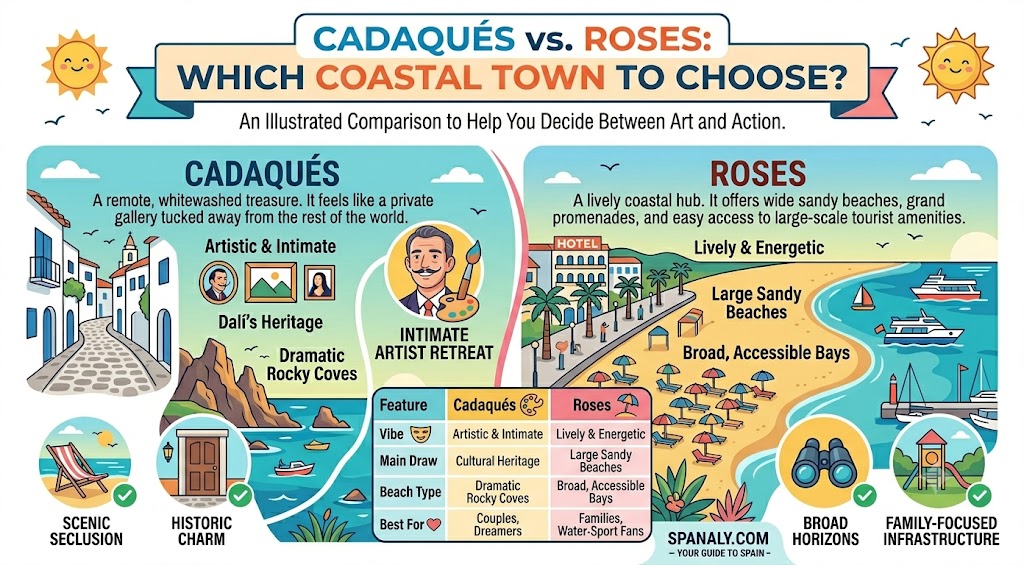
Choosing between Cadaqués and Roses depends on whether you seek an intimate, artist-inspired retreat or a classic, activity-filled seaside holiday.
Cadaqués: A remote, whitewashed treasure. It feels like a private gallery tucked away from the rest of the world.
Roses: A lively coastal hub. It offers wide sandy beaches, grand promenades, and easy access to large-scale tourist amenities.
| Feature | Cadaqués | Roses |
|---|---|---|
| Vibe | Artistic & Intimate | Lively & Energetic |
| Main Draw | Dalí’s Heritage | Large Sandy Beaches |
| Beach Type | Dramatic Rocky Coves | Broad, Accessible Bays |
| Best For | Couples, Dreamers | Families, Water-Sport Fans |
Choose Cadaqués if you prioritize scenic seclusion, historic charm, and a slower, poetic atmosphere. Opt for Roses if you prefer a traditional resort feel with convenience, broad horizons, and family-focused infrastructure.
Spanaly Insight: If you crave the classic postcard view of a white village meeting the sea, Cadaqués is your match. If you want endless beach days without navigating mountain roads, head to Roses.
🏰 Top 5 Must-See Landmarks in Cadaqués
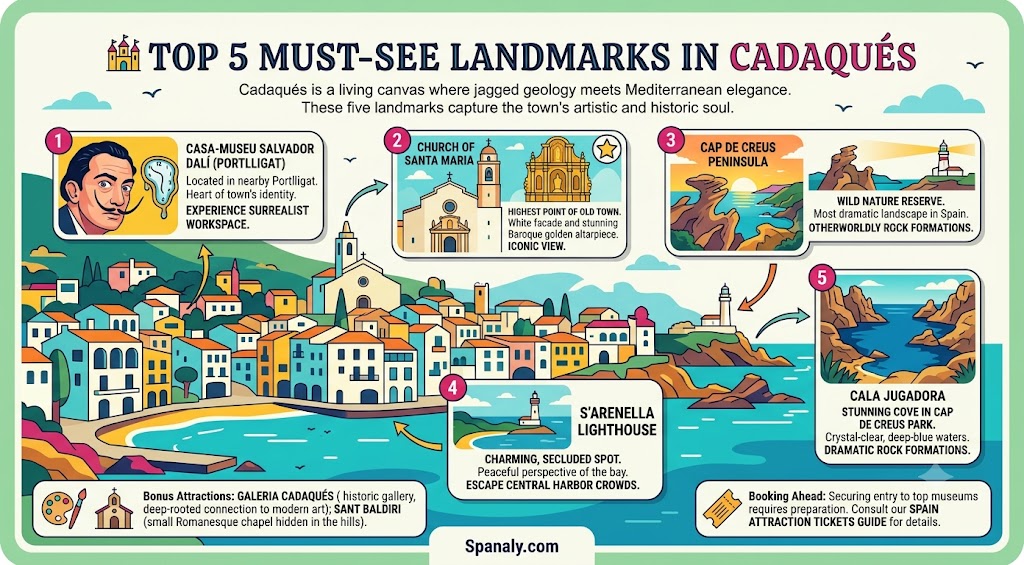
Cadaqués is a living canvas where jagged geology meets Mediterranean elegance. These five landmarks capture the town’s artistic and historic soul.
Casa-Museu Salvador Dalí: Located in nearby Portlligat, this house-museum is the heart of the town’s identity. Experience the surrealist workspace where Dalí lived and created his most iconic works.
Church of Santa Maria: Standing at the highest point of the old town, its white facade and stunning Baroque golden altarpiece are iconic. The view from the square is arguably the best in the village.
Cap de Creus Peninsula: This wild nature reserve offers the most dramatic landscape in Spain. Its rocky, wind-sculpted formations look otherworldly, especially at sunrise.
S’Arenella Lighthouse: A charming, secluded spot that provides a peaceful perspective of the bay. It is perfect for those who want to escape the central harbor crowds.
Cala Jugadora: A stunning cove within the Cap de Creus park. It features crystal-clear, deep-blue waters surrounded by dramatic, ancient rock formations.
Bonus Attractions:
Galeria Cadaqués: Explore this historic gallery that has showcased legendary artists for decades, maintaining the town’s deep-rooted connection to modern art.
Sant Baldiri: A small, humble Romanesque chapel hidden in the hills, offering a quiet glimpse into the region’s long-standing religious history.
Securing entry to top museums requires preparation. Consult our Spain attraction tickets guide to learn how to book ahead, avoid reseller markups, and plan your visits with confidence.
Spanaly Insight: You must book your slot for the Dalí House well in advance. Tickets sell out weeks ahead during the high season, and no walk-in entry is possible.
🎨 Hidden Gems & Local Secrets (The Spanaly Edge)
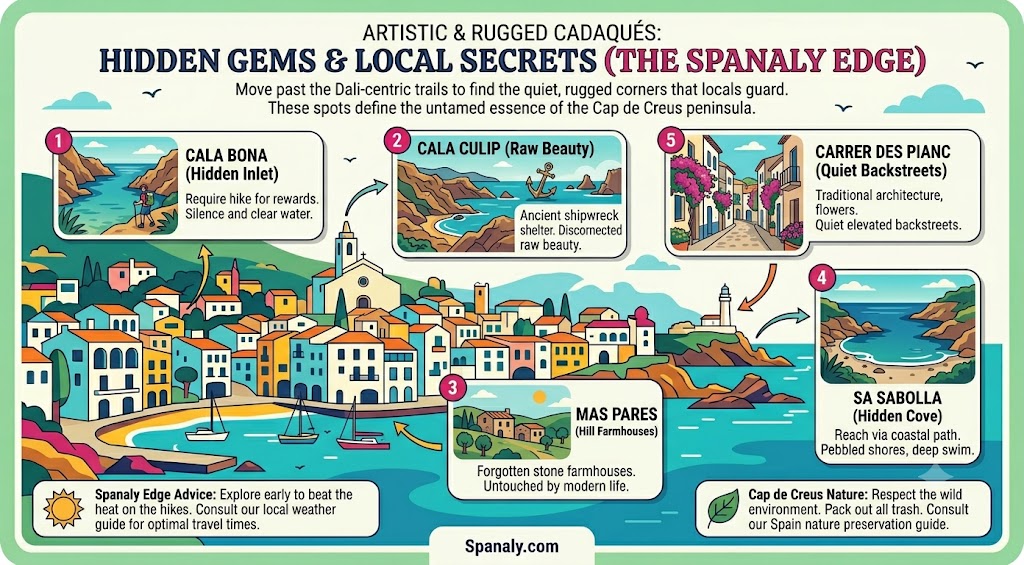
Move past the Dali-centric trails to find the quiet, rugged corners that locals guard. These spots define the untamed essence of the Cap de Creus peninsula.
Cala Bona: Skip the crowded beaches. This narrow, rocky inlet requires a hike, but rewards you with absolute silence and water so clear it looks liquid.
Cala Culip: Once a shelter for ancient shipwrecks, this secluded spot offers a raw, geological beauty that feels completely disconnected from the tourist map.
Mas Pares: Wander into the hills behind the town. You will find forgotten stone farmhouses and olive groves that have stood for centuries, untouched by modern development.
Sa Sabolla: Reach this hidden cove via the coastal path toward Roses. It is a favorite for those who prefer pebbled shores and deep, cool swimming zones.
The “Carrer des Pianc”: Most tourists stick to the central harbor. Venture into these quiet, elevated backstreets to find traditional architecture and blooming bougainvillea without the noise.
Spanaly Insight: If you trek to Cala Bona, bring sturdy water shoes. The entrance is rocky, but the secluded, marine-rich pools at the base are the best snorkeling spots in the entire region.
🏨 Where to Stay in Cadaqués
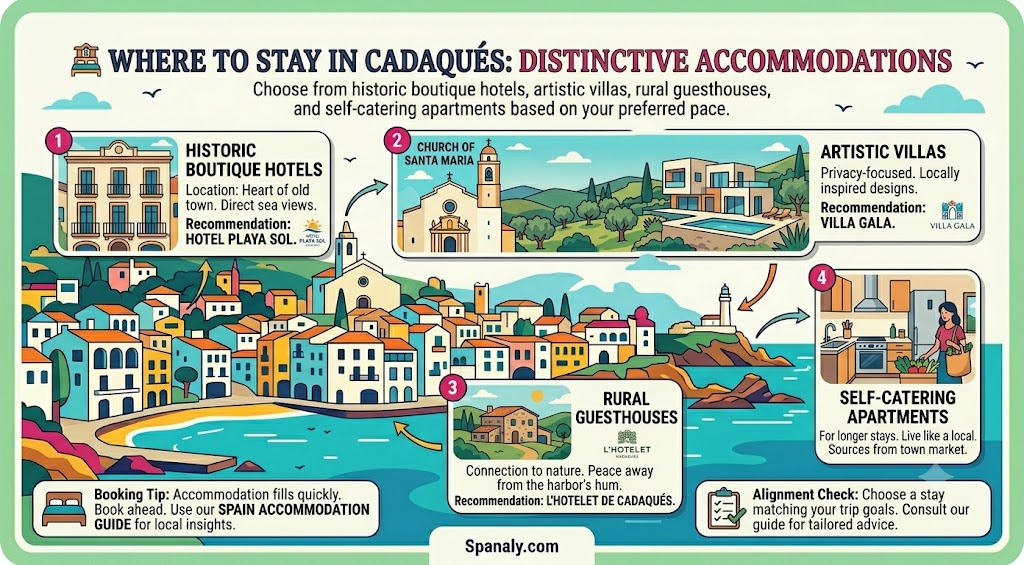
Cadaqués offers distinctive stays ranging from historic boutique hotels in the ancient town to secluded, cliffside retreats. Choose your base based on your preferred pace.
Historic Boutique Hotels: Located in the heart of the old town, these offer direct sea views and classic architectural charm.
Recommendation: Hotel Playa Sol features a blend of Mediterranean comfort and Catalan elegance, positioned perfectly along the waterfront.
Artistic Villas: Ideal for travelers prioritizing privacy. These properties often draw inspiration from local cubist and traditional designs.
Recommendation: Villa Gala provides a luxury escape in a tranquil setting, perfect for those seeking panoramic views and total serenity.
Rural Guesthouses: Situated in the surrounding hills, these properties offer a direct connection to the wild beauty of the Cap de Creus peninsula.
Recommendation: L’Hotelet de Cadaqués offers an intimate, home-like atmosphere, perfect for travelers preferring peace away from the harbor’s hum.
Self-Catering Apartments: The best choice for longer stays. These allow you to live like a local, sourcing fresh ingredients from the town market.
Before booking, ensure your location aligns with your activity goals. Our accommodation in Spain guide helps you select the stay matching your specific trip style.
Spanaly Insight: Always prioritize properties with a private terrace or shared rooftop. Because Cadaqués relies on low-rise architecture, an elevated vantage point offers a level of privacy that the busy, narrow streets below cannot provide.
🍽️ Gastronomy & Dining Guide
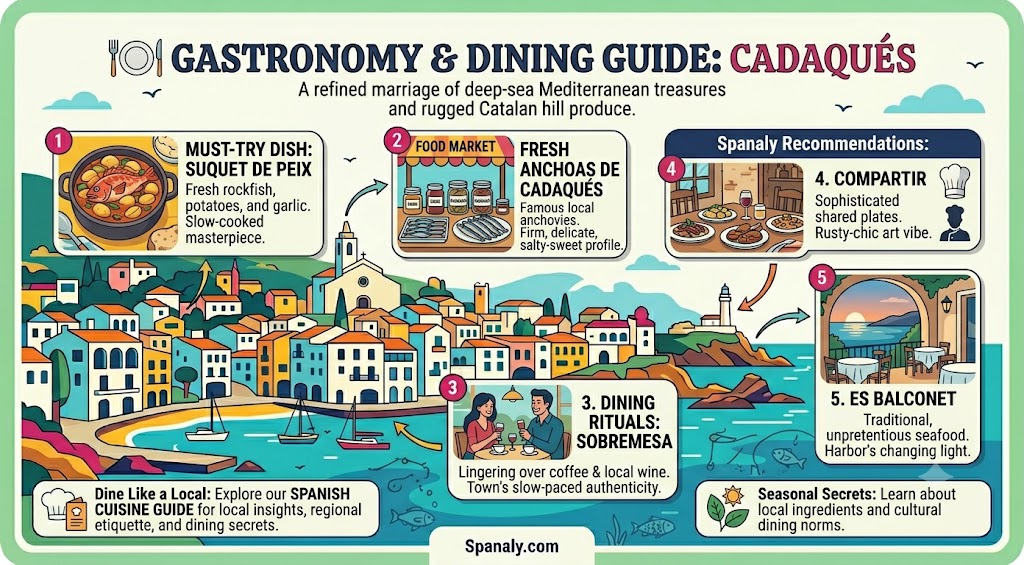
Cadaqués’ culinary identity is a refined marriage of deep-sea Mediterranean treasures and the rugged, aromatic produce of the Catalan hills.
Must-Try Dish (Suquet de Peix): A traditional fisherman’s stew. It is a slow-cooked masterpiece of fresh rockfish, potatoes, and a rich, garlicky picada sauce. It defines the local soul.
The Food Market: Visit the local market to source anchoas de Cadaqués (famous local anchovies). They are prized for their firm texture and delicate, salty-sweet profile.
Dining Rituals: Embrace the sobremesa—the post-meal tradition of lingering over coffee or local wine. It is here that the town’s slow-paced rhythm is most authentic.
Spanaly Recommendations:
Compartir: Born from the kitchen of former El Bulli chefs. It focuses on sophisticated, shared-plate dining in a rustic-chic setting that perfectly complements the town’s artistic vibe.
Es Balconet: A local staple for those seeking traditional, unpretentious seafood. Its terrace offers an intimate look at the harbor’s changing light.
To master the nuances of dining like a local, explore our Spanish cuisine guide. It covers regional etiquette, must-know seasonal ingredients, and cultural dining secrets.
Spanaly Insight: When choosing a seafood restaurant, look for places that feature “peix de llotja” (fish from the market) on their daily specials. This ensures your meal was caught in the nearby waters that very morning.
🧳 Essential Logistics for Your Visit
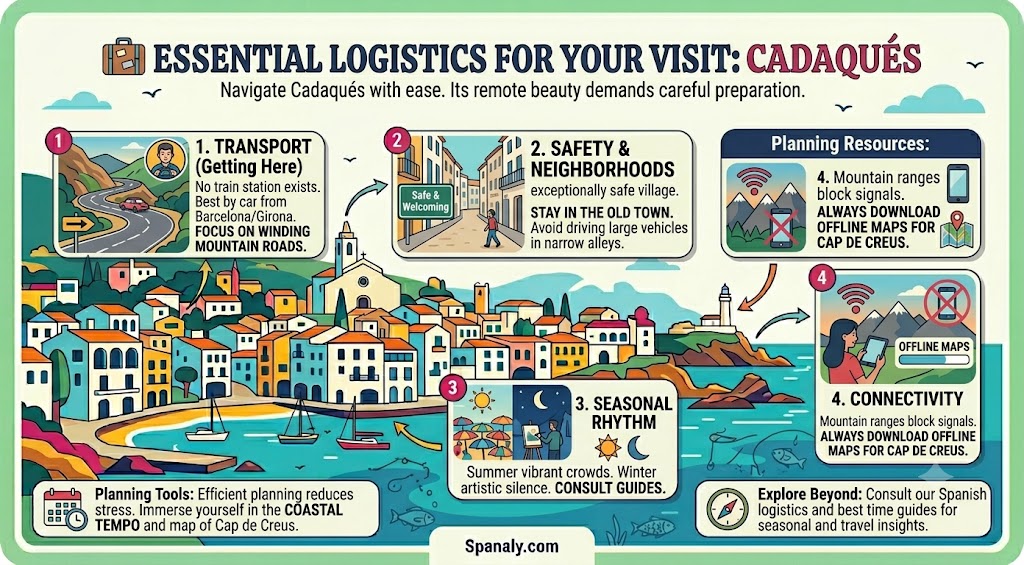
Navigating Cadaqués requires preparation. Its remote location creates a unique, secluded environment that demands careful planning.
Transport: No train station exists here. Driving from Barcelona or Girona is best. Expect winding, narrow mountain roads requiring focused attention.
Safety & Neighborhoods: The village is exceptionally safe for everyone. Stay in the old town. Avoid driving large vehicles into narrow, maze-like alleys.
Seasonal Rhythm: Summer brings vibrant crowds; winter offers deep, artistic silence. Consult our best time to visit Spain guide for seasonal insights.
Connectivity: Mountain ranges often block signals. Always download offline maps before venturing into the Cap de Creus nature reserve.
Efficient planning reduces stress. Immerse yourself in the coastal tempo and explore the rugged nature beyond the harbor.
Spanaly Insight: Park in designated lots at the village entrance. Driving into the historic center usually leads to dead ends and significant frustration.
📸 Best Photo Spots in Cadaqués
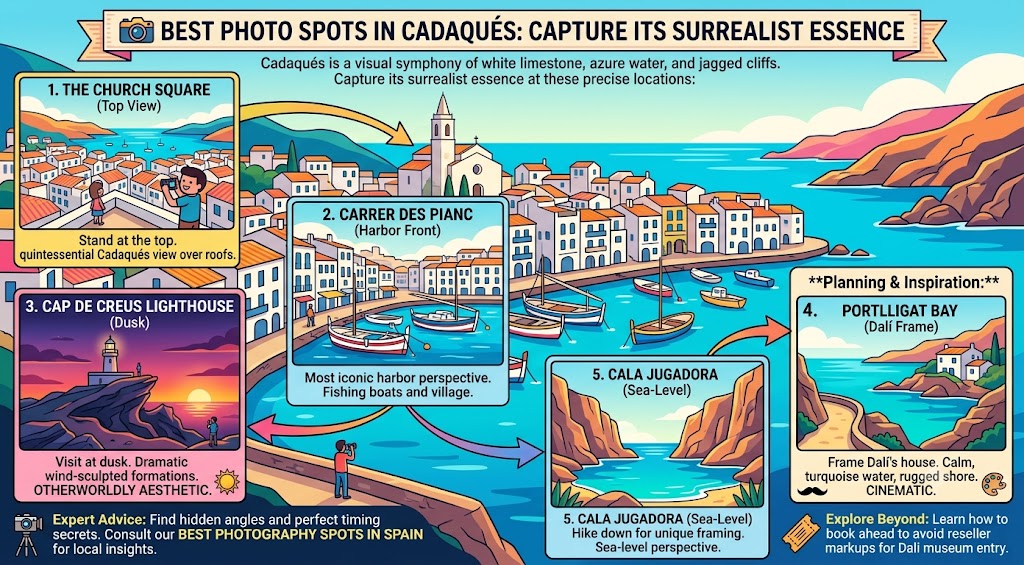
Cadaqués is a visual symphony of white limestone, azure water, and jagged cliffs. Capture its surrealist essence at these precise locations:
The Church Square: Stand at the top of the old town. The view over the white rooftops toward the bay is quintessential Cadaqués.
Carrer des Pianc: This waterfront street offers the most iconic perspective of the harbor, with fishing boats bobbing against the village backdrop.
Cap de Creus Lighthouse: Visit at dusk. The dramatic, wind-sculpted rock formations under the fading sky create a raw, otherworldly aesthetic.
Portlligat Bay: Frame Salvador Dalí’s house from the path above. The calm, turquoise water contrasted with the rugged shore is cinematic.
Cala Jugadora: Hike down to this cove for a sea-level perspective. The framing of the cliffs against the open Mediterranean is unmatched.
For more inspiration on capturing the nation’s beauty, consult our best photography spots in Spain guide. It helps you find hidden angles and timing secrets.
Spanaly Insight: Use a polarizing filter if you are shooting near the water. It removes the glare from the white buildings and makes the deep blue of the Mediterranean pop.
🚗 Best Day Trips from Cadaqués
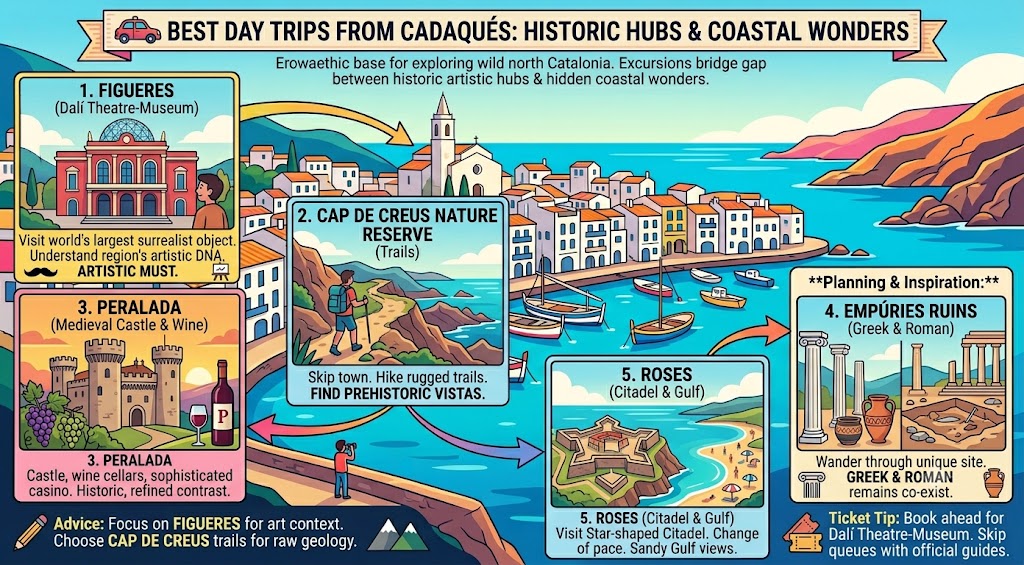
Cadaqués is a strategic base for exploring the wild north of Catalonia. These excursions bridge the gap between historic artistic hubs and hidden coastal wonders.
Figueres: Visit the Dalí Theatre-Museum. It is the world’s largest surrealist object and an absolute must for understanding the region’s artistic DNA.
Cap de Creus Nature Reserve: Skip the town and head deep into the park. Hike the rugged trails to find remote, wind-swept vistas that feel prehistoric.
Peralada: Explore this medieval gem famous for its castle, wine cellars, and casino. It offers a sophisticated, historic contrast to the coastal village vibe.
Empúries Ruins: Wander through the only archaeological site in the Iberian Peninsula where Greek and Roman city remains exist side-by-side.
Roses: For a change of pace, visit the Citadel of Roses. It features impressive star-shaped fortifications overlooking the vast, sandy gulf.
Focus on Figueres if you want deep artistic context. Choose the Cap de Creus trails if you prioritize raw, untouched Mediterranean geology.
Spanaly Insight: Renting a car is essential for these trips. Public bus schedules in this region are infrequent and will significantly limit your ability to explore multiple sites in one day.
🗺️ Cadaqués 24-Hour Itinerary
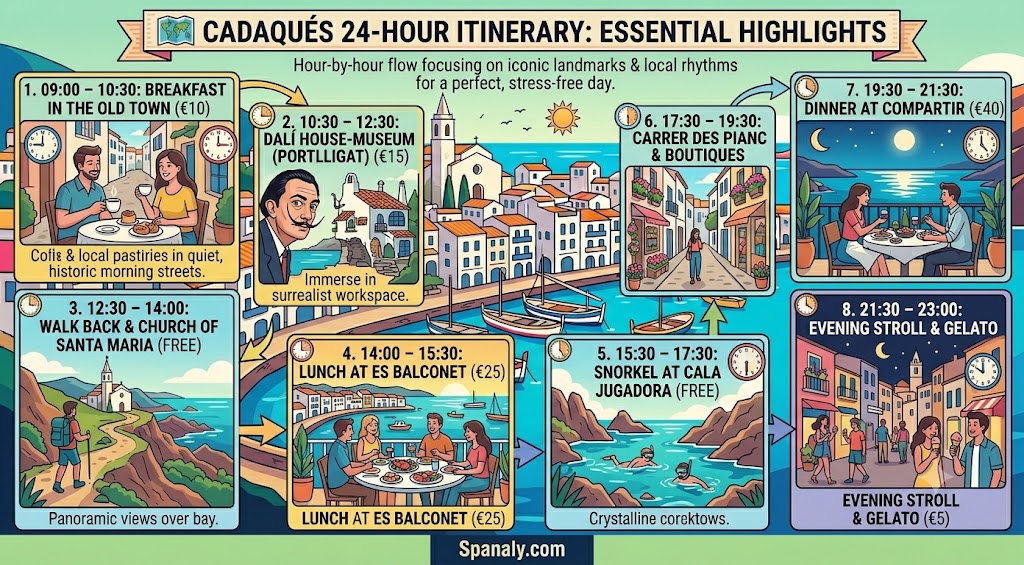
This route provides a seamless, hour-by-hour flow, focusing on the town’s iconic landmarks and local rhythms to ensure a productive, stress-free day.
09:00 – 10:30: Breakfast in the Old Town (€10). Sip coffee and eat local pastries in the quiet, historic morning streets.
10:30 – 12:30: Visit the Dalí House-Museum in Portlligat (€15). Immerse yourself in the surrealist workspace where Dalí created his masterpieces.
12:30 – 14:00: Walk back to the village and hike to the Church of Santa Maria (Free). Enjoy panoramic views of the entire bay.
14:00 – 15:30: Lunch at Es Balconet (€25). Taste traditional local seafood in a vibrant, waterfront setting overlooking the harbor.
15:30 – 17:30: Relax and snorkel at Cala Jugadora (Free). Swim in the crystalline waters nestled beneath the dramatic Cap de Creus rocks.
17:30 – 19:30: Wander Carrer des Pianc and browse artisan boutiques. These narrow, flower-lined streets offer the perfect local aesthetic.
19:30 – 21:30: Dinner at Compartir (€40). Enjoy sophisticated shared plates on a terrace overlooking the glowing Mediterranean sea.
21:30 – 23:00: Evening stroll and gelato in the town square (€5). Experience the vibrant, social pulse of the local night.
This itinerary ensures you experience the best of Cadaqués’ heritage without wasted transport time. For more regional layouts, explore our Spain travel itineraries plans.
Spanaly Insight: Do not squeeze in activities outside the town today. Focusing on the historic core and the nearby coast guarantees a stress-free experience.
🚫 Common Mistakes to Avoid in Cadaqués
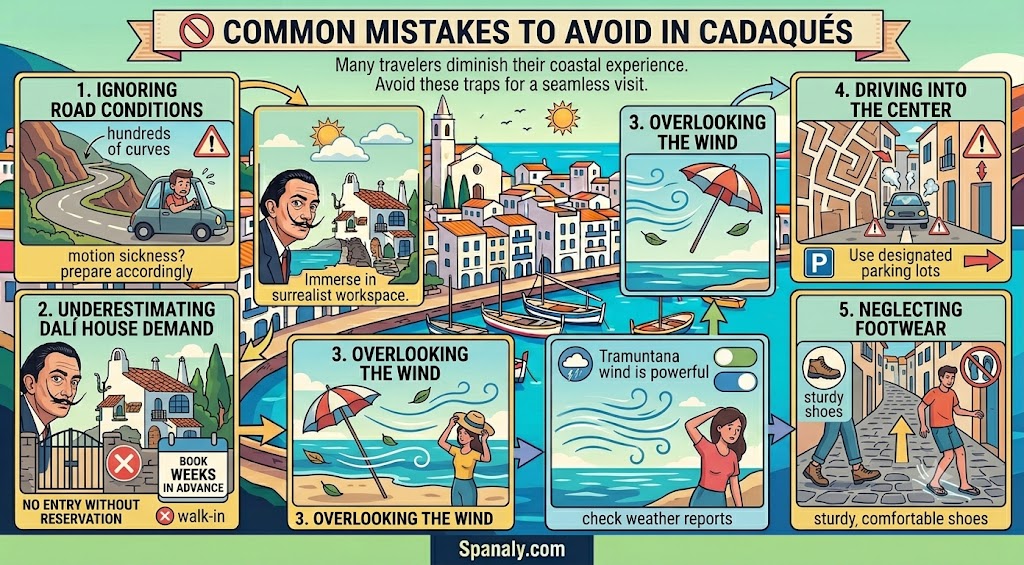
Many travelers diminish their coastal experience by ignoring local geography or miscalculating logistics. Avoid these traps to ensure a seamless visit.
Ignoring Road Conditions: The road to Cadaqués is famous for its hundreds of curves. If you suffer from motion sickness, prepare accordingly before driving.
Underestimating Dali House Demand: Many arrive expecting walk-in entry. The Dalí House-Museum requires booking weeks in advance. You cannot enter without a reservation.
Overlooking the Wind: The Tramuntana wind is powerful. Do not assume beach days are always calm; check weather reports before heading to remote coves.
Driving into the Center: The historic core features extremely narrow, labyrinthine streets. Driving here usually leads to dead ends and significant stress. Use designated parking lots.
Neglecting Footwear: This is not a flat resort town. Steep, cobblestone streets demand sturdy, comfortable walking shoes. Do not attempt these slopes in flip-flops.
Spanaly Insight: Always keep a light windbreaker in your bag. Even on warm summer afternoons, the mountain breeze can turn surprisingly cold as the sun sets.
🛡️ Visitor FAQs – Cadaqués Guide
🚗 Is it difficult to drive to Cadaqués?
The road into Cadaqués is famous for its hundreds of curves. While it offers stunning mountain vistas, it can be challenging for those prone to motion sickness. Take your time, drive slowly, and remember that the journey is a part of the unique experience of reaching this secluded village.
🎫 Do I really need to book the Dalí House in advance?
Yes, absolutely. The Casa-Museu Salvador Dalí in Portlligat is small and strictly regulated to preserve its intimacy. Tickets frequently sell out weeks in advance during the peak season. Walk-in entries are not possible, so please secure your reservation online before traveling.
🏊 Are the beaches in Cadaqués suitable for families?
Most beaches in and around Cadaqués are rocky coves rather than wide sandy expanses. They are beautiful and perfect for snorkeling, but they may be challenging for small children. We recommend bringing water shoes and choosing beaches closer to the village center for easier access.
💨 What is the "Tramuntana" wind?
The Tramuntana is a strong, cold wind that sweeps down from the Pyrenees. It is a local weather phenomenon that can change the atmosphere of the village instantly. Always check the local forecast before heading out on a boat or planning a beach day, as it can make the sea quite rough.
👟 Is Cadaqués accessible for visitors with limited mobility?
The historic center of Cadaqués is characterized by steep, cobblestone streets and narrow stairways, which can be difficult to navigate. While the harbor area is flat and pleasant for walking, exploring the upper village requires good mobility. Please plan accordingly if you are traveling with someone who has limited mobility.
Cadaqués Guide by Spanaly.com
Cadaqués is not just a coastal village; it is an enduring muse. It captures the raw tension between the rugged Pyrenees and the infinite, shimmering Mediterranean.
Embrace the Silence: Beyond the art and the architecture, find the town’s true rhythm in the quiet, stone-paved alleys that lead to the sea.
Respect the Landscape: The wind-sculpted cliffs of Cap de Creus are a reminder of nature’s power. Tread lightly and witness the surreal beauty firsthand.
Beyond the North: If you seek another coastal sanctuary that perfectly balances geological drama with local charm, explore our Nerja Travel Guide for a southern Mediterranean experience of equal intensity.
Cadaqués rewards those who linger and observe. Stand by the harbor as evening falls, breathe in the salt and pine, and appreciate why this place remains an eternal source of inspiration. Pack your bags, keep your plans flexible, and let the Catalan horizon guide your next great discovery.
Spanaly Insight: Travel changes your perspective by pushing you toward the edges of the map. Cadaqués does this effortlessly by blending the intensity of surrealist history with the serene, timeless beauty of the open sea.