🛡️ Spain’s Living History
As the summer sun sinks over the Mediterranean, Alicante comes alive with the thunder of drums and the shimmer of ancient armor. The Moros y Cristianos of Alicante is not merely a parade; it is a living chronicle where faith, legend, and artistry collide.
Initially, the city transforms into a grand open-air theatre, echoing battles that once shaped Spain’s destiny. Indeed, beneath the clash of swords lies a deeper celebration of coexistence and civic pride. Each step tells a story written over seven centuries, making it a cornerstone of our Ultimate Guide to Spain’s Festivals, where history is reborn every summer.
🏺 Ancient Roots and Symbolic Meaning
The festival traces its origins to the Reconquista, when Christian kingdoms reclaimed territories from Muslim rule. In fact, in Alicante, the commemoration evolved into a ritual of remembrance and reconciliation.
Dual Soul: Each side—Moorish and Christian—represents Spain’s complex heritage.
Cultural Fusion: While Islamic civilization brought science and art, Christian kingdoms shaped modern governance.
Shared Identity: Therefore, historians view the festival as a living dialogue. Similarly to the cultural preservation we explore in our Ultimate Seville Travel Guide, this event celebrates the fusion of two civilizations that built the Spain we know today.
🥁 The Rhythm of the Festival: Key Events
The main celebrations occur in late July, spanning several days of vibrant performances. Consequently, visitors should prepare for a sensory explosion:
El Desembarco (The Landing): A dramatic night performance on Postiguet Beach, depicting the Moors’ arrival by sea with fireworks and drums.
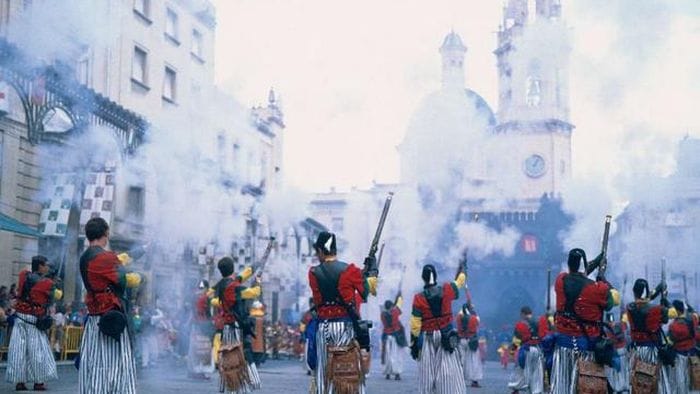
Entrada de Cristianos y Moros: The Grand Parade where thousands wear historical costumes of velvet, silk, and intricate metal.
Las Embajadas: Theatrical battles featuring dialogues in ancient Castilian and Arabic-inspired tones.
The Battle and Reconquest: Musket fire and choreographed “war dances” fill the old town streets.
Furthermore, witnessing these grand parades is as captivating as walking through the historic avenues mentioned in our Ultimate Madrid Travel Guide.
🎭 The Power of the Comparsas and Artistry
The heart of the festival lies in the comparsas, brotherhoods representing either side. Undoubtedly, the dedication of these groups is what keeps the tradition alive.
Family Legacy: Roles are often inherited, with families preparing year-round for their appearance.
Hidden Craftsmanship: In quiet workshops, seamstresses work on velvet and silk, stitching golden threads with meticulous care.
Gastronomic Tradition: Between parades, members gather for communal meals. In fact, tasting the local flavors during these celebrations is as essential as the dishes we highlight in our Spanish Cuisine Guide.
🕯️ Artistry and Hidden Traditions
Beyond the parade’s dazzling spectacle, the festival thrives on quiet craftsmanship. In hidden workshops, seamstresses work by candlelight on velvet and silk, stitching golden threads with meticulous care. Each costume takes months, drawing patterns from chronicles and oral legends.
Musical guilds rehearse intricate marches blending Andalusian motifs with Christian hymns, creating an unmistakable Mediterranean soundscape. Blacksmiths forge swords, shields, and ornaments inspired by museum relics but imbued with modern flair.
Secret rituals continue behind closed doors: captains are anointed with olive oil, oaths are sworn by torchlight, and ancient blessings are whispered. These private acts form the festival’s true heartbeat — history reborn in the hands of Alicante’s people
🏛️ Cultural Legacy and UNESCO Recognition
Scholars and cultural institutions strongly advocate for the festival to be recognized as Intangible Cultural Heritage by UNESCO. Indeed, it fosters local pride and intercultural understanding by transforming memories of old conflicts into a symbol of modern unity.
Education: Schools in Alicante use the festival to teach history and tolerance.
Preservation: Furthermore, the meticulous care in preserving ancient music and costumes makes this event a masterpiece of human creativity.
The Soul of the City: Similarly to the artistic brilliance we explore in our Ultimate Barcelona Travel Guide, the Moros y Cristianos of Alicante proves that Spain’s true identity lies in its ability to celebrate its complex history through art.
🛡️ Visitor Tips and Local Secrets
To experience the festival like a local and avoid the stress of crowds, preparation is essential. Consequently, keep these insider tips in mind:
Postiguet Beach: Make sure to arrive early for El Desembarco; it is the most theatrical part of the festival.
Comparsa Headquarters: Many brotherhoods open their doors to visitors. In fact, these venues often house small exhibits about their centuries-old history.
Comfort and Heat: July in Alicante is intense. Therefore, stay hydrated and wear light clothing, but always keep a camera ready for the magic of the parades.
Navigation: Avoid driving at all costs as most central streets are closed. Instead, use the tram or walk to soak in the festive atmosphere.
🏰 Beyond the Festival: What to Explore
After the final drumbeat fades, Alicante’s charm endures. Explore the city like a living museum:
Castle of Santa Bárbara: Perched above the city, with panoramic views and a breeze scented by salt and pine.
Explanada de España: Marble tiles ripple like waves beneath your feet. Locals stroll, ice cream in hand, while musicians echo the festival’s fading marches.
Alicante Museum of Contemporary Art (MACA): Picasso, Miró, and Chillida works showcase a contrast of modernity and tradition.
El Barrio (Old Town): Whitewashed houses, flowered balconies, and tapas bars preserve festival costumes on display.
Postiguet Beach: Relax as locals do, reflecting on a festival where history remains a living pulse
⚔️ Visitor FAQs – Moros y Cristianos Festival
📅 When does the festival take place in Alicante?
The festival is usually celebrated in late July. It lasts several days and features grand parades and theatrical reenactments under the Mediterranean sun. Check local calendars annually as exact dates may shift slightly.
🏺 What is the historical meaning of the festival?
It commemorates the medieval battles between Moors and Christians during the Reconquista. In Alicante, it has evolved into a celebration of cultural fusion and coexistence, reflecting the civilizational roots of modern Spain.
⚔️ What can visitors expect to see during the event?
Expect grand parades with thousands in silk and velvet costumes, gunpowder displays, and the famous Desembarco (landing) on the beach. The event concludes with spectacular fireworks lighting up the night sky.
📍 What are the best places to watch the parades?
The best spots are along Rambla Méndez Núñez and Plaza del Ayuntamiento. For the landing ceremony, head to Postiguet Beach. Arriving early is essential to secure a good view among the large crowds.
🛡️ Is the festival suitable for international tourists?
Absolutely. It is a welcoming, intercultural experience that provides a living history lesson. Its festive environment and visual splendor make it an unmissable event for anyone wanting to see Spanish history come to life.
Created by Spanaly.com
🏁 A Living Pulse of History
In summary, the Moros y Cristianos of Alicante is more than just a festival; it is the city’s heartbeat. Whether you are captivated by the shimmer of the armor or the rhythm of the brass bands, the spirit of unity is undeniable.
Ultimately, history walks the streets here, reminding the world that from centuries of struggle emerged a shared identity. Indeed, to experience these parades is to see past and present dance hand in hand—a living history celebrated with open hearts and Mediterranean joy.