🫑 Galicia’s Green Treasures
Imagine walking through the sun-drenched streets of Galicia. Specifically, the aroma of sizzling olive oil fills the air. Notably, tiny green peppers dance and blister on a hot skillet. These are Pimientos de Padrón, the playful gems of the northwest.
In fact, they are more than just a simple appetizer. Moreover, they represent a deep-rooted social ritual. This tradition is a cornerstone of authentic Spanish Cuisine. Consequently, sharing a plate is an essential experience for every foodie.
✨ Why You Will Love Them:
🎡 The Game: Most are mild, but one is fiery! Indeed, it is a fun culinary roulette.
🌿 Freshness: They embody the raw, Atlantic spirit of Spain.
🥗 Healthy: A delicious part of the balanced Mediterranean diet.
📜 Origins & History: From Mexico to Herbón
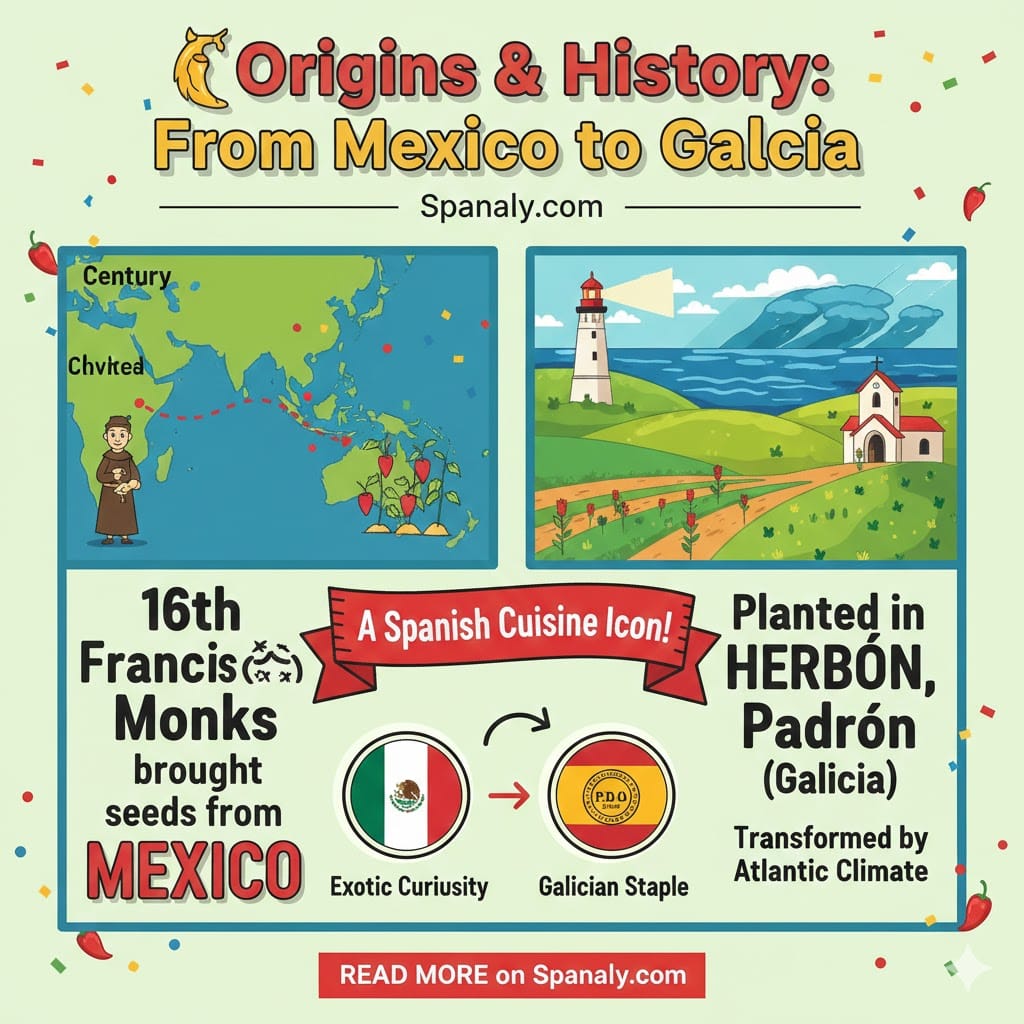
The journey of these peppers started in the 16th century. Specifically, Franciscan monks brought the seeds from Mexico. Notably, they planted them in the small village of Herbón, Padrón. This event significantly enriched the heritage of Spanish Cuisine.
Initially, the peppers were an exotic rarity. Moreover, the Galician climate slowly transformed their DNA. Consequently, they became a local symbol of identity. Today, they are a highlight of any Traditional Spanish Food Guide.
⛪ Historical Highlights:
⛪ Monastic Roots: The seeds grew first in monastery gardens.
🌊 Atlantic Touch: The cool Galician air shaped their mild taste.
🏅 Local Pride: They evolved from an import to a national treasure.
💡 Spanaly Pro Tip: Look for the name “Herbón” on the package. Specifically, this ensures you are tasting the original seeds planted by the monks!
🏅 The P.D.O. Label: What Makes It Authentic?
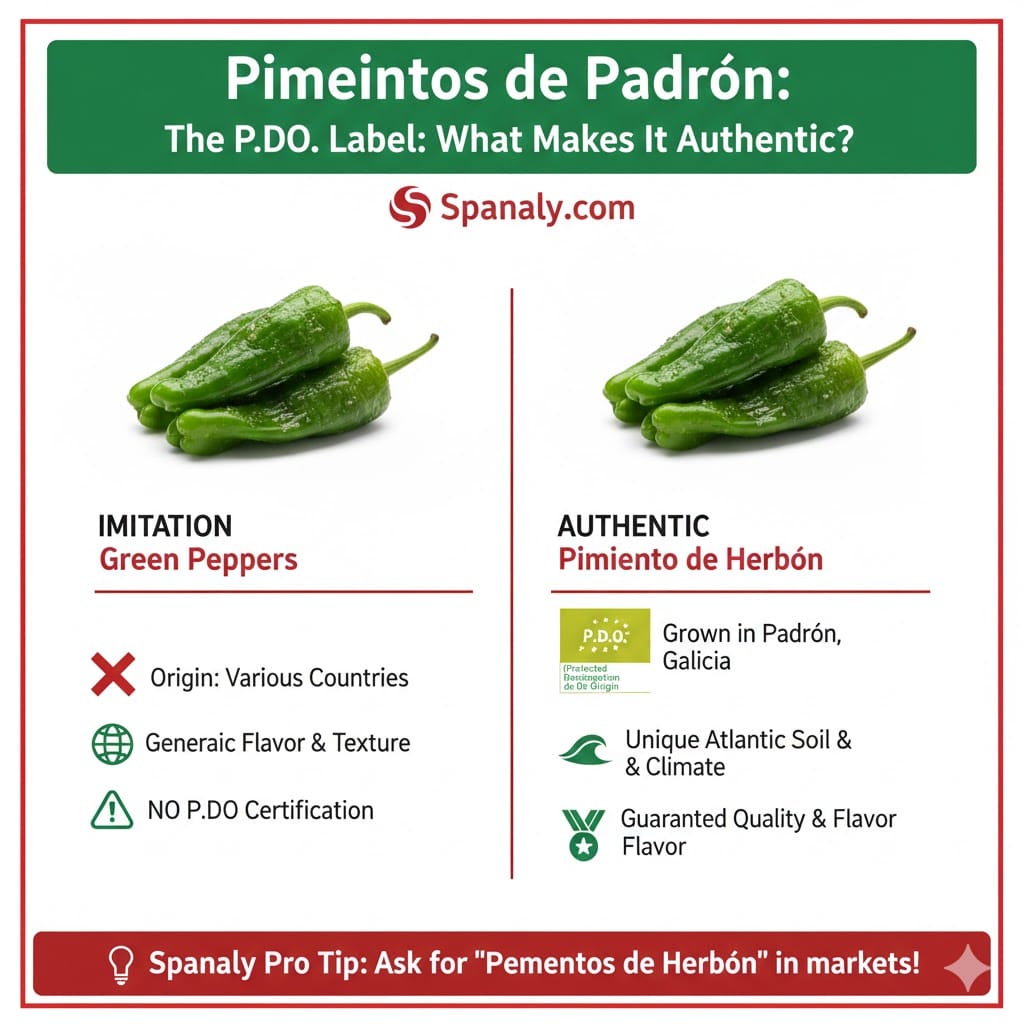
Not every small green pepper is a true Padrón. Specifically, the European Union protects the “Pemento de Herbón” with a P.D.O. (Protected Designation of Origin). Notably, this certification ensures the peppers grow in traditional Atlantic soil. This focus on regional quality is a key reason Why Visit Spain for food lovers.
In fact, many imitators exist in global markets. Moreover, the true flavor profile only comes from the specific micro-climate of Galicia. Consequently, checking for the official seal is as important as following an Essential Spain Travel Tips guide. Ultimately, the P.D.O. status preserves a legacy that has lasted for centuries.
✅ How to Identify the Real Deal:
🏷️ The Logo: Look for the yellow and red “Denominación de Origen” seal.
📍 The Region: Ensure the label mentions “Herbón” specifically.
🌿 The Texture: Authentic peppers have a thinner skin and intense aroma. Indeed, you will taste the difference!
💡 Spanaly Pro Tip: When buying in a Spanish market, ask for “Pementos de Herbón.” Specifically, this local name guarantees you are getting the PDO-protected harvest!
🔥 The Culinary Roulette: The Science of Spiciness
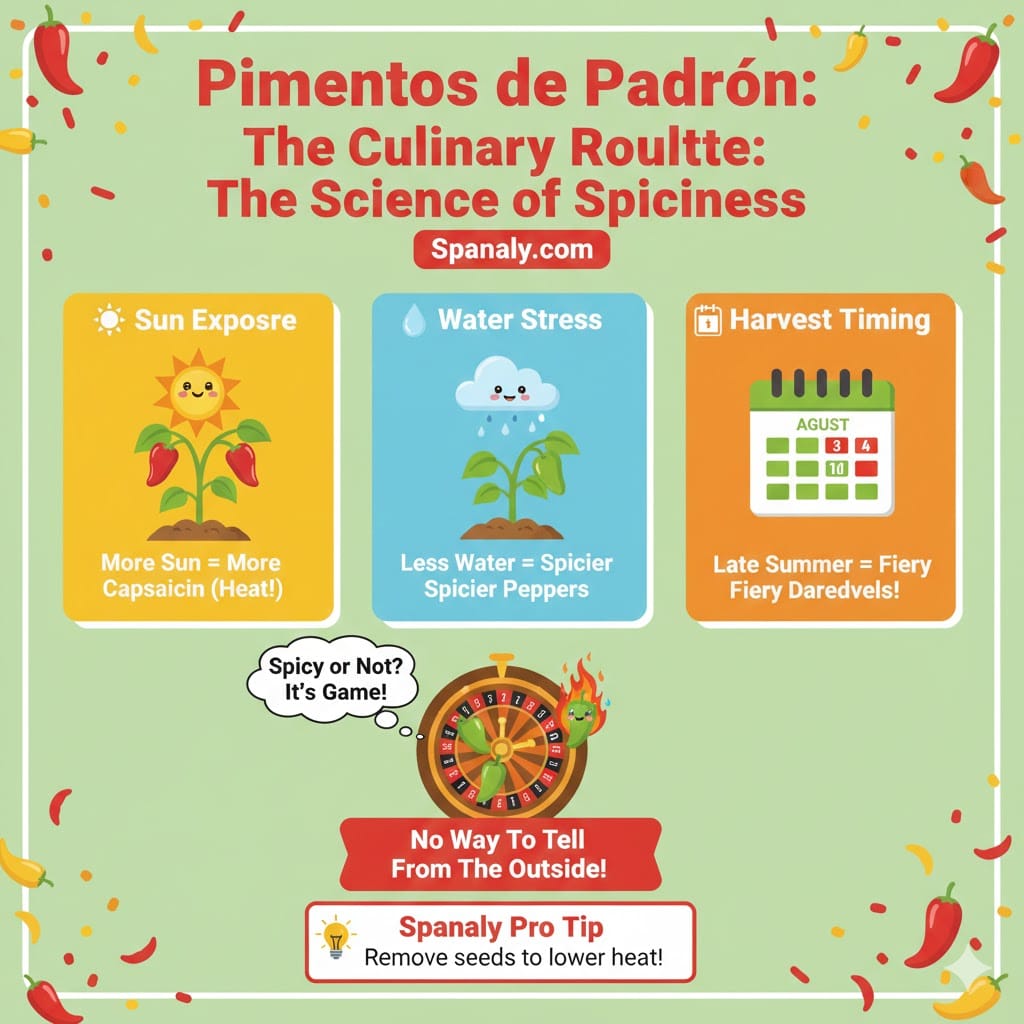
The famous Galician saying goes: “Pementos de Padrón, uns pican e outros non” (Some are spicy, others are not). Specifically, this unpredictability is what makes them a legend in Spanish Festivals. Notably, there is no way to tell which pepper is hot just by looking at it.
In fact, the heat comes from a compound called Capsaicin. Moreover, the level of spiciness depends on the amount of sunlight and water the plant receives. Consequently, peppers harvested later in the summer tend to be fierier. This unique trait makes them a highlight of Spanish Attractions in the culinary world.
🧬 Why the “Heat” Happens:
☀️ Sun Exposure: More sunlight usually leads to more capsaicin production.
💧 Water Stress: If the plant gets less water, the peppers often become spicier. Indeed, it is nature’s way of protecting the seeds.
📅 Harvest Timing: Late-season peppers (August-September) are the true “daredevils” of the bunch.
💡 Spanaly Pro Tip: To lower the risk of a “burn,” remove the seeds before eating. Specifically, most of the heat is concentrated in the internal white ribs and seeds!
🍳 Traditional Preparation: The Secret of the Perfect Blister
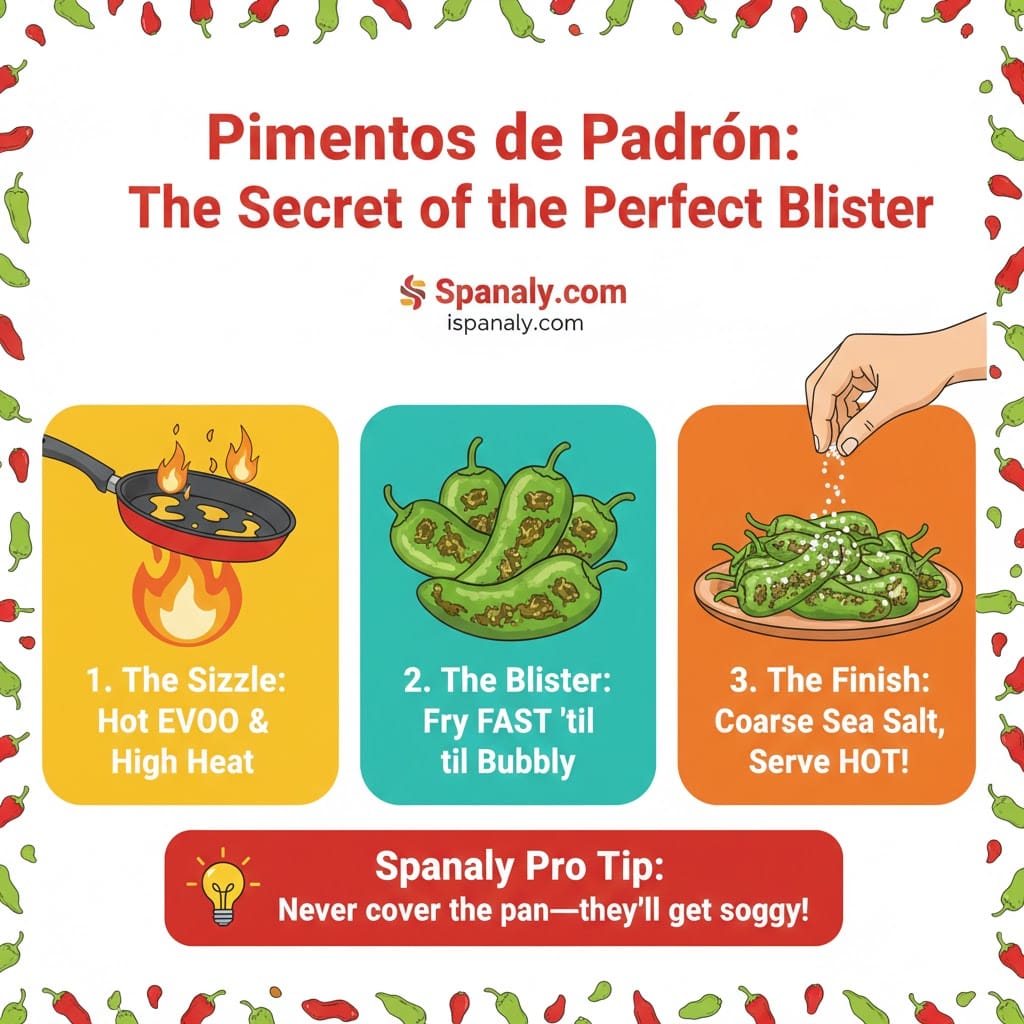
You don’t need a long list of ingredients for this masterpiece. Specifically, the magic lies in the technique rather than the complexity. Notably, mastering the “blister” is the first step toward enjoying Traditional Spanish Food.
In fact, you only need three things: fresh peppers, high-quality olive oil, and coarse sea salt. Moreover, the process takes less than ten minutes. Consequently, it is the perfect quick snack for anyone following Essential Spain Travel Tips. Ultimately, the goal is a smoky aroma and a tender bite.
🔥 The 3-Step Galician Method:
🛢️ The Sizzle: Heat plenty of Extra Virgin Olive Oil in a wide skillet until very hot.
🌪️ The Blister: Toss the dry peppers in. Indeed, they must fry quickly until the skins turn white and bubbly.
🧂 The Finish: Remove them and sprinkle generously with “Sal de Maldon” or coarse sea salt while hot.
💡 Spanaly Pro Tip: Never cover the pan while frying. Specifically, steam will make the peppers soggy, and you will lose that iconic, slightly charred crunch!
🍷 The Perfect Pairings: Albariño & Pulpo a la Gallega
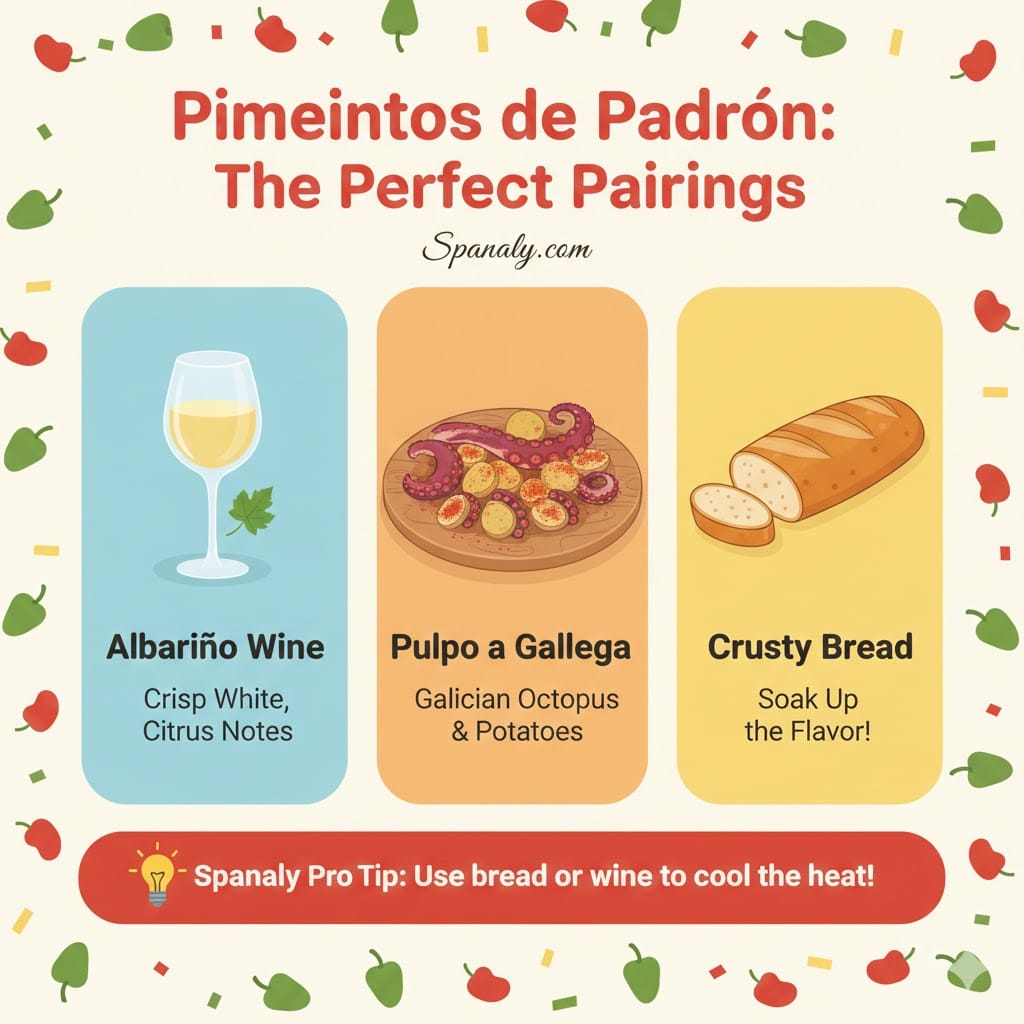
Eating Padrón peppers is a social ritual. Specifically, they are rarely eaten alone. Notably, pairing them with the right flavors elevates the experience to a new level. This culinary harmony is a central pillar of Spanish Culture.
In fact, the best companion is a cold glass of Albariño wine. Moreover, its crisp acidity balances the peppers’ salty and occasionally spicy bite. Consequently, adding a plate of Spanish Tapas like Pulpo a la Gallega (Galician Octopus) completes the authentic feast. Indeed, this combination is the soul of Northern Spain.
🍽️ What to Serve Them With:
🍷 Albariño Wine: The white wine of Galicia. Specifically, its citrus notes cut through the olive oil perfectly.
🐙 Pulpo a la Gallega: Sliced octopus with paprika and potatoes. The textures complement each other beautifully.
🥖 Crusty Bread: Essential for soaking up the remaining salted olive oil. Ultimately, no drop should go to waste!
💡 Spanaly Pro Tip: If you hit a very spicy pepper, don’t reach for water. Specifically, a piece of bread or a sip of wine is much more effective at cooling the heat!
📅 The Best Time to Visit: Seasonal Harvest Guide
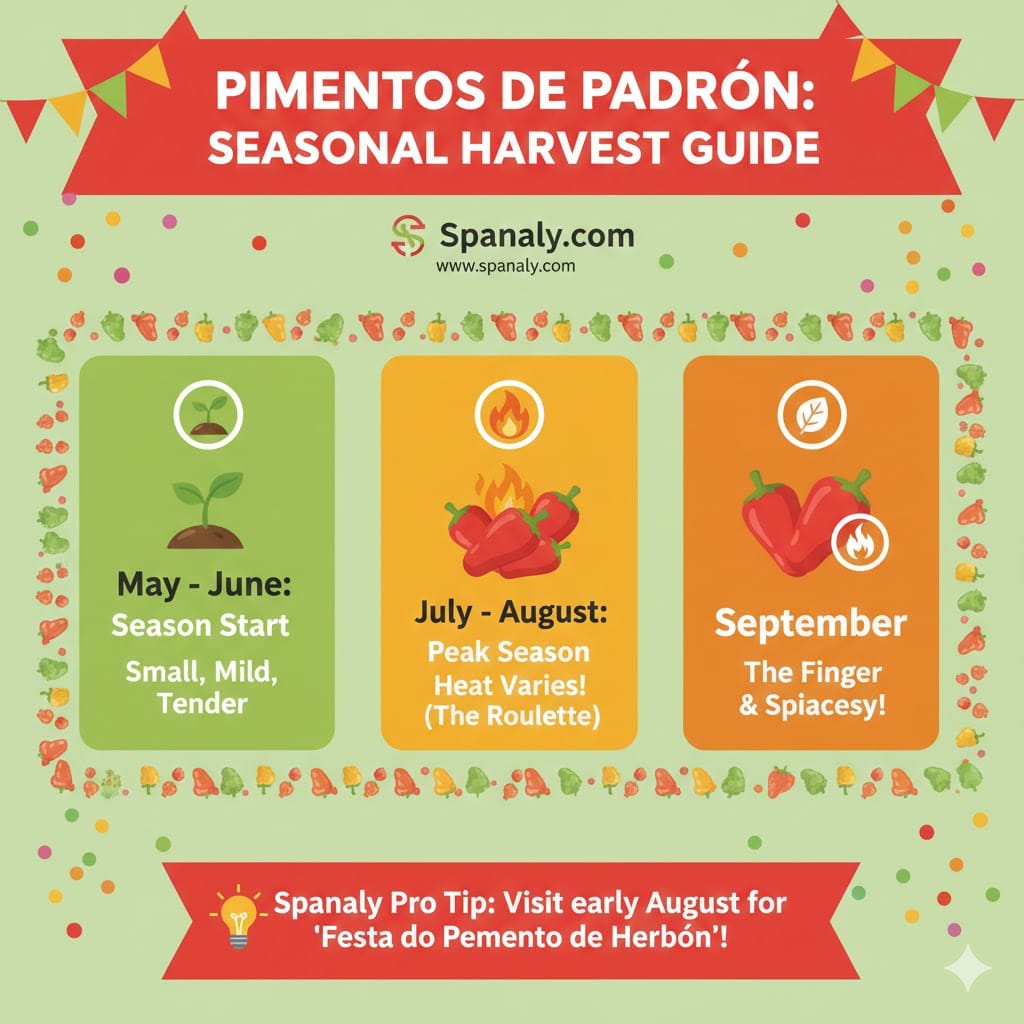
Timing is essential for experiencing culinary authenticity. Specifically, the true Padrón pepper season is not year-round. Notably, you should plan your trip between May and October to see the harvest at its peak. Understanding these regional cycles is as important as checking the Best Time to Visit Spain.
In fact, peppers grown outside this window often lack the iconic thin skin. Moreover, greenhouse versions found in winter don’t carry the same “Culinary Roulette” thrill. Consequently, visiting a local Galician market in summer is a top recommendation for any Spain Travel Guide. Ultimately, late summer is when the flavors reach their absolute peak.
🗓️ The Padrón Calendar:
🌱 May – June: The season begins. Specifically, the peppers are small, mild, and very tender.
🔥 July – August: Peak season. This is when the heat starts to vary. Indeed, it is a highlight for anyone following a 3 Days in Seville or any northern itinerary.
🍂 September – October: The finale. The peppers are larger and the chance of finding a spicy one is at its highest. This excitement is a key part of Spanish Festivals.
💡 Spanaly Pro Tip: If you visit in early August, don’t miss the “Festa do Pemento de Herbón.” Specifically, it is a must-see event, much like the famous La Tomatina!
⚖️ Padrón vs. Shishito: The Global Comparison
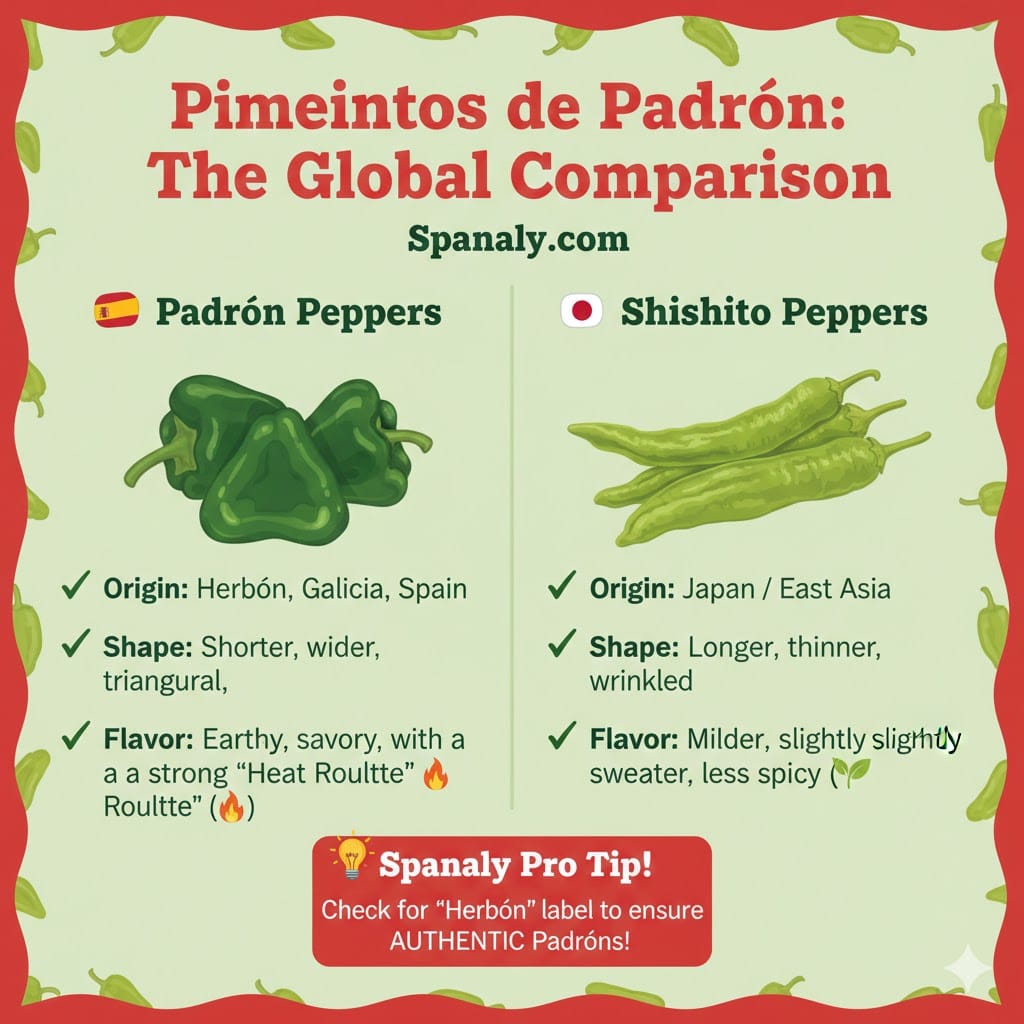
Many food lovers often confuse Padrón peppers with the Japanese Shishito. Specifically, while they look similar, their personalities are quite different. Notably, understanding these nuances is as essential as knowing the Cultural Etiquette in Spain.
In fact, Padrón peppers have a more intense, earthy flavor. Moreover, the “Roulette” effect is much stronger in the Spanish variety. Consequently, if you are used to the milder Shishito, the Galician harvest might surprise you. This comparison is a great topic for foodies exploring Spanish Cuisine. Ultimately, both are delicious, but only one is a true Galician icon.
🔍 Key Differences at a Glance:
🇪🇸 Padrón: Thicker walls, more triangular shape, and a higher chance of a “spicy surprise.” Indeed, it is the king of Galician tapas.
🇯🇵 Shishito: Thinner, longer, and more wrinkled. Specifically, it is generally much milder with a sweeter finish.
🧂 Preparation: Padrón is traditionally fried in olive oil, while Shishito is often charred or grilled.
💡 Spanaly Pro Tip: If you are in the US, you might find Shishito more easily. Specifically, always check the label for “Herbón” to ensure you are buying the authentic Spanish Padrón!
🥦 Health Benefits: A Mediterranean Powerhouse
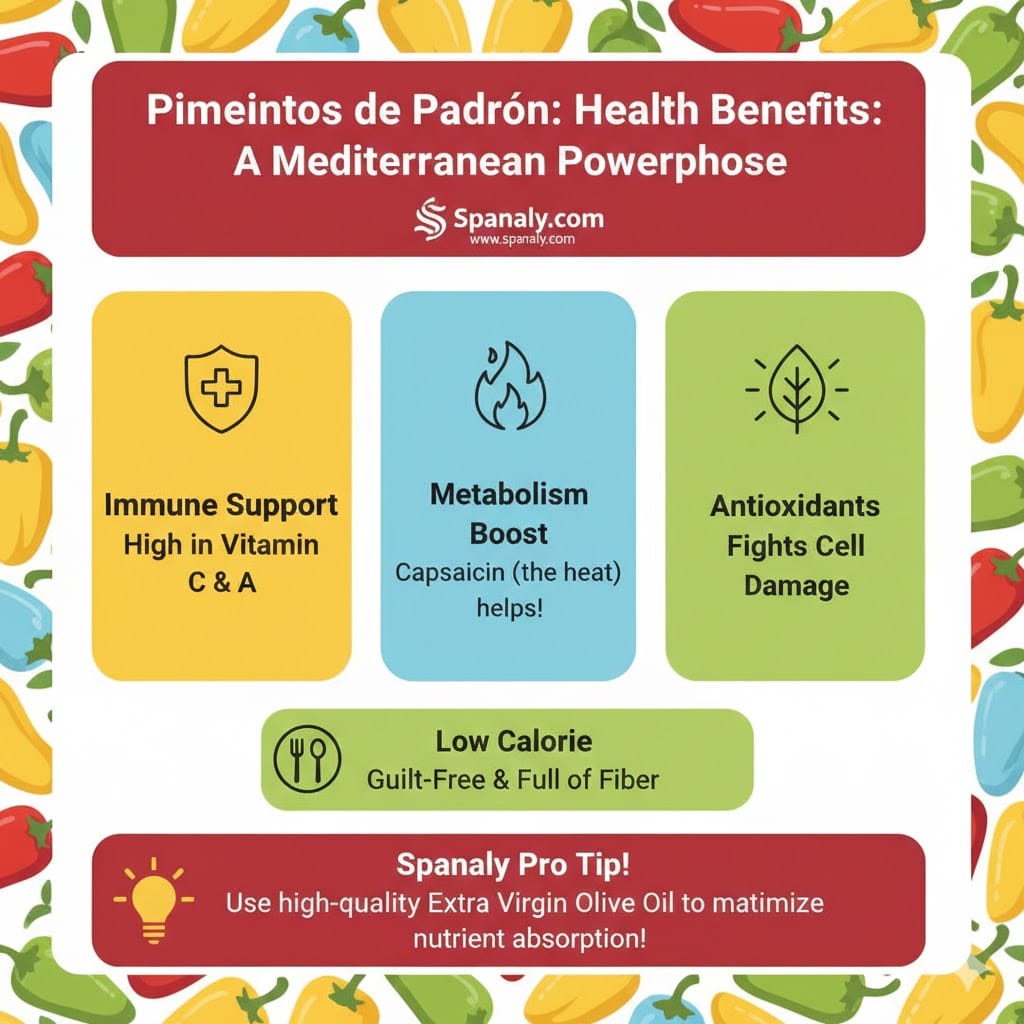
Pimientos de Padrón are not just delicious; they are incredibly healthy. Specifically, they are a low-calorie snack packed with essential nutrients. Notably, incorporating them into your diet is a delicious way to follow the Traditional Spanish Food philosophy.
In fact, these peppers are rich in vitamins C and A, which boost the immune system. Moreover, they contain significant amounts of dietary fiber. Consequently, they aid digestion and support heart health. This makes them a perfect choice for health-conscious travelers exploring Spanish Cuisine. Ultimately, you can enjoy them guilt-free as part of a balanced lifestyle.
🌟 Why They Are Good For You:
🛡️ Immune Support: High Vitamin C content helps protect your body. Indeed, it is nature’s own defense mechanism.
🔥 Metabolism Boost: The capsaicin (which provides the heat) can help speed up metabolism.
✨ Antioxidants: They are loaded with compounds that fight cell damage. Specifically, the fresher the pepper, the better the benefits.
🥗 Low Calorie: A whole plate of blistered peppers is surprisingly light. Ultimately, it is the perfect alternative to heavier tapas.
💡 Spanaly Pro Tip: To keep it healthy, use high-quality Extra Virgin Olive Oil. Specifically, it adds healthy fats that help your body absorb the pepper’s vitamins more effectively!
🗺️ Where to Experience Authentic Padrón Peppers
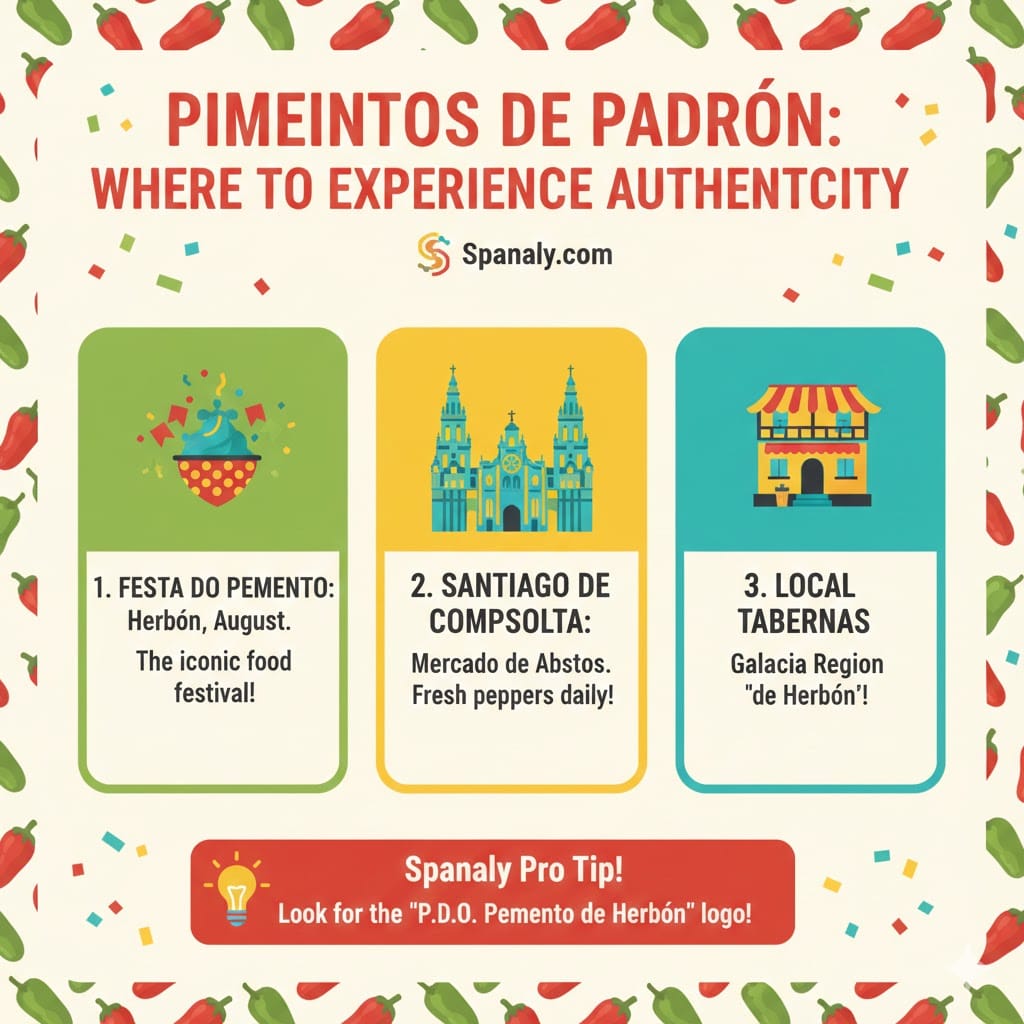
To taste the real deal, you must head to the heart of Galicia. Specifically, the village of Herbón is the undisputed capital of this green gold. Notably, visiting this region is a highlight for anyone following a Spain Travel Guide.
In fact, the best way to enjoy them is at a local “Pulpería” or during a traditional fiesta. Moreover, the atmosphere of a Galician market is unlike anything you will find in larger cities. Consequently, if you are planning a trip, checking the Best Time to Visit Spain is crucial to catch the harvest festivals. Ultimately, the authentic flavor is found where the Atlantic breeze meets the fertile soil.
📍 Top Spots & Festivals:
🎊 Festa do Pemento de Herbón: Held every August. Indeed, it is one of the most vibrant Spanish Festivals dedicated to food.
⛪ Santiago de Compostela: Just a short drive from Padrón. Specifically, the Mercado de Abastos here serves them fresh daily.
🍴 Local Tabernas: Look for places where locals gather. Ultimately, this is the best way to practice your Basic Spanish Language Tips while ordering.
💡 Spanaly Pro Tip: Always look for the “P.D.O. Pemento de Herbón” logo on the menu. Specifically, this ensures you are supporting local farmers and eating the authentic variety!
🌱 Seed & Souvenir Guide: Taking Galicia Home
Many travelers fall in love with these peppers and want to take a piece of Galicia back with them. Specifically, while you cannot always transport fresh produce across borders, there are ways to enjoy them at home. Notably, understanding these rules is a key part of Essential Spain Travel Tips.
In fact, buying authentic Padrón seeds (Pemento de Herbón) is the best way to recreate the magic. Moreover, these seeds are widely available in local markets and specialized shops. Consequently, you can grow your own “Culinary Roulette” in your garden. This sustainable souvenir is a wonderful addition to any collection of Spanish Attractions you’ve experienced. Ultimately, the flavor of Spain can live on in your own kitchen.
🛍️ What to Look For:
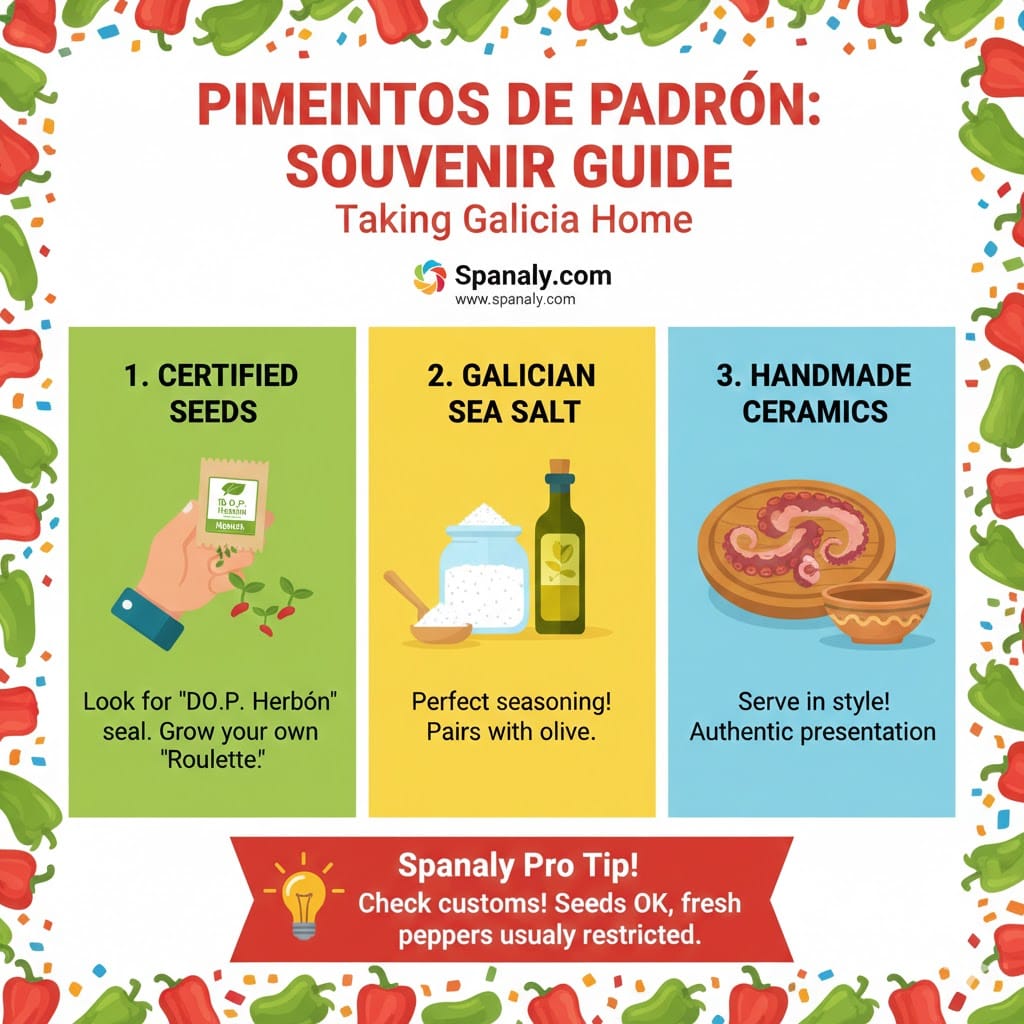
📦 Certified Seeds: Look for the “D.O.P. Herbón” seal on seed packets. Specifically, this guarantees you are growing the true Galician variety.
🧂 Galician Sea Salt: A great, portable souvenir to season your homegrown peppers. Indeed, it makes for a perfect gift alongside a bottle of Spanish Cuisine inspired olive oil.
🏺 Handmade Ceramics: Traditional Galician “Pulpo” wooden plates or ceramic bowls are perfect for serving. Ultimately, they complete the authentic presentation.
💡 Spanaly Pro Tip: Check your country’s customs regulations before flying. Specifically, while seeds are often allowed if properly packaged and labeled, fresh peppers are usually restricted!
💡 Insider Tips for the Ultimate Padrón Experience
To truly eat like a local, you need to know the unwritten rules. Specifically, these tips will help you navigate a Galician tavern with confidence. Notably, mastering these small details is a vital part of Cultural Etiquette in Spain.
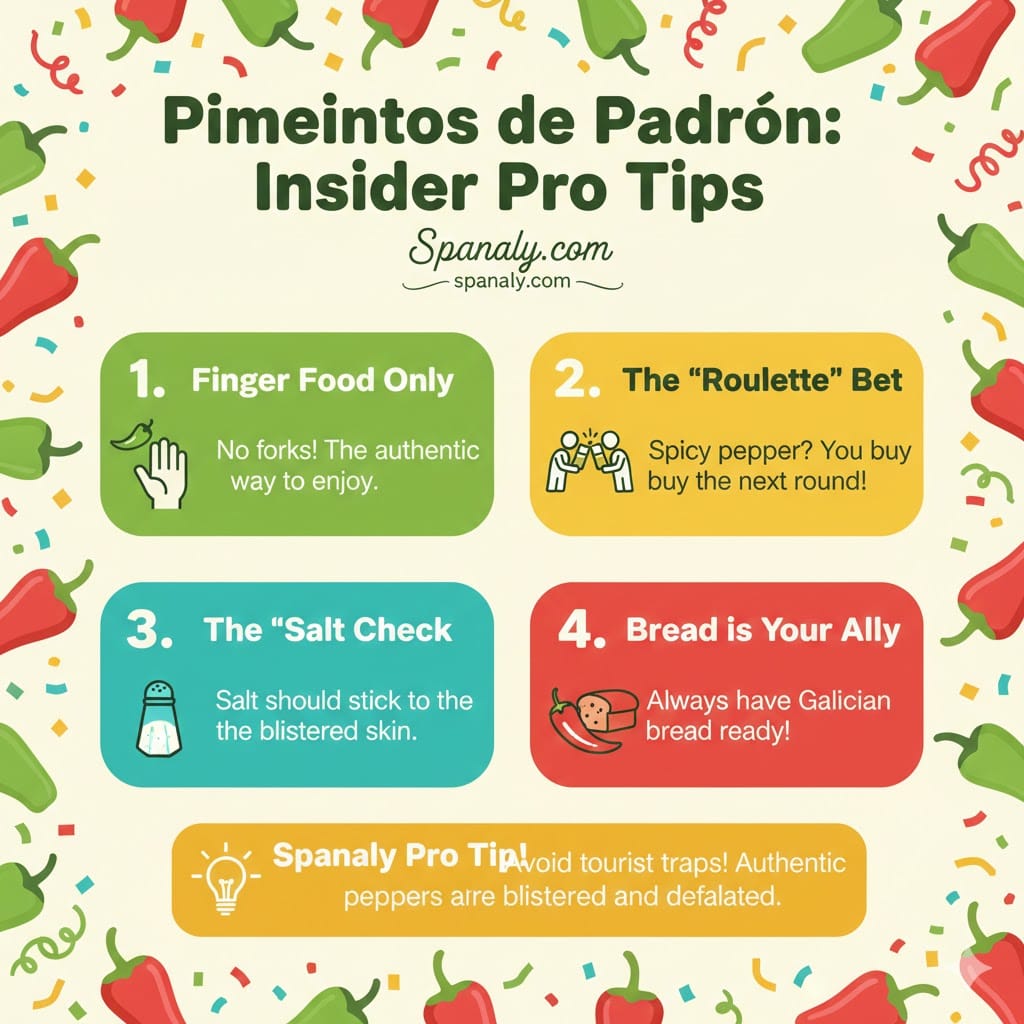
In fact, never use a fork; these peppers are the ultimate finger food. Moreover, if you are sharing a plate, the “Roulette” rules dictate that the person who gets the spicy one usually buys the next round of drinks! Consequently, it turns a simple meal into a social game. This playful spirit is common in any Spain Travel Guide. Ultimately, it’s about the laughter shared over the table.
🤫 Pro Secrets You Won’t Find Elsewhere:
🧂 The “Salt Check”: If the salt is falling off, the peppers weren’t fried correctly. Specifically, the salt should stick to the blistered skin for the perfect bite.
🕙 Morning Markets: For the best price and freshness, visit Galician markets before 11:00 AM. Indeed, this is a top tip from our Essential Spain Travel Tips.
📉 The Stem Secret: Locals believe that peppers with shorter, thicker stems are more likely to be spicy. Specifically, test this theory yourself during your next meal!
🥯 Bread is Key: Always have a basket of Galician bread ready before you start. Ultimately, it is your only insurance policy against a spicy surprise.
💡 Spanaly Pro Tip: Avoid ordering these peppers in non-specialized “tourist traps” far from Galicia. Specifically, if they don’t look blistered and slightly deflated, they haven’t been cooked at the right temperature!
🫑 Visitor FAQs – Pimientos de Padrón Expert Guide
💡 Why do some peppers taste bitter instead of sweet?
Bitterness is usually a sign that the peppers were harvested too late or stored for too long in a dry environment. **Specifically**, the best peppers should have a vibrant green, taut skin. **Notably**, freshness is the key to balancing the natural sugars with the earthy undertones of the fruit.
🧊 Can I store fresh Padrón peppers in the freezer?
It is not recommended for traditional frying. **In fact**, freezing breaks down the cell walls, making it impossible to achieve that signature "blistered" texture. **Moreover**, frozen peppers tend to become soggy when fried. **Ultimately**, for the best experience, they should be consumed within 3 to 5 days of purchase.
🥤 What is the best non-alcoholic pairing?
If you want to skip the wine, go for sparkling mineral water with a squeeze of fresh lemon. **Consequently**, the carbonation helps cut through the richness of the olive oil. **Indeed**, it cleanses the palate effectively, especially if you have just encountered one of the spicier peppers in the batch.
🌚 Are small black spots on the skin safe to eat?
Yes, small dark streaks are often just "sun tans" where the pepper was exposed to direct sunlight. **Specifically**, these spots do not affect the safety or flavor. **However**, you should avoid peppers with soft, mushy brown patches, as this indicates they are starting to spoil.
Created by Spanaly.com
✨ Why You Must Try Pimientos de Padrón
Pimientos de Padrón are a true Galician icon. Specifically, they offer a unique blend of simplicity and excitement. Notably, while most are mild, the “spicy surprise” is what makes them legendary.
In fact, this dish is as essential to Spanish culture as Salmorejo. Moreover, sharing a plate with friends is a rite of passage for any traveler. Consequently, you must try them to understand the local soul.
🌟 Why We Love Them:
🫑 The Thrill: Every bite is a fun “Culinary Roulette.” Indeed, it is the ultimate social food.
🧂 The Flavor: Simple sea salt and olive oil create magic.
📸 The Memory: It is a story you will tell long after your trip. Ultimately, the experience is unforgettable.
💡 Final Thought: Don’t fear the heat! Specifically, the spice is what gives this traditional tapa its world-famous personality.