In the mist-covered lands of Galicia, every recipe is a chapter of history. The Tarta de Santiago is perhaps the most poetic of them all—a tale of pilgrimage, faith, and rustic elegance. This golden almond cake, instantly recognizable by the powdered sugar Cross of Saint James on its surface, is the ultimate symbol of the Camino de Santiago.
For centuries, it has served as a sweet milestone. Whether you are a weary pilgrim reaching the steps of the Santiago Cathedral or a traveler exploring the narrow granite streets of the Old Town, this cake offers more than just sustenance; it provides a connection to a thousand-year-old spiritual journey. It embodies the Galician spirit: humble in ingredients, yet rich in heritage.
🌟 Explore the Map of Flavors: Before diving into Galicia’s sweets, discover the full spectrum of the peninsula in our Spanish Cuisine hub.
📜 The Heritage: From Medieval Convents to Global Icon
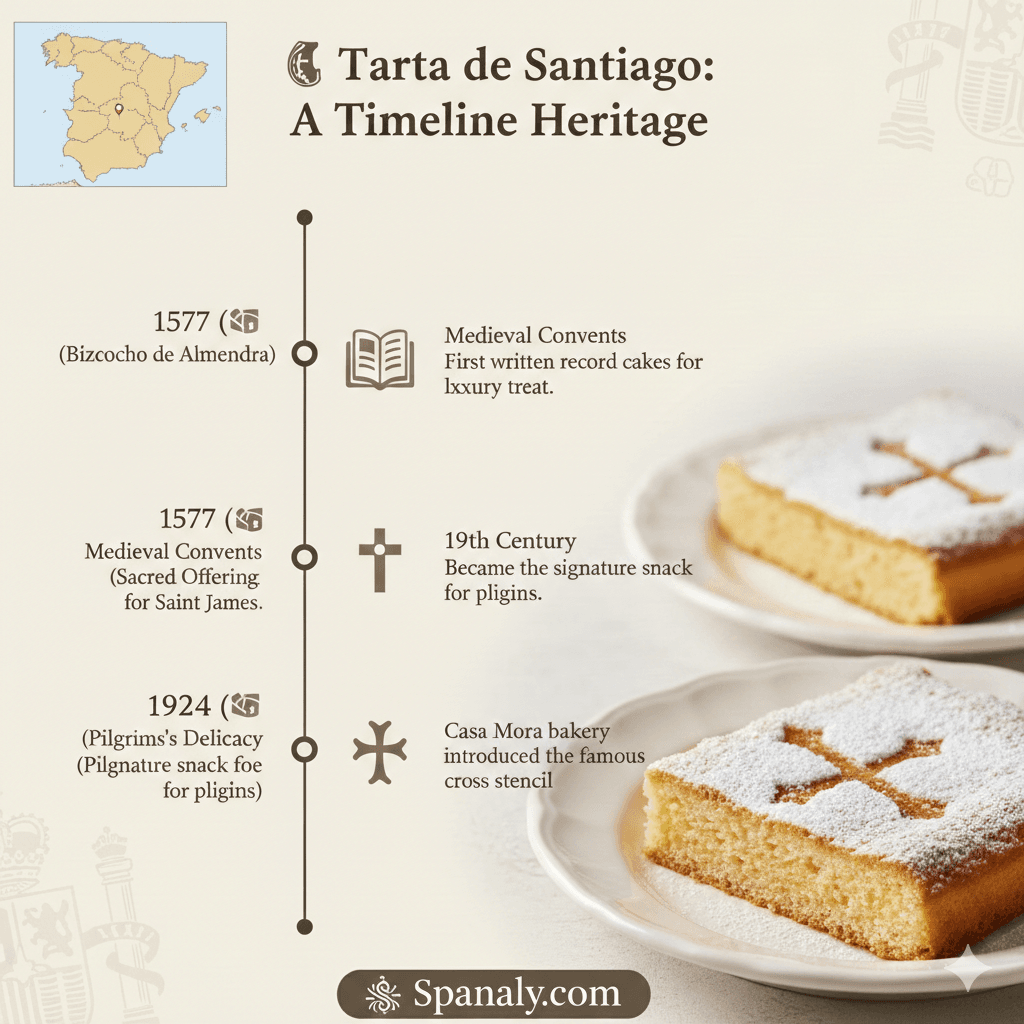
The story of Tarta de Santiago is a journey through time:
The First Record: In 1577, it was first mentioned in university archives as “Bizcocho de Almendra,” a luxury treat for religious elites.
Convent Origins: Its true soul was born in medieval Galician convents, where nuns crafted these almond delights as sacred offerings.
The Pilgrim’s Treat: By the 19th century, it transformed from a luxury item into the signature snack for pilgrims finishing their journey.
The Mark of a Legend: The iconic Cross of Saint James was introduced by the Casa Mora bakery in 1924. This simple addition turned a dessert into an edible monument of Galician pride.
🌟 Expand Your Journey: While this cake is the soul of Galician sweets, Spain’s culture extends far beyond the north. Heading toward the Mediterranean? Our Ultimate Barcelona Travel Guide features over 30 expert articles to help you transition from the pilgrim paths to the vibrant streets of Catalonia.
👨🍳 The Masterclass: Crafting an Authentic Tarta de Santiago
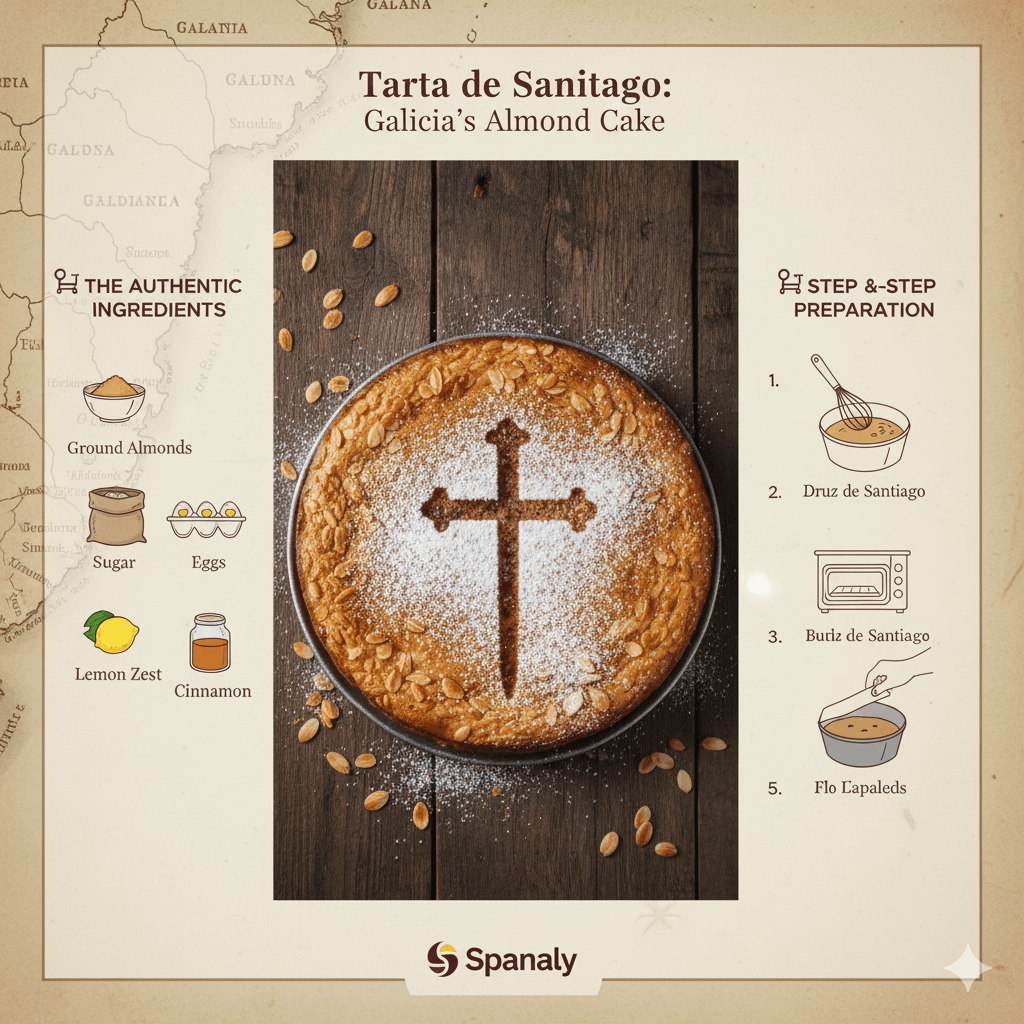
To bake this cake at home is to bring the aroma of a Galician bakery into your kitchen. The secret lies in the quality of the almonds and the gentle patience of the mixing.
🛒 The Authentic Ingredients (PGI Standards)
🥚 5 Large Eggs: Preferably organic, to provide the golden color and rich structure.
🥜 250g Raw Ground Almonds: Use a coarse grind rather than fine flour for that signature rustic texture.
🍚 250g White Granulated Sugar: To perfectly balance the richness of the nuts.
🍋 Zest of 1 Lemon: For a bright, citrusy backbone.
🍂 1 tsp Ground Cinnamon: For a warm, Mediterranean aroma.
🥃 Optional: A splash of Galician Orujo or almond liqueur for added depth.
🥣 Step-by-Step Preparation
Preparation: Preheat your oven to 180°C. Grease a circular baking tin (22-24cm) with butter or line it with parchment paper.
The Dry Mix: In a large bowl, whisk together the ground almonds, sugar, lemon zest, and cinnamon until well combined.
Incorporating the Eggs: Add the eggs one by one to the dry mixture. Use a spatula to fold them in gently. Important: Do not over-beat; you want a dense, moist consistency.
The Bake: Pour the batter into the tin and bake for 30 to 35 minutes until the top is golden brown and a toothpick comes out clean.
The Ritual: Once cooled, place the Saint James Cross stencil in the center and dust generously with powdered sugar before revealing the iconic silhouette.
🌍 Cultural Importance and Modern Recognition
The Tarta de Santiago is more than just a recipe; it is a protected piece of European heritage.
🛡️ The PGI Status: In 2010, the European Union officially granted this cake the Protected Geographical Indication (PGI) status. This means any cake sold under this name must be produced in Galicia and contain at least 33% almonds.
🎉 The Feast of Saint James: Every July 25th, during the city’s biggest festival, bakeries across Santiago de Compostela work through the night to produce thousands of these cakes for pilgrims and locals alike.
🤝 Food & Faith: To truly understand the atmosphere of these celebrations, check out our guide to Spanish Festivals & Events, where culinary traditions and spiritual faith unite in spectacular fashion.
📍 Where to Taste the Best Tarta de Santiago
If you are walking the granite streets of Santiago de Compostela, these historic spots are “sacred” stops for any food lover:
🏆 Casa Mora (Since 1920): The legendary bakery credited with first using the Saint James Cross stencil.
☁️ Pastelería Mercedes Mora: Famous for a texture so light it feels like a “cloud of almonds.”
⛪ Convento de San Paio de Antealtares: For the ultimate authentic experience, buy your cake directly from the cloistered nuns through a torno (revolving window).
🕵️ How to Spot an Authentic Tarta de Santiago
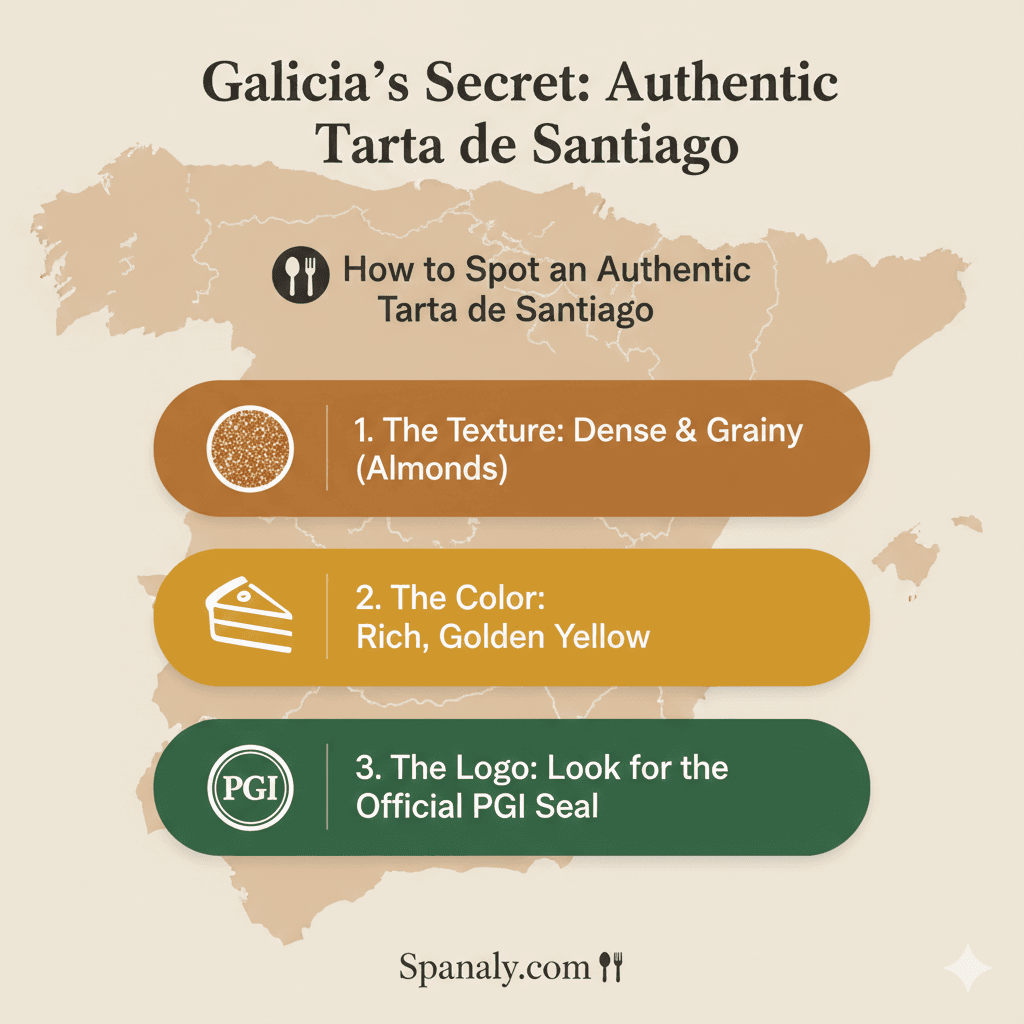
Before you buy your edible souvenir, remember these three golden rules to ensure you’re getting the real Galician deal:
The Texture: It should be dense and slightly grainy (from the almonds), never spongy like a regular flour cake.
The Color: The inside must be a rich, golden yellow. If it’s too pale, they probably skimped on the eggs or almonds.
The Logo: Look for the official PGI (Protected Geographical Indication) seal on the box—this is your guarantee of quality and origin.
🍰 Visitor FAQs – Tarta de Santiago Guide
✨ Is Tarta de Santiago naturally gluten-free?
Yes! The authentic recipe contains zero flour, relying entirely on ground almonds for structure. It is a perfect natural choice for gluten-sensitive visitors. However, if buying commercially, always check for cross-contamination labels.
✨ Why is it decorated with the Cross of Saint James?
The Cruz de Santiago became the cake's official signature in 1924, thanks to the Casa Mora bakery. It represents the city's deep connection to the pilgrimage route and the military-religious Order of Saint James.
✨ How long can I keep the cake and how to store it?
Thanks to its almond and sugar content, it stays moist for 7 to 10 days in a cool, dry place. Its durability is exactly why it became the most popular edible souvenir for pilgrims to carry home.
✨ What does the PGI status mean for this cake?
PGI (Protected Geographical Indication) is an EU protection. It guarantees the cake was produced in Galicia, contains at least 33% almonds, and follows the strict traditional recipe for authentic Galician heritage.
✨ What is the best way to serve Tarta de Santiago?
It is best served with a glass of Licor de Café (Galician coffee liqueur) or a sweet dessert wine. Traditionally, it is never served with cream or fruit—its beauty and flavor lie in its elegant simplicity.
Created by Spanaly.com
✨ Final Thoughts: More Than Just a Cake
The Tarta de Santiago is Galicia on a plate. From the humble, high-quality almonds to the iconic sword-cross, it tells a story of endurance, joy, and shared tradition. It is the perfect sweet ending to a spiritual journey or a culinary exploration of Northern Spain.
Whether you are savoring a slice in a hidden Santiago convent or baking it in your own kitchen, you are participating in a ritual that has comforted travelers for centuries. Buen provecho!