Table of Contents
Toggle💃 Feria de Málaga
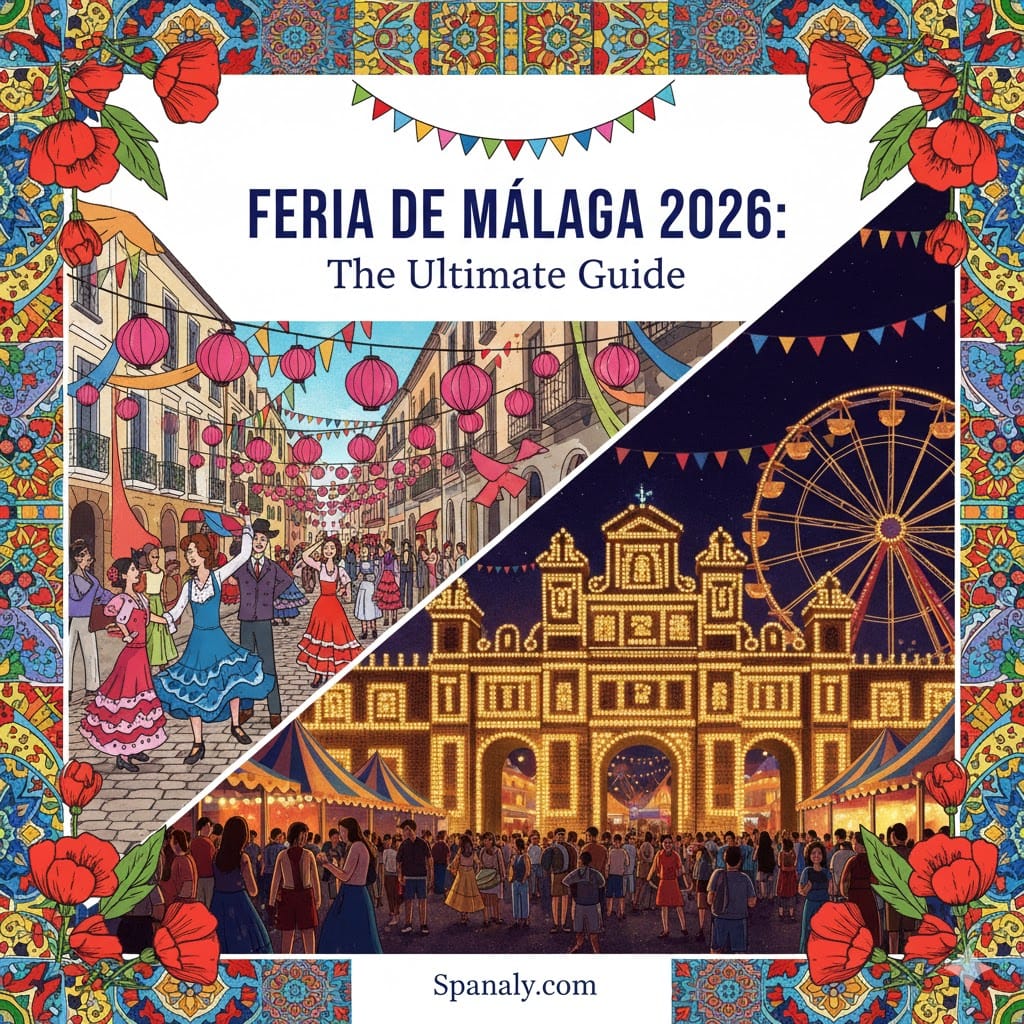
Step into the heart of Málaga and experience the ultimate highlight of Spain’s summer season. Every August, the city transforms into a breathtaking spectacle of color, music, and deep-rooted tradition.
✨ Vibrant Streets: Historic avenues shine with thousands of decorative lights.
🐎 Traditional Parades: Dancers and horse riders move gracefully through the city center.
🥘 Sensory Journey: The scent of grilled sardines and sweet pastries fills the warm Mediterranean air.
It is a celebration where tourists and locals unite. Whether you are watching a flamenco show or enjoying the electric atmosphere, this event is a core pillar of our Ultimate Guide to Spain’s Festivals.
💡 Spanaly Pro Tip: Don’t just stay in the center! To feel the true local vibe, spend your afternoon in the historic district (Day Fair) and head to the main fairgrounds (Night Fair) after sunset for the full 24-hour experience.
🏛️ Cultural Significance: The Roots of 1487
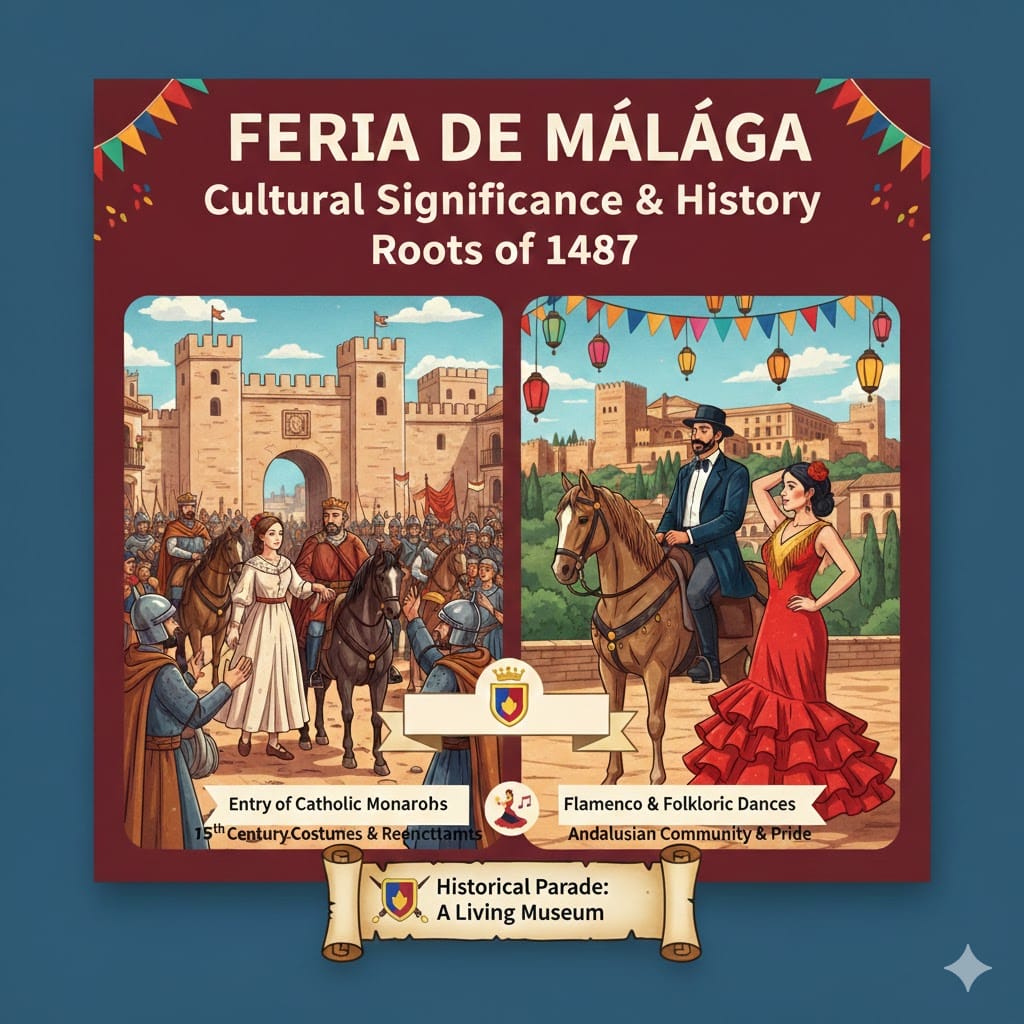
The Feria de Málaga is not just a massive street party; it is a historical milestone. Its origins date back to August 19, 1487, celebrating the city’s incorporation into the Crown of Castile by the Catholic Monarchs.
🛡️ Living History: Every year, the city re-enacts the triumphant entry of the monarchs.
💃 Andalusian Identity: The festival showcases the region’s music, dance, and community spirit in its purest form.
🌍 Global Bridge: It connects the historic charm of the past with a vibrant, modern celebration.
This preservation of heritage is similar to the historic spirit found in our Ultimate Seville Travel Guide, proving that Andalusia knows exactly how to celebrate its soul.
💡 Spanaly Pro Tip: Look for the traditional historical parade on the first Saturday of the fair. It is the best moment to see authentic costumes from the 15th century and understand the roots of Málaga.
☀️ Day Fair vs. Night Fair: The Ultimate Strategy
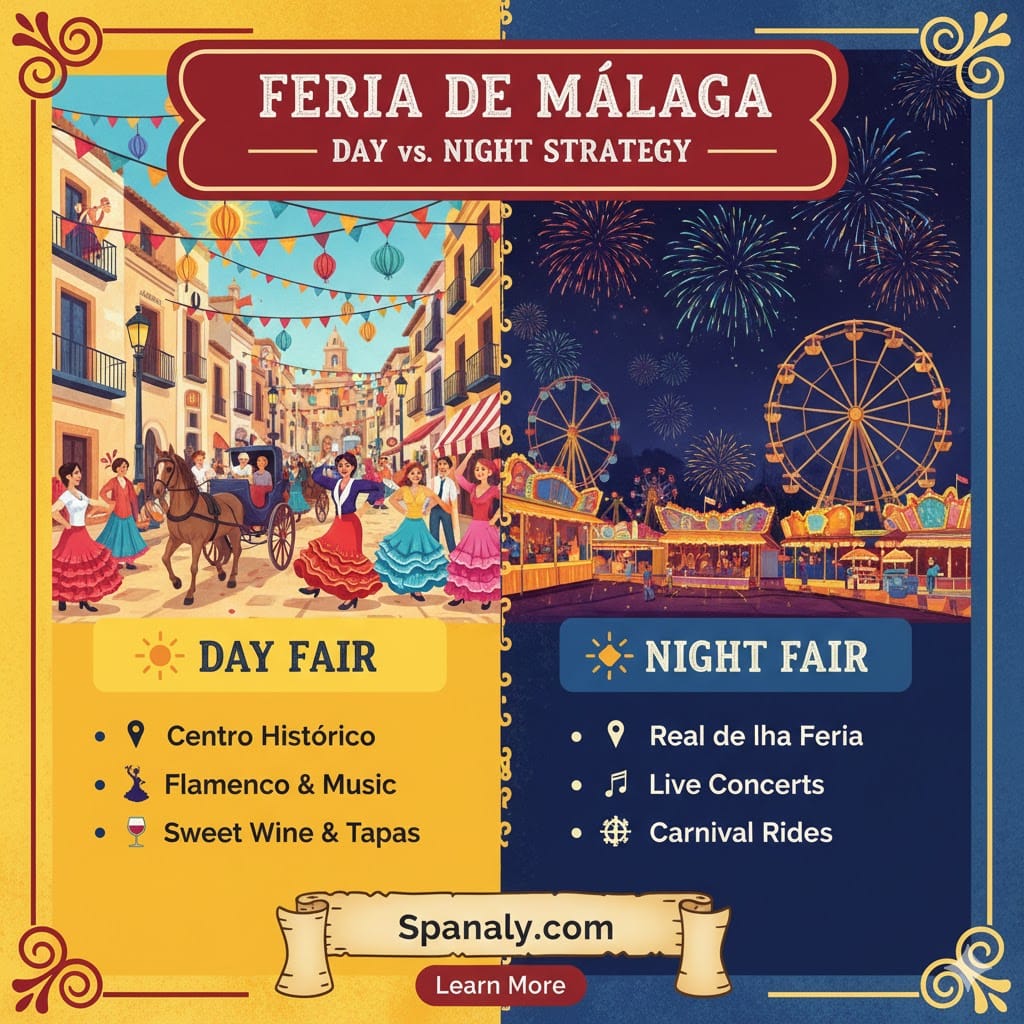
To truly master the Feria de Málaga, you must understand its dual nature. The celebration is split between the historic city center and the dedicated fairgrounds, each offering a unique atmosphere.
🏙️ The Day Fair (Feria de Día): Held in the heart of the city (Calle Larios). Expect streets filled with flower-decorated balconies, people dancing “Sevillanas,” and plenty of chilled wine. It is vibrant, crowded, and purely traditional.
🎡 The Night Fair (Feria de Noche): Located at the “Real de la Feria.” This is where the giant Ferris wheel, carnival rides, and hundreds of casetas (party tents) come to life under millions of light bulbs.
🔄 The Transition: Most locals enjoy the afternoon in the center, take a short siesta, and then head to the fairgrounds around 9:00 PM to dance until dawn.
Dividing your time is essential to avoid exhaustion. Much like the planning required in our Ultimate Barcelona Travel Guide, knowing when to move from one area to another will save your energy for the final fireworks.
💡 Spanaly Pro Tip: The Day Fair officially ends around 6:00 PM in the city center to allow for cleaning. Use this gap to grab a quiet dinner or a quick nap before the Night Fair energy peaks!
🎡 Explore the Fairgrounds: The Real de la Feria
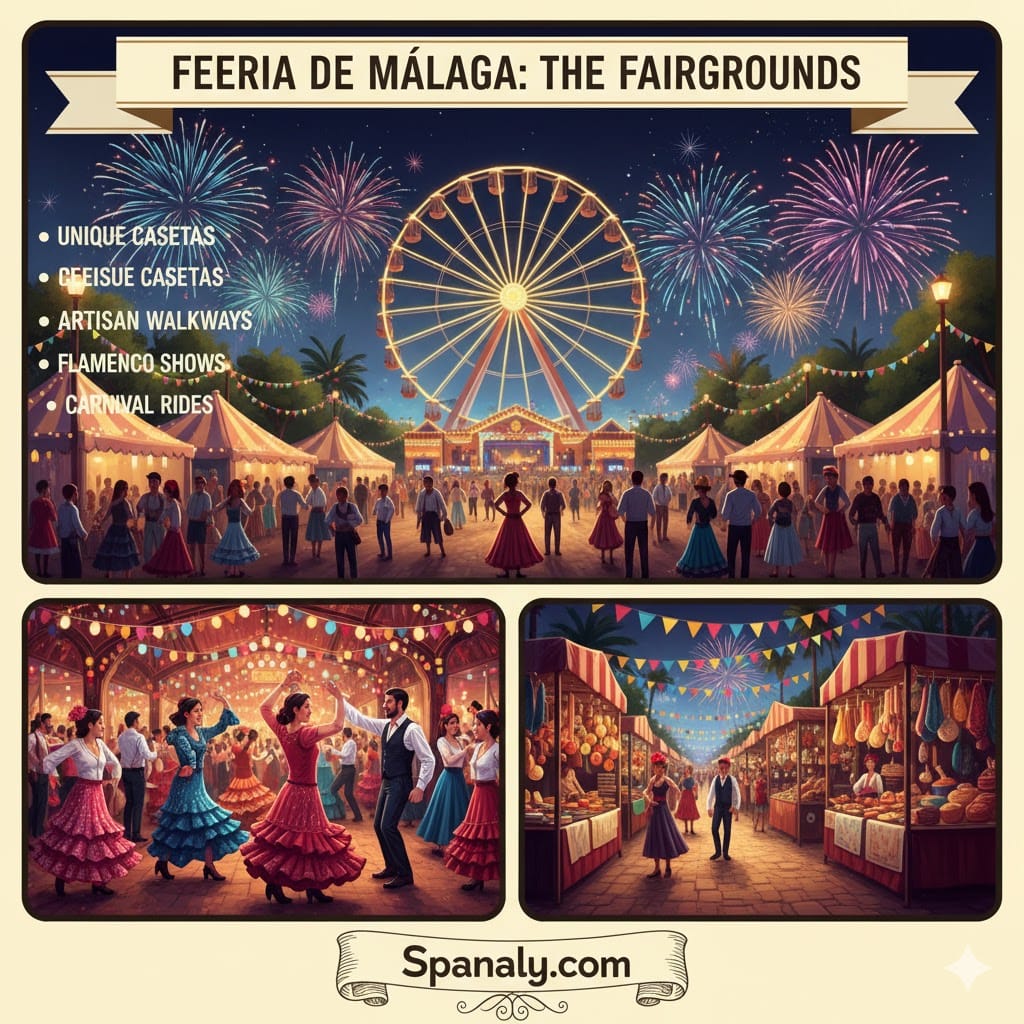
The heart of the festival beats at the Real de la Feria, the city’s expansive main fairground. This dedicated area becomes a miniature city, designed specifically to host the non-stop energy of the Night Fair.
🎪 Unique Casetas: Rows of traditional tents serve as the lifeblood of the fair. While some offer energetic dance floors with modern music, others are sanctuaries for authentic flamenco.
🏺 Artisan Walkways: Discover handcrafted souvenirs and local crafts along the main avenues, showcasing the finest Andalusian craftsmanship.
🎢 A Blend of Eras: The fairgrounds perfectly merge centuries-old traditions with modern carnival rides and giant Ferris wheels, ensuring entertainment for every generation.
Unlike many private festivals in Spain, the majority of the casetas here are open to everyone. This inclusivity reflects the welcoming spirit we highlight in our Ultimate Seville Travel Guide, where every visitor is treated like a local.
💡 Spanaly Pro Tip: Look for the “Casetas Municipales” if you want to see professional flamenco performances for free. They are usually the largest tents and offer a more traditional and organized show schedule.
🐎 The Cabalgata & Parades: A Journey Through History
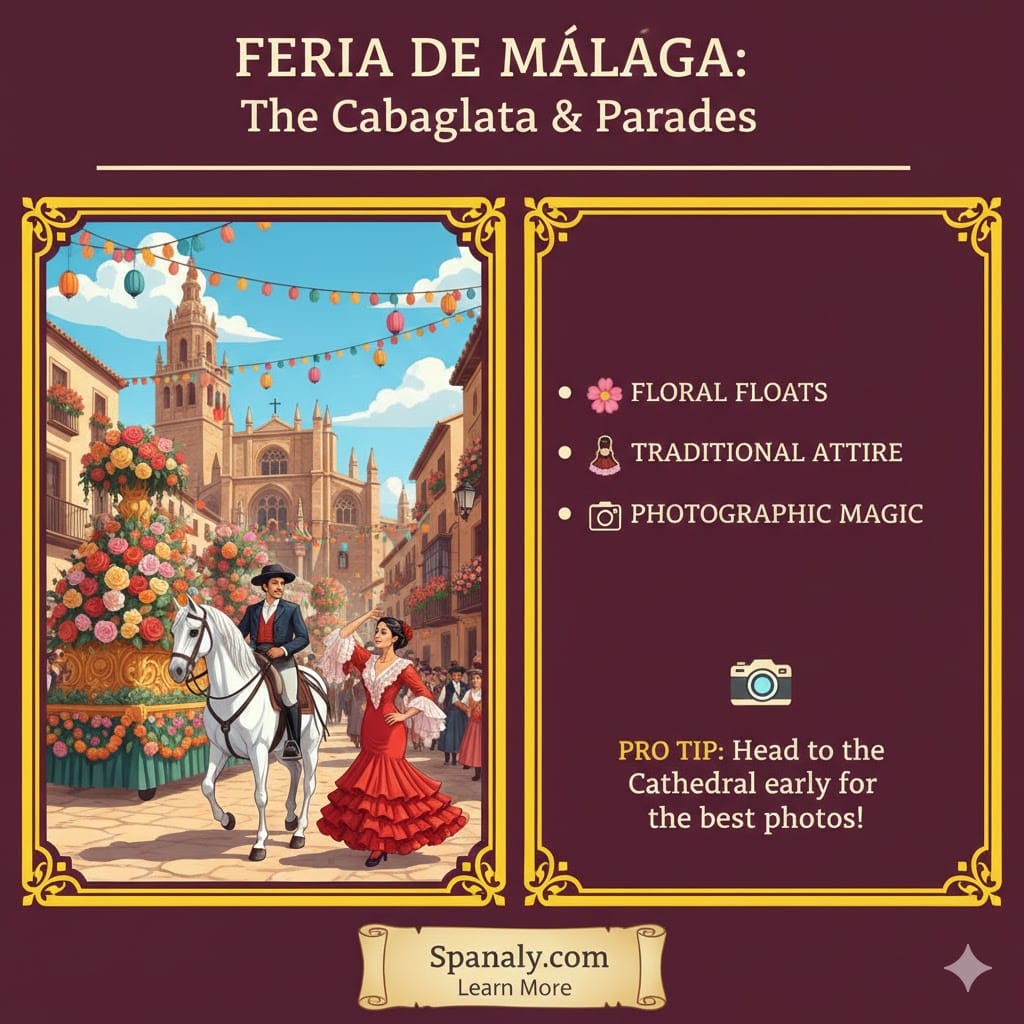
The festival officially bursts into life with the famous Cabalgata parade. This is not just a procession; it is a vibrant bridge between Málaga’s rich past and its energetic present.
🌸 Floral Floats: Suddenly, the streets are filled with carriages and floats decorated with thousands of fresh Mediterranean flowers.
👗 Traditional Attire: Watch as dancers in stunning flamenco dresses and men in “traje de corto” create a sea of color.
📸 Photographic Magic: The contrast between the historic stone architecture and the colorful carriages creates a “postcard-perfect” shot.
Witnessing the Andalusian passion for horses and heritage is a must for any traveler. If you enjoy discovering such cultural gems, you’ll find our Spain Historical Monuments Guide equally fascinating for planning your next stop.
💡 Spanaly Pro Tip: For the best views, head to the city center near the Cathedral early. This is also a great time to practice some Basic Spanish Language Tips when interacting with the friendly locals during the parade!
🍷 Cartojal & Rebujito 101: The Festive Drinks
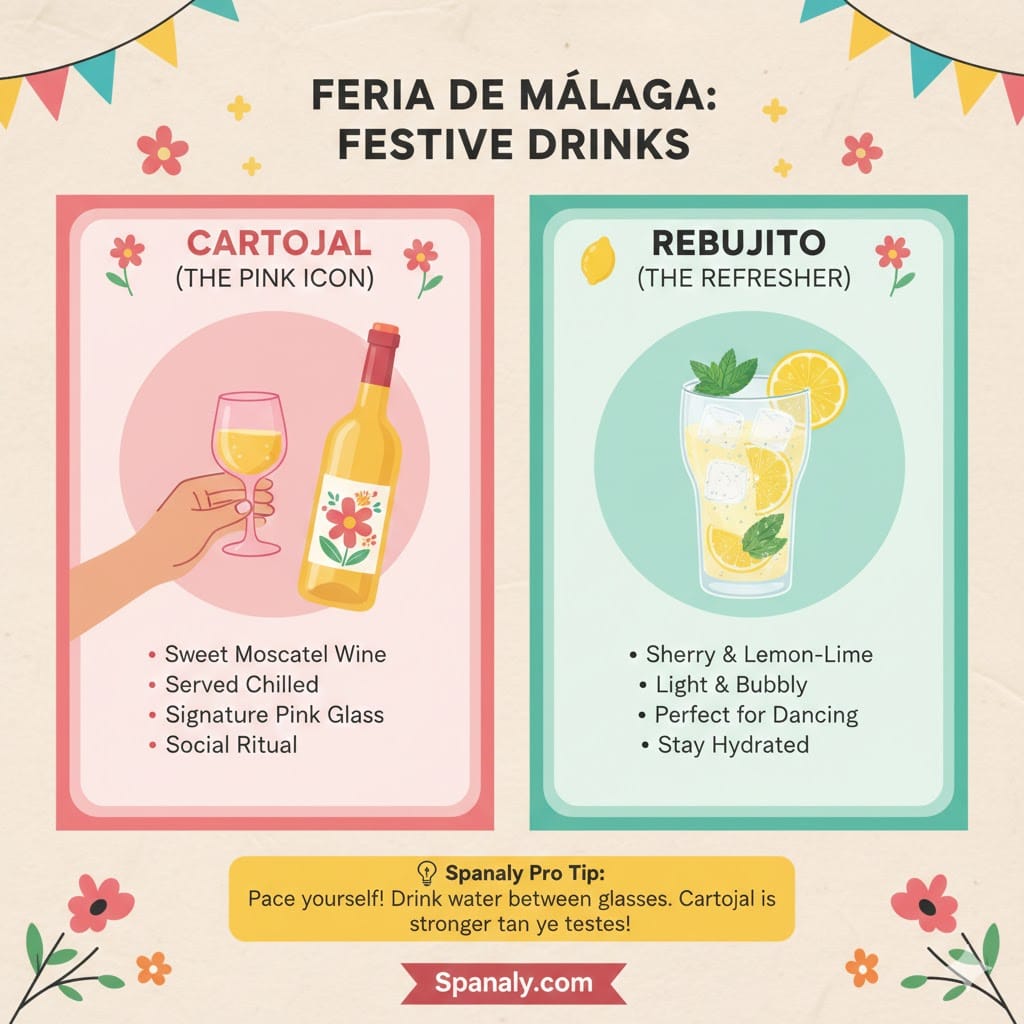
You cannot truly say you’ve experienced the Feria de Málaga without tasting its two most iconic drinks. These beverages are more than just refreshments; they are symbols of the festival’s joy and the warm Andalusian hospitality.
🌸 Cartojal (The Pink Icon): This sweet, chilled Moscatel wine is the undisputed star. You’ll see everyone carrying the signature pink glasses. It is served very cold to balance the August heat.
🍋 Rebujito (The Refresher): A clever mix of dry Sherry (usually Fino or Manzanilla) and lemon-lime soda, topped with fresh mint. It is light, bubbly, and perfect for staying hydrated while dancing.
🤝 A Social Ritual: Sharing a bottle of Cartojal with friends (or new friends you just met in a caseta) is a rite of passage for every visitor.
Understanding the local flavors is key to enjoying Spain. For a deeper dive into the country’s world-class gastronomy, don’t miss our Traditional Spanish Food Guide.
💡 Spanaly Pro Tip: Pace yourself! Cartojal is delicious and goes down easily, but it is stronger than it looks. Drink plenty of water between glasses, especially during the sun-drenched Day Fair in the city center.
🍴 Food and Local Flavors: A Taste of Andalusia
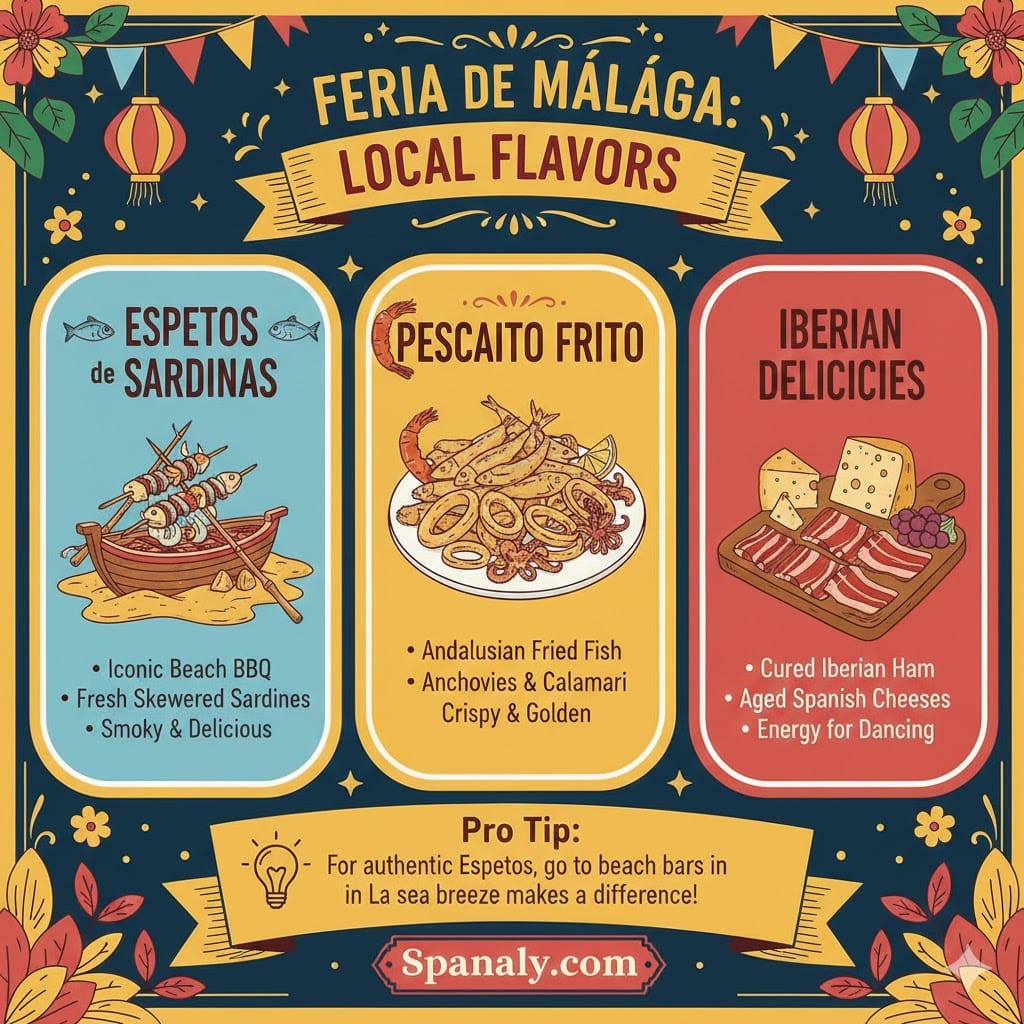
The Feria de Málaga is a culinary journey that celebrates the Mediterranean’s finest bounty. From the smoky aroma of the beaches to the savory snacks in the city center, your taste buds are in for a treat.
🐟 Espetos de Sardinas: The undisputed king of Málaga’s gastronomy. Fresh sardines are skewered on bamboo canes and roasted over pit fires in boat-shaped barbecues on the beach.
🍤 Fried Fish (Pescaito Frito): A golden assortment of anchovies, calamari, and baby squid, fried to crispy perfection. It is the soul of every festival table.
🥓 Iberian Delicacies: No caseta is complete without a platter of Jamón Ibérico and aged cheeses, providing the perfect energy boost for hours of dancing.
If you are a true foodie, mastering the local dining culture is essential. Check out our guide on How to Order Food Like a Local in Spain to navigate the busy festival tapas bars with confidence.
💡 Spanaly Pro Tip: For the most authentic Espetos, head to the beach bars (Chiringuitos) in the La Malagueta area. While the fairgrounds have great food, nothing beats the taste of sardines roasted by the sea breeze!
👗 The Festive Dress Code: How to Blend In
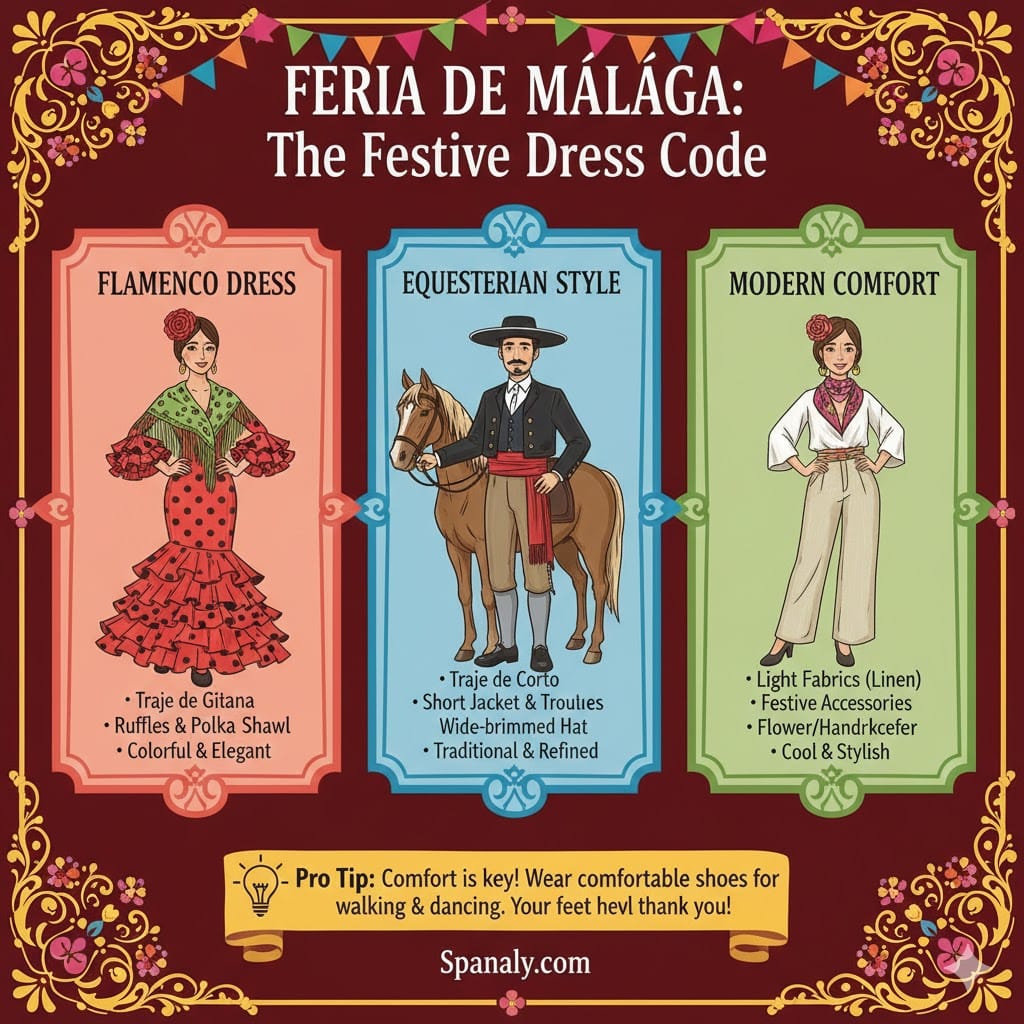
Walking through the Feria de Málaga feels like stepping into a vibrant painting. While there is no “strict” rule for tourists, knowing the local style will help you feel like a true Malagueño rather than just a visitor.
💃 The Flamenco Dress (Traje de Gitana): Women wear stunning, body-hugging dresses adorned with ruffles (volantes), vibrant polka dots, and elaborate embroidery. A fresh flower tucked behind the ear and a colorful shawl (mantón) complete the look.
🐎 The Equestrian Style (Traje de Corto): Traditionally worn by men, especially those on horseback. It consists of short jackets, high-waisted trousers, and a wide-brimmed Cordobés hat.
🕶️ Modern Comfort with a Twist: If you aren’t wearing traditional attire, opt for light, breathable fabrics like linen. Many locals simply add a festive touch, such as a flower in the hair or a traditional silk handkerchief.
Dressing for the Spanish climate and culture is an art form. To ensure you’re fully prepared for the August heat, check out our What to Pack for Spain: Ultimate 2026 Guide for expert seasonal advice.
💡 Spanaly Pro Tip: Comfort is king! While the dresses look magnificent, you will be walking and dancing for hours. If you choose to wear a traditional outfit, ensure your shoes are “broken in” and comfortable. Your feet will thank you after a long night at the Real!
🎆 Nightly Music and Fireworks: The Sky Spectacle
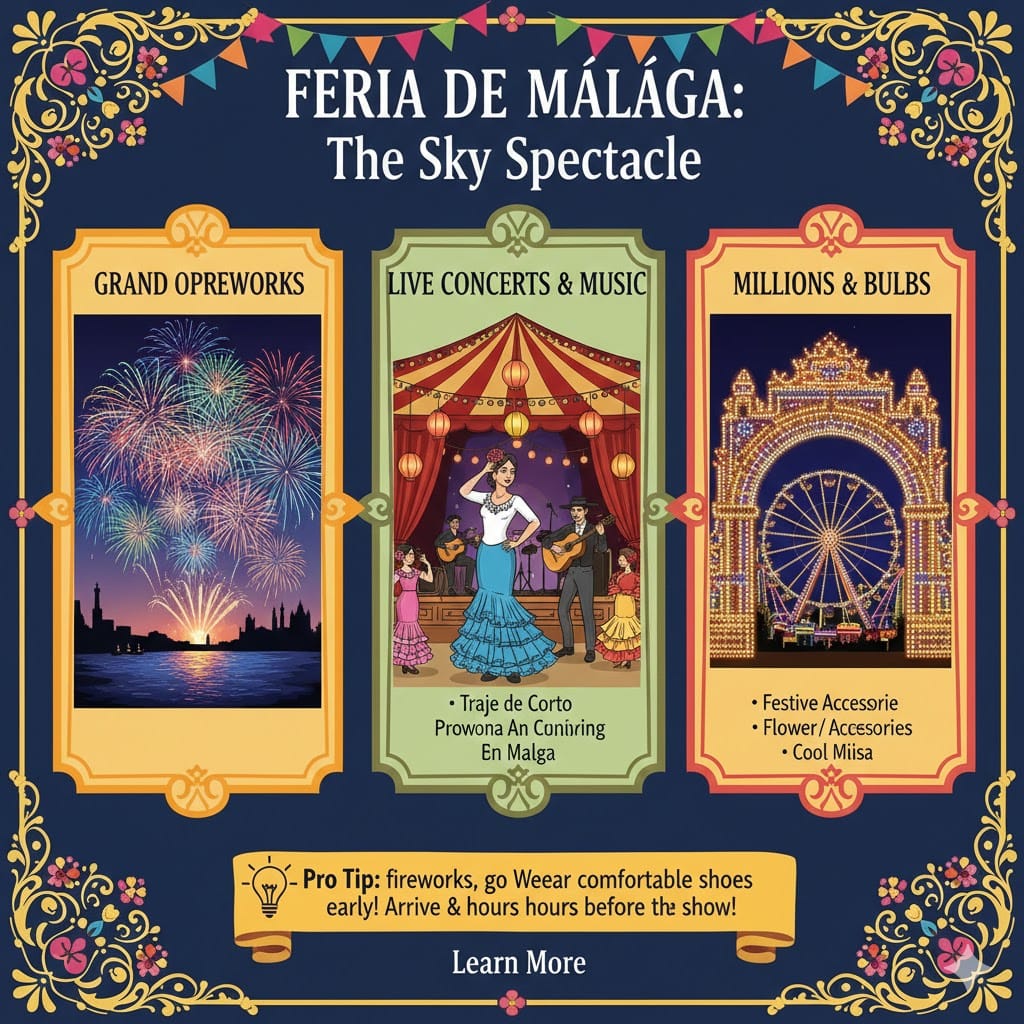
As the sun sets over the Mediterranean, the Feria de Málaga transforms into a symphony of light and sound. The transition from the traditional afternoon to the electric night is marked by spectacular displays that captivate both locals and visitors.
✨ The Grand Opening Fireworks: The festival traditionally begins with a massive pyrotechnic show at the Port of Málaga. For over 20 minutes, the sky is painted with intricate designs, reflected perfectly in the sea.
🎶 Live Concerts: Every night, the Auditorio Municipal and various casetas host live performances. From world-class Flamenco masters to modern Spanish pop and indie bands, the music never stops.
🎡 Millions of Bulbs: The fairgrounds (Real) are illuminated by millions of LED lights, including the iconic “Portada” (main gate), which is a masterpiece of light architecture and a must-see for every visitor.
Experiencing the nightlife safely is essential for a great trip. If you are planning to extend your Spanish adventure, you might find our Night Safety in Barcelona guide helpful for general tips on navigating busy Spanish crowds after dark.
💡 Spanaly Pro Tip: For the opening fireworks, the best view is from the Muelle Uno area or a rooftop bar in the center. However, be prepared to arrive at least two hours early to secure a spot, as thousands of people gather for this specific moment!
🕒 The Perfect Day: Your Full Feria Itinerary
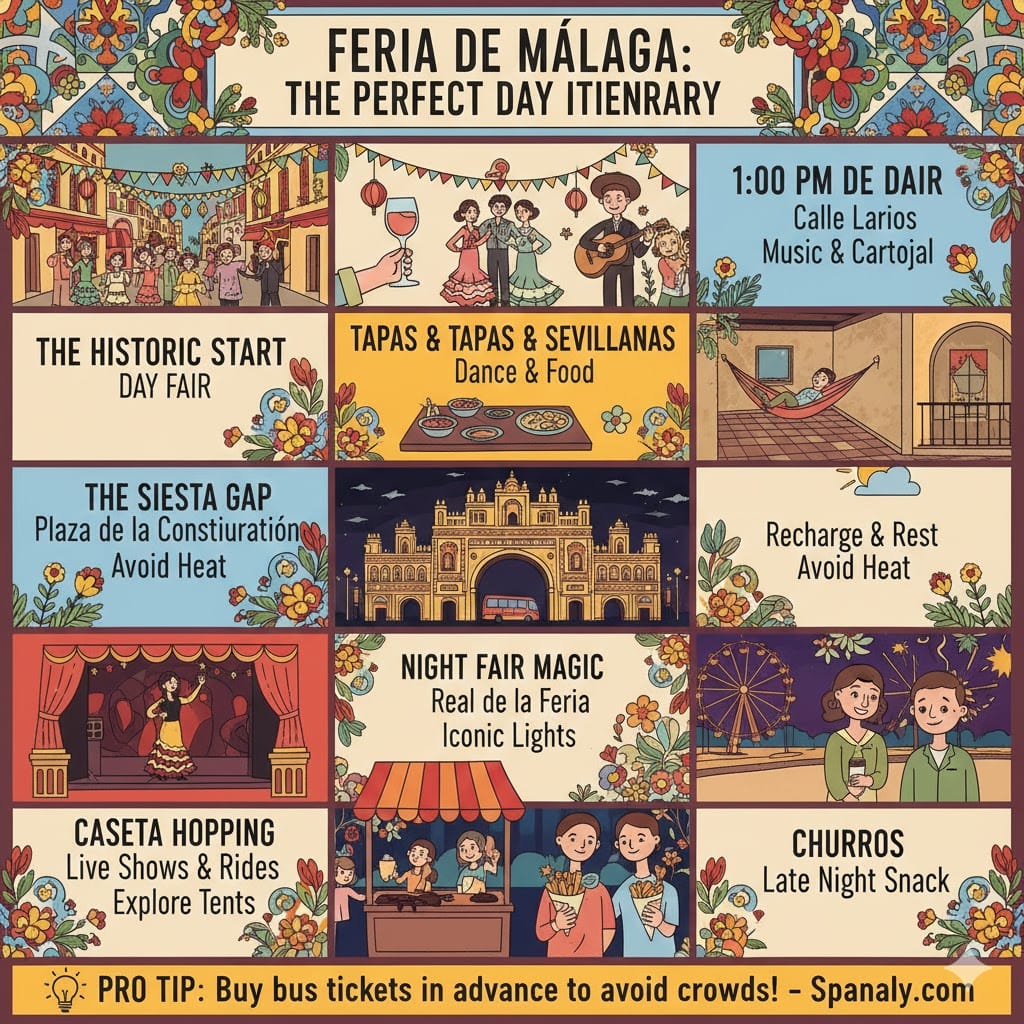
Planning your day is the best way to survive the heat and maximize the fun. Here is our recommended “Golden Route” for a complete, stress-free experience:
1:00 PM – The Historic Start: Head to Calle Larios in the city center. This is the peak of the Day Fair. Enjoy the floral decorations, the street music, and your first chilled glass of Cartojal.
3:00 PM – Tapas & Sevillanas: Find a spot near Plaza de la Constitución. Watch the locals dance and join in for some traditional tapas. For help navigating the menu, check our guide on How to Order Food Like a Local in Spain.
6:00 PM – The Siesta Gap: As the center starts to quiet down, head back to your hotel. This is the perfect time to rest. Understanding Spain’s Daily Rhythm is key to enjoying the festival without burning out.
9:30 PM – Night Fair Magic: Take the shuttle bus to the Real de la Feria. Start by walking under the magnificent lighted main gate (Portada) for that iconic photo.
11:00 PM – Caseta Hopping: Explore different tents, enjoy a live flamenco show at the Caseta Municipal, and then try the carnival rides if you’re feeling adventurous.
1:30 AM – Churros & Chocolate: End your night like a true Malagueño with hot churros at one of the fairground stalls before heading back.
💡 Spanaly Pro Tip: Buy your bus tickets or top up your travel card (EMT) a day in advance. The kiosks near the fairgrounds get incredibly crowded at night, and you’ll want a quick exit when the party finally ends!
🏨 Where to Stay in Málaga: Your Festival Base
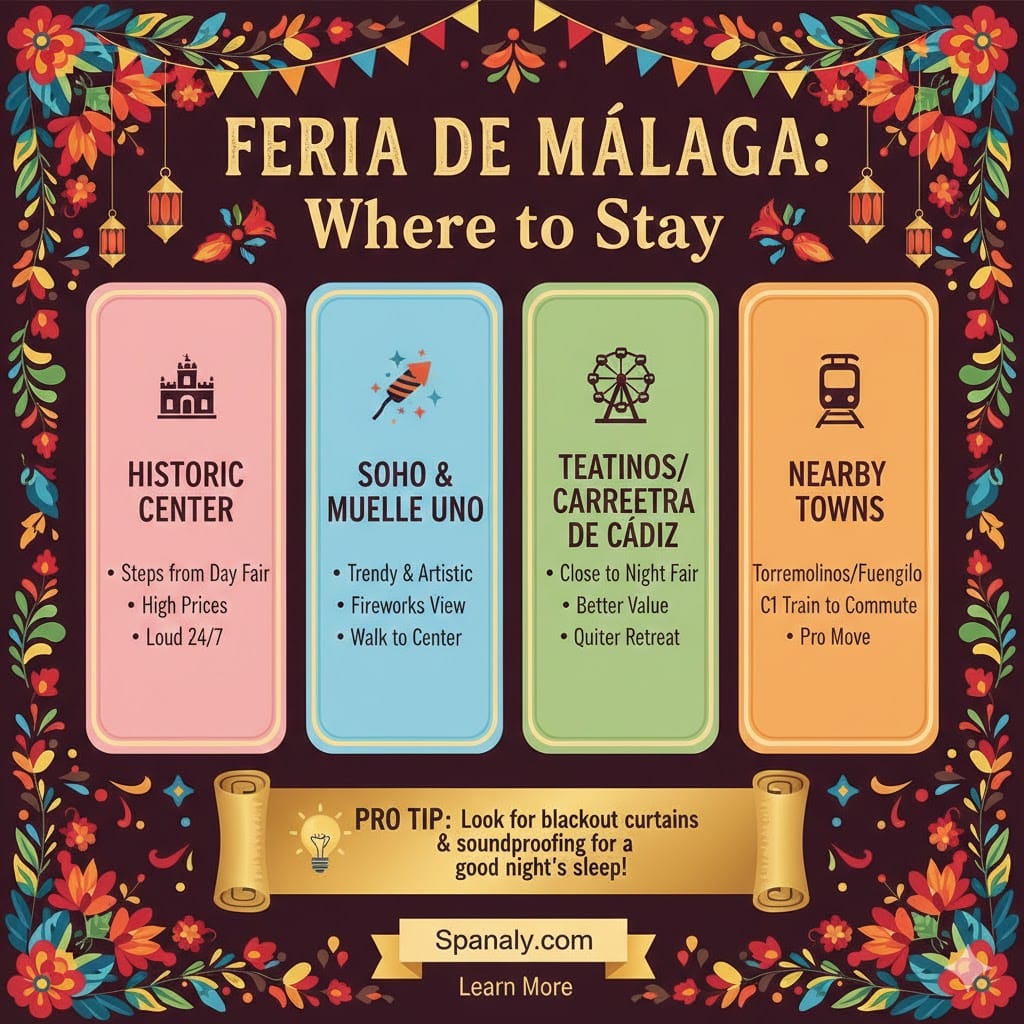
During the Feria de Málaga, accommodation fills up months in advance. Choosing the right neighborhood depends on whether you want to be in the middle of the noise or have a quiet retreat.
📍 Historic Center (Centro Histórico): Best for those who want to be steps away from the Day Fair. Expect high prices and vibrant, loud streets 24/7.
📍 Soho & Muelle Uno: A trendy, artistic area perfect for the opening fireworks and within walking distance of the center, offering a slightly more “modern” vibe.
📍 Teatinos or Carretera de Cádiz: Ideal if you prefer the Night Fair. These residential areas are closer to the Real de la Feria and usually offer better value for money.
📍 Nearby Towns (Torremolinos/Fuengirola): If Málaga is full, stay in these coastal towns and use the Cercanías C1 train to commute. It’s a common “pro move” for festival-goers.
Finding the right stay is a priority for every traveler. For more specific advice on choosing the perfect base in Spain, you might find our Where to Stay in Madrid or Where to Stay in Seville guides useful for comparing different Spanish city layouts.
💡 Spanaly Pro Tip: Look for accommodations that offer “blackout curtains” and good soundproofing. In Málaga, the party literally doesn’t stop, and a good night’s sleep is your most valuable asset!
🚌 2026 Logistics: Transport & Budgeting
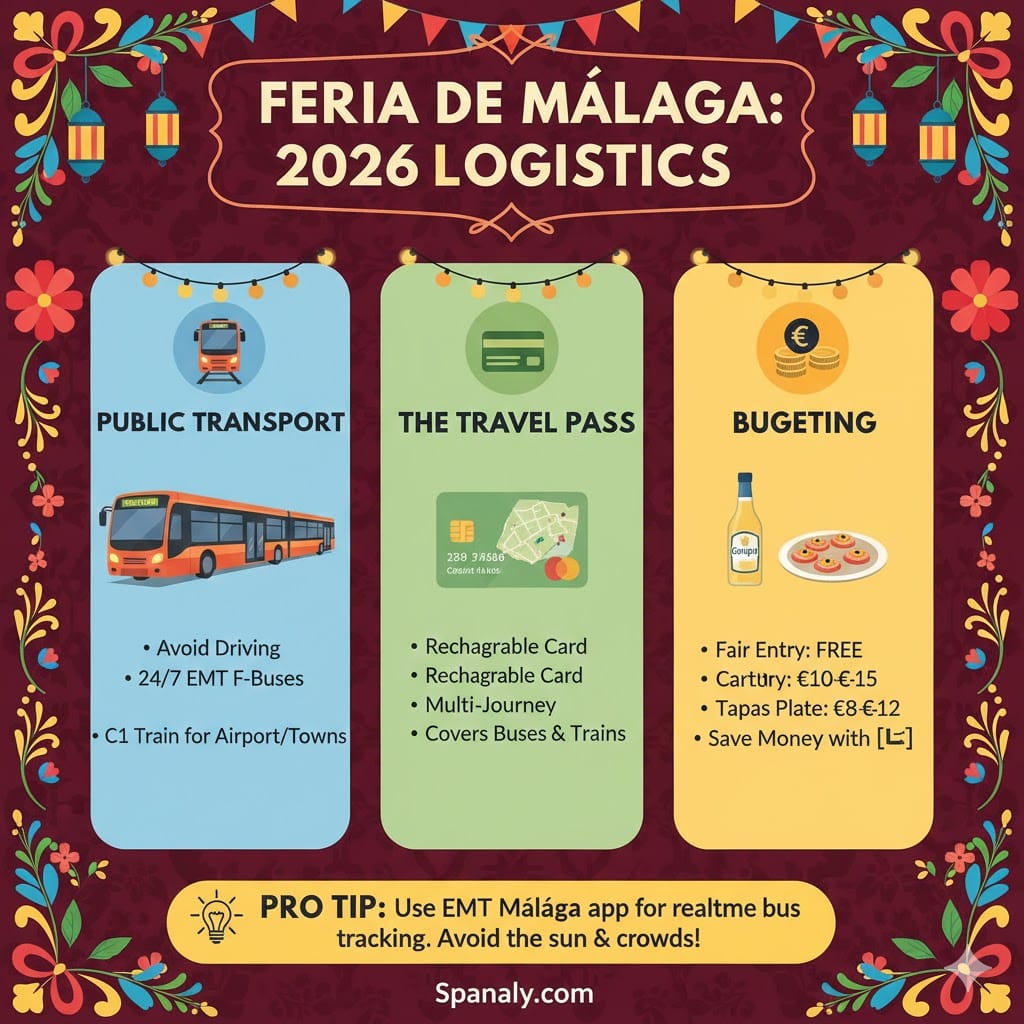
Getting around during the Feria de Málaga requires a bit of planning, as the city transforms and certain areas become pedestrian-only. Here is how to navigate the festival like a pro in 2026:
🚆 Public Transport is King: Avoid driving at all costs. The local EMT buses run special “F” lines 24/7 between the city center and the Real. If you are staying further away, the Cercanías C1 train is efficient and connects the airport and nearby towns to the heart of the action.
💳 The Travel Pass: We highly recommend getting a rechargeable multi-journey card. For more details on navigating Spanish cities, our Getting Around Spain 2026 Guide covers everything from trains to local buses.
💰 Budgeting for the Fair: While entry to the fairgrounds and most casetas is free, food and drinks can add up. Expect to pay around €10-€15 for a bottle of Cartojal and €8-€12 for a plate of tapas. If you’re traveling on a budget, check out our Insider Secrets to Saving Money in Spain.
💡 Spanaly Pro Tip: Use the official EMT Málaga app to track bus arrival times in real-time. During the festival, traffic can be unpredictable, and having the app will save you from waiting under the scorching sun!
💡 Essential Visitor Tips: The Insider’s Edge
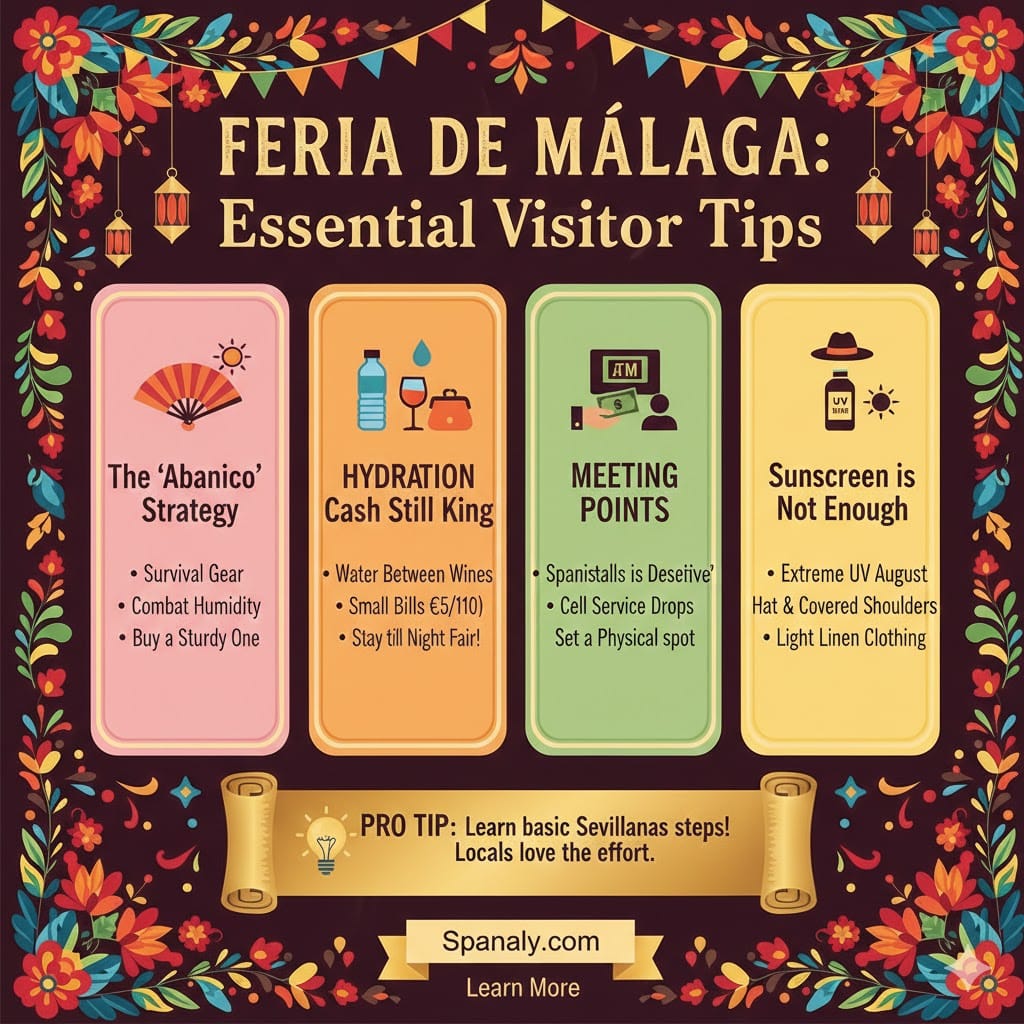
To truly enjoy the Feria de Málaga without the typical tourist pitfalls, keep these expert tips in your back pocket. These are the small details that make a massive difference in your experience:
☀️ The “Abanico” (Hand Fan) Strategy: Do not treat a hand fan as a souvenir; treat it as survival gear. Even with the toldo (shade covers) in Calle Larios, the humidity can be intense. Buy a sturdy wooden one on your first day.
💧 Hydration Between Cartojals: It’s easy to forget water when the sweet wine is flowing. The Spanish heat is deceptive. A good rule of thumb is “one water for every two glasses of wine” to ensure you make it to the Night Fair.
🏧 Cash is Still King in Casetas: While most shops in Málaga accept cards, many small, traditional casetas and fairground stalls are “Cash Only” or have a minimum spend. Carry small bills (€5 and €10) to avoid long ATM lines.
📢 Meeting Points: The fairgrounds are massive and cell service can drop when tens of thousands of people are sharing the same tower. Establish a physical meeting point (like the “Portada” gate) with your group in case you get separated.
🧴 Sunscreen is Not Enough: If you are attending the Day Fair, remember that the UV index in Málaga during August is extreme. Wear a hat and, if possible, light linen clothing that covers your shoulders.
Managing your health and safety is paramount. For a broader look at staying safe while exploring the country, take a look at our guide on Safety Tips for Travelers in Spain.
💡 Spanaly Pro Tip: Learn the “Sevillanas” basic steps before you go! You don’t need to be a pro, but knowing even the first copla will turn you from an observer into a participant, and the locals will absolutely love your effort.
🎡 Visitor FAQs – Feria de Málaga 2026 Guide
📅 When is the Feria de Málaga held in 2026?
The festival traditionally takes place in mid-August. For 2026, the celebrations will peak around August 19th, marking the historical anniversary of the city's incorporation into the Crown of Castile.
🎡 Day Fair vs. Night Fair: What is the difference?
The Day Fair is a street party in the historic center (Calle Larios), known for its floral vibe and traditional dancing. The Night Fair moves to the Real de la Feria, featuring bright lights, carnival rides, and huge party tents.
🍷 What should I drink to feel like a local?
The legendary choice is Cartojal, a sweet, cold wine served in iconic pink glasses. If you prefer something more refreshing, try a Rebujito (dry sherry with lemon-lime soda), the ultimate heat-buster.
🎟️ Is there an entrance fee for the "Casetas"?
No! One of the best things about Málaga's fair is that almost all casetas are open to the public and free to enter. This makes the festival much more inclusive and welcoming for international travelers compared to other fairs.
🚌 What is the best way to travel between the two fairs?
The shuttle bus (Line F) is your best friend, running 24/7 between the center and the fairgrounds. We recommend using the EMT Málaga app for real-time updates and avoiding taxis during peak hours due to traffic.
Expertly curated by Spanaly.com
✨ Your 2026 Málaga Adventure Awaits
The Feria de Málaga isn’t just an event; it’s the soul of Andalusia in full bloom. In 2026, the city is more ready than ever to welcome you with open arms and chilled wine.
Why you shouldn’t miss it:
Authenticity: Experience a tradition that hasn’t lost its heart.
Inclusivity: From the street parties to the casetas, everyone is a local.
Contrast: Enjoy the sunny beach by day and the electric fairgrounds by night.
Memories: Nothing beats the first sip of Cartojal under the August sun.
Final Checklist:
Book Early: Hotels in the center fill up months in advance.
Stay Hydrated: Balance the wine with plenty of water.
Dress for Heat: Think linen, hats, and your essential Abanico.
Ready to dive deeper into the Spanish lifestyle? Don’t forget to explore our Complete Spain Travel Checklist for 2026 to ensure your entire trip is as seamless as a Flamenco dance.
See you under the lights of the Portada!