🔥 Spain’s Night of Fire
Every June, as summer breathes its first warm air, Spain bursts into flame and celebration. The Fiestas de San Juan ignite the night with bonfires, fireworks, music, and laughter. Initially, this event was a simple celebration of the summer solstice, but today it is a massive cultural phenomenon.
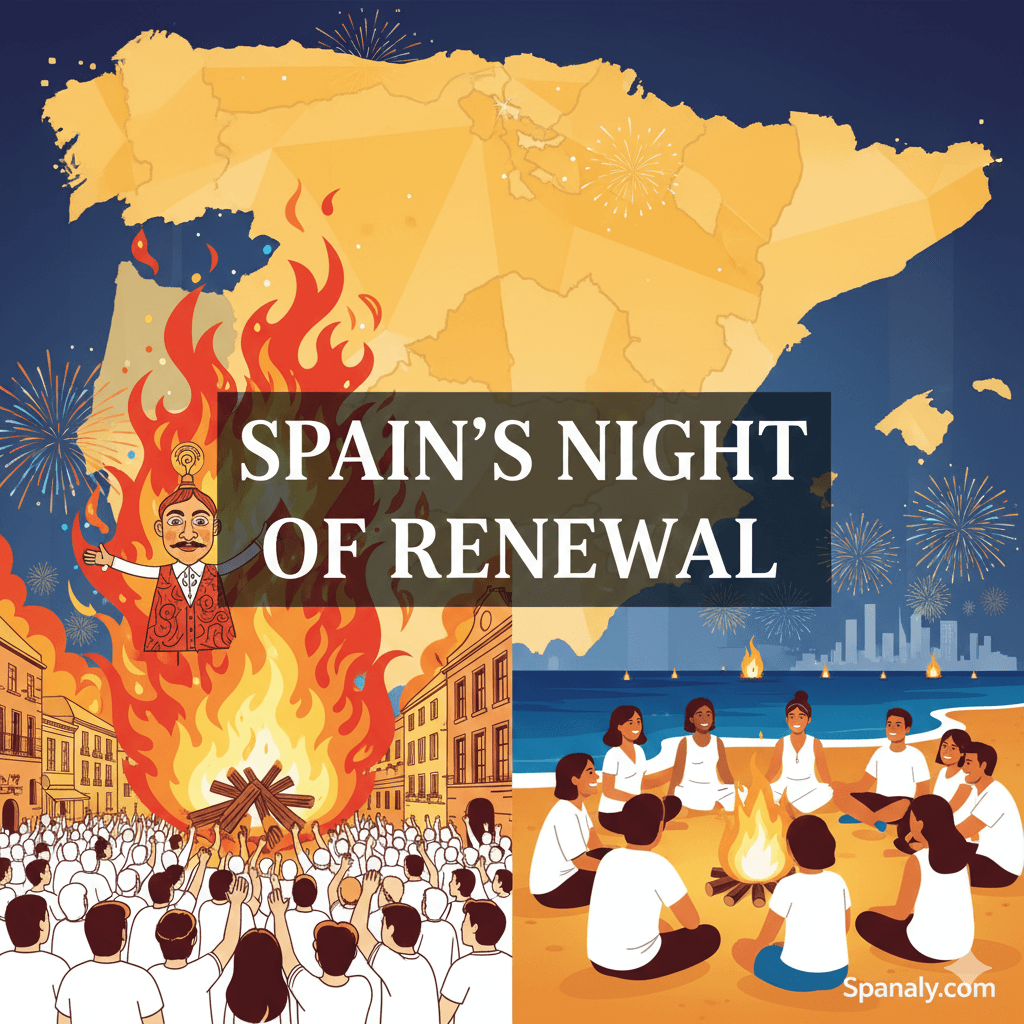
In Alicante, the Hogueras de San Juan turn streets into glowing galleries of fire and art. Consequently, it has become a highlight in our Ultimate Guide to Spain’s Festivals . Meanwhile, in Cataluña, the “Nit de Sant Joan” unfolds by the sea, where families gather on golden beaches under the glow of midnight fires. Indeed, it is a night of light, renewal, and pure Mediterranean magic.
🏺 Origins of the Celebration: From Sun Worship to Saint John
Long before Saint John’s name was spoken, people across the Iberian Peninsula gathered on the year’s shortest night to honor the sun’s power. In fact, they lit fires on hillsides and beaches, believing the flames would chase away evil spirits and bless the coming harvest.
A Spiritual Transformation: When Christianity took root, these pagan rituals merged with the Feast of Saint John the Baptist.
The Fusion: Therefore, the result was a spectacular blend of faith and folklore.
Cultural Mirror: Similarly to many traditions explored in our Spanish Culture & Traditions Hub, the festival evolved into a vibrant expression of Spain’s identity—where the sacred and the earthly burn brightly together.
🎨 Alicante – The Heart of the Bonfires
In Alicante, the Hogueras de San Juan are more than just flames; they are a sophisticated art form. In fact, the city turns into an open-air museum where imagination meets satire.
The Sculptures (Hogueras): Gigantic wooden monuments fill the streets, crafted by local artists to satirize politics and culture.
La Cremà: The celebration peaks on June 24, when these artworks are burned in a fiery spectacle. Consequently, the night sky turns a brilliant gold.
The Queen of Fire: The event also features the “Bellea del Foc” contest, adding a layer of beauty and tradition to the heat.
Indeed, witnessing the burning monuments in Alicante is an experience that rivals the energy found in our Ultimate Guide to Spain’s Festivals .
🌊 Cataluña – The Magic of “Nit de Sant Joan”
In Cataluña, especially in Barcelona, the festival takes a more symbolic and intimate form by the Mediterranean Sea. Initially, it feels like a massive family gathering on the sand, a highlight we often mention in our Ultimate Barcelona Travel Guide.
Beach Bonfires: Families and friends light fires along the coastline, creating a shimmering effect on the water.
Culinary Traditions: The air fills with the scent of “Coca de Sant Joan”, a sweet pastry shared to mark the occasion. Similarly to the authentic flavors in our Spanish Cuisine Guide, this pastry is a seasonal treasure.
The Midnight Dive: At midnight, many people dive into the sea. Therefore, this ritual is believed to bring luck and purification for the coming year.
✨ 5. Traditions and Modern Spirit
Across Spain, the Fiestas de San Juan prove that ancient fire still carries deep meaning in the modern world. Furthermore, these traditions show Spain’s dual heartbeat:
Public Spectacle: In cities like Alicante, fire represents creativity and civic pride.
Personal Connection: In coastal towns, the fire is about togetherness and letting go of the old.
In summary, whether it’s a giant sculpture or a small beach fire, the message is the same: renewal. This spirit of joy is a key reason why these events are central to our Ultimate Guide to Spain’s Festivals .
🎫 Festival Info – Fiestas de San Juan
| 🗓️ Date | June 20 – 24, every year |
| 📍 Main Locations |
Alicante (Hogueras de San Juan) – city center, Postiguet Beach Cataluña (Nit de Sant Joan) – beaches of Barcelona, Tarragona, Girona, and coastal towns |
| 💥 Main Events | Bonfire construction & burning (La Cremà), parades, fireworks competitions, beach parties, music, traditional food (Coca de Sant Joan) |
| 💰 Entry Fee | Free public celebrations; some concerts or terrace events may charge a small entry fee |
| 🕛 Highlights |
June 23 night → beach bonfires and fireworks June 24 → La Cremà (burning of sculptures) in Alicante |
| 🚌 How to Get There | High-speed train or flights to Alicante Airport (ALC) or Barcelona-El Prat (BCN); both cities have extensive public transport to festival zones |
| 🔗 Official Websites |
www.hogueras.com – Alicante official site www.barcelona.cat/santjoan – Barcelona city events |
| 🧭 Good to Know | Book hotels early — accommodations fill up weeks before the festival. Bring light clothes and follow local safety rules near bonfires. |
🛡️ Essential Visitor Tips for San Juan
To fully experience the magic of the Night of Fire, careful planning is key. Initially, you should decide whether you prefer the artistic bonfires of the south or the beach vibes of the north. Here are our top recommendations:
📅 Best Time to Visit: Plan your trip between June 20–24. Consequently, you will witness both the construction of the monuments and the spectacular finale of “La Cremà.”
📍 Top Spots: Undoubtedly, the Alicante city center and Postiguet Beach are the epicenters of the action.
🎆 Don’t Miss: The breathtaking fireworks displays and the final night’s burning of the sculptures. Indeed, it is the most emotional part of the festival.
😋 What to Try: Savor the traditional “Coca de Sant Joan”. Furthermore, we highly recommend trying local horchata, a refreshing drink that is perfect for the summer heat. This is a must-try highlight in our Spanish Cuisine Guide.
Pro Tip: If you are staying in Barcelona, arrive at the beach early. Therefore, you can secure a good spot before the crowds arrive for the midnight celebrations, as we suggest in our Ultimate Barcelona Travel Guide.
🔥 Visitor FAQs – San Juan Festival: Night of Fire
🔥 What is the main highlight of San Juan in Alicante?
The ultimate highlight is **"La Cremà"** on the night of June 24. This is the spectacular moment when the artistic wooden monuments across Alicante are set on fire, symbolizing renewal and the official arrival of summer.
🏖️ Where is the best place to celebrate in Barcelona?
**Barceloneta Beach** is the heart of the party. Thousands gather on the sand for picnics and music, as the entire shoreline glows with bonfires and fireworks in a vibrant celebration that lasts until dawn.
🍰 What traditional food is eaten during the festival?
The most iconic treat is the **"Coca de Sant Joan"**, a sweet brioche-style pastry topped with candied fruits or cream. It is traditionally shared with friends and family, often accompanied by a glass of sweet wine or cava.
🏊♂️ Why do people jump into the sea at midnight?
It is a popular ritual of purification. Many believe that diving into the Mediterranean at the stroke of twelve brings **health and good luck** for the coming year, washing away the old year's energies in the waves.
🎟️ Do I need to pay for tickets for San Juan?
No, the festival is a public, **free celebration**. While some beachfront clubs may host private ticketed events, the heart of the festival—the bonfires, parades, and beach parties—is open to everyone in the streets and on the sand.
Created by Spanaly.com
🏁 A Night of Fire and Renewal
In summary, the Fiestas de San Juan are not merely celebrations—they are a ritual of renewal, a promise whispered between fire and sea. Whether you are watching the flames dance on the Alicante skyline or sharing laughter by the waves in Cataluña, you feel the quiet heartbeat of Spain that unites art, faith, and joy.
Indeed, each flame burned and each cheer raised is a reminder that every ending glows with the start of something new. For travelers, this night offers a profound connection to the Mediterranean soul. If you are planning your trip to experience these traditions, be sure to check our Ultimate Guide to Spain’s Festivals for more seasonal highlights. Ultimately, witnessing the Night of Fire is an experience that will stay with you long after the last sparks fade into the dawn.