🏛️ Embracing the Spanish Soul
Spain is far more than sunshine and landmarks. It is a land where tradition and warmth define every single day. Understanding the local rhythm is your key to a genuine experience in 2026.
Beyond Tourism: Mastering etiquette helps you connect authentically with locals.
Confidence: Knowing the “social rules” ensures you navigate Spain with ease.
Respect: Small gestures earn you big smiles in return.
Whether you are exploring the streets of Madrid or the plazas of Seville, these nuances turn a simple trip into a deep cultural journey. Before we dive into the details, make sure you check our Spain Travel Tips & Essentials to be fully prepared.
👋 Greetings and First Encounters
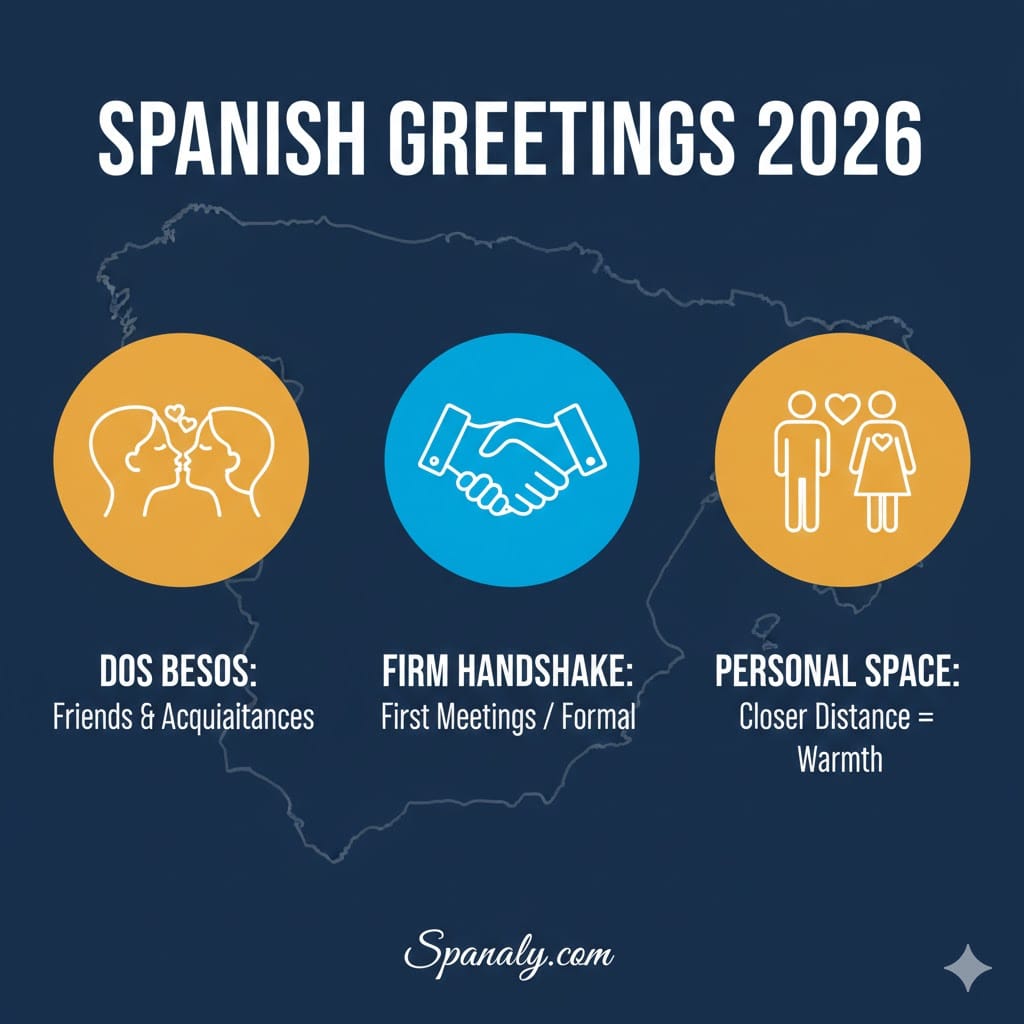
Spaniards value personal connections and warmth above all. When you meet someone for the first time in 2026, you should follow these social cues to make a great impression:
The Handshake: Use a firm handshake and maintain direct eye contact in professional or formal settings. This gesture shows your confidence and respect for the other person.
The “Dos Besos”: Once you build a rapport or meet friends, you should offer two light kisses on the cheeks (starting with the right). Men usually stick to a handshake or a warm hug unless they are close relatives.
Physical Distance: Expect a closer physical distance than you might find in Northern Europe or the US. Spaniards express warmth through touch, and they don’t intend to intrude on your personal space.
Explore Local Customs: To understand how these greetings vary across different regions, check our Spanish Attractions guide for more cultural context.
Use Proper Titles: When you address elders or people in formal positions, use “Señor” or “Señora” followed by their surname to show extra courtesy.
💡 Expert Tip: Always say a polite “Hola” or “Buenos días” when you enter a small shop or an elevator. Locals appreciate travelers who acknowledge their presence and show basic manners.
🍴 Dining & Table Manners
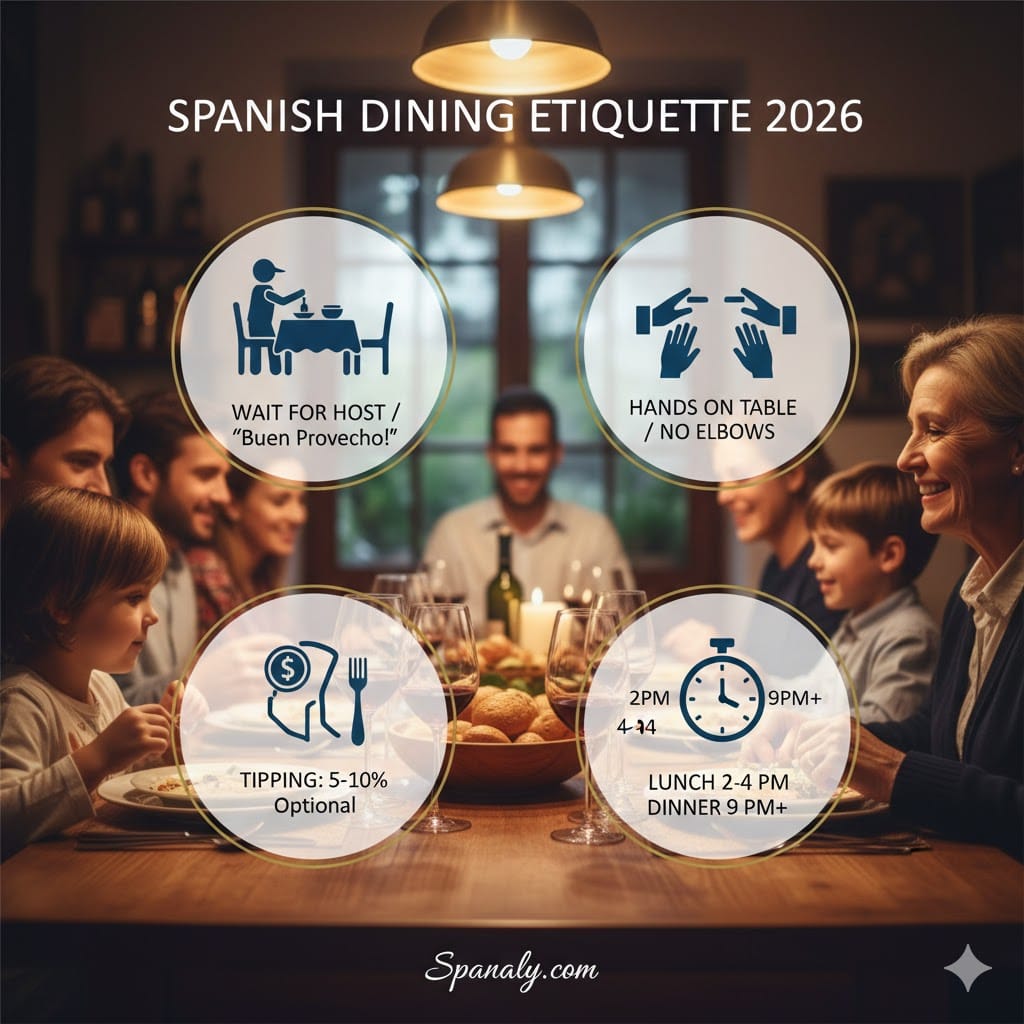
In Spain, mealtime represents a sacred social ritual rather than just a way to refuel. In 2026, you can master the dining scene by adopting these active habits:
Wait for the Signal: You should wait for the host to say “¡Buen provecho!” before you pick up your cutlery. This small gesture shows respect for the person who prepared the meal.
Keep Hands Visible: You must keep your hands on the table at all times—never hide them in your lap. However, you should avoid resting your elbows on the table surface.
The Tapas Strategy: As you will discover in our Spanish Cuisine guide, you don’t need to wait for a host at a busy tapas bar. If you see a gap at the counter, you should take it immediately!
Bread Etiquette: Use your bread to assist your fork when pushing food, but you should never use it as a sponge to soak up sauce during formal dinners.
The Bill Ritual: You should never expect the waiter to bring the bill automatically. In Spain, servers wait for you to ask for it (“La cuenta, por favor”) because they don’t want to rush your experience.
🍷 Wine Protocol: If you pour wine for yourself, always offer it to your companions first. This proactive courtesy defines the Spanish communal dining spirit in 2026.
⏱️ Punctuality and the Spanish Concept of Time
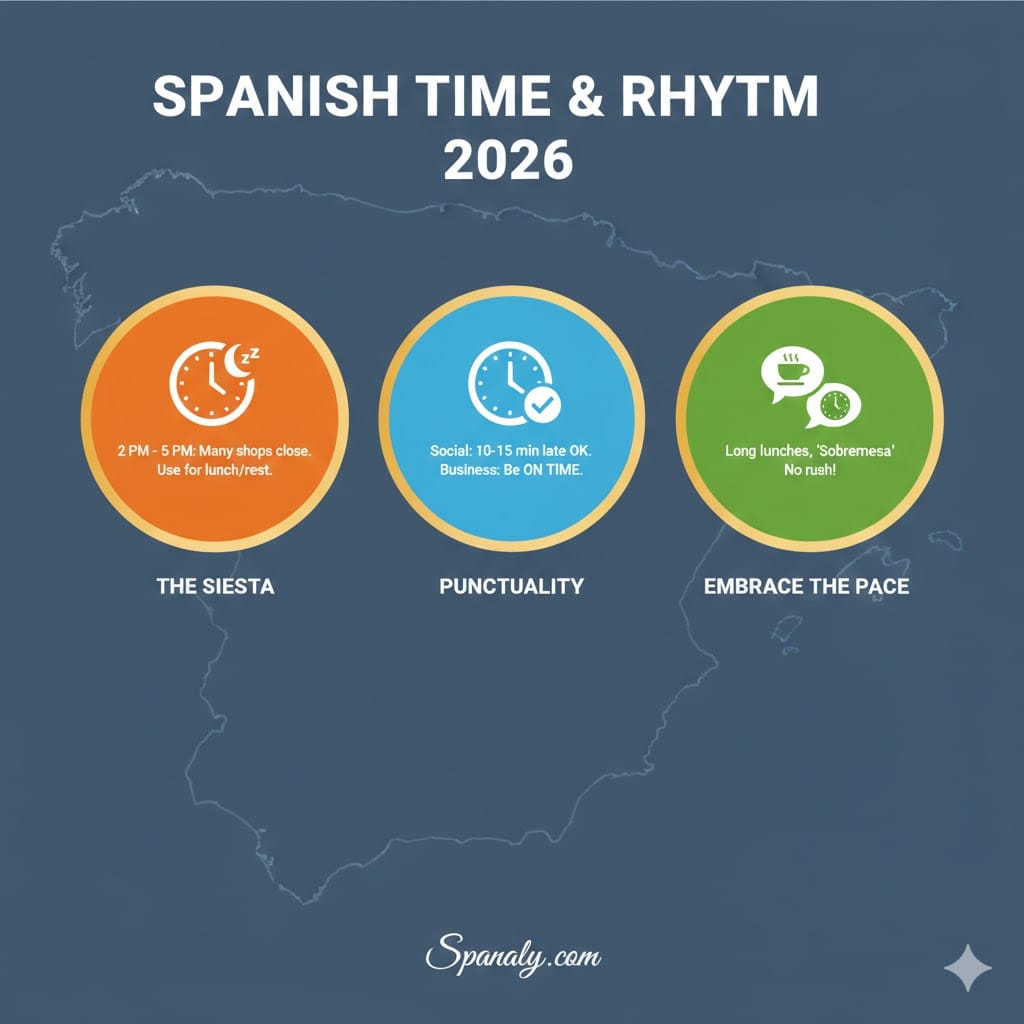
While the world moves at a frantic pace, Spain maintains its own unique rhythm. In 2026, you will enjoy your trip much more if you adapt to these local time-keeping habits:
Social Flexibility: When you meet friends for a casual drink, you should expect them to arrive 10–15 minutes late. In Spain, we view this “fashionable lateness” as a sign of a relaxed and stress-free social life.
Strict Business Hours: While social life is flexible, you must respect strict business hours. If you plan a visit using our Ultimate Madrid Travel Guide, remember that many professional offices and smaller shops still close for the Siesta.
Dinner Times: Spaniards rarely eat dinner before 9:00 PM. If you show up at a restaurant at 7:00 PM, you will likely find the kitchen closed or the dining room empty.
The “Mañana” Mindset: When someone says “Mañana”, they don’t always mean “tomorrow” literally. They often mean “in the near future.” You should embrace this patience rather than pushing for immediate results.
📅 Pro Tip: For official appointments, tours, or train departures, you must arrive on time. Spain’s modern infrastructure and professional services run with high precision in 2026.
👗 Dress Code: Elegance in Simplicity
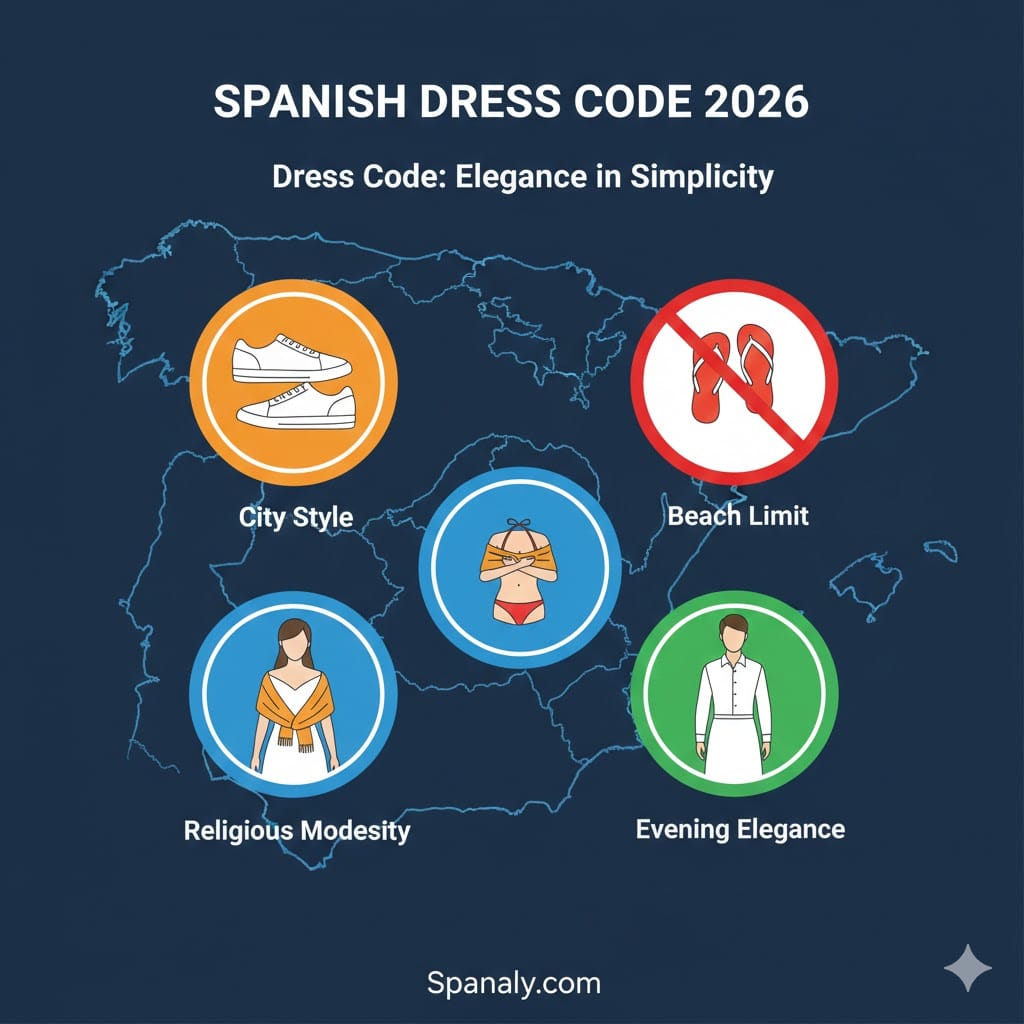
Spaniards take great pride in their appearance. In 2026, the secret to fitting in is “Polished Casual”—looking neat without trying too hard.
City Style: In Madrid or Barcelona, swap your flip-flops for stylish sneakers or loafers. Locals generally dress up more than you might expect for a casual walk.
The Beach Limit: Keep swimwear and flip-flops strictly for the beach or poolside. Walking through city centers or dining in beachwear is considered disrespectful.
Religious Modesty: When visiting cathedrals or churches (like Sagrada Família), always cover your shoulders and knees. Carrying a light scarf is a smart 2026 travel hack.
Evening Elegance: For dinner or “Going out,” locals tend to dress up. A smart shirt or a simple dress will make you feel right at home in a Spanish Restaurante.
📱 Digital Etiquette & Social Media (New Section)
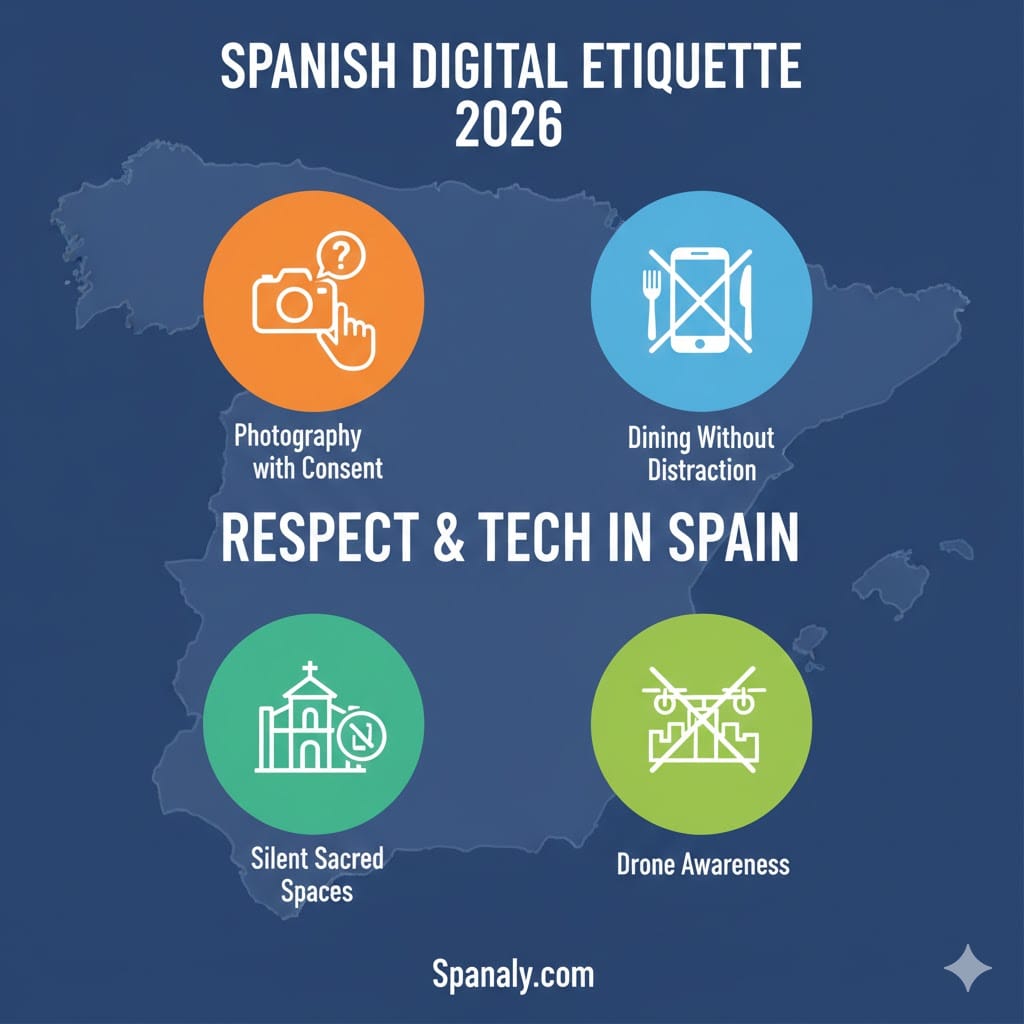
In the era of 2026, how you use technology in Spain matters just as much as how you speak. Respecting local privacy is the ultimate sign of a sophisticated traveler.
Photography with Consent: Always ask for permission before taking close-up photos of local artisans, street performers, or children. A simple nod or asking “¿Puedo?” goes a long way.
Dining Without Distraction: While taking a quick photo of your Tapas is fine, avoid long phone calls or loud videos at the table. Meals are for conversation, not screens.
Silent Sacred Spaces: In museums and churches, ensure your phone is on silent. Use flash only where explicitly permitted to preserve historical artifacts.
Drone Awareness: Spain has strict regulations regarding drones in historic centers. Always check local 2026 apps for “No-Fly Zones” to avoid heavy fines and respect local peace.
🗣️ Communication Style & Body Language
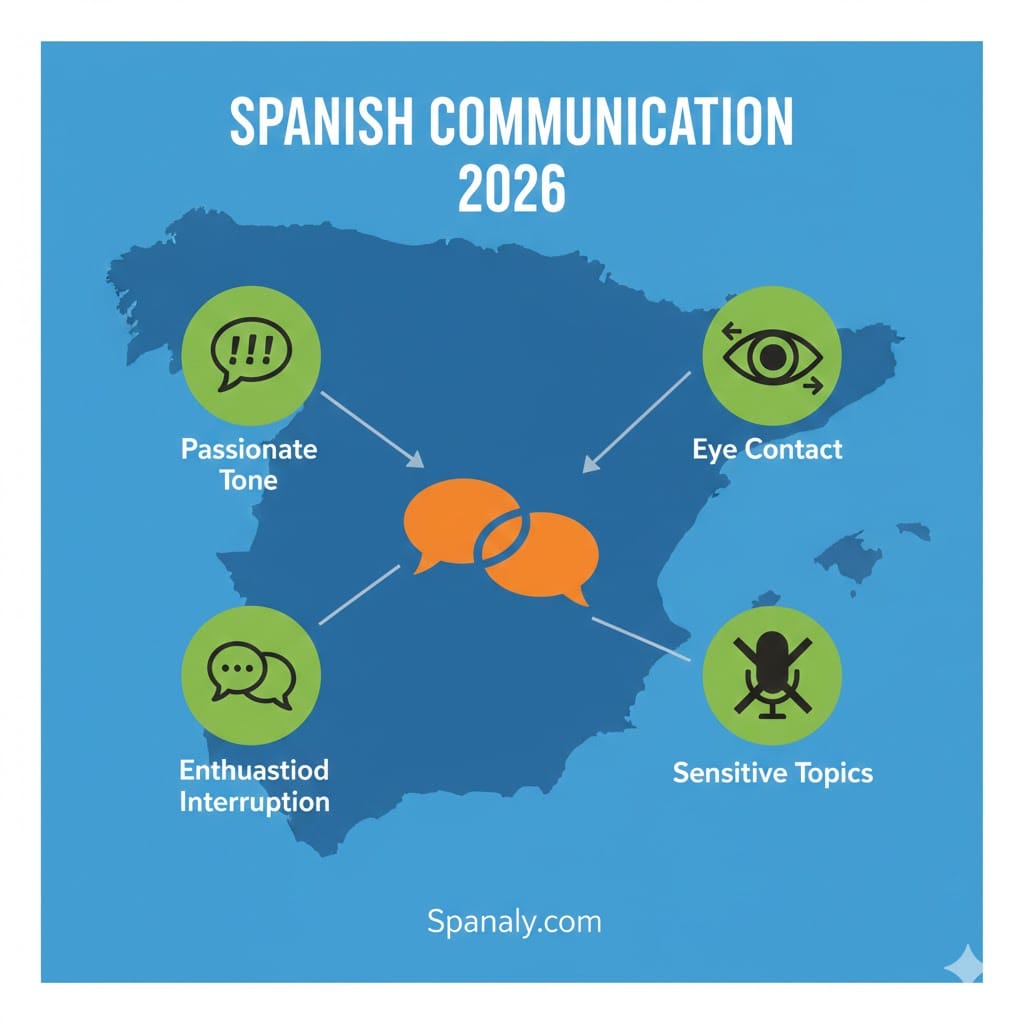
Spaniards communicate with passion and energy. To connect effectively with locals in 2026, you should embrace these expressive communication habits:
Embrace the Volume: Don’t assume people are arguing if they speak loudly. Spaniards use high volume to show enthusiasm and engagement in a topic.
The Art of Interruption: You might notice that people interrupt each other frequently. In Spanish culture, we view this as a sign that you are actively listening and interested in the conversation, not as an act of rudeness.
Physical Contact: Expect a pat on the arm or a touch on the shoulder during a talk. Spaniards use physical touch to build trust and show friendliness.
Expressive Gestures: Watch the locals during Spanish Festivals to see how much they use their hands to tell a story. You should use your own gestures to help convey your feelings when words aren’t enough.
Eye Contact: You must maintain steady eye contact. If you look away frequently, your Spanish counterpart might think you are untrustworthy or uninterested.
📢 Language Note: While many locals speak English, you will win hearts instantly if you use basic Spanish phrases like “¡Qué guay!” (How cool!) or “¡Olé!” to show your appreciation for the moment.
🏰 Respect for Culture, Religion, and Heritage
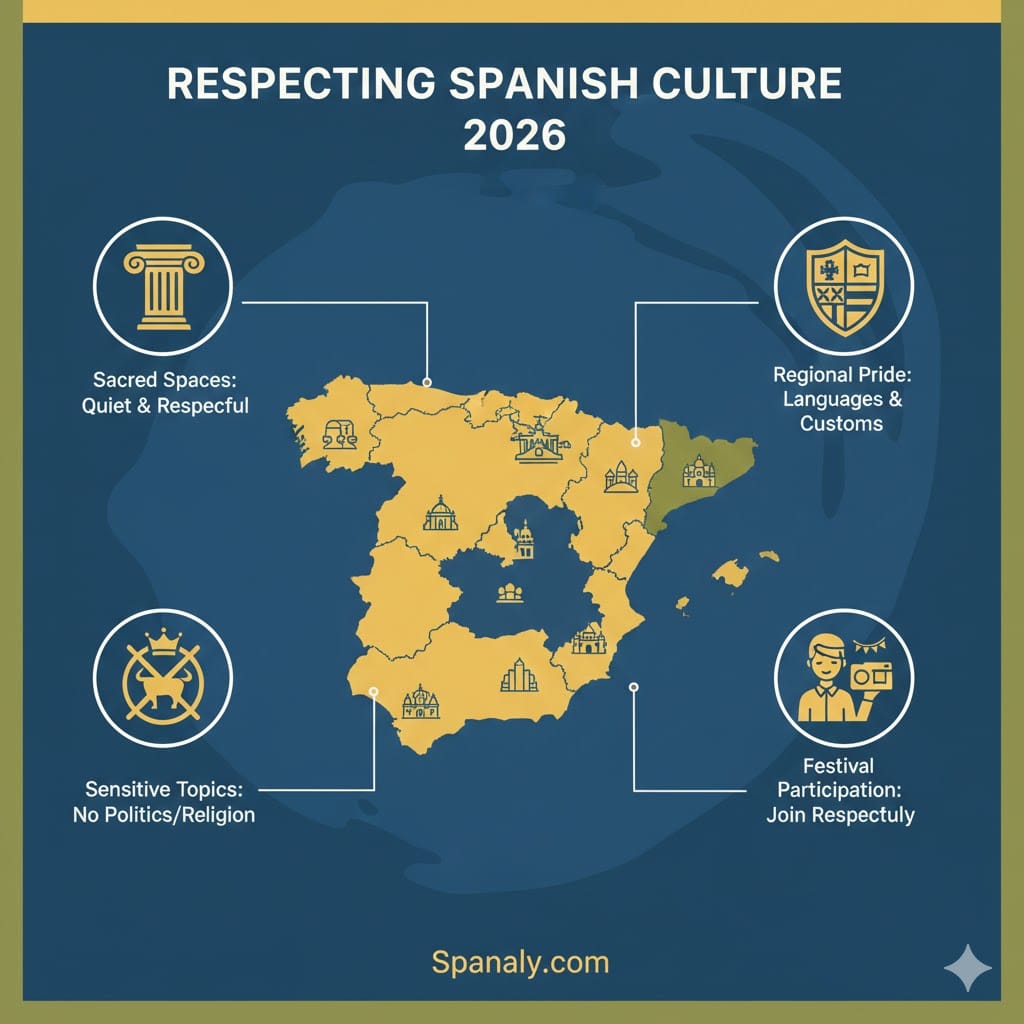
Spain’s identity is a rich tapestry woven from Roman, Moorish, and Christian history. In 2026, showing respect for this heritage is the mark of a true traveler.
Sacred Spaces: Whether you are admiring the grandeur in our Ultimate Madrid Travel Guide or visiting local chapels, maintain a quiet and respectful demeanor.
Regional Pride: Spain is a land of diverse regions. Locals in Catalonia, the Basque Country, or Galicia take immense pride in their unique languages and customs.
Sensitive Subjects: Avoid making jokes or light comments about religion, the monarchy, or local traditions like bullfighting, as these can be deeply personal for many.
Festival Participation: You are always welcome to join local fiestas! However, when exploring the historic neighborhoods in the Ultimate Seville Travel Guide, remember that some events like Semana Santa are solemn religious occasions.
🏛️ Heritage Tip: Spain’s monuments are treasures of humanity. Following “No Touch” rules and staying on designated paths helps preserve these wonders for future generations.
🤫 Public Behavior and Noise Levels
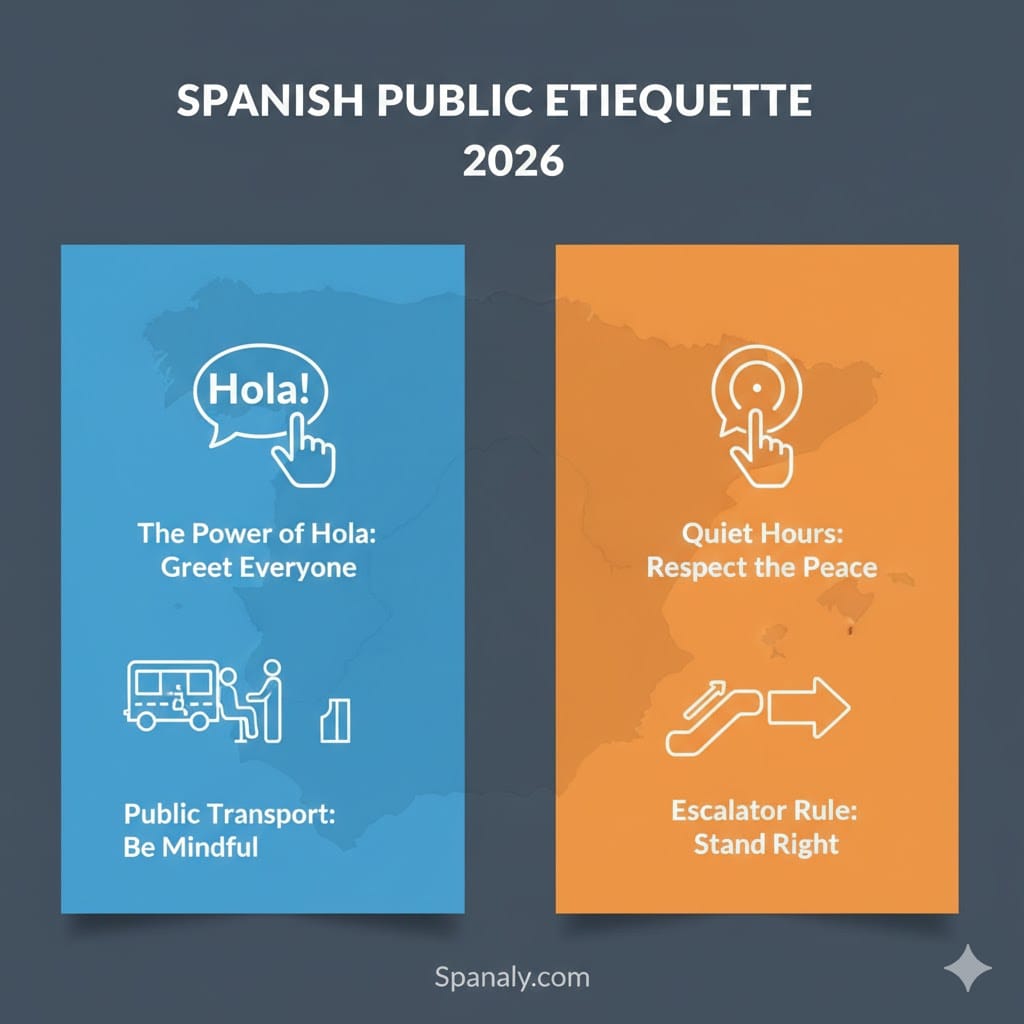
Spaniards balance vibrant street life with a deep respect for shared spaces. In 2026, you should follow these guidelines to navigate public areas like a seasoned traveler:
Embrace the Street Life: You will notice that life in Spain happens outdoors. Whether you are exploring the narrow alleys of our Ultimate Seville Travel Guide or sitting in a plaza, you should join the lively atmosphere without hesitation.
Respect the Afternoon Hush: Between 2:00 PM and 5:00 PM, many residential areas observe the Siesta. You should lower your voice and avoid making loud noises during these hours to respect the locals’ rest.
Public Transportation Manners: When you use the Metro or buses, you must allow passengers to exit before you attempt to board. Also, keep your phone conversations quiet to avoid disturbing others in the cabin.
Avoid Excessive Public Drunkenness: While Spain enjoys its wine and beer, locals rarely drink to the point of losing control in public. You should enjoy your drinks responsibly to maintain a respectful image.
Queueing Culture: You will find that Spaniards respect queues (la cola). Always ask “¿Quién es el último?” (Who is the last one?) when you arrive at a pharmacy or a bakery to find your rightful spot.
🚶 Space Awareness: On busy sidewalks, you should keep to the right to allow the flow of foot traffic. This simple habit keeps the vibrant city centers moving smoothly in 2026.
🏠 Visiting Homes & Invitations
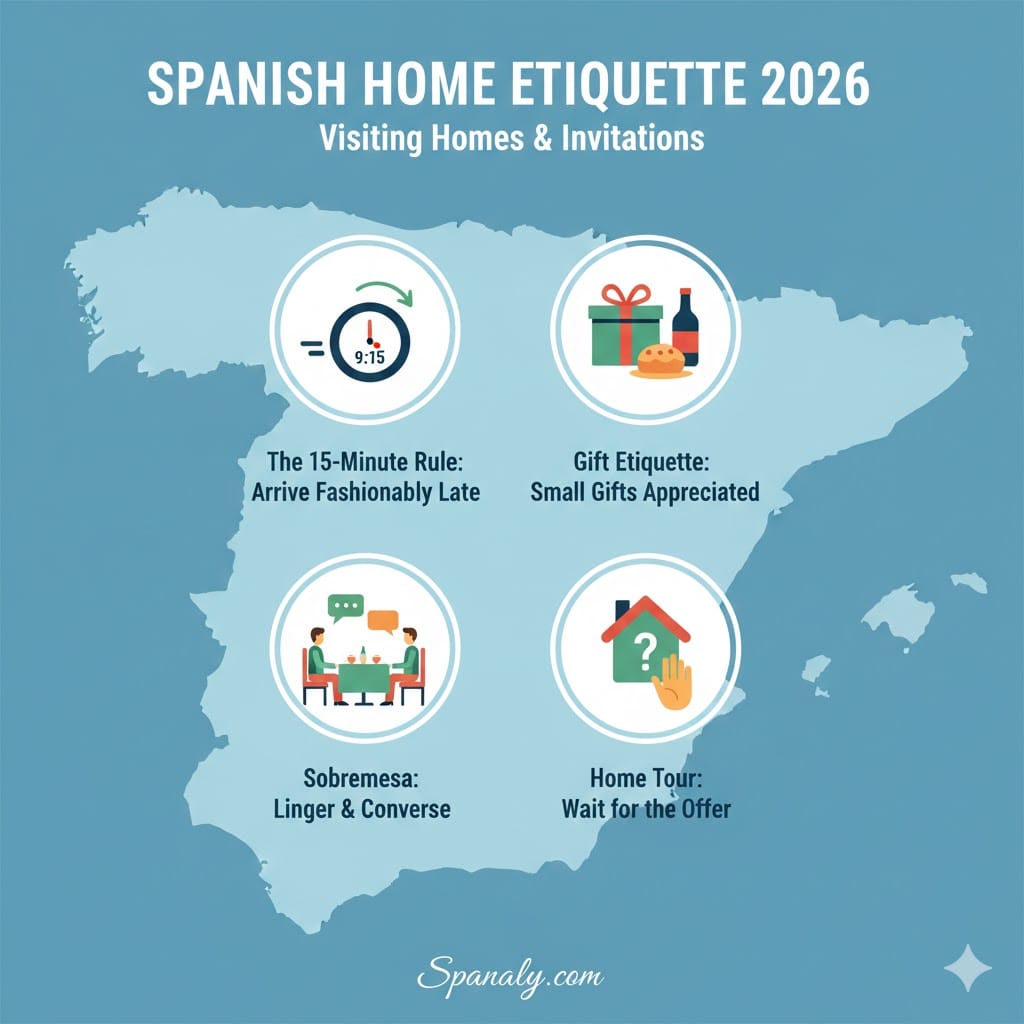
Being invited to a Spanish home is a sign of true friendship. In 2026, following these traditional gestures will make you the perfect guest.
The 15-Minute Rule: If you are invited for dinner at 9:00 PM, arriving at 9:10 PM or 9:15 PM is considered polite. Arriving exactly on time or early might catch your host unprepared.
Gift Etiquette: Never show up empty-handed. A high-quality box of chocolates, a bottle of wine, or pastries from a local Pastelería are always appreciated.
The “Sobremesa” Tradition: As mentioned in our Spanish Cuisine guide, don’t plan to leave immediately after eating. The post-meal conversation is often the highlight of the evening.
Touring the Home: Unlike some cultures, it’s best to wait for the host to offer a tour of the house rather than asking to see the rooms yourself.
🎁 Hosting Tip: If you want to impress your hosts, a small souvenir from your home country is a fantastic conversation starter and a deeply respected gesture in 2026.
💸 Tipping and Financial Etiquette
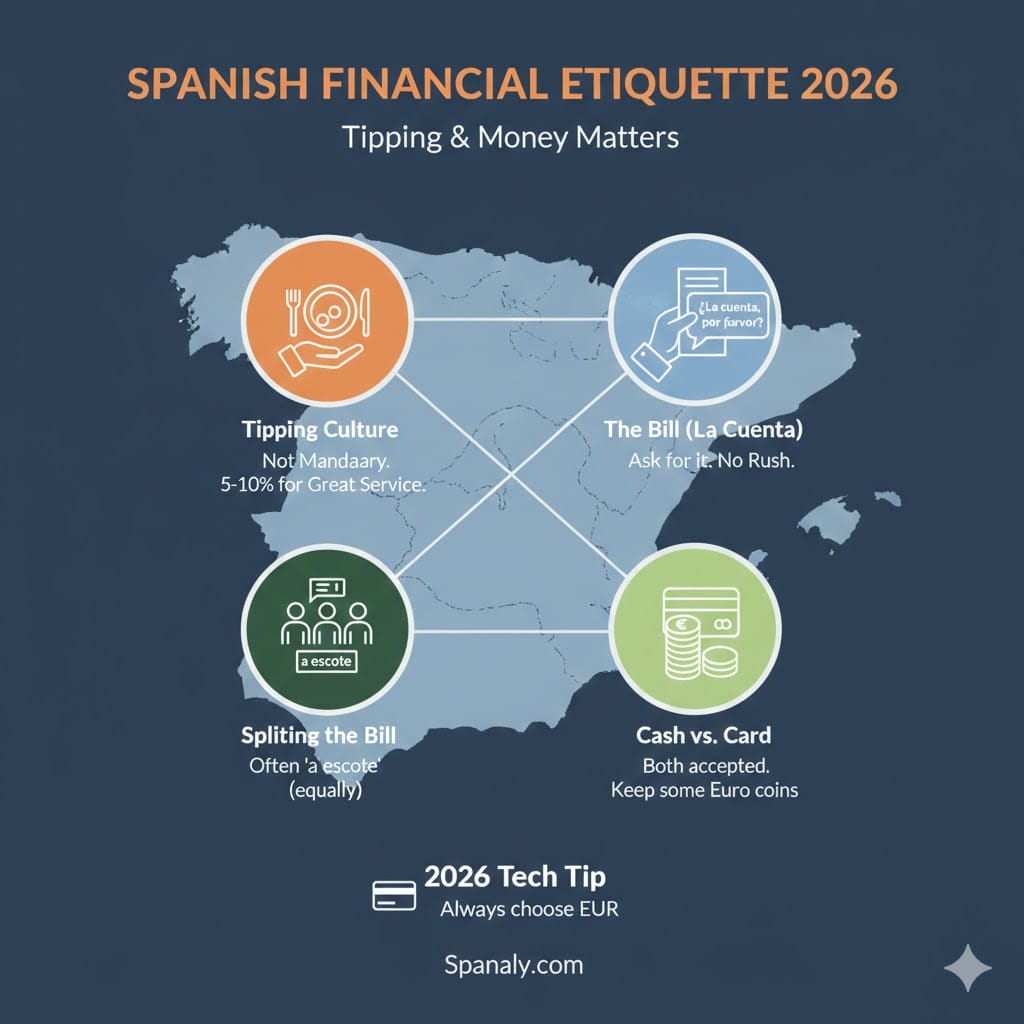
Navigating money matters in Spain is straightforward once you understand the local mindset. In 2026, the focus remains on fairness rather than obligatory percentages.
Tipping Culture: Tipping is not mandatory in Spain as service charges are included. However, leaving small change or rounding up the bill in casual cafes is common. For exceptional service in a nice Restaurante, a tip of 5–10% is a generous gesture.
The Bill (La Cuenta): In Spain, servers will rarely bring the bill unless you ask for it (“La cuenta, por favor”). Rushing guests is considered rude, so feel free to enjoy your Spanish Cuisine experience.
Splitting the Bill: While apps for splitting costs are popular in 2026, the traditional way is often “a escote” (splitting equally) or one person treating the group, expecting to be treated next time.
Cash vs. Card: Most establishments in cities like those in our Ultimate Madrid Travel Guide accept cards and mobile payments. However, keeping some Euro coins is essential for small tapas bars or remote villages.
💳 2026 Tech Tip: Always choose to be charged in Euros (EUR) rather than your home currency when using a card to get the best exchange rate from your bank.
🌟 Pro Tips for a Flawless Spanish Experience
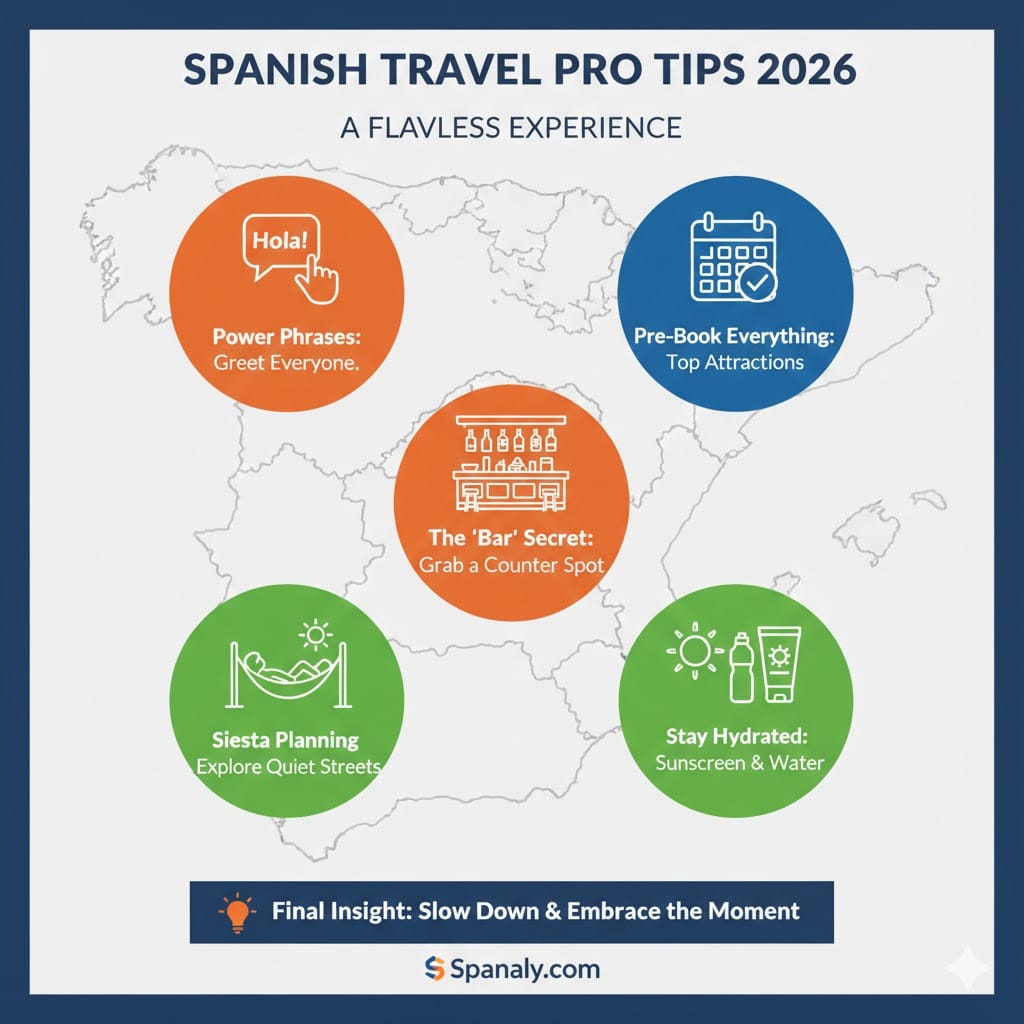
To truly master the art of Spanish travel in 2026, keep these expert recommendations in your back pocket:
Learn the “Power Phrases”: While many Spaniards speak English, starting with a polite “Hola” or “Perdón” shows deep respect for the culture and instantly warms up the local response.
Pre-Book Everything: For world-class Spanish Attractions like the Alhambra or Sagrada Família, booking weeks in advance is no longer optional—it’s a 2026 necessity to avoid disappointment.
The “Bar” Secret: Don’t wait to be seated in a busy Tapas bar. If there’s a gap at the counter, take it! This is the most authentic way to enjoy Spanish Cuisine.
Siesta Planning: Use the afternoon quiet hours to explore the less-crowded streets of your destination, whether you are following our Ultimate Seville Travel Guide or wandering through Madrid.
Stay Hydrated & Solar-Ready: The Spanish sun is legendary. Always carry a reusable water bottle and wear sunscreen, especially during outdoor Spanish Festivals.
💡 Final Insight: The best way to respect Spain is to simply slow down. Don’t try to see everything in one day; instead, embrace the quality of the moment over the quantity of sights.
🤝 Visitor FAQs – Cultural Etiquette in Spain Guide 2026
👋 How should I greet someone for the first time in Spain?
For a first meeting in 2026, a firm handshake is the professional standard. Between friends, the "dos besos" (two light kisses) is common. Don't be surprised by the close physical distance; it's a sign of Spanish warmth.
🗣️ Why do Spaniards speak so loudly? Is it a sign of anger?
Not at all! Spaniards are passionate and expressive. Raised voices usually indicate enthusiasm and active engagement in the conversation. In Spanish culture, interrupting is often a sign of interest rather than rudeness.
👗 What should I avoid wearing in Spanish cities?
Avoid wearing beachwear (swimsuits or flip-flops) in city centers; it is considered disrespectful. Modesty (covering shoulders and knees) is strictly required for religious sites like the Sagrada Família.
🏠 What is the etiquette if I'm invited to a Spanish home?
Always bring a small gift (pastries or wine). Arriving 10-15 minutes after the scheduled time is the local norm. Be prepared for a long sobremesa—the social conversation that happens after the meal.
🤫 Are there any sensitive topics I should avoid?
Avoid discussing politics or the Civil War. Respect regional identities (Catalan, Basque, etc.) and their unique languages. Showing interest in local traditions is always a safer and more appreciated path.
Cultural Etiquette Guide by Spanaly.com
✅ Embrace the Spanish Way of Life
Mastering Cultural Etiquette in Spain is not about following rigid rules, but about embracing a lifestyle built on warmth, respect, and passion. By understanding these nuances in 2026, you transform from a mere tourist into a welcomed guest who truly connects with the local soul.
Be Patient: Embrace the slower pace of the Siesta and the long Sobremesa.
Be Respectful: Honor the traditions, sacred sites, and regional identities.
Be Present: Put away the screen and dive into the vibrant energy of the streets.
Spain is a country that gives back as much as you put in. Whether you are wandering through the historic alleys of our Ultimate Seville Travel Guide or enjoying the cosmopolitan vibe of Madrid, your cultural awareness will be your most valuable travel asset.
🌍 Your Journey Starts Here: Ready to explore more? Don’t forget to check our Spanish Attractions guide to start planning your next unforgettable adventure!