🛡️ Spain is consistently ranked as one of the world’s most captivating travel destinations, celebrated for its architectural marvels, Mediterranean lifestyle, and warm hospitality. While the country is remarkably safe for visitors, the high volume of tourism in 2026 inevitably attracts petty crime and sophisticated scams designed to catch travelers off guard.
The secret to a worry-free Spanish adventure lies in awareness, not fear. By understanding the local landscape and recognizing common red flags, you can navigate even the busiest plazas with total confidence.
What You Will Learn in This 2026 Safety Guide:
The Reality of Safety: An up-to-date look at crime rates and police presence in major cities.
Scam Recognition: How to spot “distraction teams,” fake officers, and modern digital traps.
Smart Habits: Practical tips on how to protect your valuables without losing your peace of mind.
Emergency Protocols: A ready-to-use directory of 2026 emergency numbers and tech tools.
Whether you are planning to explore the Top Attractions in Spain or lose yourself in the backstreets of Andalusia, this guide empowers you to stay one step ahead of the risks while focusing on what truly matters: the joy of discovery.
✅ How Safe Is Spain for Travelers in 2026?
Statistically, Spain remains one of the safest countries in the world for international visitors. Violent crime is extremely rare, and the overall safety atmosphere allows for a relaxed travel experience. In 2026, the Spanish government has further increased the presence of specialized tourist police units in major city centers to ensure a welcoming environment.
However, you should understand the local safety dynamics to stay fully protected:
Efficient Police Forces: You can rely on three main bodies: the Policía Nacional (urban areas), the Guardia Civil (highways and rural areas), and the Mossos d’Esquadra (specifically in Catalonia). Most officers in tourist hubs now speak basic English to assist you better.
Low Violent Crime, High Petty Theft: While you don’t need to worry about serious safety threats, you must stay vigilant against “opportunistic theft.” Pickpockets are professional and target those who appear distracted or carry valuables openly.
Preparation is Key: Your safety starts with how you prepare your gear. You should choose anti-theft bags and hidden money belts as outlined in our Seasonal Travel Packing Guide for Spain, which helps you blend in and stay secure.
High-Vigilance Zones in 2026:
You should be particularly mindful of your surroundings in these specific locations:
Barcelona: The Metro system, Las Ramblas, and the Barceloneta beach.
Madrid: Puerta del Sol, Gran Vía, and the bustling El Rastro market.
Transportation Hubs: Major train stations like Atocha (Madrid) and Sants (Barcelona) are magnets for pickpockets during peak hours.
🚨 The Most Common Tourist Scams in Spain (2026 Edition)
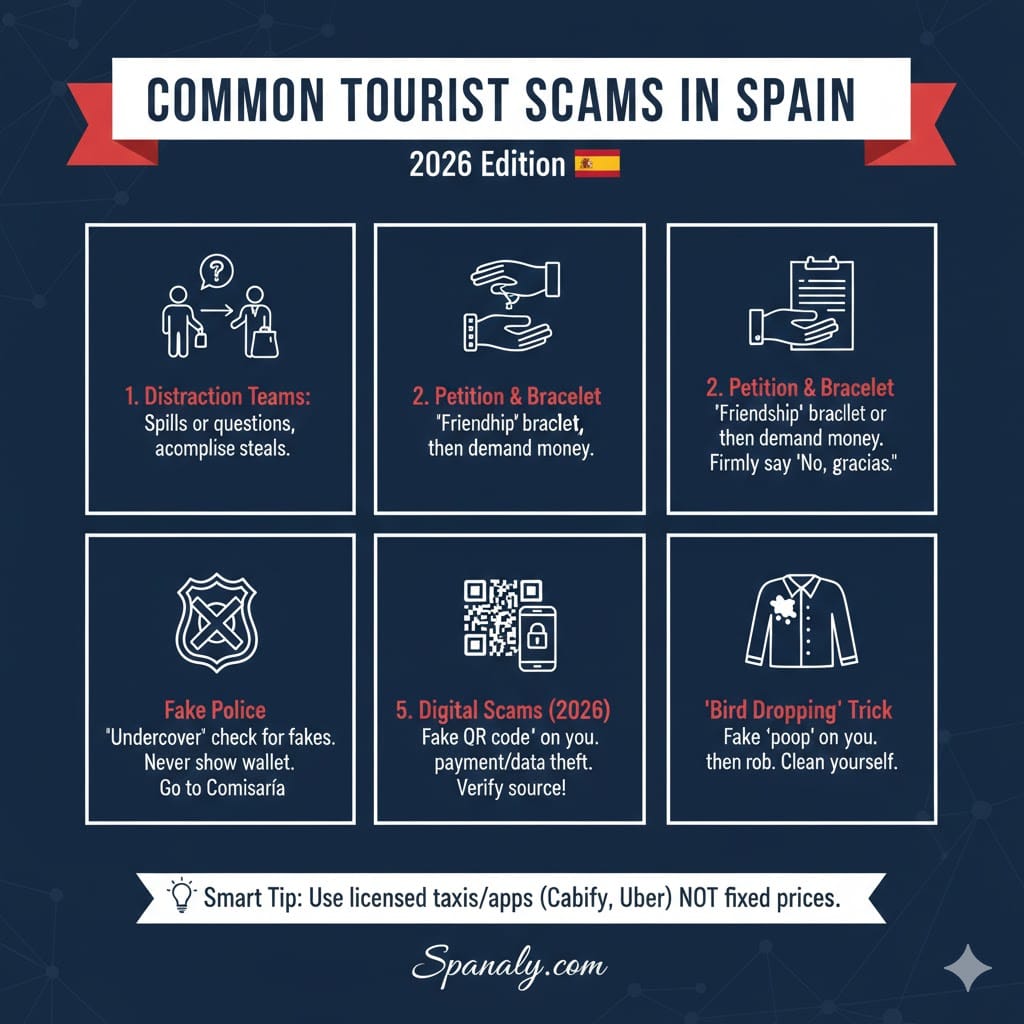
Scammers in Spain are often non-violent but highly skilled at distraction. You should recognize these common patterns to protect yourself and your belongings:
The Distraction Teams: Groups of two or more people often work together in crowded areas. One person might spill something on your clothes or ask for directions while an accomplice silently picks your pocket. You must stay alert whenever a stranger approaches you with a sudden “accident.”
The Petition & Bracelet Scams: Common in places like Plaza de España in Seville or near the Sagrada Família. A person may try to tie a “friendship” bracelet on your wrist or ask you to sign a fake charity petition. Knowing the Cultural Etiquette in Spain will help you realize that locals rarely approach strangers this aggressively; you should firmly say “No, gracias” and keep moving.
Fake Police Officers: Some scammers pose as undercover officers and ask to inspect your wallet for “counterfeit bills.” You should know that real Spanish police will never ask to see your wallet or cash in the street. If this happens, insist on going to the nearest police station (Comisaría).
The “Bird Dropping” Trick: Someone tells you that a bird just pooped on your jacket and offers to help you clean it. While you are distracted, they take your valuables. You should ignore the “help” and clean it yourself in a safe, indoor location.
Digital Scams & Fake QR Codes: In 2026, you must be careful with QR codes in public places. Some scammers paste fake codes over legitimate ones to steal your data. Always verify the source before scanning.
💡 Smart Tip: If you are using a taxi, you should only use licensed vehicles with visible meters or trusted apps like Cabify or Uber. You should avoid any driver who offers a “fixed price” that isn’t officially listed.
🛡️ Practical Safety Tips for a Worry-Free Trip
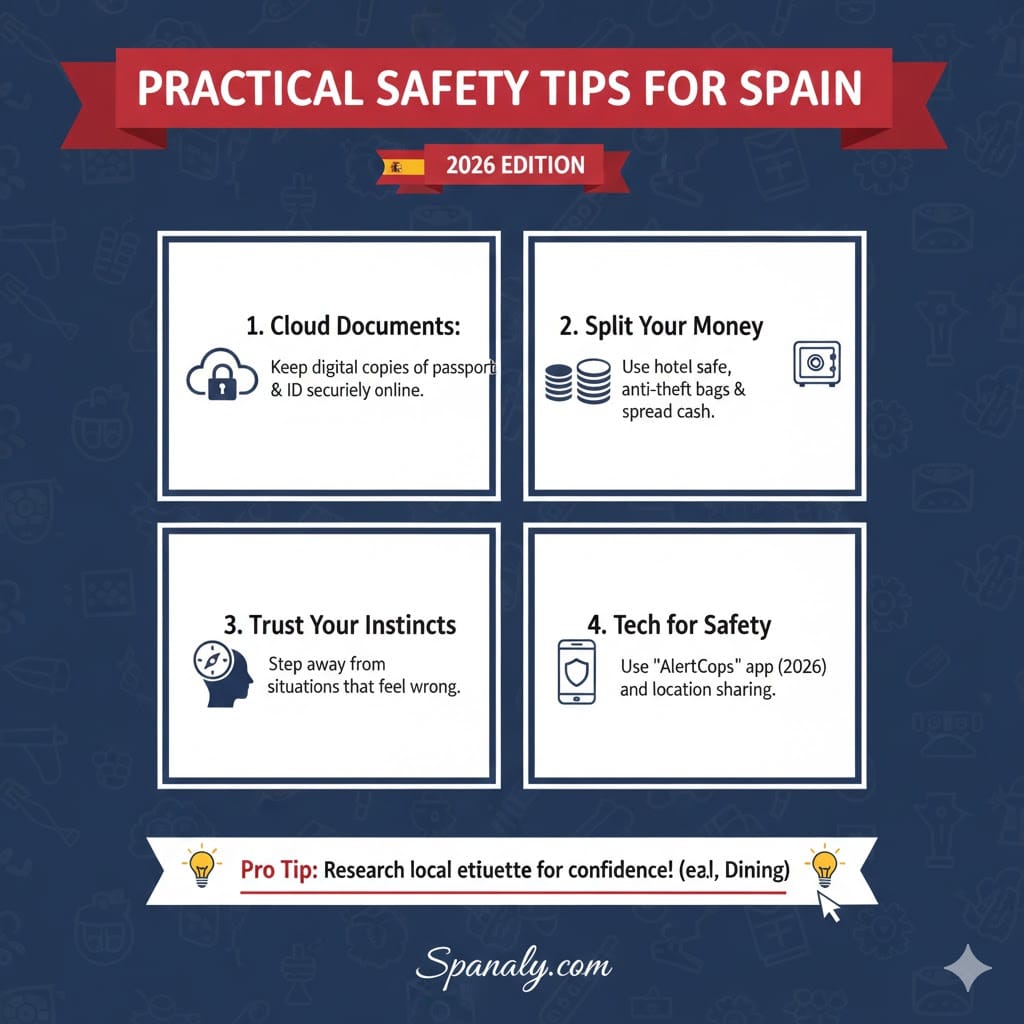
Even in a safe country like Spain, adopting smart habits ensures your trip remains stress-free. You should stay one step ahead of potential risks by following these proven precautions:
Secure Your Belongings: You should use anti-theft crossbody bags with zippers facing inward. In crowded metro stations or busy markets, you must keep your bag in front of your body at all times.
Split Your Finances: You should never carry all your cash and credit cards in one place. You should leave your passport and emergency backup cash in your hotel safe and only carry what you need for the day.
Stay Alert While Dining: When you are Mastering the Art of Ordering Food in Spain, you should avoid hanging your bag on the back of your chair or placing your phone on the table. Professional pickpockets often target distracted diners in outdoor terraces.
Trust Your Instincts: If a situation feels “off” or a stranger is being overly helpful without reason, you should politely excuse yourself and walk toward a well-lit area or a shop.
Digitize Your Records: You should take photos of your passport, travel insurance, and ID, storing them in a secure cloud service like Google Drive or iCloud for instant access in case of loss.
📱 Using Technology for Safety in 2026
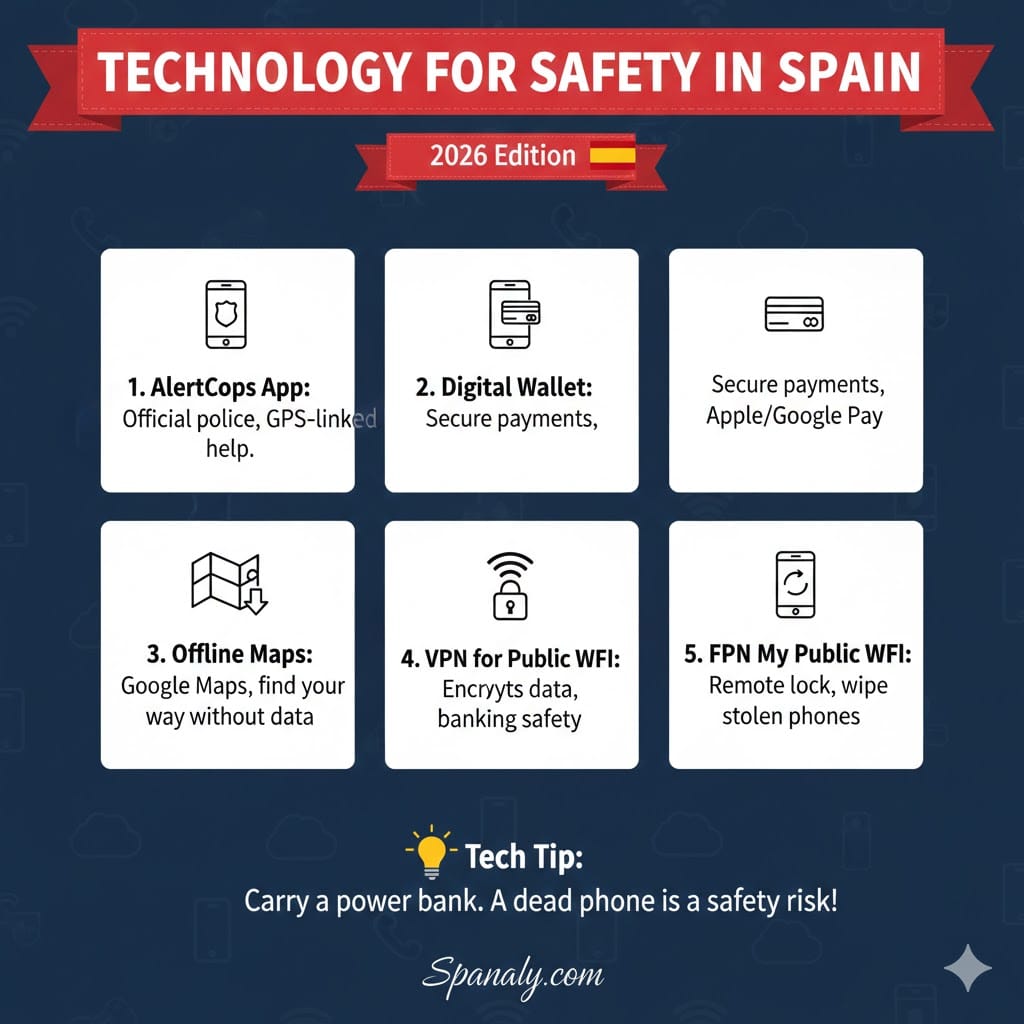
In 2026, technology is your greatest ally in staying safe while exploring Spain. The country has embraced digital safety tools that allow travelers to connect with authorities and navigate cities with confidence. You should ensure your smartphone is equipped with these essential tools:
AlertCops App: This is the official citizen security app of the Spanish Law Enforcement Agencies. You must download it. It allows you to send a geo-localized alert to the nearest police center and even has a “Guardian” feature to share your location with trusted contacts or the police in real-time.
Digital Wallet Security: You should use Apple Pay or Google Pay whenever possible. These methods are more secure than physical cards as they use tokenization to protect your real card details.
Google Maps Offline: Before heading out to explore Top Attractions in Spain, you should download offline maps of the city. This ensures you can find your way back to your hotel even if you lose your data connection or enter a “dead zone.”
Secure Connectivity: You should be cautious with public Wi-Fi in major plazas. In 2026, you must use a VPN (Virtual Private Network) to encrypt your data if you need to access banking apps or personal emails while on a public network.
Find My Device: You must ensure that “Find My iPhone” or “Find My Device” is active. If your phone is lost or stolen, you can remotely lock it or wipe your sensitive data instantly.
💡 Tech Tip: You should keep a high-quality portable power bank in your bag. A dead phone in an unfamiliar city is a safety risk you can easily avoid.
📞 Emergency Numbers and Local Help (2026 Directory)
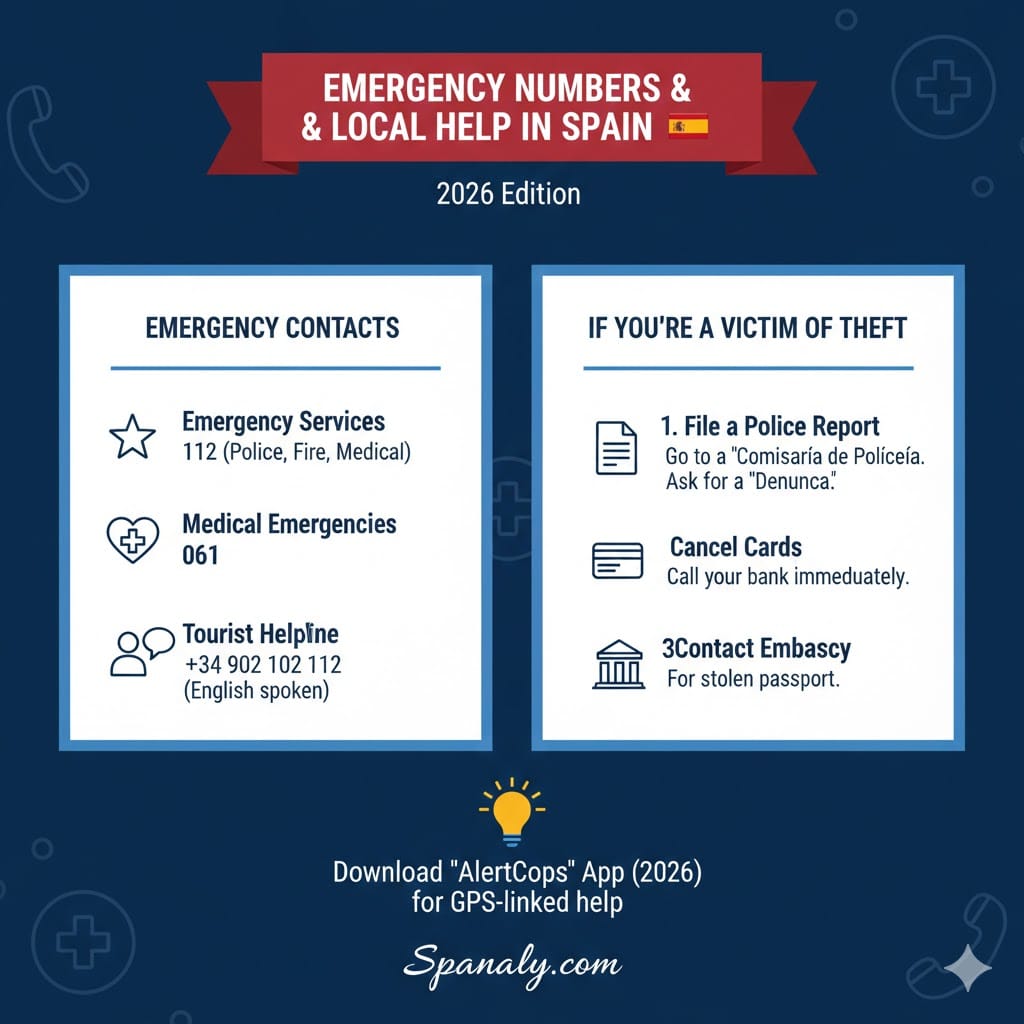
In case of an emergency, having the right numbers saved can save you precious time. You should keep this list accessible on your phone, even without an internet connection.
| Service | Number | Notes |
| General Emergency | 112 | Valid for Police, Fire, and Ambulance (Europe-wide). |
| National Police | 091 | For reporting crimes or immediate urban assistance. |
| Medical Emergencies | 061 | Direct line for urgent medical help and ambulances. |
| Tourist Helpline | +34 902 102 112 | Provides assistance in English and other languages. |
| Local Pharmacies | Look for Green Cross | Many are open 24/7 (Farmacias de Guardia). |
What to do if you are a victim of theft:
File a Report: You must go to the nearest Comisaría de Policía to file a “Denuncia” (official report). This is essential for insurance claims or replacing a stolen passport.
Cancel Cards: You should contact your bank immediately through their official app to freeze your accounts.
Contact Your Embassy: If you lose your passport, you must visit your country’s embassy in Madrid or consulate in Barcelona to obtain emergency travel documents.
🛡️ The 2026 Digital Safety Gap: Protecting Your Data
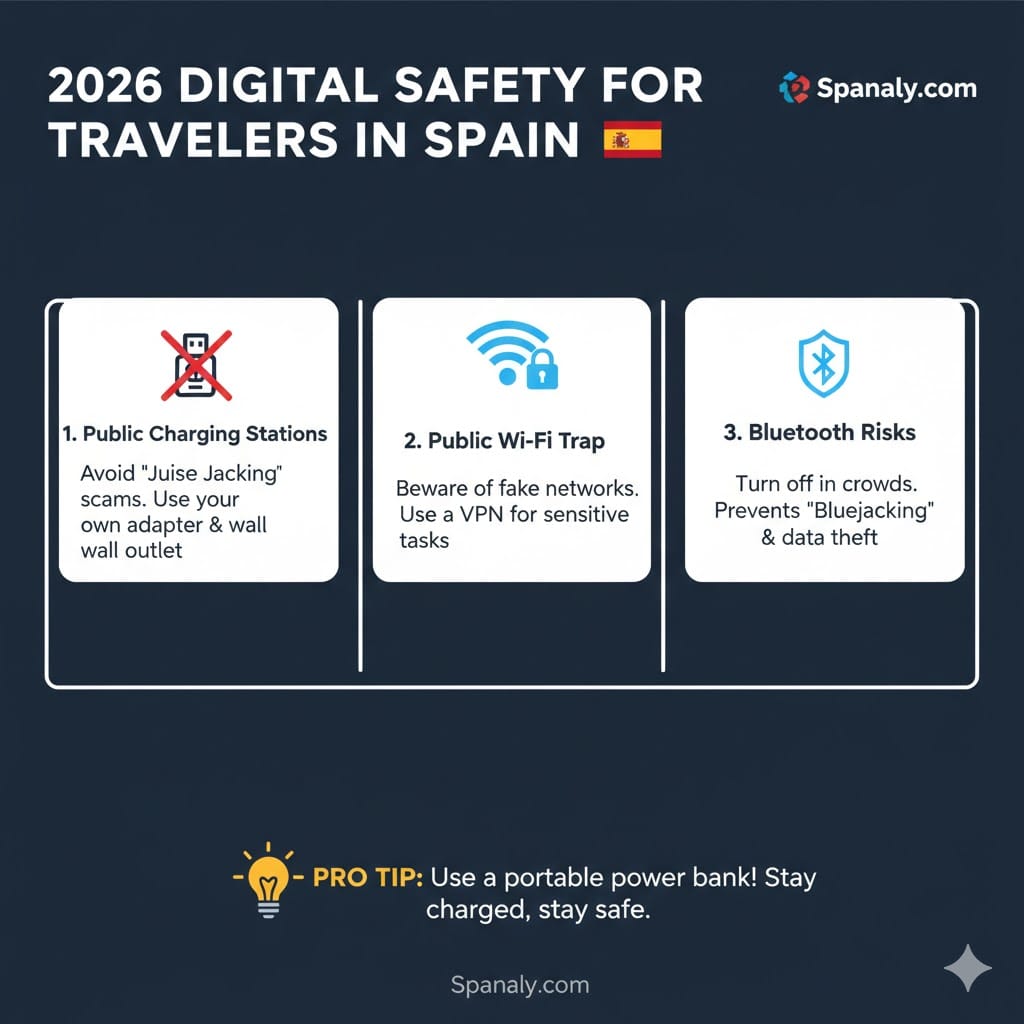
While physical theft is a known risk, cyber-safety has become a top priority for travelers in 2026. You should protect your digital footprint as carefully as your wallet:
Avoid Public Charging Stations: You should be wary of “Juice Jacking.” Scammers can modify public USB ports in airports or plazas to steal data from your phone. You should use your own power adapter and a standard wall outlet instead.
The Public Wi-Fi Trap: Hackers often create fake Wi-Fi networks with names like “Free_Spain_WiFi.” If you connect, they can intercept your login credentials. You must use a VPN or stick to your roaming data for sensitive tasks.
Bluetooth Risks: You should turn off your Bluetooth in crowded areas like the metro or festivals to prevent “Bluejacking” or unauthorized file transfers.
💃 Staying Safe During Nightlife and Events
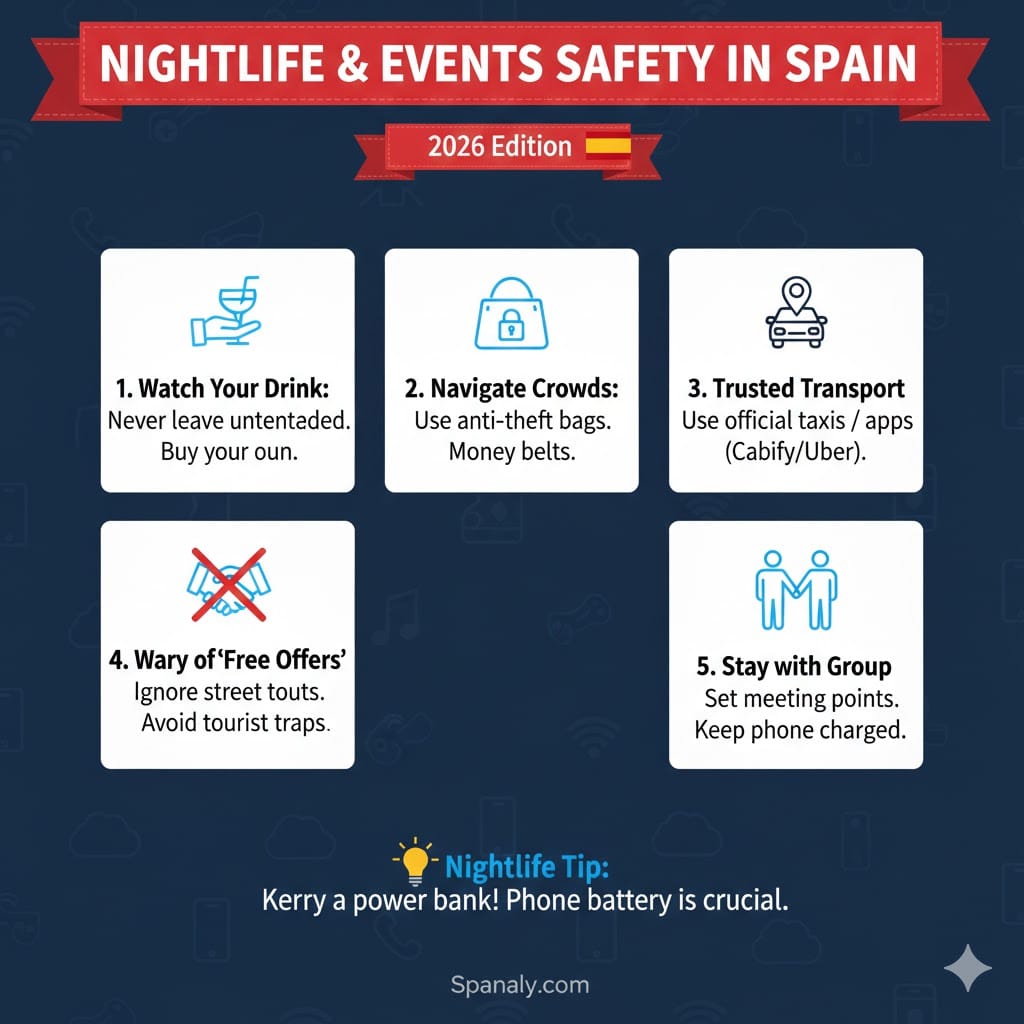
Spain’s nightlife is legendary, especially during major festivals where the energy is infectious. Whether you are enjoying a late-night dinner in Madrid or attending one of the Top Cultural Festivals in Spain 2026, you should follow these safety protocols to ensure your night ends on a high note:
Watch Your Drink: You must never leave your drink unattended in bars or clubs. Drink-spiking is rare but possible in crowded tourist spots. You should always buy your own drinks and keep them in your sight.
Navigate Crowds Smartly: During large-scale events like Feria de Abril or Las Fallas, crowds attract professional pickpockets. You should wear a money belt or an anti-theft bag tucked under your coat.
Use Trusted Transportation: After a late night out, you should avoid accepting rides from “unlicensed taxis.” You must stick to official white taxis or use reputable ride-sharing apps like Cabify or Uber to ensure your journey is tracked via GPS.
Be Wary of “Free Entry” Offers: You should ignore overly friendly strangers on the street offering “free club entry” or “discounted drinks.” Often, these are lures to overpriced venues or tourist traps.
Stay with Your Group: If you are traveling with friends, you should establish a “meeting point” in case you get separated in a crowd, especially since mobile networks can sometimes become congested during massive festivals.
💡 Nightlife Tip: You should keep enough battery on your phone for a ride home. Most modern Spanish bars in 2026 offer charging stations, but carrying your own power bank is always the safer choice.
💡 Quick Summary: The Golden Rules of Safety in Spain
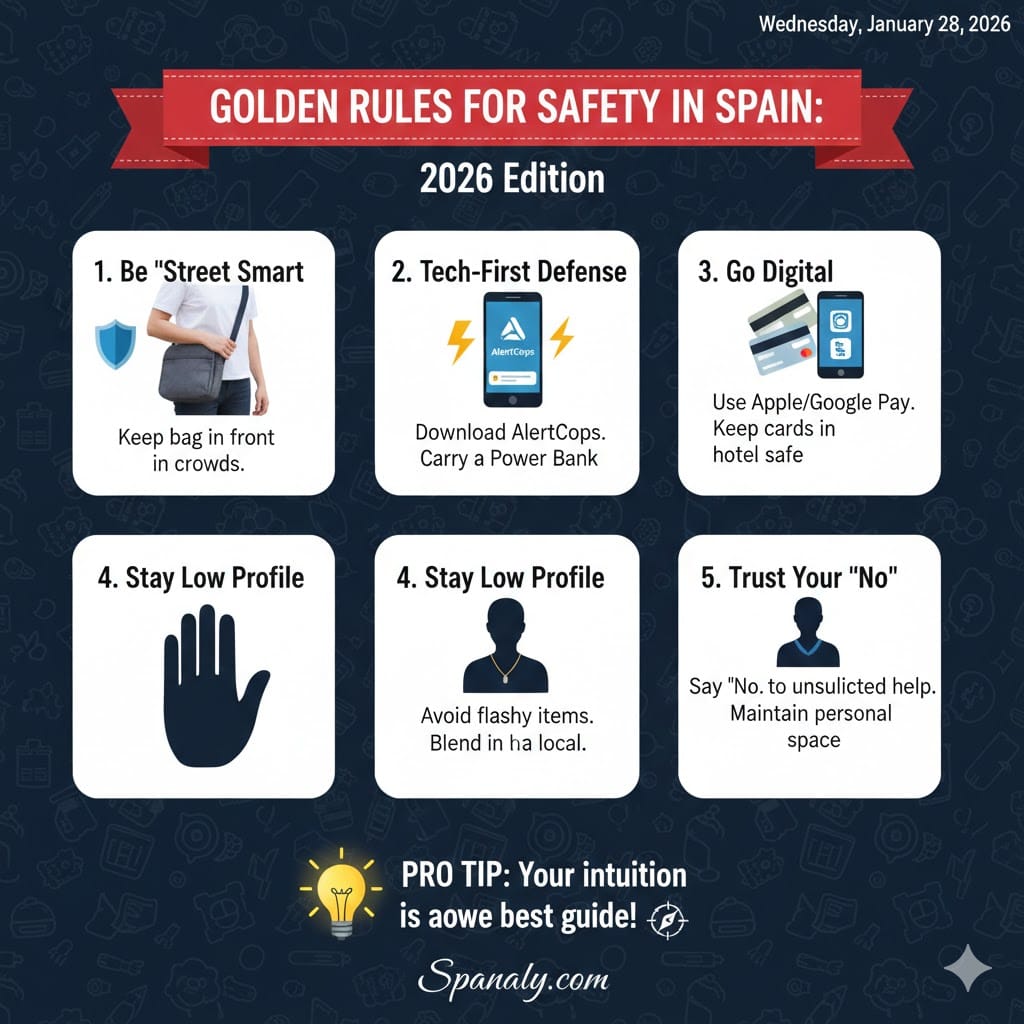
If you remember nothing else, you should keep these five “Golden Rules” in mind to ensure your 2026 Spanish adventure remains perfect:
🛡️ Be “Street Smart”: You should treat your belongings as if they are irreplaceable. In crowded plazas, your bag belongs in front of you, not on your back.
📱 Tech-First Defense: You must download the AlertCops app and keep a Power Bank in your bag. A working phone with a GPS-linked safety app is your best bodyguard.
💳 Go Digital: You should use Apple/Google Pay for daily expenses. You must keep your physical cards and passport locked in the hotel safe; a digital photo of your ID on your phone is usually enough for daily transit.
🤫 Stay Low Profile: You should avoid displaying expensive jewelry or large amounts of cash in public. You should blend in like a local to avoid becoming a target for distraction scams.
🛑 Trust Your “No”: You should feel empowered to say a firm “No” to unsolicited help, “free” gifts, or street performers who get too close. Your personal space is your safety zone.
🛡️ Visitor FAQs – 2026 Travel Safety & Scam Prevention
🚨 Is Spain safe for solo travelers in 2026?
Yes, Spain is exceptionally safe for solo travelers. Violent crime remains extremely rare. In 2026, enhanced patrols in tourist hubs have made it even safer, though you should still stay vigilant against petty pickpocketing in crowded spots like Las Ramblas or Puerta del Sol.
👮 How can I identify a fake police officer?
Genuine Spanish police never ask to see your wallet or cash on the street. In 2026, you can verify an officer's identity via the AlertCops app. If someone demands money, insist on going to the nearest Comisaría; real officers will always show their official badge (Placa) first.
📱 What should I do if my phone or passport is stolen?
First, use "Find My Device" to lock your phone. Then, visit the nearest police station to file a "Denuncia" (official report). This is mandatory for insurance and for your embassy to issue emergency travel documents. Keep a digital backup of your ID in the cloud for faster processing.
🚉 Is it safe to use the metro at night?
Metros in Madrid and Barcelona are safe and well-patrolled. However, as Digital Wallets are the norm in 2026, be careful when using your phone near the doors. "Snatch-and-run" thefts can occur just as the doors close, so keep your device secure during stops.
🕊️ How do I avoid "Rose" or "Bracelet" scams?
Never let strangers hand you rosemary or tie a "friendship" bracelet on your wrist. Once they do, they will demand aggressive payment. Politely but firmly say "No, gracias" and keep walking. In 2026, maintaining your personal space is still your best defense against these distraction traps.
Last updated for 2026 by Spanaly.com
✨Embracing Spain with Confidence
Spain is a country of vibrant colors, rich history, and unmatched hospitality. While it is important to stay aware of potential scams and safety risks in 2026, you should not let these precautions overshadow your excitement. By adopting a “street-smart” mindset, utilizing the latest safety apps like AlertCops, and protecting your digital footprint, you ensure that your Spanish adventure remains focused on making memories, not managing mishaps.
Safety is not about being afraid; it is about being prepared. Whether you are wandering through the Gothic Quarter of Barcelona or enjoying a sunset in Seville, your awareness is your best travel companion.
📣 Join the Spanaly Community!
Did you find this 2026 Safety Guide helpful? Your experience could help a fellow traveler stay safe!
Share this guide with anyone planning a trip to Spain this year.
Leave a comment below: Have you encountered any of these scams, or do you have a safety tip of your own?
Stay Updated: Subscribe to our newsletter for the latest travel insights and local secrets from across Spain.
¡Buen viaje and stay safe!