🌋 A Volcanic Treasure
Floating between the Atlantic breeze and African heat, the Canary Islands offer more than just eternal spring. At the heart of every Canarian table sits a humble yet legendary dish: Papas Arrugadas. These “wrinkled potatoes” are a testament to island creativity, born from volcanic soil and shaped by the salt of the sea.
They are simple, salty, and full of character—a bite-sized story of survival and pride.
🌍 Explore More: To understand how this dish fits into the wider world of Spanish flavors, dive into our Spanish Cuisine hub.
📜 Origins and History: From the Andes to the Atlantic
The story began in the 16th century when potatoes arrived from the Andes, making the Canary Islands the first European soil they ever touched.
The Volcanic Edge: The islands’ rich, mineral-heavy soil proved perfect for ancient varieties like the “Papa Bonita.”
Scarcity turned into Art: With fresh water often scarce, locals boiled their harvest in sea water. This didn’t just cook the potatoes; it created a natural preservative and the dish’s signature salty crust.
Identity: What started as a survival meal for farmers is now a protected symbol of Canarian identity, recognized by UNESCO as part of Spain’s cultural heritage.
🧪 The Science Behind the Wrinkles
Why do they wrinkle? It’s not just boiling; it’s physics. When potatoes simmer in highly concentrated salt water, the skins dehydrate slightly. As the water evaporates, the salt crystallizes into a fine, white “snowy” crust, while the inside remains incredibly buttery.
It’s a texture you won’t find anywhere else in the world—a perfect balance of a mineral exterior and a creamy interior.
👨🍳 The Masterclass: How to Cook Authentic Papas Arrugadas
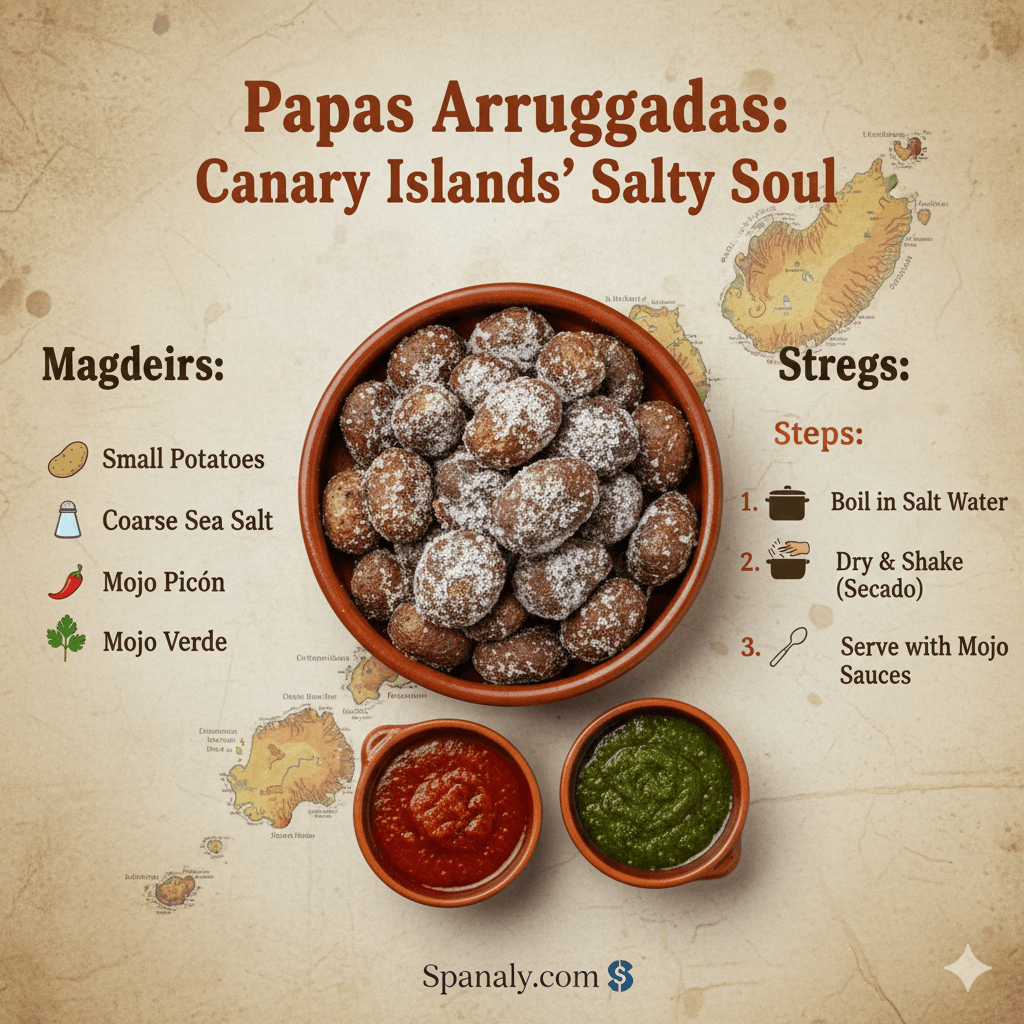
To make this definitive guide truly powerful, we must focus on the precise technique that separates a simple boiled potato from an authentic Canarian masterpiece.
🛒 Ingredients
The Potatoes: 1 kg of small, “waxy” potatoes (ideally Papa Bonita or Yukon Gold). Never peel them!
The Salt: 250g of Coarse Sea Salt. This is non-negotiable for creating the signature crust.
The Liquid: Water (just enough to barely cover the potatoes).
The Finish: A slice of lemon (a traditional secret to brighten the flavor and aid the wrinkling process).
🔥 The “Wrinkling” Method (Secado)
The Salt Boil: Place cleaned potatoes in a large pot. Add the salt and water. Cover and boil for 20-25 minutes until tender.
The Drain: Pour out all the water completely.
The “Secado” (Drying): This is the most important step. Return the pot to the stove over low heat. Shake the pot constantly for 2-3 minutes without a lid.
The Magic: Watch as the skins begin to wrinkle and a beautiful, snowy white salt crust forms on every potato.
🌶️ The Essential Mojo Sauces
A plate of Papas Arrugadas is incomplete without its “Mojo” companions. These sauces represent the soul of the islands:
🔴 Mojo Picón (The Red Soul): A fiery blend of garlic, cumin, vinegar, and dried Canarian peppers. It mirrors the heat of the volcanoes.
🟢 Mojo Verde (The Fresh Breeze): Made with fresh cilantro, parsley, and green peppers. It provides a cooling contrast to the salty potatoes.
🥖 Pairing Tip: While these potatoes are the stars, they often share the table with other Spanish icons like Patatas Bravas in mainland tapas bars.
🏛️ More Than a Dish – A Cultural Emblem
To Canarians, Papas Arrugadas represent heritage and resilience. They are served at every important milestone—from birthdays to local pilgrimages (Romerías). Often enjoyed alongside local volcanic wines, they are the centerpiece of a cuisine that has earned its place as part of the Intangible Cultural Heritage of Spain.
While you might start your meal with these salty treasures, Spanish tradition always has room for more. You might follow them with a hearty Escudella i Carn d’Olla if you find yourself in Catalonia, proving that Spanish gastronomy is a beautiful contrast of island simplicity and mainland richness.
📍 Where to Taste the Best Papas Arrugadas
Traveling through the Canary Islands offers endless opportunities to try this dish. Some must-visit spots include:
Guachinches (Tenerife): Family-run rustic taverns serving the most authentic homemade versions.
La Hierbita (Santa Cruz): A historic favorite known for its traditional Mojo recipes.
Casa Marcos (Fuerteventura): Where traditional roots meet creative island fusion.
🥔 Visitor FAQs – Papas Arrugadas & Mojo Sauce
🔹 Why is so much salt used, and will it be too salty?
The salt is essential for the "wrinkling" process, drawing moisture out while keeping the inside creamy. Surprisingly, they aren't overly salty; only a fine, flavorful crust forms on the skin, perfectly balancing the potato's natural sweetness.
🔹 Can I use any type of potato for this dish?
While the "Papa Bonita" is the authentic Canarian choice, you can use any small, waxy variety (like baby potatoes). Avoid large, starchy potatoes as they tend to fall apart during the traditional shaking phase.
🔹 Should I eat the skin or peel it?
Always eat the skin! The skin holds the signature salt crust and the most intense flavor. Peeling a Papa Arrugada is considered a culinary mistake in the Canaries, as the wrinkled texture is what makes the dish unique.
🔹 What is the difference between Red and Green Mojo?
Mojo Picón (Red) is spicy and smoky, usually paired with meat or potatoes. Mojo Verde (Green) is fresh and herbal, made with cilantro or parsley, and often served with fish. For the best experience, try them both together!
🌱 Is this dish suitable for vegans and gluten-free diets?
Absolutely. Papas Arrugadas and both Mojo sauces are 100% vegan and gluten-free by nature. They are among the healthiest and most natural tapas options available in Spanish cuisine.
Created by Spanaly.com
✨ Taste the Atlantic Breeze
Papas Arrugadas are more than food—they are a sensory trip to the islands. Imagine sitting by the ocean, the air filled with sea salt and laughter, while a plate of warm, wrinkled potatoes arrives at your table.
Whether you’re finishing your culinary journey with a sweet Ensaimada from Mallorca or a slice of Tarta de Santiago from Galicia, your experience with the “salty soul” of the Canaries will remain unforgettable. It is a dish that proves honesty and simplicity, when rooted in culture, become true art.