Table of Contents
Toggle🇪🇸 Discovering the Perfect Rhythm of Spain
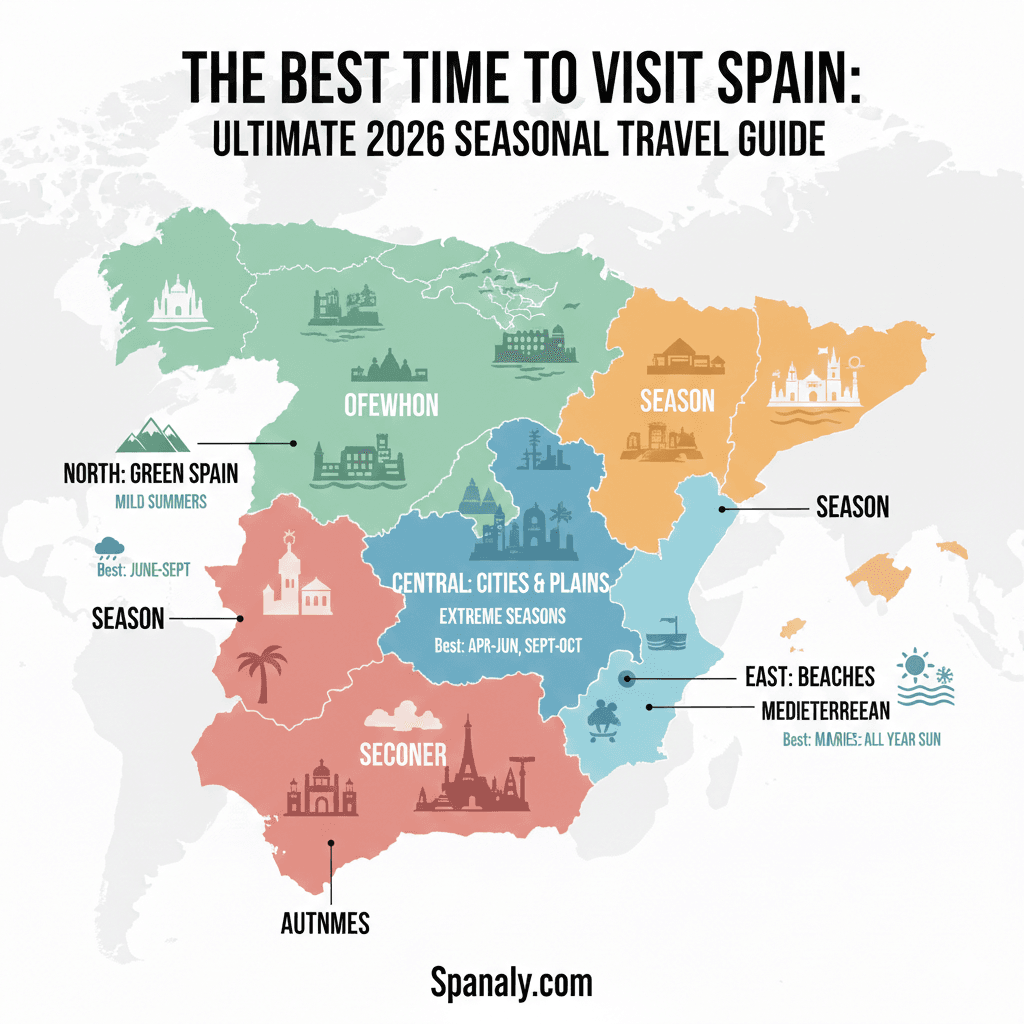
Spain is more than just a destination; it is a world of contrasts. From the sun-kissed beaches of the south to the emerald green mountains of the north, every corner has its own “perfect moment.”
In 2026, timing your visit correctly is the secret to a perfect trip. Whether you are looking for world-famous Spanish Festivals or want to explore historic Spanish Attractions without the crowds, this guide is your strategic roadmap.
What to expect in this guide:
🌡️ Seasonal Breakdown: Weather facts for every month.
🎭 Cultural Calendar: When to catch the best events.
📍 Regional Advice: Why the “best time” varies by city.
💡 Pro Tips: Local secrets to save money and stay comfortable.
🌸 Spring (March – May) – The Ideal Window
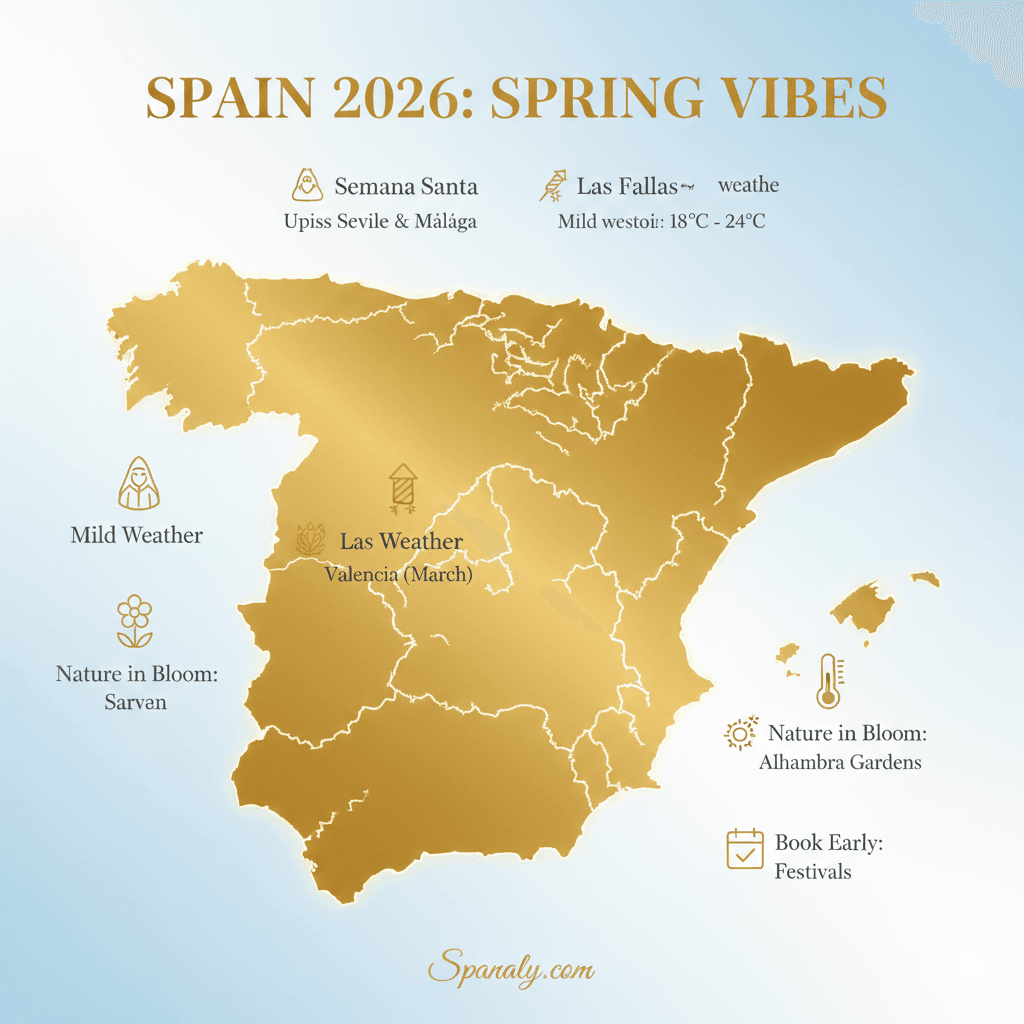
Spring is widely considered the absolute best time to explore Spain. The weather is refreshing, the landscapes are vibrant, and the heavy summer crowds haven’t arrived yet.
Why visit in Spring 2026?
🌡️ Perfect Weather: Temperatures average between 18°C and 24°C. It’s ideal for long walking tours in Ultimate Madrid Travel Guide or Barcelona.
🎭 Cultural Explosion: Witness the world-famous Semana Santa (Holy Week) and the April Fair in Seville.
🌿 Nature in Bloom: The cherry blossoms in Valle del Jerte and the gardens of the Alhambra are at their peak beauty.
Local Pro Tips:
🧥 Dress in Layers: Mornings can be chilly while afternoons are warm.
📅 Book Early: Even though it’s not “peak summer,” festivals like Las Fallas in Valencia (March) cause hotels to fill up months in advance.
☀️ Summer (June – August) – Sun, Sea, and Festivals

Summer in Spain is synonymous with vibrant energy, crystal-clear waters, and endless daylight. However, in 2026, the key to a successful summer trip is location. While the coasts are perfect, inland cities require a different strategy.
Why visit in Summer 2026?
🏖️ Beach Perfection: The Costa del Sol, Balearic Islands, and Costa Brava offer the ultimate Mediterranean lifestyle.
🎉 Iconic Festivals: Join the legendary La Tomatina in Buñol or the music-filled nights of Barcelona’s festivals.
🌙 Nightlife & Vibe: This is when Spain truly stays awake until dawn, with open-air “Terrazas” and seaside dining.
📍 Best Destinations for Summer:
San Sebastián: For cooler temperatures and the best Spanish Cuisine in the north.
Mallorca & Menorca: For world-class beaches and hidden calas.
Costa Brava: For a mix of art (Dalí) and stunning coastal trails.
⚠️ Important Local Warning: Avoid inland Andalusia (Seville, Córdoba) and Madrid during July and August if you are sensitive to heat. Temperatures often exceed 40°C. If you must visit, follow the local rhythm: Siesta in the afternoon and explore after 9:00 PM.
🍂 Autumn (September – November) – The Connoisseur’s Choice

Autumn is a masterpiece of colors and flavors. As the summer heat fades, Spain transforms into a paradise for foodies, hikers, and those seeking a more authentic, peaceful experience in 2026.
Why visit in Autumn 2026?
🍇 Gastronomy & Wine: It is the season of the Vendimia (Grape Harvest). Regions like La Rioja come alive with wine festivals and tastings.
🌡️ Pleasant Cooling: Temperatures drop to a comfortable 15°C – 23°C, perfect for exploring Spanish Attractions without the sweat.
💸 Better Value: Flight and hotel prices begin to drop significantly compared to the summer peak.
📍 Best Destinations for Autumn:
La Rioja: To witness the vineyards turning golden-red and participate in harvest traditions.
Madrid: The Retiro Park becomes a golden wonderland, making it the perfect time for our Ultimate Madrid Travel Guide routes.
Galicia: For mystical misty mornings, lush forests, and the freshest seafood festivals.
💡 Local Pro Tip: September is still warm enough for swimming in the Mediterranean, but without the crowds. It’s the “Secret Summer” of the Costa del Sol.
❄️ Winter (December – February) – Skiing & Sunny Escapes

Winter in Spain is full of surprises. While the center of the country can be cold, you can still find spring-like weather in the south or world-class slopes in the north. It is the best time for budget travelers and those who love festive traditions.
Why visit in Winter 2026?
⛷️ Winter Sports: Spain is the second most mountainous country in Europe. The Pyrenees and Sierra Nevada offer amazing skiing conditions.
☀️ Warm Escapes: The Canary Islands remain a tropical paradise with temperatures around 20°C all winter long.
🎄 Magical Traditions: Experience the unique “Three Kings Parade” (Cabalgata de Reyes) in January and beautiful Christmas markets in Madrid and Barcelona.
📍 Best Destinations for Winter:
Sierra Nevada (Granada): Unique for being a ski resort where you can see the Mediterranean from the peaks.
Canary Islands (Tenerife/Lanzarote): The best “winter sun” destination in Europe.
Seville: The city is pleasantly cool (16°C), perfect for exploring without the crowds or the heat.
💡 Local Pro Tip: If you visit the Mediterranean coast (Valencia/Malaga) in winter, you’ll enjoy bright blue skies and sunny terraces, even if it’s too cold for swimming. It’s the best time for cheap, luxury hotel deals!
💡 Quick Packing Insights for 2026
Before you zip your suitcase, remember that Spain’s diverse climate requires a smart strategy. Here is what you need to know at a glance:
☀️ Summer: Light linens are non-negotiable to survive the 40°C inland heat.
❄️ Winter: You’ll need a heavy coat for Madrid, but only a light jacket for the Canary Islands.
👞 The Secret: Always pack “smart-casual” outfits to blend in with Spain’s elegant dinner culture.
👉 Get your full month-by-month checklist here: What to Pack for Spain: Ultimate 2026 Seasonal Travel Guide
📍 Regional Weather Guide: Where to Go & When
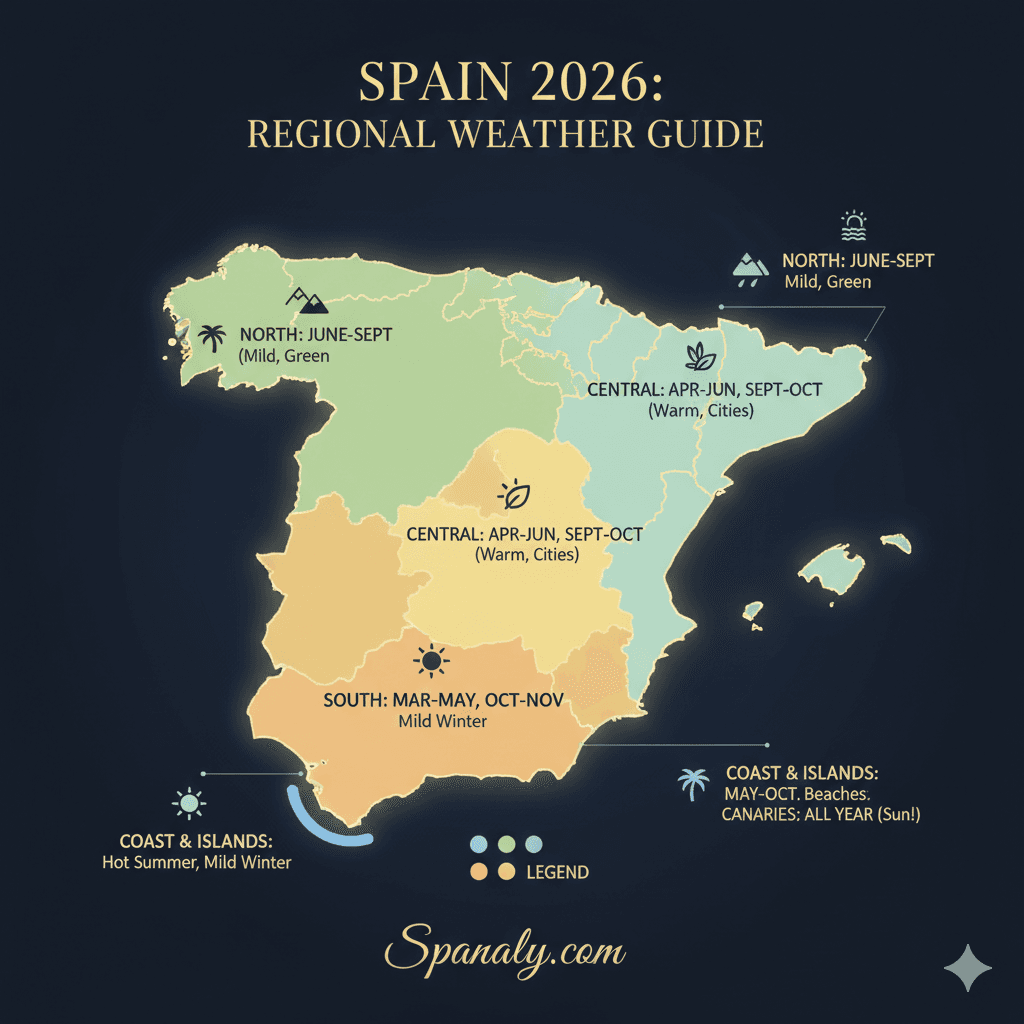
Spain is a collection of microclimates. Choosing the right month for the right region is the secret to a flawless 2026 itinerary.
🟢 Northern Spain (Galicia, Basque Country, Asturias)
Best Time: June to September.
Why: This is the “Green Spain.” It’s much cooler and rainier than the south. Summer offers perfect mild temperatures (22°C – 26°C) for hiking and coastal drives.
Avoid: November to March if you dislike rain and misty, grey skies.
🟡 Central Spain (Madrid, Castilla-La Mancha)
Best Time: April to June & September to October.
Why: The “Meseta” has extreme seasons. Spring and Autumn provide the most comfortable climate for exploring our Ultimate Madrid Travel Guide routes.
Avoid: July and August (intense heat) and January (bitter cold).
🔴 Southern Spain (Andalusia, Murcia)
Best Time: March to May & October to November.
Why: To see the Spanish Attractions of Seville and Granada in their glory without the heatwaves. Even winter is pleasant and sunny here.
Avoid: The peak summer months (July/August) unless you stay strictly on the coast.
🔵 Coastal Areas & Islands (Costa Brava, Costa del Sol, Balearics)
Best Time: May to October.
Why: Pure Mediterranean bliss. September is the “Golden Month”—the water is warm, but the crowds have thinned out.
Winter Tip: For guaranteed sun in December or February, head straight to the Canary Islands.
💡 Expert Tips for a Flawless Spain Trip
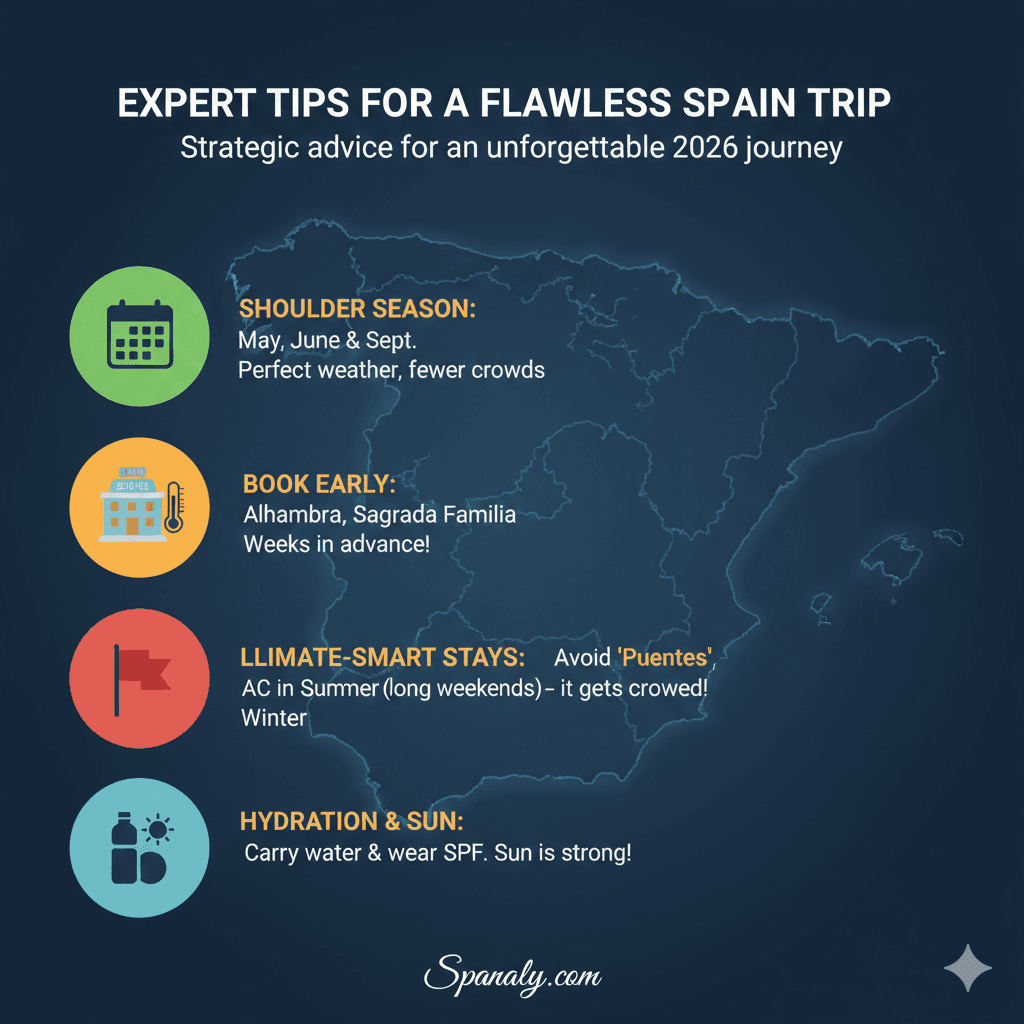
To make the most of your journey through Spain’s seasons and regions, keep these strategic tips in mind:
📅 The “Shoulder Season” Rule: If you want the perfect balance of great weather and lower prices, aim for May, June, or September. These are the “sweet spots” for 2026 travel.
🎟️ Book Top Attractions Early: Regardless of the season, landmarks like the Alhambra in Granada or Sagrada Familia in Barcelona require tickets weeks in advance.
🏨 Climate-Specific Stays: When booking in summer, ensure your accommodation has AC (common but not universal in old buildings). In winter, check for heating, especially in Madrid and the North.
🎉 Sync with Local Holidays: Check the local calendar for “Puentes” (long weekends). During these times, locals travel too, and cities can get very crowded.
💧 Hydration & Sun: Even in spring, the Spanish sun is strong. Always carry a reusable water bottle and wear SPF, especially when exploring Spanish Attractions.
📅 Visitor FAQs – Best Time to Visit Spain Guide 2026
☀️ When is the absolute best month for a general trip to Spain in 2026?
🏖️ Is it worth visiting Spain's coastal regions during the 2026 winter?
🥵 How should I handle the summer heat in Andalusia in 2026?
🍷 Which season is recommended for foodies and wine lovers?
⛷️ Can I experience both snow and sun in one trip?
Spain Travel Guide by Spanaly.com
🌟 Your Perfect Spain Journey Awaits
Spain is not just a destination; it is a feeling that changes with every season. Whether you are chasing the midnight sun on a Mediterranean beach in July, exploring the golden vineyards of La Rioja in October, or wandering through the historic streets of Seville in the mild February air, 2026 is the year to experience it all.
The best time to visit Spain truly depends on your personal rhythm. If you seek culture and comfort, the Spring and Autumn will never disappoint. If you crave the legendary Spanish energy and Seville, the vibrant Summer is your stage.
No matter when you choose to land, Spain’s warmth—both in its weather and its people—will be waiting for you. Pack your bags, follow our Seville, and get ready for the trip of a lifetime.
¡Buen viaje!