🏛️ Gaudí’s Dream on Passeig de Gràcia
On the elegant boulevard of Passeig de Gràcia, two of Antoni Gaudí’s most celebrated creations — Casa Batlló and Casa Milà (La Pedrera) — stand as living expressions of imagination turned to stone. Specifically, these masterpieces represent the pinnacle of Catalan Modernisme, where organic shapes and symbolic art redefine the urban landscape. Indeed, walking past these facades feels like entering a dream where nature and architecture are indistinguishable.
🎨 Artistic Soul: A vibrant display of Gaudí’s unique “trencadís” mosaic and fluid forms.
📍 Prime Location: Situated on Barcelona’s most upscale street, connecting the historic center to the Gràcia district.
🌍 World Heritage: Both icons are recognized by UNESCO for their outstanding universal value.
Notably, this famed street connects the lively La Rambla – The Heart of the City with the sophisticated atmosphere of northern Barcelona. Consequently, exploring these houses is essential for anyone wanting to understand the true identity of the city. To ensure a seamless trip, we recommend consulting our Ultimate Barcelona Guide for top logistics and transport tips.
💡 Spanaly Insight: Passeig de Gràcia is not just about architecture; it’s a sensory experience. Therefore, we suggest starting your walk from Plaça de Catalunya and moving upwards. Notably, this allows you to see the “Bone House” (Batlló) first, followed by the “Stone Quarry” (Milà), perfectly capturing the evolution of Gaudí’s genius.
🌿 The Artistic Vision of Antoni Gaudí
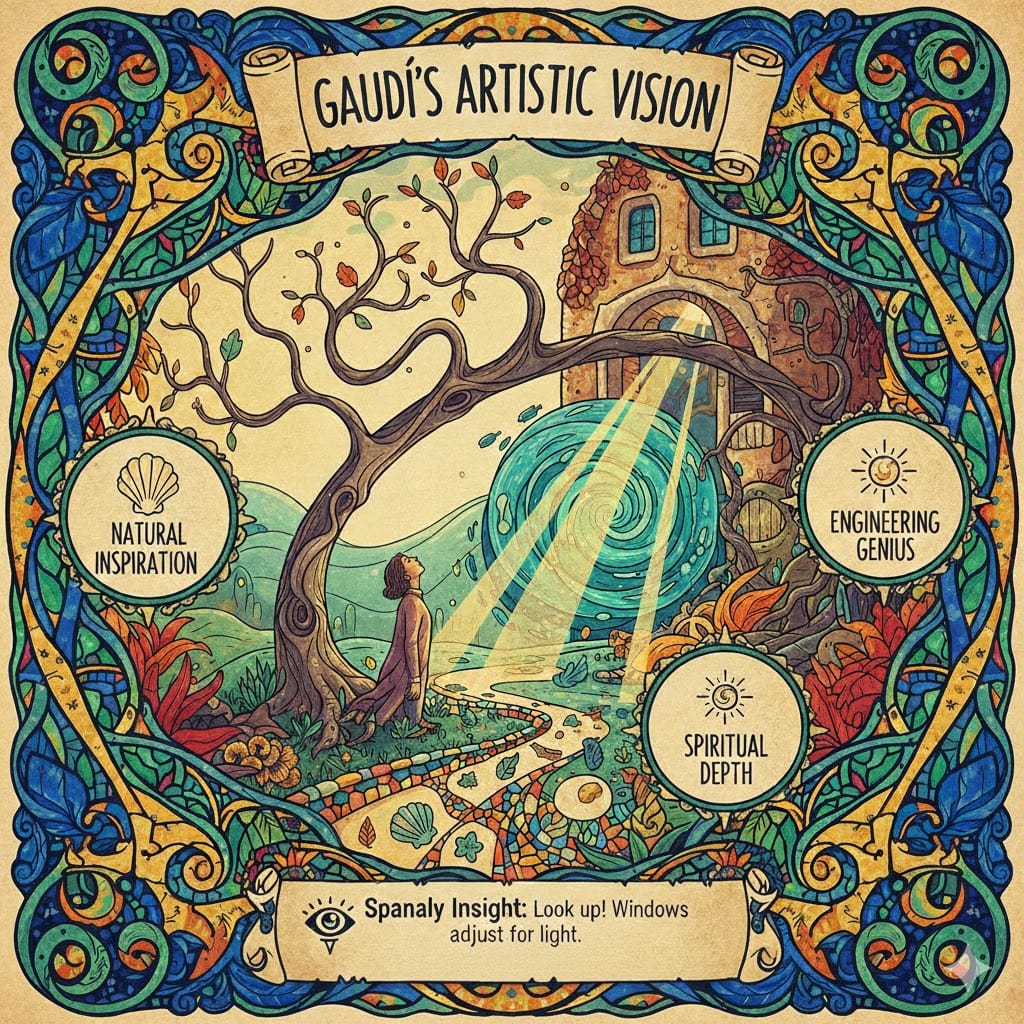
Gaudí’s philosophy was deeply rooted in nature, symbolism, and fluidity. Specifically, he believed that “there are no straight lines or sharp corners in nature,” a principle that guided every curve, mosaic, and iron detail in these buildings. Indeed, every element carries a profound meaning — it is not just decoration, but a functional part of a poetic structure that breathes life into the city.
🐚 Natural Inspiration: Elements inspired by marine life, forest canopies, and skeletal structures that replace traditional geometry.
📐 Engineering Genius: Revolutionary techniques, such as the catenary arch, allowed for open spaces and self-supporting walls without the need for internal pillars.
✨ Spiritual Depth: Architecture designed to elevate the human spirit through the play of natural light and organic beauty.
Notably, Gaudí’s ability to blend structure with abstract art is a testament to the city’s rich artistic heritage. For a deeper dive into Barcelona’s creative world, we recommend visiting the Picasso Museum Barcelona, which celebrates another genius who, like Gaudí, redefined modern aesthetics. Consequently, exploring both masters will give you a complete understanding of the city’s artistic soul.
💡 Spanaly Insight: To truly appreciate Gaudí’s vision, look at the ventilation shafts and windows. Consequently, you will notice they grow larger as you go down the floors to ensure equal light distribution for everyone. However, most tourists miss this subtle detail of “social architecture” while staring at the colorful mosaics!
⚔️ The "Block of Discord": A Battle of Architects
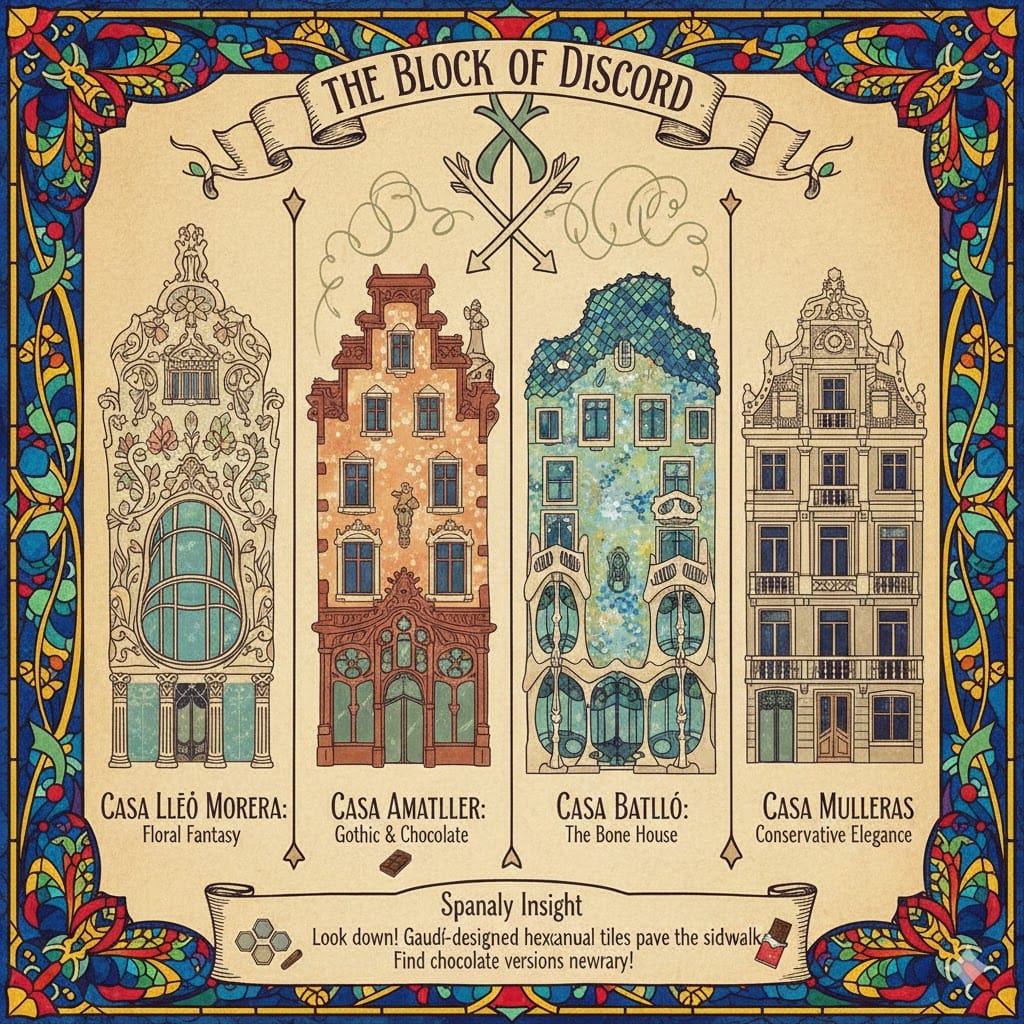
Before you step inside Gaudí’s masterpieces, you must understand the context of the Manzana de la Discordia (the Block of Discord). Specifically, this single city block on Passeig de Gràcia features buildings by the four greatest modernista architects of the time. Indeed, it was a “battle” of styles where each architect tried to outdo the other to win the favor of Barcelona’s elite.
🏛️ Casa Lleó Morera: A neoclassical floral fantasy by Domènech i Montaner.
🍫 Casa Amatller: A neo-Gothic masterpiece inspired by Dutch houses, designed by Puig i Cadafalch.
💀 Casa Batlló: Gaudí’s radical response that broke all traditional rules of symmetry.
🏰 Casa Mulleras: The most “conservative” yet elegant addition to this architectural war.
Notably, while this block represents the modern evolution of the city, you can find the roots of Barcelona’s architectural soul by exploring the narrow, medieval streets of the Gothic Quarter Barcelona. Consequently, comparing the ancient stone walls of the old city with the colorful explosions of the “Block of Discord” will give you a complete perspective on how Barcelona transformed into a global art capital.
💡 Spanaly Insight: Most people only photograph Casa Batlló, but the real secret lies in the ground! Notably, look at the hexagonal paving stones (panots) on the sidewalk. Specifically, they were designed by Gaudí himself for Casa Batlló but were later used to pave the entire boulevard. However, you can buy a mini chocolate version of these tiles at the nearby chocolate shops!
💀 Casa Batlló – The House of Bones
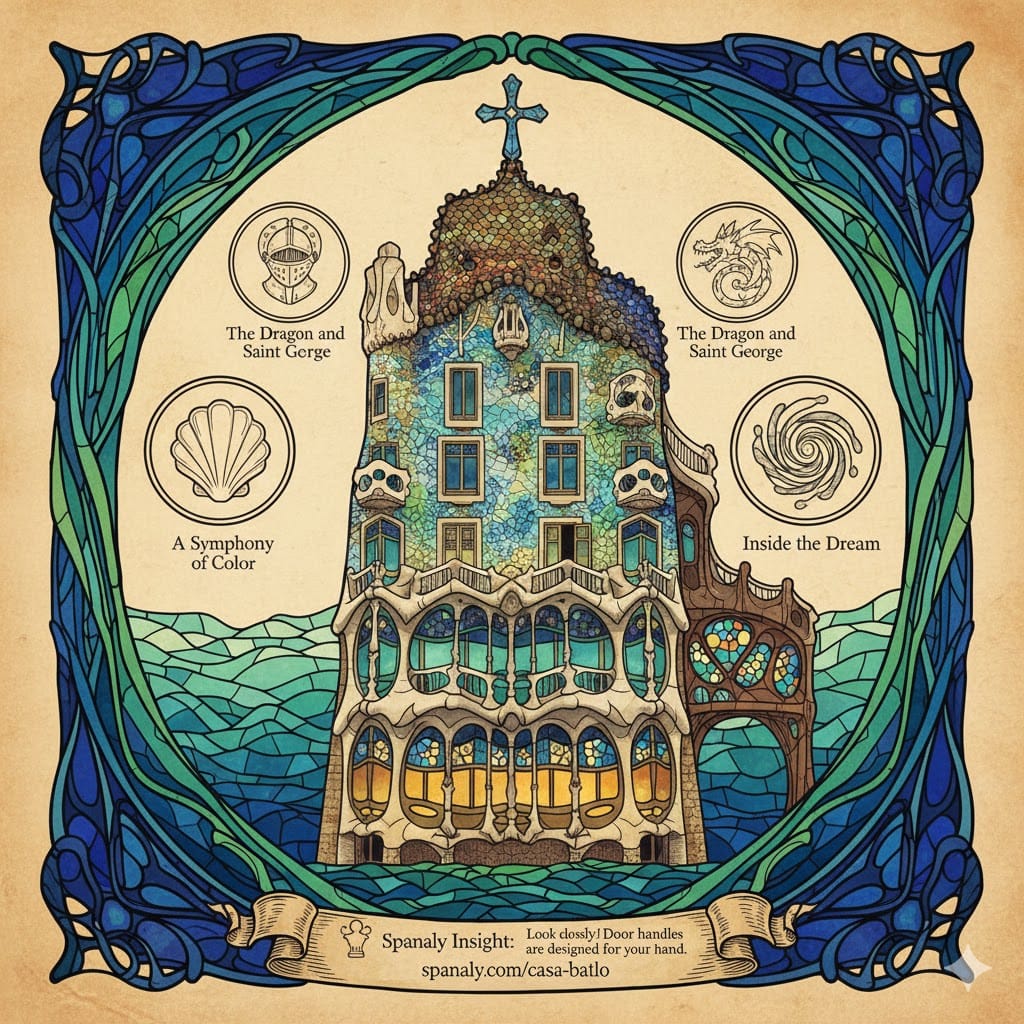
Casa Batlló (1904–1906) is a masterpiece of color, symbolism, and organic design. Specifically, the façade ripples like ocean waves, covered in a vibrant mosaic of broken ceramic tiles known as trencadís. Indeed, its skeletal balconies and bone-like columns earned it the local nickname “Casa dels Ossos” (The House of Bones).
🌊 A Symphony of Color: The façade transitions from golden tones at the bottom to deep blue at the top, mimicking the layers of the Mediterranean Sea.
🐉 The Dragon and Saint George: At the rooftop, the scaled tiles form a dragon’s back. Notably, the four-armed cross represents the sword of Saint George (Sant Jordi) piercing the beast, a beloved Catalan legend.
🐚 Inside the Dream: The interior features a flowing noble floor with no straight lines. Consequently, the ergonomic woodwork and stained glass create an underwater atmosphere that feels alive.
Notably, this building is a highlight of any itinerary, often ranking at the top of the Barcelona Top Attractions list. Therefore, walking through its halls is like navigating a submarine designed by a poet, making it a must-see for anyone exploring Gaudí’s heritage.
💡 Spanaly Insight: When you enter the Noble Floor, pay attention to the ceiling. Specifically, it is shaped like a giant whirlpool! Notably, Gaudí even designed the door handles to fit the human hand perfectly. However, most visitors are so busy looking at the windows that they forget to “feel” the architecture with their hands.
🏘️ Casa Milà (La Pedrera) – The Stone Quarry
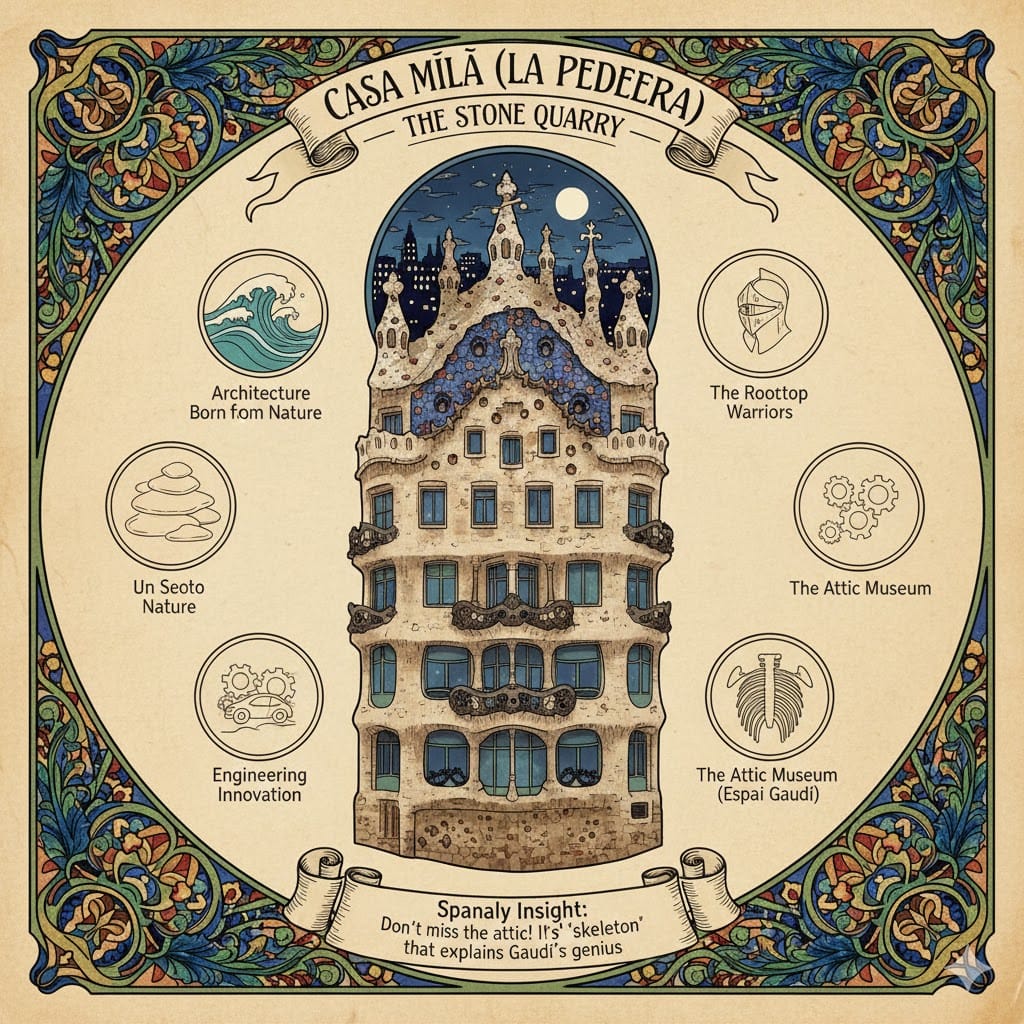
Built between 1906 and 1912, Casa Milà — known locally as La Pedrera (“The Stone Quarry”) — marked the peak of Gaudí’s creative freedom. Specifically, its undulating stone façade and wrought-iron balconies defied every architectural convention of the early 20th century. Indeed, it was so radical that it was initially mocked by locals, only to later become one of the most beloved icons of the city.
🌊 Architecture Born from Nature: The building lacks straight lines, designed to resemble a solid rock smoothed by sea waves or wind erosion.
💂 The Rooftop Warriors: The surreal rooftop is a landscape of chimneys and ventilation towers shaped like helmeted warriors. Notably, it offers some of the most spectacular panoramic views of Barcelona.
🏗️ Engineering Innovation: Casa Milà was revolutionary for its self-supporting stone façade and its underground garage — a feature almost unheard of at the time of its construction.
Notably, while exploring this masterpiece, it’s essential to stay vigilant in the surrounding busy streets. For more details on how to explore the city safely after your visit, check our guide on Night Safety in Barcelona. Consequently, you can enjoy the magic of Gaudí’s rooftops and the city’s evening atmosphere with total peace of mind.
💡 Spanaly Insight: Don’t just look at the outside! Specifically, the attic of La Pedrera (Espai Gaudí) is where the real secrets are kept. Notably, it houses a museum that uses whale skeletons and chains to explain how Gaudí designed his famous arches. However, most visitors rush to the roof and miss the chance to see the “skeleton” of the building itself.
🆚 The Comparison: Which One Should You Visit?
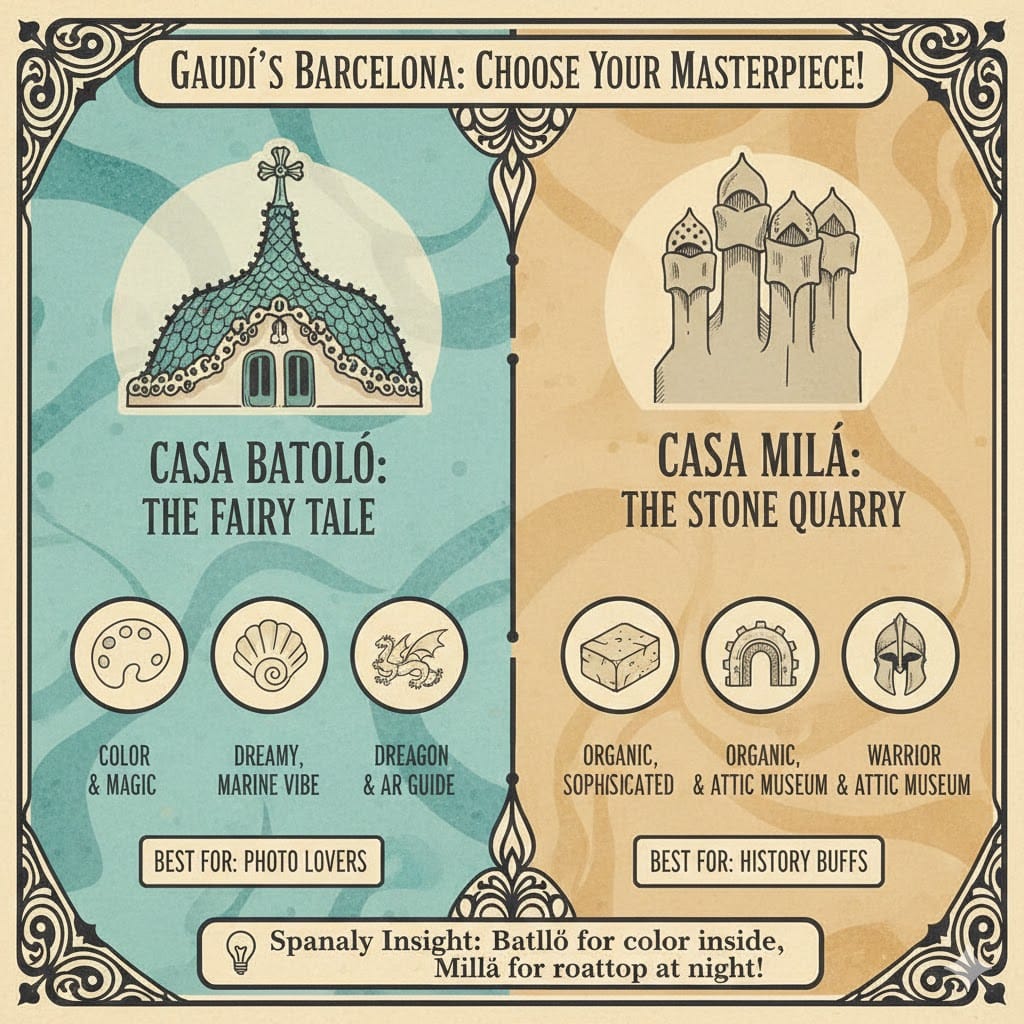
If you are short on time or traveling on a budget, choosing between these two giants can be difficult. Specifically, while both are Gaudí masterpieces, they offer completely different sensory experiences. Indeed, understanding their unique personalities will help you decide which one aligns best with your travel style.
| Feature | Casa Batlló (The Fairy Tale) | Casa Milà (The Masterpiece) |
| Best For | Fans of color, magic, and detail. | Fans of architecture and engineering. |
| Vibe | Dreamy, marine-inspired, and colorful. | Solid, organic, and sophisticated. |
| Highlight | The “Dragon” roof and immersive AR guide. | The “Warrior” rooftop and the attic museum. |
| Crowds | Generally more crowded and “touristy.” | Slightly more spacious and educational. |
Notably, these buildings are more than just landmarks; they are a primary reason why visit Spain is a top priority for art lovers worldwide. Consequently, whether you choose the colorful dream of Batlló or the structural strength of Milà, you are witnessing the pinnacle of Spanish creativity.
💡 Spanaly Insight: Can’t decide? Notably, you don’t have to enter both to enjoy them. Specifically, we recommend paying for the interior tour of Casa Batlló to see the colors, but visiting the rooftop of Casa Milà at night for their spectacular light show. Consequently, you get the best of both worlds without breaking the bank!
🌍 UNESCO Recognition: A Universal Legacy
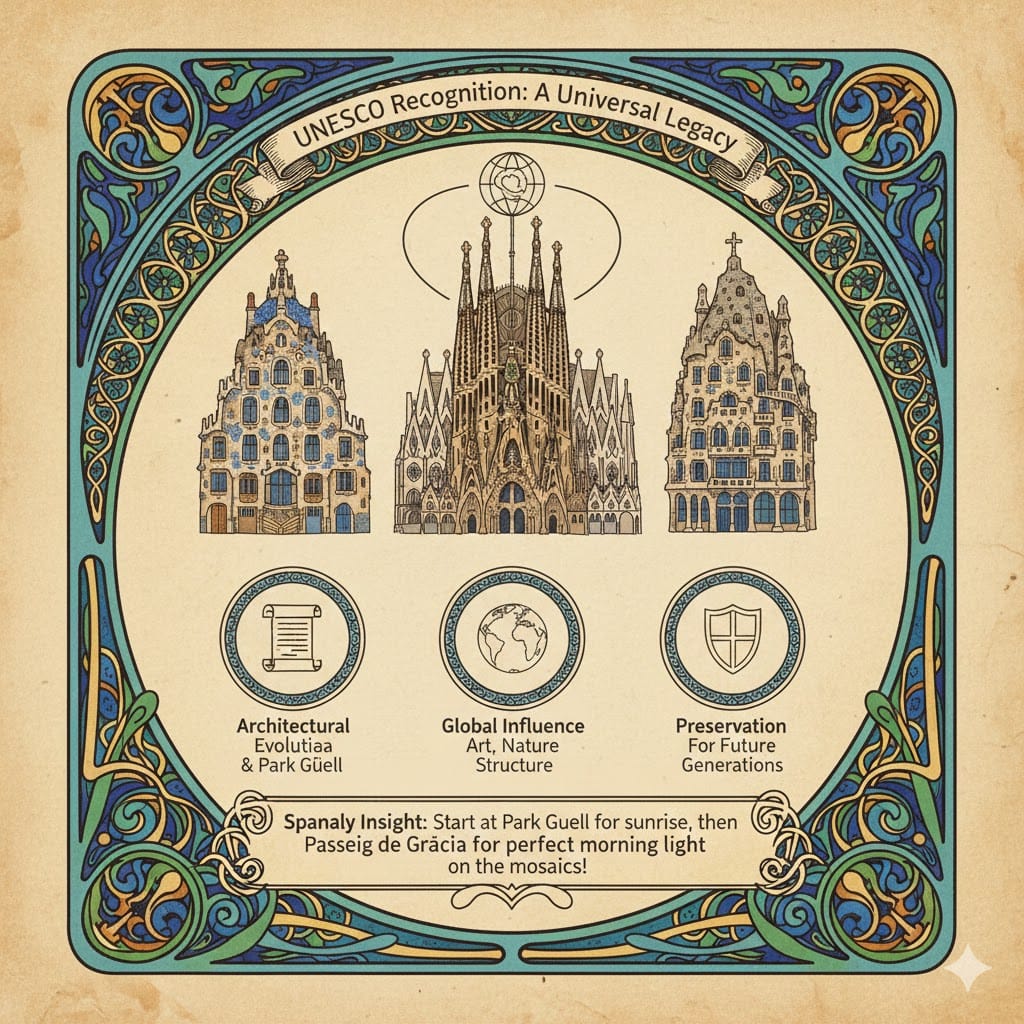
Both Casa Batlló and Casa Milà form part of the collective UNESCO World Heritage Site known as the “Works of Antoni Gaudí.” Specifically, this prestigious designation honors seven of his most exceptional creations that transformed the face of Barcelona. Indeed, recognized first in 1984 and extended in 2005, this status highlights their outstanding universal value as symbols of human creativity.
🏛️ Architectural Evolution: The list includes his seminal project, , and the colorful public park, .
✨ Global Influence: These buildings redefined what architecture could be at the turn of the 20th century, merging art, nature, and structure.
🛡️ Preservation: UNESCO status ensures these masterpieces are preserved for future generations to witness Gaudí’s genius.
Notably, these sites are not just monuments; they are “living museums” of imagination. Consequently, their inclusion in the World Heritage list confirms that Barcelona’s modernist beauty is a gift to the entire world. Therefore, visiting them is a journey through the peak of the Modernisme movement.
💡 Spanaly Insight: UNESCO sites in Barcelona can get extremely busy. Notably, if you plan to visit multiple Gaudí sites in one day, we recommend starting at Park Güell for the sunrise views. Specifically, you can then head down to Passeig de Gràcia to see the houses when the mid-morning light hits the mosaics perfectly.
🌙 Night Experiences: Magic Under the Stars
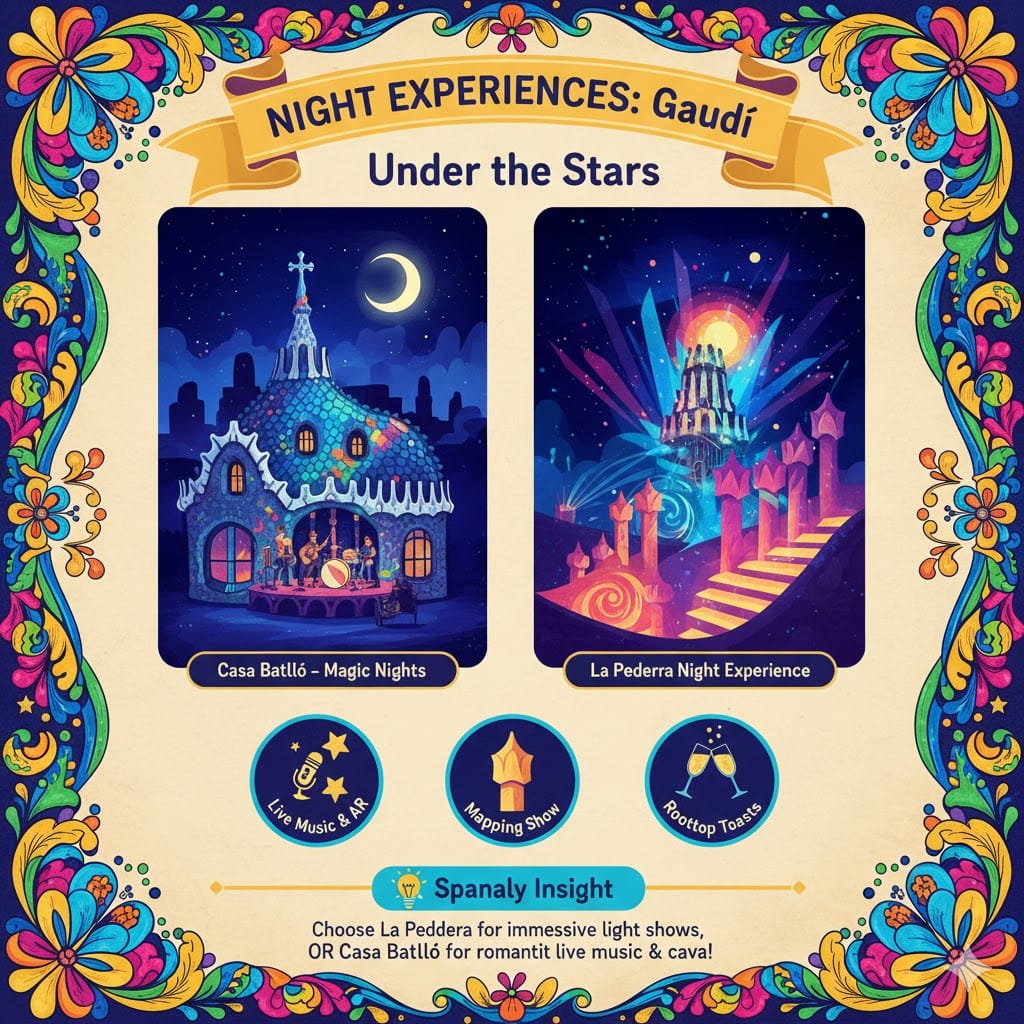
Seeing Casa Batlló and Casa Milà during the day is only half the story. Specifically, as the sun sets, these buildings transform into glowing sculptures. Indeed, both landmarks offer exclusive night tours that combine history with cutting-edge audiovisual technology, creating an atmosphere that feels entirely different from the daytime bustle.
🎭 Casa Batlló – Magic Nights: This experience features live music on the rooftop dragon-terrace. Notably, the “Winter Night” visit uses augmented reality and special projections to bring the house’s legends to life in the dark.
🔥 La Pedrera Night Experience: A spectacular journey that culminates on the warrior rooftop with a high-definition mapping show. Consequently, the chimneys are illuminated in a dance of light and sound that tells the story of life and origins.
🥂 Rooftop Toasts: Most night tickets include a glass of cava, allowing you to toast to Gaudí’s genius while overlooking the shimmering lights of Passeig de Gràcia.
Notably, wandering around these monuments at night is a dreamlike experience. However, to ensure your evening remains perfect, we recommend checking our guide on Night Safety in Barcelona. Therefore, you can focus on the beauty of the illuminated facades without any worries.
💡 Spanaly Insight: If you have to choose only one night show, go for La Pedrera Night Experience. Specifically, the mapping on the warrior chimneys is more immersive. However, if you want a romantic atmosphere with live jazz or soul, Casa Batlló’s Magic Nights is unbeatable.
🏛️ Cultural Context: Catalan Identity in Stone
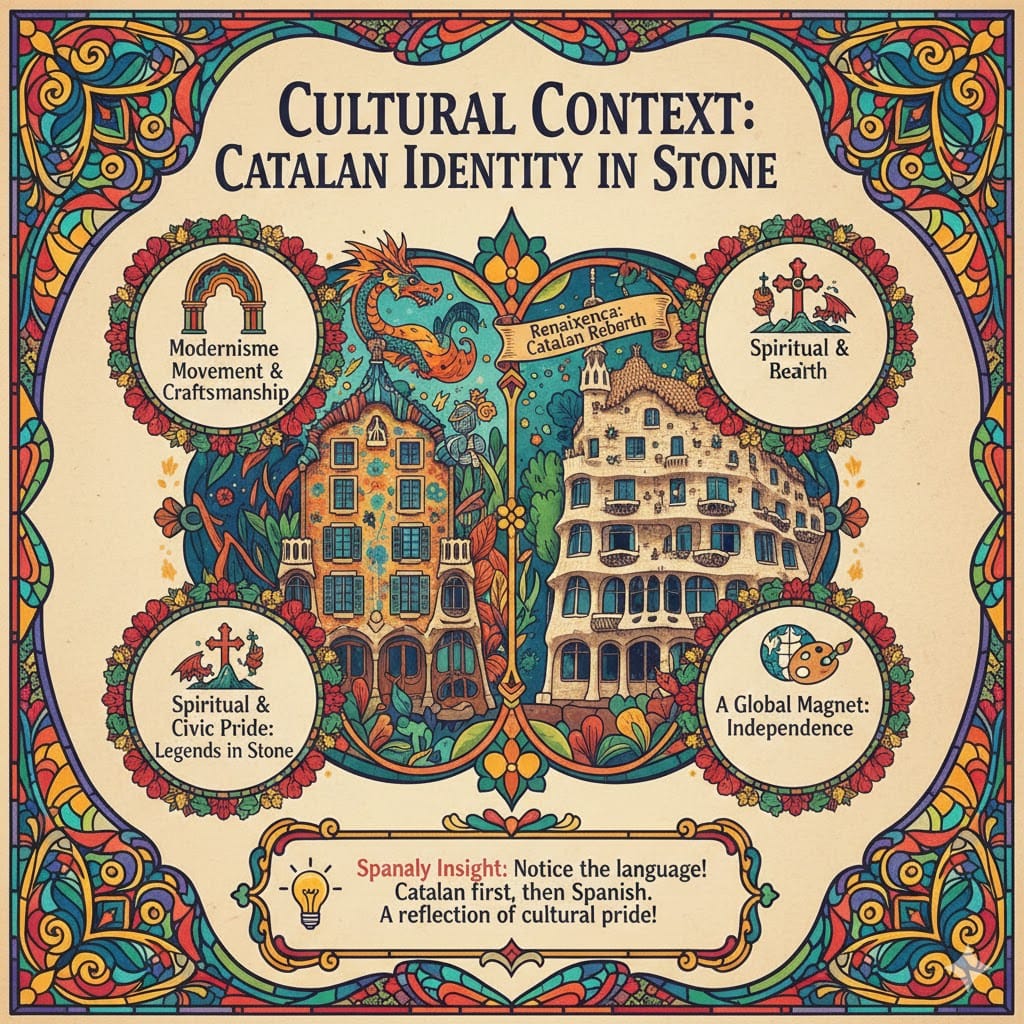
To truly appreciate Casa Batlló and Casa Milà, one must understand the era of Renaixença (Catalan Rebirth). Specifically, during the late 19th century, Barcelona’s industrial elite used architecture to express their newfound wealth and strong Catalan identity. Indeed, Gaudí wasn’t just building houses; he was creating symbols of a culture that looked to nature and religion to define itself against traditional European styles.
🌿 The Modernisme Movement: This was Catalonia’s answer to Art Nouveau, but with a unique focus on medieval legends and local craftsmanship.
⛪ Spiritual & Civic Pride: From the dragon of Saint George to the mountain-like curves of La Pedrera, every stone tells a story of Catalan pride.
🎨 A Global Magnet: This cultural explosion is a major part of why visit Spain, as it offers a glimpse into a region that has always fought to maintain its artistic independence.
Notably, Gaudí integrated traditional Catalan techniques, such as the volta catalana (Catalan arch), into revolutionary modern designs. Consequently, these buildings are not just “pretty facades” but the architectural manifesto of a nation.
💡 Spanaly Insight: Notice the language! Specifically, most signs inside these monuments are in Catalan first, then Spanish and English. Notably, this isn’t just a linguistic choice; it’s a reflection of the same cultural pride that drove Gaudí to create these masterpieces.
♿ Accessibility & Facilities: Inclusion for All
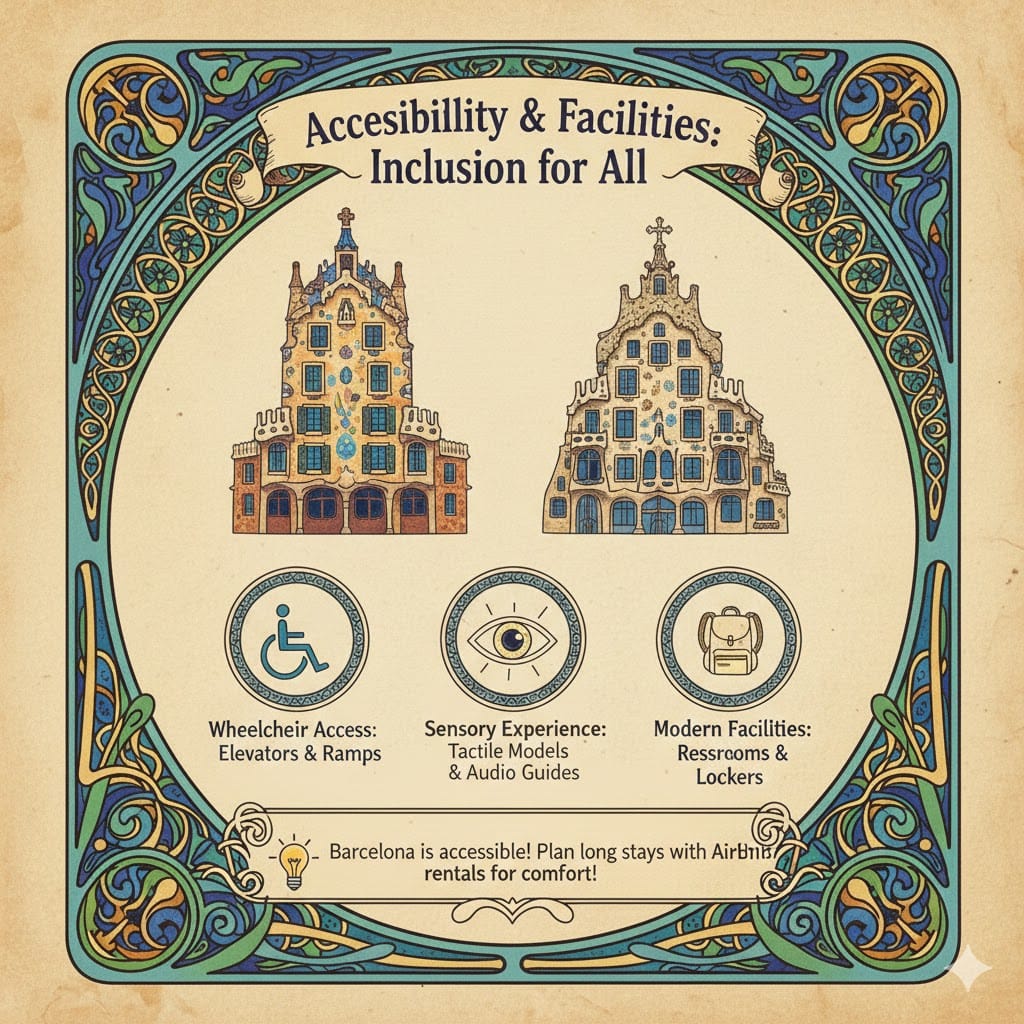
Barcelona is one of Europe’s most accessible cities, and Gaudí’s masterpieces have been modernized to welcome everyone. Indeed, both houses have made significant investments to ensure that visitors with reduced mobility or sensory disabilities can enjoy the experience.
🦽 Wheelchair Access: Both sites are equipped with elevators. Notably, while some small corners (like the very top of the dragon roof in Casa Batlló) may have restricted access, the vast majority of the “Noble Floors” and rooftops are accessible.
👁️ Sensory Experience: For the visually impaired, there are tactile models of the facades. Specifically, the audio guides are designed to be descriptive and immersive.
🎒 Facilities: You will find modern restrooms, gift shops, and lockers. However, large suitcases are generally not allowed, so travel light!
Notably, if you are planning a long stay and looking for a home base that meets your needs, consider checking Barcelona Airbnb Apartment Rentals. Therefore, you can find accommodations that offer the same level of accessibility and comfort as these world-class monuments.
📋 Expert Visitor Tips: Master Your Gaudí Tour
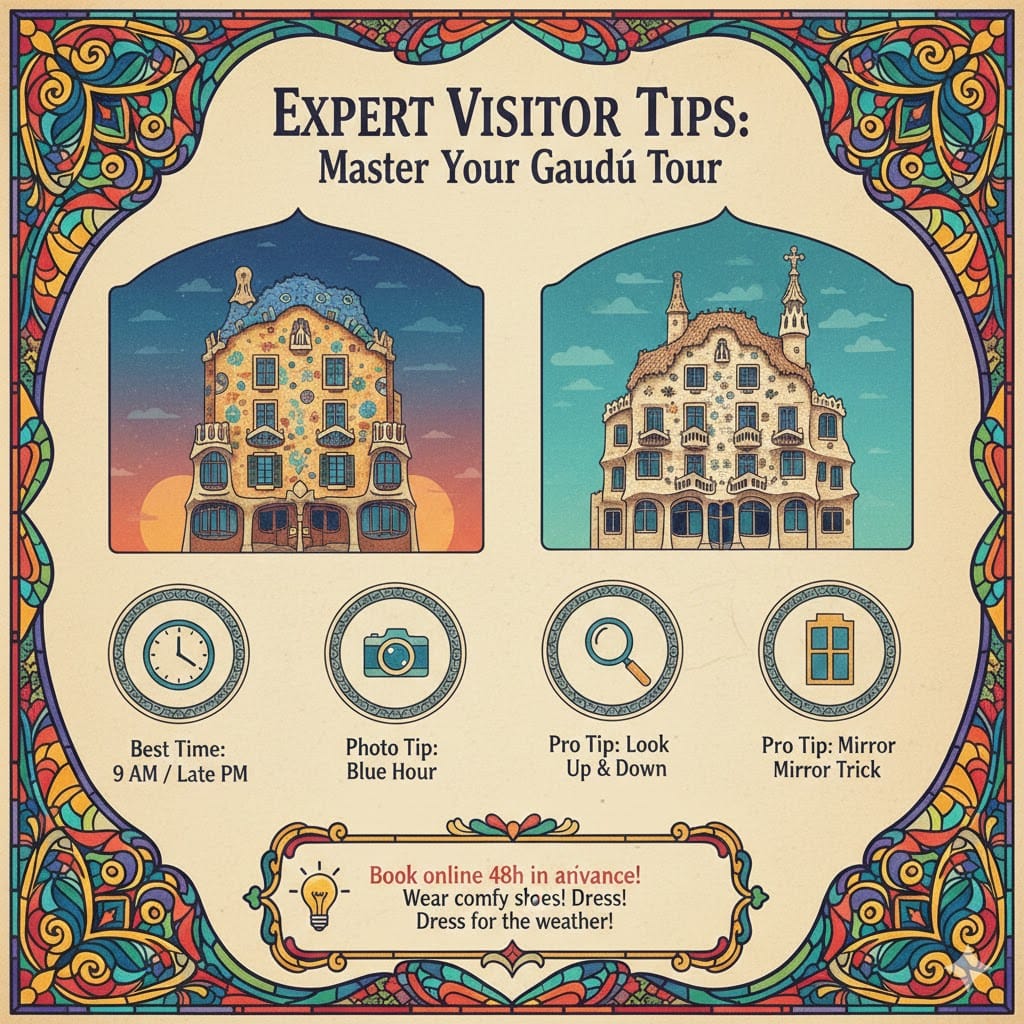
To make the most of your visit to Casa Batlló and Casa Milà, timing and preparation are everything. Specifically, these are among the most visited sites in Europe, so a little planning goes a long way. Indeed, following these expert tips will help you avoid long queues and ensure a smooth, stress-free experience.
| Feature | Casa Batlló | Casa Milà (La Pedrera) |
| Opening Hours | 9:00 AM – 8:00 PM | 9:00 AM – 8:30 PM (Night tours until 11 PM) |
| Best Time to Visit | Early morning (9 AM) or late afternoon. | Mid-day (12 PM) or for the sunset show. |
| Ticket Type | Blue, Silver, or Gold (Gold is best for fast pass). | Essential or Night Experience. |
| Duration | 1 to 1.5 hours. | 1.5 to 2 hours. |
Notably, a secret for the best photos is to visit during the “Blue Hour” (just after sunset), when the artificial lights of the houses contrast beautifully with the deep blue sky. Consequently, your pictures will look professional without the harsh midday shadows. If you are planning to head south after Barcelona, check out our Seville Travel Tips to see how the Moorish architecture of the south influenced Gaudí’s own style.
💡 Spanaly Insight: Here are three “Pro Tips” you won’t find in most guides:
Charge Your Phone: Specifically, Casa Batlló’s AR guide consumes a lot of battery. Notably, bring a power bank so you don’t run out of juice mid-tour.
Look Up (and Down): Indeed, Gaudí designed everything from the door handles to the floor tiles. Therefore, don’t just focus on the big rooms; the details are where the real genius lies.
The Mirror Trick: Notably, in Casa Batlló, use the unique ergonomic windows to frame your photos of Passeig de Gràcia for a truly “modernist” perspective.
🛡️ Security Note: Staying Safe in the Crowds
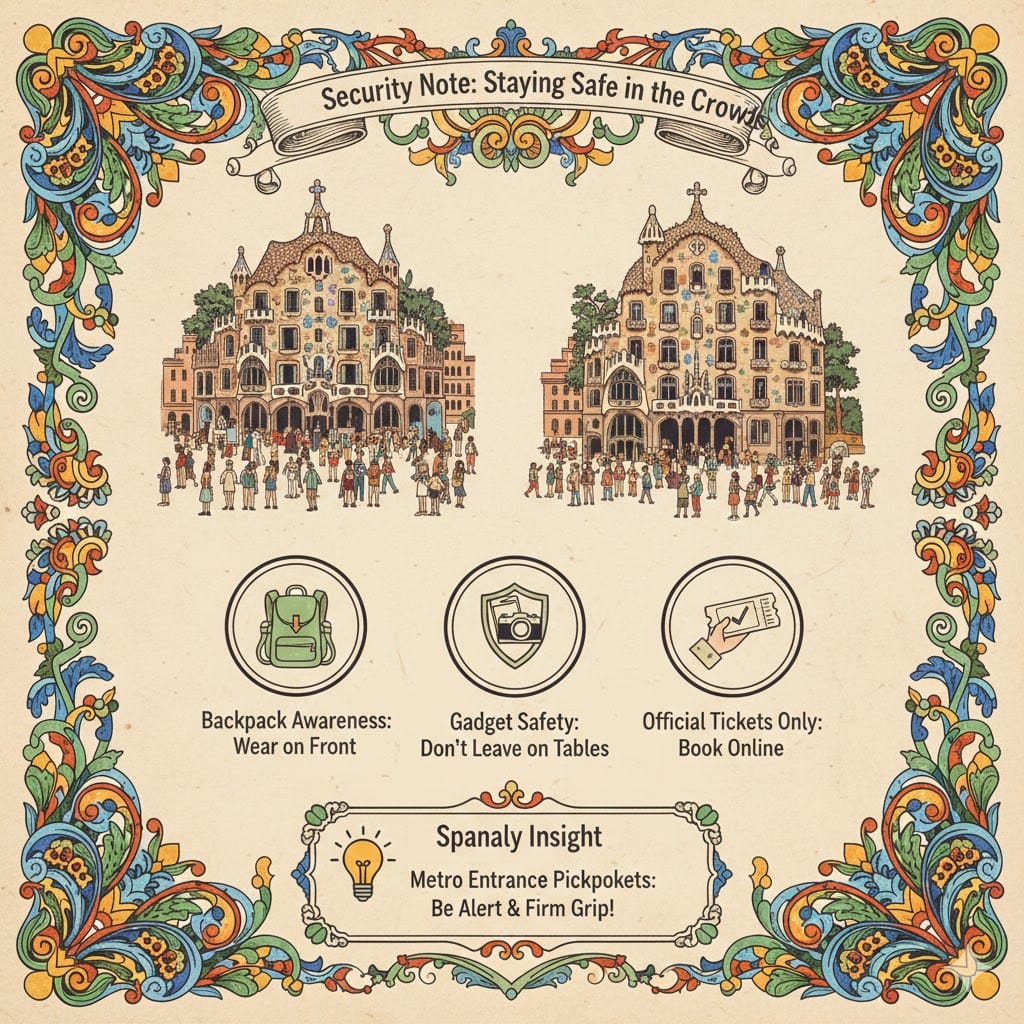
While Barcelona is generally a safe and welcoming city, the areas surrounding Casa Batlló and Casa Milà on Passeig de Gràcia are major hubs for international tourism. Specifically, high foot traffic attracts not only art lovers but also opportunistic pickpockets. Indeed, staying aware of your surroundings will ensure your visit remains a magical memory rather than a stressful one.
🎒 Backpack Awareness: In crowded areas or while queuing, always wear your bag on your front. Notably, pickpockets are highly skilled in busy queues. To protect your belongings effectively, we recommend reading our expert guide on Spain Travel Safety.
📱 Gadget Safety: When taking those stunning photos of the facades, avoid leaving your phone or camera on cafe tables nearby. Specifically, “snatch and run” incidents can happen in a split second.
🎫 Official Tickets Only: Never buy tickets from street vendors outside the houses. Consequently, you risk purchasing fake or overpriced entries. Therefore, always use the official websites or recognized platforms.
Notably, both houses have their own security personnel and bag checks at the entrance. Indeed, this is for your safety and the preservation of the art. However, remember that large backpacks and umbrellas may need to be stored in lockers before you begin your tour.
💡 Spanaly Insight: Be extra careful at the metro entrance of Passeig de Gràcia right in front of Casa Batlló. Specifically, this is a prime spot for distractions. Notably, if someone approaches you with a map or asks for directions in a very pushy way, keep walking and keep a firm grip on your belongings.
🏛️ Essential Visitor FAQs – Gaudí Masterpieces
🤔 Is there a combined ticket for both Casa Batlló and Casa Milà?
Actually, no single official ticket covers both. Since they are managed by different foundations, you must purchase tickets separately. However, many "Barcelona Pass" options or city-wide tourist cards include both, which can save you money if you plan on visiting other major landmarks on the same day.
🐾 Are pets allowed inside the monuments?
Casa Batlló is surprisingly pet-friendly! Small dogs are allowed as long as they are carried in a travel bag or in your arms. In contrast, Casa Milà generally only permits guide dogs. Consequently, if you are traveling with a furry friend, Batlló is your best architectural bet.
📸 What is the best "Photography Trick" for the facades?
For Casa Milà, the best wide-angle shots are taken from the opposite side of Passeig de Gràcia. For Casa Batlló, wait for the sun to hit the facade directly in the early afternoon; notably, this makes the mosaic discs shimmer like fish scales, a detail that is lost in the morning shadows.
☕ Are there cafes or dining options inside?
Yes! Casa Milà houses "Cafè de la Pedrera," a stunning modernist space with a wavy ceiling that mirrors the building's exterior. Specifically, it’s a great spot for a coffee break with a view of the street. Casa Batlló has a smaller rooftop bar area usually active during the evening "Magic Nights."
🎁 Which gift shop is better for authentic souvenirs?
Both are excellent, but Casa Milà's shop is famous for its high-quality replicas of Gaudí-designed furniture and door handles. Therefore, if you want a sophisticated piece of Catalan design to take home, this is the place. Casa Batlló's shop is more focused on colorful mosaics and artistic jewelry.
Smart Traveler Guide by Spanaly.com
✨ Your Gaudí Adventure Awaits
In the end, there is no “wrong” choice between Casa Batlló and Casa Milà. Both are masterpieces; it just depends on which vibe speaks to you more:
Go for Casa Batlló: If you want color, fantasy, and a fairytale atmosphere.
Go for Casa Milà: If you prefer structural power, history, and legendary rooftops.
Notably, these buildings are the living soul of Barcelona. So, take your time, look at every detail, and soak in the creative energy.
What’s next after Barcelona? If your Spanish journey continues toward the capital, don’t forget to check out our Ultimate Madrid Travel Guide. Specifically, it will help you navigate the grand palaces and vibrant life of Madrid with the same ease!
💡 Spanaly Tip: Put your phone down for a few minutes and just look. Indeed, Gaudí’s true genius is hidden in the tiny details that cameras often miss!