Maria Luisa Park (Parque de María Luisa) isn’t just a garden—it’s Seville’s living museum of nature, architecture, romance, and Andalusian culture. Stretching across 34 hectares, the park perfectly blends European landscaping with Moorish-inspired fountains, tiled benches, and monumental plazas designed for the Ibero-American Exposition of 1929.
For travelers in 2026, it remains the ultimate escape to breathe, photograph, and enjoy a calm moment away from the city’s bustle. To plan your entire stay in the city, don’t miss our Ultimate Seville Travel Guide.
📜 The History Behind the Greenery
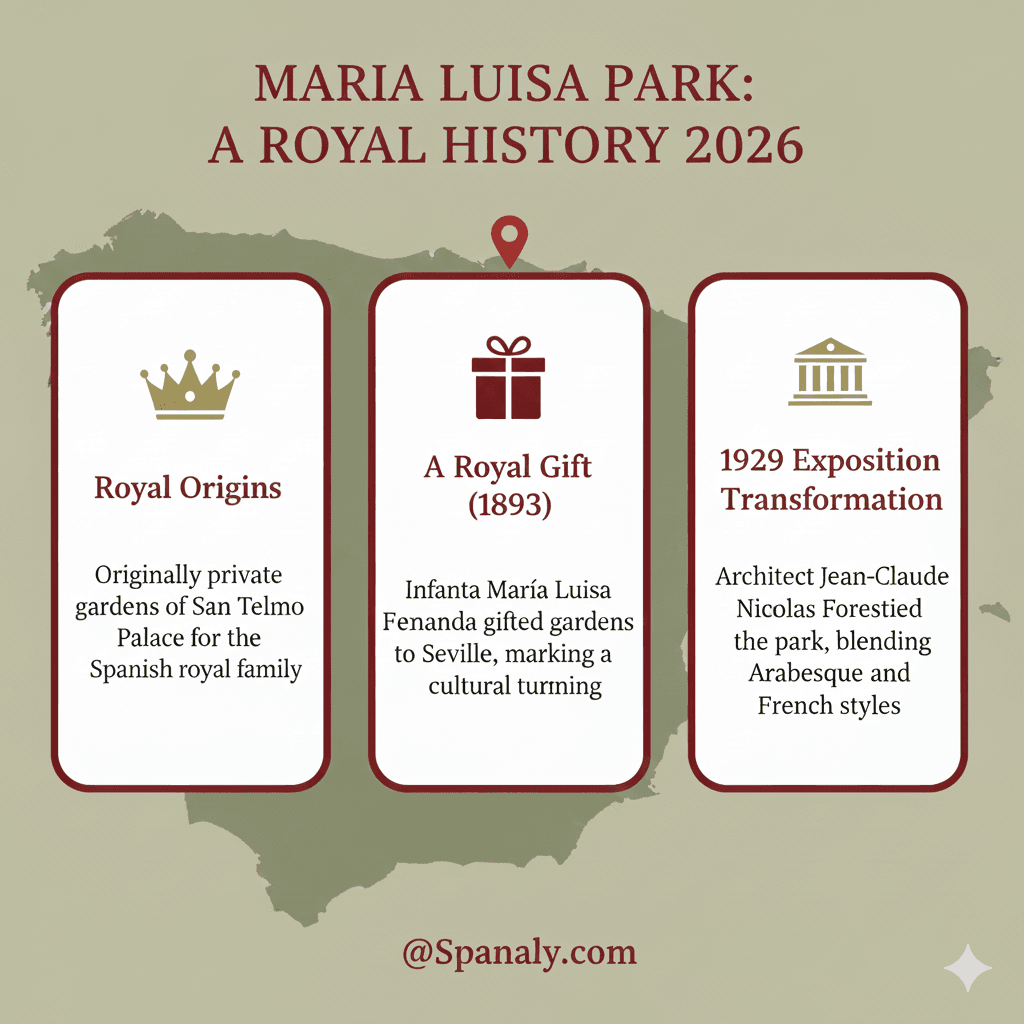
Understanding the park’s history adds a layer of magic to your walk.
👑 Royal Origins: Originally, this land was part of the private gardens of the San Telmo Palace, serving as a private retreat for the Spanish royal family.
🎁 A Gift to the City: In 1893, Infanta María Luisa Fernanda gifted these lush gardens to the city of Seville, a gesture that changed the city’s urban landscape forever.
🎨 The 1929 Transformation: For the Ibero-American Exposition, the famous French landscape architect Jean-Claude Nicolas Forestier redesigned the park. He created a unique “Sevillian style” by mixing Arabesque fountains, French symmetry, and Mediterranean vegetation.
🏛️ Main Sights & Architectural Wonders
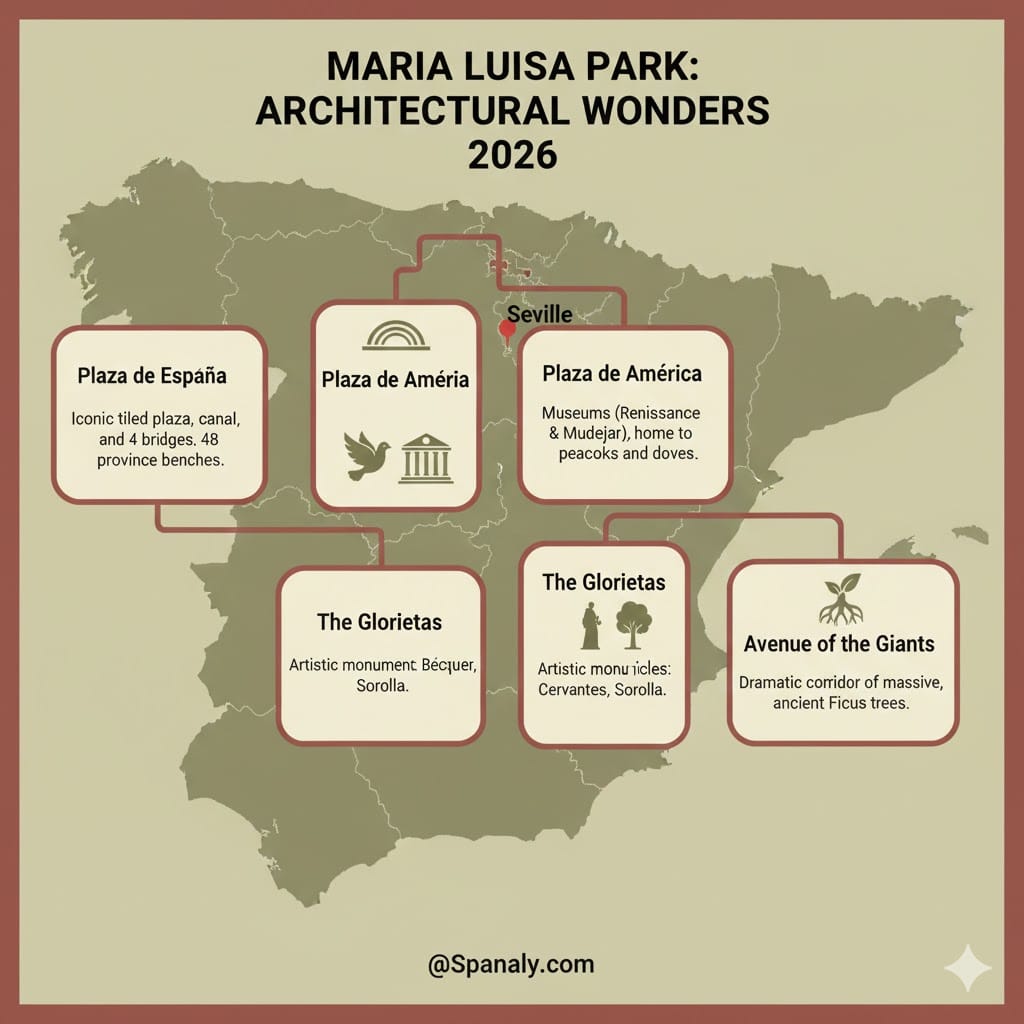
The park is world-renowned not just for its trees, but for how architecture and nature integrate seamlessly.
📍 Plaza de España: The Crown Jewel
This spectacular semi-circular plaza is one of the most recognizable Spanish Attractions.
What to see: The canal with its four elegant bridges and the 48 colorful azulejo (tile) benches representing each Spanish province.
Pro Tip: For a full historical breakdown and photo tips, read our dedicated article: Plaza de España Seville: History & Visitor Guide.
📍 Plaza de América
Located at the southern end, this plaza showcases three distinct architectural styles:
Archaeological Museum: Renaissance style.
Museum of Popular Arts and Traditions: Mudejar style.
The Royal Pavilion: Gothic style.
Note: This is the famous “Pigeon Plaza” where you can feed white doves and spot roaming peacocks.
📍 The Glorietas (Artistic Circles)
Scattered throughout are charming glorietas dedicated to Spanish legends:
Glorieta of Bécquer: A romantic sculpture under a massive cypress tree dedicated to the poet Gustavo Adolfo Bécquer.
Cervantes & Sorolla Glorietas: Hidden spots decorated with exquisite tiles, perfect for reading or quiet contemplation.
📍 Avenue of the Giants (Paseo de los Gigantes)
A must-visit for nature lovers. Giant, ancient ficus trees form a dramatic, cathedral-like tunnel of shade. Their massive, twisted roots are a masterpiece of nature.
📸 Best Photo Spots for 2026
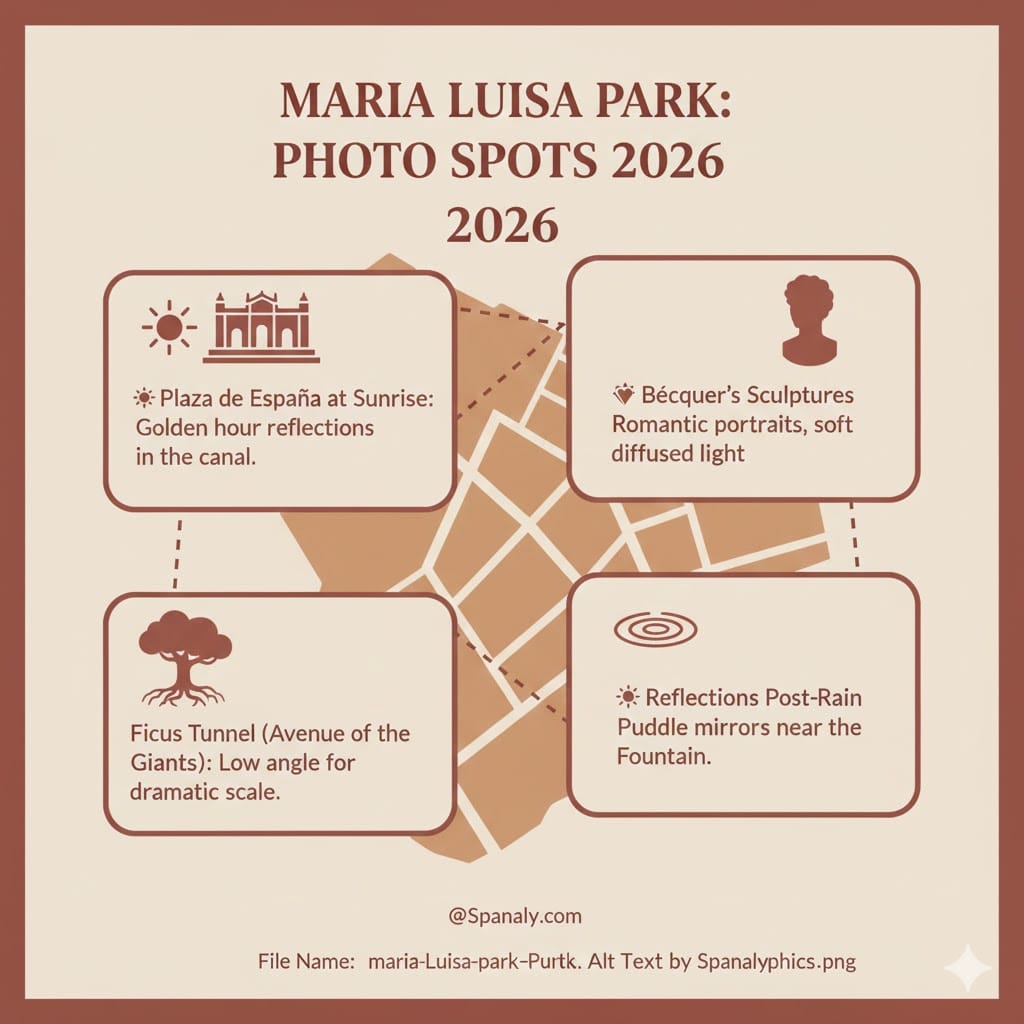
Capture the essence of Seville with these top-rated locations. Whether you are using a professional camera or a smartphone, Maria Luisa Park offers a stunning variety of textures, lighting, and historical backdrops that are perfect for your travel gallery.
🌅 Plaza de España at Sunrise
The Shot: Arrive at the golden hour to capture the sun’s first rays hitting the grand facade.
Why: The still water in the canal acts as a perfect mirror, creating flawless reflections before the rowboats and crowds arrive.
🌳 The Ficus Tunnel (Avenue of the Giants)
The Shot: Get low to the ground and aim upward through the intertwined branches.
Why: This perspective emphasizes the majestic scale of these ancient trees, creating a dramatic, cathedral-like atmosphere in your photos.
🤍 Bécquer’s Romantic Sculptures
The Shot: Use a shallow depth of field (Portrait mode) to focus on the delicate marble figures.
Why: The towering cypress trees provide soft, diffused lighting, perfect for capturing the romantic and moody spirit of Seville’s legendary poet.
✨ Reflections Post-Rain
The Shot: Look for puddles near the Fountain of the Lions or the tiled walkways.
Why: After a light rain, the park’s famous azulejos (tiles) glisten, and the water creates natural mirrors that double the beauty of the architecture.
🚶 The Perfect Walking Route (1.5–2 Hours)
Follow this optimized path to see everything without getting lost:
Start: Plaza de España. Take 30 minutes to admire the tiles and bridges.
The Heart: Walk southwest through the shaded garden paths toward the Fountain of the Lions.
The Culture Hub: Reach Plaza de América to enjoy the museums and wildlife.
The Secret Corners: Wander through the Glorietas (specifically Bécquer’s monument).
The Finale: End your walk at the Avenue of the Giants for a majestic shaded conclusion.
💡 Insider Tips for First-Time Visitors
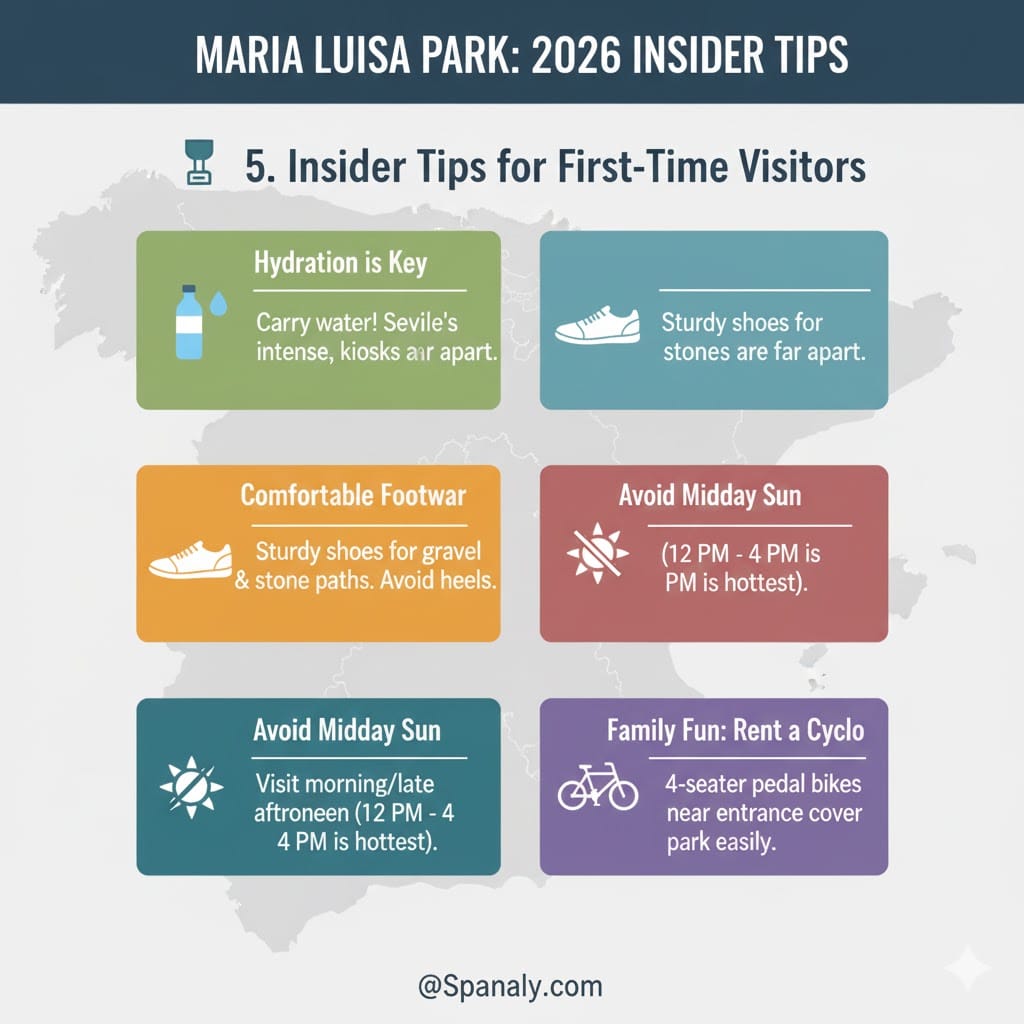
To ensure your visit is as relaxing and enjoyable as possible, we have gathered these essential practical tips. Navigating 34 hectares of gardens in the heart of Andalusia requires a bit of local know-how to beat the heat and make the most of your time.
🧊 Hydration is Key Seville’s heat can be intense, even in the shade. Always carry a reusable water bottle, as the historic kiosks inside the park can be quite far apart when you’re exploring the inner trails.
👟 Comfortable Footwear The park’s beauty is best discovered on foot, but the paths are a mix of gravel, ancient stone, and earth. Wear sturdy, comfortable walking shoes to avoid fatigue during your 2-hour exploration.
☀️ Avoid the Midday Sun The Andalusian sun is strongest between 12:00 PM and 4:00 PM. For a much cooler experience and better lighting for your photos, we highly recommend visiting in the early morning or late afternoon.
🚲 Family Fun: Rent a “Cyclo” If you are visiting with family or want to cover more ground quickly, consider renting a 4-seater pedal bike (Cyclo) near the main entrances. It’s a fun, traditional way to see the park’s highlights without the long walk.
📍 Visitor Information
- 🕒 Opening Hours: 24/7 — always open.
- 🎟️ Entry Price: Completely free.
- 🚇 Closest Tram / Metro: Prado de San Sebastián.
- 👟 Recommended Duration: 90 minutes to 3 hours depending on pace.
- 👨👩👧 Suitable For: Couples, families, photographers, nature lovers, architecture enthusiasts.
Created by Spanaly
🌿 Visitor FAQs – Maria Luisa Park Seville
🏛️ What are the main attractions inside the park?
The park is home to the stunning Plaza de España and Plaza de América. Other highlights include the romantic Bécquer Roundabout, the Lions Fountain, and the Island of the Birds. It’s a botanical paradise filled with orange trees, palms, and Mediterranean flowers.
🎟️ Is there an entry fee for Maria Luisa Park?
No. Maria Luisa Park is a public city park and entry is completely free. It is open every day from early morning until late at night, making it an ideal spot for a budget-friendly stroll, a picnic, or a morning run in beautiful surroundings.
🦚 Can children see wildlife in the park?
Yes, kids love this park! You can often see free-roaming peacocks around Plaza de América, as well as ducks and swans in the various ponds. There are also many shaded areas and paved paths that are perfect for families with strollers.
🚲 What is the best way to explore the park's large area?
Since the park is quite large (approx. 100 acres), renting a quadricycle (pedal buggy) is a popular and fun option for families and groups. You can also easily explore on foot or rent a bike to cover more ground and see the hidden "Glorietas" (themed garden corners) tucked away in the forest.
📸 Where are the best photo spots?
Apart from the iconic Plaza de España, the Mt. Gurugú (a small artificial hill with a waterfall) and the Pavilion of Alfonso XII are fantastic spots for photography. The play of light through the giant ficus trees also provides a dramatic backdrop for portraits.
Nature & Heritage Guide by Spanaly.com
🏛️ Maria Luisa Park is far more than just “the park next to Plaza de España.” It is the lungs of Seville and a masterpiece where history and nature walk hand in hand. Whether you are wandering through the shadows of the ancient ficus trees, feeding the doves at Plaza de América, or simply admiring the intricate tile work of a hidden glorieta, the park offers a deep connection to the romantic soul of Andalusia.
As you plan your 2026 journey, remember that this park is a place to slow down. Don’t rush through it—let the scent of orange blossoms and the sound of Moorish fountains guide your steps. It is, without a doubt, one of the most beautiful free experiences you will find in all of Spain.