🏛️ Real Maestranza Bullring
The Real Maestranza Bullring is far more than a sports arena; it is a masterpiece of Baroque architecture and a symbol of Andalusian soul. Notably, it stands as one of the oldest and most prestigious bullrings in Spain.
🌟 Historic Legacy: Established in the 18th century by a royal noble brotherhood.
🎨 Architectural Beauty: Famous for its unique oval shape and vibrant yellow-and-white façade.
📍 Prime Location: Situated in the heart of the El Arenal neighborhood, near the Guadalquivir River.
Specifically, if you want to make the most of your journey, don’t miss our Seville Travel Tips for essential visitor advice. Indeed, a visit here offers a deep immersion into centuries-old traditions. Ultimately, whether you are drawn to history or architecture, the Real Maestranza is a “must-see” on any Seville Travel Guide itinerary.
💡 Spanaly Insight: Get ready to capture some of the best photos in the city. In fact, the contrast between the golden sand (albero) and the bright blue Seville sky is a photographer’s dream!
📜 The Royal Legacy: History of the Real Maestranza
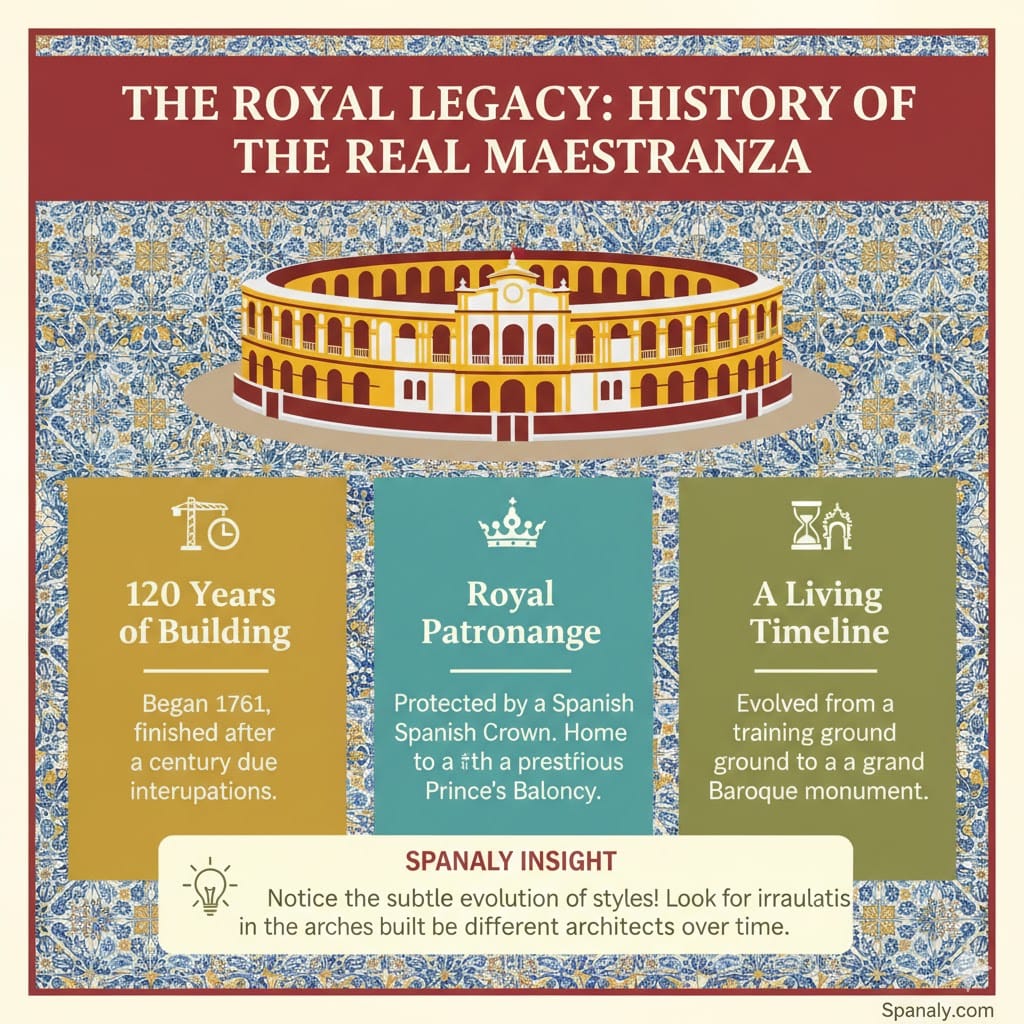
The history of the Real Maestranza is deeply intertwined with the nobility of Seville. Notably, it is not just a sports venue, but the headquarters of the Real Maestranza de Caballería, a royal cavalry order founded in 1248.
🏗️ Long-Term Construction: Work began in 1761, but due to various historical interruptions, it took over 120 years to fully complete the structure.
👑 Royal Patronage: The bullring has always enjoyed the protection of the Spanish Crown, which is why the “Prince’s Balcony” remains one of its most prestigious features.
🕰️ A Living Timeline: It evolved from a wooden training ground for knights into the grand stone Baroque monument we see today.
Specifically, the 18th-century design by Francisco Cabeza introduced the famous oval shape, which was revolutionary for its time. Indeed, exploring this history helps you appreciate the city’s broader heritage. For more context on Seville’s historic districts, our guide to the Triana District Seville—located just across the river—offers a perfect companion to this story.
Ultimately, the Real Maestranza stands as a witness to the transformation of Seville from a medieval stronghold to a vibrant cultural capital.
💡 Spanaly Insight: Notice the slight irregularities in the arches. In fact, because the construction lasted so long under different architects, you can see the subtle evolution of styles just by looking at the interior pillars!
🎨 Baroque Masterpiece: Unique Architectural Features
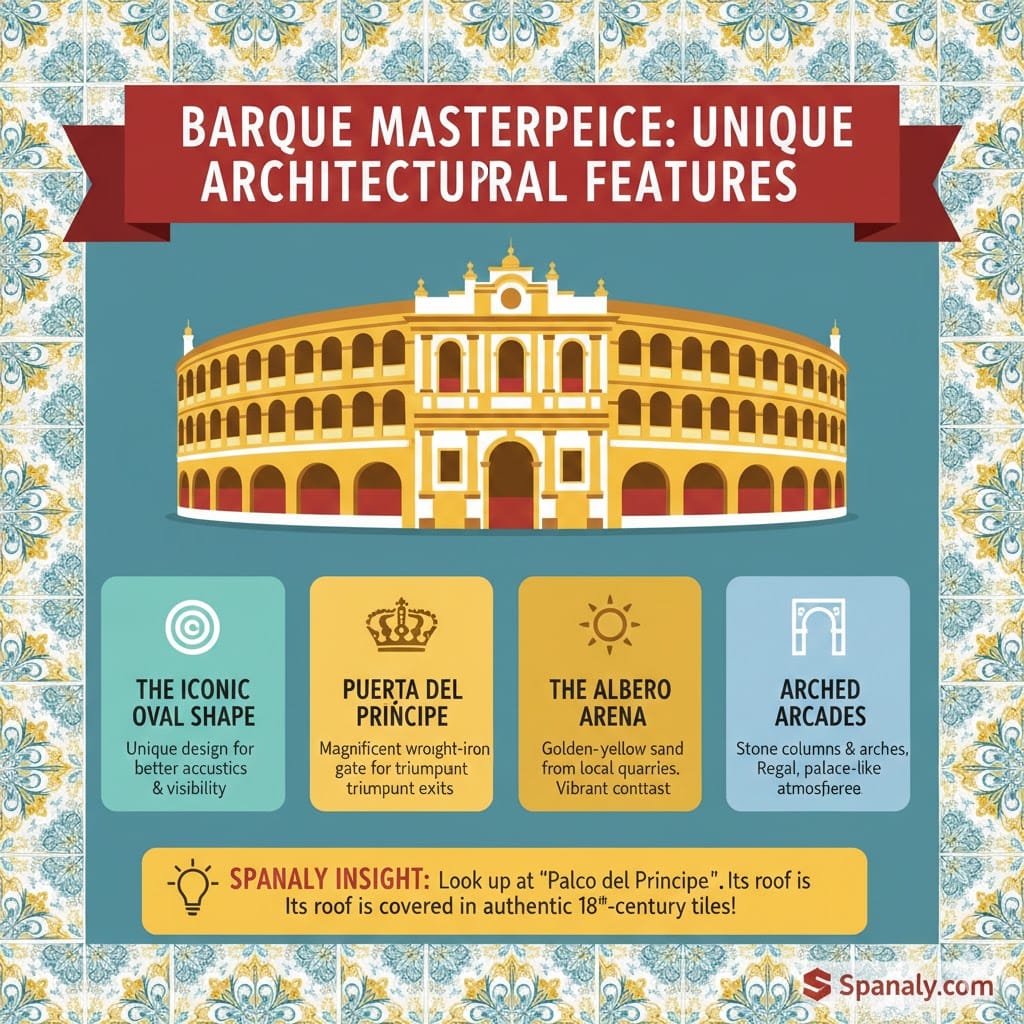
The architecture of the Real Maestranza is a stunning example of late Baroque style. Notably, its design focuses on elegance and symmetry, blending traditional Spanish colors with noble materials. Specifically, several key elements make this structure a world-class monument.
🌀 The Iconic Oval Shape: Unlike most circular bullrings, this arena is uniquely oval. Indeed, this design was chosen to provide better acoustics and visibility during the long construction period.
👑 Puerta del Príncipe (The Prince’s Gate): This is the most famous entrance. Specifically, it features a magnificent wrought-iron gate that is only opened for the most successful performers to exit in triumph.
🟡 The Albero Arena: The floor is covered with a special golden-yellow sand called albero, sourced from local quarries. Notably, it creates a vibrant contrast against the white-washed walls.
🏟️ Arched Arcades: The upper gallery is supported by beautiful stone columns and arches, providing a regal atmosphere that feels more like a palace than a stadium.
Ultimately, every corner of the plaza reflects the grandeur of Seville’s past. Indeed, for a deeper look at how this Baroque influence spreads through the city, you might want to visit the Maria Luisa Park Seville, which showcases another side of Seville’s architectural splendor.
💡 Spanaly Insight: Look up at the “Palco del Príncipe” (The Royal Box). In fact, it was designed exclusively for the Spanish Royal Family, and its roof is covered in authentic 18th-century tiles!
🖼️ The Bullfighting Museum: A Journey Through Art and Tradition
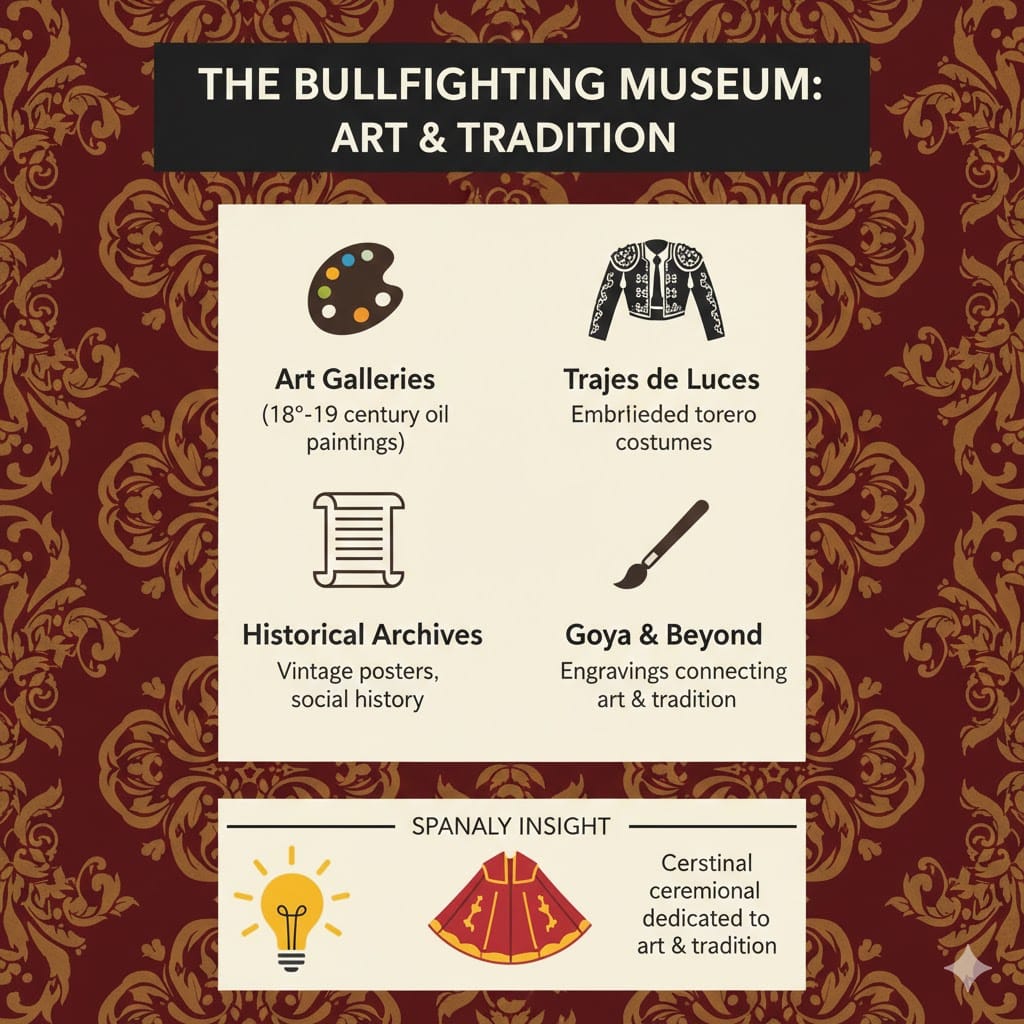
The on-site museum is a treasure trove of Andalusian history. Notably, it offers a sophisticated look at the evolution of Seville’s social fabric. Specifically, it is divided into several galleries that house priceless artifacts.
🎭 Art Galleries: Discover a stunning collection of oil paintings from the 18th and 19th centuries. Indeed, many works depict the festive atmosphere of old Seville.
✨ Trajes de Luces: Marvel at the “Suits of Lights”—hand-stitched costumes worn by legendary toreros, decorated with intricate gold and silver embroidery.
📜 Historical Archives: See original posters and documents that trace the history of the Traditional Spanish Food Guide era, when these events were the city’s main social gatherings.
🎨 Goya & Beyond: The museum features engravings by the famous artist Francisco de Goya, highlighting the deep connection between Spanish art and this tradition.
Ultimately, whether you are a fan of the tradition or just a history buff, the museum provides a valuable cultural archive. Indeed, it helps visitors understand why this landmark remains so central to the city’s identity.
💡 Spanaly Insight: Don’t miss the collection of “Capotes de Paseo” (ceremonial capes). In fact, some of these are dedicated to the Virgin of Hope of Macarena, reflecting the deep religious ties in Seville!
🐎 The Royal Cavalry Brotherhood (Real Maestranza de Caballería)

Behind the golden sand and stone arches lies a noble institution with deep roots. Notably, the bullring is owned and managed by the Real Maestranza de Caballería, a prestigious knightly order founded in the 13th century. Specifically, this brotherhood was originally established to train noblemen in horsemanship and military skills.
⚔️ A Royal Link: The order is headed by the King of Spain himself, which explains the “Royal” title and the unparalleled prestige of the site.
🛡️ Tradition of Service: Historically, the knights provided military defense for Seville; indeed, today they focus on cultural preservation and charity work.
🏇 Equestrian Excellence: The site still hosts high-level equestrian events, honoring its original purpose as a training ground for noble cavalry.
Specifically, the brotherhood’s influence extends far beyond the arena walls. Indeed, their commitment to maintaining Seville’s cultural identity is a key reason why the city remains one of the Why Visit Spain top recommendations. Ultimately, understanding this noble background adds a layer of sophistication to your visit, transforming it from a simple tour into a journey through Spanish aristocracy.
💡 Spanaly Insight: Keep an eye out for the brotherhood’s coat of arms around the building. In fact, the symbols of the “Cavalry” are intricately carved into the gates and even embroidered on the museum’s textiles!
🎭 The Cultural Calendar: Events Beyond Bullfighting
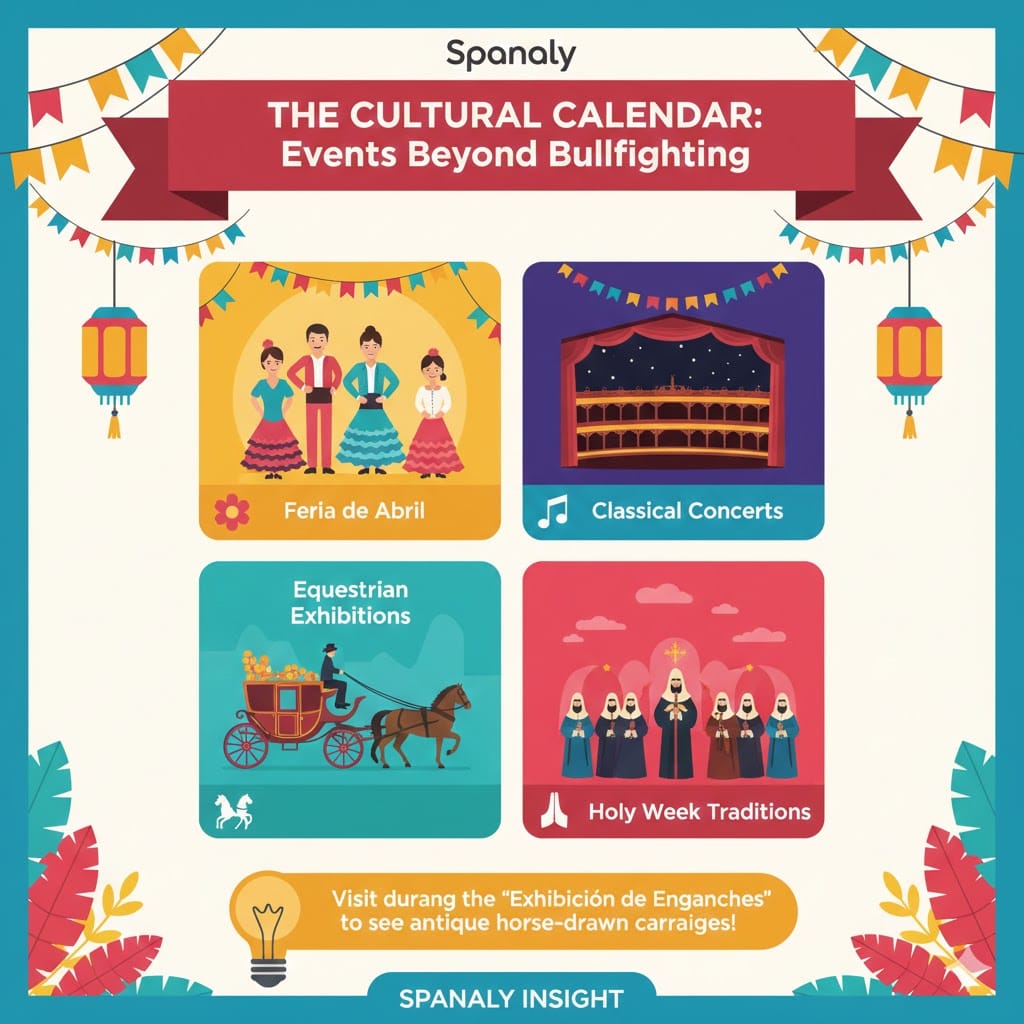
The Real Maestranza is not just a monument to the past; it is a vibrant center for Seville’s modern social life. Notably, while it is famous for traditional events, the arena hosts a diverse array of cultural celebrations throughout the year. Specifically, its calendar is packed with activities that attract thousands of visitors.
🌸 Feria de Abril (April Fair): This is the peak season for the arena. Indeed, the bullring becomes the epicenter of the city’s festivities, drawing crowds in traditional Andalusian dress.
🎼 Classical Concerts: Thanks to its unique oval design and exceptional acoustics, the plaza occasionally hosts open-air operas and classical music performances under the stars.
🏇 Equestrian Exhibitions: Honoring the legacy of the Royal Cavalry Brotherhood, you can witness stunning displays of Spanish horsemanship and traditional carriage competitions.
🙏 Holy Week Traditions: During Semana Santa in Spain, the area surrounding the bullring is a key spot to watch the solemn processions pass through the historic El Arenal district.
Ultimately, checking the local calendar before your visit is highly recommended. Indeed, experiencing a live event here—whether it’s a parade or a concert—is one of the most memorable things to do in the city. Specifically, for more ideas on timing your trip, see our guide on the Best Time to Visit Seville.
💡 Spanaly Insight: If you visit during the “Exhibition of Carriages” (Exhibición de Enganches), you will see some of the most beautiful antique horse-drawn carriages in the world. In fact, it’s like stepping back into the 19th century!
👟 Step-by-Step: What to Expect on a Guided Tour
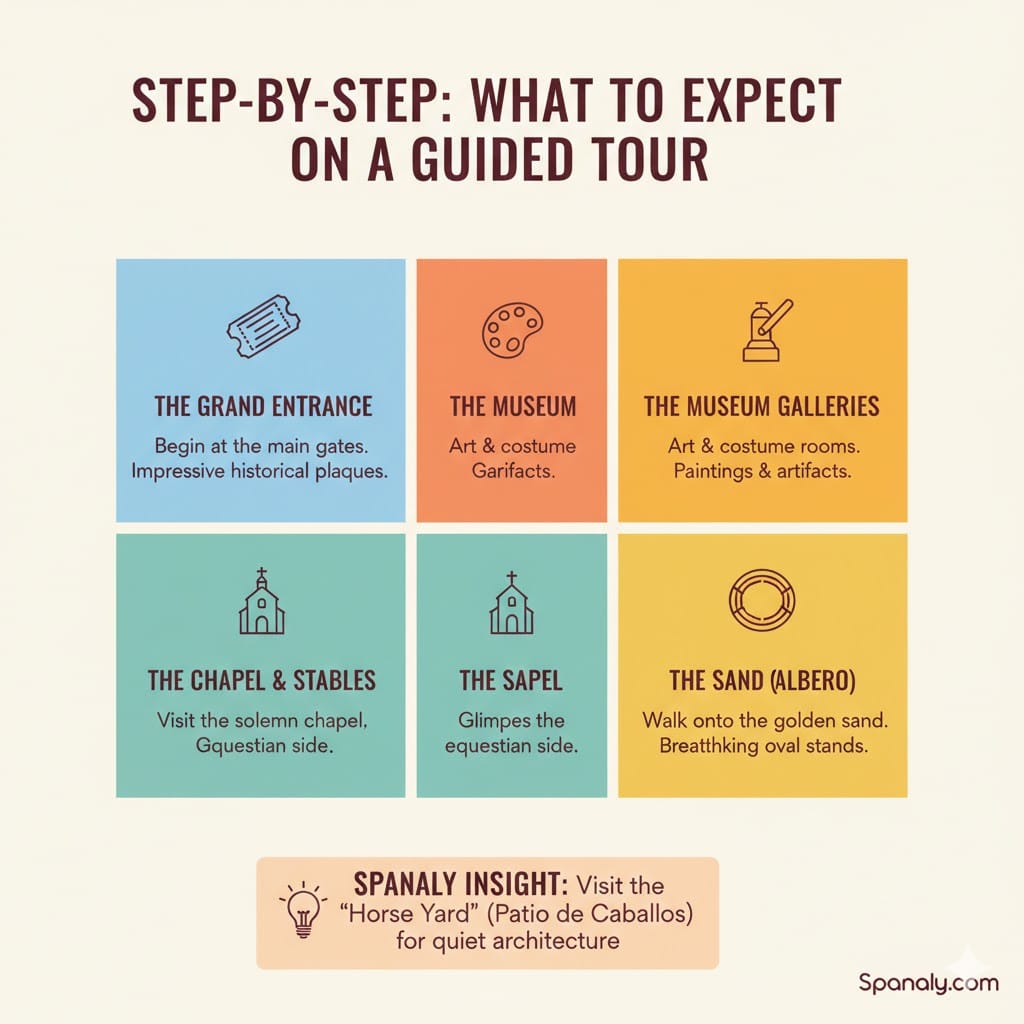
Exploring the Real Maestranza is a seamless experience, notably because the site is designed to lead you through a chronological journey. Specifically, the guided tours (often available with an audio guide) ensure you don’t miss any historical nuances.
🎟️ The Grand Entrance: You begin at the main gates, where you’ll receive your tickets. Indeed, even the entrance hall displays impressive historical plaques.
🖼️ The Museum Galleries: The first part of the tour takes you through the art and costume rooms. Specifically, you will see the evolution of the bullfighting tradition through paintings and original artifacts.
⛪ The Chapel & Stables: You will visit the small, solemn chapel where participants pray before an event. Notably, the nearby stables offer a glimpse into the equestrian side of the arena.
🏟️ The Sand Arena (Albero): The climax of the tour is walking out into the arena itself. Indeed, standing on the golden sand and looking up at the oval stands is a breathtaking moment.
Ultimately, the tour is designed to be educational and culturally enriching. Indeed, it provides a respectful look at a complex tradition while focusing on its artistic and social impact. Specifically, if you are planning your day, this tour fits perfectly into a wider 3-Day Seville Itinerary plan.
💡 Spanaly Insight: Make sure to visit the “Horse Yard” (Patio de Caballos). In fact, it is one of the quietest and most atmospheric parts of the building, perfect for admiring the traditional architecture away from the main stands.
🎟️ Essential Visitor Info: Hours, Tickets, and Best Time to Visit
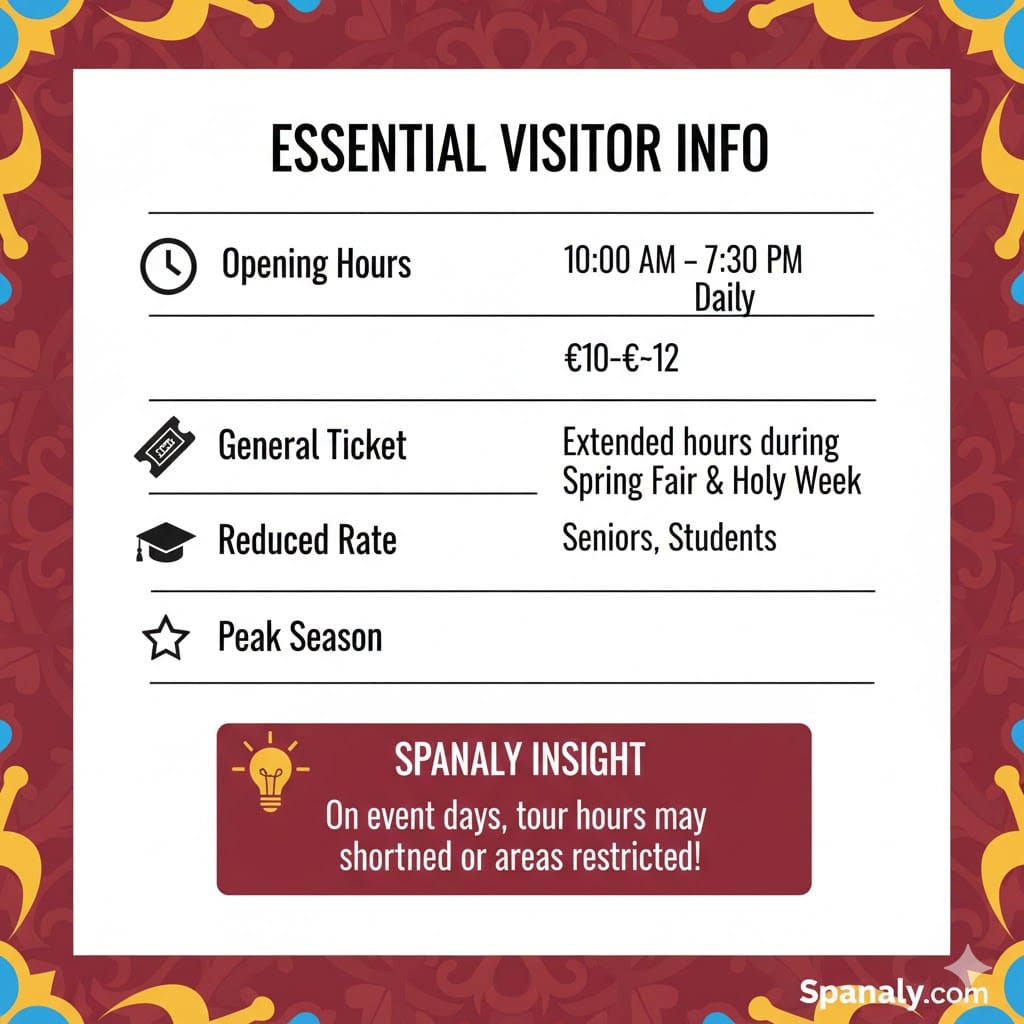
Planning your visit to the Real Maestranza requires a bit of timing, notably if you want to avoid the largest crowds. Specifically, the bullring operates with consistent hours throughout the year, but seasonal events can sometimes affect access.
📅 Visit Overview
| Feature | Details |
| Opening Hours | 10:00 AM – 7:30 PM (Daily) |
| Peak Season Hours | Extended hours during Spring Fair and Holy Week |
| General Ticket | Approximately €10 – €12 (Includes Audio Guide) |
| Reduced Rate | Available for Seniors (65+), Students, and Children |
| Free Entry | Limited slots (usually Monday afternoons; check official site) |
Notably, ticket prices usually include a high-quality audio guide available in multiple languages. Indeed, purchasing your tickets online in advance is highly recommended to secure your preferred time slot and skip the lines at the box office.
Ultimately, if you are looking for the absolute best experience, we recommend visiting during the Best Time to Visit Seville—typically in late spring or early autumn—when the weather is mild enough to enjoy the open-air arena comfortably. Specifically, aim for a morning visit (right at 10:00 AM) for the best lighting and the quietest atmosphere.
💡 Spanaly Insight: Remember that the bullring is still an active venue. In fact, on days when an event is scheduled, the tour hours might be shortened or certain areas of the arena might be restricted!
📍 Location & How to Get There: Navigating El Arenal
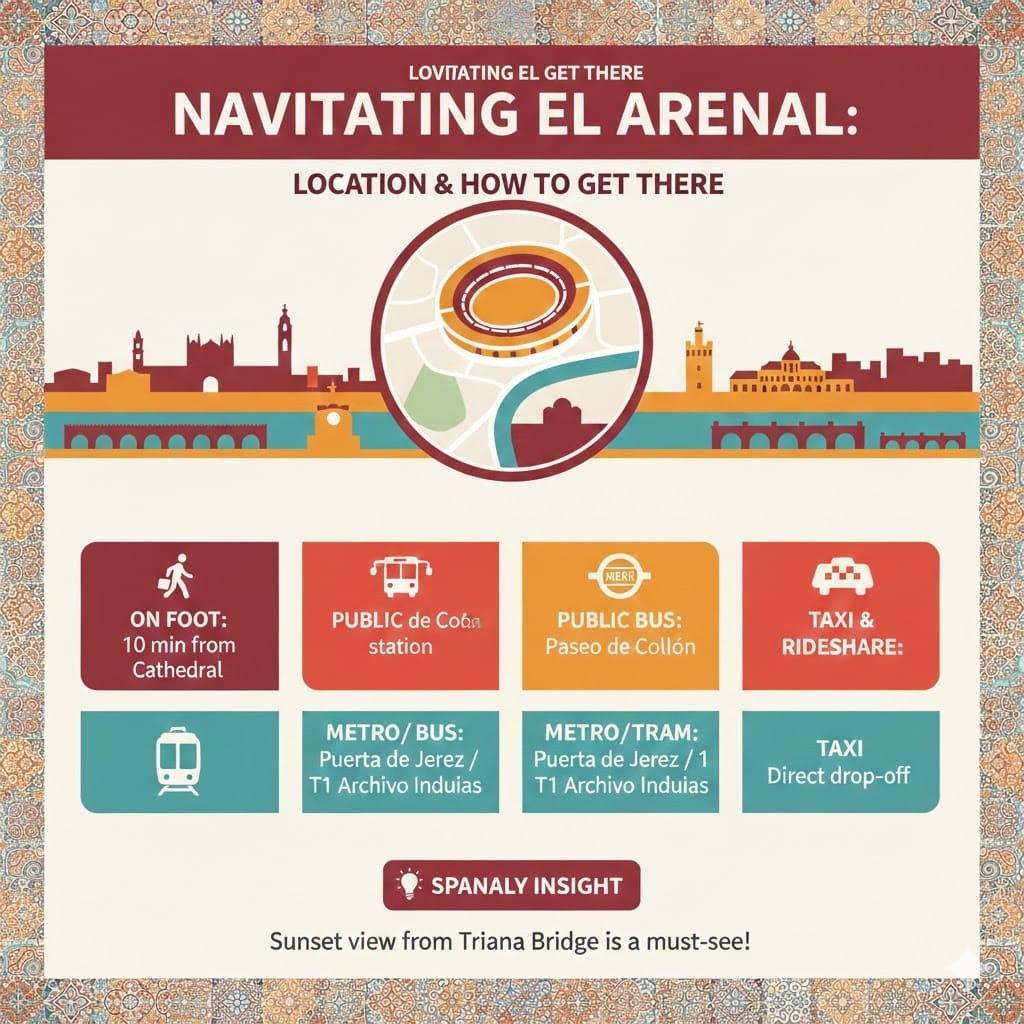
The Real Maestranza is perfectly situated in the historic El Arenal neighborhood, right along the banks of the Guadalquivir River. Notably, its central location makes it incredibly easy to reach from almost any part of the old city. Specifically, you have several convenient options for getting there.
🚶 On Foot: If you are staying in the city center, walking is your best bet. Indeed, the bullring is just a short 10-minute stroll from the Seville Cathedral and the Giralda.
🚌 Public Bus: Several major bus lines (including C1, C3, and C4) stop at the “Paseo de Colón” station, which is right in front of the arena. Notably, this is the most convenient public transport option.
🚋 Metro & Tram: The nearest Metro station is Puerta de Jerez. From there, it’s a scenic 5-minute walk along the riverbank. Specifically, the T1 Tram also stops nearby at the Archivo de Indias.
🚕 Taxi & Rideshare: Taxis can drop you off directly at the main entrance on Paseo de Cristóbal Colón.
Ultimately, reaching the arena is part of the experience, as the walk offers stunning views of the Torre del Oro Seville nearby. Indeed, its proximity to the river makes it a perfect starting point for an evening walk. Specifically, navigating this area is simple, but for a broader view of the city’s layout, check out our Seville Neighborhoods Guide.
💡 Spanaly Insight: If you’re coming from the Triana side, cross the “Puente de Isabel II” (Triana Bridge). In fact, the view of the bullring’s white and yellow facade from the bridge at sunset is one of the most photographed spots in the city!
🍽️ Exploring El Arenal: Best Eats and Views Near the Bullring
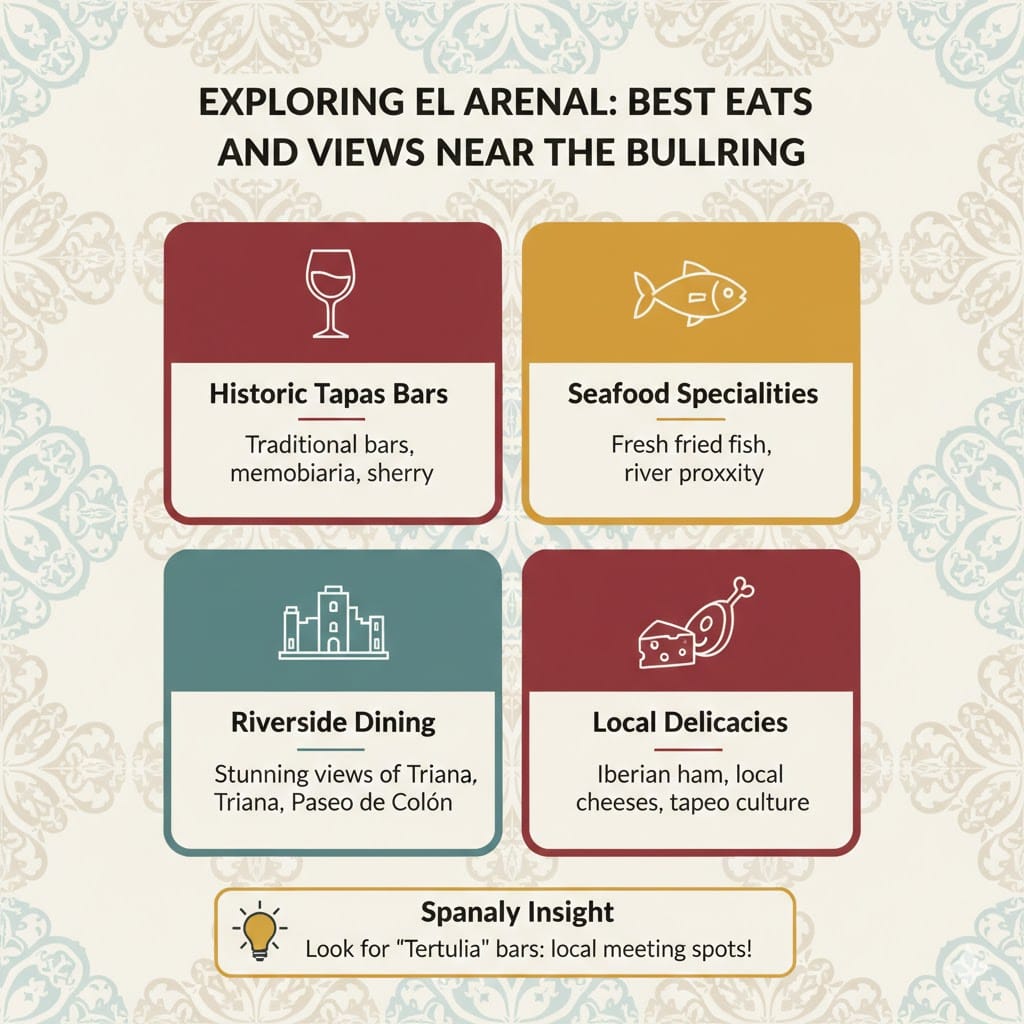
After exploring the grandeur of the arena, your journey continues in the surrounding streets of El Arenal. Notably, this neighborhood is famous for its vibrant culinary scene and historic taverns. Specifically, it is the perfect place to experience authentic Seville through its food.
🍷 Historic Tapas Bars: The streets adjacent to the bullring are lined with traditional bars. Indeed, many are decorated with bullfighting memorabilia, offering a unique atmosphere to enjoy a glass of sherry.
🍤 Seafood Specialties: Given its proximity to the river, El Arenal is renowned for its fresh fried fish (pescaíto frito). Notably, this is a staple of any Traditional Spanish Food Guide.
🌅 Riverside Dining: For a more modern experience, head to the restaurants along Paseo de Colón. Specifically, these spots offer stunning views of the Triana district across the water.
🧀 Local Delicacies: Don’t miss out on trying local cheeses and Iberian ham. Indeed, these flavors are best enjoyed slowly, embracing the local “tapeo” culture.
Ultimately, El Arenal is a foodie’s paradise that perfectly complements your visit to the Real Maestranza. Indeed, whether you want a quick bite or a full Andalusian feast, you are in the right place. Specifically, to dive deeper into the city’s flavors, explore our curated list of Traditional Sevillian Tapas.
💡 Spanaly Insight: Look for bars that have “Tertulia” in their name. In fact, these are traditional meeting spots where locals gather to discuss history, art, and city life over a cold caña (small beer)!
⚖️ A Balanced Perspective: Understanding the Tradition
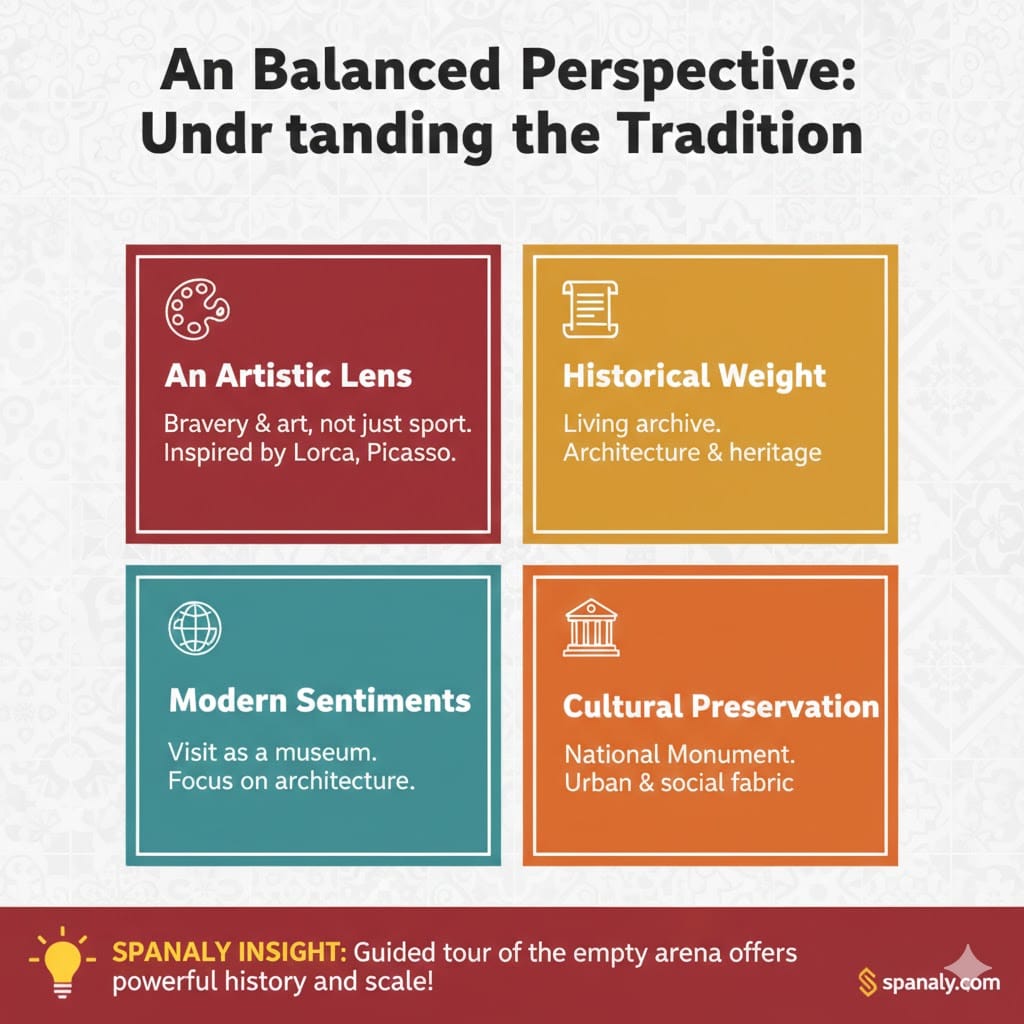
Visiting the Real Maestranza often sparks a deep curiosity about the nature of the tradition itself. Notably, while it is an undeniable pillar of Spanish history and art, it is also a subject of modern debate. Specifically, understanding the cultural context helps travelers navigate this experience with respect and insight.
🎨 An Artistic Lens: For many locals, the event is seen as a “liturgy” of bravery and art rather than a sport. Indeed, the focus is on the grace of the movements and the historical costume, which has inspired poets like Lorca and painters like Picasso.
📜 Historical Weight: The bullring is a living archive of Seville’s social evolution. Notably, the architecture and the museum galleries provide a way to appreciate the craftsmanship and heritage without necessarily attending a live event.
🌍 Modern Sentiments: Today, many Spaniards and international visitors prefer to visit the monument strictly as a museum. Specifically, the site has adapted by focusing its tours on the Baroque architecture and the noble history of the Royal Cavalry.
🏛️ Cultural Preservation: Regardless of personal views, the building remains a protected National Monument. Indeed, it is an essential piece of the city’s urban and social fabric.
Ultimately, your visit can be as much about the stunning Baroque design as it is about the tradition itself. Indeed, by exploring the museum and the arena, you are engaging with a complex part of the Spanish Culture and Traditions that has shaped Andalusia for centuries. Specifically, being an informed traveler allows you to appreciate the landmark’s role in Seville’s identity while forming your own perspective.
💡 Spanaly Insight: Most visitors find that a guided tour of the empty arena is the perfect way to appreciate the “art” and “history” of the site. In fact, the silence of the empty stands offers a powerful sense of the building’s immense historical scale!
🏆 Pro-Traveler Tips: How to Visit Like a Local

To truly experience the Real Maestranza like a seasoned traveler, you need to look beyond the standard guidebooks. Notably, these insider tips will help you navigate the site with ease and discover its hidden charms. Specifically, here is how you can elevate your visit.
👟 The “Albero” Footwear Rule: The arena floor is covered in Albero (a specific yellow crushed lime). Indeed, it is beautiful but very dusty. Avoid wearing white sneakers or suede shoes, as the yellow dust is notoriously difficult to remove.
🤫 The Acoustic Secret: If you find yourself in the center of the arena, try speaking at a normal volume. Specifically, the oval design creates a unique acoustic phenomenon where your voice can be heard clearly across the stands—a trick used by performers for centuries.
⛪ Afternoon Light for Photographers: While mornings are quiet, the “Golden Hour” (an hour before sunset) is when the Baroque facade glows intensely. Notably, the shadows cast by the arches inside the arena create stunning geometric patterns for your photos.
📅 The “Secret” Free Hours: While most sites have long lines for free entry, the Real Maestranza occasionally offers free slots on Monday afternoons. Indeed, you must book these online exactly when they open, as they disappear in minutes.
🎒 Security Hack: The arena has strict rules about large bags, and there are no lockers on-site. Ultimately, travel light or use a “Stasher” point in the nearby El Arenal neighborhood to avoid being turned away at the gate.
Specifically, these small details make the difference between a stressful tour and a perfect afternoon. Indeed, by planning around these local insights, you ensure that your visit to one of the Most Beautiful Places in Spain is flawless.
💡 Spanaly Insight: If the weather is hot, buy a traditional “Abanico” (hand fan) from a local shop in El Arenal before entering. In fact, even during a museum tour, the sun in the open arena can be intense, and you’ll look like a true Sevillano while staying cool!
🏟️ Visitor FAQs – Real Maestranza Bullring Seville
♿ Is the Real Maestranza accessible for visitors with limited mobility?
Mostly yes. The museum and the lower levels of the arena are accessible. However, due to the 18th-century architecture, some upper stands and narrow corridors have stairs. Specifically, we recommend notifying the staff at the entrance so they can guide you through the designated accessible routes.
🎧 Are audio guides available in different languages?
Indeed. The entry price typically includes an audio guide available in English, Spanish, French, German, Italian, and more. Notably, they use a "contactless" system or disposable earpieces, but you can often use your own smartphone to scan QR codes in certain sections for a more personal experience.
👗 Is there a specific dress code for visiting the museum?
There is no formal dress code for the daytime museum tour. However, ultimately, we suggest respectful casual attire as you will be visiting a chapel. If you are attending a special evening event or concert, locals tend to dress up significantly (smart-casual or formal).
☀️ Is the arena tour shaded or open-air?
The museum galleries and the chapel are indoors and cool. Specifically, the arena floor (the Albero) is completely open to the sky. In fact, during the summer months, temperatures can exceed 40°C in the center of the ring, so hats and sunscreen are essential for the outdoor portion of the visit.
🐾 Are pets allowed inside the monument?
No, pets are not allowed inside the Real Maestranza, with the exception of certified service animals. Ultimately, it is best to leave your furry friends at your accommodation, as the historic museum environment is not suitable for pets.
Seville Landmark Guide by Spanaly.com
✨ Why Real Maestranza is a Must-See
Wrapping up your Seville journey? Here is why this golden arena deserves a spot on your list:
🏟️ Architectural Marvel: Experience the rare oval design and Baroque elegance firsthand.
⏳ Living History: Walk through centuries of Andalusian social and artistic evolution.
📸 Photographer’s Dream: Capture the vibrant contrast of white walls, yellow sand, and blue skies.
🍷 Perfect Location: Finish your tour and step right into the heart of Seville’s best tapas scene.
Notably, if your Spanish adventure continues toward the Mediterranean coast, don’t miss our guide to the legendary Gothic Quarter Barcelona for a completely different—but equally stunning—historical vibe.
Ultimately, whether you visit for the art, the history, or the views, the Real Maestranza remains the soul of Seville. Indeed, it is an experience that stays with you long after you’ve left the city.
💡 Spanaly Insight: Safe travels, and remember to always look beyond the surface to find the true heart of Spain!