🗼 Torre del Oro
The Torre del Oro (Tower of Gold) is one of Seville’s most photographed landmarks, standing as a silent witness to the city’s maritime glory for over 800 years. Notably, this dodecagonal military watchtower has guarded the Guadalquivir River since the Almohad dynasty. Specifically, it serves as a bridge between Seville’s ancient defensive past and its era as a gateway to the New World.
🏰 Historic Sentinel: A 13th-century defensive structure that once controlled river access.
✨ Golden Legacy: Famous for its unique shine and its role in guarding precious cargo from the Americas.
⚓ Naval Museum: Home to a compact yet fascinating collection of maritime instruments and maps.
🌅 Panoramic Views: Offers some of the best vistas of the river and the vibrant Triana district.
Ultimately, whether you are a history buff or a photography enthusiast, a visit to this tower is essential for understanding the city’s soul. Indeed, its strategic location makes it a perfect highlight within your Seville Travel Guide checklist. Specifically, it remains a symbol of resilience, having survived wars, earthquakes, and the passage of centuries.
💡 Spanaly Insight: Many travelers only view the tower from the outside. In fact, climbing to the top terrace provides a unique perspective of the river that you won’t find anywhere else in the city!
✨ Overview: What Makes the Golden Tower Special?
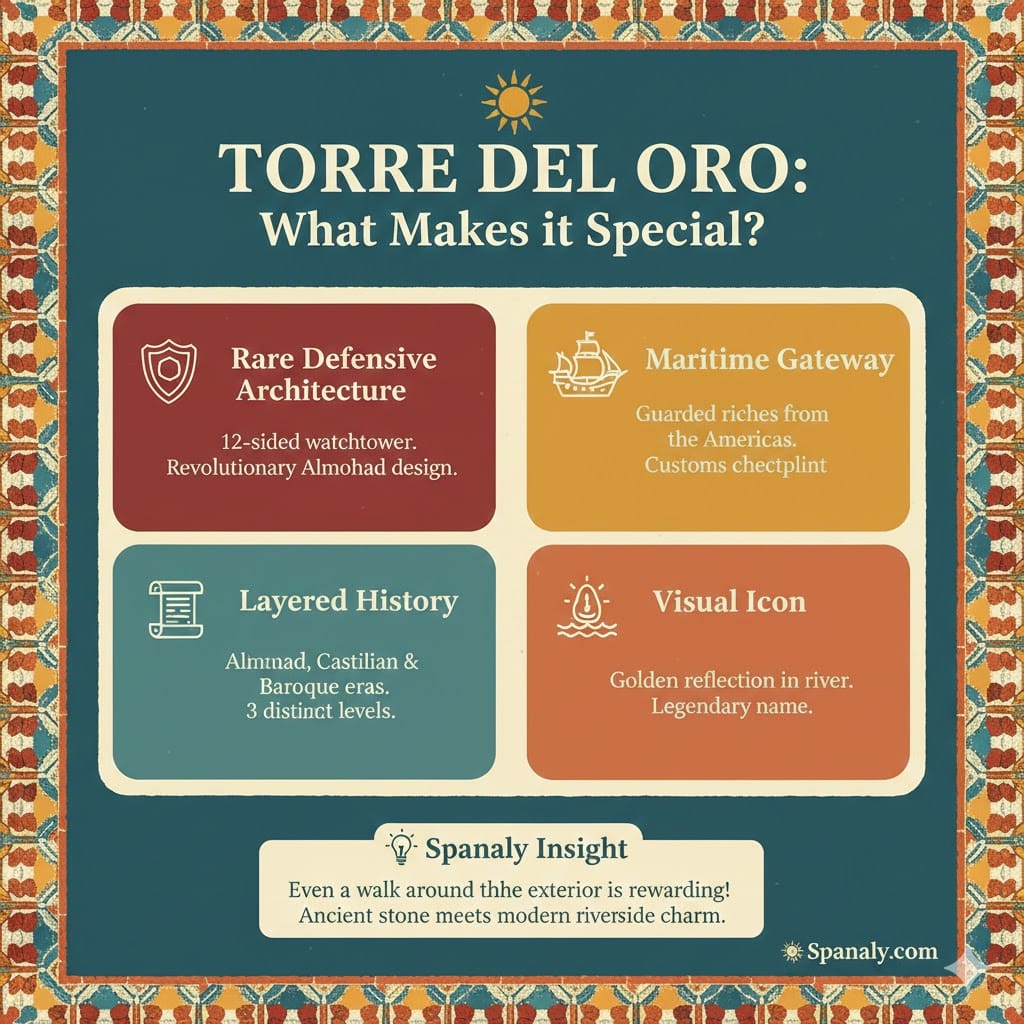
The Torre del Oro is much more than just a historical building; it is a symbol of Seville’s identity. Notably, it is one of the few surviving examples of Almohad military architecture in the city. Specifically, its location on the banks of the Guadalquivir River makes it a focal point for both history lovers and casual strollers.
🛡️ Rare Defensive Architecture: It is a dodecagonal (12-sided) watchtower, a design that was revolutionary for its time.
⚓ A Maritime Gateway: For centuries, it served as the “check-in” point for Spanish galleons returning from the Americas loaded with riches.
📜 Layered History: The tower consists of three distinct levels built in different eras: the Almohad, the Castilian, and the Baroque.
🎨 Visual Icon: Its striking yellow-gold reflection in the river at sunset is the reason behind its legendary name.
Ultimately, visiting this tower offers a quick yet profound glimpse into the city’s naval power. Indeed, it is an essential stop that perfectly complements a stroll toward the nearby Plaza de España Seville. Specifically, its unique silhouette has become an inseparable part of the Sevillian skyline.
💡 Spanaly Insight: If you have limited time, even a walk around its exterior is rewarding. In fact, the contrast between the ancient stone and the modern riverside promenade captures the essence of Seville’s “old meets new” charm!
🕰️ The History: From Almohad Defense to Christian Glory

The Torre del Oro has lived through rulers, wars, maritime glory, and earthquakes—each era leaving a permanent mark on its stones. Notably, its story is the story of Seville itself. Specifically, it has evolved from a fierce military fortress to a peaceful cultural monument.
🕌 The Almohad Era (1220–1248): Built by the Almohad dynasty, it served as a watchtower to control river traffic. Indeed, a massive iron chain once connected it to the opposite bank to block enemy ships from entering the harbor.
⚔️ Christian Conquest (1248): The chain was famously broken by the fleet of King Ferdinand III. Specifically, this event was a turning point that integrated the tower into the Christian defensive system of the city.
🚢 Age of Discoveries (16th–17th century): During Spain’s maritime expansion, the tower guarded ships returning from the Americas. Notably, it served as a customs checkpoint for the riches flowing into the Seville Travel Guide heartland.
🌍 Modern Era: Surviving the great 1755 Lisbon earthquake, the tower was restored and eventually converted into a Naval Museum in 1944. Indeed, it remains a protected National Monument today.
Ultimately, every stone in the tower tells a tale of survival. Specifically, it has transitioned from a site of war to a place of historical reflection. Indeed, understanding this timeline is essential before exploring other nearby wonders like the Maria Luisa Park Seville.
💡 Spanaly Insight: Look closely at the walls! In fact, you can still see the different styles of masonry that mark the transitions between Moorish engineering and later Spanish renovations.
❓ The Legend of the Name: Why "Tower of Gold"?

One of the most frequent questions travelers ask is how the tower earned its sparkling title. Notably, there isn’t just one answer, but a blend of historical theories and poetic legends. Specifically, the name Torre del Oro has evolved alongside the city’s shifting fortunes.
✨ The Ceramic Theory: For a long time, it was believed the tower was covered in golden tiles. Indeed, archaeological studies suggest the “glow” came from a mixture of lime mortar and pressed straw, which reflected the intense Seville sun.
🚢 The Treasures of the Americas: During the 16th century, the tower served as the safe haven for the riches returning from the New World. Notably, people believed its name came from the literal gold and silver stored within its walls.
🏺 The “Albero” Reflection: The golden hue of the river water, combined with the tower’s reflection at sunset, creates a natural spectacle. Specifically, the reflection on the Guadalquivir gave it a permanent “golden” aura in the eyes of the locals.
Ultimately, whether the name comes from its physical materials or its historic wealth, the tower remains the city’s most precious riverside gem. Indeed, this legendary status is part of what makes it a highlight in any Seville Travel Tips guide. Specifically, it stands as a reminder of the era when Seville was the economic heart of the world.
💡 Spanaly Insight: To see the “Gold” for yourself, visit the opposite bank in Triana just as the sun begins to set. In fact, the way the light hits the stone at that exact moment explains the name better than any history book!
🎨 Architecture & Design: A Unique Andalusian Gem

The Torre del Oro stands out not just for its color, but for its highly unusual geometry. Notably, it is a masterclass in military engineering that has evolved through three distinct construction phases. Specifically, its layered design serves as a physical timeline of Seville’s architectural history.
📐 The Dodecagonal Base: The first and main body is 12-sided (dodecagonal). Indeed, this Almohad design was chosen for its superior defensive strength against naval attacks.
🏰 The Castilian Middle: Added in the 14th century after the Christian conquest, this smaller dodecagonal section enhanced the tower’s height and visibility. Notably, it reflects the transition to Mudéjar influence.
☀️ The Baroque Crown: The small circular top level was added in 1760. Specifically, it was built to repair the tower after the Great Lisbon Earthquake, giving it its iconic “three-tier” silhouette.
🧱 The Golden Mortar: The walls are made of a robust mixture of lime, sand, and pressed straw. Indeed, it is this specific blend—not gold—that captures the sunlight so perfectly.
Ultimately, the blend of Islamic foundations and Spanish additions creates a harmonious monument. Indeed, this architectural diversity is why the tower is often featured alongside the Alcazar of Segovia as a pinnacle of Spanish fortification. Specifically, it proves that functional military buildings can also be works of art.
💡 Spanaly Insight: Notice the difference in the brickwork as you look up. In fact, the Almohad lower level is much thicker and more rugged than the more decorative upper tiers!
⚓ Inside the Naval Museum: Maritime Treasures

The museum inside the Torre del Oro may be compact, but it is incredibly rich in history. Notably, it offers a journey through Spain’s naval evolution across two floors of exhibits. Specifically, it provides the necessary context to understand how Seville became the center of the maritime world during the Age of Discovery.
🚢 Ship Models: See detailed scale replicas of famous vessels, including the galleons that crossed the Atlantic. Indeed, these models highlight the incredible engineering of the Spanish fleet.
🧭 Navigational Tools: Explore ancient astrolabes, compasses, and sea charts used by legendary explorers. Notably, these instruments are a testament to the bravery of early sailors.
🗺️ Historic Maps: Discover rare 16th-century maps detailing the newly discovered routes to the Americas. Specifically, they show how Seville’s harbor was the most important link in the global trade chain.
🐚 Naval Artifacts: The collection includes everything from cannons and flags to documents that changed history. Indeed, every artifact tells a story of survival on the high seas.
Ultimately, the experience is not just about the objects, but about the atmosphere inside the ancient stone walls. Indeed, it is a perfect indoor activity that pairs beautifully with a visit to the Triana District Seville just across the river. Specifically, it prepares you for the panoramic reward waiting on the top floor.
💡 Spanaly Insight: Don’t rush the climb! In fact, the small windows (loopholes) on the way up offer “framed” views of the river that are perfect for artistic, close-up photos.
🎫 Visitor Essentials: Opening Hours & Tickets

Planning your visit to the Torre del Oro is straightforward, as it is one of the most accessible and affordable monuments in the city. Notably, while it is a small museum, its popularity means timing your visit can make a big difference. Specifically, being aware of the free entry days is a great way to save money during your trip.
| Section | Details & Tips |
| 🗓️ Weekdays (Mon–Fri) | 09:30 AM – 07:00 PM |
| 周末 Weekends (Sat–Sun) | 10:30 AM – 06:45 PM |
| 🎫 General Admission | Approximately €3 |
| 🎓 Students & Seniors | Approximately €1.50 (Valid ID required) |
| 🆓 Free Entry Day | Mondays (Check local updates for hours) |
| ⏳ Visit Duration | 30 to 45 minutes |
Ultimately, the tower’s central location means you can easily fit it into a busy morning or a relaxed afternoon. Indeed, its proximity to other major sites makes it a logical stop after visiting the Real Maestranza Bullring Seville. Specifically, it provides a high-value experience for a very symbolic price.
💡 Spanaly Insight: During peak summer months, try to visit as soon as it opens. In fact, the interior of the tower can get quite warm by midday, so the early morning breeze from the river makes the climb much more pleasant!
🚢 The Riverside Experience: Cruises & Walks

The area surrounding the Torre del Oro is the soul of Seville’s waterfront. Notably, the tower serves as the primary hub for river-based tourism. Specifically, it is the starting point for both relaxing boat tours and the most scenic walking routes in the city.
⛴️ Guadalquivir River Cruises: Numerous boat tours depart from the docks right next to the tower. Indeed, seeing the city’s skyline from the water offers a unique perspective of the Giralda and Triana.
👟 Paseo de Cristóbal Colón: This wide promenade is perfect for a sunset stroll. Notably, it connects the tower with other riverside landmarks like the Real Maestranza Bullring Seville.
🌉 Bridge Hopping: From the tower, it is a short, beautiful walk to the San Telmo Bridge or the iconic Triana Bridge. Specifically, these paths are lined with benches and local kiosks for a perfect break.
🚴 Riverside Cycling: The flat, dedicated bike paths along the river make the tower a key stop for those exploring the city on two wheels. Indeed, it is a refreshing way to cover more ground.
Ultimately, the riverside experience is what makes a visit to the tower so memorable. Indeed, after exploring the history inside, you can immediately dive into the vibrant local life outdoors. Specifically, it is a perfect transition point before heading to the nearby Jardines de Murillo Seville for a change of scenery.
💡 Spanaly Insight: If you plan on taking a river cruise, book the “Golden Hour” slot. In fact, watching the lights of the city turn on while passing the illuminated Torre del Oro is a magical experience you shouldn’t miss!
📸 Pro-Traveler Tips: Best Views & Photo Spots
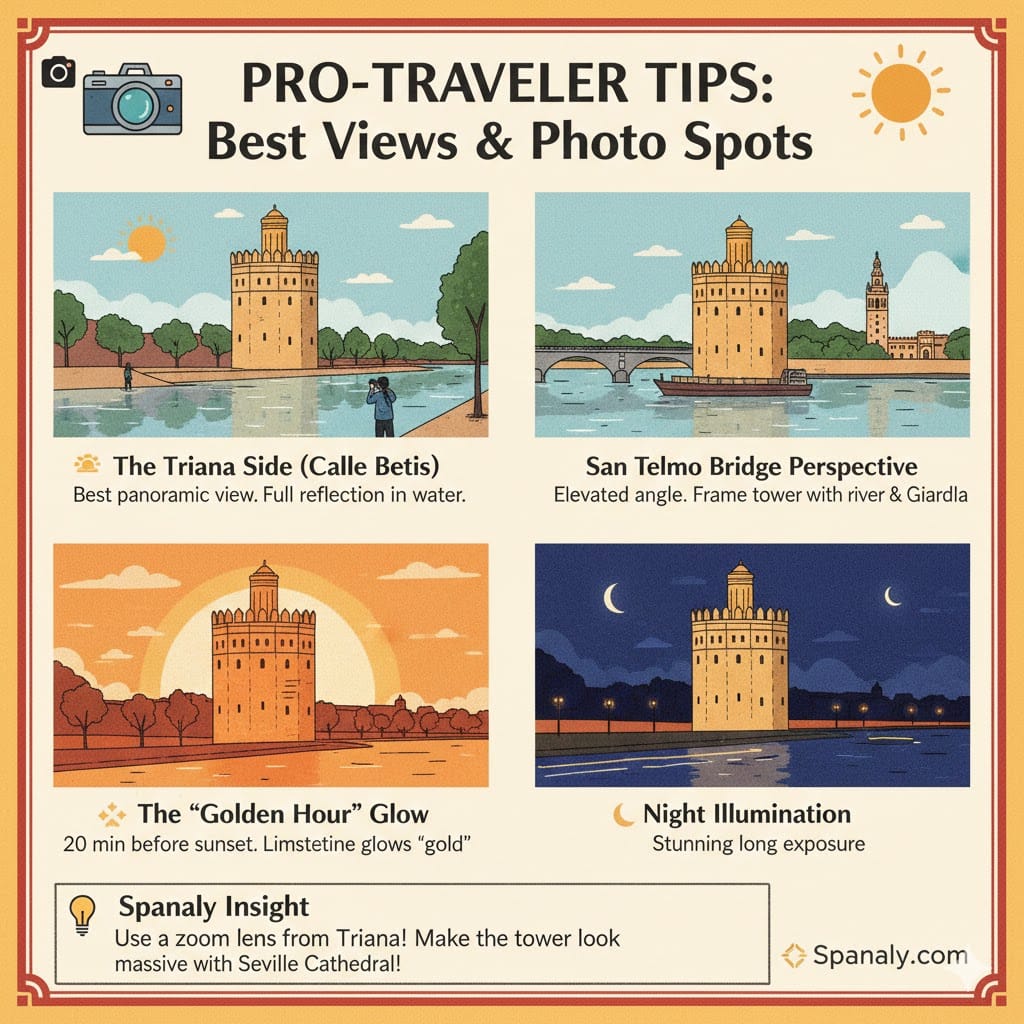
Capturing the perfect shot of the Torre del Oro requires more than just a camera; it requires knowing the right spots and timing. Notably, the tower’s interaction with the river and the sky creates different moods throughout the day. Specifically, following these local tips will ensure your photos look like professional postcards and align with the best Essential Spain Travel Tips.
🌅 The Triana Side (Calle Betis): For the absolute best panoramic view, cross the San Telmo bridge to the Triana side. Indeed, standing on the riverbank opposite the tower allows you to capture its full reflection in the water.
🌉 San Telmo Bridge Perspective: Walking across the bridge itself provides a fantastic elevated angle. Notably, it is the perfect spot to frame the tower with the river traffic and the Giralda in the far background.
✨ The “Golden Hour” Glow: Arrive about 20 minutes before sunset. Specifically, the limestone and straw mortar of the tower catch the orange light, making it literally glow as if it were made of solid gold.
🌙 Night Illumination: Once the sun sets, the tower is beautifully lit. Indeed, using a long exposure from the riverfront will give you a stunning, sharp image against the dark blue sky.
Ultimately, the tower is one of the most photographed monuments in Spain for a reason. Indeed, taking the time to find these unique vantage points will make your travel gallery stand out. Specifically, it’s about capturing the harmony between the ancient stone and the flowing river to create a lasting memory.
💡 Spanaly Insight: If you have a zoom lens, try to compress the perspective from the Triana side. In fact, you can make the tower look massive against the backdrop of the Seville Cathedral!
🚶 Exploring Nearby: From El Arenal to Triana
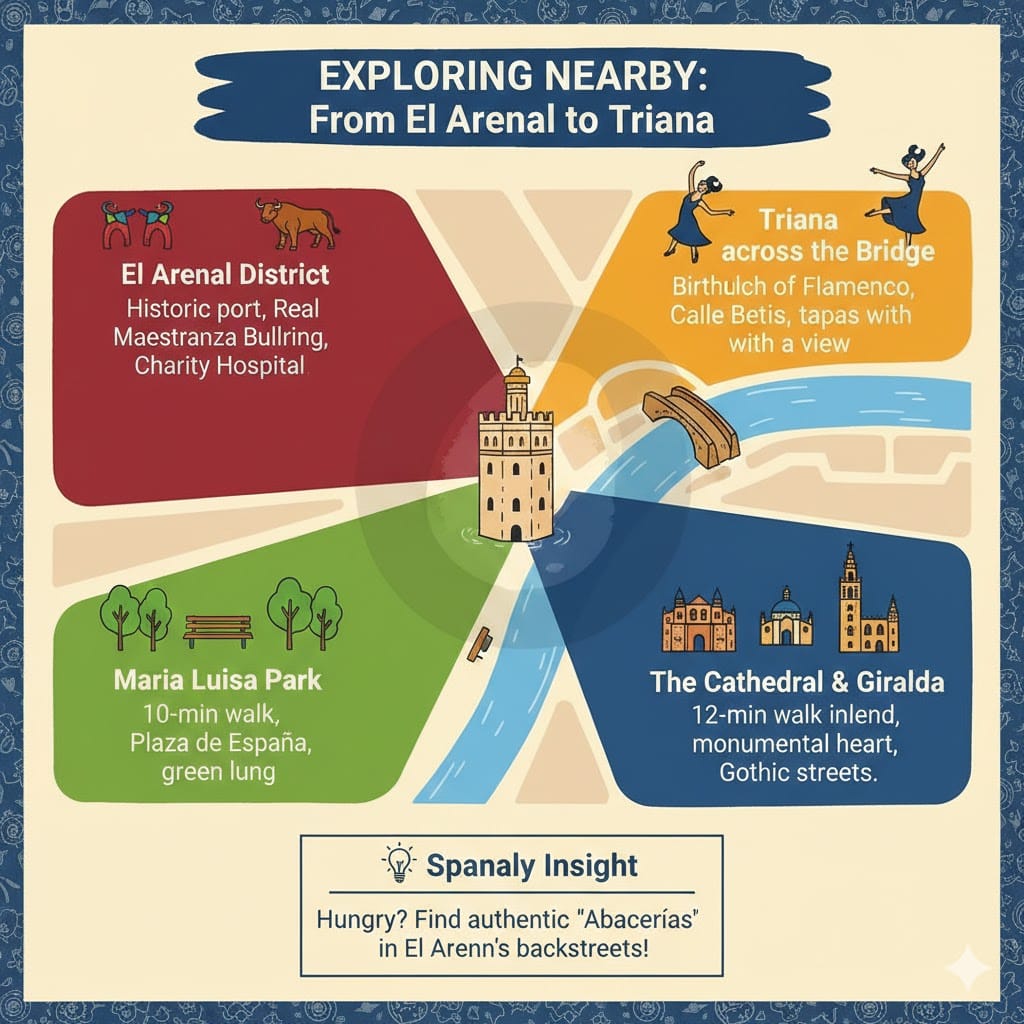
The Torre del Oro is perfectly positioned at the crossroads of Seville’s most vibrant neighborhoods. Notably, you don’t need a car to explore the surroundings. Specifically, a short walk in any direction from the tower leads you to another world of culture, history, and gastronomy, making it a staple in any Seville Travel Guide.
🎭 El Arenal District: Just steps away, this historic neighborhood was once the heart of the city’s port activity. Indeed, it is home to the majestic Seville Charity Hospital and the legendary Real Maestranza Bullring Seville, where history meets tradition.
💃 Triana across the Bridge: Cross the San Telmo bridge to enter the birthplace of flamenco. Notably, the riverside Calle Betis offers the best tapas with a view of the tower you just visited, a highlight often mentioned in Seville Travel Tips.
🌳 Maria Luisa Park: A pleasant 10-minute walk along the river leads you to the city’s green lung. Specifically, this path takes you toward the breathtaking Plaza de España and the lush Maria Luisa Park Seville.
⛪ The Cathedral & Giralda: Heading inland for about 12 minutes brings you to the monumental heart of the city. Indeed, the transition from the riverside breeze to the narrow Gothic streets is a quintessential Seville experience that every traveler should witness.
Ultimately, the tower acts as the perfect “bridge” between the maritime past and the artistic present. Indeed, organizing your day around these nearby spots ensures you maximize your time. Specifically, it provides a seamless flow for those following a well-planned itinerary through the city’s most iconic landmarks.
💡 Spanaly Insight: If you’re feeling hungry, wander into the backstreets of El Arenal. In fact, this area is famous for its traditional “Abacerías” (old grocery stores serving tapas) that offer a much more authentic experience than the riverfront tourist spots!
⏳ Best Time to Visit: Timing Your Golden Experience

Choosing the right moment to visit the Torre del Oro can transform a simple sightseeing stop into a magical memory. Notably, Seville’s climate and the tower’s unique materials mean that the experience changes dramatically depending on the clock and the calendar. Specifically, timing is the key to avoiding the crowds and aligning with the best time to visit Spain for the perfect light.
🌸 Seasonal Choice (Spring & Autumn): March to May and September to October offer the most pleasant temperatures. Indeed, climbing the narrow stairs is much more comfortable during the best time to visit Seville, when the intense summer heat is at bay.
🌅 The Sunset “Golden Hour”: This is the undisputed best time for exterior views. Notably, arriving 30 minutes before sunset allows you to see the tower transition from a pale sand color to a vibrant, shimmering gold.
🕙 Early Morning (Museum Visit): If you plan to explore the Naval Museum inside, aim for the opening at 09:30 AM. Specifically, you’ll beat the large tour groups and have the panoramic terrace almost to yourself.
🌑 The Monday Bonus: Since Mondays offer free entry, they are popular. Indeed, if you are on a budget, this is the best time, but be prepared for slightly longer queues.
Ultimately, there is no “bad” time to see this riverside gem, but a little planning goes a long way. Indeed, aligning your visit with these tips ensures you experience the monument at its peak beauty. Specifically, it helps you manage your energy for a full day of exploring the city’s highlights without the stress of peak-hour crowds.
💡 Spanaly Insight: Avoid the 02:00 PM to 05:00 PM window during summer. In fact, the stone walls trap the heat, making the interior feel like a traditional Spanish oven!
💡 Expert Spanaly Advice: Make the Most of Your Visit

To ensure your visit to the Torre del Oro is as seamless as it is memorable, we’ve gathered these “insider” tips. Notably, these go beyond the basic logistics to help you experience the monument like a local. Specifically, paying attention to these small details can significantly enhance your overall comfort and enjoyment.
🎒 Travel Light: The spiral staircase inside the tower is notoriously narrow and steep. Indeed, there are no lockers on-site, so avoid bringing large backpacks or heavy shopping bags. Specifically, a small cross-body bag is the best choice for this climb.
👟 Grip Matters: The stone steps can be worn smooth and surprisingly slippery, especially if it has recently rained or is very humid. Notably, wearing shoes with good traction is essential for a safe ascent to the panoramic terrace.
💧 Stay Hydrated: While the museum is indoors, it lacks a cafe or vending machines. Indeed, carry a reusable water bottle, but remember that drinking is usually restricted to the outdoor rooftop area to protect the exhibits.
🔭 Bring Binoculars: From the top level, you have a direct line of sight to the distant Aljarafe hills and the modern skyscrapers of the Cartuja area. Specifically, a small pair of binoculars will help you pick out architectural details of the Seville Cathedral that are invisible to the naked eye.
📱 Offline Maps: While the tower is easy to find, the narrow streets of the nearby El Arenal can interfere with GPS signals. Notably, downloading an offline map of the riverside area ensures you can find those hidden “Abacerías” we recommended earlier.
Ultimately, these small preparations allow you to focus on the history and the views rather than the logistics. Indeed, a bit of foresight makes the difference between a rushed stop and a highlights-reel experience. Specifically, it ensures you remain energized for the rest of your Seville Travel Guide adventure.
🏰 Visitor FAQs – Torre del Oro Seville
📷 Can I take photos and use tripods inside the tower?
Personal photography is welcome. You can take photos and videos throughout the museum and on the terrace. Notably, the use of professional tripods or flash is restricted inside the museum levels to protect the naval artifacts. Specifically, the rooftop remains the best spot for unobstructed panoramic shots.
❄️ Is the interior of the tower air-conditioned?
Partially. Due to the tower's 13th-century thick stone walls, some museum areas remain naturally cooler. Indeed, while there is limited modern climate control, the stairwells and the top terrace can get quite warm. Specifically, visiting in the early morning is your best bet for a comfortable temperature.
🎧 Are there audio guides available for the Naval Museum?
Yes, via QR codes. Most exhibits feature descriptions in both Spanish and English. Notably, you can scan digital codes throughout the museum to access deeper historical context on your smartphone. Indeed, this makes the small museum very easy to navigate for international travelers.
🚻 Are there public restrooms or storage lockers on-site?
No. Because of the tower’s historic and compact structure, there are no public restrooms or luggage storage facilities inside. Ultimately, we recommend using the facilities at nearby cafes in El Arenal before your visit, especially since large bags are not allowed up the narrow stairs.
🐕 Are pets allowed inside the Torre del Oro?
Only service animals. To ensure the preservation of the wooden models and historical maps, general pets are not permitted. Indeed, the riverside promenade outside is perfect for a walk with your pet, but they will have to wait outside if you plan to climb to the museum levels.
Seville Riverside Guide by Spanaly.com
✨ The Golden Soul of Seville
The Torre del Oro is more than just a stone structure; it is the silent witness to Seville’s maritime glory. Ultimately, whether you come for the history, the photos, or the river breeze, this tower remains a highlight of any Spain Historical Monuments Guide.
🏰 A Bridge to History: From Moorish defense to a naval museum, its walls tell the story of a city that once linked worlds.
📸 A Visual Masterpiece: No trip to Seville is complete without capturing that magical “Golden Hour” glow against the water.
🚢 A Hub of Life: It serves as the perfect starting point for river cruises, scenic walks, and exploring local tapas.
Indeed, a visit here is short, affordable, and incredibly high-value. Specifically, it provides that essential panoramic perspective needed to understand the heart of Seville. Ultimately, as you leave the tower and head toward your next adventure, you’ll carry a piece of the city’s golden spirit with you.
🌟 Spanaly Farewell: Don’t just look at the tower—feel the history! Take a deep breath by the river, enjoy the view, and let Seville’s charm do the rest.