✨ A trip to Seville’s Golden Tapas
Pescaíto Frito — literally “little fried fish” — is much more than a simple dish; it is one of Andalusia’s most iconic culinary treasures. Notably, across Seville’s lively bars and traditional freidurías, baskets of crisp, golden fish are served hot, fragrant, and irresistibly light. Specifically, this beloved delicacy captures the true soul of southern Spain by combining fresh seafood with an expert frying technique passed down for generations.
🐟 The Golden Standard: A staple of the Sevillian Tapas Guide, where freshness is the only rule.
🍋 Simple Perfection: Lightly floured, flash-fried, and finished with a squeeze of lemon for a burst of Mediterranean flavor.
🍻 A Social Ritual: Best enjoyed with friends, a cold drink, and the buzzing atmosphere of a local neighborhood.
Ultimately, diving into the world of Seville’s favorite fried delight is essential for any food lover. Indeed, it represents the perfect balance of simplicity and mastery. Specifically, it serves as the culinary heartbeat of the city, ensuring every visitor experiences the authentic taste of the Seville Travel Guide lifestyle.
💡 Spanaly Insight: If you see locals carrying brown paper cones (cartuchos) filled with fish, you’re near a Freiduría. In fact, eating these crispy bites while walking through the historic streets is the most “Sevillano” way to enjoy them!
🐟 Pescaíto Frito vs. Cazón en Adobo: The Crispy Rivalry
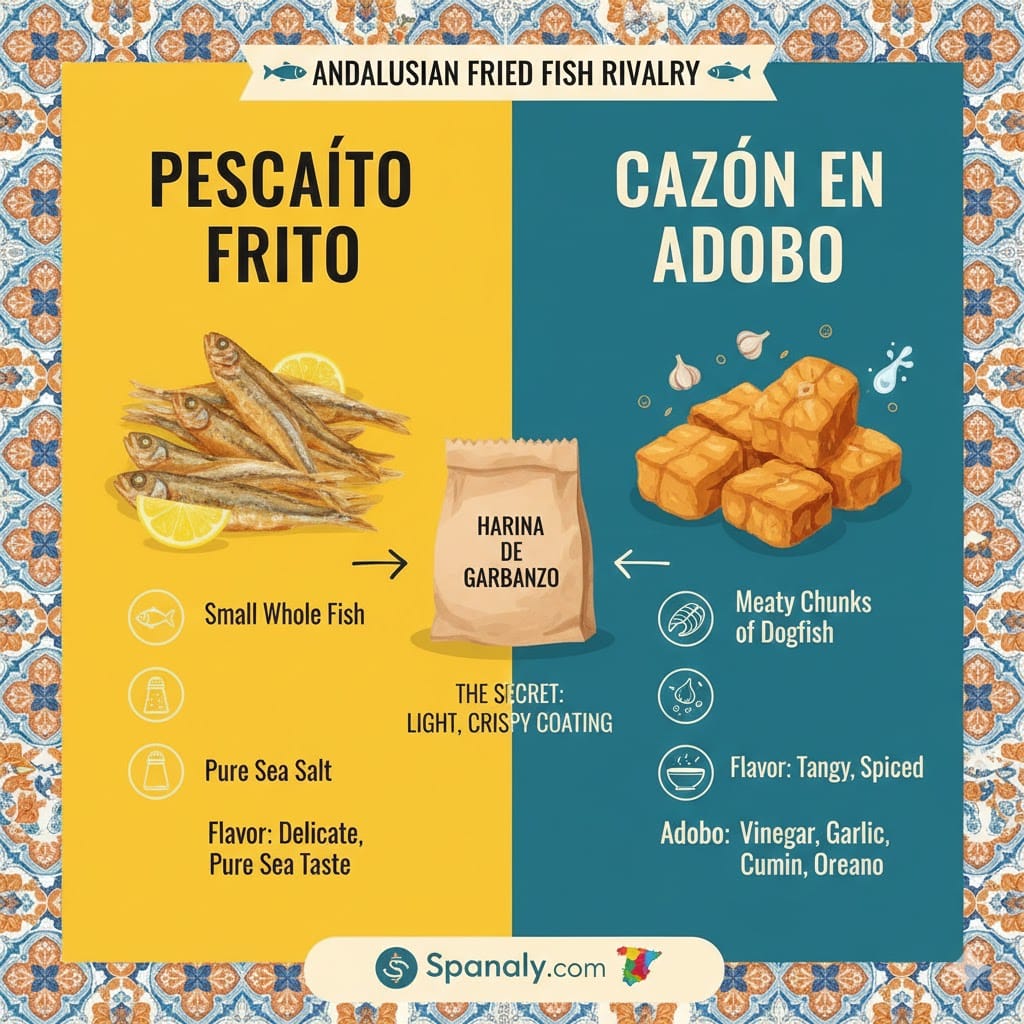
While both are icons of the Andalusian frying art, any local will tell you they offer completely different sensory experiences. Notably, understanding the difference is key to Mastering the Art of Ordering Food in Spain. Specifically, while one celebrates the pure taste of the sea, the other is a masterclass in traditional marinating.
🍋 The Texture: Pescaíto Frito consists of whole small fish (like anchovies or baby squid) that are crunchy on the outside and tender inside. In contrast, Cazón en Adobo (marinated dogfish) consists of soft, meaty chunks that melt in your mouth.
🌿 The Flavor Profile: Pescaíto is seasoned only with sea salt to let the fresh fish shine. Notably, Cazón is famous for its “Adobo”—a powerful marinade of vinegar, garlic, cumin, and oregano that gives it a tangy, aromatic kick.
🌾 The Coating: Both use the essential chickpea flour for that signature lightness. Indeed, this ensures a thin, golden crust that never feels heavy or greasy, unlike the thick batters found in other international fried fish dishes.
Ultimately, trying both is the only way to truly appreciate the diversity of the Sevillian Gastronomy Guide. Indeed, if you prefer pure maritime flavors, go for the Pescaíto. Specifically, if you crave a bold, spiced experience, the Cazón en Adobo is your perfect match.
💡 Spanaly Insight: If you can’t decide, just order a “Fritura Variada.” In fact, most traditional fry shops will give you a mix of both, allowing you to enjoy the best of both worlds in one crispy basket!
📜 The Origins: History of Fried Fish in Seville
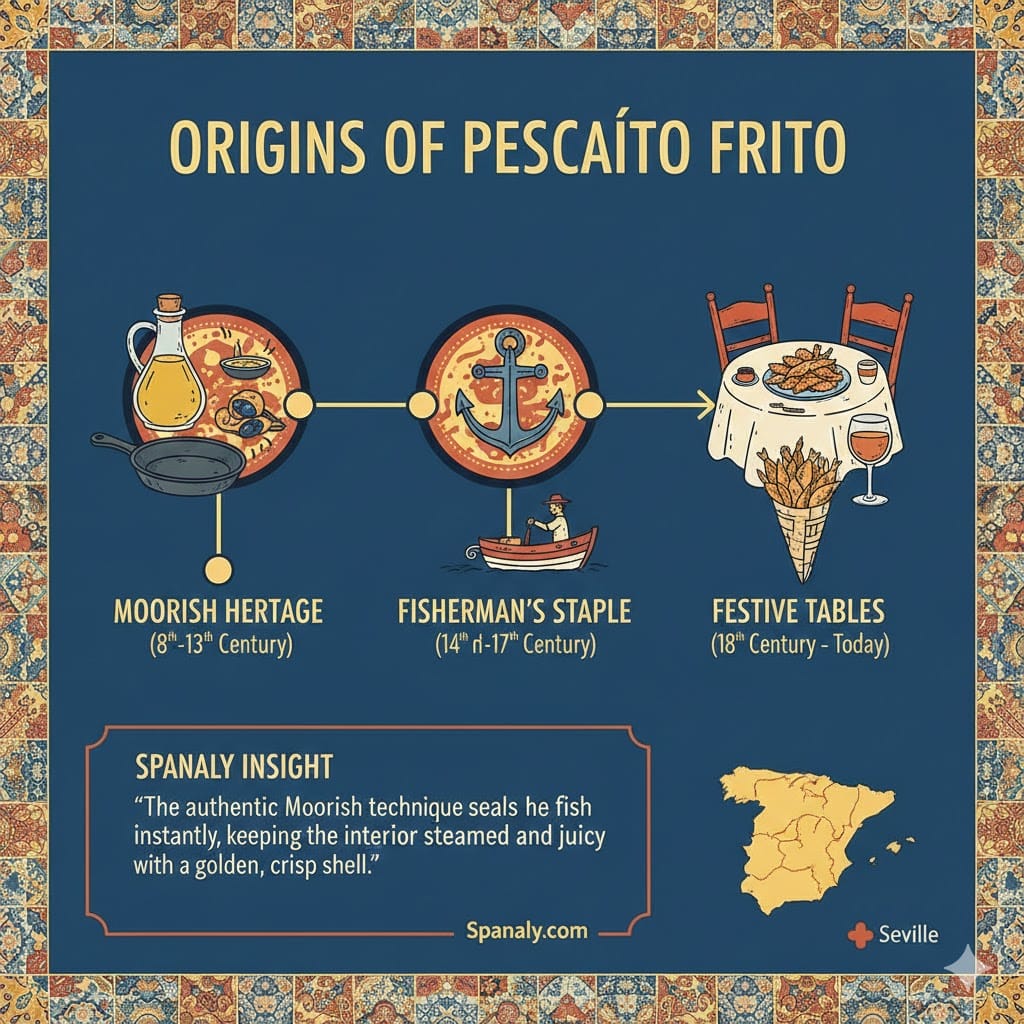
The tradition of frying small fish in Andalusia is a fascinating journey through time. Notably, this culinary practice dates back to Moorish times, when the Arab influence in the Iberian Peninsula introduced advanced frying techniques using olive oil. Specifically, Seville’s strategic proximity to the Guadalquivir River and the Atlantic coast ensured a constant supply of fresh seafood, making “frying” the most efficient way to enjoy the daily catch, a cornerstone of the Spanish Cuisine Guide.
🌊 Moorish Heritage: The use of olive oil for deep-frying was perfected during the Al-Andalus era, setting the stage for centuries of maritime gastronomy.
⚓ A Fisherman’s Staple: Originally, Pescaíto Frito was the “fast food” of dockworkers and sailors who needed a quick, protein-rich meal.
📈 From Streets to Palaces: What started as a humble street food eventually climbed the social ladder, becoming an essential highlight of Sevillian festive tables.
Ultimately, the evolution of this dish mirrors the evolution of the city itself. Indeed, it represents a blend of cultures—Roman, Moorish, and Christian—all coming together over a hot pan of oil. Specifically, it remains a living testament to the Mediterranean diet, where simple ingredients are treated with the utmost respect to create world-class flavors.
💡 Spanaly Insight: While it’s called “fried fish,” the authentic version should never feel greasy. In fact, the ancient Moorish technique was designed to seal the fish instantly, keeping the interior steamed and juicy while the outside becomes a golden protective shell!
🏠 The Role of Freidurías: Seville’s Historic Fry Shops
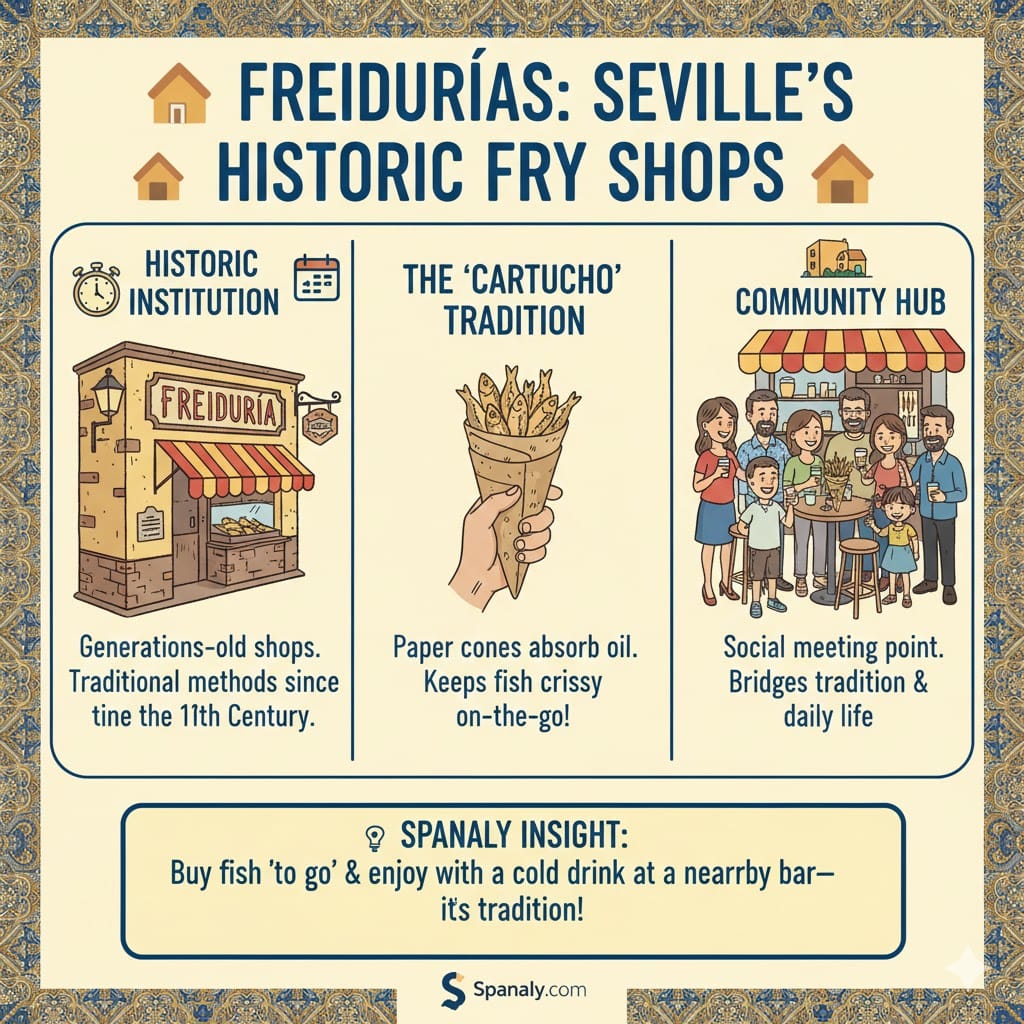
You cannot truly understand the city’s food culture without visiting a Freiduría. Notably, these are specialized “fry shops” that have been the cornerstone of Sevillian neighborhoods for generations. Specifically, they are the dedicated hubs where the art of the perfect, clean fry is guarded like a sacred secret, making them a fascinating study of the Spain Daily Rhythm: Siesta & Mealtimes.
🕰️ Historic Institutions: Many Freidurías in Seville have been operating since the 19th century, maintaining traditional methods that predate modern fast food.
🌯 The “Cartucho” Tradition: These shops popularized serving fish in brown paper cones. Indeed, this isn’t just for style; the special paper absorbs excess oil, ensuring the fish stays crisp while you walk.
🏘️ A Community Hub: A Freiduría is where locals gather before lunch or dinner. Notably, it bridges the gap between a quick snack and a historical culinary ritual.
Ultimately, stepping into one of these shops is a sensory journey. Indeed, the sound of the sizzling oil and the sight of the golden mounds of fish are unforgettable. Specifically, it is where you experience the city’s pulse in its most authentic and unpretentious form.
💡 Spanaly Insight: Many Freidurías allow you to buy your fish “to go” and eat it at a nearby bar that doesn’t have a kitchen. In fact, it’s a perfectly acceptable local tradition to walk in with your paper cone and order a cold drink to accompany it!
🧪 The Science of the Fry: Flour, Oil, and Temperature
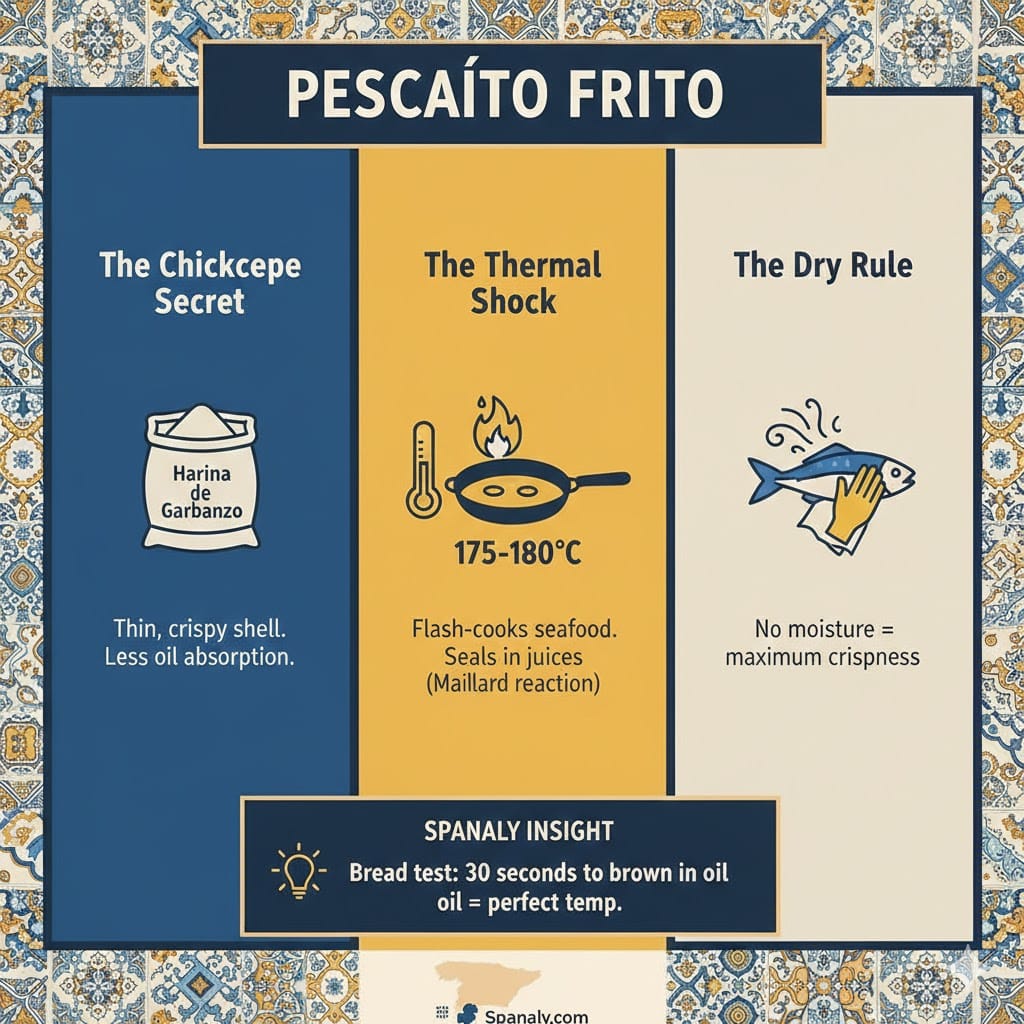
Achieving the perfect Pescaíto Frito is a delicate balance of physics and culinary art. Notably, the goal is to create a micro-thin protective barrier that flash-cooks the fish without allowing oil to penetrate the flesh. Specifically, using the right medium is crucial, which is why locals often debate the Best Spanish Olive Oils for achieving that iconic, non-greasy finish.
🌾 The Chickpea Secret: Traditional Andalusian frying strictly uses harina de garbanzo (chickpea flour). Indeed, its unique protein structure creates a crispier, drier shell that absorbs significantly less oil than wheat flour.
🔥 The Thermal Shock: The oil must be kept between 175°C and 185°C. Notably, this high heat triggers the Maillard reaction instantly, sealing in the natural juices of the seafood.
🌬️ The Dry Rule: Before hitting the flour, every fish must be bone-dry. Specifically, moisture is the enemy of crispness, as it creates steam that softens the delicate coating.
Ultimately, when these elements align, the result is a “clean” fry that feels light on the stomach. Indeed, this scientific approach is what distinguishes a tourist trap from an authentic gourmet experience. Specifically, it transforms humble ingredients into a golden masterpiece of Mediterranean engineering.
💡 Spanaly Insight: To test if the temperature is right at home, locals drop a small piece of bread into the oil. In fact, if it sizzles and browns in exactly 30 seconds, you’ve reached the “Golden Zone” for the perfect fry!
👨🍳 The Spanaly Kitchen: Authentic Recipe & Method
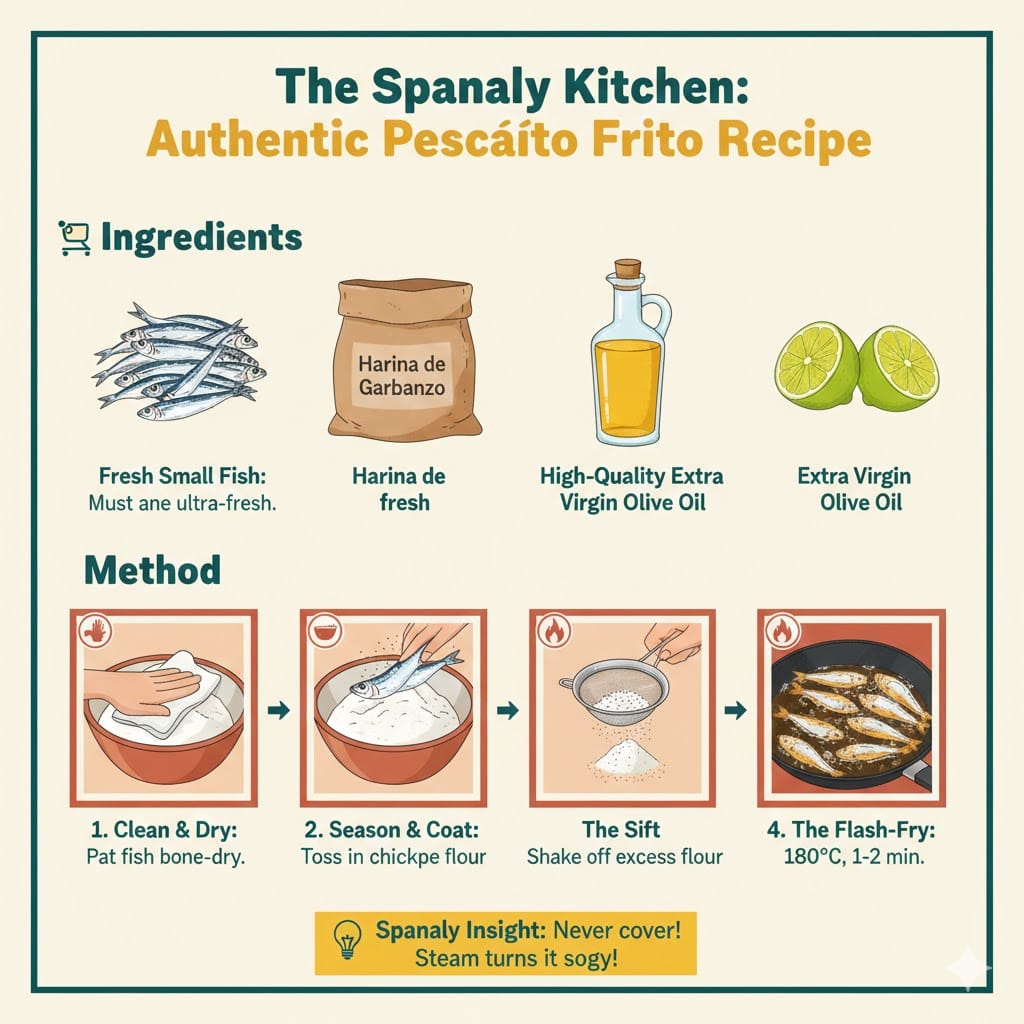
Recreating the magic of a Sevillian Freiduría at home is simpler than you think, provided you respect the traditional proportions. Notably, while the fish is the star, pairing it with a side of Salmorejo Spanish Cold Soup is a local secret that elevates the meal to a gourmet level. Specifically, following these steps will ensure your fish is light, golden, and perfectly seasoned.
🛒 The Ingredients:
500g of fresh small fish (anchovies, baby squid, or hake bites).
200g of authentic Chickpea Flour (Harina de Garbanzo).
High-quality Extra Virgin Olive Oil for frying.
A generous pinch of Sea Salt and fresh lemon wedges for serving.
🔥 The Preparation Method:
Clean & Dry: Wash the fish and, most importantly, pat it bone-dry with paper towels.
Season & Coat: Toss the dry fish in a bowl with the flour and salt until lightly covered.
The Sift: Use a sieve to shake off every bit of excess flour; you only want a micro-thin layer.
The Flash-Fry: Fry in small batches in very hot oil (180°C) for just 1-2 minutes until pale gold.
Ultimately, the secret is speed and heat. Indeed, serving it immediately is the final, non-negotiable step. Specifically, it ensures the contrast between the hot, crispy shell and the tender, juicy heart of the fish remains intact.
💡 Spanaly Insight: Never cover the fried fish with a lid or foil while waiting to serve. In fact, the steam trapped inside will instantly turn your crispy masterpiece into a soggy disappointment!
🐟 Essential Types: What’s in the Mix?
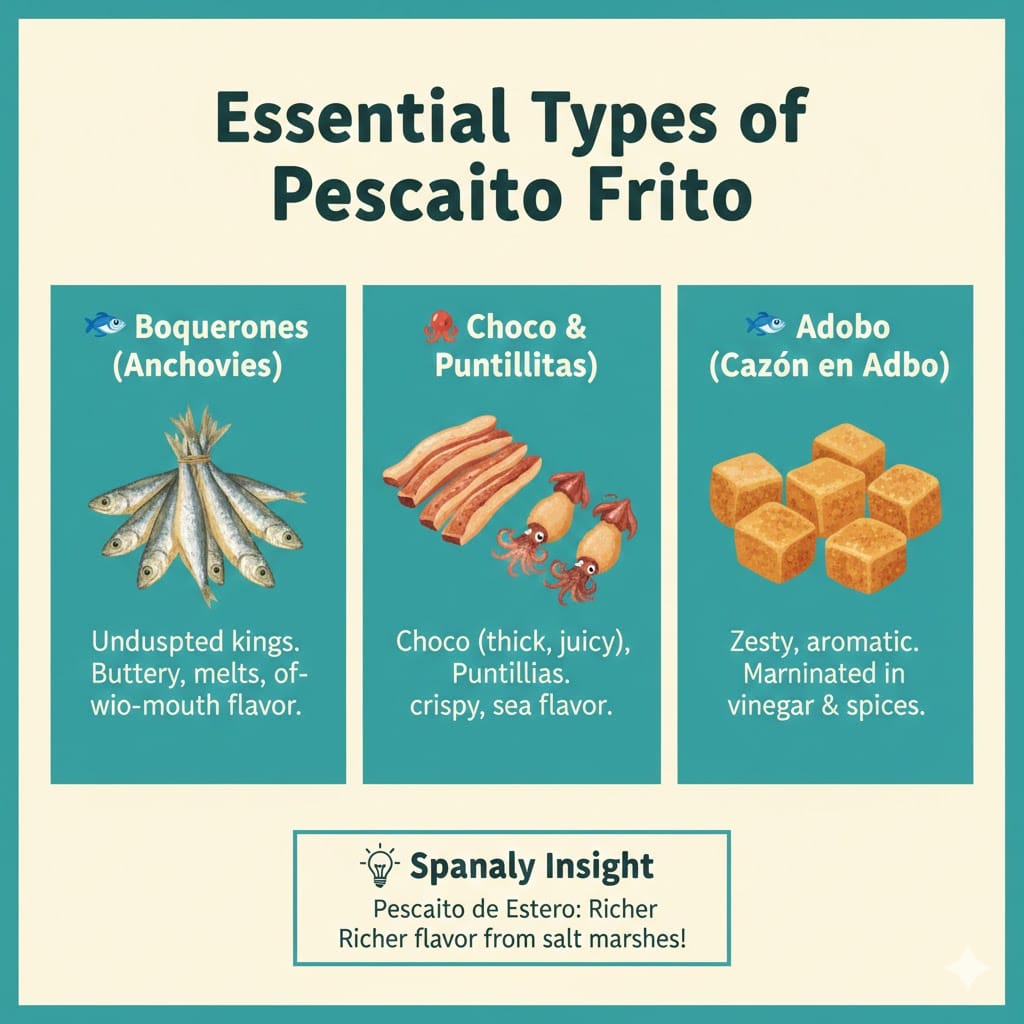
The beauty of a true Variado (mixed platter) lies in its diversity. Notably, an authentic tray must feature a specific selection of small seafood, each contributing a different level of crunch and sweetness. Specifically, knowing these types will help you order like a local and navigate the menu with ease, a key part of mastering Cultural Etiquette in Spain.
🐟 Boquerones (Anchovies): The undisputed kings. Indeed, they are usually fried in “bunches” (joined by the tail) and offer a delicate, buttery flavor that melts in your mouth.
🦑 Choco & Puntillitas: These are types of cuttlefish and baby squid. Notably, while Choco is cut into thick, juicy strips, Puntillitas are fried whole, providing a satisfying “pop” and intense sea flavor.
🐠 Adobo (Cazón en Adobo): This is dogfish marinated in vinegar, oregano, and cumin. Specifically, it provides a zesty, aromatic contrast to the simpler salt-seasoned fish on the plate.
Ultimately, a perfect platter is a balance of textures—from the firm bite of the hake (Pescadilla) to the tender crunch of the squid. Indeed, this variety is what makes the Mediterranean diet so vibrant and celebrated. Specifically, it’s not just a meal; it’s a tasting tour of the Andalusian coast in a single sitting.
💡 Spanaly Insight: If you see “Pescaito de Estero” on a menu, order it immediately! In fact, these are fish raised in the natural salt marshes of Cadiz and Seville, known for having a much richer, cleaner flavor than regular sea fish.
🍋 The Art of Enjoying: Etiquette and Pairings
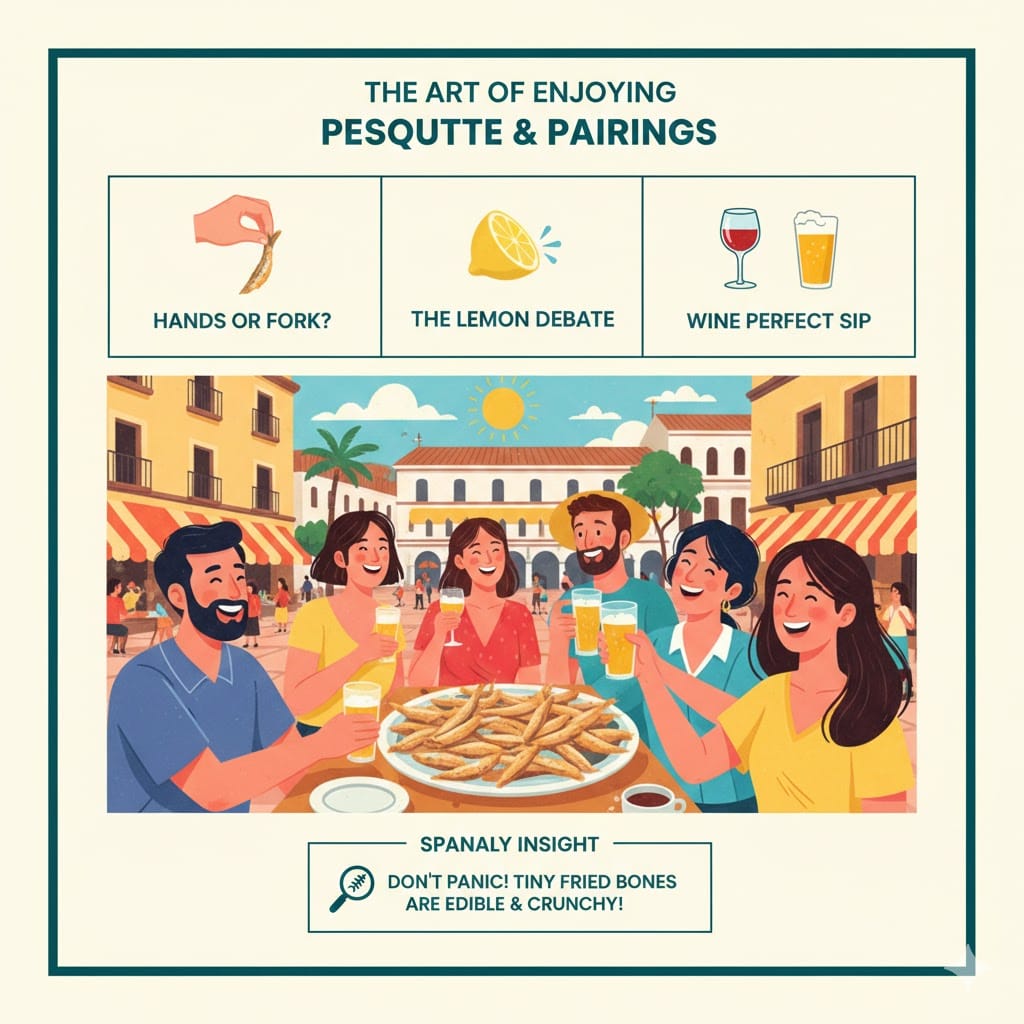
Eating Pescaíto Frito is a sensory experience that demands a relaxed atmosphere. Notably, there is a local “code” to enjoying these golden treasures without looking like a tourist. Specifically, finding the right drink to balance the saltiness is key, often leading locals to choose dry whites or Sherries from the famous Spanish Wine Regions to complement the meal.
👐 Hands or Fork?: For the smaller fish like Boquerones or Puntillitas, it is perfectly acceptable—and often preferred—to use your fingers. Indeed, picking them up by the tail is the most authentic way to enjoy the crunch.
🍋 The Lemon Debate: While every plate comes with lemon wedges, locals use them sparingly. Notably, a quick spritz is meant to enhance the sea flavor, but soaking the fish will ruin the carefully crafted crispness of the chickpea flour.
🍷 The Perfect Sip: To cut through the richness of the fry, a very cold, dry drink is essential. Specifically, a glass of Manzanilla or a crisp Caña (small beer) provides the ideal acidic balance to the salty seafood.
Ultimately, the best way to enjoy it is standing up at a crowded bar or sitting in a sun-drenched plaza. Indeed, the noise, the shared plates, and the casual vibe are the “secret ingredients” that make the fish taste better. Specifically, it’s about the joy of the moment and the company you keep.
💡 Spanaly Insight: If you find a small bone in your Boquerón, don’t panic! In fact, when fried correctly at high heat, the tiny bones become brittle and completely edible, adding an extra bit of calcium and crunch to your bite.
📍 Where to Find the Best Pescaíto Frito in Seville
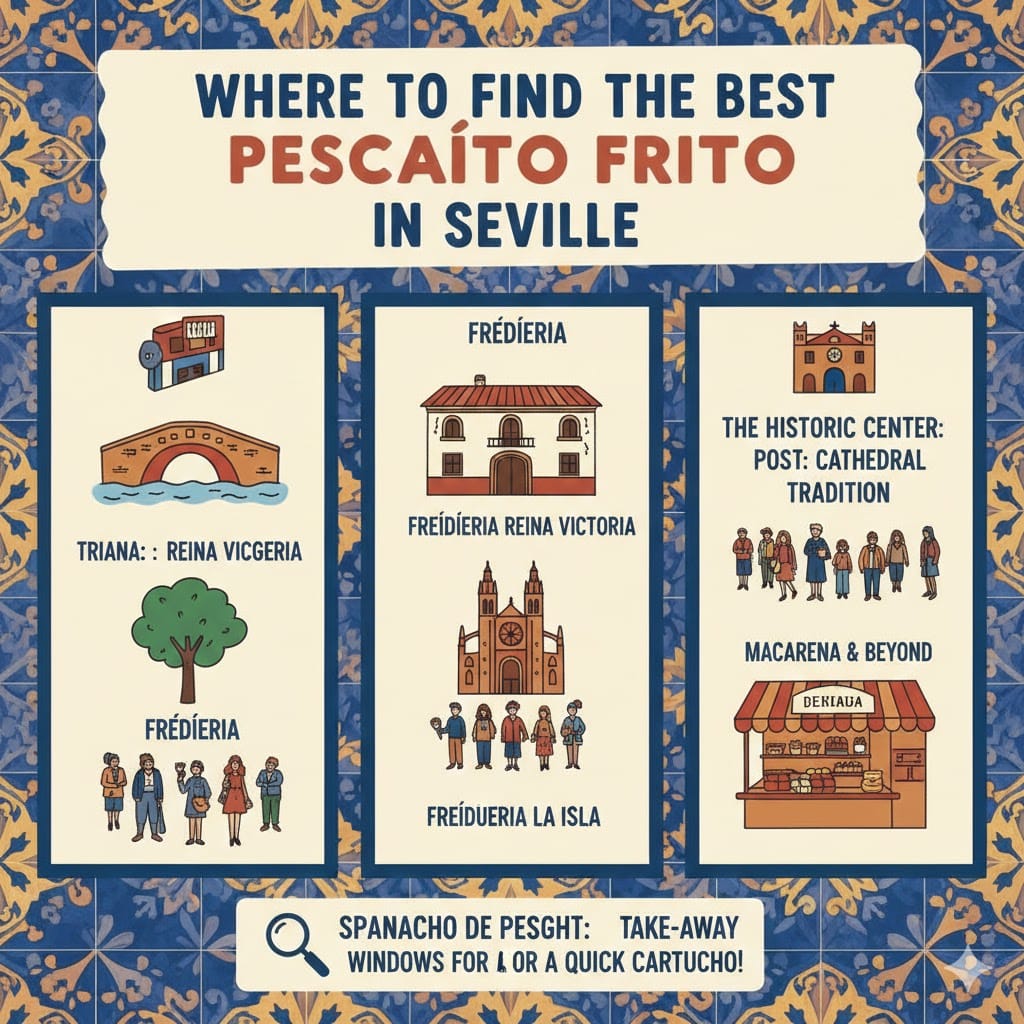
Finding authentic Pescaíto Frito in Seville is a journey through its most historic neighborhoods. Notably, while the city is filled with options, the true soul of the fry lies in the old Freidurías of the center and across the river in Triana. Specifically, many of these legendary fry shops are considered among the Best Restaurants in Seville for those seeking a genuine and unpretentious culinary experience.
🏘️ Triana: The Riverside Legend: Crossing the Isabel II Bridge leads you to Triana, the spiritual home of fried fish. Indeed, spots like Freiduría Reina Victoria have been serving crispy delights for decades, maintaining a neighborhood vibe that feels untouched by time.
⛪ The Historic Center: Post-Cathedral Tradition: Near the Cathedral, you’ll find Freiduría La Isla. Notably, it’s a local institution where the queue of people waiting for their Cartucho is as much a part of the experience as the fish itself.
🌳 Macarena & Beyond: For a more “off-the-beaten-path” feel, heading towards the Macarena district reveals hidden gems where locals gather away from the tourist crowds. Specifically, these spots often offer the freshest Pescaito de Estero at unbeatable prices.
Ultimately, the best place is often the one where you see a crowd of locals standing on the sidewalk with white paper cones in hand. Indeed, the simplicity of the setting is a testament to the quality of the fry. Specifically, it’s not about the decor; it’s about the perfect, golden crunch.
💡 Spanaly Insight: If you’re in a rush, look for “Despacho de Pescado” signs. In fact, these are strictly take-away windows where you can get your fish wrapped and ready in seconds—perfect for a stroll along the Guadalquivir river!
📋 Pro Tips for Ordering: Mastering the Cartucho
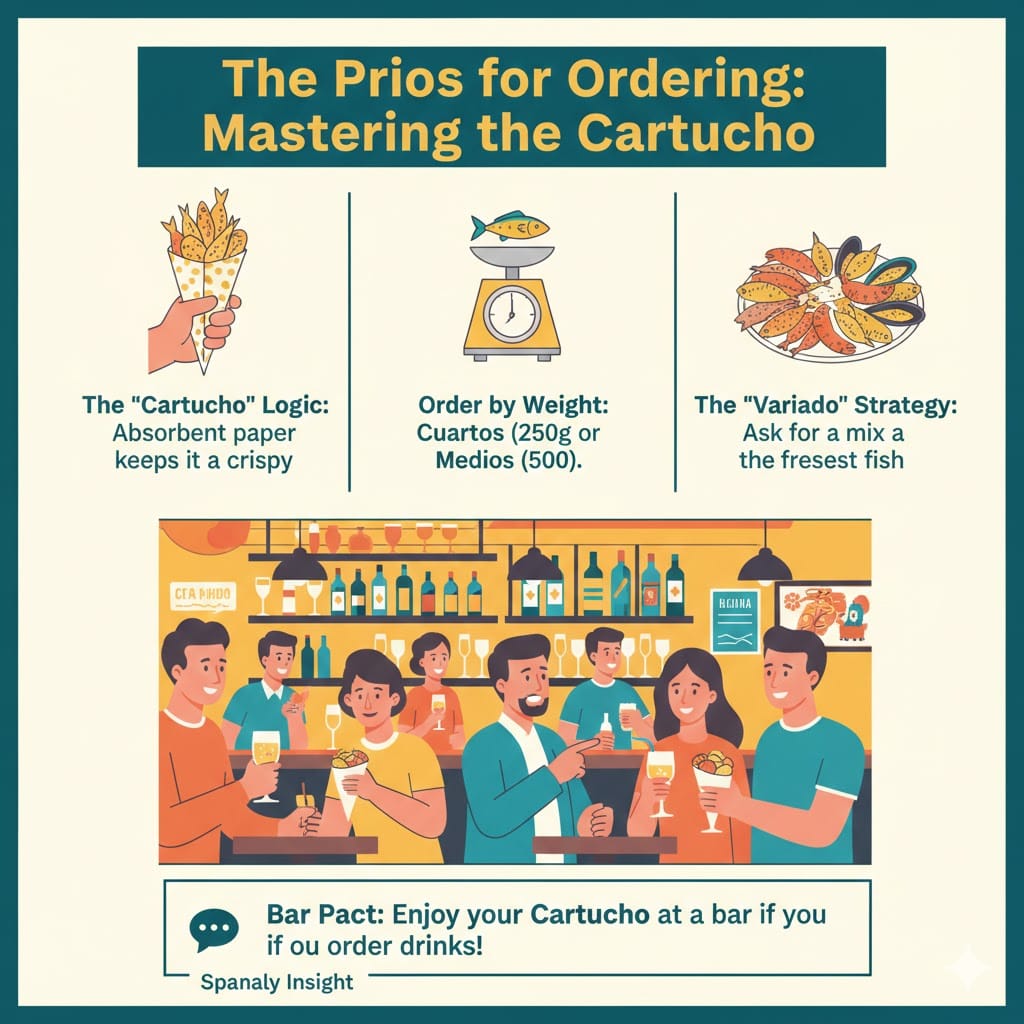
Stepping into a traditional Seville fry shop can be overwhelming if you don’t know the drill. Notably, it’s not just about what you order, but how you order it. Specifically, mastering the “Cartucho” culture is a vital skill for any traveler, much like the advice found in our Essential Spain Travel Tips, where understanding local customs makes all the difference.
📦 The “Cartucho” Logic: In a Freiduría, your fish isn’t served on a fancy plate; it’s wrapped in a Cartucho (a conical paper wrap). Indeed, this absorbent paper is functional—it soaks up any microscopic excess oil, ensuring every bite stays crispy until the very last one.
⚖️ Order by Weight, Not Plate: Forget “small” or “large” portions. Notably, you order by weight—usually in Cuartos (250g) or Medios (500g). Specifically, a Cuarto is perfect for one hungry person or two people sharing as a snack.
🐟 The “Variado” Strategy: If you can’t decide, simply ask for a “Variado.” Indeed, the fry-master will create a balanced mix of whatever is freshest that day, typically including Boquerones, Choco, and Adobo.
Ultimately, don’t be afraid of the loud atmosphere and the fast-paced service. Indeed, it’s part of the charm. Specifically, just state your weight (e.g., “Un cuarto de variado, por favor”) and wait for your warm, fragrant paper cone.
💡 Spanaly Insight: If you plan to eat at a nearby bar, ask the waiter first. In fact, many bars in Seville have a “pact” with neighboring fry shops, allowing you to bring your Cartucho to their tables as long as you order your drinks from them.
🌟 Expert Spanaly Advice: The Insider Secrets
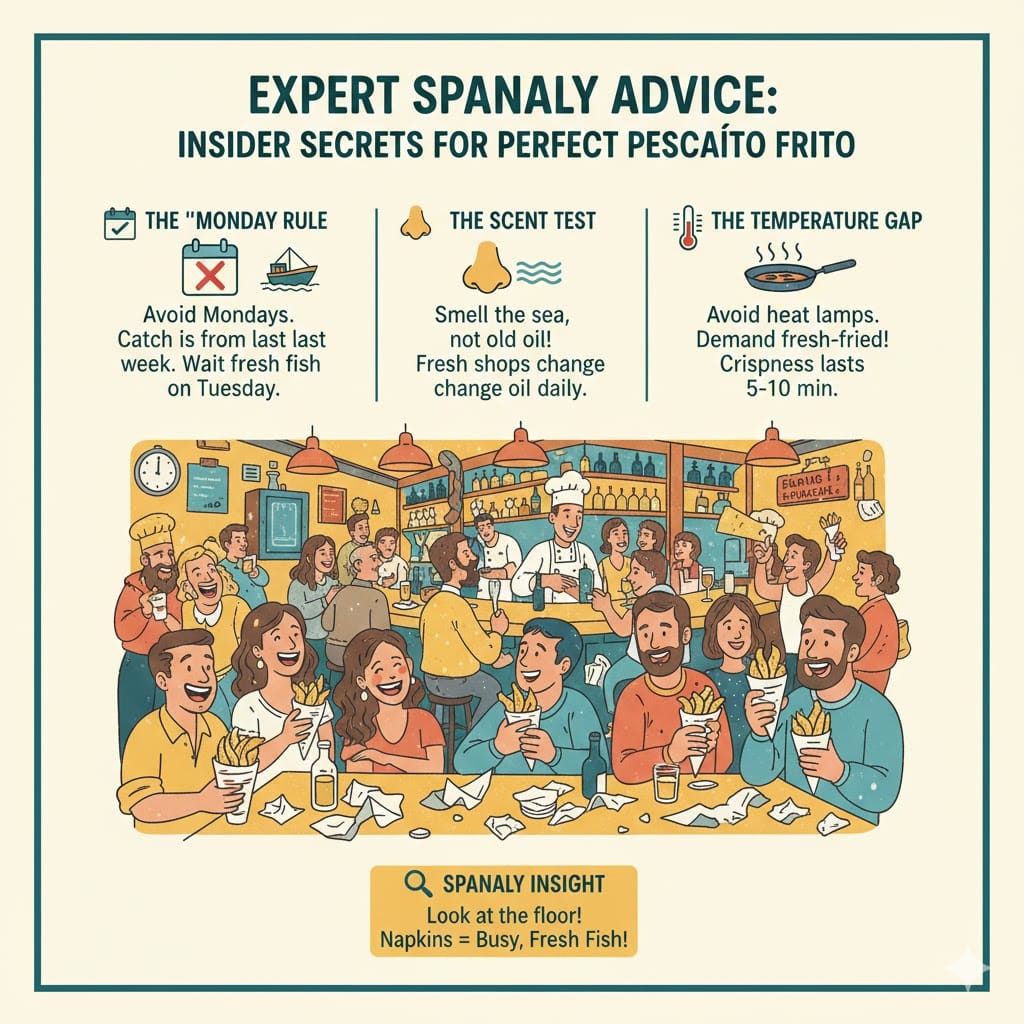
To truly master the Pescaíto Frito experience, you need to look beyond the menu. Notably, the quality of the fry is influenced by factors most visitors overlook. Specifically, following these insider rules curated by Spanaly will guarantee you the freshest bite possible.
📅 The “Monday Rule”: Never order fried fish on a Monday. Indeed, most fishing fleets don’t head out on Sundays, meaning Monday’s catch is often from the previous week. Specifically, wait until Tuesday for the first fresh arrivals of the week.
👃 The Scent Test: A great Freiduría should smell like a fresh sea breeze, not heavy grease. Notably, if the air smells “oily” or burnt, the oil hasn’t been changed recently. In fact, the best shops change their olive oil daily to maintain that pale, golden color.
🌡️ The Temperature Gap: Avoid buying pre-fried fish sitting under heat lamps. Ultimately, the magic of the Harina de Garbanzo (chickpea flour) only lasts for the first 5-10 minutes. Indeed, if you don’t hear the sizzle of a fresh batch, keep walking.
Ultimately, the secret is in the timing and the transparency of the kitchen. Indeed, watching the Maestro Freidor work his magic in real-time is the best quality assurance you can get. Specifically, it’s a craft that rewards the patient observer.
💡 Spanaly Insight: Look at the floor! In fact, in the most authentic, high-turnover spots, it’s a tradition to see paper napkins on the ground. While it looks messy, it’s a local sign that the place is packed and the fish is moving fast—guaranteeing freshness.
🐟 Visitor FAQs – Pescaíto Frito Guide
🐟 When is the best time to eat fresh fried fish?
To ensure maximum freshness, visit from Tuesday to Saturday. Avoid Mondays, as the fishing fleet usually rests on Sundays. Also, look for the "Maestro Freidor" actively frying small batches to ensure you get your Cartucho piping hot and crispy.
🐠 Can I eat the tiny bones in Boquerones?
Yes! When fried at the correct temperature (180°C), the tiny bones in anchovies become brittle and edible. Eating them by the tail with your fingers is the most authentic way to enjoy the crunch, adding a unique texture to the experience.
🥣 What is the best side dish to pair with the fish?
While many tourists stick to bread, the locals' secret is pairing the fried fish with a side of Salmorejo (Spanish cold tomato soup). The creamy texture of the soup provides a perfect gourmet contrast to the salty, golden crunch of the seafood.
📍 How much fish should I order per person?
Since you order by weight in a Freiduría, a good rule of thumb is a Cuarto (250g) for one person or a Medio (500g) to share between two as a hearty snack. If you're unsure, ask for a Variado to sample the day's best catch.
💡 Is there a secret to keeping the fish crispy?
The golden rule: Never cover your fish! Whether it's a lid or foil, trapped steam will instantly turn the crispy Harina de Garbanzo coating soggy. Enjoy it immediately from the paper cone to maintain that perfect "flash-fry" texture.
Seville Gastronomy Guide by Spanaly.com
✨ Savoring the Essence of Andalusia
A trip to Seville is never truly complete without the sound of a crackling fry and the scent of the sea in the air. Notably, Pescaíto Frito is more than just a meal; it’s a golden invitation to slow down and live like a local.
🌟 The Golden Rule: Remember, the best fish is the one shared with friends, standing at a marble bar, and eaten while it’s still piping hot.
🥘 Beyond the Fry: If you’ve fallen in love with the magic of chickpea flour, you must explore Seville’s other legume-based legend: Espinacas con Garbanzos. Specifically, it’s the perfect warm companion to your seafood journey.
🍋 A Lasting Memory: Whether it’s a simple Cartucho by the river or a gourmet platter in Triana, that first crispy bite will remain your favorite souvenir.
Ultimately, the spirit of Andalusia is found in these simple, perfect traditions. Indeed, once you’ve mastered the art of the Variado, you’re no longer a visitor—you’re part of the city’s vibrant tapestry. Specifically, Seville doesn’t just feed your hunger; it feeds your soul.
¡Buen provecho!