🍷 Spain is one of the world’s legendary wine producers, home to centuries-old traditions, bold flavors, and landscapes shaped by sun, soil, and culture. From the misty Atlantic coast of Galicia to the sun-drenched vineyards of Andalusia, each region offers a unique story—and an unforgettable tasting experience.
This guide is crafted for travelers who want to explore Spain through its wines: where to go, what to taste, and how to enjoy every region like a local.
🗺️ 1. La Rioja – Spain’s Most Iconic Wine Region
Best for: Classic reds, wine museums, scenic vineyards
Famous grapes: Tempranillo, Garnacha
La Rioja is the heart of Spanish winemaking, famous for elegant reds aged in oak barrels. The region is divided into Rioja Alta, Rioja Alavesa, and Rioja Oriental, each offering distinct flavor profiles.
What to try
Reserva & Gran Reserva aged wines
Tempranillo-based blends
Top places to visit
Haro Wine Station
Vivanco Wine Museum
Marqués de Riscal Winery (architectural icon)
🍇 2. Ribera del Duero – Powerful Red Wines in Castile
Best for: Full-bodied red wines
Signature grape: Tinto Fino (Tempranillo)
Ribera del Duero offers bold, structured wines grown on high-altitude plateaus. The region has grown into a global star, rivaling La Rioja in reputation.
What to try
Rich, dark Tempranillo wines
Barrel-aged reds
Top experiences
Aranda de Duero wine cellars
Visits to Vega Sicilia & Protos
🏔️ 3. Priorat – High-End Mountain Wines of Catalonia
Best for: Premium wines, rugged landscapes
Key grapes: Garnacha, Cariñena
A small but prestigious region with steep terraced vineyards and mineral-rich llicorella slate soils.
Must-try wines
Powerful red blends
Boutique organic wines
Where to go
Scala Dei Monastery
Porrera & Gratallops tasting rooms
🌊 4. Rías Baixas – Home of Albariño
Region: Galicia
Best for: Crisp white wines
Signature grape: Albariño
Rías Baixas is the perfect region for travelers who enjoy light, aromatic, seafood-friendly wines.
What to try
Pure Albariño
Coastal white blends
Experiences
Wine & seafood pairing tours
Coastal winery routes in Cambados
🪶 5. Jerez – The World of Sherry
Region: Andalusia
Best for: Unique fortified wines
Key styles: Fino, Manzanilla, Amontillado, Oloroso, Pedro Ximénez
Jerez (Sherry) is unlike any other wine region. Its centuries-old solera system and warm climate create wines ranging from dry and salty to sweet and dark.
Must-try experiences
Tasting tours in Jerez de la Frontera
González Byass winery
Flamenco evenings + Sherry pairing
🌞 6. Penedès – Mediterranean Wines & Cava Origin
Region: Catalonia
Famous for: Cava sparkling wine
Grapes: Xarel·lo, Macabeo, Parellada
Try this
Brut Nature Cava
Organic whites
Mediterranean reds
Visit:
Sant Sadurní d’Anoia (Cava capital)
7. ⛰️ Toro & Bierzo – Emerging Regions with Character
This section covers two regions in Castile and León, highlighting the contrast in wine styles :
Toro
📍 Region: Castile and León
🍇 Signature Grape: Tinta de Toro (Tempranillo clone)
📝 Description: Known for intense, powerful red wines with deep flavour and naturally high alcohol content.
Bierzo
📍 Region: Castile and León
🍇 Signature Grape: Mencía
📝 Description: A cooler, rising region celebrated for producing elegant, medium-bodied red wines and high-quality white Godello.
Quick Map — Top Spanish Wine Regions
A compact visual guide to Spain's most celebrated wine regions. Tap each name to jump to the full region guide (when available).
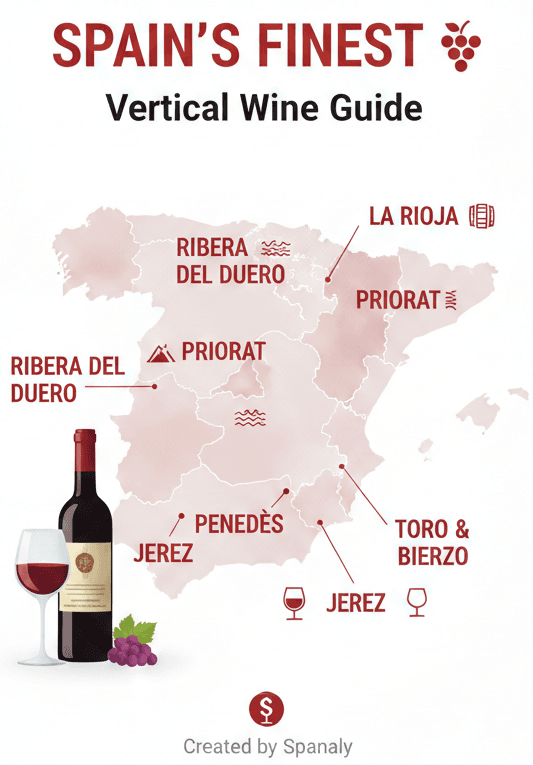
- La RiojaMost iconic — classic Tempranillo-driven reds.
- Ribera del DueroPowerful, full-bodied reds from high plateaus.
- PrioratPrestige mountain wines with mineral-rich soils.
- Rías BaixasCrisp, aromatic Albariño whites — seafood-friendly.
- JerezThe legendary sherry capital — unique fortified styles.
- PenedèsHome of Cava — Spain’s traditional sparkling wines.
- Toro & BierzoEmerging regions producing intense and characterful wines.
Food Pairings Across Regions
- Rioja Reserva Roast lamb
- Ribera del Duero Hearty red meat dishes
- Albariño (Rías Baixas) Fresh seafood and shellfish
- Sherry (Jerez) Tapas and desserts
- Cava (Penedès) Starters, hummus, and tapas
Travel Tips for Wine Lovers
- Best time to visit: Late September–October (harvest season) for vendimia events and lively cellar activity; April–June (spring) for mild weather and fewer crowds.
- Booking wineries: Reserve online in advance — top estates and harvest tours often require pre-booking. Consider private tours for a deeper experience.
- Getting around: Rent a car for dispersed regions (Rioja, Ribera del Duero, Toro). Use wine trains, bike routes, or guided tours in Catalonia and Galicia. Hire a local driver for full-day tasting itineraries.
- Practical tips: Wear comfortable shoes; bring a light jacket for cool cellars. Ask for smaller pours or shared flights if tasting many wines, and hydrate between samples. Check seasonal opening hours (many wineries observe siesta or reduced winter schedules).
- Cultural notes: Pair tastings with regional specialties (cheese, jamón, seafood) and ask about aging categories — crianza, reserva, gran reserva — to understand style and value.
🧳 Must-Visit Vineyards (Traveler Favorites)
🍷 Marqués de Riscal (Rioja)
Iconic for its futuristic Frank Gehry–designed hotel and exceptional Tempranillo blends.
🏆 Vega Sicilia (Ribera del Duero)
Spain’s most prestigious winery, famed for its legendary Único and exclusive guided tastings.
🌿 Torres (Penedès)
A family-run powerhouse offering eco-friendly vineyards, cava tastings, and immersive tours.
🌊 Terras Gauda (Rías Baixas)
A coastal gem known for premium Albariño wines and scenic Atlantic landscapes.
🪶 González Byass (Jerez)
Home of Tío Pepe; the perfect spot to explore traditional sherry aging in historic bodegas.
🍇 Visitor FAQs – Spanish Wine Regions Guide
🍷 What are the most famous wine regions in Spain?
Spain is home to world-class regions. La Rioja is the most iconic for red wines, followed by Ribera del Duero. For sparkling wine lovers, Penedès (the home of Cava) is a must, while Rías Baixas in Galicia is famous for its crisp Albariño white wines. Don't forget the Sherry Triangle in Jerez for fortified wines.
🗓️ When is the best time to visit the vineyards?
The Harvest Season (September–October) is the most exciting time, filled with local festivals and grape-crushing events. However, late Spring (May–June) is also beautiful, offering lush green landscapes, mild temperatures, and a much quieter experience for cellar tours and tastings.
🎫 Do I need to book winery tours in advance?
Yes, highly recommended. Most prestigious "Bodegas" (wineries) require pre-booked appointments for guided tours and tastings, especially if you want an English-speaking guide. Some iconic wineries, like Marqués de Riscal or Tío Pepe, can be fully booked weeks in advance during peak tourism months.
🚗 Is it easy to reach these regions from major cities?
Regions like Penedès are very close to Barcelona (under 1 hour), and Jerez is an easy day trip from Seville. However, for Rioja or Ribera del Duero, we recommend renting a car or booking a multi-day tour from Madrid or Bilbao to fully appreciate the vast countryside and remote village estates.
🌟 Are these regions suitable for non-drinkers or families?
Absolutely. Many wineries are architectural masterpieces (designed by greats like Frank Gehry). The regions offer stunning scenery, historic castles, gourmet food tours, and traditional olive oil mills. Many estates also provide non-alcoholic grape juice tastings for children or those who prefer not to drink.
Spanish Wine & Culture Guide by Spanaly.com
🧭 Final Thoughts
Exploring Spanish wine regions isn’t just about tasting great wines—it’s about discovering Spain’s landscapes, traditions, and centuries-old craftsmanship. Whether you’re wandering among the rolling hills of Rioja, exploring ancient cellars in Jerez, or enjoying seafood with Albariño by the Atlantic, each region offers a journey into the heart of Spanish culture.
With the right planning, every traveler—beginner or expert—can enjoy Spain’s diverse wine world and bring home unforgettable flavors and memories.