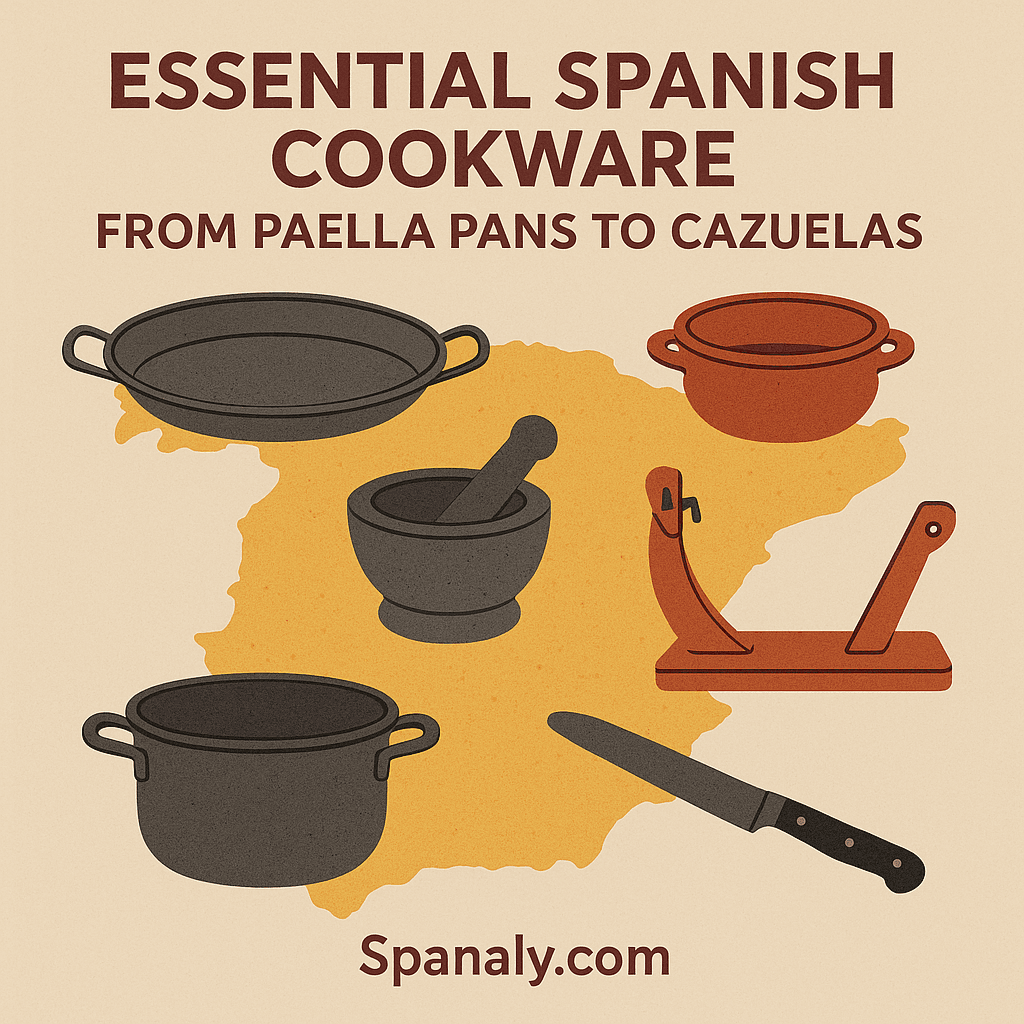
🍳 Spanish cuisine is renowned for its vibrant flavors, fresh ingredients, and centuries-old culinary traditions. But the secret to truly authentic Spanish dishes often lies not only in the recipes but also in the cookware. Using traditional Spanish cookware ensures your dishes have the right texture, aroma, and taste. Here’s a complete guide to the essential cookware every home chef should know.
Table of Contents
Toggle1️⃣ Paella Pan (Paellera)
Origin: Valencia
Use: Cooking traditional paella
The iconic paella pan is shallow and wide, perfect for even rice cooking and creating the coveted socarrat (crispy rice layer). Traditionally made of carbon steel or stainless steel, it is ideal for cooking over an open flame or stovetop.
Tips:
Season your carbon steel pan before first use to prevent rust.
Avoid stacking heavy items on top to prevent warping.
Use a wide pan even for small portions; it helps distribute heat evenly.
2️⃣ Cazuela (Clay Pot)
Origin: Throughout Spain
Use: Slow-cooked stews, beans, and casseroles
Cazuelas are clay pots that retain heat and moisture beautifully, perfect for cooking traditional Spanish stews and braised dishes. The slow cooking enhances the depth of flavors, creating rich and aromatic meals.
Tips:
Soak new clay pots in water before first use.
Avoid sudden temperature changes to prevent cracking.
Always heat gradually on the stove.
3️⃣ Mortar and Pestle (Mortero y Mano)
Origin: Widely used across Spain
Use: Grinding spices and making sauces
A mortar and pestle is essential for preparing sauces like alioli, crushing fresh herbs, and grinding spices. It releases flavors and aromas that electric grinders cannot replicate.
Tips:
Use for fresh herbs to maximize flavor.
Clean gently with water; avoid soap if possible to preserve natural flavors.
4️⃣ Jamon Holder (Jamonero)
Origin: Spain
Use: Slicing cured ham
For slicing Iberian ham with precision, a jamonero is indispensable. It holds the leg of ham steady, allowing for thin, even slices that melt in your mouth.
Tips:
Always use a long, sharp, flexible knife.
Secure the ham firmly for safety.
Slice thinly against the grain for the best texture and flavor.
5️⃣ Escudella Pot
Origin: Catalonia
Use: Cooking traditional Catalan stews
Used for hearty soups and stews, the escudella pot is deep and robust, designed for long, slow cooking. This ensures that meats, vegetables, and beans release their full flavor into the dish.
Tips:
Cook slowly for several hours to develop deep flavors.
Stir occasionally to prevent sticking.
Ideal for winter dishes and festive meals.
📊 Summary Table of Essential Cookware
| Cookware 🛠️ | Origin/Region 📍 | Main Use 🍲 | Tips 💡 |
|---|---|---|---|
| Paella Pan | Valencia | Paella rice dishes | Season carbon steel; avoid stacking heavy items |
| Cazuela (Clay Pot) | Throughout Spain | Stews, beans, casseroles | Soak before use; avoid temperature shock |
| Mortar & Pestle | Widespread | Grinding spices, sauces | Use for fresh herbs; clean gently |
| Jamonero (Ham Holder) | Spain | Slicing Iberian ham | Use sharp knife; secure ham firmly |
| Escudella Pot | Catalonia | Hearty stews and soups | Cook slowly for rich flavors |
🥘 Visitor FAQs – Traditional Spanish Kitchenware
🍳 Can I use a traditional Paella pan on an electric or induction stove?
Yes, but with caution. Traditional carbon steel pans can warp if heated too quickly on electric stoves. For induction hobs, you must ensure the pan is specifically labeled as induction-compatible. In 2026, many modern Spanish brands offer flat-bottomed pans designed specifically for even heat distribution on modern surfaces.
🏺 How do I "season" and clean a clay Cazuela?
Before first use, soak your Cazuela in water for 24 hours. When cleaning, avoid using harsh soaps as the porous clay can absorb them. Use warm water and a soft brush. Important: Never put a cold clay pot directly onto a high flame or pour cold water into a hot pot, as the thermal shock will cause it to crack.
🔨 Why is a Mortar and Pestle (Mortero) better than a blender?
In Spanish cooking, the Mortero is essential for making Alioli or Picada. Unlike a blender that cuts the ingredients, the mortar crushes them, releasing the essential oils and creating a much deeper, more aromatic flavor profile and a superior rustic texture that defines authentic Andalusian and Catalan dishes.
🔪 What tools do I need to slice Spanish Jamón at home?
You need two things: a Jamonero (ham holder) to keep the leg stable and a Cuchillo Jamonero (a long, flexible, and very sharp knife). The secret to the best flavor is to slice the ham so thin it’s almost translucent, allowing the fat to melt instantly on your palate.
🛍️ Are traditional Spanish kitchen tools good souvenirs?
Absolutely! A handcrafted Mortero from Macael marble or a set of small Cazuelas make excellent and functional gifts. They are durable, reflect Spanish heritage, and allow you to recreate the authentic taste of your Seville trip in your own kitchen. Just ensure they are well-packed for your flight!
Kitchen Heritage Guide by Spanaly.com
🍽️ For a complete overview of Spanish cuisine, start with our main guide: Spanaly Gastronomy Hub (Recipes, Tapas, & Regions)
🍴 Mastering Spanish cuisine begins with knowing the essential cookware that has defined its traditional flavors for centuries. From the iconic paella pan of Valencia to the versatile cazuela, each tool brings authenticity and depth to your dishes. Whether grinding fresh spices with a mortar and pestle or slicing delicate jamón in a jamonero, using the right equipment enhances both the taste and the overall cooking experience. Investing in these classic Spanish cookware pieces allows you to bring a true taste of Spain into your kitchen and enjoy the rich culinary traditions of this vibrant country.