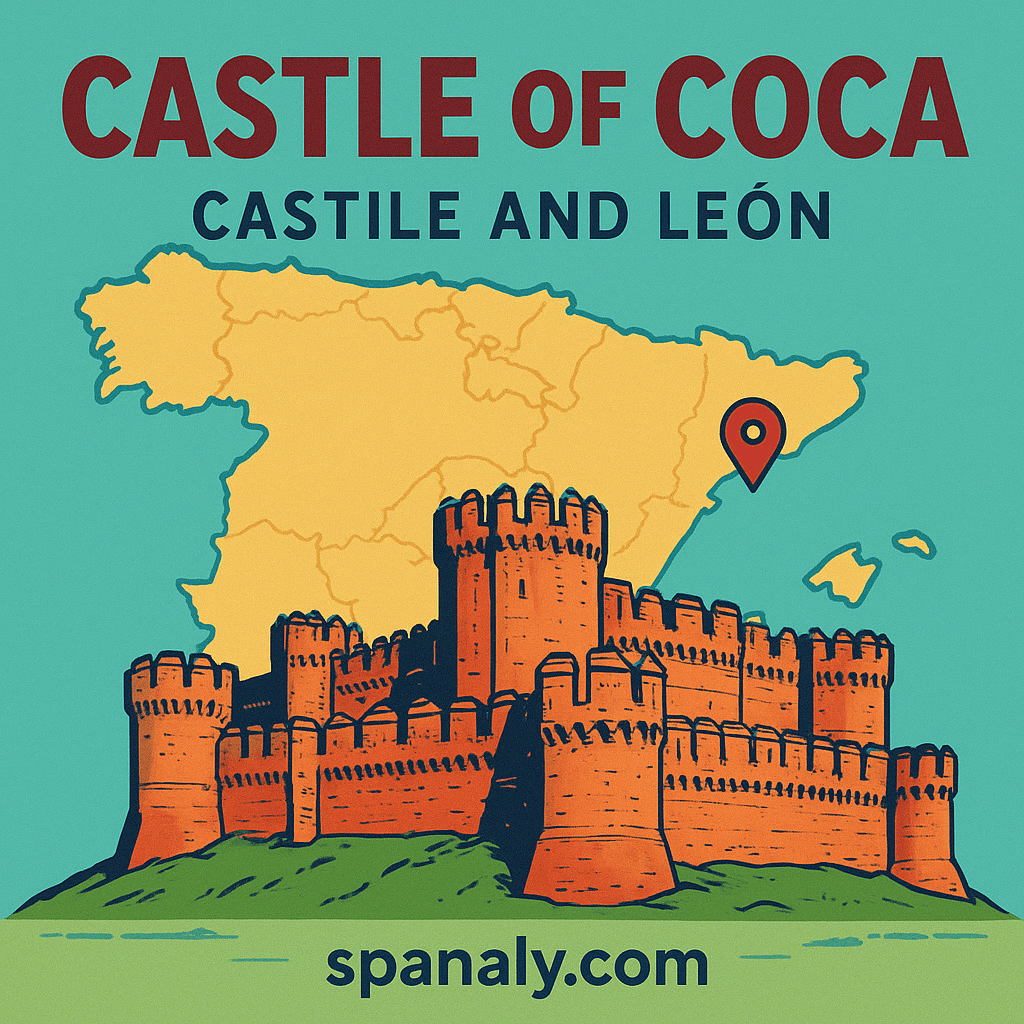
🏰 Standing proudly on the plains of Castile and León, the Castle of Coca challenges the classic image of medieval stone fortresses. Built almost entirely of red brick and adorned with intricate geometric patterns, it represents one of the most daring and refined examples of Mudéjar military architecture in Europe. For an overview of Spain’s grandest fortresses, read our guide to the Top Castles & Palaces in Spain. This is not merely a defensive structure—it is a statement of power, artistry, and cultural fusion. Visiting the Castle of Coca is an immersive journey into a time when architecture was as symbolic as it was strategic.
Table of Contents
Toggle📍 At a Glance: Castle of Coca
| 🗺️ Location | Coca, Province of Segovia, Castile and León, Spain |
| 📅 Construction | Late 15th century (from 1473) |
| 🏗️ Architectural Style | Mudéjar Gothic military architecture |
| 👑 Commissioned by | The Fonseca family |
| 🏛️ Current Status | National Monument, open to visitors |
Strategically placed between two rivers, the castle dominates the surrounding landscape both visually and defensively, reinforcing its role as a symbol of power and architectural innovation.
📜 Historical Context: Power, Prestige, and Innovation
The Castle of Coca was commissioned by Alonso de Fonseca, Archbishop of Seville, at a pivotal moment in Spanish history. The late 15th century marked the transition from medieval warfare to artillery-based combat, forcing architects to rethink fortress design.
However, rather than serving as a frontline military base, Coca functioned primarily as a symbol of noble authority. Therefore, its innovative structure reflects advanced knowledge of defensive engineering while projecting the wealth and sophistication of its owners. Despite periods of abandonment in later centuries, careful restoration has preserved the castle as one of Spain’s finest historical monuments.
🧱 Architecture & Design: Mudéjar Meets Military Genius
The Castle of Coca is internationally admired for its fusion of aesthetics and defense.
✨ Architectural Highlights
🟥 Red brick construction: Rare in European castles, both decorative and durable
🔺 Mudéjar ornamentation: Islamic-inspired geometric patterns and arches
🏰 Massive towers and crenellations: Designed for surveillance and intimidation
🕳️ Deep defensive moat: Enhancing both protection and visual drama
💣 Artillery-adapted walls: Thick, angled surfaces to absorb cannon fire
Every detail reflects a castle designed not only to resist attack, but to impress.
🚶 What to See Inside the Castle
A guided visit reveals a complex and well-organized interior:
🌿 Central courtyard: The architectural heart of the castle
🧗 Towers and ramparts: Offering panoramic countryside views
🏛️ Vaulted halls: Showcasing Gothic structural techniques
🛡️ Defensive galleries and staircases: Explaining medieval military strategy
Interpretive panels and knowledgeable guides transform the visit into a vivid historical experience.
🎟️ Visitor Information & Practical Tips
| ℹ️ Category | Details |
|---|---|
| ⏰ Opening Hours | Open throughout the year. Reduced hours in winter; extended visiting hours in summer. |
| 💶 Tickets | Entry is usually via guided tour only. Discounts may be available for students, seniors, and groups. |
| 🚗 Getting There | Located about 50 km from Segovia. Best accessed by car; public transport options are limited. |
👉 Always check official local sources before planning your visit.
🧭 Essential Tips for Visitors
To fully enjoy your visit to the Castle of Coca, a bit of planning can make a noticeable difference. As a historic fortress with multiple levels and outdoor areas, the experience is far more rewarding when you come prepared and time your visit well.
👟 Wear comfortable footwear The castle features stone staircases, uneven floors, and outdoor walkways that can be slippery, especially after rain.
📸 Mind photography rules Photography is generally allowed, but flash and tripods may be restricted inside to protect delicate architectural details.
☀️ Choose the best time of day Early morning and late afternoon offer softer light, fewer visitors, and the most striking views of the castle’s red brick façade.
🧥 Dress for the season Interior spaces can feel cool even in summer, while exposed ramparts may be windy—layered clothing is recommended.
⏰ Arrive a little early Guided tours follow fixed schedules, so arriving 15–20 minutes in advance ensures a relaxed start.
🗺️ Explore beyond the castle Pair your visit with a walk through the historic town of Coca, where you can experience local life, small cafés, and traditional Castilian atmosphere.
💧 Bring water, especially in summer Facilities inside the castle are limited, and the surrounding area can be quite warm during peak months.
🎭 Cultural & Architectural Significance
The Castle of Coca is more than a fortress—it is a physical expression of Spain’s multicultural identity. By blending Christian military needs with Islamic artistic traditions, it illustrates how Mudéjar craftsmanship shaped Spanish heritage.
Today, it stands as a benchmark for late medieval castle design and a must-see site for anyone interested in architecture, history, or cultural dialogue.
🏰 Visitor FAQs – Castle of Coca Guide 2026
🧱 What makes the Castle of Coca different from other Spanish castles?
The Castle of Coca is unique because it is built primarily of red brick rather than stone. It is the finest example of Mudéjar military architecture in Spain, combining Islamic decorative patterns with Gothic defense systems. Its deep moat and intricate brickwork make it look more like a palace than a fortress.
🎟️ Is a guided tour mandatory to enter the castle?
Yes. To preserve its delicate brick interiors and towers, the Castle of Coca is only accessible via official guided tours. These tours provide fascinating details about the castle's history, the noble Fonseca family who built it, and its clever defensive features like the "deadly" arrow slits.
🚗 What is the best way to reach Coca from Segovia or Madrid?
The most convenient way is by car. It is located about 50 km from Segovia and 140 km from Madrid. Public transport is quite limited and infrequent to this specific town. Driving allows you to combine your visit with other nearby gems like Olmedo or the historic city of Cuéllar.
📸 Are there any restrictions on photography?
You are allowed to take photos for personal use throughout the castle. However, the use of flash and tripods is strictly prohibited inside the chambers and chapel to avoid damaging the historic frescoes and artifacts. The best photos are taken from the exterior bridge across the dry moat at sunset.
🌅 When is the ideal time to visit for fewer crowds?
We recommend visiting on a weekday morning. Weekends can get busy with local school groups and domestic tourists. In terms of lighting, the late afternoon is spectacular as the orange and red bricks of the castle glow intensely under the Castilian sun.
Castilian Heritage Guide by Spanaly.com
✨ The Castle of Coca stands as a bold departure from traditional European fortresses—innovative, artistic, and deeply symbolic. Its Mudéjar details, strategic design, and powerful presence make it one of Spain’s most underrated architectural treasures.
For travelers seeking depth, beauty, and authenticity beyond the usual routes, Coca offers an unforgettable encounter with Spain’s medieval soul.