Flamenco is one of Spain’s most iconic cultural treasures, celebrated globally for its passionate music and expressive dance. Born in Andalusia, it represents a vibrant melting pot of cultures that has shaped the country’s identity. Furthermore, flamenco is often the heartbeat of the most famous Spanish Festivals, where the art form truly comes to life in the streets.
Why Flamenco Captivates:
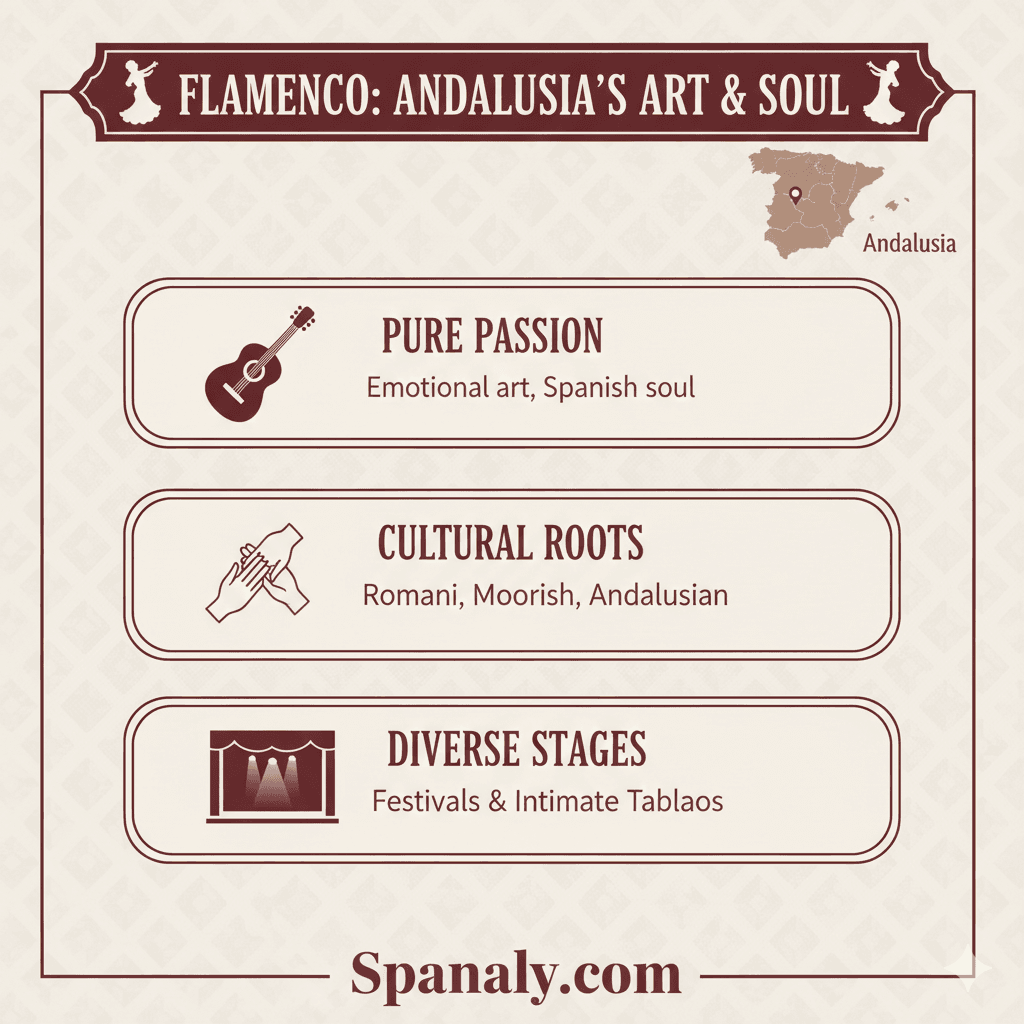
Pure Passion: An emotional art form that captures the “soul” of Spanish tradition and deep-rooted history.
Cultural Roots: Consequently, it blends Romani, Moorish, and Andalusian influences into a unique performance, much like the diverse heritage found in our Seville Travel Guide.
Diverse Stages: From grand festivals to intimate authentic tablaos, it offers a window into Spain’s living heritage, making it one of the top Spanish Attractions for any traveler.
🏺 History of Authentic Flamenco
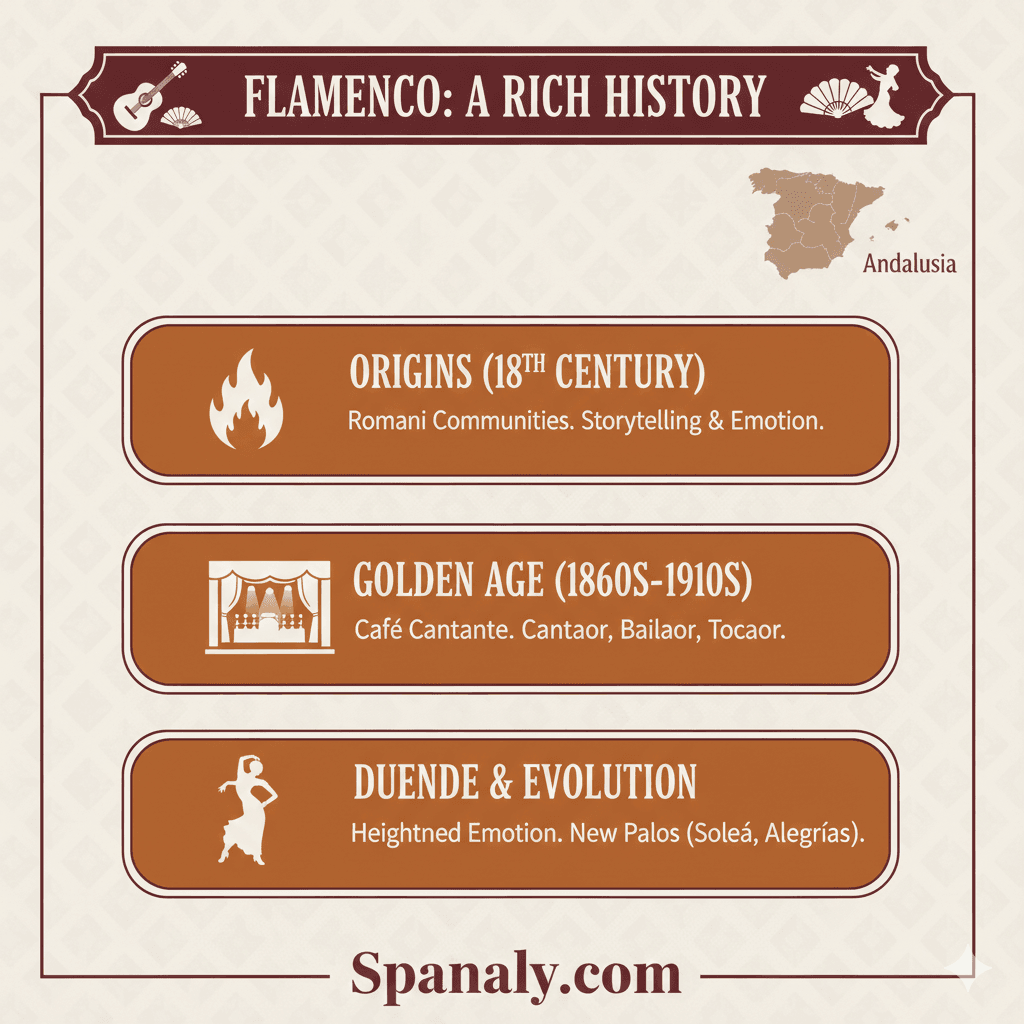
Flamenco traces its origins to the 18th century in southern Spain. Initially associated with the Romani (Gitanos) communities, it evolved as a powerful storytelling medium. This historical journey is as fascinating as the architectural evolution described in our Granada Travel Guide.
The Golden Age (1860s–1910s): This era saw the rise of the Café Cantante, which professionalized the art form. This period cemented the roles of the cantaor (singer), bailaor (dancer), and tocaor (guitarist).
The Essence of Duende: Flamenco artists strive to achieve Duende, a state of heightened emotion and artistic inspiration—a mysterious power that moves the audience deeply, much like the intense energy of the Carnival of Cádiz.
Evolution of Styles: Over centuries, it gave rise to multiple palos (styles) like the profound Soleá and the joyful Alegrías, showcasing a cultural depth similar to Barcelona’s artistic heritage.
🥁 Core Elements of Flamenco
Flamenco is not just dance—it is a complete art form combining music, rhythm, and performance. Its main elements include specific techniques that reflect the same precision found in Traditional Spanish Food preparation:
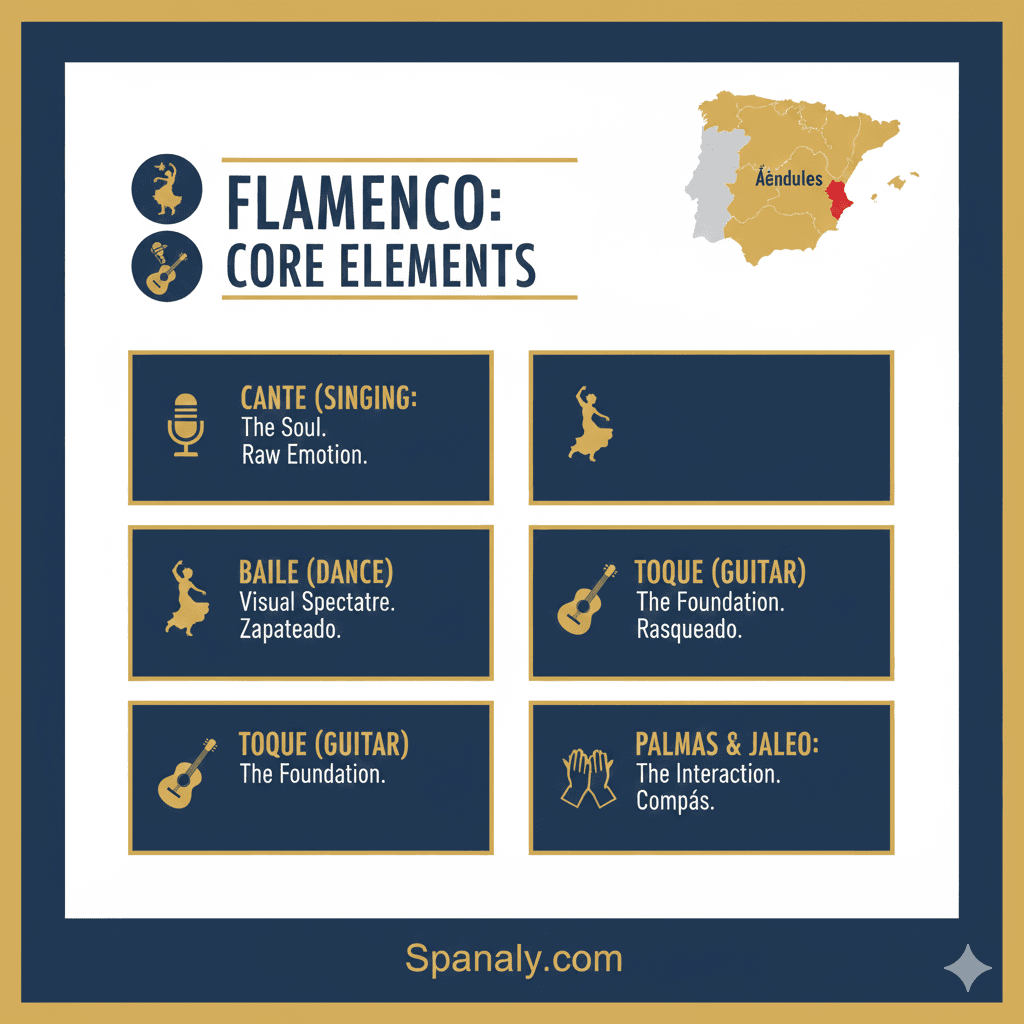
Cante (Singing): The Soul. Performed by the cantaor. It focuses on raw, plaintive tones to articulate deep emotion and life stories.
Baile (Dance): The Visual Spectacle. Defined by complex techniques like Zapateado (rhythmic footwork) and Braceo (elegant arm movements), capturing the same passion seen in our Seville Travel Guide.
Toque (Guitar): The Foundation. The tocaor provides rhythm and harmony, using rapid strumming techniques known as Rasgueado.
Palmas & Jaleo: The Interaction. These are crucial interactive elements that maintain the Compás (the vital rhythmic structure), providing energy much like the atmosphere in major Spanish Festivals.
🌍 Flamenco Today: Heritage and Evolution
Flamenco has evolved globally while preserving its authentic roots. Its modern presence centers on dedicated performance venues and official cultural recognition, making it one of the most protected Spanish Attractions:
UNESCO Heritage: In 2010, UNESCO declared flamenco an Intangible Cultural Heritage of Humanity, a recognition that underscores its deep cultural significance, much like the historic landmarks in our Madrid Travel Guide.
The Rise of the Tablao: Today, the Tablao is the most popular place to experience authentic, spontaneous flamenco. These intimate venues create a close connection between the audience and the performers, echoing the vibrant spirit of Spanish Festivals.
Modern Fusion: Modern adaptations fuse traditional flamenco with contemporary styles, attracting new generations while keeping the Compás (rhythm) at its heart, similar to the artistic innovation seen in Barcelona.
💡 Tips for Visitors: Your Authentic Flamenco Guide
Experiencing flamenco in Spain is an unforgettable cultural journey. Initially, to ensure you find the real “Duende,” keep these professional tips in mind:
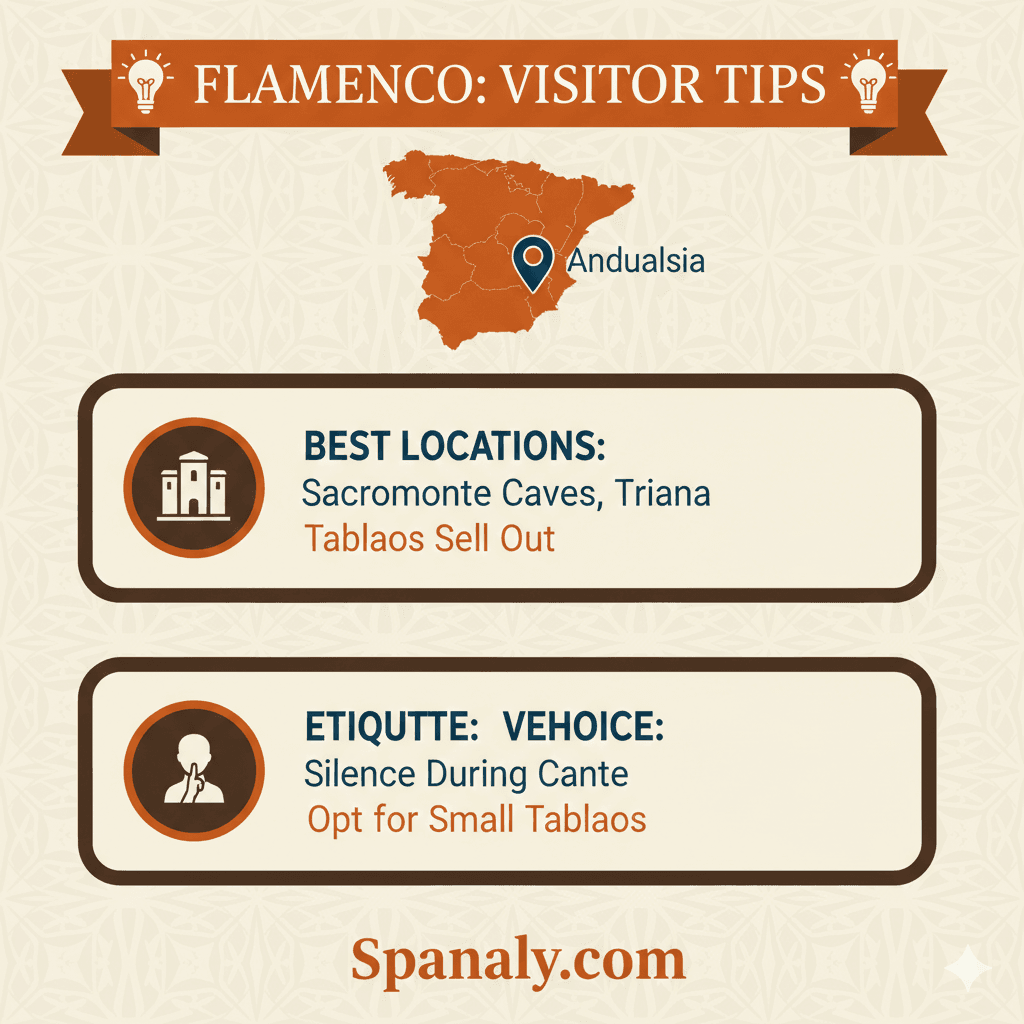
Best Locations for Authenticity: Look for venues in historic neighborhoods. For instance, the Sacromonte caves in Granada offer an intimate setting, while the Triana district in Seville is the legendary cradle of the dance.
Choosing the Venue: Opt for a smaller Tablao (Recommended) over large theatrical shows. In fact, the raw, intimate setting is crucial, providing an experience as authentic as discovering the hidden gems in our Mallorca Travel Guide.
Timing & Booking: Local festivals provide the most vibrant atmosphere. However, since popular tablaos have limited seating, you should secure your tickets well in advance, a process as essential as planning for the Fallas Festivities.
Etiquette: Flamenco is a serious art. Therefore, remain silent during the intense Cante and Zapateado sections. This respect for the artist’s concentration is a hallmark of Spanish cultural manners, similar to those mentioned in our Spanish Culture and Traditions guide.
👗 Flamenco Attire and Aesthetics
The costumes worn in flamenco are integral to the art form, enhancing the visual drama and facilitating the dancers’ movements. This aesthetic focus is a vital part of the Spanish identity, much like the traditional crafts highlighted in our Toledo Travel Guide:
For Women (Bailaoras): The Traje de Flamenca features multiple ruffles (volantes) that enhance the drama of spins. Essential accessories include large hair combs (peinetas) and artistic shawls (mantones).
For Men (Bailaores): Men typically wear tailored, dark trousers and a fitted jacket (chaquetilla). This attire is designed to highlight the precision and intensity of the Zapateado (footwork).
Visual Harmony: Whether simple or elaborate, all attire is designed to amplify the passion and visual lines of the dance, creating a spectacle as colorful as the sights in our Valencia Travel Guide.
Major Flamenco Festivals in Spain
| Festival Name | City | Typical Timing |
|---|---|---|
| Bienal de Flamenco | Seville | September (Biennial – Even Years) |
| Festival de Jerez | Jerez de la Frontera | Late February / Early March |
| Festival Internacional del Cante de las Minas | La Unión (Murcia) | August |
| Suma Flamenca | Madrid | June / July |
💃 Visitor FAQs – Authentic Flamenco Guide 2026
🎭 What is a "Tablao" and why is it recommended?
A Tablao is a small, intimate venue designed specifically for flamenco. Unlike large theaters, a tablao allows you to be inches away from the performers, feeling the vibration of the footwork and the intensity of the singer. This proximity is essential to experience Duende—the raw, spiritual soul of flamenco.
🔥 What does "Duende" mean in a flamenco performance?
Duende is a mystical Spanish term for a moment of heightened emotion and authenticity. In flamenco, it happens when the artist breaks through their technique to reach a state of soulful transcendence. You’ll recognize it by the electric silence in the room, followed by a sudden, heartfelt cry of "¡Olé!".
📍 Which neighborhoods offer the most authentic experience?
In Seville, the legendary neighborhood of Triana is the historic cradle of flamenco. In Granada, you must visit the Sacromonte caves to see the Zambra, a style deeply rooted in local Romani traditions. Both areas offer a grit and passion that modern tourist shows often lack.
🤫 Is there a specific etiquette I should follow?
Yes. Silence is respect. Flamenco is a deeply emotional dialogue between the guitar, the singer, and the dancer. Please avoid talking, using flash photography, or clapping along unless the artists explicitly invite the audience to do so. Your silent attention helps the performers reach their peak emotional state.
🎟️ Should I book tickets in advance?
Definitely. The most authentic tablaos have very limited seating to maintain their intimacy. In 2026, popular shows in Seville and Granada often sell out 3–7 days in advance. Booking online ensures you get a good seat and don't miss out on the city's most powerful cultural tradition.
Flamenco Heritage Guide by Spanaly.com
💃 The Soul of Andalusia
In conclusion, Flamenco is more than just a performance; it is a living cultural expression that embodies Spain’s heart and history. Whether you are witnessing a raw Zambra in a Granada cave or a sophisticated gala in a grand theater, the experience connects you directly to the passionate soul of Spanish art.
Ultimately, the intensity of the Cante and the power of the Zapateado create a memory that stays with you long after the music stops. If you are planning to witness this magic, we invite you to explore the cities where this art thrives by checking our Malaga Travel Guide or discovering more hidden gems in our Bilbao Travel Guide. For travelers seeking the true essence of Spain, flamenco is an unforgettable journey into rhythm, emotion, and tradition.