🏰 The Guardian of the Coast
Castillo de Santa Bárbara sits majestically atop Mount Benacantil, serving as the eternal soul of Alicante and a grand balcony over the Mediterranean. This massive fortress is not just a landmark; it is a vital chapter in our Spain historical monuments guide.
While cities like Seville represent Andalusian passion, Alicante completes the Spanish story with its vibrant coastal energy. Exploring these ancient walls allows you to witness centuries of military strategy and Mediterranean beauty in a single visit.
🌊 Coastal Icon: A powerful silhouette that dominates the city skyline from every angle.
🛡️ Historic Shield: An ancient protector that stood firm against countless naval sieges.
📸 Ultimate Viewpoint: Home to the most breathtaking 360-degree panoramas of the Costa Blanca.
🏛️ Cultural Hub: A living space that hosts modern exhibitions and magical sunset concerts in 2026.
Consequently, your journey through Alicante officially begins at these stone gates. The fortress perfectly bridges the gap between a rugged military past and the sun-drenched Mediterranean lifestyle of today.
🌟 Spanaly Insight: Keep your eyes peeled for “La Cara del Moro” (The Moor’s Face) on the mountainside. This natural rock formation looks exactly like a giant human profile. Local legend says the mountain itself is a silent guard watching over the city’s deepest secrets!
⚔️ The Coastal Duel: Alicante vs. Barcelona
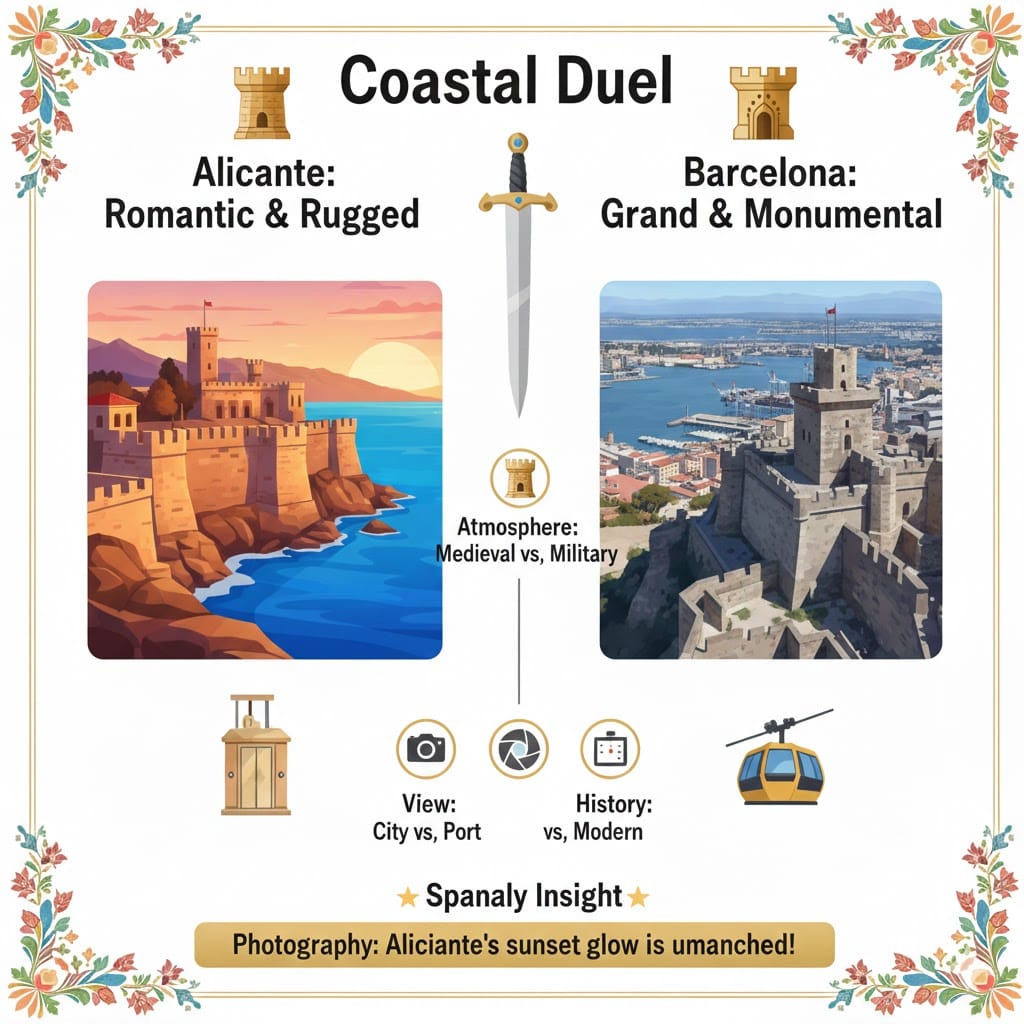
To understand the prestige of Santa Bárbara, you must compare it to its Catalan rival, Montjuïc Castle in Barcelona. While both fortresses guard the Mediterranean, they offer completely different vibes for travelers.
🏰 Atmosphere: Alicante feels romantic and medieval; Barcelona is military and monumental.
🌊 The View: Santa Bárbara hangs directly over the city center; Montjuïc overlooks a massive industrial port.
🎨 Historical Focus: Alicante highlights the Reconquest era; Barcelona reflects modern political history.
🚶 The Ascent: Reach Santa Bárbara via a cool tunnel elevator; Montjuïc is famous for its scenic cable car.
Consequently, Santa Bárbara provides a more intimate connection to ancient Mediterranean roots. While Barcelona inspires awe with its scale, Alicante captures the heart with its rugged, sun-soaked charm.
🌟 Spanaly Insight: If you prioritize photography, Alicante wins the sunset battle. The golden hour light hits the limestone walls and red bricks perfectly against the turquoise sea. This contrast creates a dreamlike glow that is hard to find at other coastal forts!
📜 The Fascinating History & The Legend of the Moor’s Face
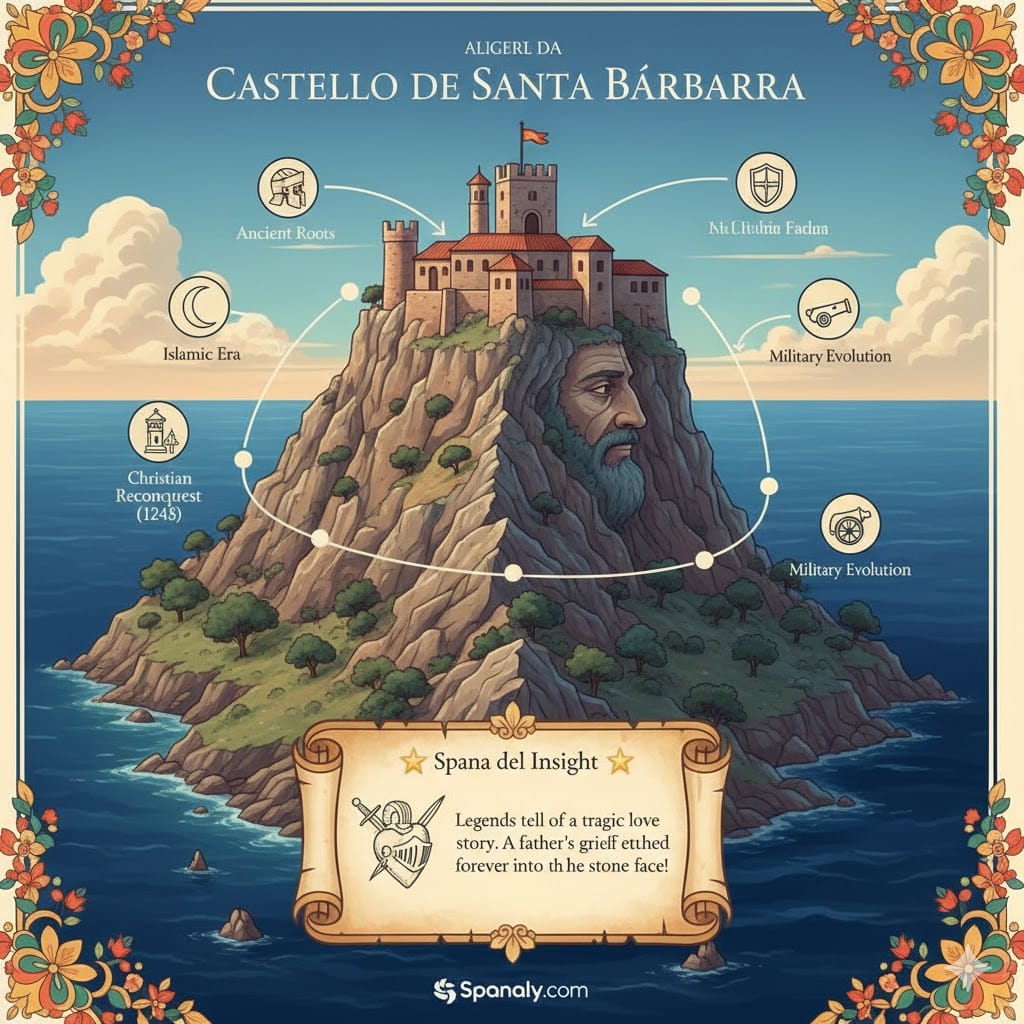
The story of Castillo de Santa Bárbara unfolds like a timeline carved into the rugged stone. This fortress has witnessed the rise of empires, evolving from a primitive citadel into a Mediterranean masterpiece. Its strategic importance often draws comparisons to the legendary Castle of Loarre in the north.
🏰 Ancient Roots: Excavations reveal Iberian and Roman remains on Mount Benacantil.
🌙 Islamic Era: During the 9th century, Muslim engineers built the first true fortified walls.
⚔️ The Christian Reconquest: Prince Alfonso of Castile captured the site on December 4, 1248.
🛡️ Military Evolution: The castle expanded over centuries to repel pirate raids and naval sieges.
However, the most captivating feature of the mountain isn’t man-made. If you look at the fortress from the shoreline, the rock formation reveals “La Cara del Moro” (The Moor’s Face). This natural phenomenon is as iconic to Alicante as the historic Gothic Quarter is to Barcelona’s soul.
🌟 Spanaly Insight: Don’t just look for the face; listen to the local lore! Legends tell of a tragic love story between a Moorish princess and a Christian knight. It is said the Princess’s father died of grief, and his face was forever etched into the stone. Today, it remains one of the most photographed natural curiosities in the Valencian Community.
🚀 The Elevator Through the Mountain
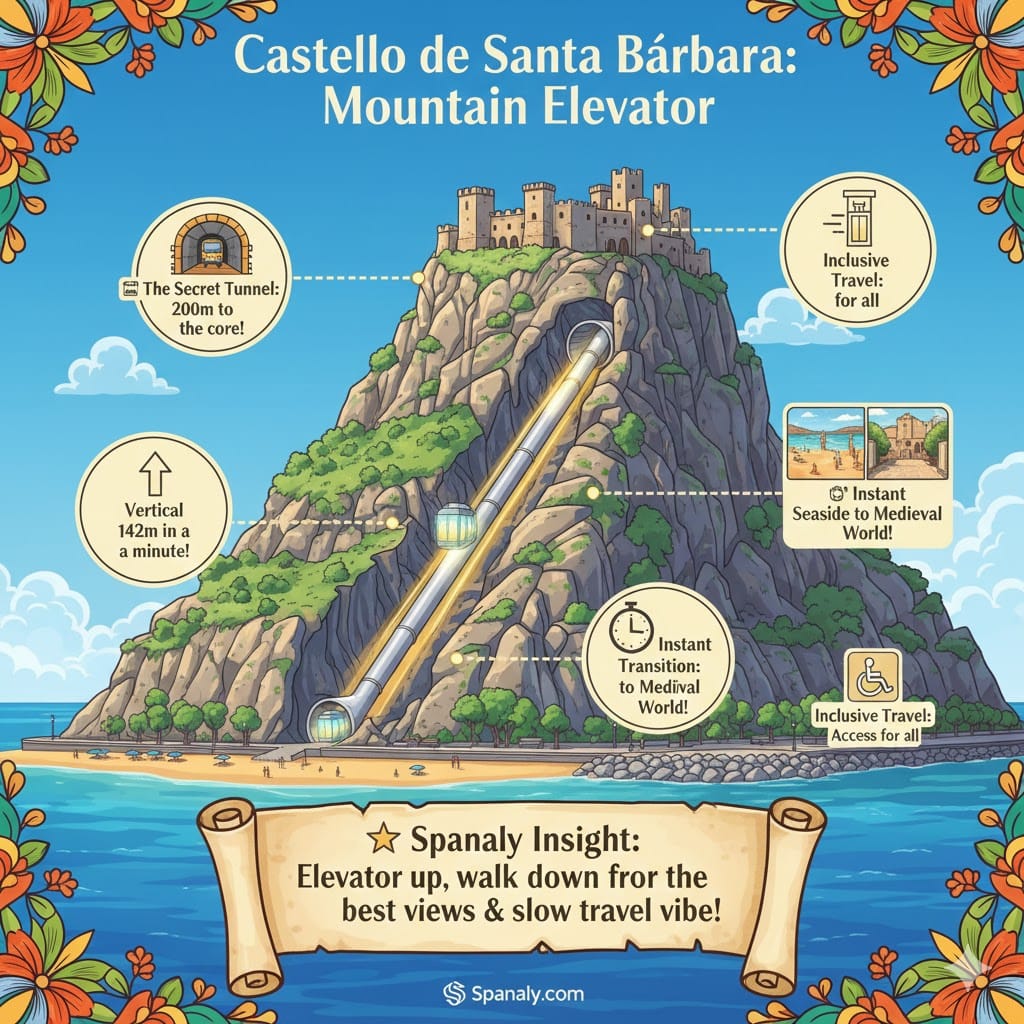
Reaching the summit of Mount Benacantil is an adventure in itself. While many historic sites require a grueling climb, Alicante offers a high-tech solution that feels like a scene from a movie. This engineering marvel stands out as a must-do, much like the modern public transport guide helps travelers navigate complex cities.
🚇 The Secret Tunnel: Enter a 200-meter long tunnel located directly opposite Postiguet Beach.
🛗 Vertical Ascent: The elevator travels 142 meters straight up through the solid rock.
⏱️ Instant Transition: In seconds, you leave the seaside buzz for a silent medieval world.
♿ Inclusive Travel: This facility ensures easy access, a core part of our essential Spain travel tips.
Consequently, using the lift is the smartest way to start your royal visit. It preserves your energy for the massive battlements and hidden courtyards waiting at the peak.
🌟 Spanaly Insight: Take the elevator up but choose the walking path for your return. The descent leads you through hidden gardens and ancient stone steps. It is the perfect way to capture the “slow travel” vibe that defines the Mediterranean lifestyle!
🏰 Exploring the Castle Layers
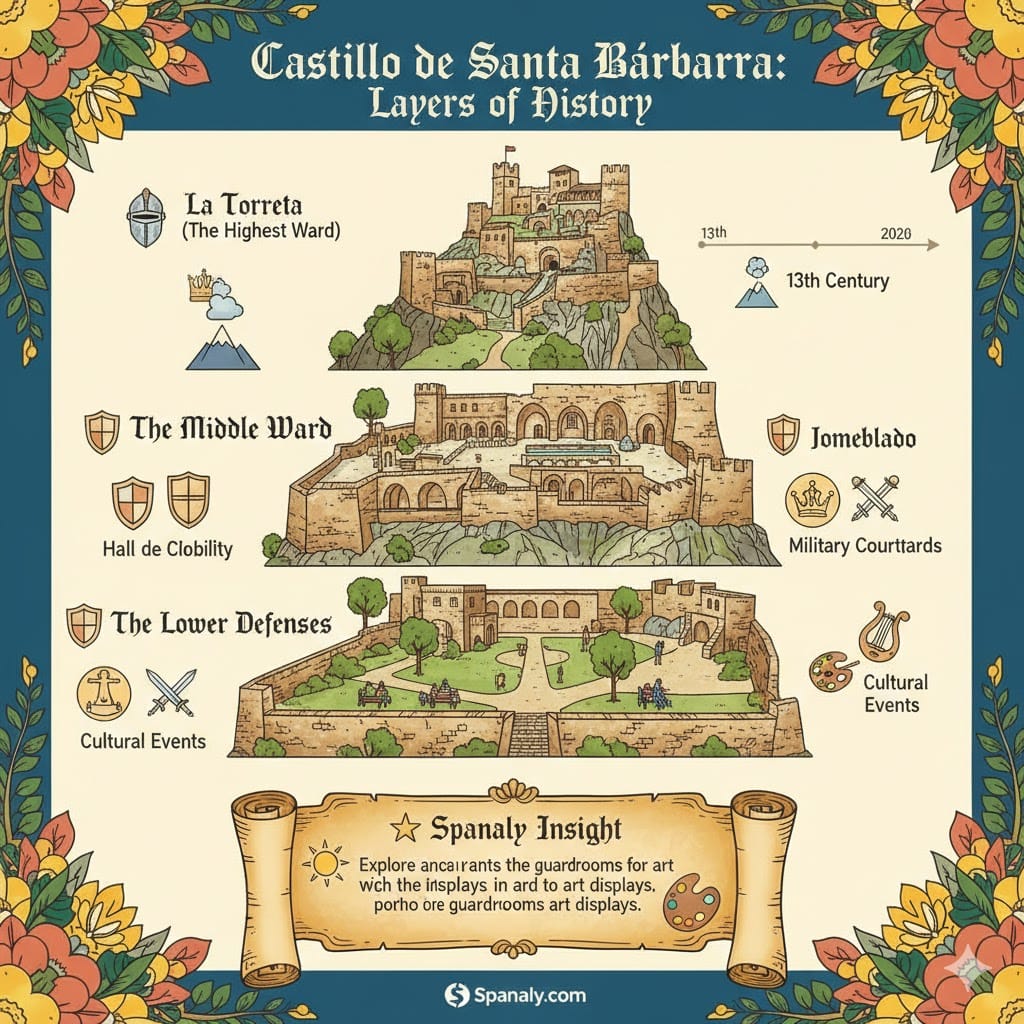
The fortress complex is divided into three distinct levels, each representing a different era of Spanish military history. Exploring these layers is like walking through a vertical museum of the Mediterranean, much like discovering the hidden stories in our Toledo travel guide.
🧗 La Torreta (The Highest Ward): This is the oldest section, housing the “Macho del Castillo” (the Keep). It sits on the peak of Mount Benacantil, offering a strategic vantage point as legendary as the Alcazar of Segovia.
🛡️ The Middle Ward: Constructed in the 16th century, this area contains the most important rooms, including the Hall of the Nobility and the military courtyards.
🌳 The Lower Defenses: Added in the 18th century, this level houses the expansive “Revellín del Bon Repós.” Today, it hosts cultural events and provides a spacious area for visitors to relax.
Consequently, each level offers a unique perspective of Alicante’s heritage. The shift from medieval stone to Renaissance fortifications is a journey through time that every history lover will appreciate.
🌟 Spanaly Insight: Don’t rush to the top! Spend time in the Middle Ward to find the old guardrooms. During the summer of 2026, these cool stone halls often feature local art displays that provide a refreshing break from the Mediterranean sun.
🏛️ MUSA: Discovering Alicante’s Secrets Underground
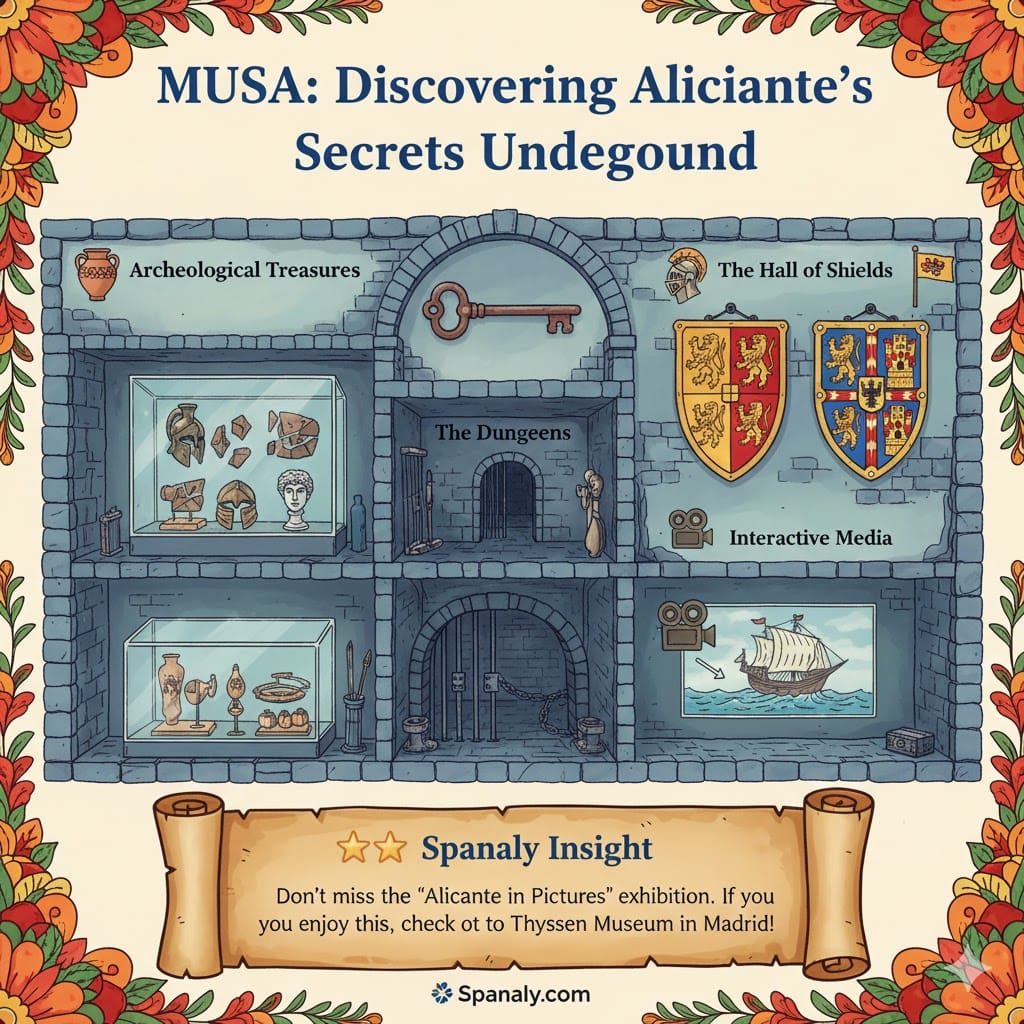
Deep within the fortress walls lies the Alicante City Museum (MUSA). This cultural space occupies several historic rooms, including the old dungeons and gunpowder magazines. Exploring its halls is the perfect way to understand the city’s soul, much like visiting the Picasso Museum reveals the artistic heart of its city.
🏺 Archeological Treasures: View artifacts ranging from the Bronze Age to the modern era.
🗝️ The Dungeons: Enter the chilling underground cells where prisoners were once kept.
🎥 Interactive Media: Watch dynamic presentations that bring Alicante’s maritime history to life.
🖼️ The Hall of Shields: Discover the heraldry of the noble families who once governed the castle.
Consequently, MUSA offers a cool refuge from the heat while providing an educational backbone to your visit. It transforms a simple walk through ruins into a deep dive into the local identity.
🌟 Spanaly Insight: Don’t miss the “Alicante in Pictures” exhibition. It showcases how the city’s skyline has evolved over the last century. If you enjoy this blend of history and art, you should definitely check out the Thyssen Museum during your next stop in the capital!
🏘️ The Descent: Walking through Barrio de Santa Cruz
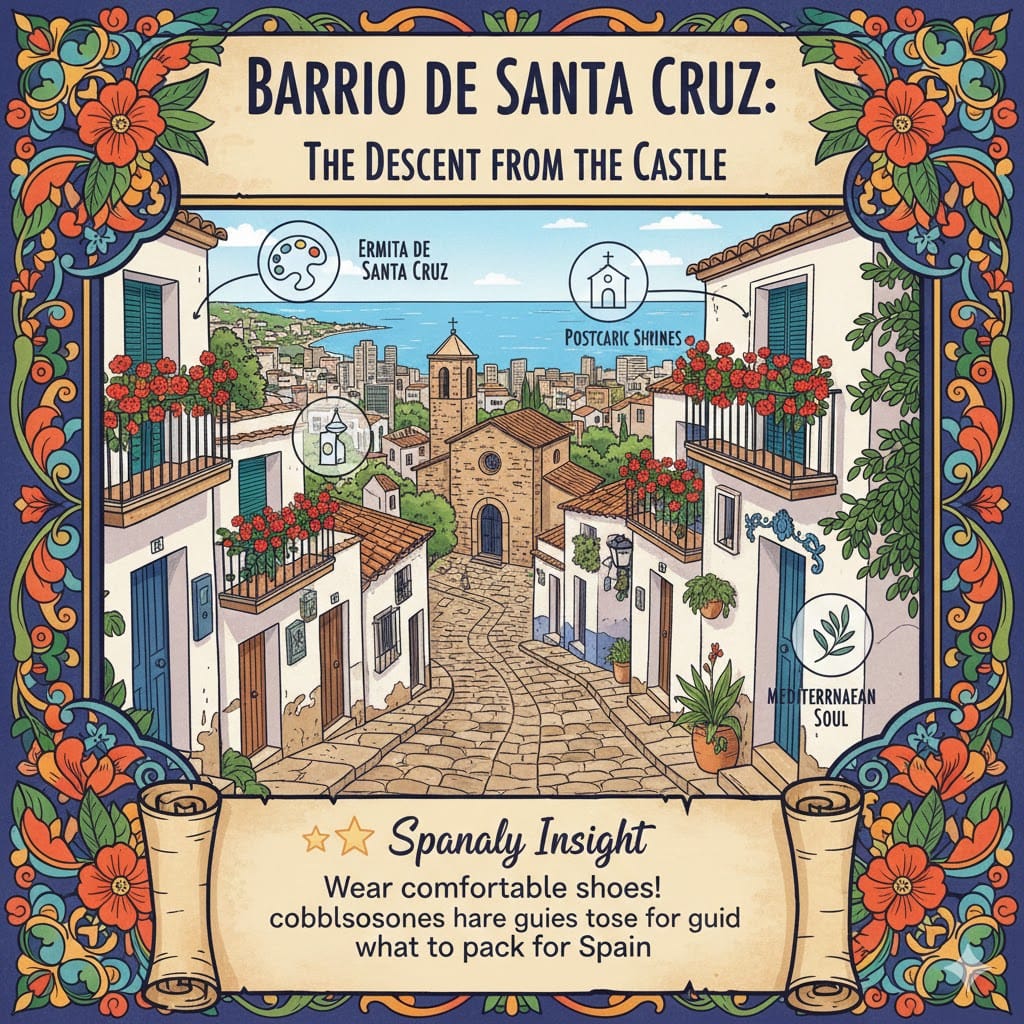
After exploring the heights, the most rewarding way to return to the city is by foot. As you descend from the fortress, you enter the Barrio de Santa Cruz, the oldest and most picturesque neighborhood in Alicante. This walk is a sensory delight, much like exploring the hidden corners of the Triana district in the south.
🎨 A Splash of Color: Wander through narrow, winding streets lined with white houses adorned with vibrant tiles and flower-filled balconies.
⛪ Historic Shrines: Passing by the Ermita de Santa Cruz offers a moment of peace and a glimpse into local religious traditions.
📸 Postcard Views: Every turn provides a new perspective of the Mediterranean, perfect for those seeking the charm of Malaga travel guide aesthetics.
🌿 Mediterranean Soul: The atmosphere here is a blend of quiet village life and artistic energy, making it a must-see.
Consequently, this route allows you to transition smoothly from medieval military history to the living, breathing culture of modern Alicante. It is the ultimate “slow travel” experience.
🌟 Spanaly Insight: Wear comfortable shoes! The cobblestones in Santa Cruz can be slippery and uneven. If you are planning a longer trip across the country, checking our what to pack for Spain guide will ensure you have the right gear for both mountain fortresses and historic city walks.
📍 How to Get to Castillo de Santa Bárbara
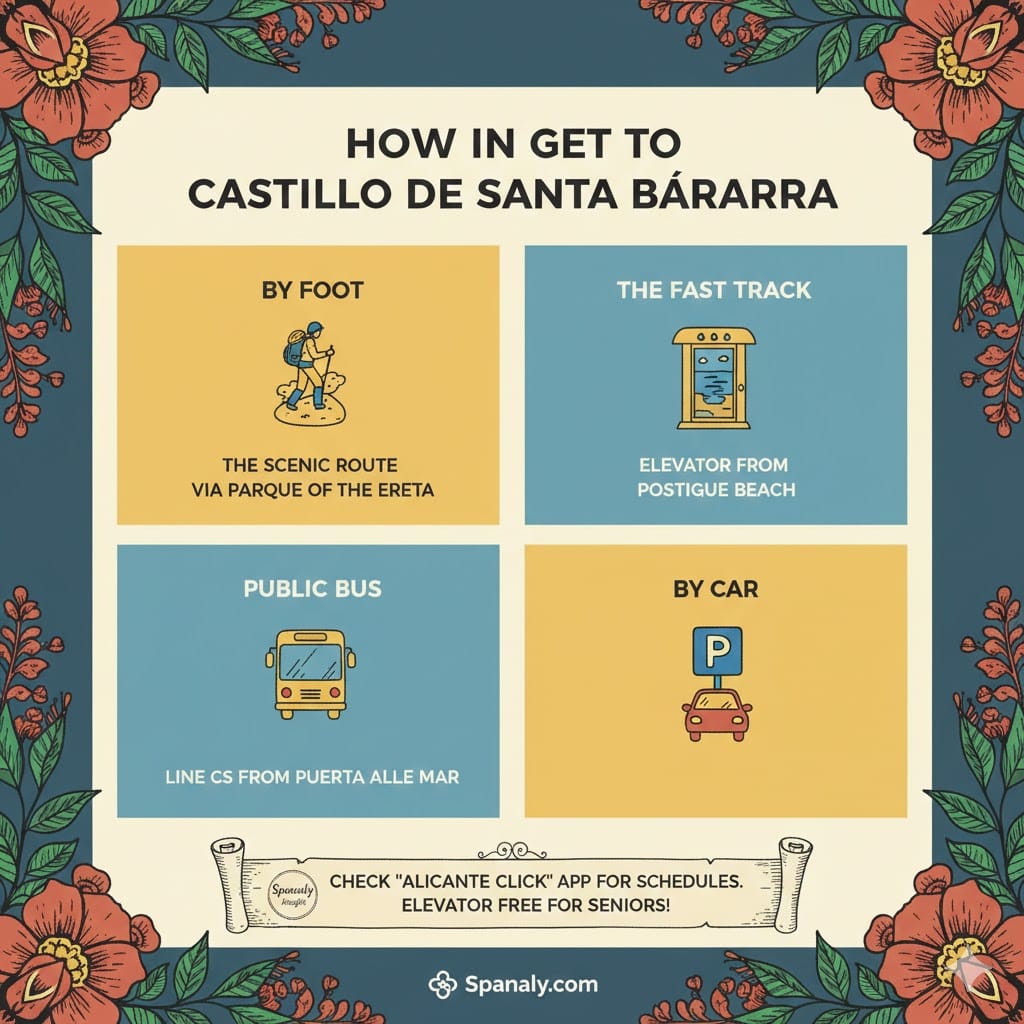
Whether you prefer a scenic walk or a quick ascent, reaching the fortress is straightforward. Alicante’s infrastructure makes it as accessible as navigating with a Getting Around Spain guide.
🚶 By Foot (The Scenic Route): For those who love a challenge, you can hike up via Parque de la Ereta. This path offers gradual views and is perfect for active travelers who enjoyed our Barcelona 2026: Walking and Biking Ultimate Guide.
🛗 The Fast Track (Elevator): As mentioned earlier, the lift from Postiguet Beach (Calle Jovellanos) is the most popular choice. It’s efficient and saves your energy for the summit.
🚌 Public Bus (Line CS): A dedicated shuttle bus runs from the city center (Puerta del Mar) directly to the castle gates, a great option for families or during the midday heat.
🚗 By Car: There is limited parking near the entrance, but we recommend using public options to avoid congestion, similar to our advice for visiting the Royal Palace of Madrid.
Consequently, choosing the right method depends on your schedule and fitness level. Most visitors find that taking the lift up and walking down provides the best of both worlds.
🌟 Spanaly Insight: If you are visiting in 2026, check the local “Alicante Click” app for real-time bus schedules. Also, remember that the elevator is free for seniors, making it one of the most inclusive historical sites in Spain!
📸 The Best Photo Spots: Capturing the Mediterranean Skyline
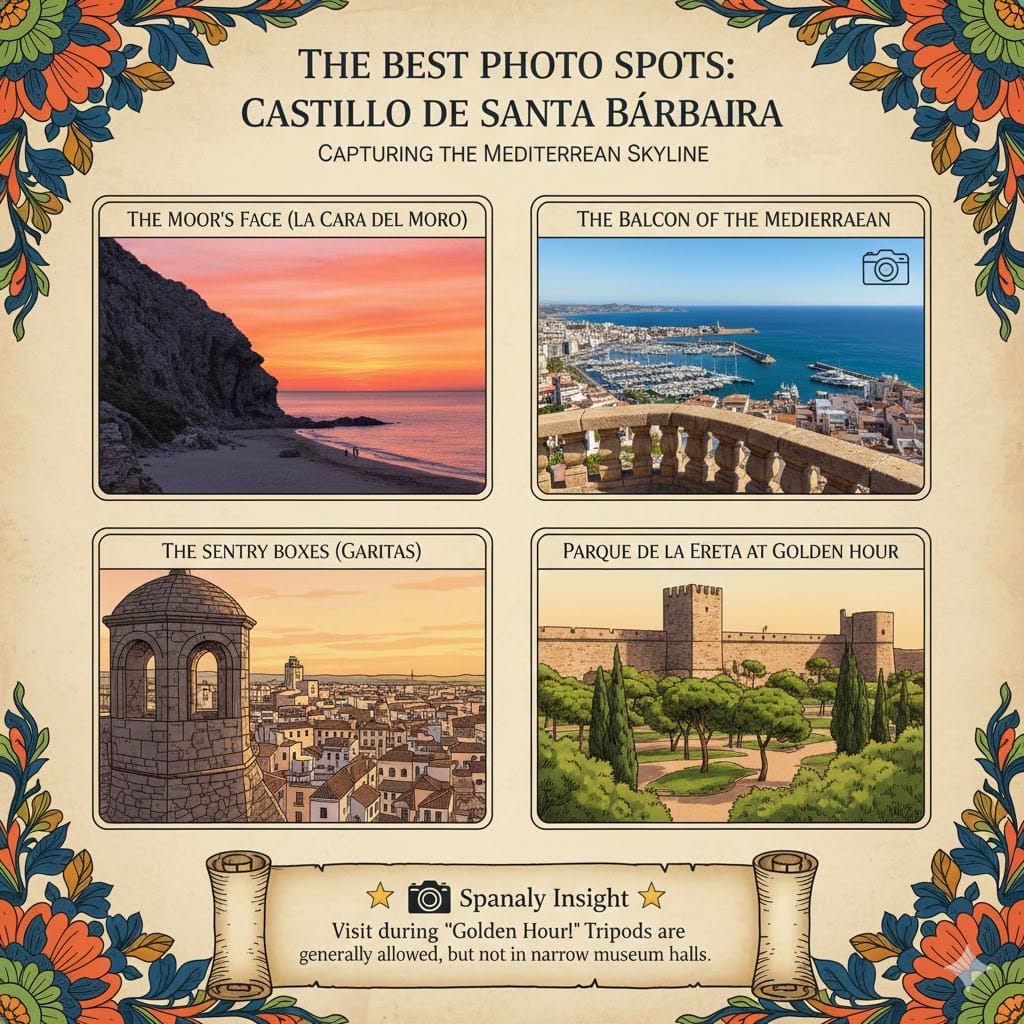
Castillo de Santa Bárbara is a paradise for photographers. Its elevation and unique architecture provide angles that make it as Instagrammable as the viewpoints in our Granada travel guide. To get the perfect shot in 2026, head to these specific locations:
👤 The Moor’s Face (La Cara del Moro): For the best view of this natural phenomenon, stand at the far end of Postiguet Beach. The silhouette of the mountain against the sunset is a masterpiece of nature.
🏰 The Balcony of the Mediterranean: Located at the highest ward (La Torreta), this spot offers a 360-degree panorama of the Alicante port and the endless blue sea, rivaling the coastal views found in our San Sebastian travel guide.
🛡️ The Sentry Boxes (Garitas): These iconic stone lookout points are perfect for framing the city skyline. They provide a historical contrast that creates a powerful visual story.
🌳 Parque de la Ereta at Golden Hour: As you descend, the park offers a lush green foreground against the ancient stone walls, a scene as serene as the gardens of the Alcazar of Seville.
Consequently, visiting during the “Golden Hour” (just before sunset) will reward you with a warm, magical light that brings the history of the stone to life.
🌟 Spanaly Insight: If you’re using a professional camera, remember that tripods are generally allowed in open areas, but avoid using them in the narrow museum halls of MUSA to keep the path clear for other visitors.
🥘 Gastronomy: From Fortress Heights to Mediterranean Flavors
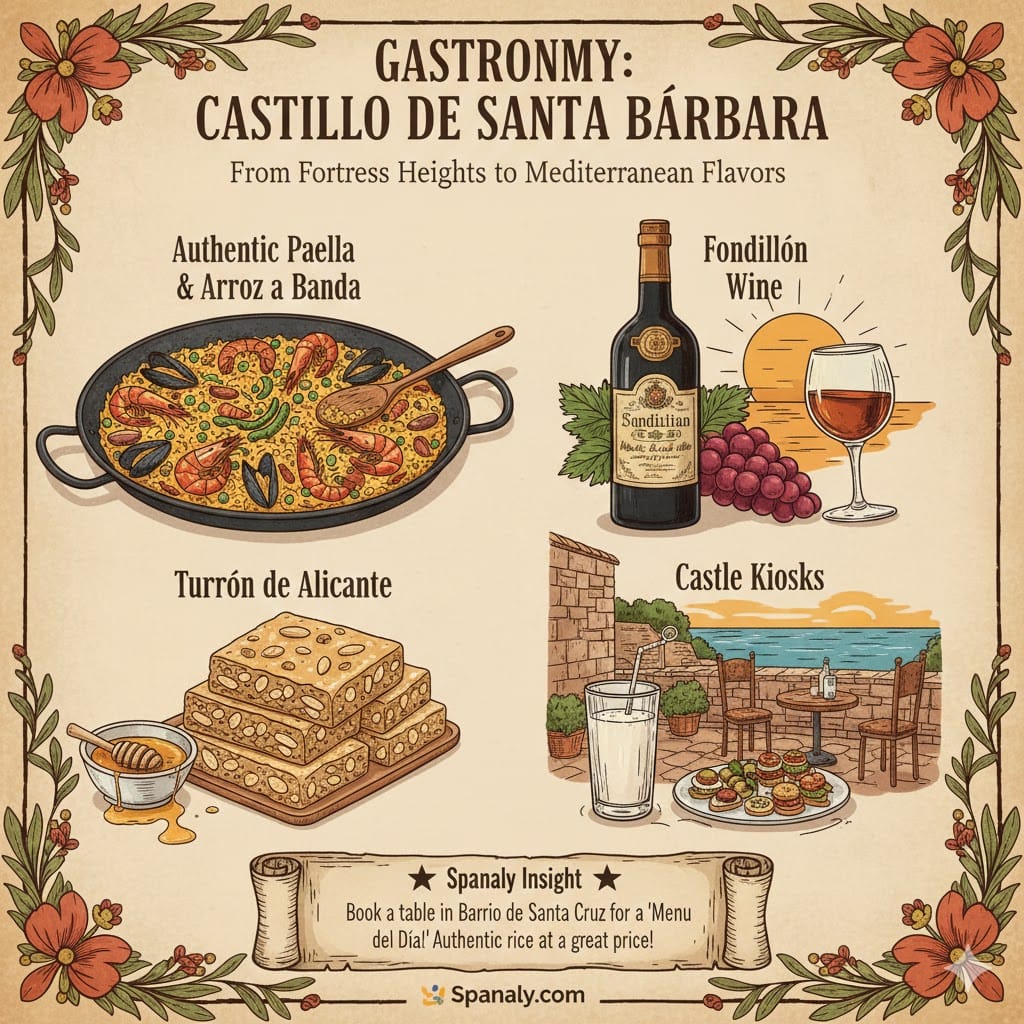
Your visit to the castle isn’t complete without indulging in the local culinary scene. Alicante is the capital of rice dishes, and the area surrounding the fortress offers flavors as authentic as those found in our Madrid food guide.
🥘 Authentic Paella & Arroz a Banda: Unlike the tourist traps, local restaurants near the port serve rice cooked in rich fish stock. It’s a mandatory stop for any food lover.
🍷 Fondillón Wine: Sample this unique, aged local wine. It is one of the few “luxury” wines with a history dating back centuries, perfect for a sunset toast.
🍦 Turrón de Alicante: Don’t leave without trying the famous hard almond nougat. It’s the sweet soul of the region, much like the traditional pastries mentioned in our Toledo travel guide.
🏰 Castle Kiosks: For a quick bite with a view, the small cafes within the fortress walls offer refreshing “Horchata” and light tapas.
Consequently, the transition from historical exploration to gastronomic delight is the perfect way to wrap up your afternoon. It’s a true taste of the Mediterranean lifestyle.
🌟 Spanaly Insight: For an unforgettable experience in 2026, book a table at one of the restaurants in Barrio de Santa Cruz on your way down. Many “Tabernas” there offer a “Menu del Día” that includes authentic home-cooked Alicante rice at a very reasonable price!
🚗 Beyond the Fortress: Top Day Trips from Alicante
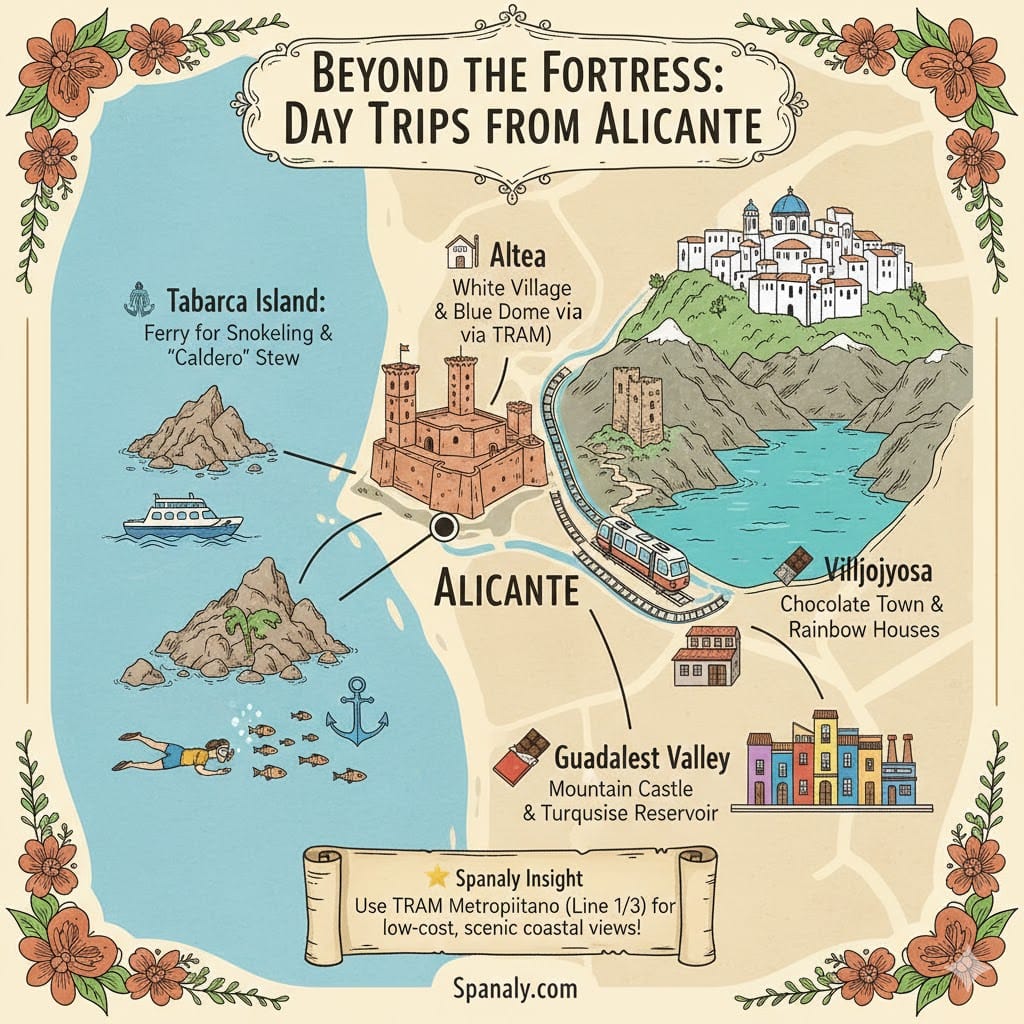
While the castle is the crown jewel, Alicante is also the perfect base for exploring the Costa Blanca’s hidden gems. In 2026, these excursions are as essential as the day trips mentioned in our Madrid travel guide:
🏝️ Tabarca Island: A 1-hour ferry ride from the Alicante port takes you to Spain’s smallest permanently inhabited island. It’s a protected marine reserve, ideal for snorkeling and tasting “Caldero,” a unique local fish stew.
⛪ Altea (The White Village): Known as the “Dome of the Mediterranean,” Altea’s white-washed streets and blue-domed church are a dream for aesthetics lovers. It’s easily reachable via the coastal tram, a journey as scenic as those in our Madrid public transport guide.
🏰 Guadalest Valley: Nestled high in the mountains, this medieval village is famous for its castle ruins and turquoise reservoir. It’s one of the most beautiful villages in Spain, perfect for a mountainous escape.
🍫 Villajoyosa: This coastal town is famous for its rainbow-colored fishermen’s houses and its long tradition of chocolate making. A visit to the Valor Chocolate Museum is a treat for all ages.
Consequently, extending your stay to include these nearby wonders will transform your trip from a simple city break into a deep Mediterranean adventure.
🌟 Spanaly Insight: For the ultimate “low-cost” adventure, use the TRAM Metropolitano (Line 1 or 3). It’s a comfortable, air-conditioned train that hugs the coastline, giving you million-dollar views of the sea for just a few euros!
🗓️ Visitor Information & 2026 Practical Tips
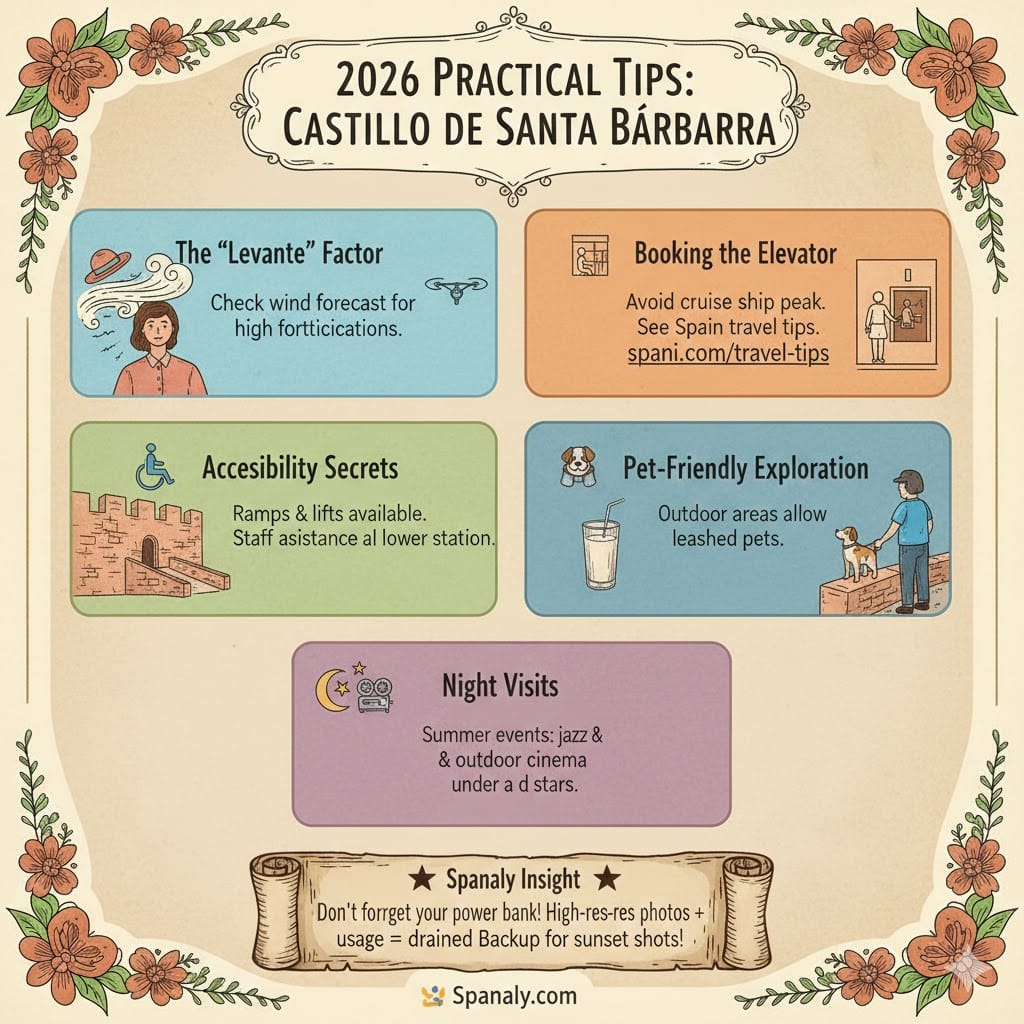
Planning your visit in 2026 requires more than just knowing the opening hours. To truly master your experience at Castillo de Santa Bárbara, follow these strategic insights that go beyond the basic tourist brochures:
🌬️ The “Levante” Factor: Before heading up, check the local wind forecast. If a strong Levante (east wind) is blowing, the higher fortifications can be very windy. Secure your hats and drone enthusiasts should be extra cautious!
🎟️ Booking the Elevator: In 2026, the mountain lift can get crowded during cruise ship dockings. We recommend checking the Spain travel tips section for advice on timing your visits to major landmarks to avoid peak hours.
♿ Accessibility Secrets: While the castle is historic, there are modern ramps and specialized lifts for those with reduced mobility. If you need assistance, the staff at the lower elevator station are exceptionally helpful.
🐾 Pet-Friendly Exploration: Good news for animal lovers! The outdoor fortress areas are pet-friendly, provided they are on a leash. It’s one of the few historical sites in Spain where your furry friend can enjoy the Mediterranean views with you.
🌑 Night Visits: During the summer months of 2026, look out for “Night at the Castle” events, featuring live jazz or outdoor cinema. The atmosphere under the stars is completely different from the daytime bustle.
Consequently, a little bit of tactical planning ensures that your visit is not just a walk through ruins, but a seamless and memorable highlight of your Spanish adventure.
🌟 Spanaly Insight: Don’t forget your power bank! Between the high-res photos and using the “Alicante Click” app for navigation, your phone battery will drain faster than usual. Having a backup ensures you won’t miss that perfect sunset shot.
🏰 Visitor FAQs – Castillo de Santa Bárbara Guide 2026
🏰 Are there any medieval reenactments in 2026?
Yes! In 2026, the castle hosts Medieval Markets and live combat demonstrations usually in the spring and late autumn. These events transform the parade grounds into a living history museum, making it a perfect time for families to experience the fortress's glory days.
💻 Is there free Wi-Fi available at the fortress?
Alicante has invested heavily in digital tourism. There is free public Wi-Fi at the visitor centers and near the MUSA museum entrance. However, signal strength can be weak behind the thick stone battlements, so we recommend downloading your offline maps beforehand.
🍹 Can I bring my own food and drinks for a picnic?
Absolutely! There are several designated benches and open plazas within the castle walls where you can enjoy a picnic. Many locals bring snacks to watch the sunset from the lower walls. Just remember to use the recycling bins provided to keep the heritage site clean.
🚁 Can I fly my drone for professional photography?
The castle is a restricted flight zone. In 2026, flying a drone without a specific permit from the Alicante City Council and aviation authorities is strictly prohibited. For stunning aerial-like views, we recommend the Torre de la Campana, which offers the highest safe vantage point.
🎭 How long should I dedicate to a full visit?
To truly appreciate the three different levels and the MUSA exhibitions, we recommend allowing at least 2 to 3 hours. If you plan to walk down through the Santa Cruz neighborhood afterward, add another 45 minutes to your itinerary for the ultimate experience.
Alicante Heritage Guide by Spanaly.com
🏰 A Fortress That Defines Alicante
Castillo de Santa Bárbara is more than just a stone monument; it is the heartbeat of Alicante. From its legendary legends to its panoramic views, it offers a journey through time that stays with you long after you leave.
✨ Unmatched Views: Whether you come for the history or the photos, the Mediterranean horizon from the summit is a memory you’ll cherish forever.
🕰️ Living History: Exploring these walls is like walking through a living museum, much like the timeless experience of crossing the Roman Bridge of Cordoba.
🌊 Mediterranean Soul: The descent through Santa Cruz and the taste of local rice provide the perfect finish to an authentic Spanish day.
In short, no trip to the Costa Blanca is complete without standing atop Mount Benacantil. It’s where the sea meets the sky and where history meets the modern traveler.
💡 Final Thought: Alicante is a city of surprises. Let the castle be your starting point, but don’t stop there—explore every corner of this vibrant coastal gem!