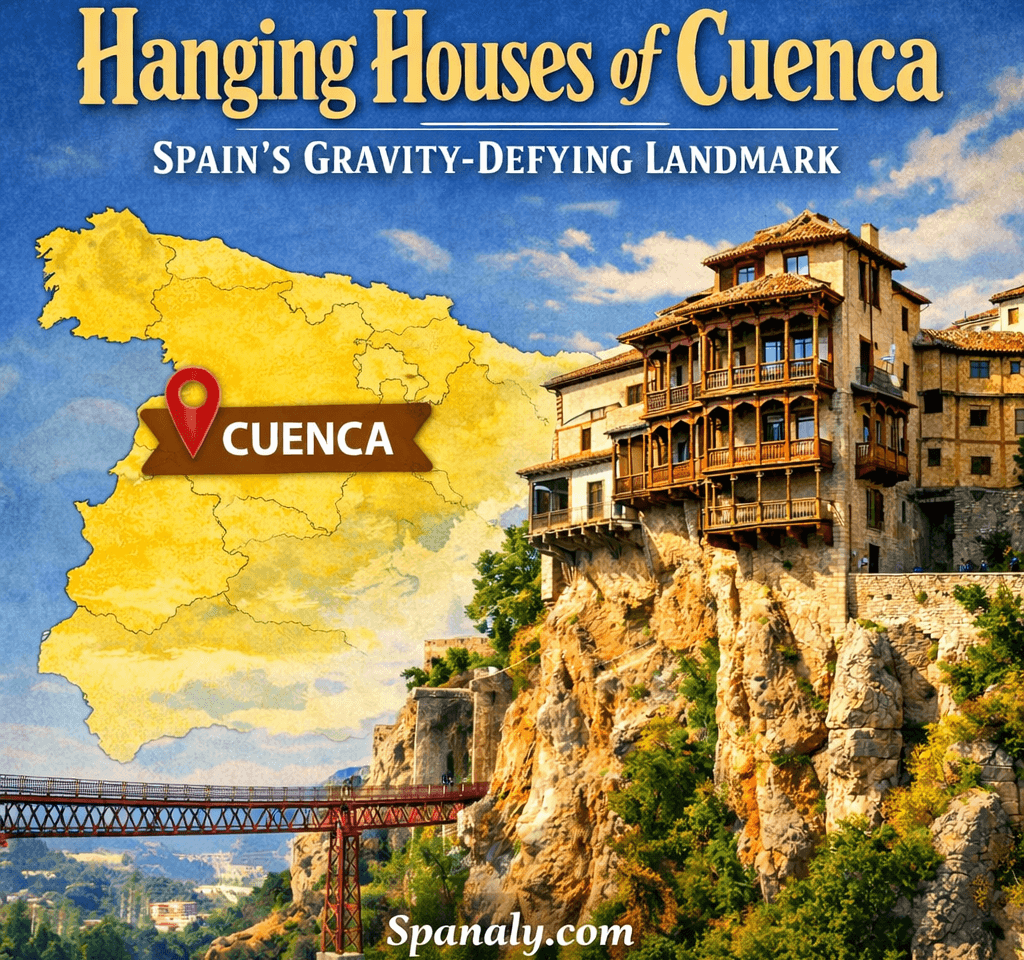
Perched dramatically on the edge of a sheer limestone cliff, the Hanging Houses of Cuenca (Casas Colgadas) are among the most breathtaking Spanish Attractions you will ever witness. Suspended high above the deep Huécar Gorge, these medieval structures appear to defy gravity, offering a powerful visual symbol of Spanish ingenuity.
Located in the heart of Cuenca’s UNESCO-listed Old Town, the Hanging Houses are more than just a postcard image. They represent a centuries-old story of survival and artistic transformation. Many travelers discover this gem while following our Ultimate Madrid Travel Guide, as Cuenca is one of the most rewarding day trips from the capital.
Table of Contents
Toggle📜 A Brief History: Architecture of Necessity
The origins of the Hanging Houses date back to the 14th and 15th centuries. During this era, Cuenca was a thriving medieval city where flat land was a luxury. To solve this, residents built their homes directly onto the rocky cliffs, much like how the builders of the Ultimate Barcelona Travel Guide monuments adapted to their own unique coastal landscape centuries later.
Medieval Ingenuity: These houses weren’t just for aesthetics; they were a strategic solution for a city surrounded by defensive cliffs.
The Survivors: While many similar cliffside houses collapsed over time, the three remaining structures stand as a testament to medieval craftsmanship and resilience.
🏗️ Design Features: Gravity-Defying Details
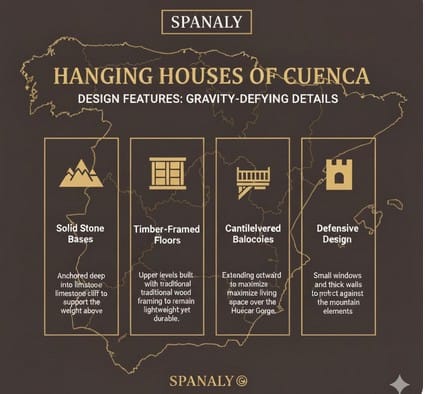
The most distinctive feature of the Casas Colgadas is their wooden cantilevered balconies, which hover dramatically over the abyss. This blend of stone and timber reflects the raw, authentic side of Spain that you can also experience through its flavors in our guide to Spanish Cuisine.
Key architectural elements include:
💎 Solid Stone Bases: Anchored deep into the limestone cliff to support the weight above.
🪵 Timber-Framed Floors: Upper levels built with traditional wood framing to remain lightweight yet durable.
🌌 Cantilevered Balconies: Extending outward to maximize living space over the Huécar Gorge.
🛡️ Defensive Design: Small windows and thick walls to protect against the mountain elements.
🖼️ Hanging Houses Today: Museum of Spanish Abstract Art
One of the most remarkable transformations of these medieval structures is their modern cultural role. Since 1966, one of the houses has hosted the Museum of Spanish Abstract Art (Museo de Arte Abstracto Español).
Inside, visitors encounter a striking contrast:
🏰 Ancient Walls: The rugged, original stone and timber of the 15th-century interior.
🎨 Modern Vision: A world-class collection of 20th-century Spanish abstract works.
🌌 The View: Gazing at contemporary art while suspended over a medieval abyss.
If you are a fan of cultural celebrations, visiting this museum during local Spanish Festivals adds an extra layer of magic to the experience, as the Old Town comes alive with tradition.
🌉 San Pablo Bridge: The Ultimate Viewpoint
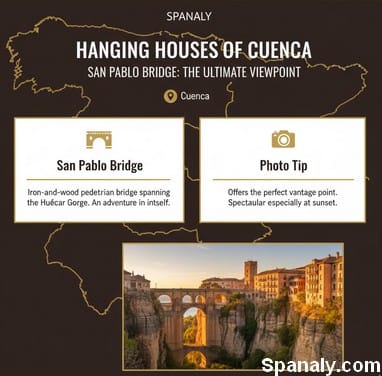
For the most iconic, gravity-defying views of the Hanging Houses, you must cross the San Pablo Bridge (Puente de San Pablo). This iron-and-wood pedestrian bridge spans the Huécar Gorge, and crossing it is an adventure in itself.
Photo Tip: The bridge offers the perfect vantage point to see the houses fully suspended above the canyon. It is especially spectacular at sunset.
Traveler’s Note: If you’ve followed our Ultimate Seville Travel Guide and enjoyed the Triana Bridge, you will find the San Pablo Bridge equally captivating but for entirely different, more dramatic reasons.
💡 Essential Visitor Tips for Cuenca
To ensure your visit to the Hanging Houses is as seamless as the views are stunning, keep these practical tips in mind:
👟 Wear Comfortable Shoes: Cuenca’s Old Town is famous for its steep, cobblestone streets. You’ll be doing a lot of climbing!
📸 Timing is Everything: Arrive at the San Pablo Bridge during the “Golden Hour” (just before sunset) for the best lighting. At night, the houses are beautifully illuminated.
🏛️ Cultural Combo: Don’t just look from the outside; enter the Museum of Abstract Art to experience the interior architecture.
🌦️ Check the Weather: Being in a mountainous region, fog can sometimes hide the gorge. Clear days offer the most dramatic perspectives.
🗺️ How to Get to the Hanging Houses
Cuenca is one of the most accessible Spanish Attractions from Madrid, making it a perfect getaway.
By High-Speed Train (AVE): The fastest way. It takes only 50 minutes from Madrid’s Atocha station to Cuenca-Fernando Zóbel station.
By Car: A scenic drive of about 2 hours from Madrid via the A-40 highway.
Local Transport: Once in Cuenca, you can take a bus (Line 1 or 2) from the city center directly to the Plaza Mayor, which is just steps away from the houses.
🏚️ Visitor FAQs – Hanging Houses of Cuenca 2026
🏚️ Can you actually go inside the Hanging Houses?
Yes! While most are private, the most famous ones house the Museum of Spanish Abstract Art (Museo de Arte Abstracto Español). Entering the museum allows you to see the original 15th-century wooden structures and balconies from the inside, providing a thrilling perspective of the deep gorge below.
🌉 Where is the best spot to photograph the houses?
The absolute best view is from the middle of the San Pablo Bridge (Puente de San Pablo). This iron bridge crosses the Huécar gorge and offers a direct, panoramic view of the wooden balconies "hanging" over the cliff. Tip: Visit during the "Golden Hour" just before sunset for magical lighting.
🚆 Is Cuenca a feasible day trip from Madrid?
Absolutely. Using the AVE high-speed train, the journey from Madrid-Atocha to Cuenca-Fernando Zóbel takes less than 55 minutes. From the station, a quick taxi or bus ride takes you to the heart of the Old Town, making it one of the easiest and most spectacular day trips from the capital.
🛡️ Are the Hanging Houses safe to visit?
Despite their precarious appearance, the houses are perfectly safe. They are built into the limestone rock and have undergone rigorous structural reinforcement over centuries. The city of Cuenca takes great care in preserving these UNESCO World Heritage structures for modern visitors.
🍽️ Is there a restaurant inside the Hanging Houses?
Yes! There is a renowned restaurant located within one of the hanging buildings. Dining here is a unique experience, offering traditional Manchego cuisine (like Morteruelo or Ajoarriero) with a literal bird's-eye view of the canyon. Booking in advance is highly recommended due to limited seating.
Cuenca Heritage Guide by Spanaly.com
🏛️ Why Cuenca Matters
The Hanging Houses of Cuenca are a testament to the fact that beauty often arises from necessity. They are a living archive of Spain’s medieval soul, perched between the heavens and the earth. Whether you are exploring the vibrant streets of our Ultimate Barcelona Travel Guide or the historic depths of Andalusia, Cuenca offers a unique, gravity-defying contrast that you won’t find anywhere else in the world.