🏛️ Park Güell
There are few places in the world where art breathes as freely as it does in the heart of Catalonia. Nowhere is this more vivid than at Park Güell, Antoni Gaudí’s enchanting sanctuary that remains a cornerstone of the Ultimate Barcelona Travel Guide for every traveler in 2026.
📍 A Dialogue Between Art and Nature Perched majestically on Carmel Hill, this park overlooks the entire city, acting as more than just a landmark—it is a profound dialogue between architecture and the natural world.
✨ Why Park Güell is an Essential Experience:
Visual Poetry: Every mosaic tile and curved path invites visitors to see the world through Gaudí’s visionary eyes.
The Trencadís Magic: Witness the revolutionary technique where broken ceramics become eternal works of art.
Panoramic Vistas: Enjoy one of the most iconic views of Barcelona with the Mediterranean Sea in the distance.
Walking through Park Güell is an immersive journey where every corner reveals a new perspective on how history and genius create unforgettable Spanish Attractions.
🎨 A Dream Conceived in Stone and Color
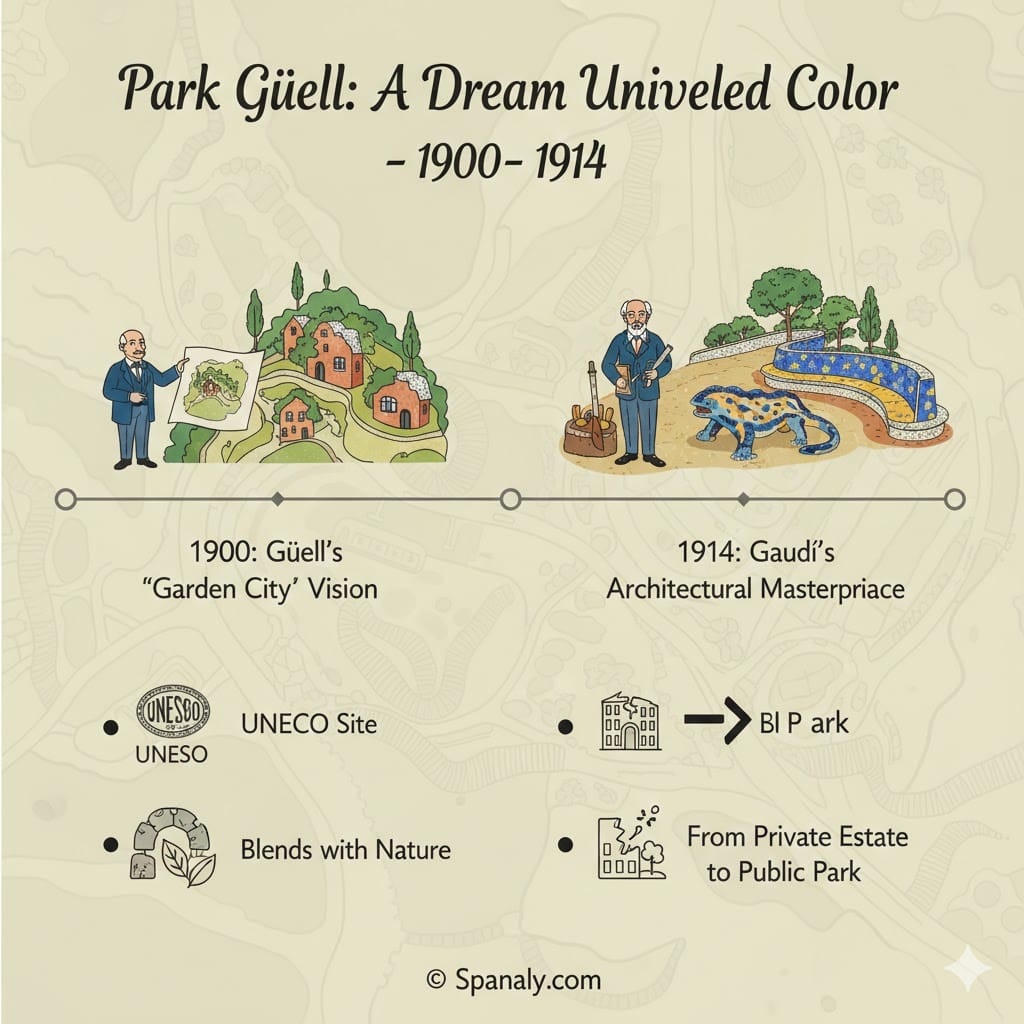
The fascinating story of Park Güell began in the early 20th century when industrial magnate Eusebi Güell envisioned a luxurious “Garden City” on Barcelona’s hills. Furthermore, inspired by the English garden movement, he commissioned the legendary Antoni Gaudí to transform the rugged terrain into a sanctuary of elegance.
🏗️ Evolution of an Architectural Masterpiece:
A Natural Integration: Between 1900 and 1914, Gaudí redefined the landscape with terraces and viaducts that blended perfectly with the environment. Consequently, the park became a pioneer in eco-friendly design long before the term existed.
From Concept to Miracle: In addition, although the residential project was not commercially successful, it evolved into an architectural miracle. This shift allowed the space to become a public treasure rather than a private estate.
Global Recognition: Moreover, this UNESCO World Heritage Site now attracts millions who come to experience its magic. Understanding the origins of such sites is essential for anyone interested in the broader context of Spanish Festivals and cultural heritage.
Therefore, standing amidst these stone structures today, one can truly appreciate how Gaudí’s vision transcended its original purpose to become an eternal symbol of Barcelona.
🌿 The Artistic and Symbolic Vision: Nature as Architecture
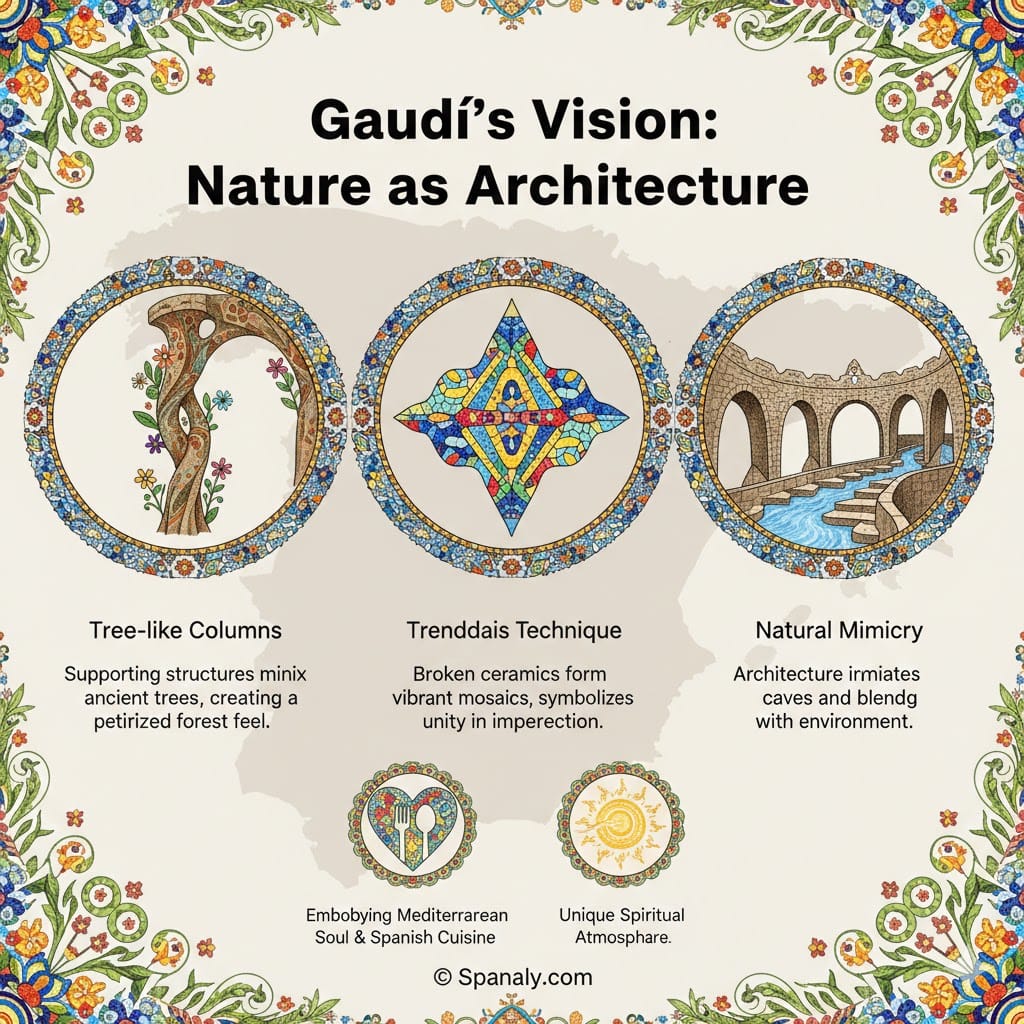
Park Güell is a labyrinth of meaning where every curve reflects a divine cosmic order. Furthermore, Gaudí believed that nature was “God’s architecture,” which led him to reject straight lines in favor of organic, flowing forms.
🌀 Gaudí’s Core Design Principles:
Tree-like Columns: Pillars that mimic ancient trunks supporting the weight of the plazas. Consequently, the structure feels like a petrified forest rather than a man-made building.
The Trencadís Technique: This involves using broken ceramic pieces to create vibrant mosaics. Moreover, it symbolizes how imperfection becomes perfect through unity.
Natural Mimicry: Viaducts are designed to look like mountain caves, and stairways flow like natural streams.
In addition to these architectural marvels, the park offers a unique spiritual atmosphere. Walking through this masterpiece is often considered a highlight of Spanish Cuisine and culture tours, as it embodies the Mediterranean soul.
🏛️ Legacy and Influence: More Than Just Architecture
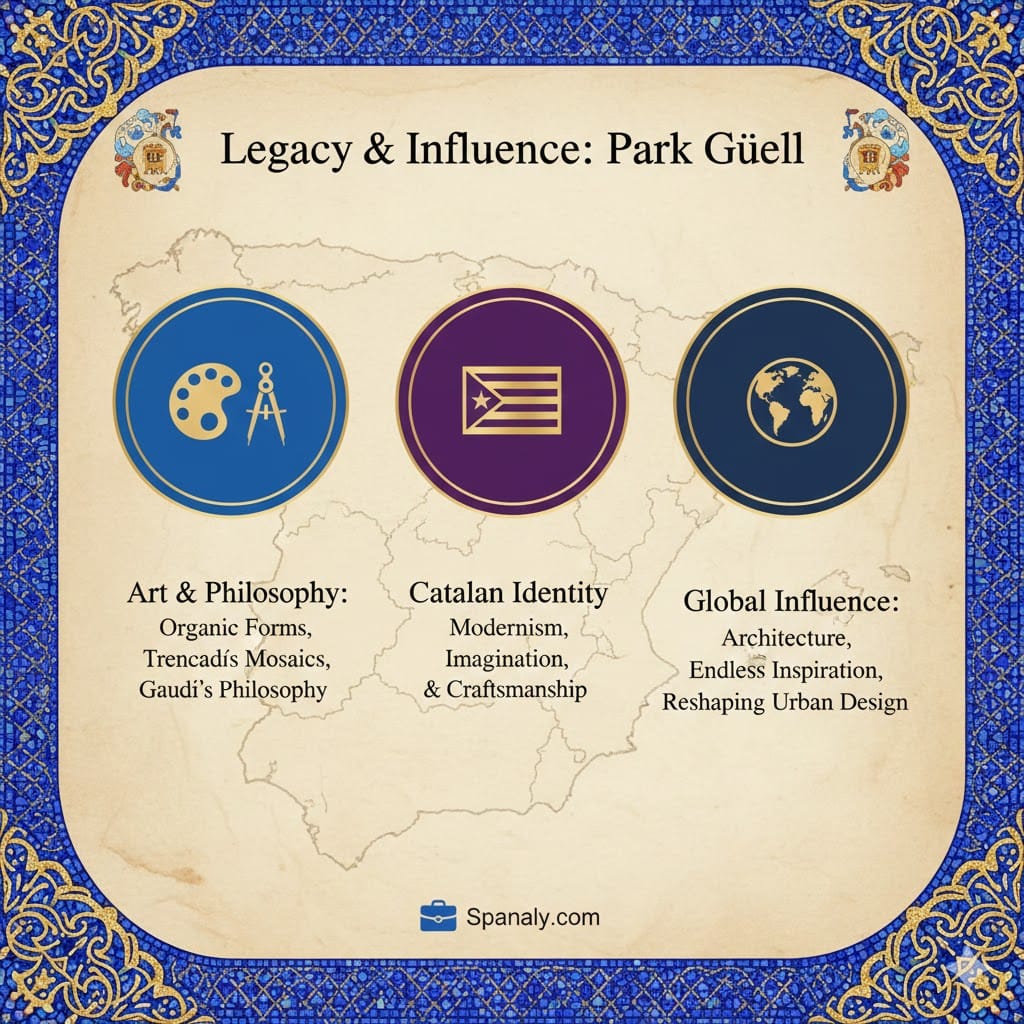
Park Güell bridges the gap between architecture and philosophy, art and spirituality. Furthermore, it embodies the true essence of Catalan Modernism—originality, symbolism, and a deep respect for craftsmanship.
🔹 Why Its Influence Remains Worldwide:
A Global Inspiration: Architects and artists from every corner of the globe find endless inspiration in its organic forms. Consequently, the park’s design language has reshaped modern urban aesthetics.
Symbol of Catalan Identity: For locals, it remains a proud emblem of identity. Moreover, it serves as living proof that imagination can reshape reality through stone and mosaic.
A Cultural Milestone: Therefore, understanding its influence is key to appreciating the broader Spanish Culture and how it celebrates regional artistic movements.
As a result, visiting the park is not just a sightseeing tour; it is a journey into the soul of Catalonia. In addition, the park’s legacy continues to grow as it adapts to the sustainable tourism standards of 2026.
⏰ Best Time to Experience the Magic
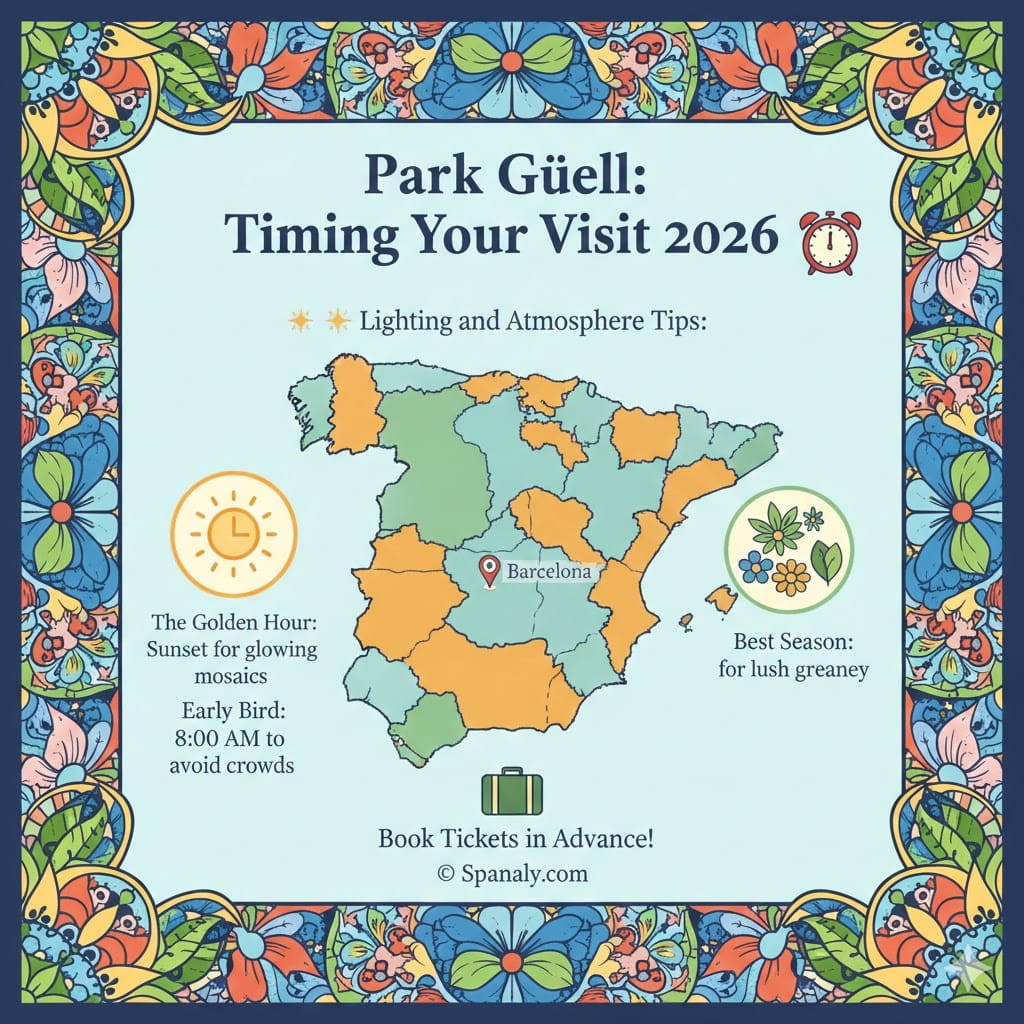
To truly appreciate Gaudí’s genius without the overwhelming crowds of 2026, timing is absolutely essential. Furthermore, understanding the Best Time to Visit Barcelona will help you align your park visit with the city’s most pleasant weather conditions.
✨ Lighting and Atmosphere Tips:
The Golden Hour Mastery: Therefore, visiting during the early morning or late afternoon is highly recommended. The soft light makes the colors of the Serpentine Bench glow with a fiery brilliance, creating a photographer’s paradise.
Strategic Crowd Management: In contrast, midday can be quite busy with tourist groups. Consequently, if you prefer a quiet, contemplative walk, we suggest aiming for the 8:00 AM time slot.
Seasonal Beauty: Moreover, while Barcelona is beautiful year-round, spring offers the most vibrant greenery surrounding the stone structures.
As a result, planning your visit around these specific times will ensure you capture the perfect photographs and feel the true, tranquil essence of the park. Additionally, remember that booking your tickets in advance is mandatory to secure these prime time slots.
📲 Modern Access: Navigating the 2026 Entry System
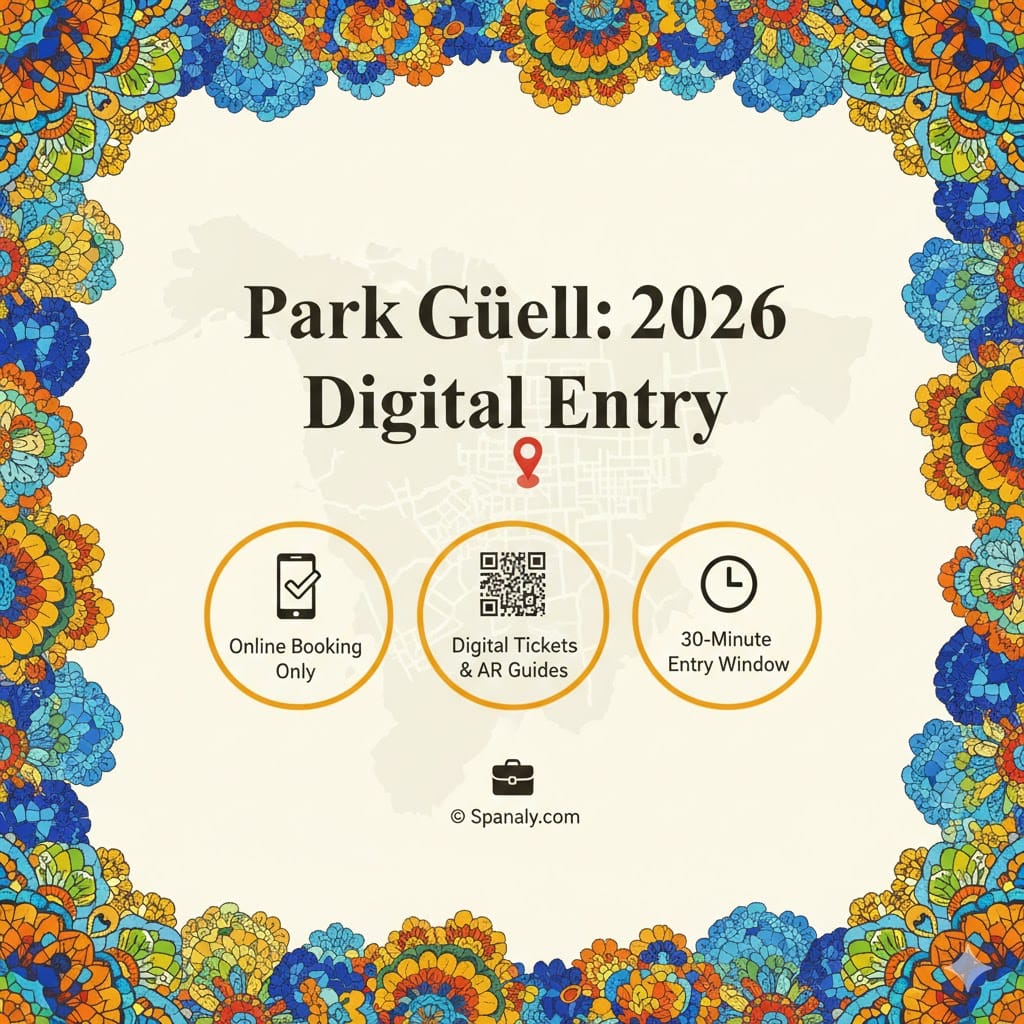
Visiting Park Güell in 2026 requires more than just showing up at the gate. Furthermore, the city of Barcelona has implemented a strictly digital-first approach to preserve this UNESCO site’s integrity.
🔹 Key Requirements for a Smooth Entry:
Mandatory Online Booking: Consequently, there are no physical ticket offices available on-site. You must secure your time slot via the official app or website at least 48 hours in advance.
The Restricted Zone (Zona Monumental): Moreover, while some perimeter areas remain free for locals, the architectural core is a paid experience. Therefore, visitors must respect a strict 30-minute entry window.
Digital Navigation: Additionally, using the Top Tourist Apps in Spain will help you manage your digital tickets and access exclusive augmented reality (AR) guides throughout the park.
As a result, staying updated on these digital requirements is essential for a stress-free visit. In addition, this planning ensures you have more time to enjoy the breathtaking views without worrying about logistics.
🏛️ The Main Highlights: What to See in Park Güell
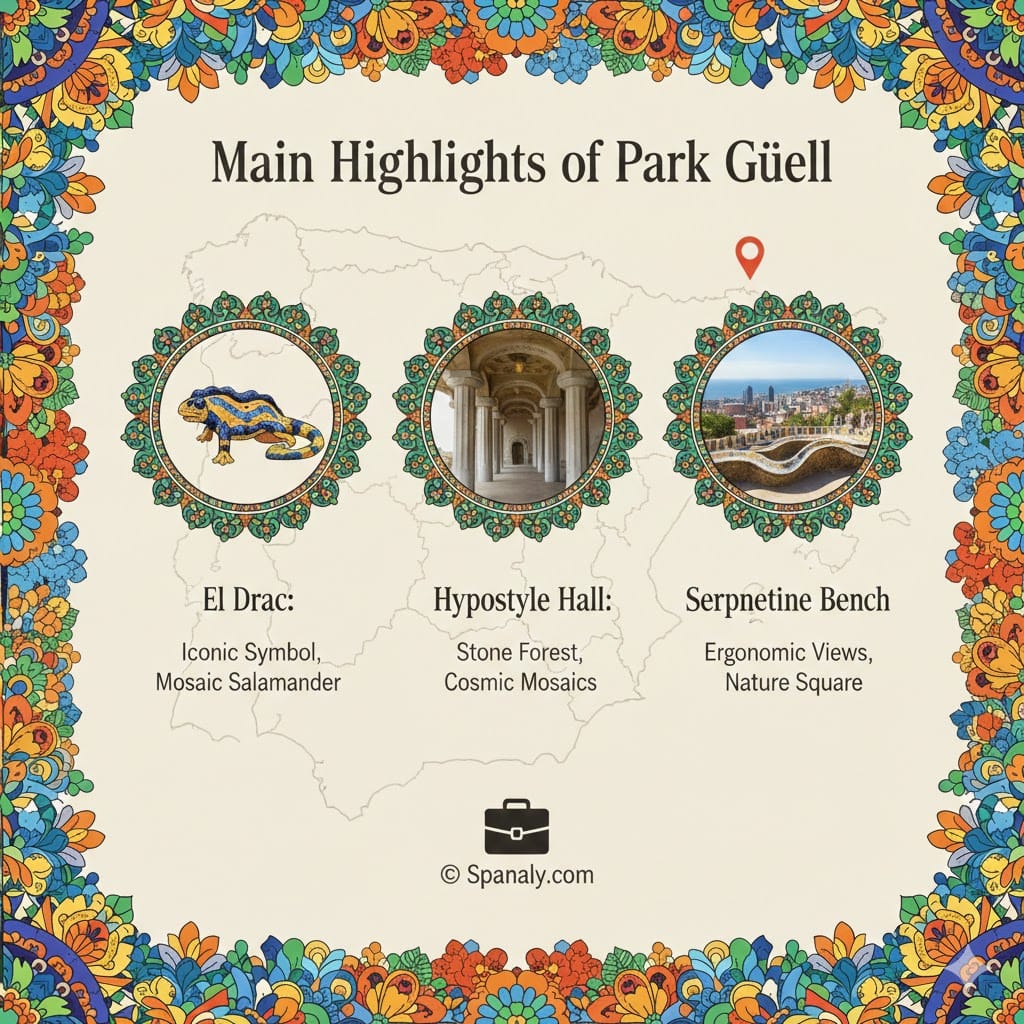
Exploring Park Güell is like walking through a living gallery of modernist genius. Furthermore, to ensure you capture the essence of this site, we have highlighted the must-see landmarks below.
🦎 El Drac: The Iconic Mosaic Salamander
As you enter through the main gates, the Dragon Stairway immediately captures your attention. Moreover, this spot is home to the park’s most famous resident.
The Symbol of Barcelona: “El Drac” is a multicolored salamander adorned in vibrant trencadís mosaics.
A Photographic Icon: Consequently, it remains the most photographed spot in the park, representing the spirit of Catalonia.
Artistic Entrance: The stairway itself sets the tone for the organic shapes you will encounter later.
🏛️ The Hypostyle Hall: A Forest of Stone
Moving further up, you will discover the Hypostyle Hall. Additionally, this grand space was originally envisioned as a bustling market for the residents.
Doric Majesty: The hall features 86 massive columns that resemble a petrified forest.
Celestial Ceilings: Furthermore, look up to find circular mosaics representing the four seasons and lunar cycles.
Acoustic Wonder: The design creates a unique atmosphere, blending monumental architecture with spiritual symbolism.
🎢 The Serpentine Bench and Nature Square
Finally, reach the Plaça de la Natura (Nature Square), the park’s crowning jewel. In addition, this open space offers the best vantage points in the city.
Ergonomic Art: The square is framed by the world’s longest undulating bench, designed perfectly to fit the human form.
Breathtaking Vistas: From this height, you can enjoy a stunning view of the Mediterranean Sea.
A Cultural Hub: Therefore, it is the perfect place to rest while reflecting on your Ultimate Seville Travel Guide or planning your next Spanish adventure.
📍 Practical Information for Your Visit
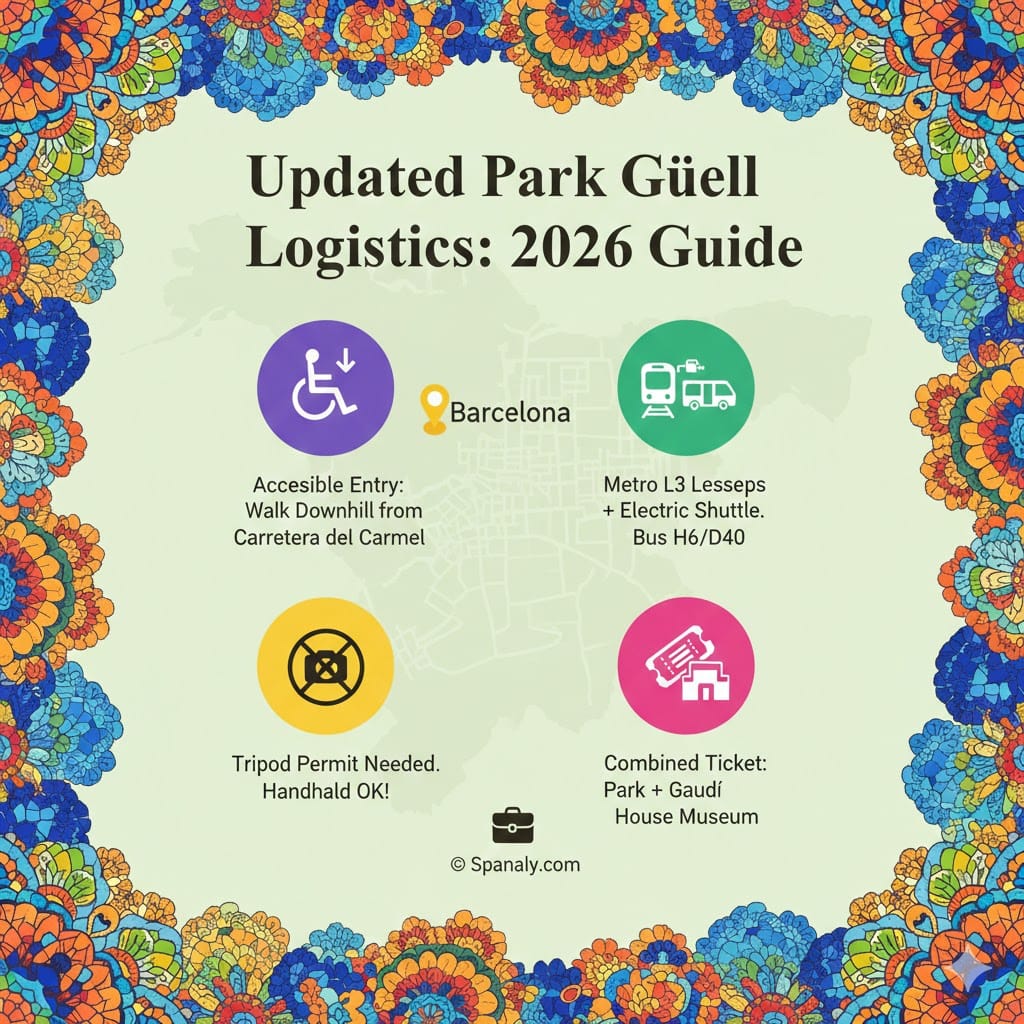
Planning the logistics is the final step to ensuring your trip is seamless. Furthermore, Park Güell’s unique topography on Carmel Hill requires specific strategic choices that go beyond basic transport.
🔹 Updated Logistics for 2026:
♿ Accessibility and Mobility: Consequently, if you have limited mobility, we highly recommend entering through the Carretera del Carmel entrance. Moreover, this gate is at the highest point, allowing you to walk downhill through the monuments instead of climbing.
🚆 Eco-Friendly Transport:
Metro Excellence: Take the Green Line (L3) to Lesseps. Additionally, in 2026, new automated shuttle connections from the station have reduced the uphill walk significantly.
Public Bus Options: Lines H6 and D40 remain reliable. In contrast, the “Bus Güell” now operates as a 100% electric shuttle, exclusive to digital ticket holders.
📸 2026 Photography Rules: Therefore, be aware that tripod usage now requires a special permit to protect the mosaic floors. Nonetheless, standard handheld photography for personal use is fully encouraged.
🎟️ Ticket Insights: While a standard adult ticket is around €10, furthermore, combined tickets that include the Gaudí House Museum (Casa Museu Gaudí) offer better value for art enthusiasts.
As a result, having these updated details ready will save you time and energy. In addition, for those planning a broader itinerary, our guide on Spanish Festivals offers great tips on how to time your visit with local Catalan celebrations.
🍴 Dining & Relaxation: Where to Recharge Nearby
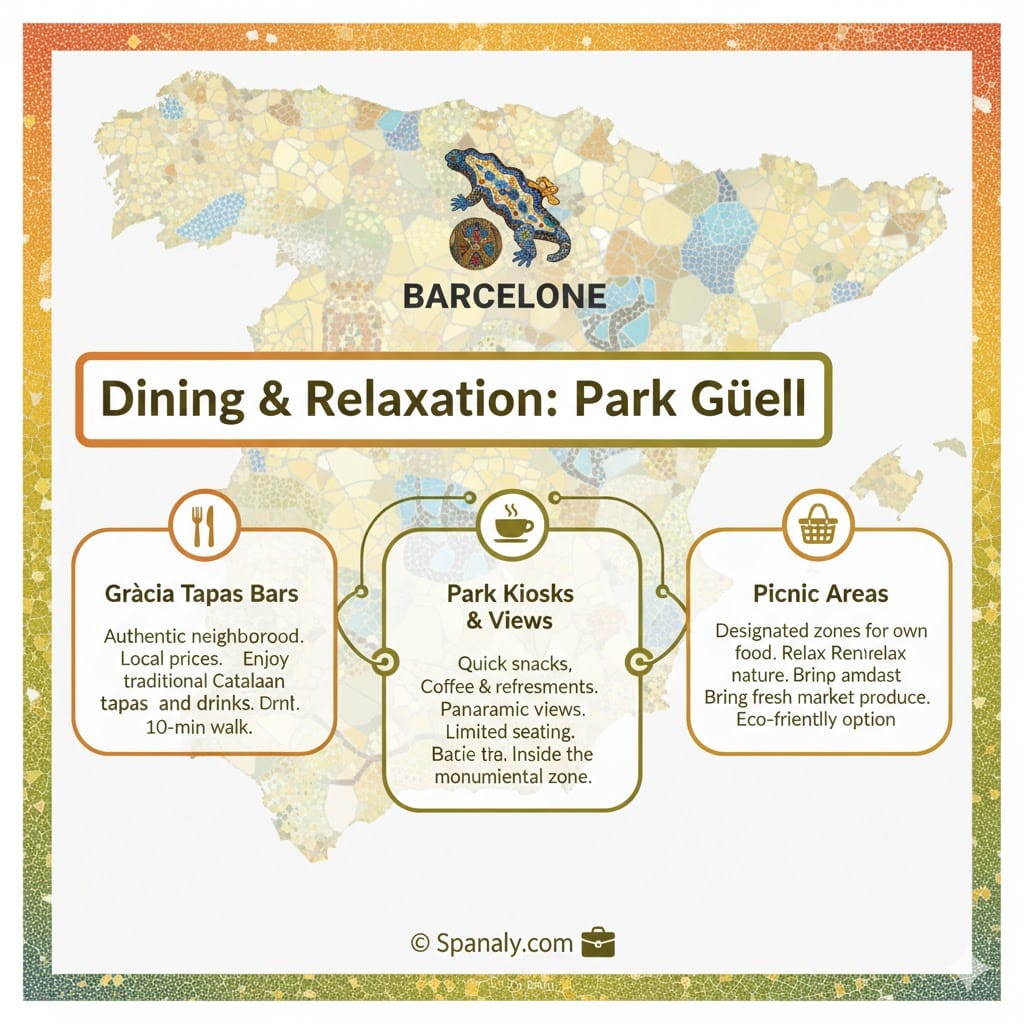
Exploring the vast and hilly terrain of Park Güell can be exhausting. Furthermore, knowing where to find the best local spots to refuel is key to a perfect day. Consequently, we have selected the best options for every type of traveler.
🔹 Your Guide to Eating Around Park Güell:
The Local Experience in Gràcia: Just a short walk downhill lies the vibrant Gràcia district. Moreover, this neighborhood is famous for its authentic plazas and traditional tapas bars that avoid the typical tourist prices.
On-Site Refreshments: Inside the park, you will find small kiosks for quick snacks. Additionally, these spots are ideal for a refreshing drink while enjoying the panoramic views of Barcelona.
Al Fresco Dining: For those who prefer a quiet moment, the park offers designated picnic areas. Therefore, bringing your own snacks allows you to soak in the atmosphere at your own pace.
As a result, you won’t just find a place to eat, but a way to experience Catalan hospitality. In addition, to ensure you feel confident at any table, check our guide on How to Order Food Like a Local in Spain for essential tips and phrases.
💡 Visitor Tips for an Unforgettable Experience
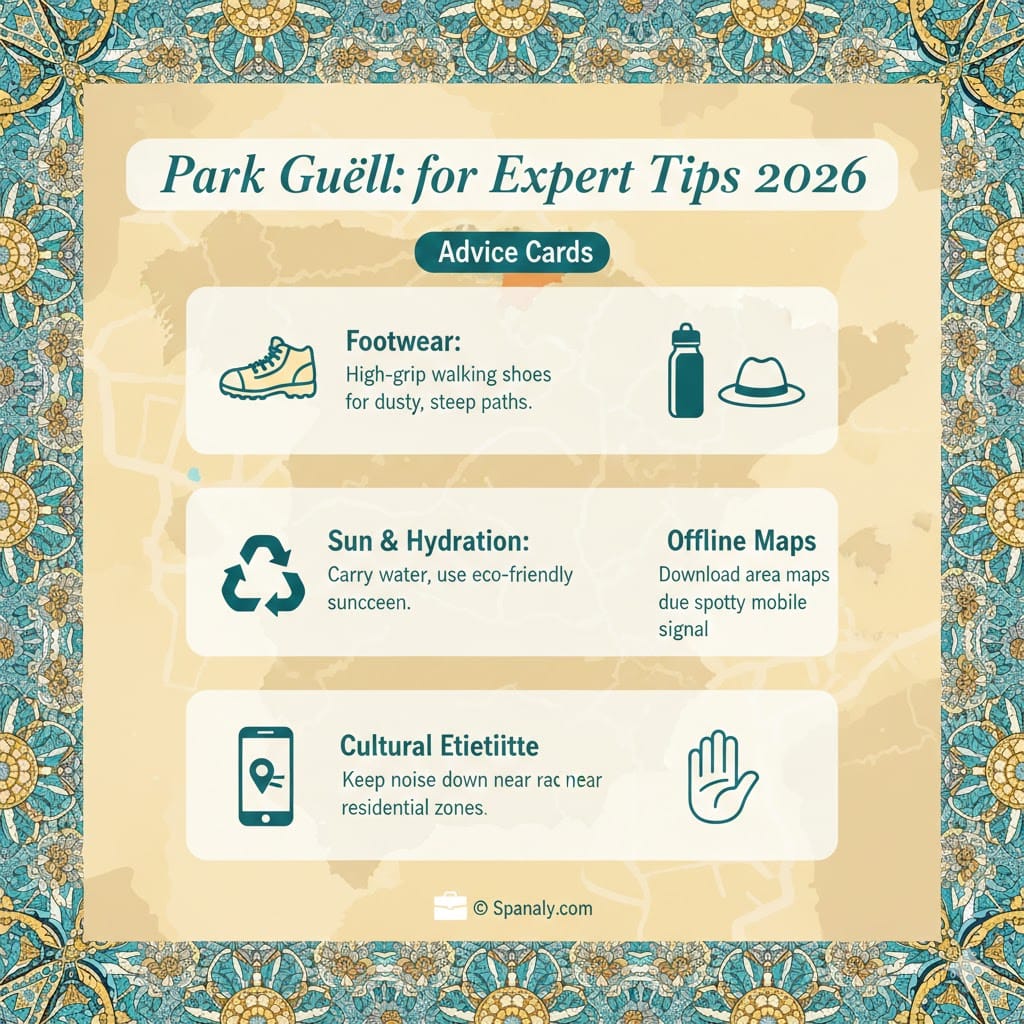
To truly master your visit to Park Güell in 2026, you need more than just a ticket. Furthermore, these insider tips will help you navigate the crowds and the unique terrain like a professional traveler.
🔹 Pro Tips for a Seamless Visit:
Footwear Strategy: Consequently, the park’s paths consist of stabilized gravel and steep stone steps. Therefore, wearing high-grip walking shoes is essential to navigate the dusty inclines safely and comfortably.
Hydration and Sun Safety: Moreover, many sections of the park offer limited shade. Additionally, we highly recommend carrying a reusable water bottle and applying sunscreen, as the Mediterranean sun can be intense even in the shoulder seasons.
Connectivity & Navigation: Since mobile signals can be weak in the higher zones, consequently, downloading an offline map is a smart move. This ensures you won’t miss hidden gems like the Turó de les Tres Creus viewpoint.
Cultural Etiquette: As a result of being located near residential areas, keeping noise levels down is appreciated by locals. Moreover, this helps maintain the serene and spiritual atmosphere Gaudí intended for the park.
In addition, to ensure every aspect of your trip is covered, from safety to local customs, make sure to read our Essential Spain Travel Tips before you pack your bags.
🌟 Essential Visitor FAQs – Park Güell 2026
✨ Your Journey into Gaudí’s Masterpiece
In conclusion, Park Güell is far more than a scenic viewpoint; it is a profound testament to how art can harmonize with nature. Furthermore, as we navigate through 2026, the park continues to stand as a beacon of sustainable tourism and creative genius that remains unmatched.
🔹 Why This Visit Matters:
A Sensory Escape: From the vibrant colors of the Trencadís mosaics to the organic curves of the stone columns, every corner tells a story. Consequently, you leave the park with a renewed sense of wonder.
Cultural Connection: Moreover, by following the updated logistics and respect protocols, you ensure that this UNESCO World Heritage site remains preserved for future generations.
Timeless Inspiration: Therefore, whether you are a first-time visitor or a returning admirer, the park’s evolution ensures there is always something new to discover.
As a result, your visit to Barcelona wouldn’t be complete without experiencing this “dream in stone.” In addition, if you are planning to explore more of Catalonia’s capital, don’t forget to check our Ultimate Barcelona Travel Guide for hidden gems and local secrets.