👋 Valencia: Where History Meets the Future
Valencia, Spain’s third-largest city, is a captivating blend of ancient heritage and futuristic innovation. Located on the sun-kissed eastern coast, it offers travelers a unique Mediterranean charm that perfectly balances tradition with modern creativity. Consequently, this Valencia Travel Guide 2026 helps you navigate its diverse landscape effortlessly.
🏛️ Architectural Fusion: Explore the avant-garde City of Arts and Sciences alongside the charming medieval Old Town.
🥘 Culinary Birthplace: Taste the most authentic flavors in the undisputed home of Spanish Paella.
✨ Vibrant Lifestyle: Enjoy golden beaches and world-class festivals like Las Fallas throughout the year.
Additionally, if you plan to extend your journey, our Ultimate Spain Travel Guide provides the perfect overview for your entire trip. Whether you seek history, food, or relaxation, Valencia invites you to a city where the past and future coexist in harmony.
Spanaly Insight: Valencia is officially one of Europe’s greenest cities. Interestingly, the city transformed its former riverbed into a 9-km lush park that now serves as the city’s “green lungs.”
🏛️ A Glimpse into History: A Mediterranean Legacy
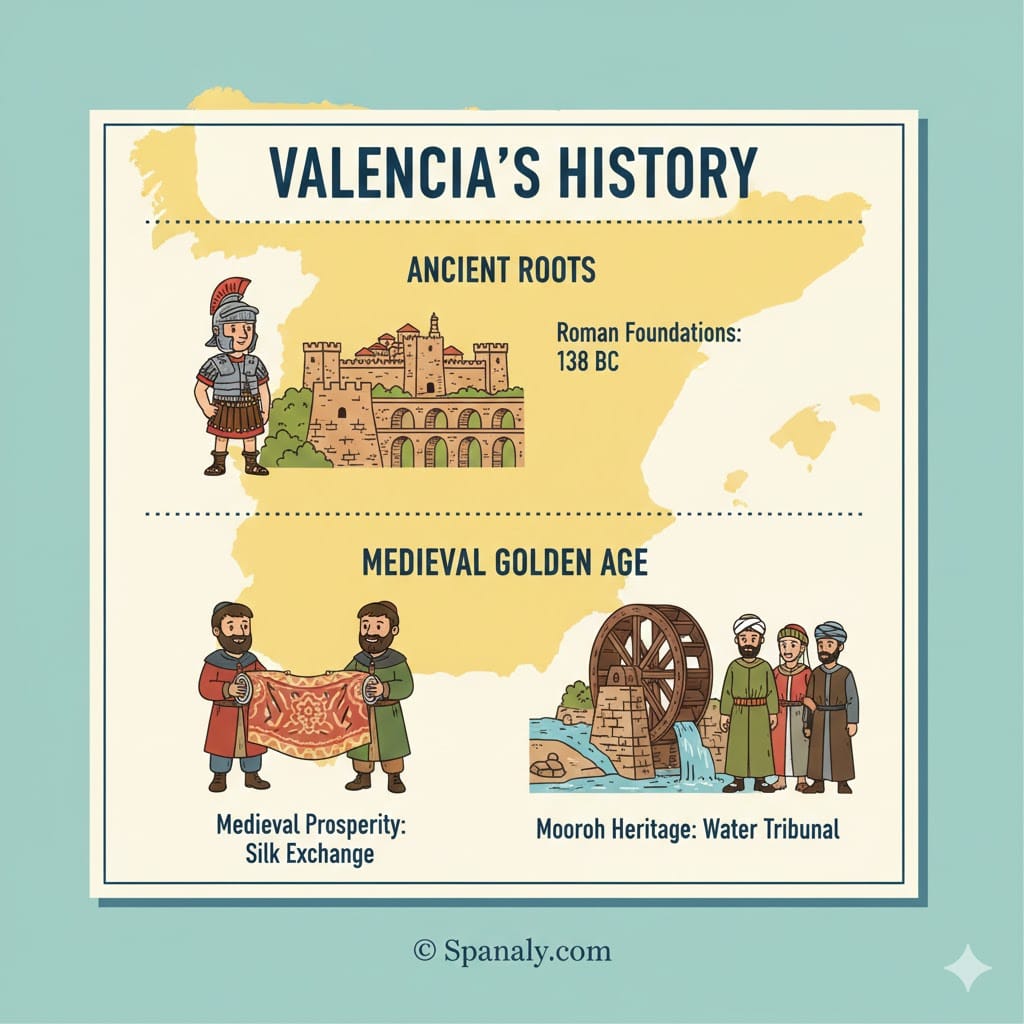
Valencia’s history dates back to 138 BC when the Romans founded it as a strategic settlement along the Turia River. Over centuries, Roman, Visigoth, Moorish, and Christian influences shaped the city’s unique architectural and social fabric. Consequently, every corner of the Old Town serves as a living museum.
Roman Foundations: Remnants of ancient city walls and aqueducts still speak of Valencia’s origins as a vital Mediterranean outpost.
Medieval Prosperity: During the 15th century, the silk trade transformed Valencia into a major European commercial hub, best represented by the UNESCO-listed La Lonja de la Seda.
Moorish Heritage: The Moors introduced innovative irrigation systems to the surrounding fertile lands (La Huerta), a tradition that survives today through the “Water Tribunal.”
Furthermore, this historical depth is visible in the fusion of Gothic, Baroque, and Modernist styles found across the city. To understand how these sites fit into the broader national heritage, check our guide to Spanish Attractions for a deeper cultural perspective.
Spanaly Pro Tip: Visit the Almoina Museum to walk over transparent glass floors directly above the original Roman ruins of the city. It is the best way to visualize Valencia’s 2,000-year-old foundations!
🏛️ Top Attractions: From Gothic Spires to Space-Age Domes
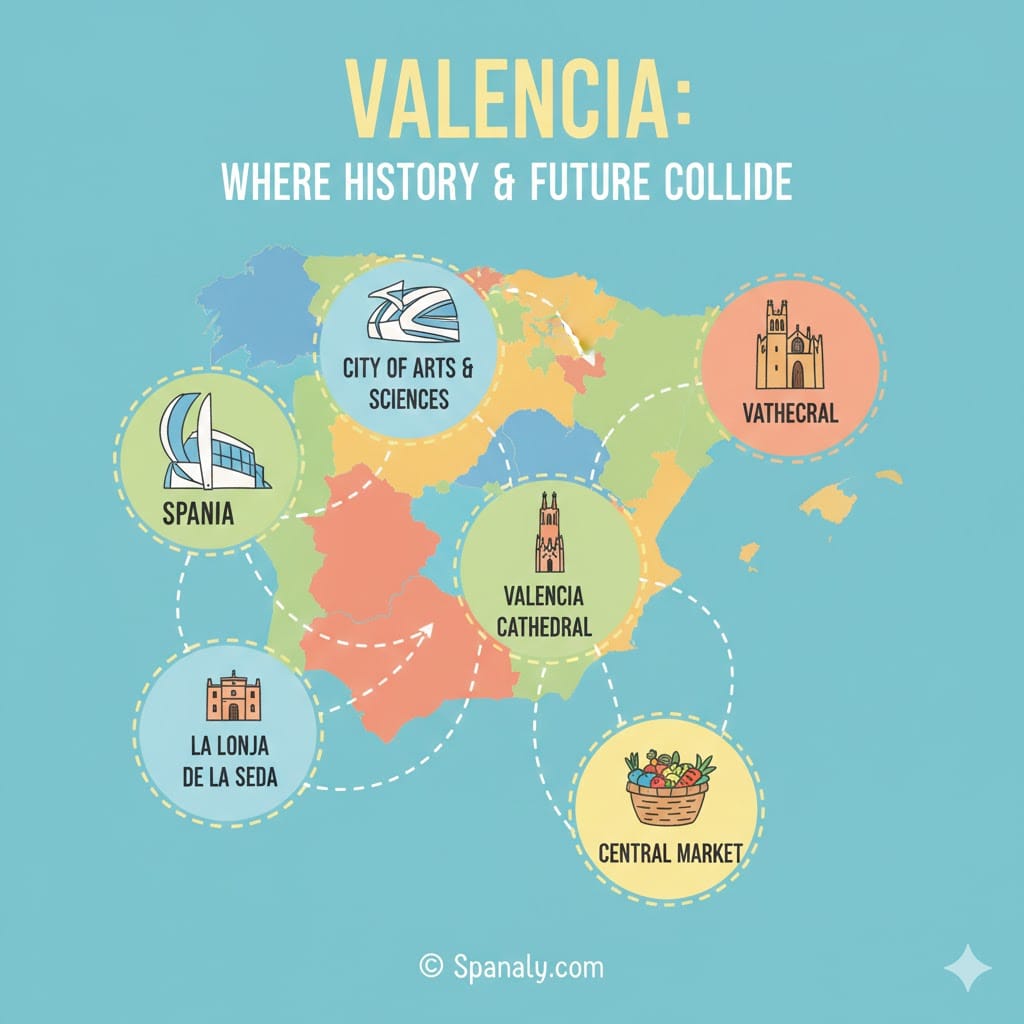
Valencia offers a visual journey that spans centuries. Consequently, you can explore futuristic marvels and medieval masterpieces within a single afternoon. To maximize your experience, you should visit these iconic landmarks:
🚀 City of Arts and Sciences: This avant-garde complex is the crown jewel of modern Spain. It features the Oceanogràfic (Europe’s largest aquarium) and the stunning Hemisfèric cinema.
⛪ Valencia Cathedral: A masterpiece where Gothic and Baroque styles meet. Interestingly, it houses the legendary Holy Grail. Climb the Miguelete Tower for the city’s best panoramic views.
📜 La Lonja de la Seda: This UNESCO-listed 15th-century silk exchange showcases the city’s golden age. Its spiraling columns are a must-see for architecture lovers.
🍅 Central Market: One of Europe’s oldest and most beautiful food markets. Moreover, its Modernist design makes it the perfect spot for authentic local snacks.
If you enjoy exploring urban gems like these, our Seville Travel Guide offers a similar deep dive into another of Spain’s most historic and beautiful cities.
Spanaly Pro Tip: Visit the Central Market early (around 9:00 AM) to experience the local buzz before the tourist crowds arrive and to get the freshest produce.
🌳 Ruzafa & Turia: Experiencing the Local Vibe
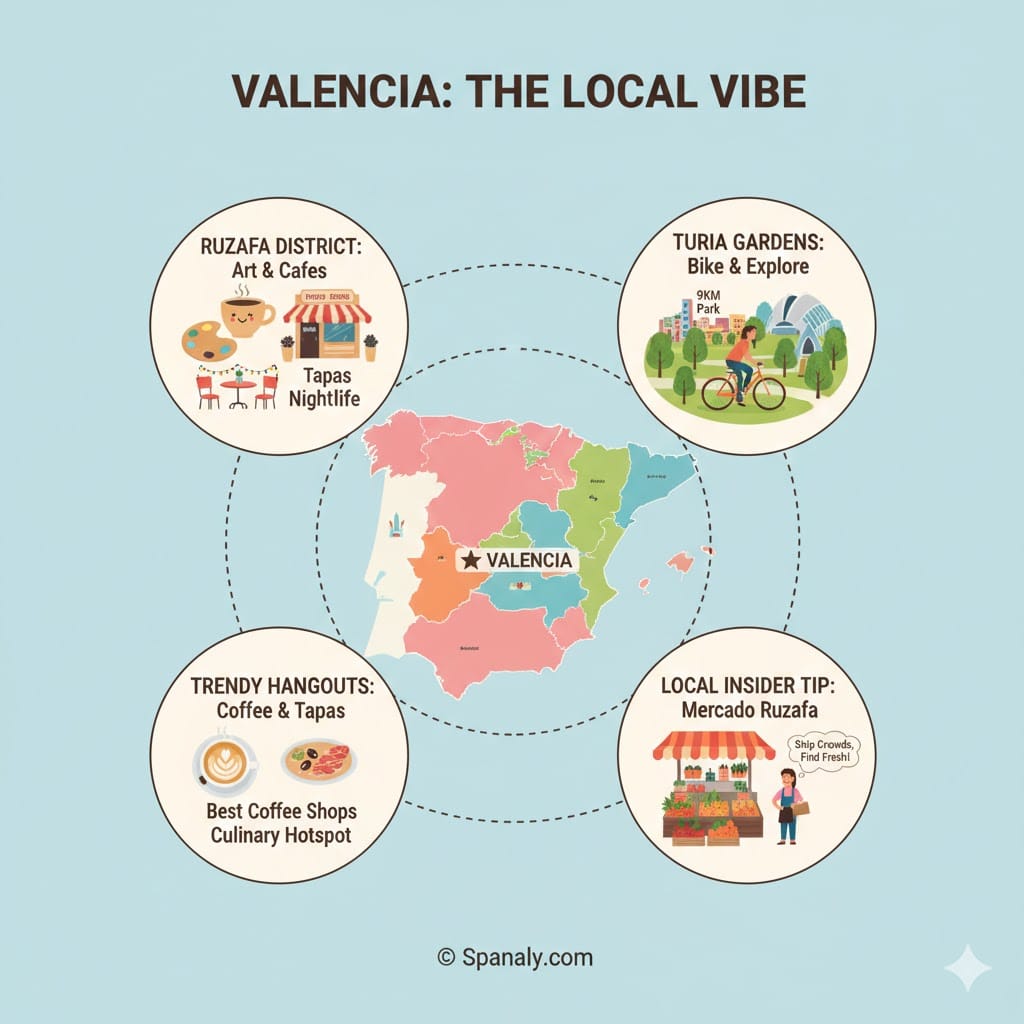
To feel Valencia’s real pulse, you must explore where the locals live and play. These two spots offer the most authentic glimpse into the city’s modern Mediterranean lifestyle.
🎨 Ruzafa District: Often called the “Soho of Valencia.” It’s a vibrant hub for indie art galleries and vintage boutiques.
☕ Trendy Hangouts: You will find the city’s best specialty coffee shops here. By night, Ruzafa turns into a culinary hotspot with lively tapas terraces.
🚲 Turia Gardens: A 9-km former riverbed turned into a lush urban park. It is the perfect “green lung” for the city.
🏃 Local Activities: We highly recommend renting a bike. It is the best way to explore the path from the Old Town to the futuristic City of Arts and Sciences.
Understanding the local rhythm is key to a great trip. To ensure you blend in perfectly, check our guide on Cultural Etiquette in Spain before your visit.
Spanaly Insider Tip: Skip the crowds and visit Mercado de Ruzafa. It offers a more intimate look at local life and fresh ingredients compared to the main Central Market.
🎭 Cultural Highlights & Festivals
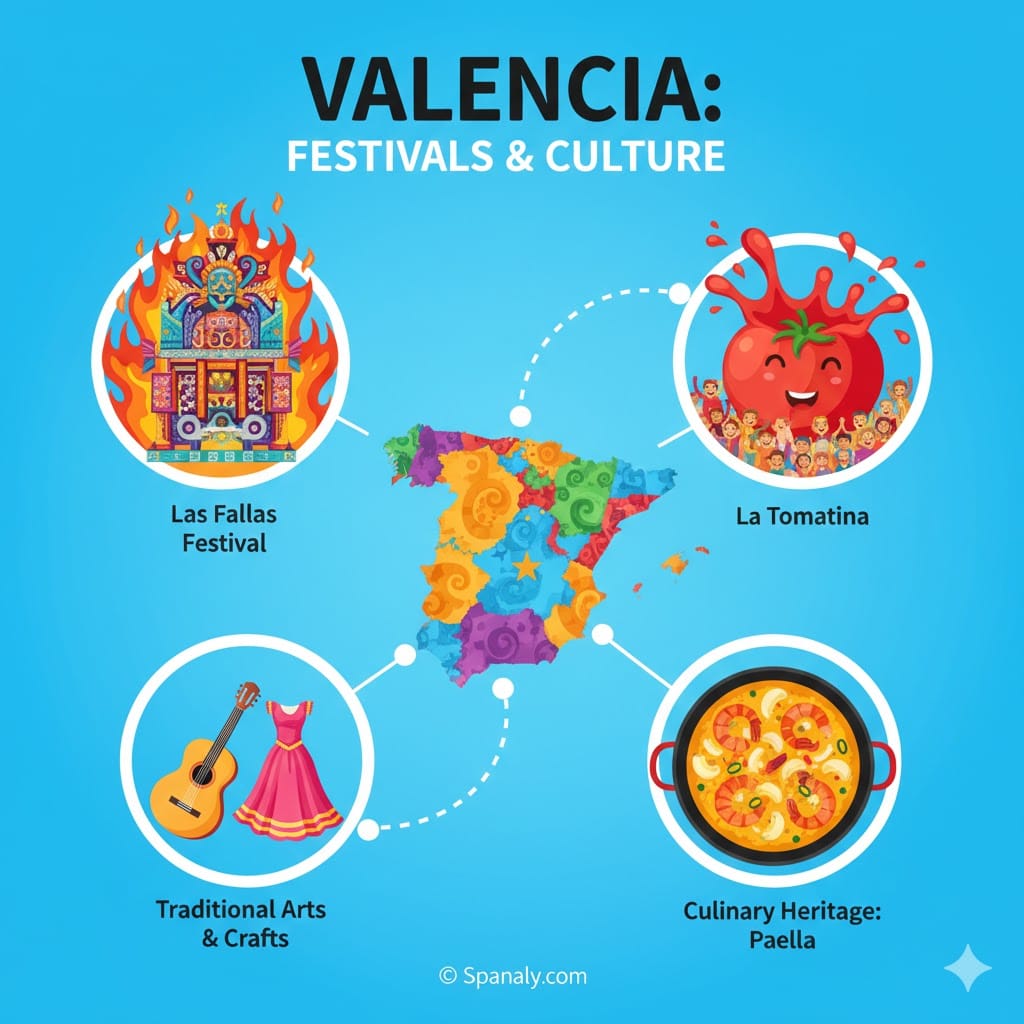
Valencia is a city that knows how to celebrate. From religious processions to explosive street parties, the cultural calendar is packed with energy and tradition.
🔥 Las Fallas Festival: A UNESCO-listed event held every March. The city fills with giant wooden monuments that are eventually burned in a spectacular display of fire and art.
🍅 La Tomatina: Located in the nearby town of Buñol, this world-famous tomato-throwing festival attracts thousands of thrill-seekers every August.
💃 Traditional Arts: Beyond festivals, Valencia is a hub for Spanish crafts. You can find exquisite ceramics and traditional silk garments in local artisan workshops.
🥘 Culinary Heritage: While festivals bring the noise, the food brings the soul. The city is the birthplace of Paella, a dish that defines Spanish Cuisine globally.
Experiencing these events is the best way to witness the passion of the locals. If you’re planning your trip around these dates, understanding Spanish Festivals will help you navigate the crowds and traditions like a pro.
Spanaly Pro Tip: For Las Fallas, book your accommodation at least 6 months in advance. The city becomes incredibly crowded, and prices triple during the final week of the festival.
🏨 Stay & Savors: Accommodation and Dining
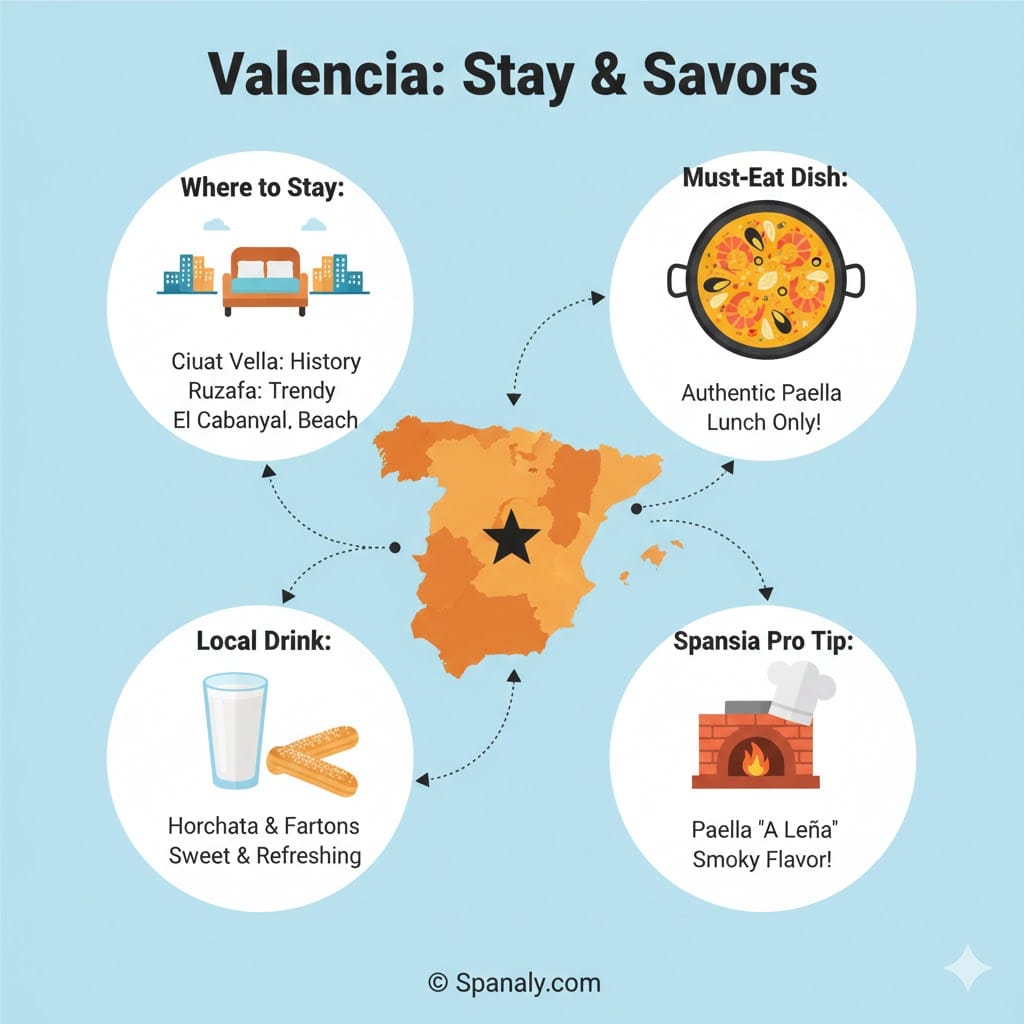
Choosing the right base and tasting authentic flavors are essential for a perfect Valencia trip. Here is how to navigate the city’s hospitality:
🛏️ Best Areas to Stay:
Ciutat Vella: Best for first-timers who want to be near historic sites.
Ruzafa: Ideal for those seeking a trendy, local, and artistic atmosphere.
El Cabanyal: Perfect if you prefer being close to the Mediterranean beaches.
🥘 The Must-Eat Dish: You cannot leave without trying Authentic Paella. Remember, locals eat it for lunch, never dinner!
🍹 Local Drink: Try Horchata, a refreshing tiger nut milk, traditionally served with sweet “fartons” pastries.
If you are still deciding on the vibe you prefer for your Spanish adventure, comparing these neighborhoods with our guide on Where to Stay in Madrid will help you understand the unique character of each city’s districts.
Spanaly Pro Tip: For the best Paella, look for restaurants that cook it over a wood fire (a leña). This traditional method gives the dish its famous smoky flavor and perfect “socarrat” (caramelized rice).
🚲 Getting Around: Seamless Transportation
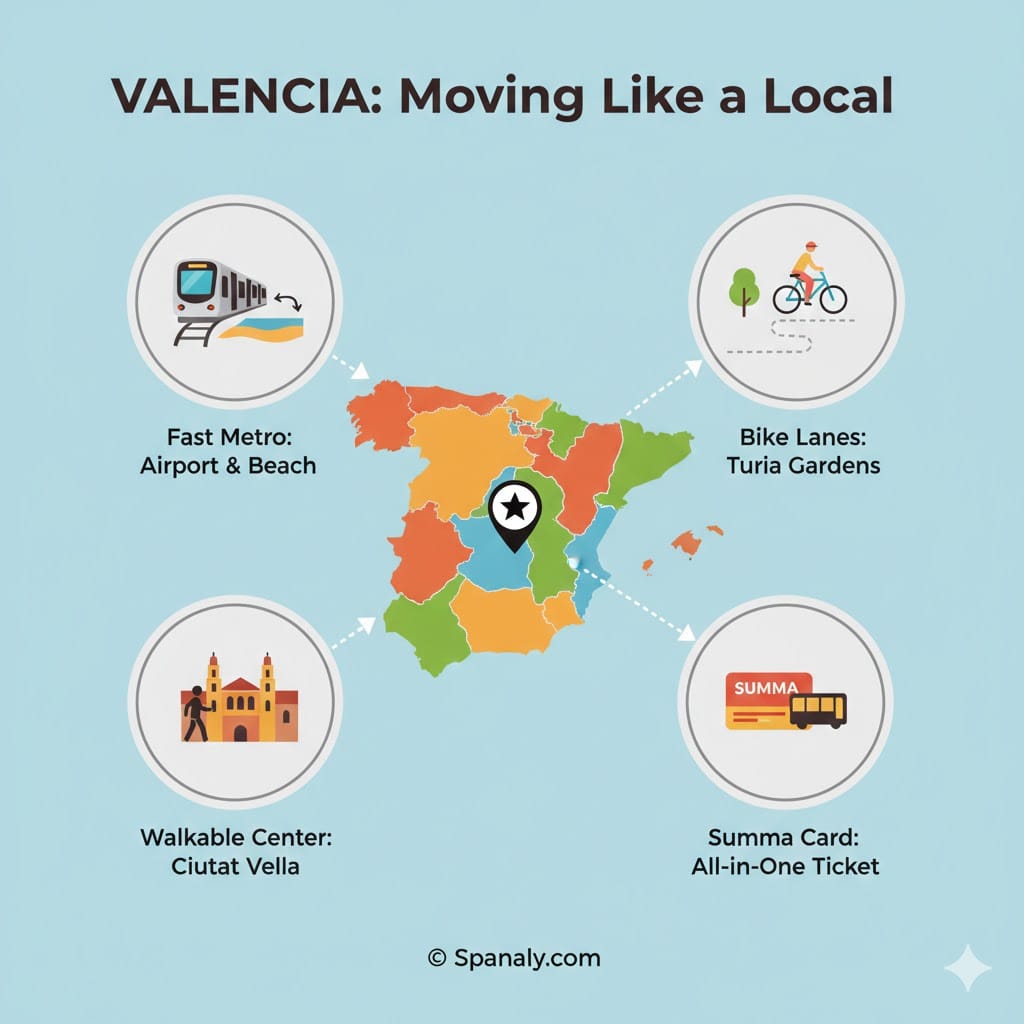
Valencia is a compact and flat city, making it incredibly easy to navigate. Whether you prefer eco-friendly cycling or efficient public transit, the city is designed for smooth movement.
🚇 Metro & Tram: The fastest way to travel from Valencia Airport (VLC) directly to the city center or the Mediterranean seaside.
🚲 Valenbisi & Biking: With over 150 km of dedicated lanes, renting a bike is the most scenic way to explore, especially through the Turia Gardens.
🚶 Walkability: The historic “Ciutat Vella” is a pedestrian paradise. Most landmarks are within a comfortable 15-minute walk.
🚌 Public Bus (EMT): An extensive network that reaches every corner where the metro doesn’t, including direct lines to the beach.
Understanding the local system is just one part of your journey. For a broader view of the country’s infrastructure, check our guide on Getting Around Spain to master the trains, buses, and flights between cities.
Spanaly Pro Tip: Get the Summa Card. It allows you to combine Metro, Bus, and Tram on a single ticket, saving you money and the hassle of buying multiple passes.
🚗 Day Trips: Beyond the City Limits
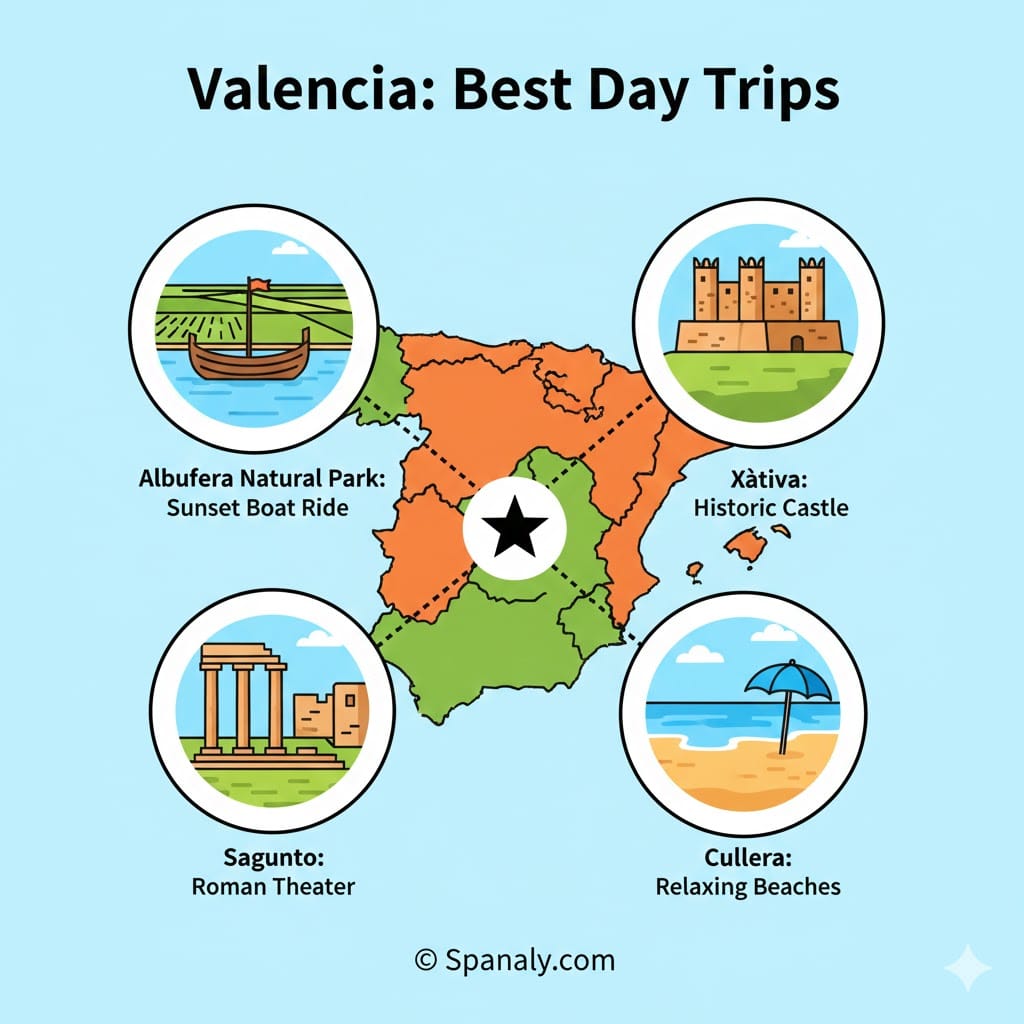
If you have extra time, the region surrounding Valencia offers stunning natural escapes and historic towns. These day trips are easily accessible and provide a refreshing change of pace.
🌊 Albufera Natural Park: Just 10 km from the city. It is home to Spain’s largest lake and pristine rice fields. We recommend a sunset boat ride for a truly magical experience.
🏰 Xàtiva: A historic town famous for its magnificent hilltop castle. It offers breathtaking views and a deep dive into Spanish medieval history.
🏺 Sagunto: Visit the ancient Roman theater and the massive fortress overlooking the Mediterranean. It is a must for history buffs.
🏖️ Cullera: Perfect for those seeking golden sandy beaches and a relaxed coastal vibe away from the urban center.
Exploring these nearby gems is easy with a rental car or local trains. For more inspiration on building the perfect Spanish itinerary, don’t miss our guide to Spanish Attractions to see the best landmarks the country has to offer.
Spanaly Pro Tip: When visiting Albufera, try the “All i Pebre” (eel and potato stew). It is a local delicacy often overshadowed by Paella but equally delicious.
💡 Practical Travel Tips: Master Your Valencia Trip
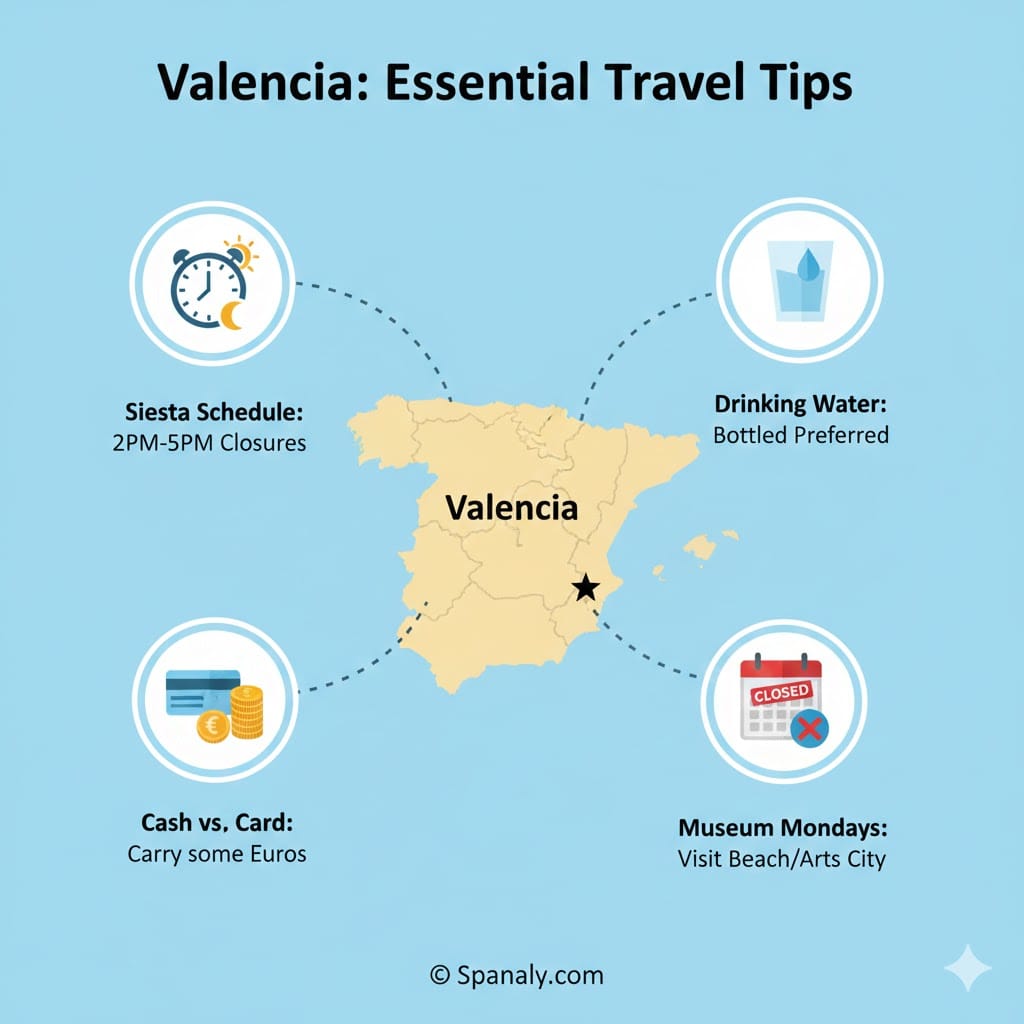
To ensure your visit is as smooth as possible, we have gathered these essential “insider” tips that every traveler should know before arriving in the city.
🕒 The “Siesta” Schedule: Valencia strictly follows the mid-afternoon break. Most local shops and small businesses close between 2:00 PM and 5:00 PM. Plan your shopping accordingly!
💧 Drinking Water: The tap water in Valencia is safe to drink but has a strong mineral taste. Most locals prefer bottled water for drinking, but you can use tap water for cooking and coffee.
💳 Cash vs. Card: While cards are accepted almost everywhere, it is always wise to carry a few Euros for small tapas bars or traditional markets like Mercado Central.
🔌 Stay Connected: Public Wi-Fi is available in major plazas, but for a stress-free journey, ensuring you have local data is key. This is a vital part of Getting Around Spain comfortably.
🎫 Museum Mondays: Most municipal museums and monuments are closed on Mondays. Plan to visit the City of Arts and Sciences or the beach on this day instead.
Spanaly Pro Tip: When dining out, “Propina” (tipping) isn’t mandatory in Valencia. However, leaving 5-10% for exceptional service in sit-down restaurants is a kind gesture that locals appreciate.
🔍 Visitor FAQs – Valencia Travel Guide 2026
1. Is the Valencia Tourist Card (VTC) worth buying?
2. What is the best month to visit Valencia for festivals?
3. Can I swim at Valencia's city beaches all year round?
4. Is Valencia a safe city for solo female travelers?
5. Are shops open on Sundays in Valencia?
6. What is the traditional souvenir to buy in Valencia?
✨ Your Valencia Adventure Awaits
Valencia is more than just a destination; it is a lifestyle where tradition meets the future. Here is why your next trip should be here:
🏗️ Architectural Marvels: Experience the contrast between the futuristic City of Arts and Sciences and the ancient Roman roots of the city.
🏖️ Coastal Bliss: Relax on wide, golden sandy beaches just minutes away from the vibrant urban center.
🥘 Culinary Excellence: Taste the history of Spain in every bite of an authentic, wood-fired Paella.
🌳 Green Spaces: Cycle through the Turia Gardens, one of the largest urban parks in Europe.
As you plan your Spanish journey, remember that every city has its own soul. If you love Valencia’s coastal vibe, you might also enjoy the royal elegance of the capital. Explore our Ultimate Madrid Travel Guide to compare these two icons and craft your perfect itinerary.
Final Spanaly Pro Tip: The true magic of Valencia is found in the “slow moments”—a long lunch by the sea, a sunset walk, and the warm smiles of the locals. ¡Buen viaje!