🏛️ Seville : The Heart of Andalusia
Seville is a city that lives and breathes history, art, and passion. Set in the sun-drenched heart of Andalusia, it is a place where civilizations have overlapped for more than two thousand years, leaving behind a rich cultural mosaic unlike anywhere else in Spain.
🌸 A Sensory Journey: Walking through Seville feels like stepping into a living storybook filled with Moorish palaces and orange-scented courtyards.
💃 Emotional Soul: More than just a destination, it is an emotional experience where flamenco rhythms rise from hidden patios.
🌞 Timeless Beauty: From golden plazas to shimmering historic quarters, the city invites you to slow down and truly feel Spain’s soul.
Whether you are starting your journey here or planning a larger trip, our Ultimate Spain Travel Guide provides the perfect context for your adventure. Our 2026 Seville travel guide awaits you!
📜 A Glimpse into History: A Mediterranean Legacy
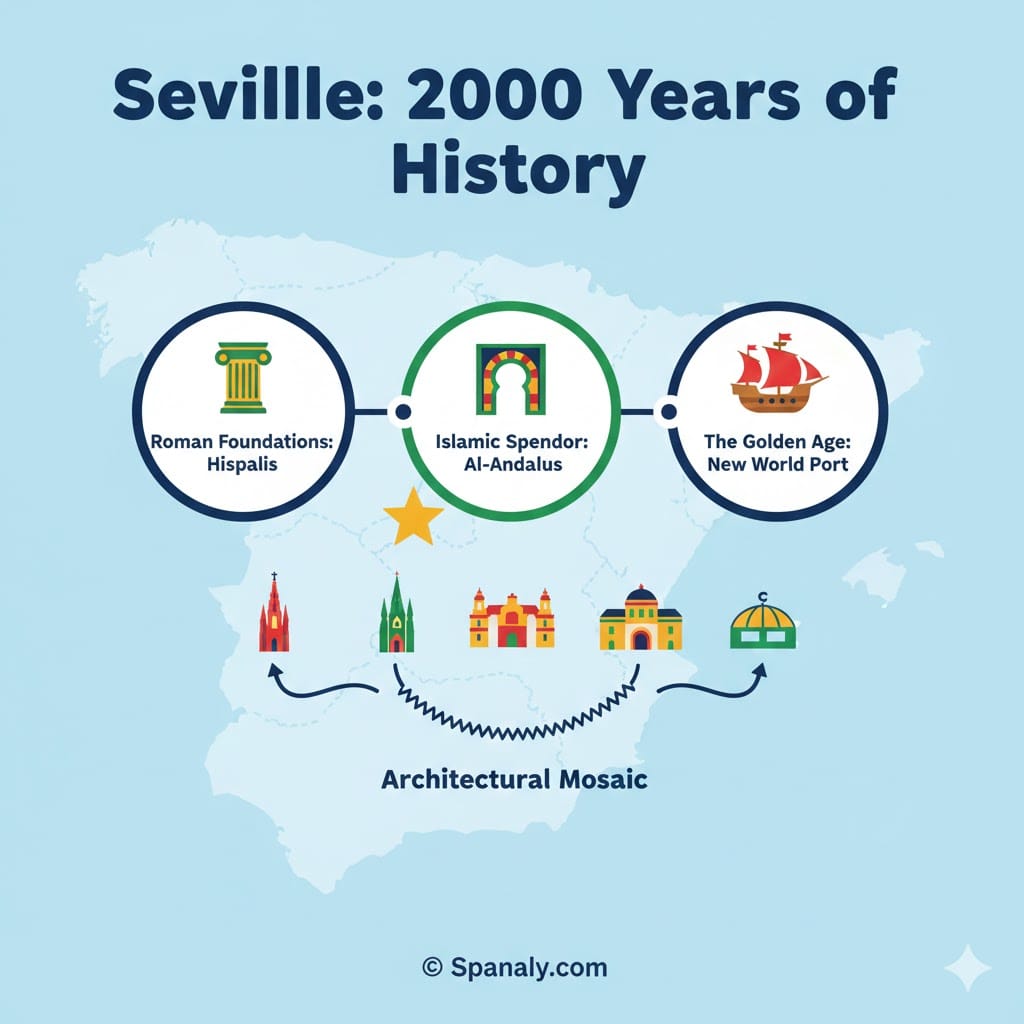
Seville’s story stretches back over two millennia, evolving from a Roman settlement into one of the world’s most influential cities.
🏺 Roman Foundations: Founded as Hispalis, the city served as a vital strategic outpost along the Turia River.
🕌 Islamic Splendor: Under Moorish rule, Seville flourished as a cultural hub. This legacy is still visible in the horseshoe arches and intricate azulejo tiles found throughout the city.
🚢 The Golden Age: Following the Christian Reconquista, Seville became Spain’s main port to the New World in the 16th century, transforming into a global trade center.
🎨 Architectural Mosaic: Today, the city seamlessly blends Gothic grandeur, Renaissance elegance, and modern creativity.
To understand how this history fits into the national picture, explore our guide to Spanish Attractions for a deeper cultural perspective.
Spanaly Pro Tip: Visit the Almoina Museum to walk over transparent glass floors directly above the original Roman ruins. It is the best way to visualize the city’s 2,000-year-old foundations.
📅 Best Time to Visit: Weather & Iconic Festivals
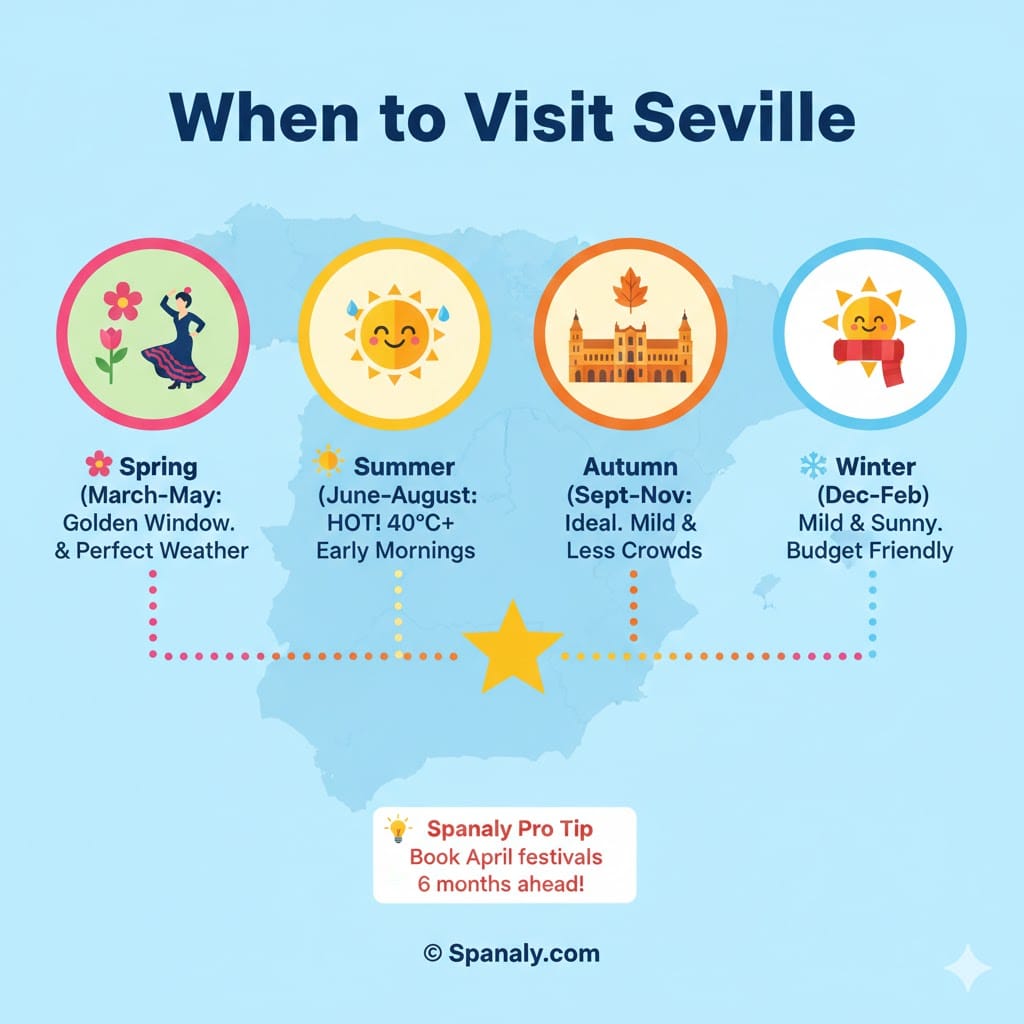
Choosing the right time to visit Seville can define your entire experience. The city transforms with the seasons, offering something unique throughout the year.
🌸 Spring (March to May): This is the “Golden Window.” The scent of orange blossoms fills the air, and temperatures are perfect for walking. It is also the season for the world-famous Semana Santa and Feria de Abril.
🍂 Autumn (September to November): A fantastic alternative to spring. The intense summer heat fades, making it ideal for exploring the Plaza de España and other outdoor landmarks without the crowds.
❄️ Winter (December to February): Mild and sunny. While it’s the quietest season, it’s perfect for those seeking budget-friendly stays and a more local atmosphere.
☀️ Summer (June to August): Known as the “Frying Pan of Europe.” If you visit now, plan your activities for early morning or late evening to avoid the 40°C+ heat.
For a complete breakdown of monthly weather patterns and a detailed festival calendar, check our Best Time to Visit Seville 2026 guide.
Spanaly Pro Tip: If you are visiting during the festivals in April, be sure to book your accommodation at least 6 months in advance, as the city reaches 100% occupancy!
🏰 Must-See Attractions: The Icons of Seville
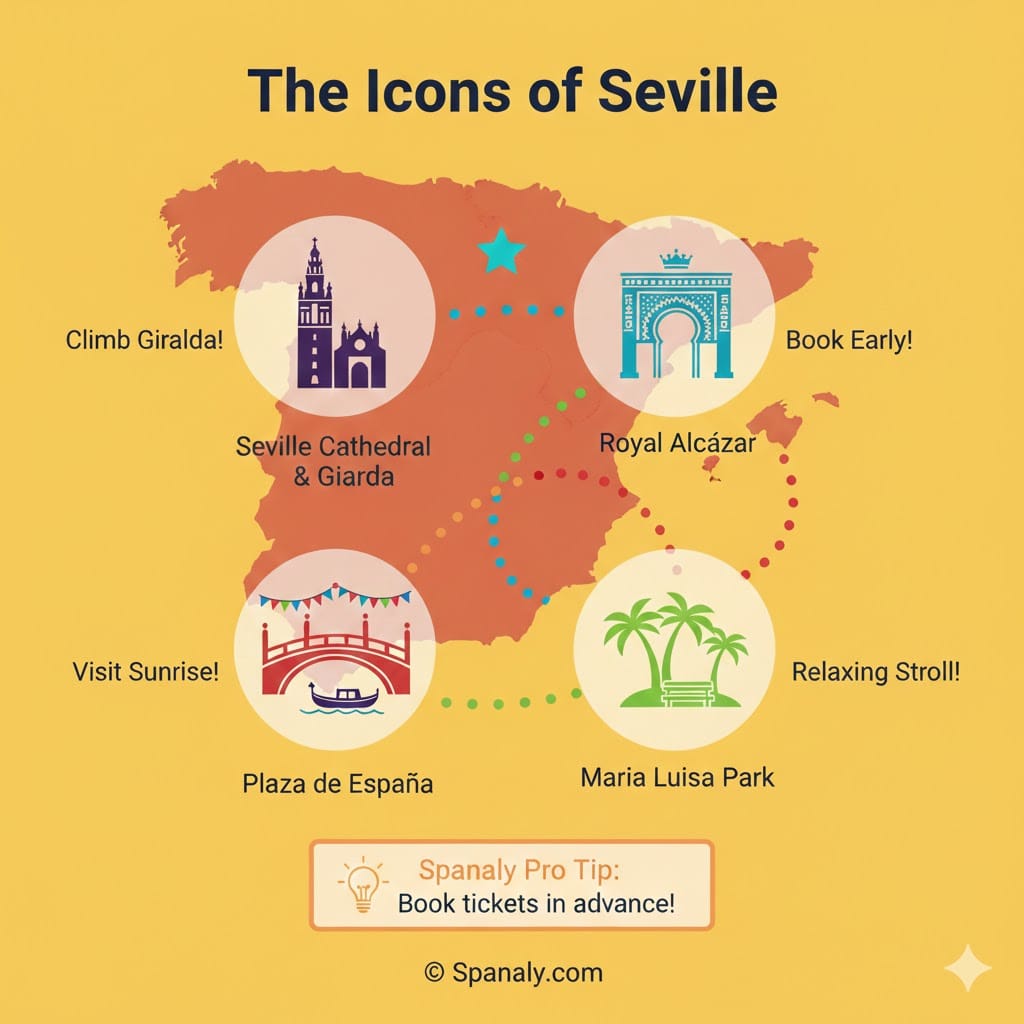
Seville offers a visual journey through time. Indeed, Gothic spires meet Moorish delicacy. To maximize your experience, you must visit these legendary landmarks:
First, explore the Seville Cathedral & La Giralda: It is the largest Gothic cathedral in the world. Additionally, you should climb the tower for panoramic views. Moreover, you can find the tomb of Columbus inside.
Next, visit The Royal Alcázar: This UNESCO site is a famous filming location. Furthermore, it serves as the ultimate example of Mudejar architecture. You will love its lush gardens.
Moreover, don’t miss Plaza de España: This is arguably the most beautiful plaza in Spain. Consequently, we recommend visiting early to avoid crowds. Indeed, the morning light is perfect for photos.
Finally, stroll through Maria Luisa Park: This green oasis is right next to the plaza. In fact, it offers a relaxing break under Mediterranean trees.
To see how these landmarks rank nationally, check our Spanish Attractions bucket list.
Spanaly Pro Tip: To avoid long queues, always book your tickets in advance. Therefore, securing your spot for the Cathedral and Alcázar is vital during the peak months of 2026.
🍄 Modern Marvels: Metropol Parasol (Las Setas)
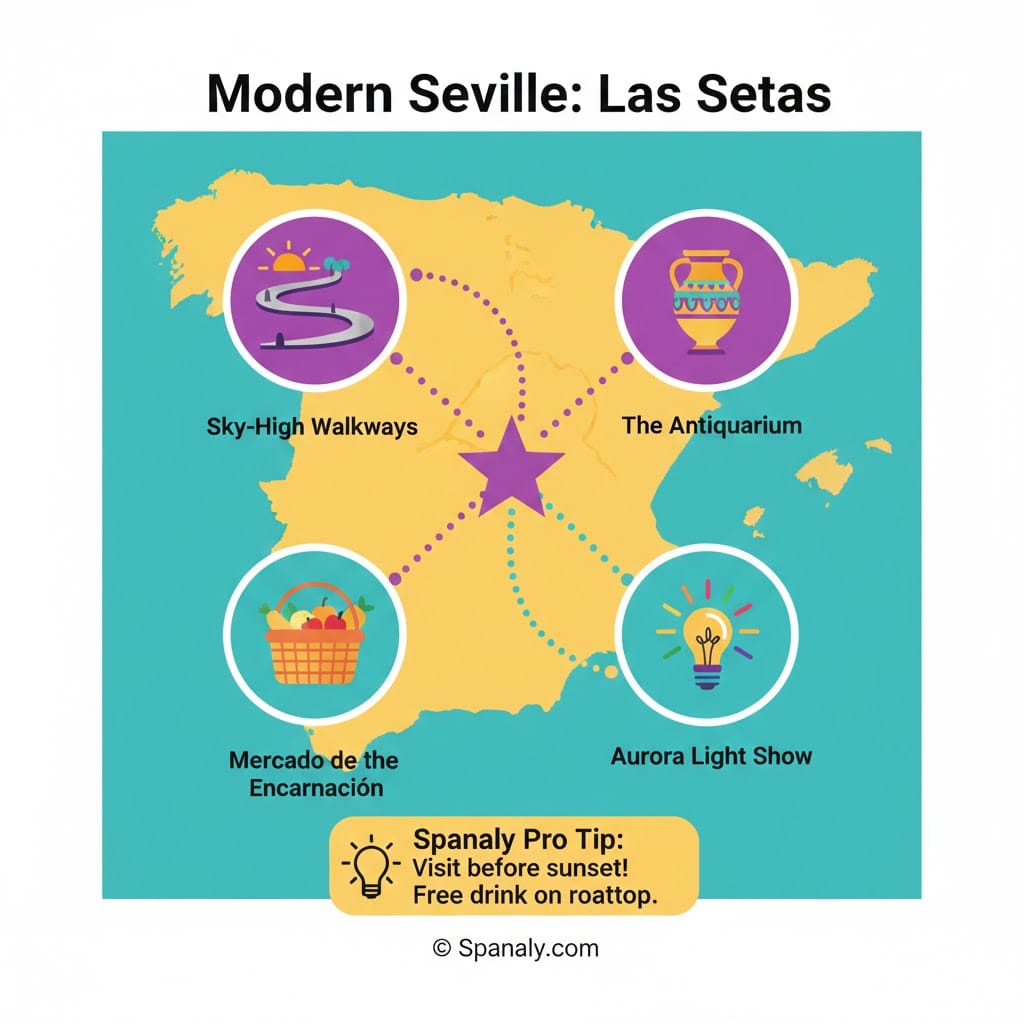
While Seville is famous for its ancient soul, it also embraces the future with Metropol Parasol, locally known as “Las Setas” (The Mushrooms). Located in La Encarnación square, it is the largest wooden structure in the world and offers a striking contrast to the surrounding historic buildings.
☁️ Panoramic Walkways: The top level features a winding walkway that offers 360-degree views of the city skyline, especially beautiful as the sun sets.
🏛️ Antiquarium: Located in the basement, this archaeological museum houses remarkably preserved Roman and Moorish remains discovered during the structure’s construction.
🛍️ Central Market: Beneath the wooden canopy, you’ll find a traditional fresh food market where you can experience the local daily rhythm.
📸 Night Experience: In 2026, the “Aurora” light show transforms the structure into a digital canvas of colors every evening.
Planning a visit to this modern icon requires a bit of savvy; for more expert advice on navigating the city efficiently, check out our Essential Seville Travel Tips.
Spanaly Pro Tip: Visit Las Setas just before sunset. Your ticket usually includes a free drink at the rooftop bar, making it the perfect spot to watch the city lights come to life.
🏘️ Barrios of Seville: From Santa Cruz to Triana
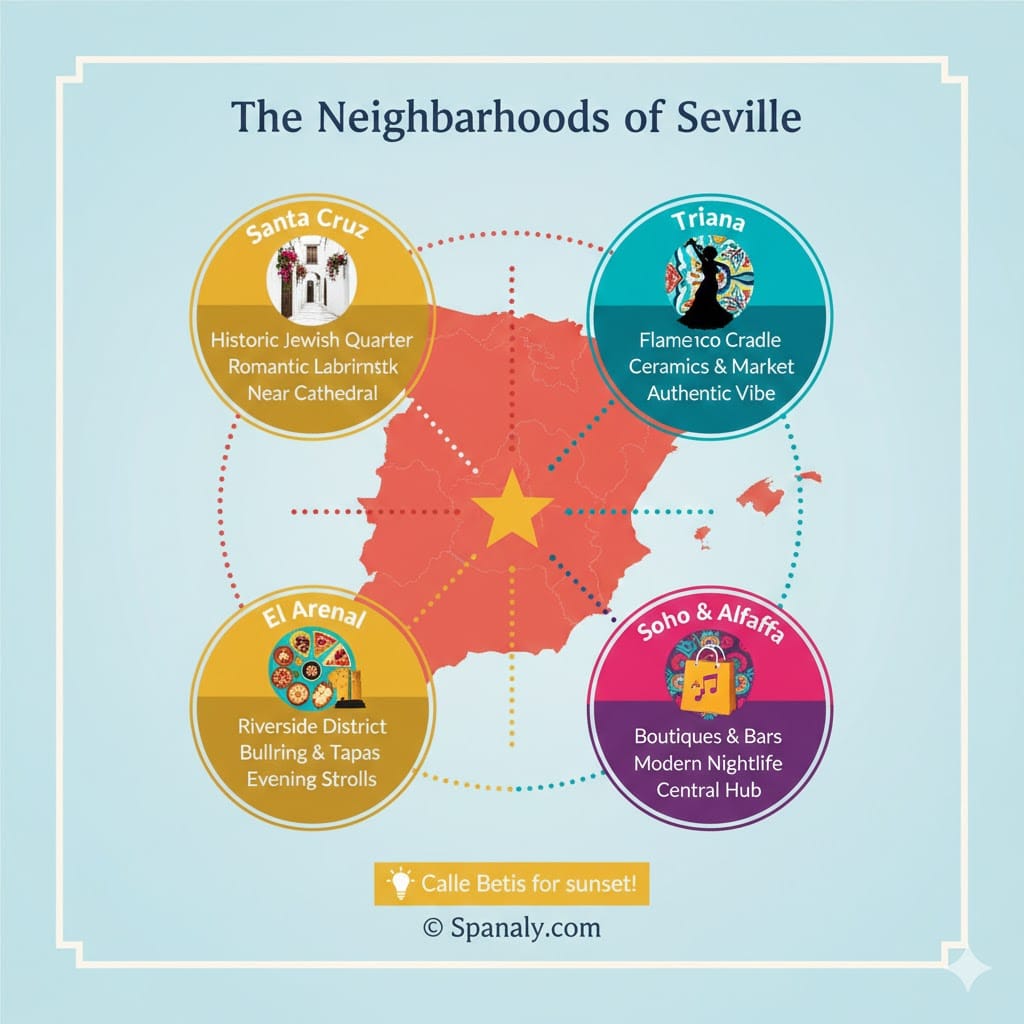
To truly feel Seville, you must get lost in its distinct neighborhoods. Each Barrio has its own personality, rhythm, and secrets waiting to be discovered in 2026.
🕍 Barrio Santa Cruz (The Historic Soul): Once the city’s Jewish quarter, this is a labyrinth of narrow white-washed alleys, flower-filled patios, and hidden squares. It’s the most romantic part of the city, perfectly located near the Cathedral.
💃 Triana (The Vibrant Cradle of Flamenco): Located just across the Guadalquivir River, Triana is famous for its ceramics, lively markets, and deep flamenco roots. It’s the place to experience the authentic “Sevillano” lifestyle away from the main tourist crowds.
🎭 El Arenal (The Golden Riverfront): Home to the historic Bullring and the Golden Tower (Torre del Oro), this riverside district is perfect for evening strolls and high-quality tapas.
🛍️ Soho & Alfalfa (Shopping & Nightlife): If you are looking for local artisan shops, boutiques, and a buzzing atmosphere at night, these central areas are the heart of Seville’s social scene.
Choosing the right base for your stay is crucial; for a detailed breakdown of which area fits your travel style, check our guide on Where to Stay in Seville 2026.
Spanaly Pro Tip: In Triana, head to Calle Betis at night. The view of the illuminated city skyline reflected in the river is one of the most iconic (and free) experiences in Seville.
💃 Cultural Experiences: The Soul of Flamenco
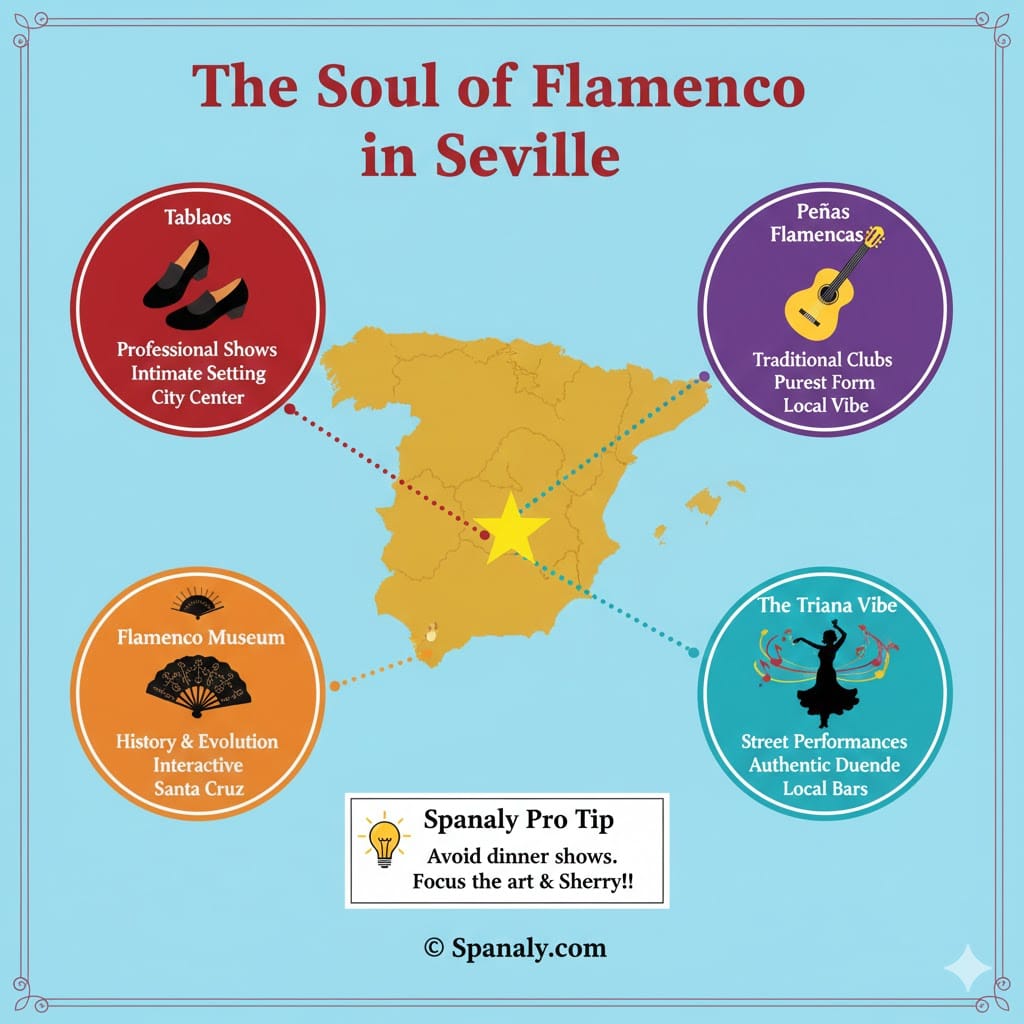
No visit to Seville is complete without experiencing Flamenco, a UNESCO Intangible Cultural Heritage that is deeply woven into the city’s identity. In 2026, the art form is more vibrant than ever, offering visitors a raw and emotional journey through music and dance.
Authentic Tablaos: For a professional and high-impact performance, visit the Tablaos in the city center. These venues offer intimate settings where you can feel the floor shake with every step.
Peñas Flamencas: If you are seeking a more grassroots experience, look for local Peñas. These are social clubs where Flamenco is practiced in its purest, most traditional form.
Flamenco Museum: Located in the Santa Cruz quarter, this interactive museum provides a deep dive into the history and evolution of the dance before you watch a live show.
The Triana Vibe: Wander through the streets of Triana in the evening; you might stumble upon spontaneous performances in local bars that capture the true “Duende” (spirit) of Seville.
The best way to witness Flamenco at its peak is during the city’s grand celebrations. Explore our guide to Spanish Festivals 2026 to find the most iconic Flamenco events of the year.
Spanaly Pro Tip: For an authentic experience, avoid venues that include a full dinner with the show. The best performances usually focus solely on the art, perhaps accompanied only by a glass of local Sherry.
🥘 Local Cuisine: A Tapas Journey in Seville
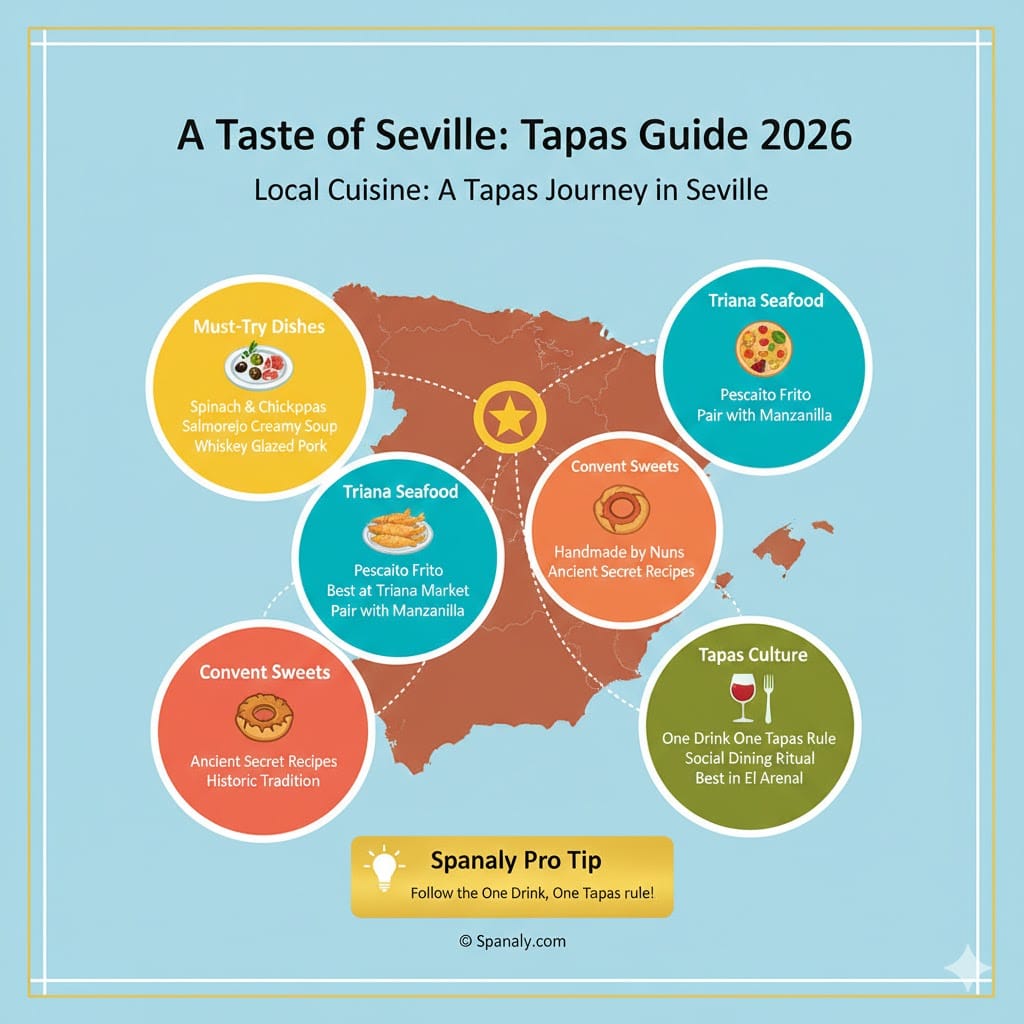
In Seville, eating is not just a necessity; it’s a social ritual. The city is the undisputed capital of Tapas, where small plates offer a burst of traditional Andalusian flavors. In 2026, the culinary scene continues to blend century-old recipes with modern gastronomic flair.
🐙 Must-Try Dishes: Don’t leave without tasting Espacas con Garbanzos (spinach with chickpeas), Salmorejo (a thick, cold tomato soup), and the legendary Solomillo al Whisky (whiskey-glazed pork sirloin).
🍷 Vibrant Tapas Bars: From the historic taverns of El Arenal to the trendy gastropubs in Soho, every corner offers a new flavor to discover.
🐟 Triana’s Seafood: Cross the river for the freshest Pescaito Frito (fried fish), a staple of the local diet best enjoyed with a glass of chilled Manzanilla sherry.
🥐 Traditional Sweets: Visit the local convents where cloistered nuns still sell handmade pastries, a unique Sevillian tradition that has survived for centuries.
To understand the full depth of these flavors and their origins, explore our comprehensive guide to Spanish Cuisine, which covers the best regional dishes across the country.
Spanaly Pro Tip: Follow the “One Drink, One Tapas” rule. Instead of having a full meal in one place, do as the locals do: have one small plate and a drink, then move on to the next bar to experience the true variety of Seville.
🚲 Getting Around Seville: Navigate Like a Local
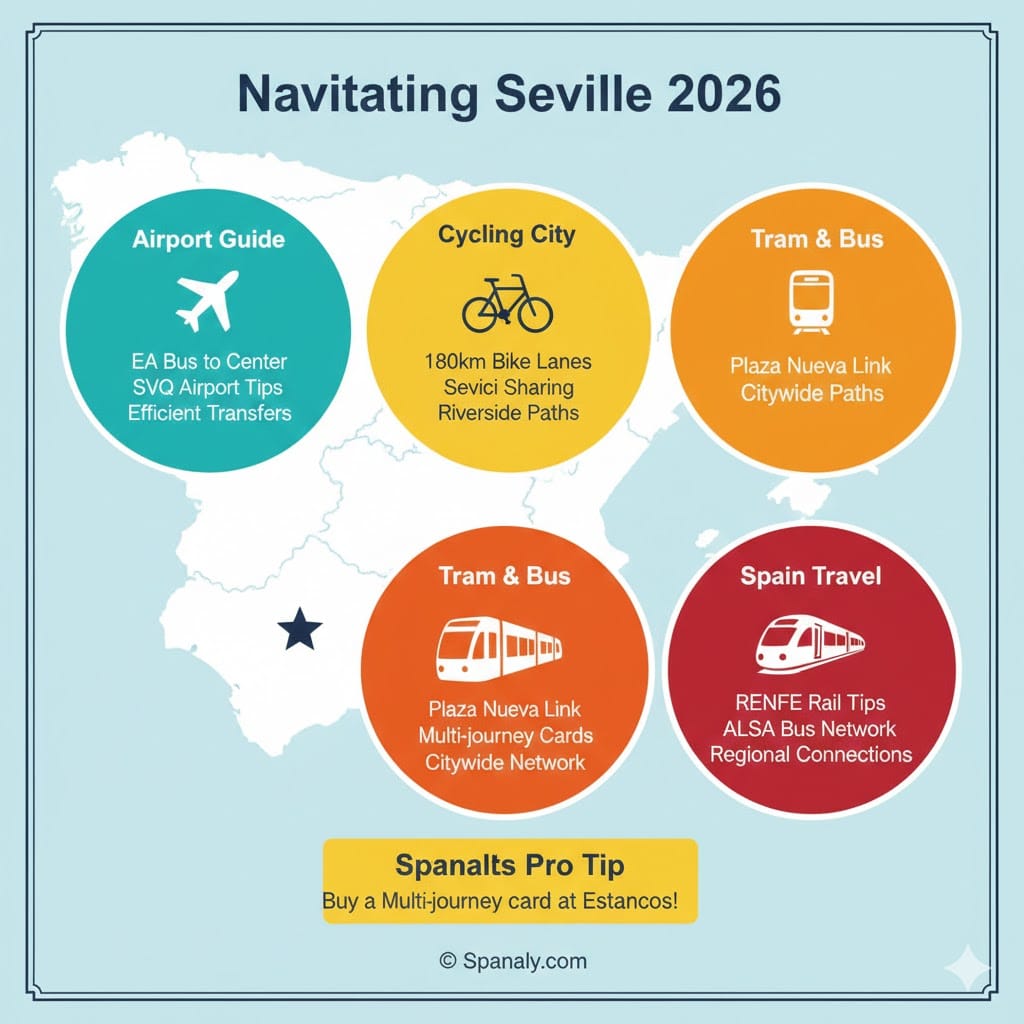
Seville is famously known as one of Europe’s most walkable cities. In 2026, the city has further expanded its pedestrian zones and eco-friendly transport options, making it incredibly easy to navigate without a car.
Walking (The Best Option): Most of the iconic landmarks in the historic center are just a few minutes apart on foot. Exploring the city’s heart is the most rewarding way to discover hidden plazas.
Sevici Bike-Sharing: With over 180 km of bike lanes, Seville is a cyclist’s paradise. You can grab a Sevici bike from hundreds of stations for a scenic ride along the Guadalquivir River.
Airport Transfers: Your journey begins at the terminal; for the most efficient ways to reach the city center, including the EA bus and taxi options, see our Seville Airport (SVQ) Guide.
Public Transport & Tram: The modern Metro-Centro tram connects Plaza Nueva to San Bernardo, while the extensive bus network covers every corner of the city. For a complete breakdown of prices and maps, check our guide on Getting Around Seville 2026.
If you are planning to extend your journey to other regions, understanding the national rail and bus network is key. Explore our expert tips on Getting Around Spain to master the RENFE and ALSA systems like a pro.
Spanaly Pro Tip: Buy a “Tarjeta de Transporte” (Multi-journey card) at any tobacco shop (Estanco). It’s much cheaper than buying individual tickets and works on both buses and the tram.
🏨 Where to Stay: Choosing Your Perfect Neighborhood
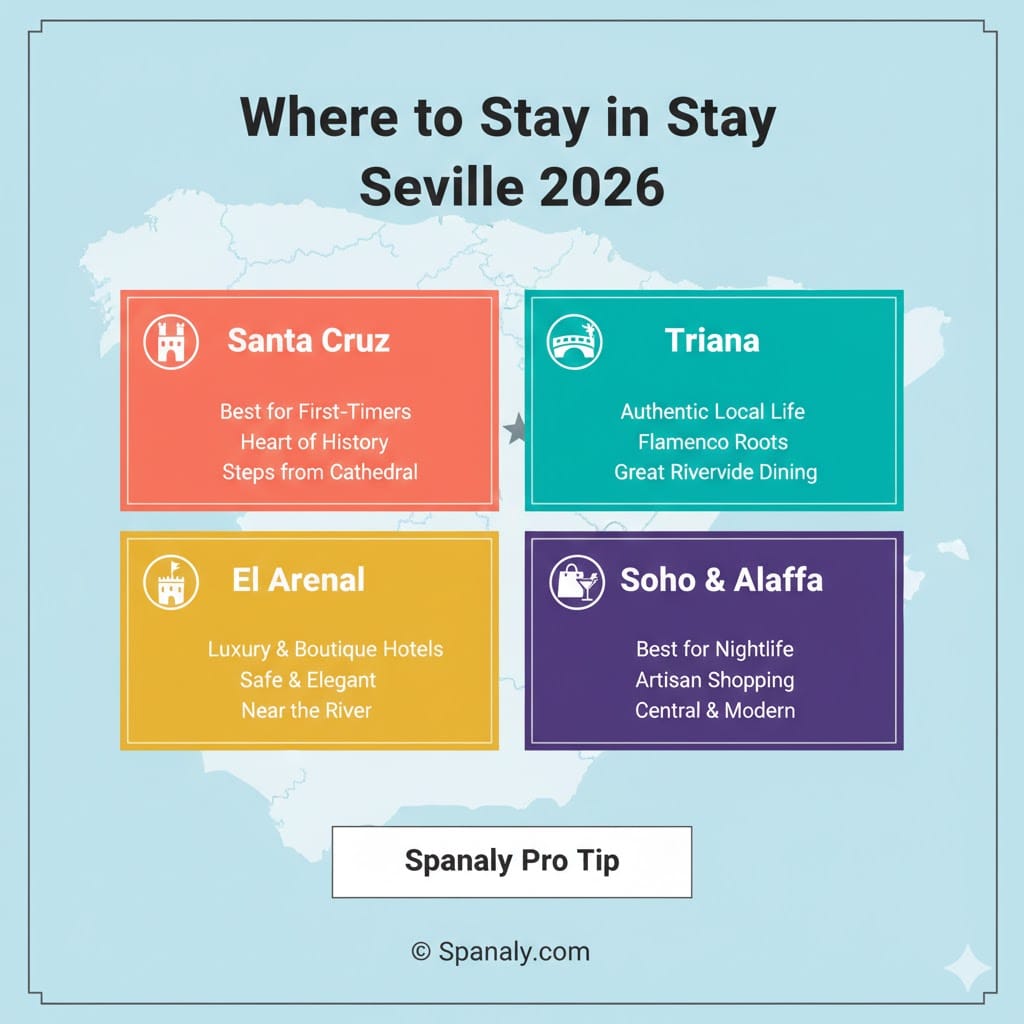
Selecting the right area to call home during your visit is the most important decision for a seamless experience. Seville’s neighborhoods offer a wide range of atmospheres, from the bustling heart of history to modern, quiet retreats.
🏰 For First-Timers (Santa Cruz): Stay here if you want to be steps away from the Cathedral and the Alcázar. It is the most iconic but also the busiest area.
💃 For Authentic Vibes (Triana): Perfect for those who want to experience local life, flamenco heritage, and riverside dining away from the heavy tourist crowds.
🎭 For Luxury & Convenience (El Arenal): Home to upscale hotels and a refined atmosphere, located perfectly between the river and the historic center.
🛍️ For Modernity & Nightlife (Soho & Alfalfa): The best choice for younger travelers or those looking for boutique shopping and a vibrant social scene.
To help you decide which district fits your personality and travel style, we have created a comprehensive guide on Where to Stay in Seville 2026, including hotel recommendations for every budget.
Spanaly Pro Tip: If you are visiting during the Feria de Abril or Semana Santa, book your accommodation at least 6 months in advance, as the city reaches 100% occupancy during these world-famous events.
🗺️ Day Trips: Exploring Beyond the City Limits
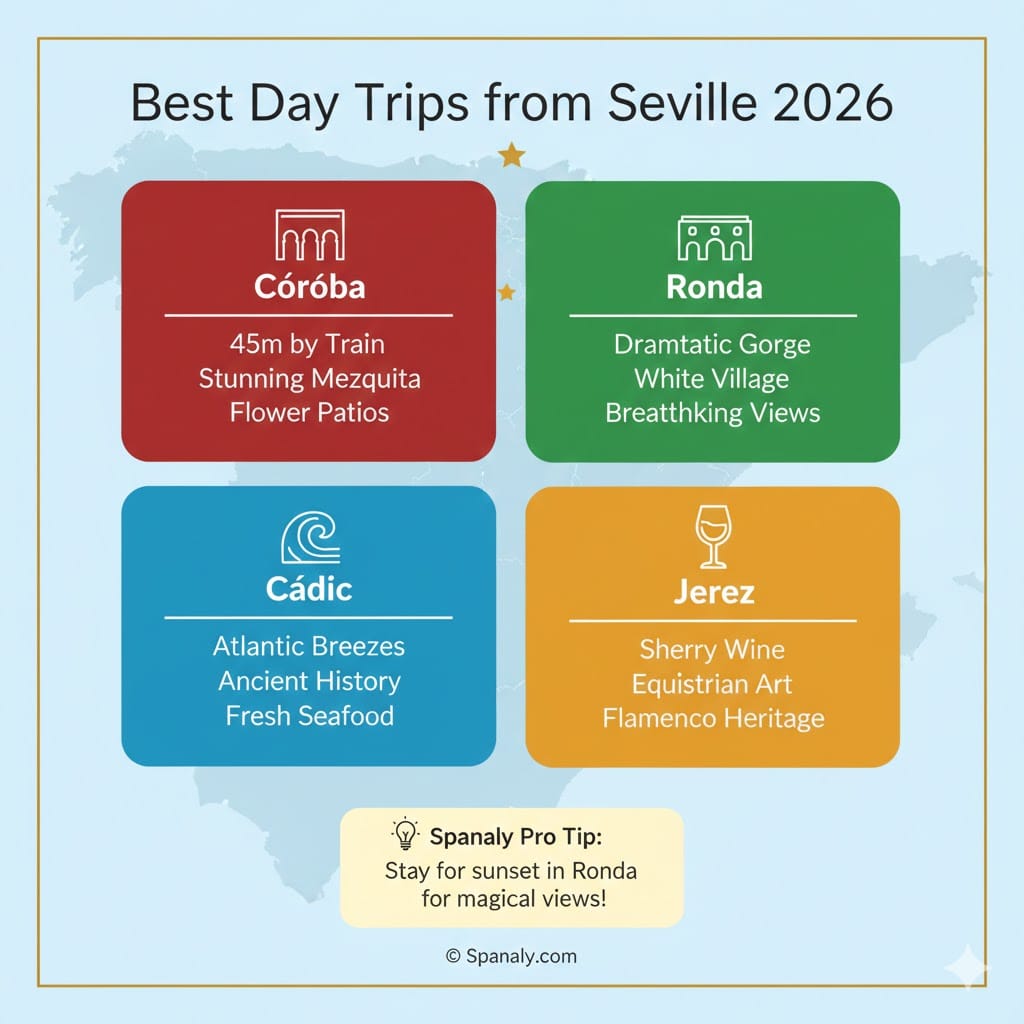
While Seville itself is captivating, its location in the heart of Andalusia makes it the perfect hub for exploring nearby gems. In 2026, high-speed train connections and organized tours have made these escapes more accessible than ever.
Córdoba: Just 45 minutes by high-speed train, this city is home to the breathtaking Mezquita-Catedral and its flower-filled patios.
Ronda: Known for its dramatic gorge and the “Puente Nuevo” bridge, this white village offers some of the most stunning views in all of Spain.
Jerez de la Frontera: The birthplace of Sherry wine and home to the Royal Andalusian School of Equestrian Art.
Cádiz: The oldest city in Western Europe, perfect for a day of Atlantic breezes and fresh seafood.
To plan your excursions perfectly, check our dedicated guide on the best Day Trips from Seville, where we break down how to visit Córdoba, Ronda, and more in a single day.
Spanaly Pro Tip: For the best experience in Ronda, try to stay until sunset. Most tour buses leave by 5:00 PM, leaving the magical views of the gorge much quieter and more personal.
🛡️ Practical Tips & Essentials for a Flawless Trip
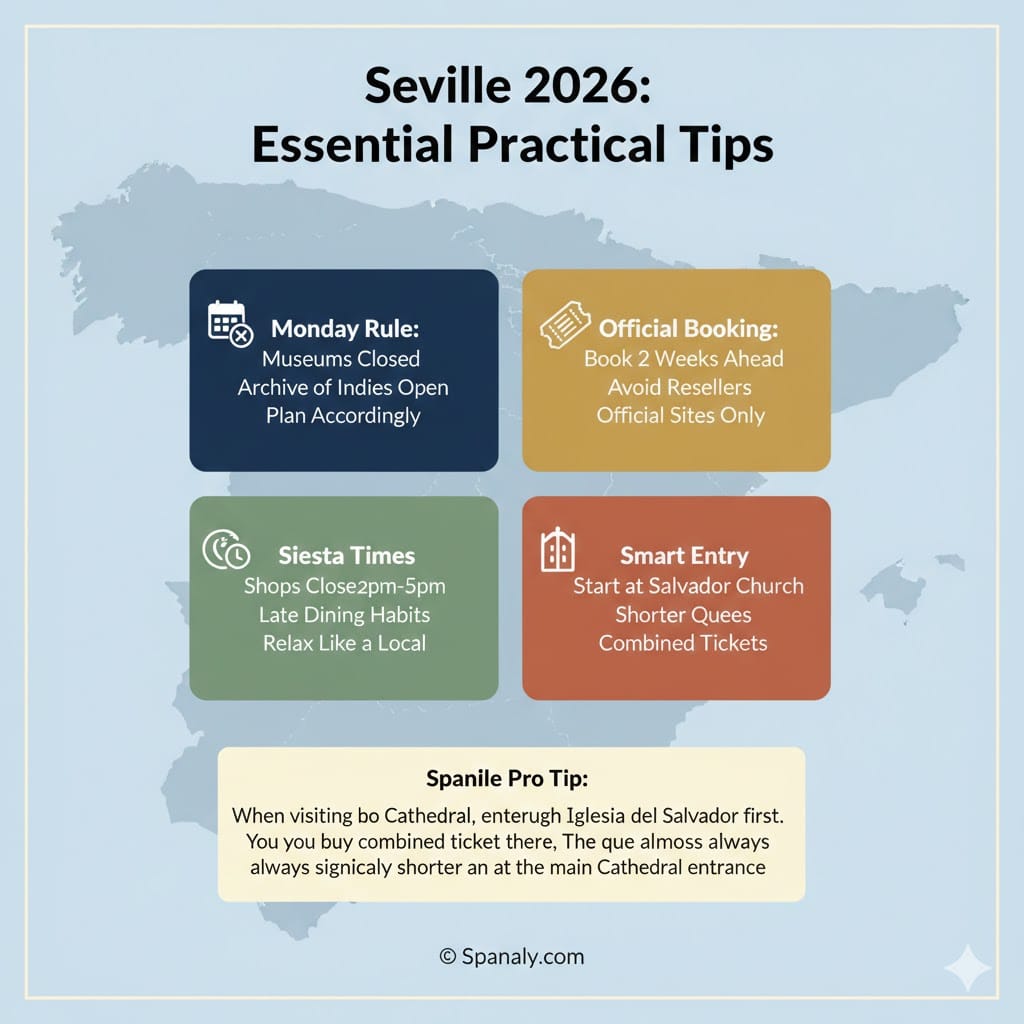
To ensure your visit is as smooth as possible, we gathered these essential insider tips. Consequently, you will save time, money, and stress in 2026.
📅 The Monday Rule: First, remember that many state-run museums close on Mondays. However, the General Archive of the Indies remains open and free. Therefore, it is the best place to visit on a Monday.
🎟️ Pre-Book Everything: Second, the Alcázar and Cathedral often sell out weeks in advance. Thus, always use official websites to book early. In addition, this helps you avoid high reseller fees.
⏰ Adjust Your Clock: Additionally, Seville runs on “Spanish Time.” For example, lunch is rarely served before 2:00 PM. Meanwhile, many local shops still observe the Siesta between 2:00 PM and 5:00 PM.
💧 Stay Hydrated for Free: Furthermore, look for the historic public drinking fountains around the city. The water is safe and cold. Indeed, it is a lifesaver during sunny Andalusian afternoons.
📱 Digital Connectivity: Finally, most plazas now offer high-speed “Sevilla-WiFi.” Nevertheless, for a more stable connection, buy a local eSIM at the airport.
Spanaly Pro Tip: When visiting the Cathedral, enter through the Iglesia del Salvador first. Because you can buy a combined ticket there, the queue is significantly shorter than at the main entrance.
🏰 Visitor FAQs – Seville Ultimate Guide 2026
🌟 Why Seville in 2026?
Seville in 2026 is a sensory masterpiece. Indeed, it perfectly balances history with modern travel standards. Consequently, this city remains a top global destination for several key reasons:
✨ Unmatched Atmosphere: First, enjoy the intoxicating scent of orange blossoms. Additionally, listen to the echoing rhythms of authentic Flamenco.
🏛️ Living History: Second, see breathtaking Gothic cathedrals. Furthermore, these stand alongside futuristic icons like the Setas.
🍷 Social Gastronomy: Moreover, experience a unique cultural ritual. In fact, dining here is about shared joy and vibrant tapas bars.
🚲 Sustainable Exploration: Finally, explore this eco-friendly city. Indeed, it is a dream to navigate on foot or by bike.
To ensure you don’t miss any detail, explore our Ultimate Seville Travel Guide. Therefore, use this pillar resource to plan every step of your adventure.
Final Note: Plan ahead and embrace the local Siesta pace. Consequently, let the city’s passion guide your heart. Indeed, Seville is waiting for you!