🌟 Spain’s cuisine is a tapestry of history, culture, and flavor. Among its many treasures, Albóndigas, or Spanish meatballs in sauce, stand out as a dish that embodies warmth, tradition, and culinary artistry. Loved in homes and restaurants alike, Albóndigas tell a story of cultural fusion, regional diversity, and the simple joy of sharing a hearty meal.
📖 Deep Dive: For a complete overview of the flavors that define the peninsula, start with our main guide: Spanish Cuisine.
Table of Contents
Toggle🏛️ The History and Origins of Albóndigas
Albóndigas have deep roots in Spanish history, reflecting centuries of cultural exchange:
📜 Etymology: The name derives from the Arabic word “al-bunduq” (meaning hazelnut, referring to their shape), introduced during the Moorish occupation.
🕰️ Evolution: Originally a simple minced meat dish, they evolved over centuries into a beloved culinary staple across the Iberian Peninsula.
🤝 Cultural Bridge: Families served them during daily meals and festive gatherings alike, making them a bridge between ancient history and modern Spanish Festivals.
Today, Albóndigas are more than just food; they are a legacy of the diverse civilizations that shaped Spain’s unique identity.
👨🍳 Ingredients and Crafting the Perfect Albóndigas
Creating Albóndigas is both an art and a cherished tradition. The secret lies in balancing flavors to achieve tender, juicy meatballs that soak up the rich sauce.
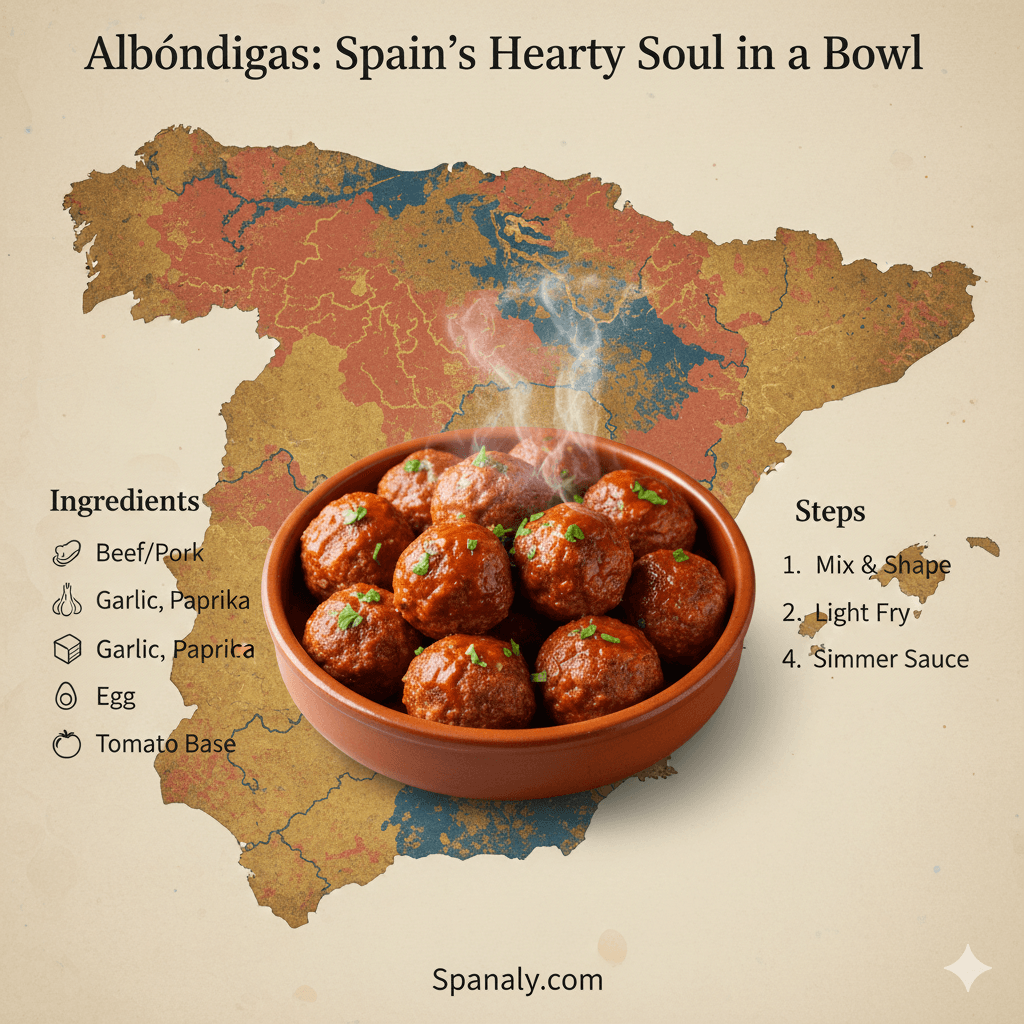
🛒 The Essentials (Ingredients)
| Component | What You Need |
| The Meat | Minced beef, pork (or a 50/50 blend) |
| Aromatics | Finely chopped onions, garlic, and fresh parsley |
| The Binder | Fresh eggs and breadcrumbs for lightness |
| Seasoning | Salt, pepper, smoked paprika, and oregano |
| The Sauce | Tomato base, enriched with red wine or stock |
👨🍳 Preparation Steps
The Mix: Combine meat with aromatics, breadcrumbs, and eggs until evenly blended.
The Shape: Form small, uniform meatballs to ensure consistent cooking.
The Sear: Lightly fry in olive oil until a golden crust forms.
The Simmer: Gently cook in the sauce, allowing them to absorb the flavors deeply.
💡 Chef’s Tip: For maximum flavor, make your Albóndigas a day in advance. The flavors deepen and become even more rich when reheated!
⭐ Expert Tips for Perfect Albóndigas
To elevate your dish from good to “Abuela-level” authentic, follow these essential professional secrets:
📏 Uniformity Matters: Keep all meatballs the same size to ensure even cooking and a beautiful presentation.
🔥 Simmer Slowly: Gentle, low heat is key. It allows the sauce to penetrate the meat, making it tender and juicy.
🌿 Freshness First: Use high-quality meat and fresh herbs like parsley or oregano for a vibrant, authentic flavor.
🍷 Regional Flair: Don’t be afraid to experiment! Add a splash of Spanish red wine or a pinch of cinnamon to your sauce.
⏳ Patience Pays: Albóndigas often taste even better the next day as the flavors have more time to deepen and meld.
🥘 The Result: When done correctly, these meatballs embody the heart and soul of Spanish Cuisine, offering a texture and flavor that is truly full of character.
🗺️ Regional Styles: A Mosaic of Flavors
Albóndigas reflect Spain’s diversity through unique regional twists:
☀️ Andalusia: Simmered with almonds and raisins for a sweet Moorish touch.
🎨 Catalonia: Accented with cinnamon and rich almond-tomato sauces.
🍷 Castile and León: A robust style featuring earthy red wine reductions.
🌊 Valencia: Unique seafood variations blending meat with coastal flavors.
🥘 Insight: These styles showcase Spain’s creativity while keeping the dish’s comforting soul intact.
👪 Cultural Significance and Tradition
Albóndigas are more than just a meal—they are a cultural symbol of sharing and hospitality. In Spain, they are a staple at family tables during Spanish Festivals, carrying a sense of togetherness. Often prepared by multiple generations, these recipes are living legacies passed down from grandmothers to grandchildren, connecting every diner to Spain’s social soul.
🍷 Perfect Pairings & Recommendations
To enjoy an exceptional Albóndigas experience, the right accompaniments are key. We suggest these authentic Spanish pairings:
🥖 For Dipping: Always serve with crusty bread or alongside a portion of crispy Patatas Bravas for a complete tapas feast.
🥔 Canary Style: For a unique twist, try pairing them with the salty Papas Arrugadas from the Canary Islands.
🍷 Drinks: A glass of Spanish red wine, such as Rioja or Tempranillo, perfectly enhances the richness of the tomato sauce.
🍰 Something Sweet: End your meal with a classic dessert like the spiral-shaped Ensaimada from Mallorca.
🥘 Visitor FAQs – Mastering Spanish Albóndigas
🔸 What is the secret to making Albóndigas tender?
The secret is using breadcrumbs soaked in milk and fresh eggs. This "panade" ensures the meatballs stay moist and light. Avoid over-mixing the meat, as it can lead to a dense and tough texture.
🔸 What type of meat is best for Spanish meatballs?
Authentic Spanish recipes use a 50/50 blend of minced beef and pork. The beef provides structure and richness, while the pork adds the essential fat needed for juiciness and flavor.
🔸 Why are they called Albóndigas?
The name is a legacy of Al-Andalus, originating from the Arabic word "al-bunduq" (hazelnut). This refers to the traditional small, round shape of the meatballs introduced during the Moorish influence on Spanish gastronomy.
🔸 Are Albóndigas served as a tapa or a main course?
Both! In bars, they are a classic tapa served in small clay dishes. At home, they are a hearty main course, typically served with white rice or French fries to enjoy the rich tomato sauce.
🔸 Can I freeze Albóndigas for later?
Yes, they freeze perfectly! You can freeze them raw or cooked in their sauce. If cooked, let them cool completely before placing them in an airtight container; they will stay fresh for up to 3 months.
Created by Spanaly.com
✨ Albóndigas are a timeless symbol of Spanish hospitality. From the simple home-cooked versions to elaborate restaurant presentations, each bite carries centuries of history and regional identity. Whether you are exploring the streets of Spain or recreating these flavors at home, Albóndigas offer a satisfying and culturally immersive experience that reflects the very heart of the country.