📍 Antequera
Forget the coastal crowds and head inland to Antequera. Known as the “Crossroads of Andalusia,” this city sits right at the intersection of history, where prehistoric dolmens meet Renaissance bell towers under the watchful gaze of the Peñón de los Enamorados.
Prehistoric Wonders: Explore the UNESCO-listed Dolmens of Antequera, some of the largest and best-preserved megalithic structures in Europe.
Architectural Depth: Wander streets lined with 30+ churches and convents, showcasing a blend of Mudéjar, Gothic, and Baroque styles.
Strategic Location: Situated perfectly between Malaga, Seville, and Cordoba, it acts as the ideal base for any deep southern exploration.
Regional Context: To see how this historic hub connects to the broader network of hidden gems across the country, explore our complete Cities in Spain collection.
Spanaly Insight: Antequera is a city of layers. If you only visit the main monuments, you miss the true spirit. Spend your arrival afternoon exploring the Coso Viejo plaza, where locals gather long before the evening rush to discuss the day’s heat and harvest.
📍 Antequera at a Glance
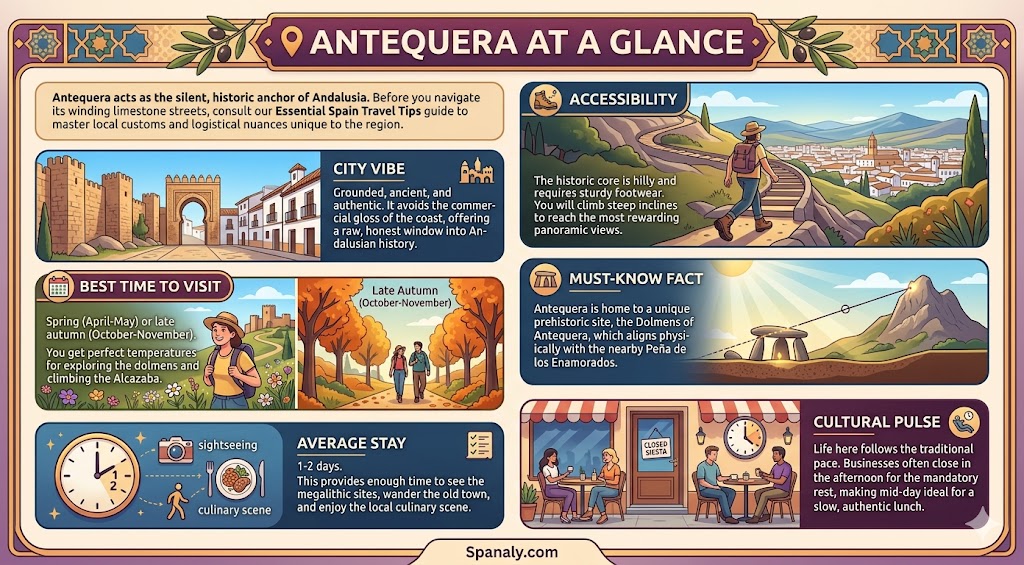
Antequera acts as the silent, historic anchor of Andalusia. Before you navigate its winding limestone streets, consult our Essential Spain Travel Tips guide to master local customs and logistical nuances unique to the region.
City Vibe: Grounded, ancient, and genuine. It avoids the commercial gloss of the coast, offering a raw, honest window into Andalusian history.
Best Time to Visit: Spring (April–May) or late autumn (October–November). You get perfect temperatures for exploring the dolmens and climbing the Alcazaba.
Average Stay: 1–2 days. This provides enough time to see the megalithic sites, wander the old town, and enjoy the local culinary scene.
Accessibility: The historic core is hilly and requires sturdy footwear. You will climb steep inclines to reach the most rewarding panoramic views.
Must-Know Fact: Antequera is home to a unique prehistoric site, the Dolmens of Antequera, which aligns physically with the nearby Peña de los Enamorados.
Cultural Pulse: Life here follows the traditional pace. Businesses often close in the afternoon for the mandatory rest, making mid-day ideal for a slow, unscripted lunch.
📍 Antequera vs. Major Andalusian Cities
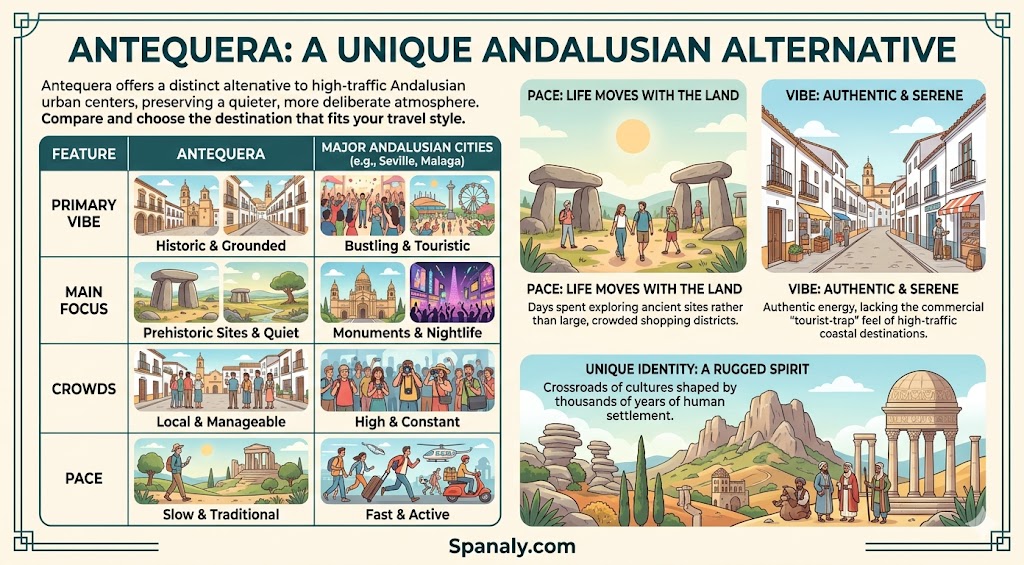
Antequera offers a distinct alternative to the high-traffic urban centers of Andalusia. While cities like Seville or Malaga focus on rapid tourism, Antequera preserves a quieter, more deliberate atmosphere. In fact, our Why Visit Spain guide provides further perspective on choosing destinations that truly fit your travel style.
| Feature | Antequera | Major Andalusian Cities |
| Primary Vibe | Historic & Grounded | Bustling & Touristic |
| Main Focus | Prehistoric Sites & Quiet | Monuments & Nightlife |
| Crowds | Local & Manageable | High & Constant |
| Pace | Slow & Traditional | Fast & Active |
Pace: Life here moves with the land. You spend your days exploring ancient sites rather than navigating large, crowded shopping districts.
Vibe: Quiet and deeply rooted in the landscape. The city lacks the commercial “tourist-trap” energy often found in high-traffic coastal destinations.
Unique Identity: Antequera retains a rugged spirit. It functions as a crossroads of cultures, shaped by thousands of years of human settlement.
🏰 Top 5 Landmarks in Antequera
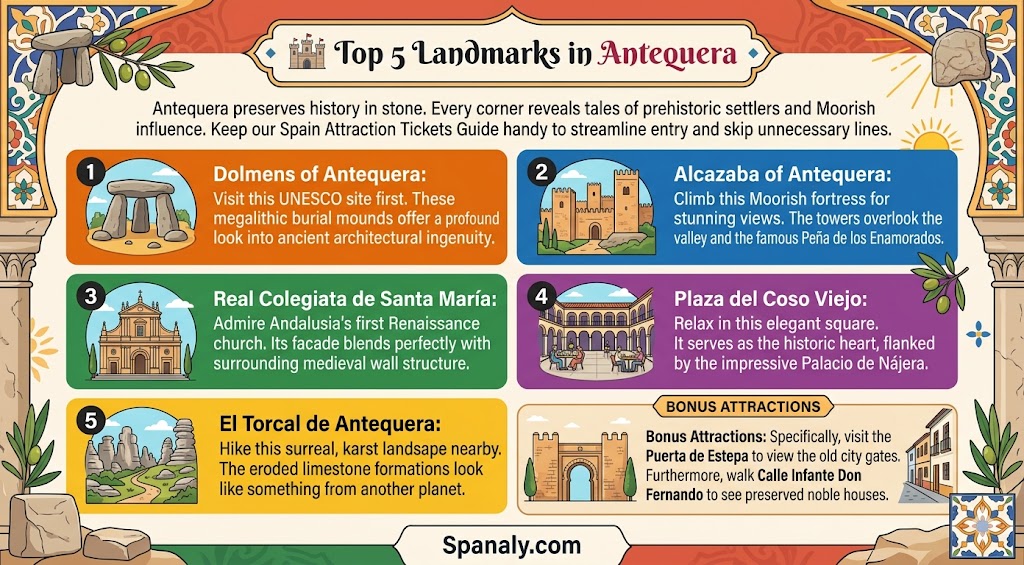
Antequera preserves history in stone. Every corner reveals tales of prehistoric settlers and Moorish influence. Keep our Spain Attraction Tickets Guide handy to streamline entry and skip unnecessary lines.
Dolmens of Antequera: Visit this UNESCO site first. These megalithic burial mounds offer a profound look into ancient architectural ingenuity.
Alcazaba of Antequera: Climb this Moorish fortress for stunning views. The towers overlook the valley and the famous Peña de los Enamorados.
Real Colegiata de Santa María: Admire Andalusia’s first Renaissance church. Its facade blends perfectly with the surrounding medieval wall structure.
Plaza del Coso Viejo: Relax in this elegant square. It serves as the historic heart, flanked by the impressive Palacio de Nájera.
El Torcal de Antequera: Hike this surreal, karst landscape nearby. The eroded limestone formations look like something from another planet.
Bonus Attractions: Specifically, visit the Puerta de Estepa to view the old city gates. Furthermore, walk Calle Infante Don Fernando to see preserved noble houses.
🎨 Hidden Gems & Local Secrets in Antequera

Most visitors focus on the Dolmens and then leave. However, the city hides deep, quiet layers that only reveal themselves to those who walk past the main plazas. If you enjoy uncovering urban mysteries, our Madrid’s Best-Kept Secrets: 7 Hidden Gems guide offers a similar approach to finding the authentic heartbeat of a Spanish city.
Jardines del Mapa: Skip the crowded parks. This small, tiered garden offers quiet benches and a direct view of the Alcazaba’s walls without the noise.
Convento de las Carmelitas Descalzas: Ring the bell for their handmade pastries. These secret, cloistered sweets are the city’s best-kept culinary tradition.
Mirador de la Almenilla: Find this narrow viewpoint at dusk. You will see the entire city transition from warm stone to cold starlight in absolute silence.
Postigo de la Estrella: Walk through this ancient, often overlooked Moorish gate. It connects the upper fortress to the lower streets, providing a raw architectural shortcut.
Cerro del Viento: Venture to this small hill for an unscripted perspective. Locals gather here to watch the horizon, far from any formal tour group paths.
Spanaly Insight: Many shops in the historic center still operate with manual locks and heavy wooden shutters. If you see a shutter halfway open at 14:00, it is not a sign of life; it is usually a shopkeeper finishing a long lunch before truly opening for the afternoon.
🏨 Where to Stay in Antequera
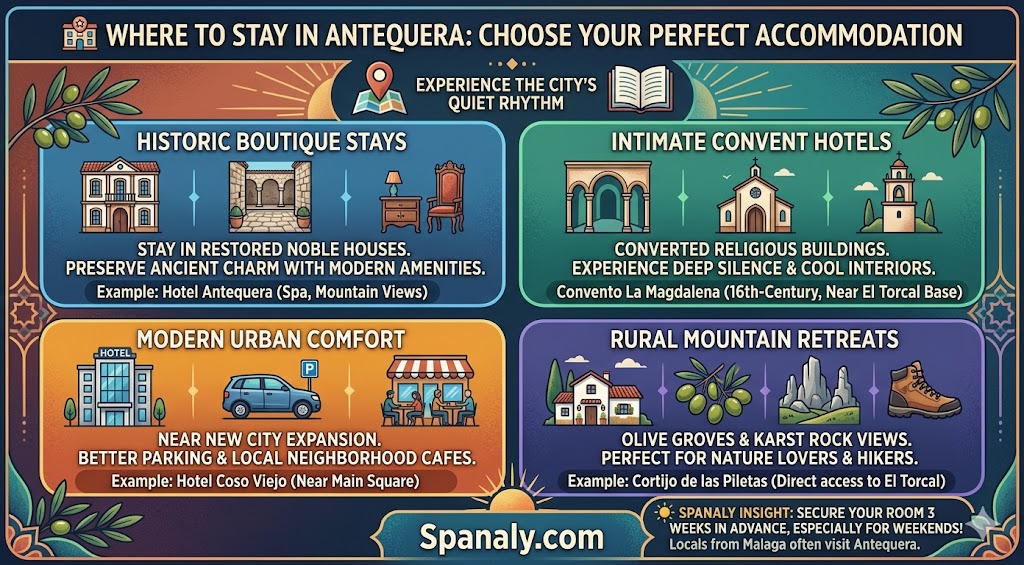
Finding the right stay allows you to experience the city’s quiet rhythm at night. Use our Accommodation in Spain guide to help identify properties that match your specific travel style and comfort needs.
Historic Boutique Stays (Old Town): Stay in restored noble houses. These hotels preserve stone courtyards and antique features while offering modern amenities.
Place to Stay: Hotel Antequera: Located just outside the historic core, this property offers excellent spa facilities and views of the surrounding mountains.
Intimate Convent Hotels: Experience deep silence by staying in converted religious buildings. These provide thick walls and cool, peaceful interiors during warmer months.
Place to Stay: Convento La Magdalena: Housed in a 16th-century building, it provides a luxurious escape nestled right at the base of the El Torcal mountains.
Modern Urban Comfort: Select hotels near the new city expansion. These offer better parking access and proximity to local, non-touristic neighborhood cafes.
Place to Stay: Hotel Coso Viejo: Situated in a restored traditional house, it puts you within a two-minute walk of the city’s main square and restaurants.
Rural Mountain Retreats: If nature is your priority, look for farmhouses or cortijos on the outskirts. You will wake up surrounded by olive groves and karst rock views.
Place to Stay: Cortijo de las Piletas: This secluded spot provides a perfect base for hikers looking to explore El Torcal directly from their doorstep.
Spanaly Insight: Antequera is a popular weekend destination for locals from Malaga. If your travel dates fall on a weekend, secure your room at least three weeks in advance to avoid the “full occupancy” notices that plague the historic center.
🍽️ Antequera Gastronomy & Dining Guide
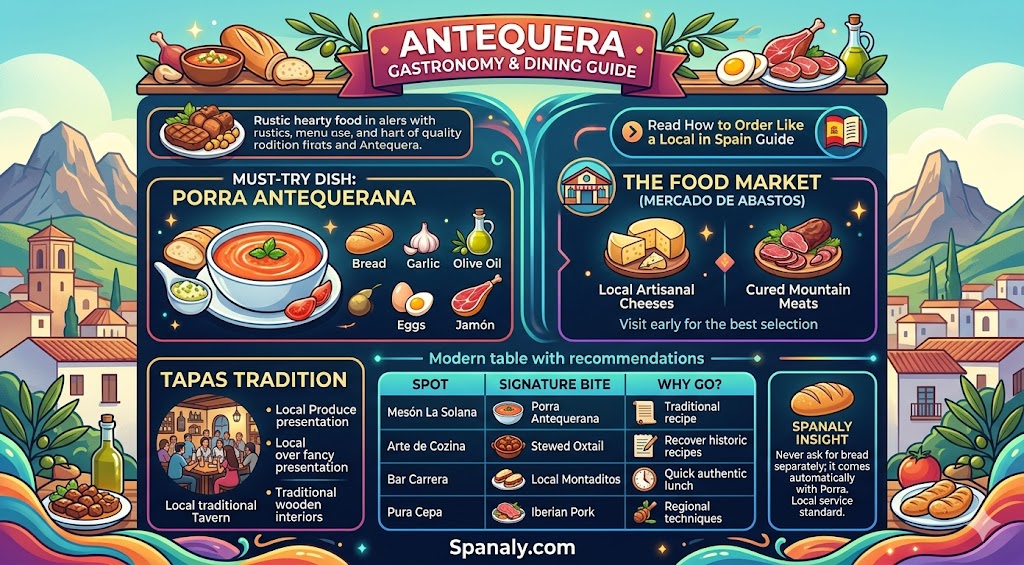
Antequera’s food is hearty, rustic, and built for a rugged climate. To master the art of local dining without looking like a tourist, read our How to Order Food Like a Local in Spain guide before heading to your first tavern.
Must-Try Dish (Porra Antequerana): You must taste this thick, cold tomato soup. It includes bread, garlic, and olive oil, topped with hard-boiled eggs and jamón.
The Food Market (Mercado de Abastos): Visit early in the morning. This bustling market remains the best place to source local artisanal cheeses and mountain-cured meats.
The Tapas Tradition: In Antequera, taverns prioritize local produce over fancy presentation. Look for small, crowded spots with traditional wooden interiors.
Spanaly Recommendations for Traditional Bites:
| Spot | Signature Bite | Why Go? |
| Mesón La Solana | Porra Antequerana | The recipe remains true to tradition, using the finest local oil and seasonal produce. |
| Arte de Cozina | Stewed Oxtail | This place focuses on recovering lost historic recipes, offering a genuine taste of the past. |
| Bar Carrera | Local Montaditos | Perfect for a quick, surrounded by local residents for a real local lunch. |
| Pura Cepa | Iberian Pork | A great spot to appreciate how specific regional techniques transform basic cuts of mountain meat. |
Spanaly Insight: Never ask for bread at the start of a meal in a traditional tavern; it arrives automatically with the porra. If you order it separately, the local waiter will immediately know you are unfamiliar with the standard service rhythm.
🧳 Essential Logistics for Antequera
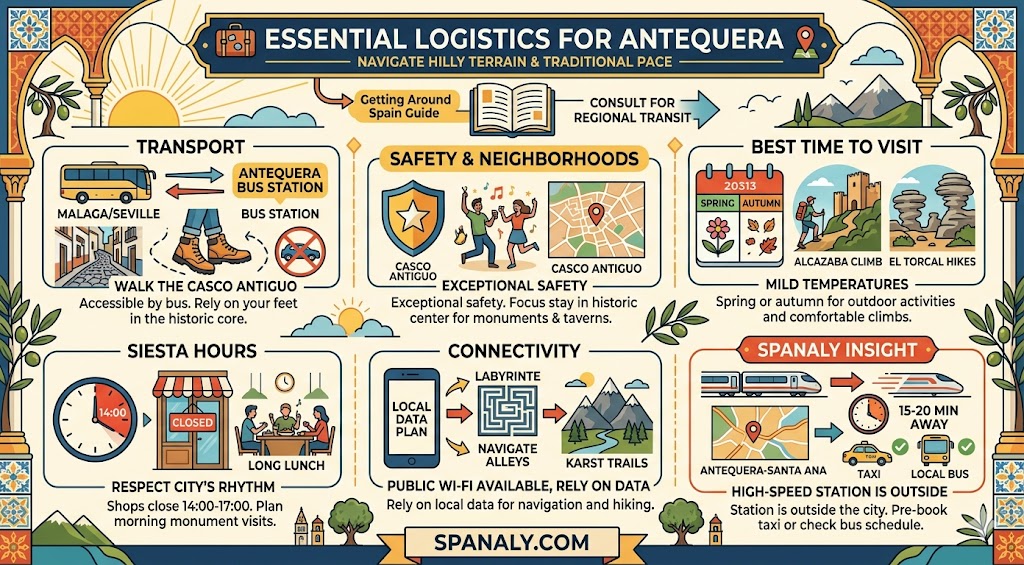
Navigating Antequera requires an understanding of its hilly terrain and traditional pace. Indeed, consult our Getting Around Spain guide to master regional transit options and ensure smooth connectivity throughout your journey.
Transport: The city is best accessed by bus from Malaga or Seville. Once in the historic center, rely on your feet; the steep, narrow streets are designed for walking, not driving.
Safety & Neighborhoods: Antequera is exceptionally safe. Focus your stay in the Casco Antiguo; this area keeps you within minutes of the major monuments and the best traditional taverns.
Best Time to Visit: Aim for spring or autumn. These months offer mild temperatures, making the steep climb to the Alcazaba and the outdoor hikes in El Torcal much more manageable.
Siesta Hours: Respect the city’s rhythm. Most shops close between 14:00 and 17:00. Plan your monument visits for the morning and your long, relaxed lunches for the afternoon closure.
Connectivity: While public plazas offer Wi-Fi, it is best to rely on a local data plan if you plan to navigate the labyrinthine alleys or hike the surrounding karst trails.
Spanaly Insight: If you arrive by train at the high-speed Antequera-Santa Ana station, remember it sits outside the city. Always pre-book a taxi or confirm the local bus schedule, as this station is roughly 15-20 minutes away from the historic center.
📸 Best Photo Spots in Antequera
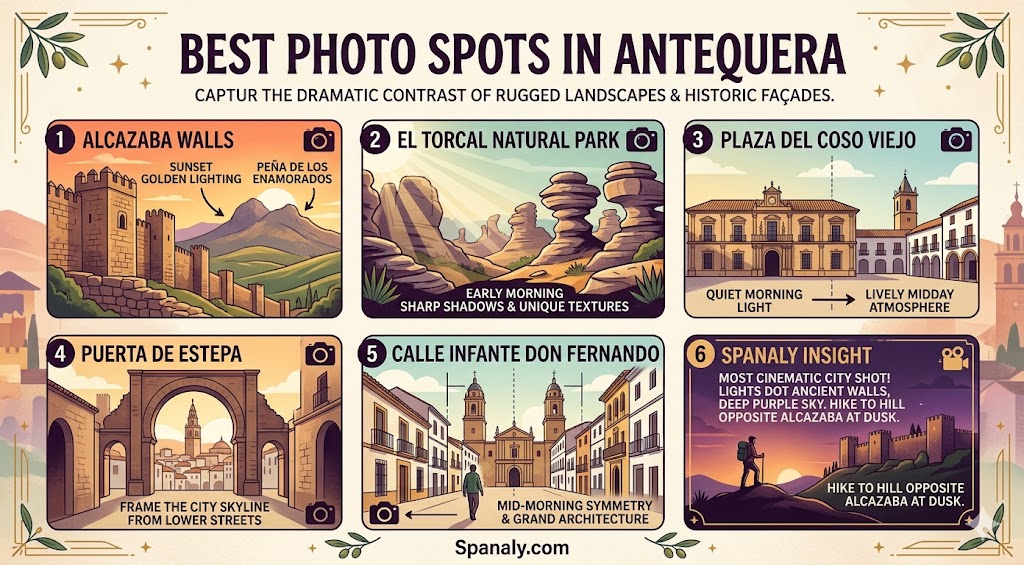
Antequera’s mix of prehistoric ruins, Moorish fortresses, and Renaissance towers offers endless visual texture. Our Best Photography Spots in Spain guide provides professional tips to help you capture the dramatic contrast between the rugged limestone landscapes and the historic stone facades.
Alcazaba Walls: Capture the contrast of the ancient Moorish stonework against the backdrop of the Peña de los Enamorados. Sunset provides the most dramatic golden lighting.
El Torcal Natural Park: Focus your lens on the surreal, eroded rock formations. The early morning light creates sharp, distinct shadows that emphasize the unique karst textures.
Plaza del Coso Viejo: Frame the historic palace against the open square. This spot perfectly captures the transition between the quiet morning light and the lively midday atmosphere.
Puerta de Estepa: This archway offers a frame for the city’s skyline. Position yourself from the lower streets to capture the tower rising above the arch.
Calle Infante Don Fernando: Wander this street at mid-morning. The alignment of the noble houses and church towers creates a symmetrical, grand architectural perspective.
Spanaly Insight: Finally, for the most cinematic shot of the city, hike to the small hill opposite the Alcazaba at dusk. The way the lights begin to dot the ancient walls while the sky turns deep purple is an image you won’t find in any brochure.
🚗 Best Day Trips From Antequera
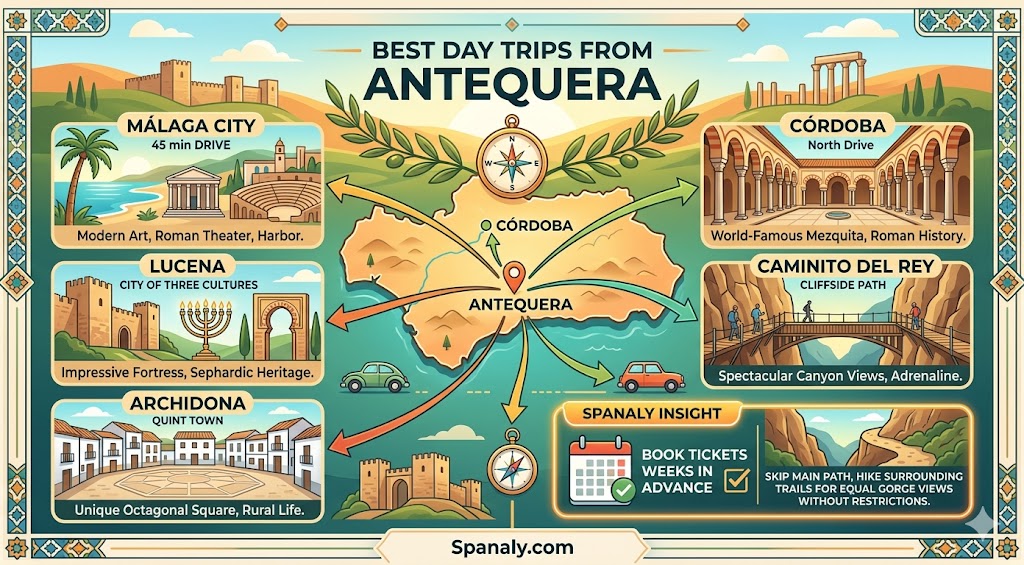
Antequera serves as a strategic hub for deeper Andalusian exploration. Having a rental car provides the freedom to reach hidden mountain villages and isolated historical sites. Additionally, refer to our Spain Travel Itineraries Plans guide to coordinate your base in Antequera with your wider regional route.
Málaga City: Drive south for 45 minutes to reach the coast. Explore the modern art scene, the Roman Theater, and the revitalized harbor district.
Córdoba: Head north to see the world-famous Mezquita. The historic center offers a dense concentration of courtyards and deep Roman history.
Lucena: Visit this “City of Three Cultures.” It features an impressive fortress and a rich heritage of Sephardic history within its walls.
Caminito del Rey: Experience the famous cliffside walkway. This adrenaline-fueled path offers some of the most spectacular canyon views in all of Southern Spain.
Archidona: Wander this small, quiet town known for its unique octagonal square. It provides a peaceful, non-touristic glimpse into rural Andalusian daily life.
Spanaly Insight: If you choose the Caminito del Rey, you must book tickets weeks in advance. If they are sold out, skip the main path and hike the surrounding sierra trails; they offer equally stunning gorge views without the ticket restrictions.
🗺️ Antequera Suggested Itineraries: The "Express" (24-Hour Plan)
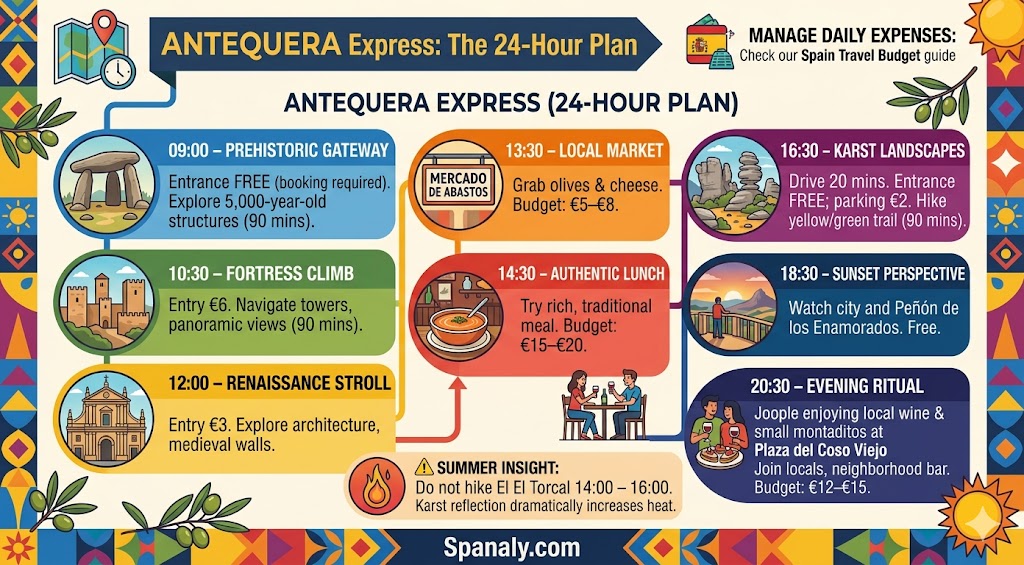
Maximize your day in the “Heart of Andalusia” with this precise schedule. For broader trip logistics, check our Spain Travel Budget guide to manage your daily expenses effectively.
09:00 – Prehistoric Gateway: Start at the Dolmens of Antequera. Entrance is free, but booking is required. Spend 90 minutes exploring these 5,000-year-old structures.
10:30 – Fortress Climb: Head to the Alcazaba. Entry: €6. Spend 90 minutes navigating the towers and enjoying the panoramic views of the valley.
12:00 – Renaissance Stroll: Walk down to Real Colegiata de Santa María. Entry: €3. Explore the early Renaissance architecture and the surrounding medieval walls.
13:30 – Local Market: Wander through the Mercado de Abastos. Grab fresh local olives and cheese for a light, casual bite. Budget: €5–€8.
14:30 – Authentic Lunch: Enjoy Porra Antequerana at a local tavern like Mesón La Solana. Expect a rich, traditional meal. Budget: €15–€20.
16:30 – Karst Landscapes: Drive 20 minutes to El Torcal de Antequera. Entrance is free; parking: €2. Hike the yellow/green trail for 90 minutes.
18:30 – Sunset Perspective: Head to Mirador de la Almenilla. Free. Watch the light change over the city rooftops and the Peñón de los Enamorados.
20:30 – Evening Ritual: Join locals in Plaza del Coso Viejo. Enjoy local wine and small montaditos at a neighborhood bar. Budget: €12–€15.
Spanaly Insight: If you visit in summer, do not attempt the El Torcal hike between 14:00 and 16:00. The heat reflecting off the white karst rock creates temperatures significantly higher than the city center.
🚫 Common Mistakes to Avoid in Antequera

Many travelers treat Antequera as a mere stopover, missing the specific rhythm that defines this city. Avoid these errors to experience the true Andalusian heart.
Rushing the Dolmens: Many visitors arrive mid-day. The site is best experienced in the cool morning light to fully appreciate the alignment with the landscape.
Ignoring the Siesta Rhythm: Do not attempt to visit museums or shop between 14:00 and 17:00. Use this time to follow the local flow—embrace a long, slow lunch.
Overlooking the Geography: Antequera is hilly. Wearing fashion-focused footwear instead of sturdy walking shoes will ruin your ability to reach the best viewpoints.
Skipping the Seasonal Dishes: Many tourists stick to generic fried tapas. You must seek out Porra Antequerana and Molletes (local bread), as these define the regional diet.
Driving Through the Center: The old town consists of narrow, medieval streets. Park your car at the city limits and explore the core on foot to avoid traffic fines.
Missing the Evening Atmosphere: Do not retreat to your hotel at sunset. The city truly comes alive in the plazas only after 20:30, once the heat dissipates.
💡 Spanaly Pro Tips

These insider insights capture Antequera’s true heartbeat, gathered from local artisans and seasoned explorers who know the city well.
The Mollete Ritual: Ask for a tostada de mollete with extra virgin olive oil and grated tomato. The phrasing ensures the kitchen prioritizes your order.
The El Torcal Shortcut: Skip the crowded red route. Head to the visitor center and ask for the Sendero de los Ammonites for a quieter, wilder hike.
Cloistered Sweets: Look for a small buzzer near the wooden torno doors of convents. Do not knock on church doors, as those are strictly for worship.
The Sleeping Giant: Drive to the A-7281 viewpoint at a 45-degree sun angle. The Peña de los Enamorados shifts into a perfect, giant sleeping face.
Sunday Silence: Visit Plaza de San Sebastián at 09:00 on Sundays. You will experience the city’s Renaissance grandeur in complete, haunting silence before the town wakes.
Spanaly Insight: If you see an elderly local sitting in Plaza de San Sebastián with a small radio, stay near them. They listen to regional updates about weather and harvests—it is the fastest “real-time” information you will ever get.
Antequera is where the earth’s raw history forces you to pause. It is not a place you merely visit; it is a landscape that demands your attention.
The Megalithic Silence: Standing before the Dolmens, you witness the earliest human attempt to tether life to the cosmos—a weight of history you cannot find elsewhere.
The Karst Geometry: When you hike El Torcal, the limestone monoliths remind you that time is a sculptor. This is nature at its most surreal, far removed from the manicured parks of the coast.
The Crossroads Legacy: By sitting at the Andalusian crossroads, Antequera offers you the rare perspective of being at the center of everything, yet miles away from the noise.
Continue the Path: If the intersection of deep history and stone artistry resonates with you, our Baeza Travel Guide will lead you to another essential stop that mirrors this quiet grandeur.
Final Call: Do not leave Antequera behind as a blur on the highway. Stay, walk the limestone paths, and let the convergence of prehistory and Renaissance stone redefine your trip.
Spanaly Insight: If you measure your travels by depth rather than distance, Antequera is the benchmark. It is where you stop looking at the map and start feeling the land.