
Table of Contents
Toggle🏙️ Barcelona Hidden Gems
Hidden gems in Barcelona are what make this city truly magical, offering much more than just famous landmarks. Beyond the crowded tourist trails, the city hides secret corners waiting for discovery. These spots offer a peaceful escape and a deep look into the true Catalan soul.
💎 Secret Charm: Discover quiet courtyards and majestic viewpoints away from the noise.
🎨 Artistic Wonders: Explore architectural masterpieces that many travelers overlook.
🌿 Local Retreats: Relax in the oldest gardens and historic hospitals of the city.
🍴 Authentic Taste: Enjoy traditional flavors in neighborhoods where locals thrive.
Indeed, these hidden treasures provide a unique perspective on the Mediterranean capital. Furthermore, they connect you with the rich history found in our Spain Historical Monuments Guide. Many of these sites are even recognized by UNESCO for their cultural value. Ultimately, finding these hidden gems in Barcelona is the best way to experience the city’s real heartbeat.
💡 Spanaly Insight: Timing is your best friend! In fact, even the most famous hidden gems in Barcelona can still get busy on weekends. Therefore, try to visit these spots on weekday mornings to enjoy the silence and the best lighting for your photos.
🌄 Bunkers del Carmel: The Ultimate Panoramic View
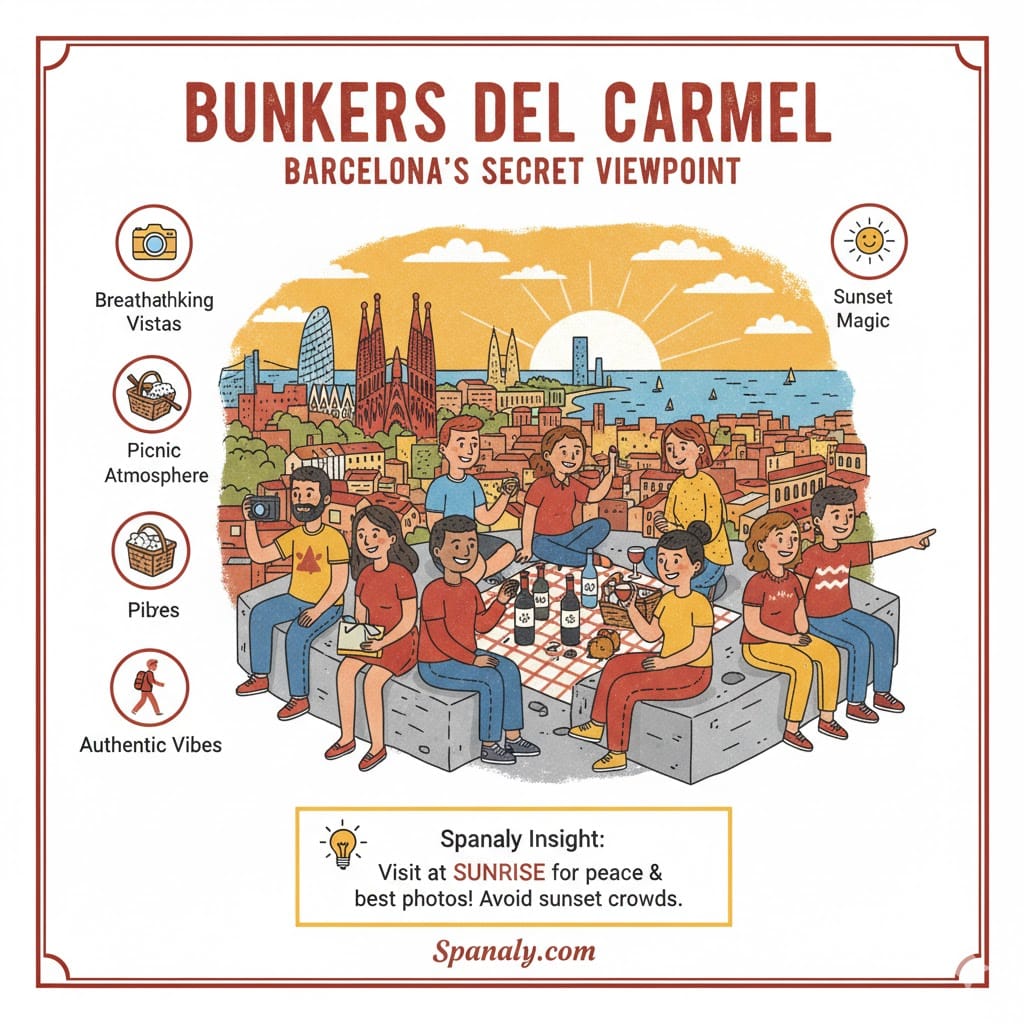
Located atop the Turó de la Rovira, this viewpoint offers a stunning 360-degree perspective of the city. Historically, these bunkers served as anti-aircraft fortifications during the Spanish Civil War. Today, they provide the most peaceful escape for those seeking beauty high above the urban noise, making them one of the most iconic hidden gems in Barcelona.
🌅 Breathtaking Vistas: See every iconic landmark, from the Sagrada Família to the Mediterranean Sea.
✨ Sunset Magic: Watch the sky turn golden as the sun dips behind the Catalan mountains.
🧺 Picnic Atmosphere: Bring your favorite snacks and join the locals for a relaxed evening.
🏙️ Authentic Vibes: Experience a raw and unpolished side of the city away from typical tourist spots.
Indeed, this location connects you with the modern history of the capital. Furthermore, it offers a visual layout of the city similar to what you might find in our . Ultimately, standing here and exploring these hidden gems in Barcelona makes you feel like the entire city belongs to you for a moment.
💡 Spanaly Insight: Be smart with your timing! In fact, the bunkers have become popular during sunset. Therefore, we recommend visiting during sunrise for a private, serene experience and the best soft lighting for your photography.
🏥 Hospital de Sant Pau: The Forgotten Modernisme Masterpiece
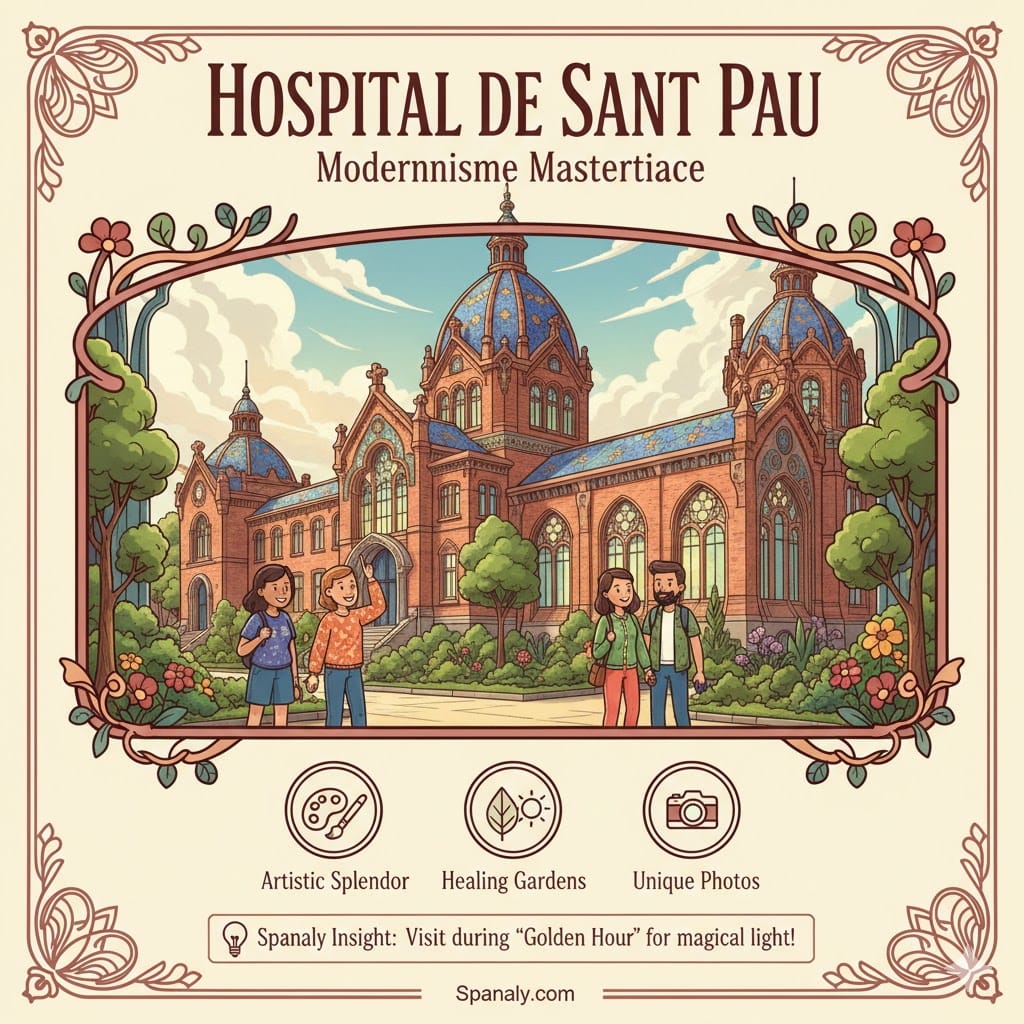
Designed by the visionary architect Lluís Domènech i Montaner, this former hospital is the largest Art Nouveau complex in the world. It is a “city within a city” that showcases the pinnacle of Catalan Modernism. Unlike the crowded halls of nearby landmarks, this UNESCO World Heritage site offers a serene journey through majestic pavilions and colorful mosaics, standing out as one of the most artistic hidden gems in Barcelona.
🎨 Artistic Splendor: Marvel at the intricate brickwork, stained glass windows, and ceramic ceilings.
🌿 Healing Gardens: Walk through outdoor spaces specifically designed to improve patients’ spirits through nature.
💎 Historic Depth: Discover the 12 pavilions connected by secret underground tunnels that once facilitated medical care.
🏛️ Peaceful Exploration: Enjoy the breathtaking architecture without the heavy tourist queues found at Park Guell Barcelona.
Indeed, this site reflects a unique social vision where beauty and health intersect. Furthermore, the vibrant domes and detailed sculptures provide a visual feast that rivals any royal palace. Ultimately, exploring Sant Pau gives you a profound understanding of the creative genius that defines these architectural hidden gems in Barcelona.
💡 Spanaly Insight: Don’t just look at the walls! In fact, the true magic lies in the ceiling patterns and the play of light through the stained glass. Therefore, we recommend visiting during the “Golden Hour” (shortly before sunset) to see the mosaics glow in a warm, ethereal light that makes for unforgettable photos.
🌿 Parc del Laberint d’Horta: A Walk Through History
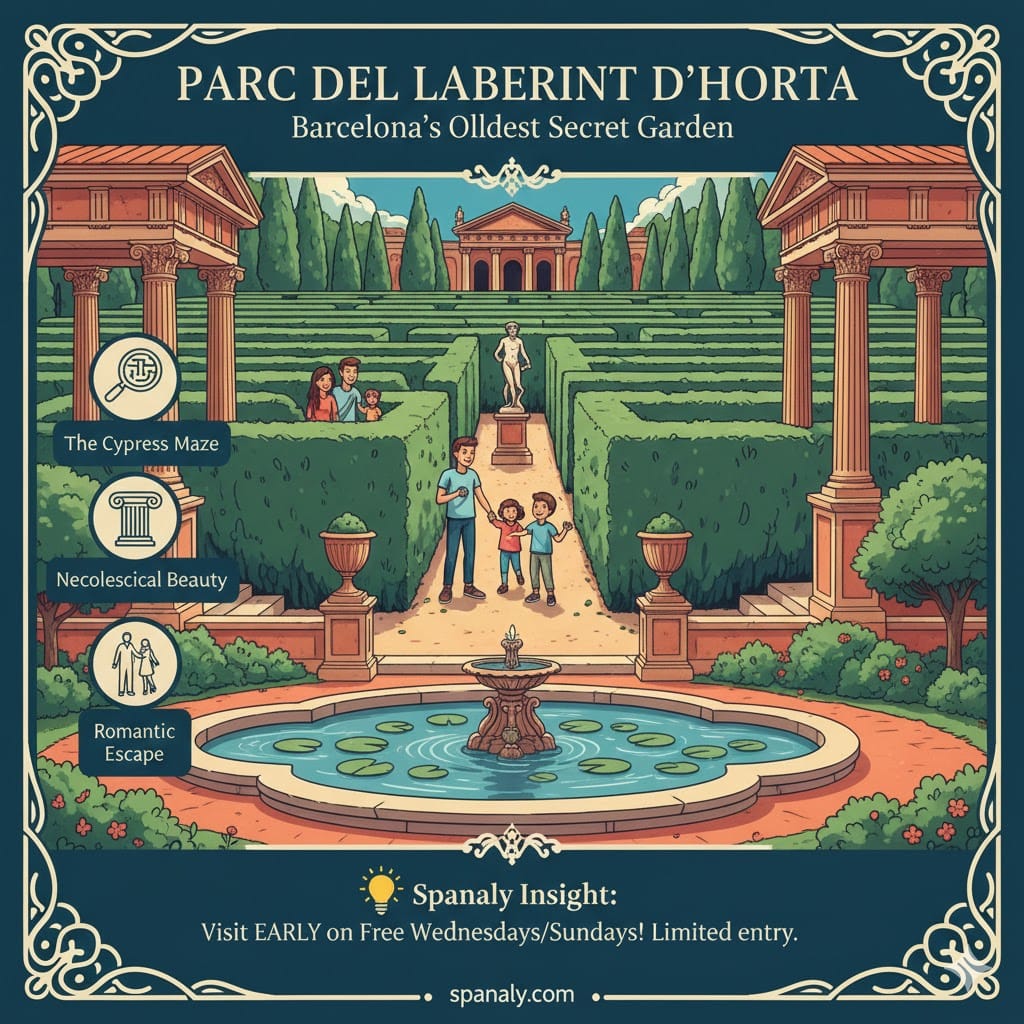
Located on the edge of the city, Barcelona’s oldest garden is a neoclassical treasure that feels like a fairytale setting. Its main attraction is the majestic cypress maze, where visitors can lose themselves in a peaceful green labyrinth. This park offers a romantic and sophisticated atmosphere far from the busy urban center, ranking high among the must-visit hidden gems in Barcelona.
🌿 The Cypress Maze: Challenge yourself to find the statue of Eros at the center of this historic labyrinth.
🏛️ Neoclassical Beauty: Admire the elegant pavilions, Tuscan columns, and mythological sculptures.
💧 Serene Waters: Relax by the tranquil lily ponds and ornamental fountains scattered throughout the park.
🌳 Romantic Escape: Enjoy the shaded paths of the romantic wing, featuring waterfalls and wilder nature.
Indeed, this garden provides a unique historical experience that reflects the elegance of the 18th century. Furthermore, its peaceful environment makes it one of the best spots for those seeking the quietest hidden gems in Barcelona. Ultimately, it is a perfect sanctuary for families and couples alike who want to see the city’s green soul.
💡 Spanaly Insight: Watch the calendar! In fact, the park limits the number of visitors to 750 at a time to preserve its delicate beauty. Therefore, we recommend checking the local schedule, as entry is often free on Wednesdays and Sundays, but it’s best to arrive early to secure your spot.
🏡 Casa Vicens: The Birth of Gaudí’s Genius
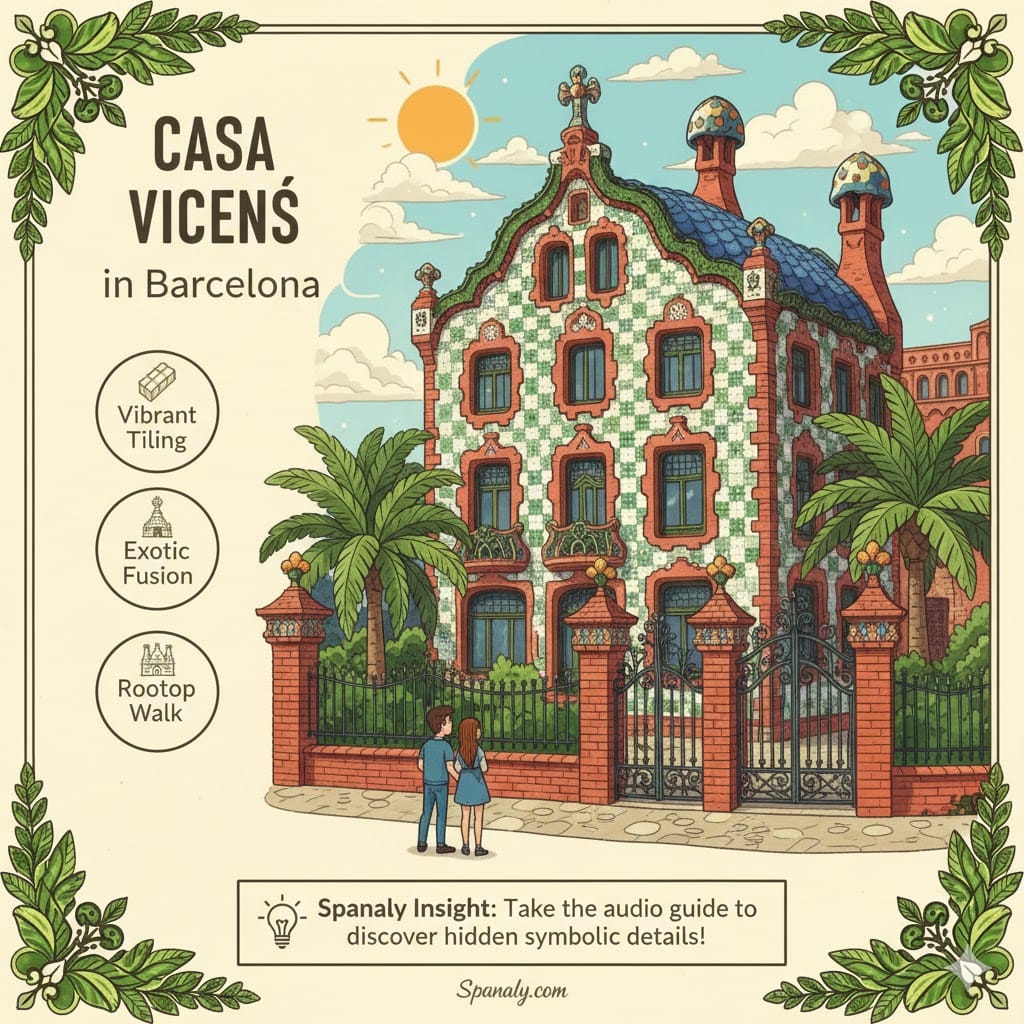
While most travelers flock to Casa Batlló, the true origin of Gaudí’s revolutionary style lies in the Gràcia neighborhood. Casa Vicens was the architect’s first major commission and is a colorful explosion of Oriental and Mudéjar influences. This UNESCO World Heritage site was a private residence for over 130 years and has only recently opened its doors to the public.
🧱 Vibrant Tiling: Admire the stunning green and white ceramic tiles inspired by the French marigolds that grew on the estate.
🕌 Exotic Fusion: Explore the unique blend of Moorish, Persian, and Japanese architectural elements.
🌿 The Smoking Room: Step into a mesmerizing oasis of blue papier-mâché tiles and intricate plasterwork.
🏰 Rooftop Walk: Discover the first of Gaudí’s iconic accessible roofs, featuring small domes and colorful chimneys.
Indeed, this house represents a radical departure from the traditional styles of the late 19th century. Furthermore, it offers a quieter, more intimate look at the architect’s vision compared to the crowded Casa Batllo and Casa Mila Barcelona. Ultimately, visiting Casa Vicens is essential to understanding the evolution of Barcelona’s most famous creator.
💡 Spanaly Insight: Look for the “hidden” details! In fact, Gaudí integrated nature into every corner, from the iron gate shaped like palm leaves to the floral paintings on the ceilings. Therefore, we recommend taking the audio guide to discover the symbolic meanings behind these early artistic choices.
⛪ The Cloister of Santa Anna: A Silent Sanctuary
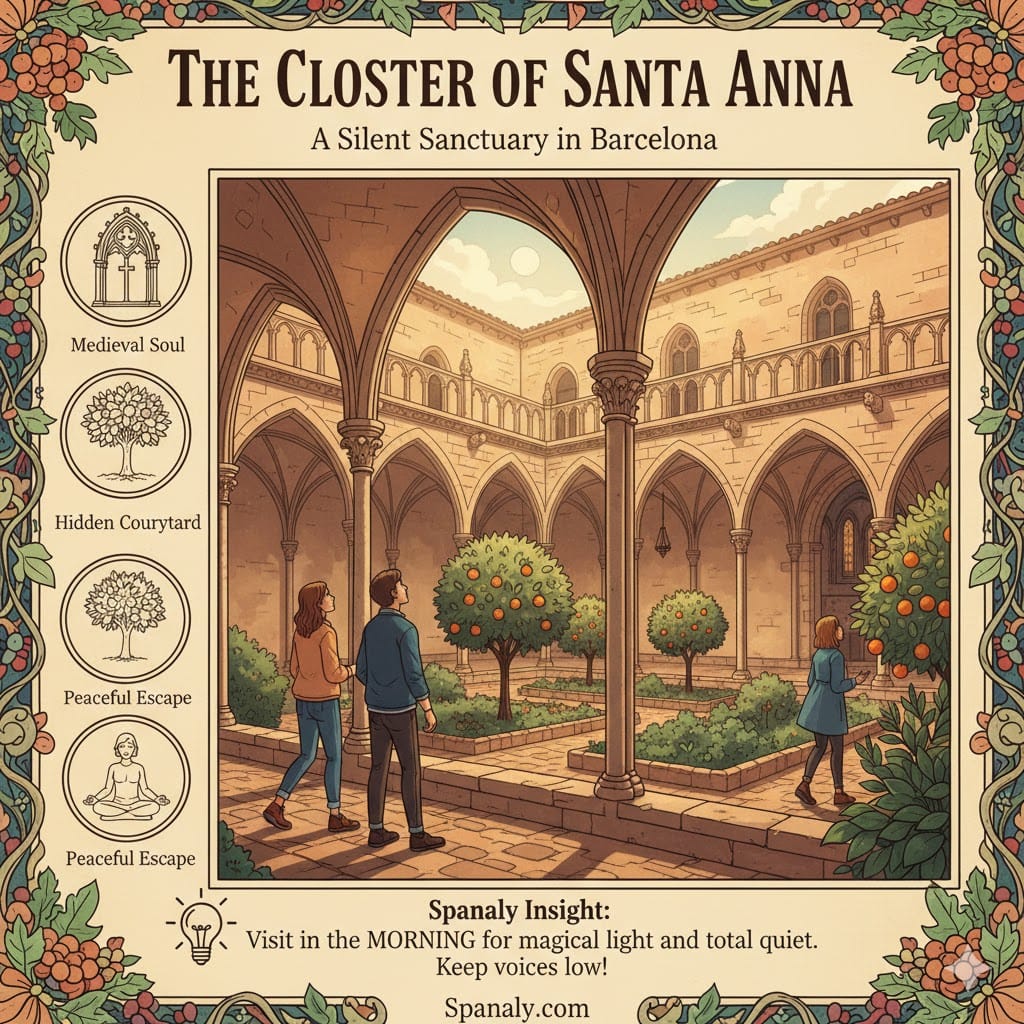
Just steps away from the bustling energy of Plaça de Catalunya lies a hidden Romanesque and Gothic treasure. The Church and Cloister of Santa Anna date back to the 12th century, offering a peaceful courtyard filled with orange trees and ancient stone arches. It is a place where the city’s roar disappears, replaced by the soft sound of birds and whispering history.
🌿 Gothic Cloister: Wander through the two-story gallery and admire the delicate columns and lush greenery.
🕯️ Medieval Soul: Explore the interior of the church, which maintains a solemn and authentic historic atmosphere.
🍊 Hidden Courtyard: Relax in the central garden, a perfect spot to pause and reflect in total silence.
🛡️ Knightly History: Discover the connection to the Order of the Holy Sepulchre and the ancient military religious history.
Indeed, this monastery is one of the few remaining examples of the city’s medieval architectural layers. Furthermore, its tranquil environment offers a sharp contrast to the crowded streets of the nearby Gothic Quarter Barcelona. Ultimately, finding this door is like discovering a portal to a different century.
💡 Spanaly Insight: Respect the silence! In fact, this is still an active place of prayer and community work. Therefore, we recommend visiting during the morning hours when the light hits the cloister arches perfectly, and remember to keep your voice low to preserve the sanctuary’s unique peace.
📍 Plaça de Sant Felip Neri: A Poetic Hidden Square
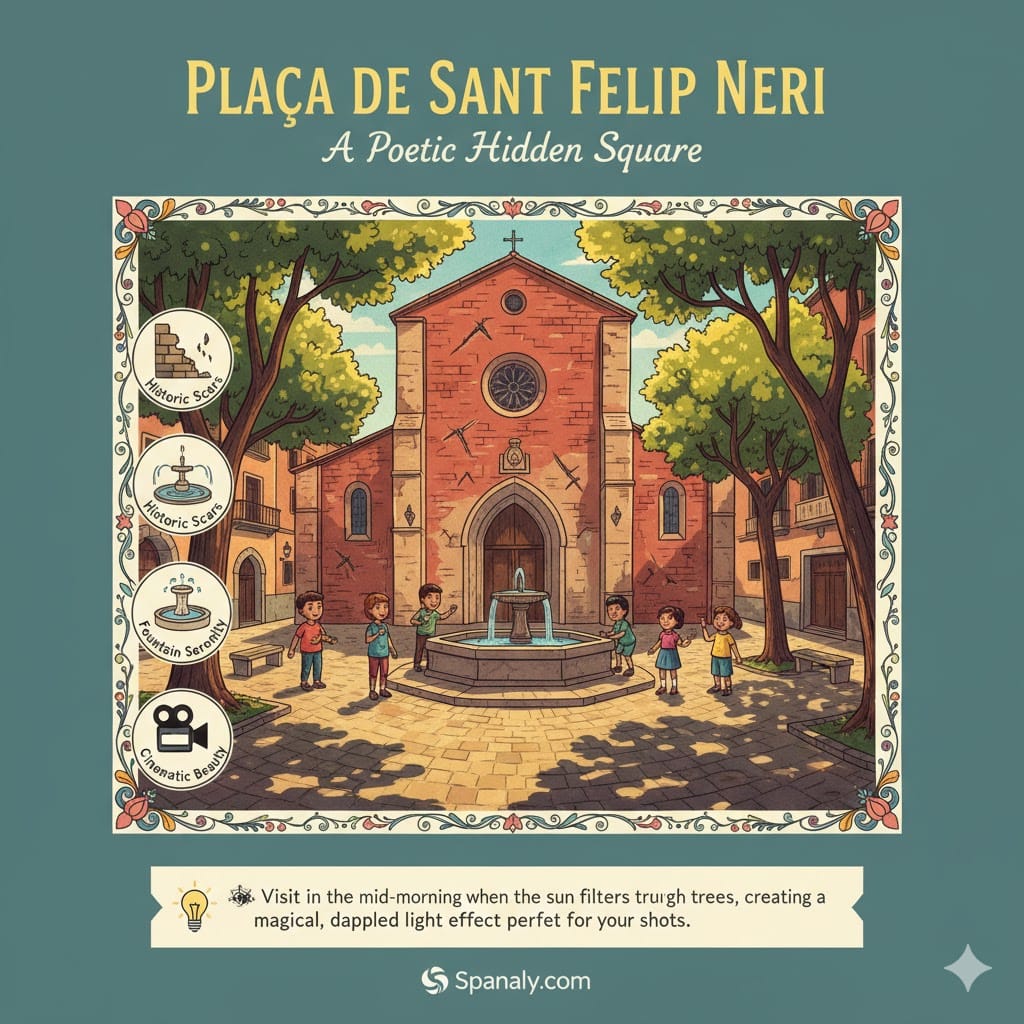
Tucked away in the narrow labyrinth of the Gothic Quarter, this small square is arguably the most atmospheric spot in Barcelona. It is centered around a gentle stone fountain and shaded by tall tipuana trees. While it appears peaceful today, the scars on the church walls remain as a silent testimony to the city’s past during the Spanish Civil War.
🏛️ Historic Scars: Observe the shrapnel marks on the church facade, left as a memorial to the square’s history.
⛲ Fountain Serenity: Listen to the calming sound of water in a space that feels completely detached from the city’s rush.
🎥 Cinematic Beauty: Discover why this picturesque setting has been a favorite filming location for international movies and music videos.
🏫 Local Life: Watch as local children play in the square during school breaks, bringing life back to this historic site.
Indeed, this square captures the resilient spirit of the Catalan people. Furthermore, its melancholic beauty offers a different emotional experience than the vibrant energy found at Barceloneta Beach Barcelona. Ultimately, sitting on its stone benches is the best way to soak in the true essence of old Barcelona.
💡 Spanaly Insight: Timing is everything for photographers! In fact, the tall buildings surrounding the square create unique shadows and light pockets. Therefore, we recommend visiting in the mid-morning when the sun filters through the trees, creating a magical, dappled light effect perfect for your shots.
🎭 Palau de la Música Catalana: The Jewel of Glass
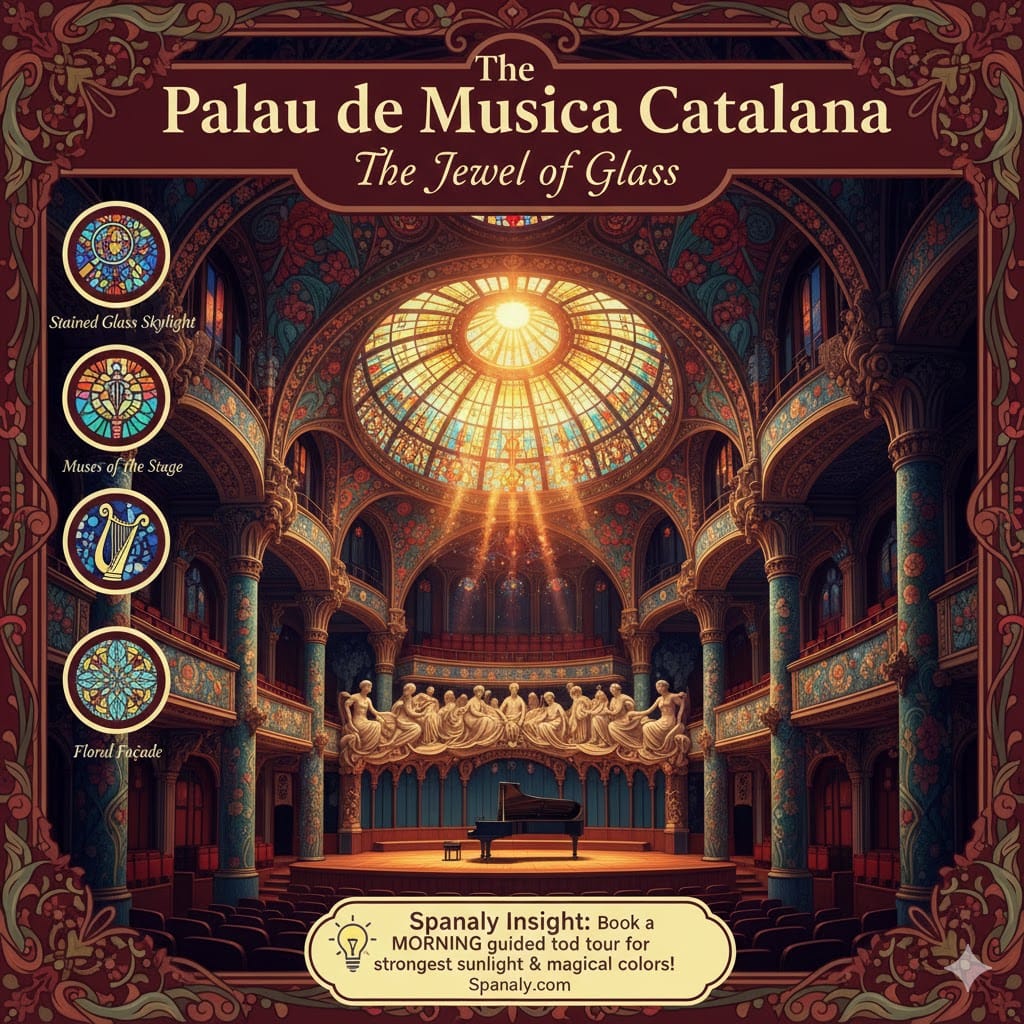
While many admire its exterior, the true magic of this concert hall lies within its auditorium. Designed by Lluís Domènech i Montaner, it is the only concert hall in Europe illuminated entirely by natural light during the day. This UNESCO World Heritage site is a symphony of stained glass, mosaics, and sculptures that celebrate the joy of music and Catalan identity.
🌈 Stained Glass Skylight: Gaze up at the breathtaking inverted dome of multicolored glass that acts as a natural sun.
🎼 Muses of the Stage: Admire the 18 sculptures of muses that appear to emerge from the back of the stage.
🌸 Floral Façade: Explore the intricate mosaic-covered columns and floral motifs that decorate every corner.
🎹 Musical Atmosphere: Feel the vibrant energy of a venue that still hosts world-class performances today.
Indeed, this building is the ultimate expression of Catalan Modernisme. Furthermore, its artistic intensity rivals the grandeur of the Sagrada Familia Barcelona. Ultimately, stepping inside this hall feels like walking into a giant, shimmering music box.
💡 Spanaly Insight: Book a guided tour! In fact, to see the skylight in its full glory, you must enter the main hall. Therefore, we recommend choosing a morning slot when the sunlight is strongest, as the play of colors on the interior sculptures is truly a once-in-a-lifetime sight.
🎨 Poble Sec Art Scene: Modern Creativity Unbound
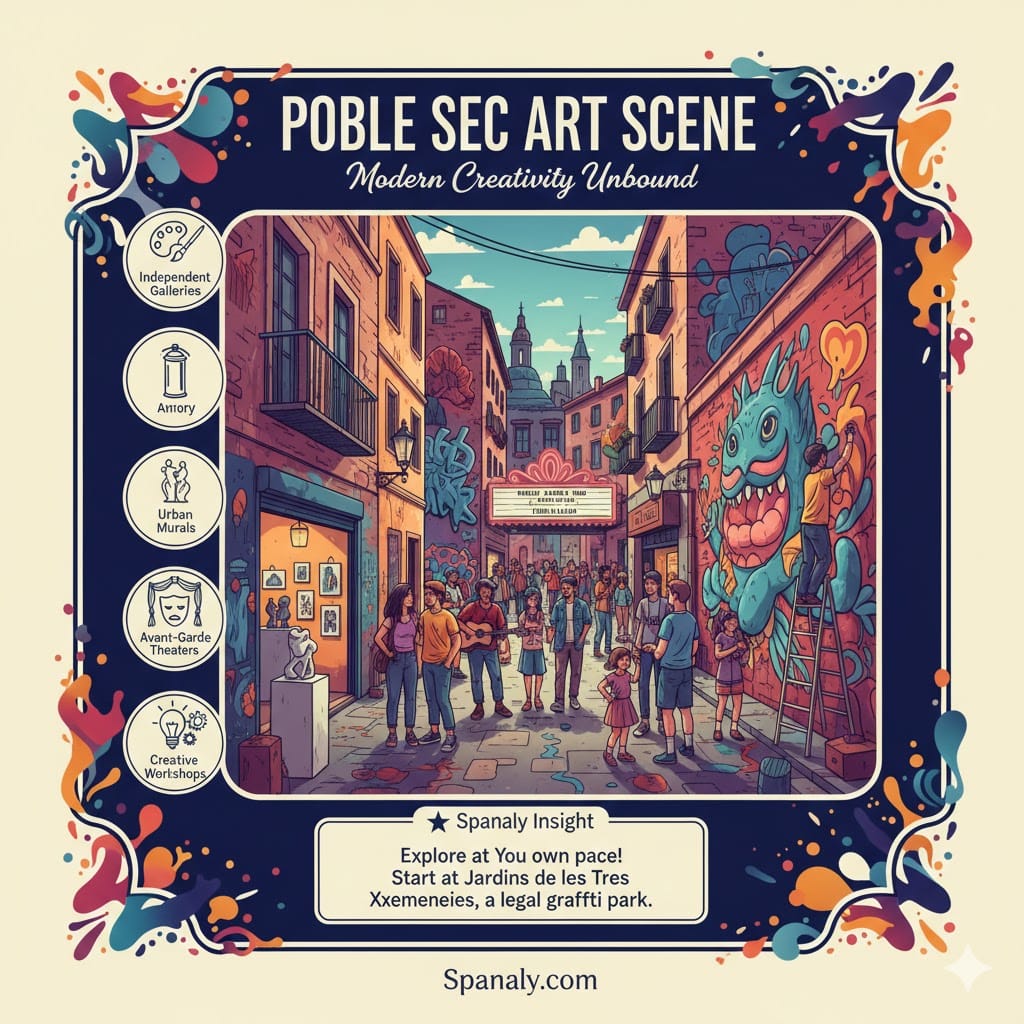
Nestled at the foot of Montjuïc, Poble Sec has transformed into Barcelona’s most exciting creative hub. This neighborhood is a living gallery where urban street art meets independent galleries and avant-garde theaters. Exploring Poble Sec offers a raw and authentic look at the city’s contemporary soul, far removed from the polished tourist trails.
🖼️ Independent Galleries: Discover local talent in small, intimate art spaces that showcase experimental works.
🖌️ Urban Murals: Wander through the streets to find impressive large-scale street art that tells stories of local identity.
🎭 Avant-Garde Theaters: Experience the “Broadway of Barcelona” on Avinguda del Paral·lel, home to legendary performance venues.
🏢 Creative Workshops: Visit open studios where artists and designers collaborate on the next big Mediterranean trends.
Indeed, this district captures the dynamic and evolving nature of Catalan culture. Furthermore, the neighborhood’s artistic energy is perfectly complemented by its legendary culinary scene, making it a highlight in our Barcelona Travel Safety Guide for those exploring off-the-beaten-path areas. Ultimately, Poble Sec is where you go to see Barcelona’s future being created today.
💡 Spanaly Insight: Explore at your own pace! In fact, the best street art is often hidden in small alleys away from the main roads. Therefore, we recommend starting your walk near the Jardins de les Tres Xemeneies, a famous “legal” graffiti park where you can see artists actively working on their latest murals.
🍢 Carrer de Blai: The Heart of the Pintxos Scene
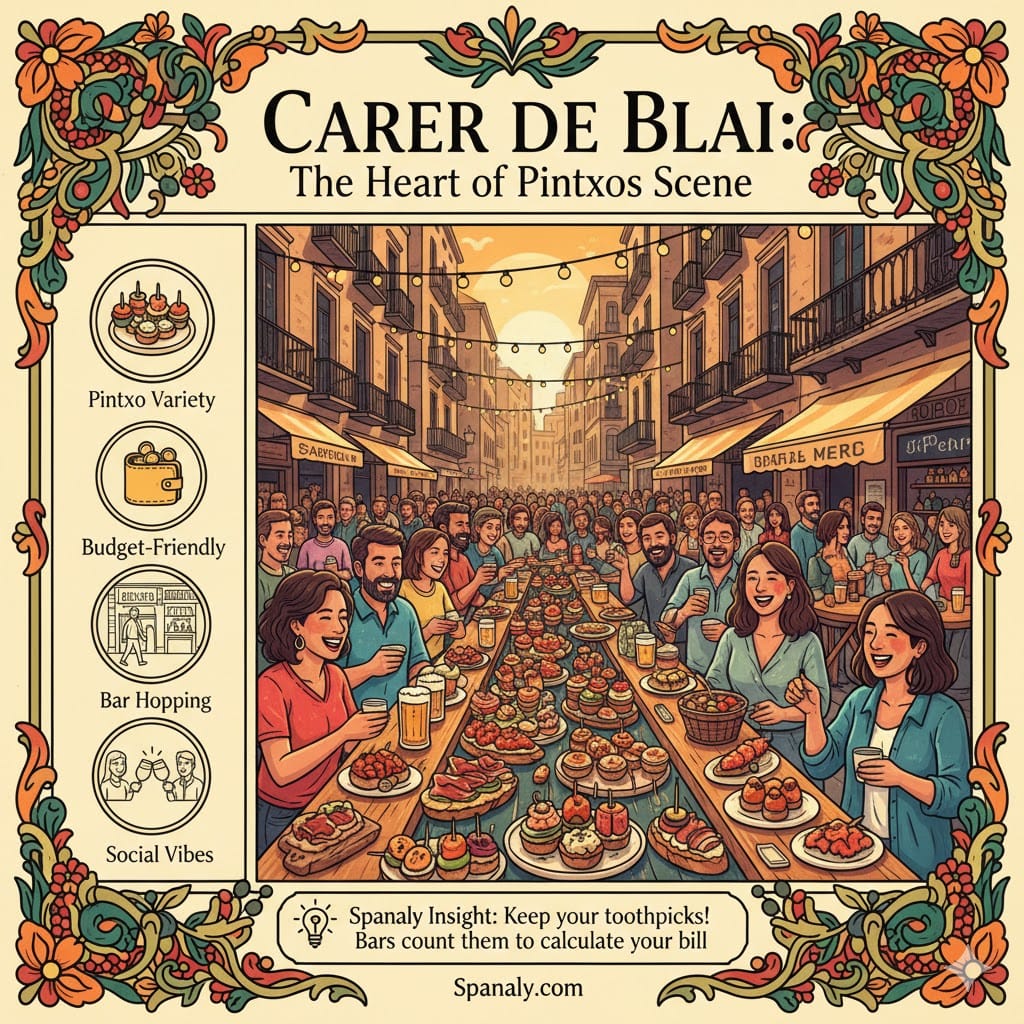
After a day of exploring, there is no better place to recharge than Carrer de Blai in the Poble Sec district. Known as the “Pintxos Street” of Barcelona, this lively pedestrian boulevard is lined with dozens of cozy bars offering creative bite-sized snacks at incredibly affordable prices. It is the ultimate social hub where locals gather to enjoy good food and a vibrant, unpretentious atmosphere.
🥖 Pintxo Variety: Choose from hundreds of colorful toppings served on crusty bread, from fresh seafood to cured Iberian meats.
💰 Budget-Friendly: Experience the joy of high-quality tapas where each pintxo typically costs between €1 and €2.50.
🚶 Bar Hopping: Follow the local tradition of having one drink and two pintxos at one bar before moving on to the next one.
🍻 Social Vibes: Enjoy the outdoor terrace seating, perfect for people-watching and soaking in the neighborhood’s energy.
Indeed, this street offers an authentic social experience that you won’t find in the more touristy areas. Furthermore, it is the perfect place to practice How to Order Food Like a Local in Spain. Ultimately, a night at Carrer de Blai is the most delicious way to end your “hidden gems” journey through Barcelona.
💡 Spanaly Insight: Keep your toothpicks! In fact, the way bars calculate your bill is by counting the wooden sticks left on your plate at the end of the night. Therefore, we recommend keeping them all in one place so you can easily settle the tab before moving to your next culinary stop.
🗺️ How to See it All: The Perfect 2-Day Itinerary
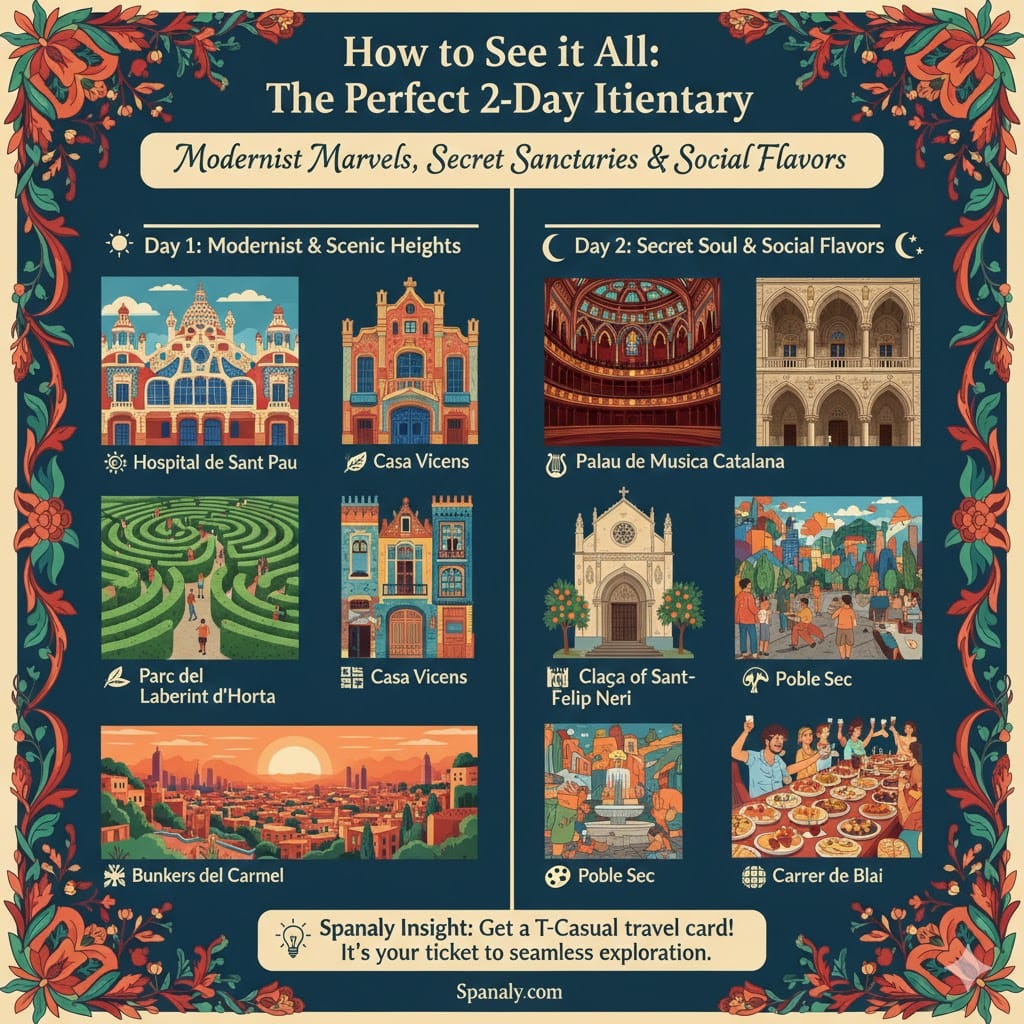
Trying to squeeze all these gems into 24 hours would be exhausting. Instead, we’ve designed a strategic 2-day plan that balances exploration with relaxation, ensuring you see the best of Barcelona at the right pace.
🗓️ Day 1: Modernist Marvels & Scenic Heights
Focus on the northern architectural masterpieces and the best sunset view in the city.
☀️ Morning: Start at Hospital de Sant Pau. Its colorful pavilions are stunning in the soft morning light.
🌳 Mid-Day: Head to Parc del Laberint d’Horta. It’s the perfect time to get lost in the maze before the afternoon heat.
🎨 Afternoon: Visit Casa Vicens in the charming Gràcia neighborhood to witness Gaudí’s early genius.
🌅 Sunset: End your day at Bunkers del Carmel with a picnic and a 360-degree view of the city.
🗓️ Day 2: Secret Sanctuaries & Social Flavors
Dive into the hidden history of the old city and end with a local culinary celebration.
🎼 Morning: Visit Palau de la Música Catalana (book an early tour to see the skylight’s full glow).
🕯️ Late Morning: Walk to the Cloister of Santa Anna, a silent escape just steps from the city center.
⛲ Noon: Discover the poetic and historic Plaça de Sant Felip Neri in the heart of the Gothic Quarter.
🖌️ Afternoon: Explore the Poble Sec Art Scene near the foot of Montjuïc for a dose of modern creativity.
🍢 Evening: Celebrate your journey at Carrer de Blai for an authentic and budget-friendly pintxos crawl.
💡 Spanaly Insight: Timing and mobility are your best friends! In fact, some of these locations are miles apart. Therefore, we highly recommend checking out our comprehensive Public Transport Barcelona Guide. Using the Metro is not only the fastest way to connect these gems, but it also helps you save energy for the walks inside the parks and historic alleys.
💡 Spanaly Pro Tips: Master Your Hidden Journey
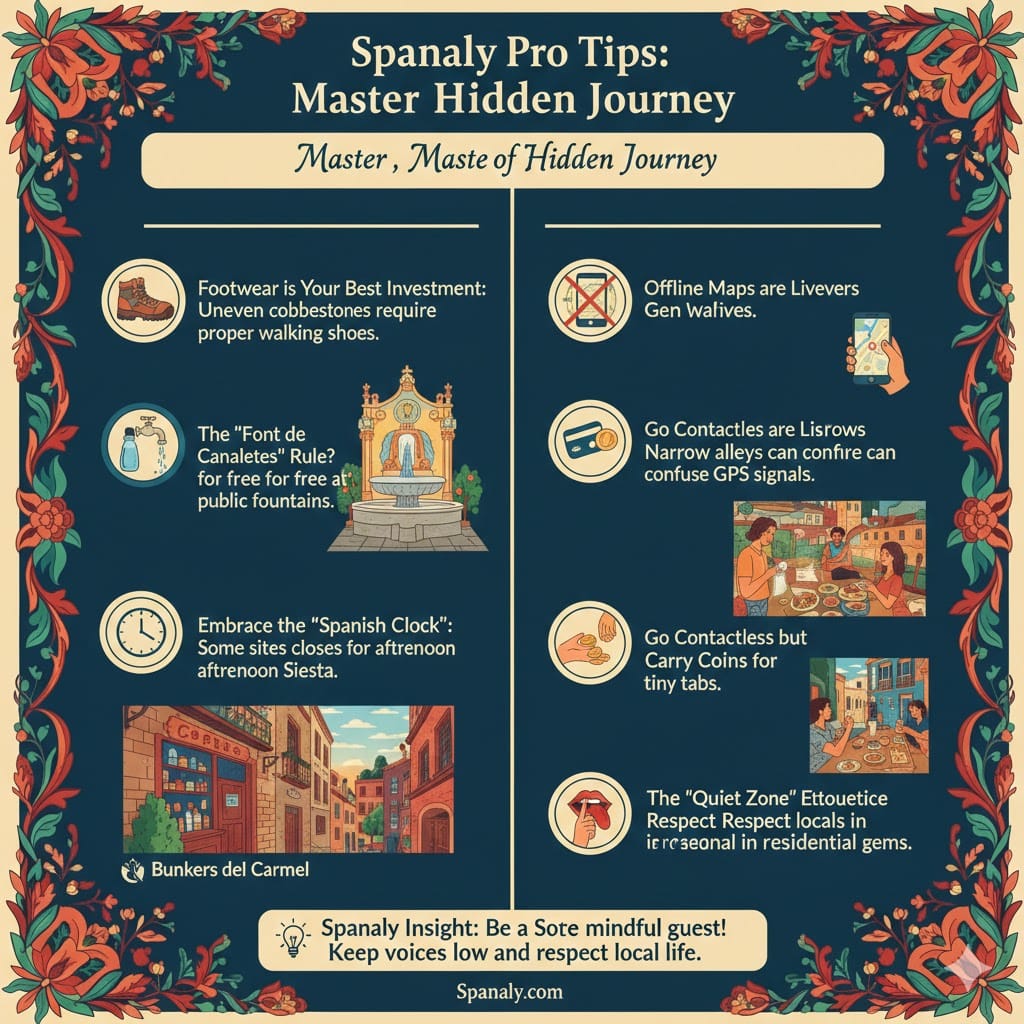
To truly experience Barcelona’s secret side like a seasoned local, you need more than just a map. These insider tips focus on the cultural nuances and logistical hacks that will elevate your adventure while keeping your stress levels low.
👟 Prioritize “Pavement-Ready” Footwear: Barcelona’s hidden gems often hide behind centuries-old uneven cobblestones and steep hills (especially near the Bunkers). Professional tip: swap fashion for function and wear high-quality walking shoes to avoid “traveler’s fatigue” by noon.
🕒 Respect the “Siesta” Rhythm: Some smaller sanctuaries and local workshops in Poble Sec might close between 2:00 PM and 5:00 PM. Plan your museum visits or transit during these hours, and save the early mornings or late evenings for outdoor exploring.
💧 Stay Hydrated for Free: Don’t waste money on bottled water! Barcelona is dotted with historic “Fuentes” (fountains) offering safe, cold, and free drinking water. Carrying a reusable bottle is an easy way to Save Money Travel Spain while staying eco-friendly.
📱 GPS-Proof Your Route: The narrow, towering walls of the Gothic Quarter can sometimes interfere with satellite signals. Download an “Offline Map” of the city center so you can find your way to Plaça de Sant Felip Neri even when your data signal gets shy.
🤫 The “Quiet Zone” Etiquette: Since many of these gems are located in residential courtyards or silent historic zones, keeping your voice low isn’t just respectful—it’s how you blend in and experience the true atmosphere without drawing the wrong kind of attention.
Indeed, these small adjustments to your travel style will significantly enhance your comfort and budget. Furthermore, moving with the local flow allows you to discover details that most tourists miss. Ultimately, being a prepared explorer is the first step toward a truly unforgettable Mediterranean experience.
💡 Spanaly Insight: Be a mindful guest! In fact, the charm of these spots lies in their preservation. Therefore, we recommend visiting in small groups and avoiding large professional camera setups in active places of worship like Santa Anna to keep the sanctuary’s peace intact for everyone.
💎 Essential Insider FAQs – Barcelona Beyond the Basics
🎭 Can I attend a concert at Palau de la Música without a full tour?
Yes! While guided tours are great, the best way to experience the Palau de la Música is by booking a concert ticket. Sometimes, a "Last Minute" ticket for an evening performance costs less than a guided tour, allowing you to see the architecture while hearing its world-class acoustics.
⛪ Is there a "dress code" for hidden religious sites like Santa Anna?
Even though the Cloister of Santa Anna is a "hidden" gem, it remains an active religious site. We recommend the "Modesty Rule": ensure your shoulders are covered and shorts/skirts are knee-length to respect the monks and the tranquility of the sanctuary.
📸 Are professional cameras allowed in the Bunkers del Carmel?
Personal photography with DSLRs is allowed and encouraged at The Bunkers. However, using tripods or professional lighting equipment for commercial shoots requires a permit from the Barcelona Film Commission. For the best "clear" shots, arrive 45 minutes before sunrise to beat the crowds.
🎨 Is the Poble Sec Art Scene safe for solo travelers at night?
Absolutely. Poble Sec is a vibrant, residential neighborhood. While it feels "edgy" due to the street art, it is very safe. The main streets are well-lit and packed with locals until late. Just stay aware of your surroundings as you would in any major city center.
🎟️ Do I need to book the Labyrinth of Horta in advance?
Unlike the Sagrada Família, you generally don't need to book weeks ahead. However, entry to Parc del Laberint d’Horta is capped at 750 people at a time. On Sundays, entry is free, which means longer queues. We recommend visiting on a weekday morning to have the maze almost entirely to yourself.
Curated by Spanaly.com
✨ Your Adventure Starts Where the Crowds End
Barcelona is much more than its famous postcards. By stepping off the beaten path, you’ve discovered the city’s true pulse—from silent cloisters to vibrant street art.
🏛️ Beyond Gaudi: You’ve seen the soul of Catalan Modernisme.
🌳 Natural Escapes: You’ve found peace in secret labyrinths.
🍢 Local Flavors: You’ve tasted the authentic life on Carrer de Blai.
🌅 New Perspectives: You’ve watched the city glow from the Bunkers.
Indeed, these nine gems are just the beginning of your Spanish journey. Furthermore, if you fell in love with this secret side of Catalonia, you shouldn’t stop here. Ultimately, the spirit of discovery continues in the capital—don’t miss our guide to the Madrid Hidden Gems to keep the magic alive!
📸 Share Your Journey: Which gem was your favorite? Tag us in your photos and let the Spanaly community know about your discoveries!