
Table of Contents
Toggle💃 Bienal de Flamenco Seville
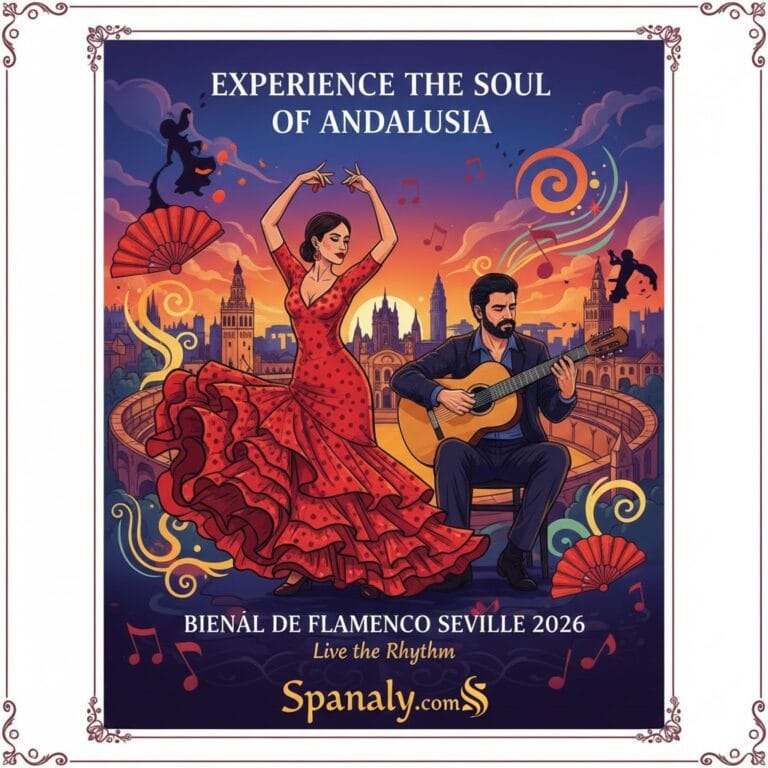
Every two years, the city of Seville doesn’t just host a festival; it breathes, heartbeats, and dances to the rhythm of the world’s most prestigious flamenco event. The Bienal de Flamenco transforms the Andalusian capital into a global stage where ancient tradition meets daring innovation.
Notably, this event is a pivotal moment for anyone exploring the diverse landscape of Festivals in Spain, offering a raw and authentic glimpse into the soul of Andalusia.
Why the 2026 Bienal is Unmissable:
🌟 World-Class Artistry: The finest dancers, haunting singers, and virtuoso guitarists gather to perform in Seville’s most historic venues.
🎭 Tradition & Innovation: Experience “Flamenco Puro” alongside bold, contemporary performances that push the boundaries of the art form.
city 🏰 Local Immersion: The entire city vibrates with energy, from grand theaters to spontaneous street performances in hidden plazas.
Indeed, this guide is crafted to help you navigate Seville’s most captivating month like a true local. To see how this spectacular event fits into your broader travel plans, don’t forget to explore our comprehensive Seville Travel Guide.
💡 Spanaly Insight: The Bienal is often called the “Olympics of Flamenco.” If you want to see the future legends of this art form before they become world-famous, this is the place to be.
✨ The Essence & History: From 1980 to the "Flamenco Olympics"
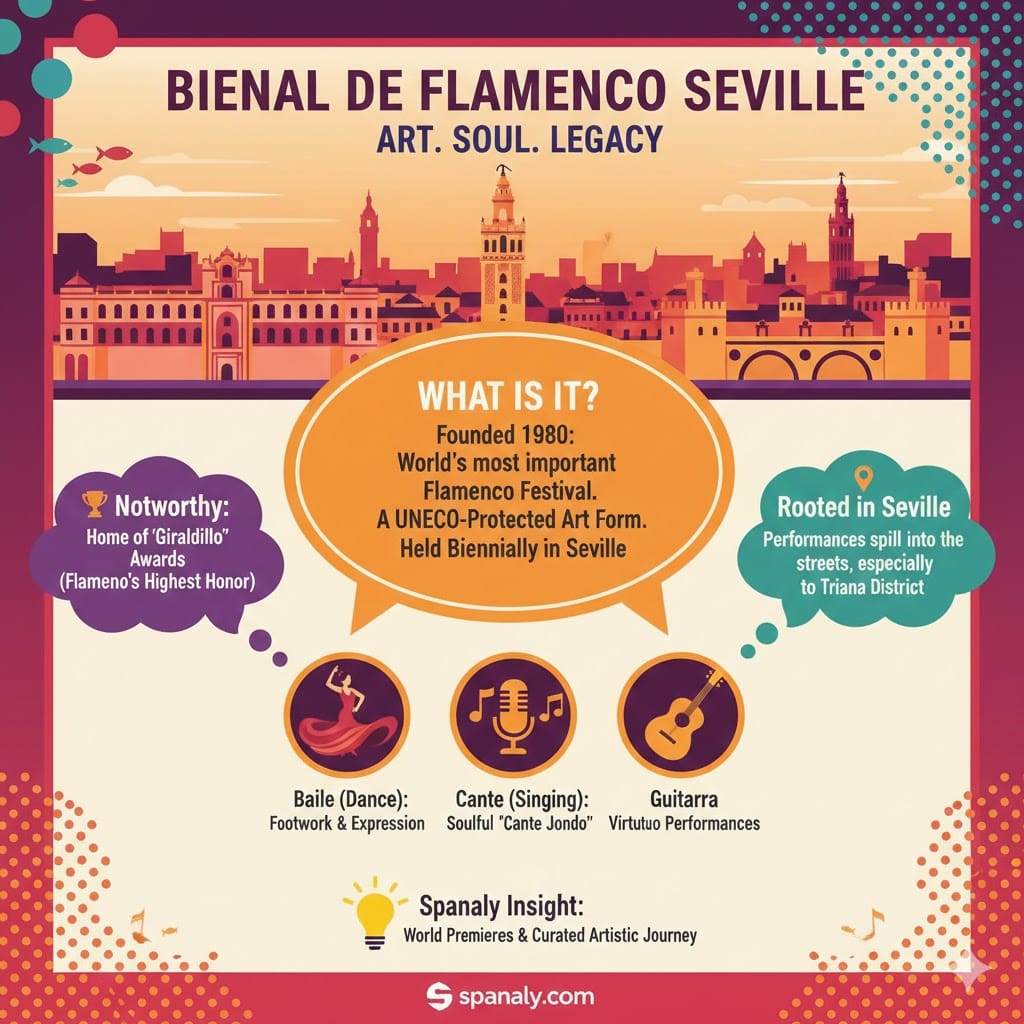
The Bienal de Flamenco is not just a festival; it is the spiritual soul of Seville: The Heart of Andalusia. Founded in 1980, it began as an ambitious cultural project to preserve the city’s profound heritage. Over the decades, it has evolved into a global phenomenon, earning its reputation as the “Olympics of Flamenco.” Today, it serves as the ultimate benchmark for artistic excellence across three main pillars:
💃 Baile (Dance): From legendary footwork to the expressive movements of rising stars.
🎤 Cante (Singing): Soul-stirring “Cante Jondo” (deep song) that resonates with the history of Andalusia.
🎸 Guitarra (Guitar): Virtuoso performances showcasing the evolution from traditional chords to modern fusion.
Notably, the festival’s history is deeply intertwined with the city’s landmarks. For instance, many early performances were held in the Triana District, historically known as the cradle of flamenco. Winning the “Giraldillo” award at this event—the highest honor in the flamenco world—is a career-defining moment for any artist. Consequently, the Bienal is where you witness the past, present, and future of this UNESCO-protected art form on a single stage.
💡 Spanaly Insight: Unlike typical tourist “tablaos,” the Bienal often features world premieres of productions that have been years in the making. It is a curated artistic journey designed for the most discerning aficionados.
📅 Festival Dates & Frequency
Understanding the timing of the Bienal is crucial for your travel planning. This is not an annual event; its scarcity is part of its prestige.
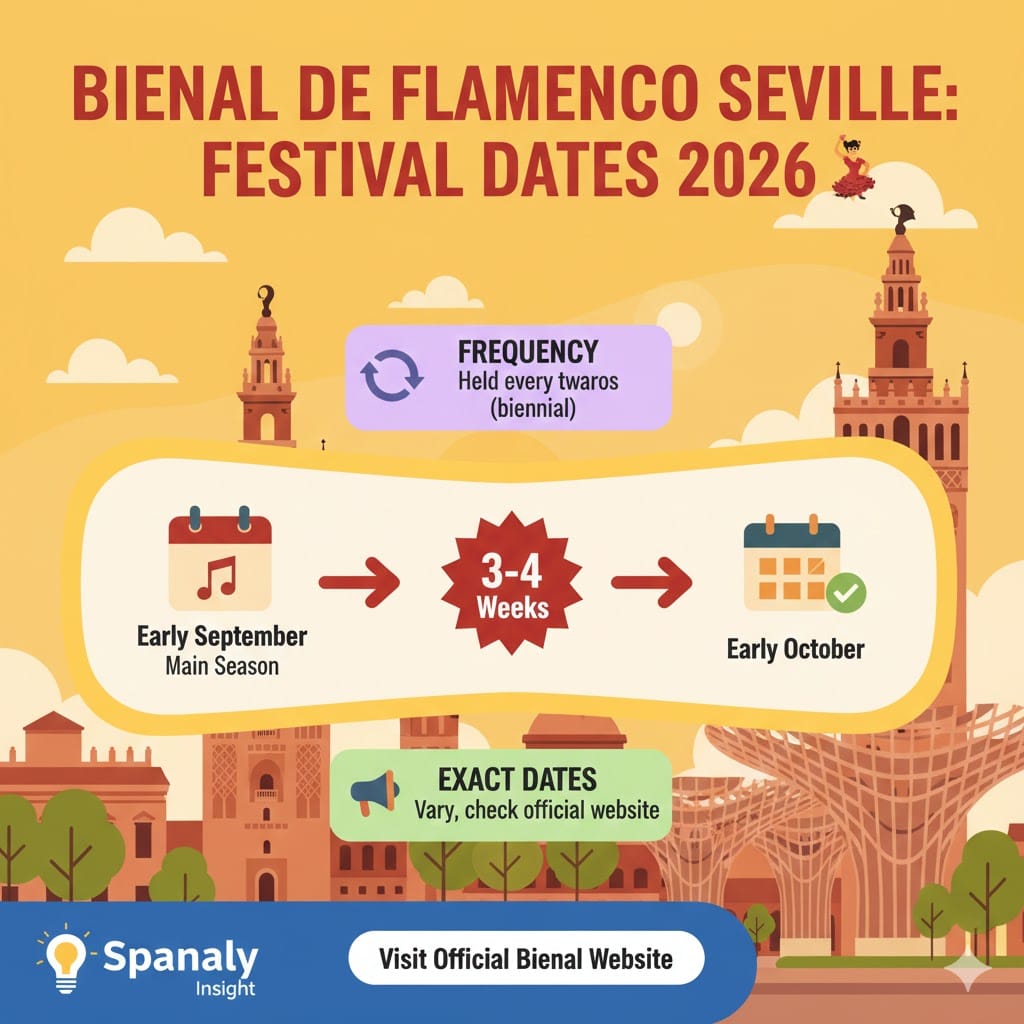
🔄 Frequency: The festival is biennial, meaning it takes place every two years (on even-numbered years).
🍂 Main Season: The event typically unfolds over three to four weeks, starting in early September and concluding in early October.
🗓️ 2026 Edition: The next Bienal is scheduled for September 2026. During this month, Seville experiences a shift from the intense summer heat to a more pleasant autumn breeze.
Notably, while the festival is on, the city’s energy reaches its peak. Consequently, knowing the Best Time to Visit Seville can help you decide whether to focus solely on the festival or combine it with other cultural highlights. If you are arriving from abroad, make sure to check our Seville Airport Guide to ensure a smooth transition from the runway to the rhythmic heart of the city.
💡 Spanaly Insight: The official program and exact dates for the 2026 edition are usually released several months in advance. We recommend checking the official Bienal website by early spring to catch the “early bird” ticket announcements.
🏟️ Main Venues: Where the Magic Happens
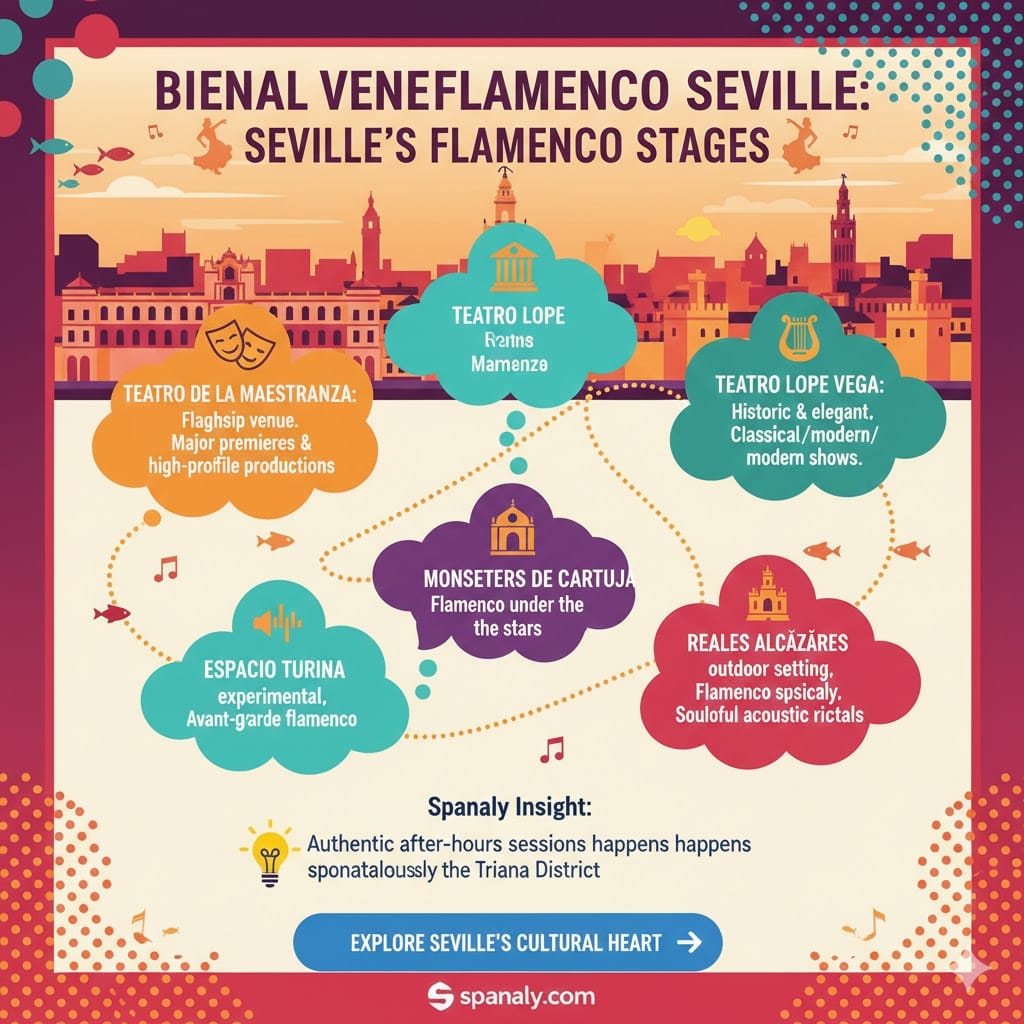
The festival’s magic isn’t confined to a single hall; it breathes life into Seville’s most iconic cultural spaces. Watching a performance in these historic settings adds a layer of soul that you won’t find anywhere else.
🎭 Teatro de la Maestranza: The festival’s flagship venue. Located right next to the famous Real Maestranza Bullring, this theater hosts the grandest premieres and world-renowned stars.
🏰 Reales Alcázares of Seville: Imagine watching flamenco under the stars in a royal garden. This UNESCO site offers a magical, historic atmosphere. Check our guide on the Alcázar – Seville to understand the grandeur of this palace.
🏛️ Teatro Lope de Vega: A stunning Baroque-style theater known for its impeccable acoustics. It’s the perfect place for intimate, elegant productions.
🎼 Espacio Turina: This is the hub for experimental and avant-garde flamenco. If you want to see artists challenging tradition, this is your spot.
🕍 Monasterio de la Cartuja: A serene, historic monastery that often hosts soulful, acoustic recitals that resonate with centuries of history.
Notably, most of these venues are located within walking distance of each other in the city center. Consequently, knowing your way around via our guide on Getting Around Seville will help you hop between shows without missing a beat.
💡 Spanaly Insight: Some of the most authentic “after-hours” sessions happen spontaneously in the Triana District across the river. Keep your ears open for the sound of guitar as you wander back to your hotel!
🎭 Understanding the Program: From Gala to Avant-Garde
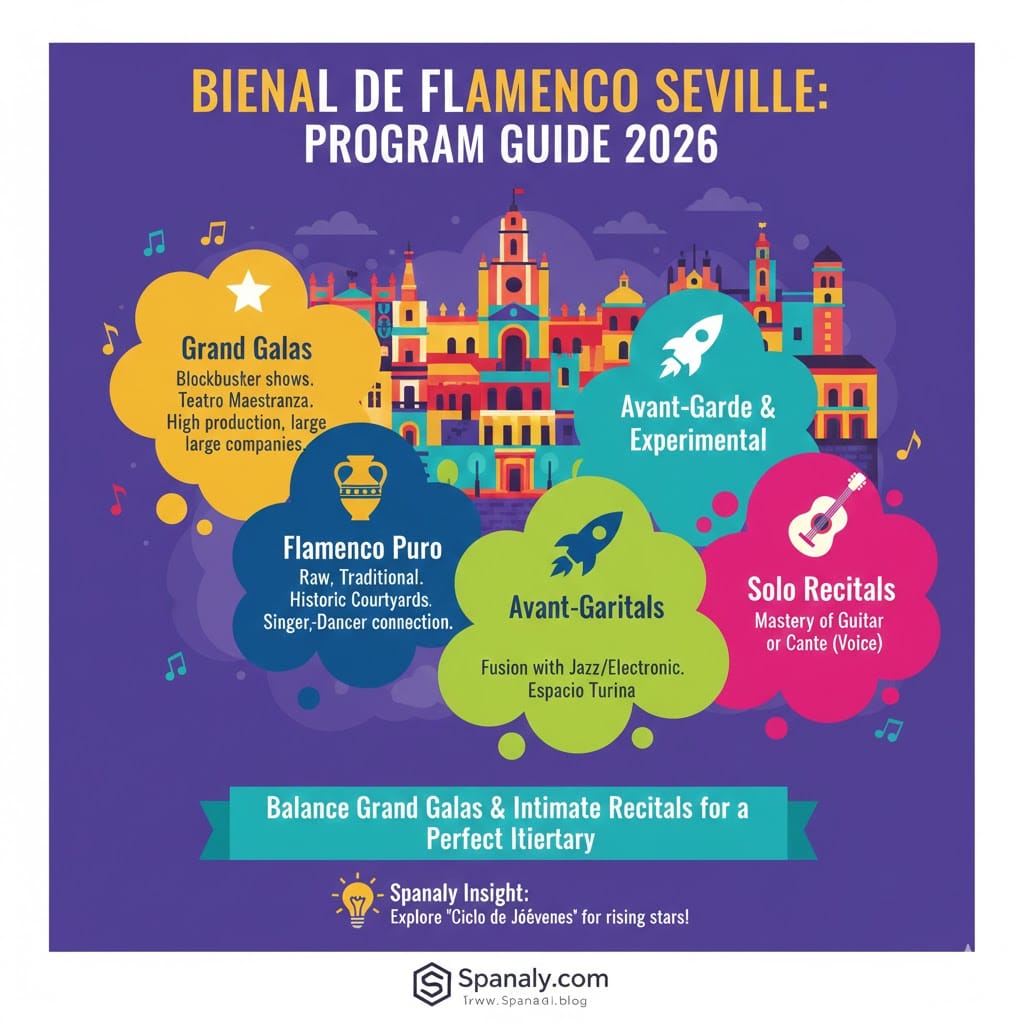
The Bienal’s program is vast and can be overwhelming for first-time visitors. To make the most of your 2026 experience, it’s essential to understand the different “flavors” of performances offered:
🌟 Grand Galas: These are the “blockbuster” shows usually held at Teatro de la Maestranza. Expect large companies, dramatic lighting, and high-production values.
🏺 Flamenco Puro: Focused on the raw, traditional roots of the art. Often held in historic courtyards or intimate theaters, these shows emphasize the connection between the singer and the dancer without modern distractions.
🚀 Avant-Garde & Experimental: Seville is a laboratory for flamenco. At venues like Espacio Turina, you’ll find artists mixing flamenco with jazz, electronic music, or contemporary dance.
🎸 Solo Recitals: Dedicated purely to the mastery of the Spanish guitar or the power of the voice (Cante).
Notably, while exploring these different styles, you might find yourself wandering through the Barrio Santa Cruz Seville, where many smaller, spontaneous events take place in hidden plazas. Consequently, balancing your schedule between “Grand Galas” and “Intimate Recitals” is the secret to a perfect festival itinerary.
💡 Spanaly Insight: Don’t just book the famous names. Some of the most moving performances come from the “Ciclo de Jóvenes” (Youth Series), where the next generation of stars performs with unmatched hunger and passion.
🎫 Tickets: Prices & How to Book Early
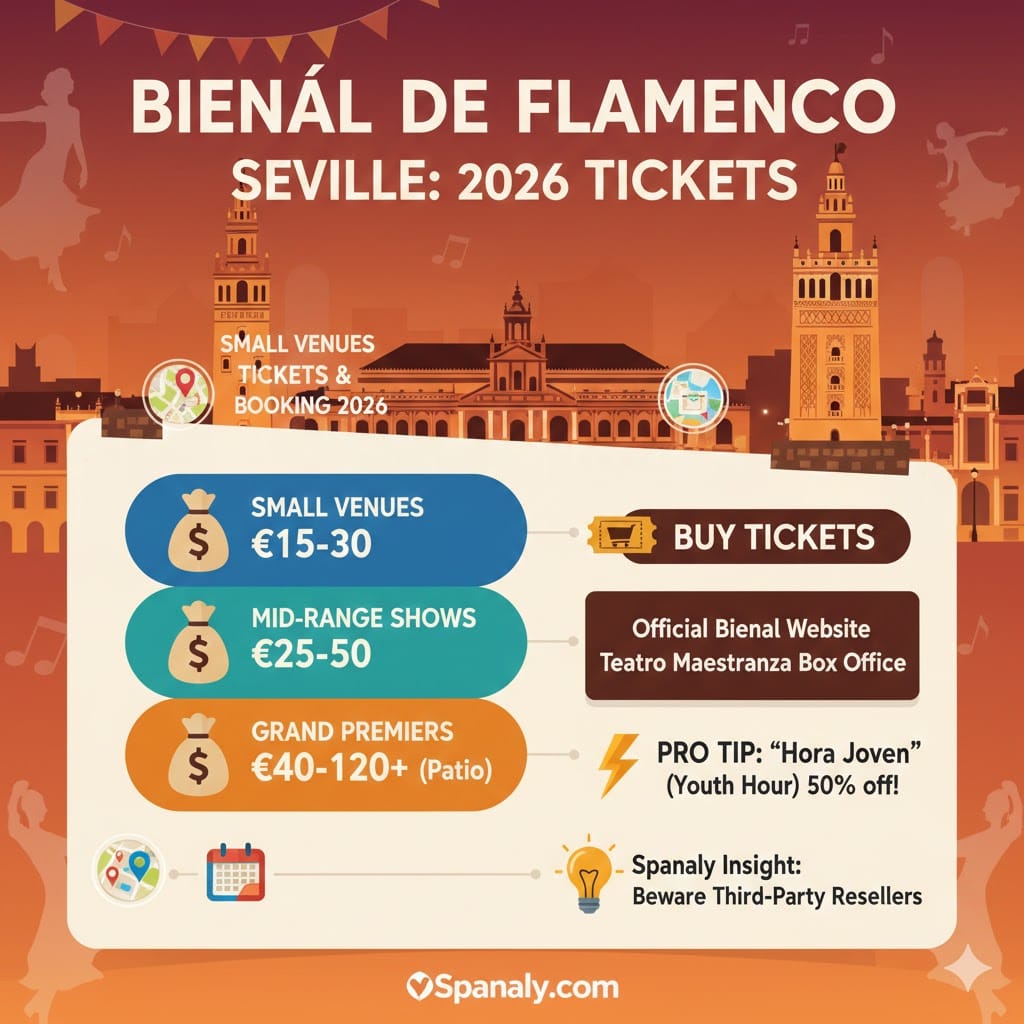
Securing your spot at the Bienal de Flamenco requires planning. Unlike standard tourist shows, these tickets are highly coveted by locals and international aficionados alike. For the 2026 edition, expect a tiered pricing system that accommodates both budget travelers and those seeking a premium experience.
💰 Typical Price Ranges:
Small Venues & Experimental Shows: €15 – €30.
Mid-Range Theaters (Lope de Vega): €25 – €50.
Grand Premieres (Teatro de la Maestranza): €40 – €120+ depending on the seating (Patio seats are the most expensive).
🎟️ Where to Buy: Always prioritize the official Bienal website or the physical box offices at the Teatro de la Maestranza and Lope de Vega.
⚡ Pro Tip: Look for the “Hora Joven” (Youth Hour) discounts—if available in 2026, visitors under 30 can often get 50% off remaining tickets one hour before the show starts.
Notably, tickets usually go on sale in the spring of the festival year. Consequently, we recommend coordinating your booking with your stay. If you’re still deciding on a base, check our guide on the Best Places to Stay in Seville for US Travelers to find a hotel within walking distance of the main ticket offices. To make the most of your trip beyond the theaters, explore our 3 Days in Seville itinerary.
💡 Spanaly Insight: Beware of third-party resale sites that inflate prices. Authentic tickets should always be purchased through official cultural channels to ensure validity and support the artists directly.
🚋 Getting Around the Venues: Transport Tips
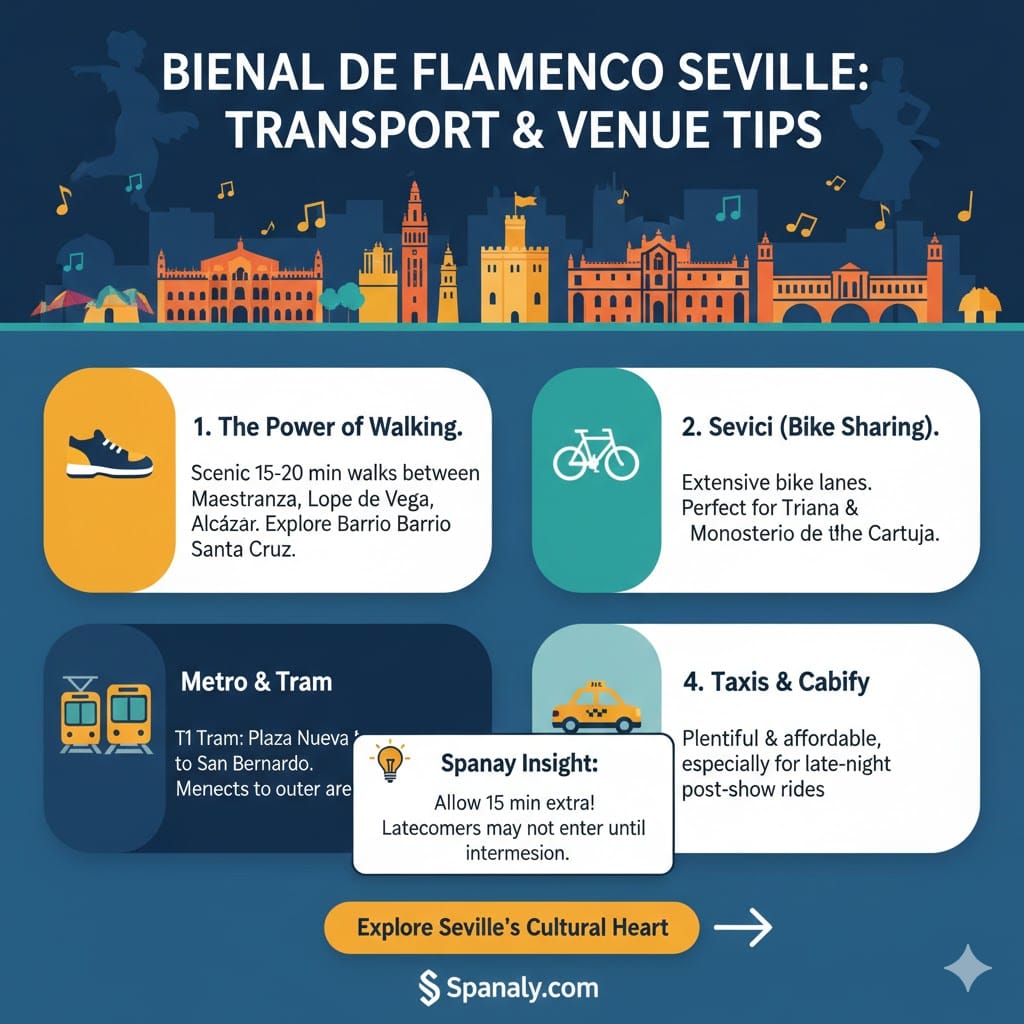
Seville is a city meant to be walked, but during the Bienal de Flamenco, you’ll often find yourself moving between historic neighborhoods like Arenal, Santa Cruz, and Triana. Navigating the city efficiently is key to enjoying multiple performances in one day.
👟 The Power of Walking: Most main venues (Teatro Maestranza, Lope de Vega, and the Alcázar) are within a 15–20 minute walk of each other. Walking through the Barrio Santa Cruz Seville Guide is the most scenic way to reach your next show.
🚲 Sevici (Bike Sharing): Seville has one of the best bike-lane networks in Europe. Renting a bike is perfect for crossing the bridge to Triana or reaching the Monasterio de la Cartuja.
🚋 Metro & Tram: The T1 Tram is ideal for moving along the central axis (from Plaza Nueva to San Bernardo), while the Metro can help if you are staying slightly outside the historic core.
🚕 Taxis & Cabify: Plentiful and affordable, especially late at night after a passionate evening performance.
Notably, for a detailed breakdown of all your options, including costs and routes, don’t miss our comprehensive guide on Getting Around Seville: Transport, Trams, and Walking. If you are looking for more general advice for your arrival, our Seville Travel Tips will help you feel like a local from day one.
💡 Spanaly Insight: During the Bienal, some streets may be more crowded than usual. Always allow an extra 15 minutes to reach the theater; latecomers are often not allowed to enter until the intermission to avoid disrupting the artists.
🎭 What to Expect & Performance Etiquette
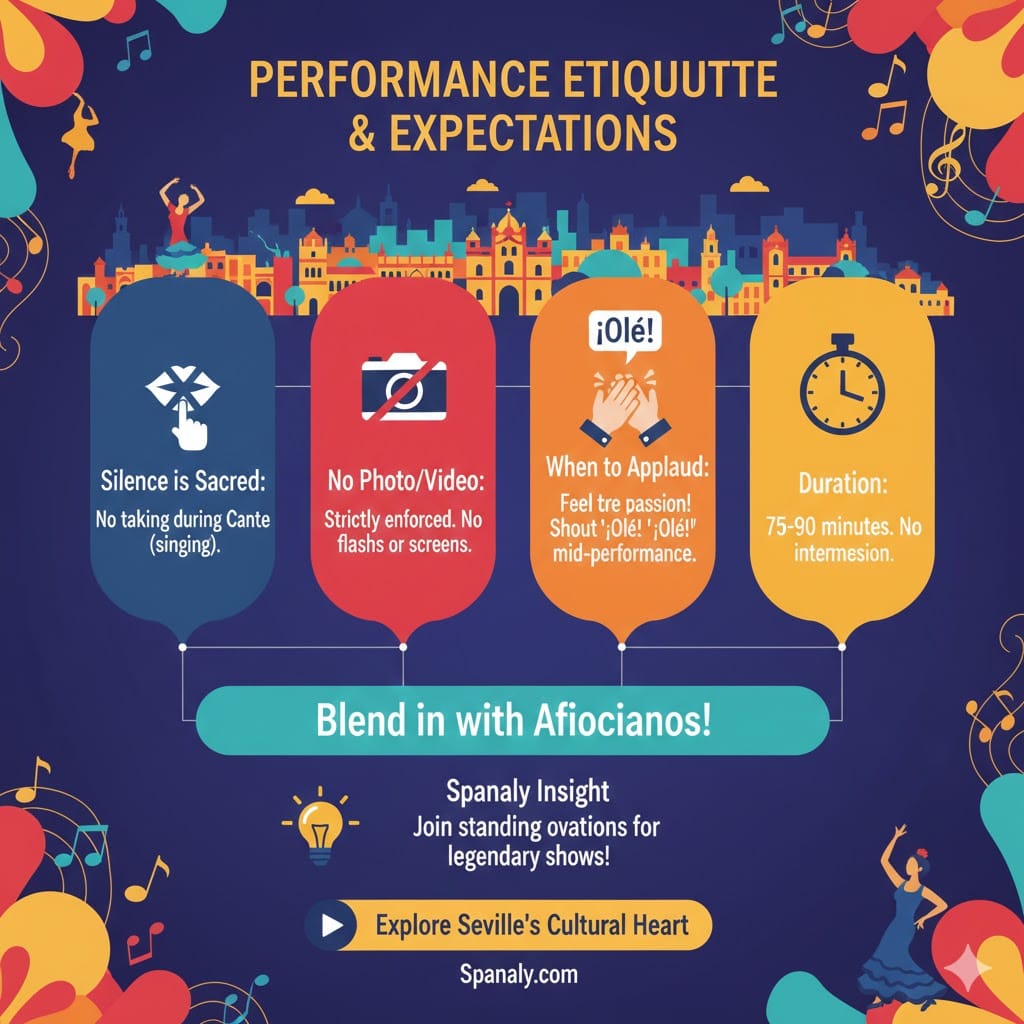
Attending the Bienal de Flamenco is a visceral experience, but it is also one governed by deep respect. Unlike the casual atmosphere of a street performance, the Bienal shows are high-art recitals where the “Duende” (the spirit of flamenco) requires absolute focus.
🤫 Silence is Sacred: During a “Cante” (singing) recital, the silence in the room is heavy and intentional. Avoid whispering or moving excessively.
📸 No Photography/Video: This is strictly enforced. Flashes and screens are not only disrespectful to the performers but also ruin the atmosphere for others.
👏 When to Applaud: You’ll hear locals shout “¡Olé!” or “¡Eso es!”. Join in only when you feel the passion, but avoid clapping mid-performance unless the rhythm clearly invites it.
⏳ Duration: Most shows last between 75 and 90 minutes without an intermission.
Notably, some editions include film screenings or artistic tributes near the Metropol Parasol, which offer a more relaxed vibe. Consequently, understanding the etiquette ensures you blend in with the true aficionados.
💡 Spanaly Insight: If you see people standing up and cheering at the end, it’s a sign of a truly legendary performance. Feel free to join the standing ovation—it’s the highest compliment for the artists.
👗 What to Wear & Weather Essentials
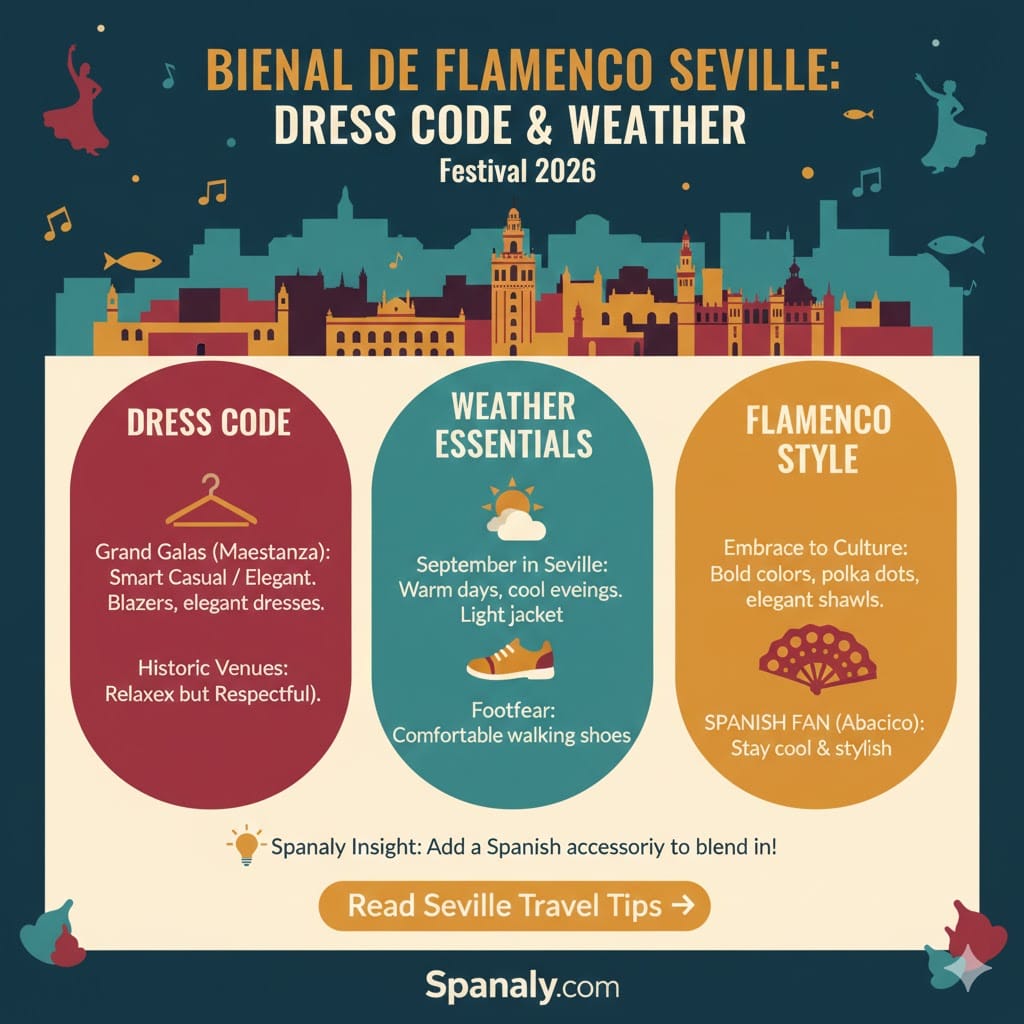
Choosing the right attire for the Bienal de Flamenco is a balance between respecting the prestige of the event and staying comfortable in Seville’s unique climate. In September 2026, the city will be transitioning from the summer heat to a more mild autumn.
👔 Dress Code: While there is no strict “black-tie” requirement, the Bienal is a formal cultural event.
For Grand Galas (Teatro Maestranza): We recommend “Smart Casual” or “Elegant.” Men often wear a blazer or a crisp linen shirt, and women opt for elegant dresses or stylish trousers.
For Historic Venues (Alcázar/Monasterios): A slightly more relaxed but still respectful look is appropriate.
🌡️ Weather Essentials: September in Seville is sunny, but evenings can bring a cooling breeze. Check our Seville Weather in September guide for a detailed packing list.
👟 Footwear: This is crucial. Since you’ll likely be walking between venues or standing during spontaneous street performances, prioritize stylish but comfortable shoes.
Notably, many locals use the festival as an excuse to showcase “Flamenco-inspired” fashion—think bold colors, polka dots (lunares), and elegant shawls. Consequently, if you want to blend in, adding a small Spanish accessory can be a wonderful nod to the culture. Before you pack, make sure to read our Spain Travel Tips for more advice on seasonal essentials.
💡 Spanaly Insight: Don’t forget a traditional Spanish fan (Abanico). Not only is it a practical tool to keep cool in crowded theaters, but it’s also a timeless accessory that is very much part of the Seville aesthetic.
🍴 The Gastronomy of the Bienal: Best Tapas Near Venues
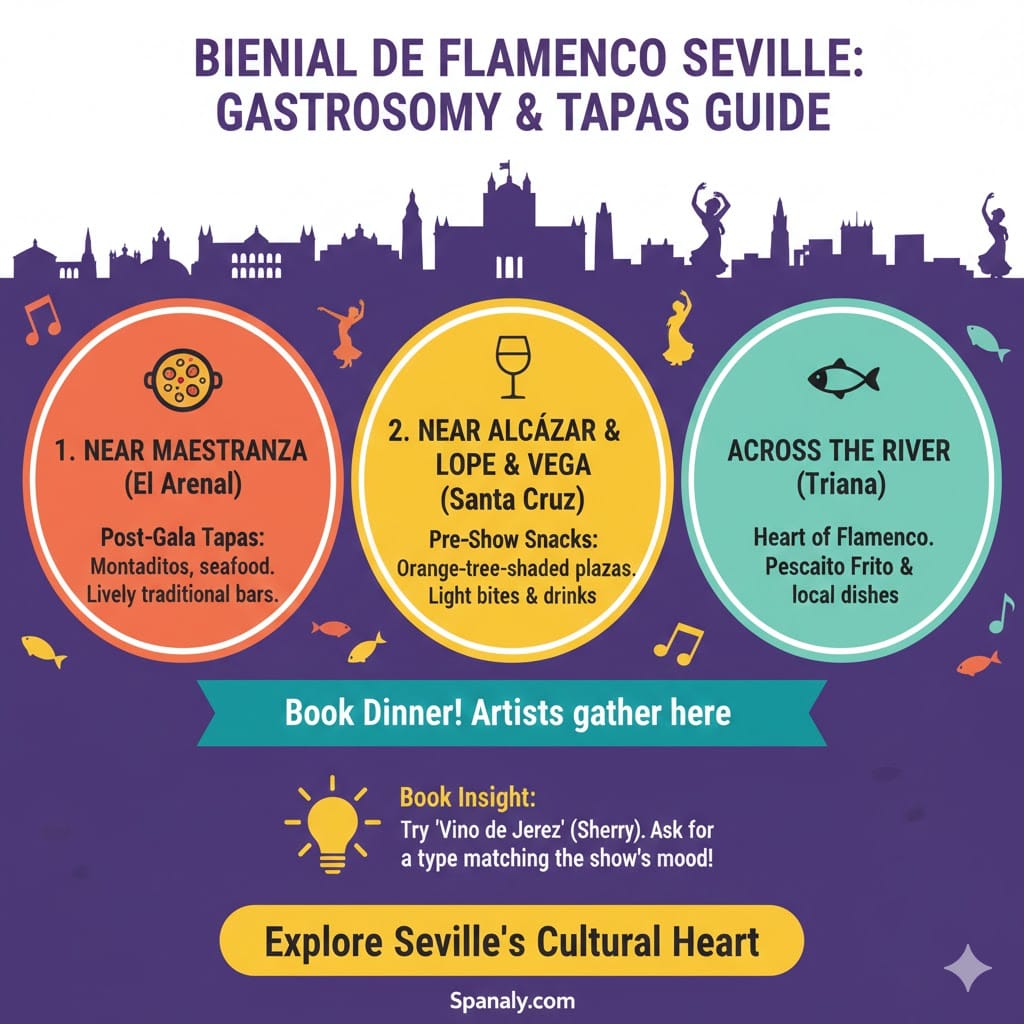
In Seville, the performance doesn’t end when the curtain falls; it simply moves to the nearby tabernas. Part of the Bienal experience is discussing the show over a glass of sherry and local delicacies. Here is where to find the best flavors near the main stages:
🥘 Near Teatro de la Maestranza (El Arenal): This area is packed with traditional bars. After a grand gala, head to the nearby streets to enjoy Best Tapas in Spain. Look for Montaditos or fresh seafood to keep the energy high.
🍷 Near Lope de Vega & the Alcázar: Before a sunset performance, wander towards the Barrio Santa Cruz Seville. Its hidden plazas offer orange-tree-shaded terraces perfect for a light pre-show snack.
🐟 Across the River (Triana): If you are visiting a venue near the river, crossing the bridge to Triana is a must. This district is the heart of Seville’s soul and home to some of the most authentic Traditional Foods of Seville, such as Pescaito Frito (fried fish).
Notably, many artists and critics gather at these spots post-performance, creating a unique atmosphere where the boundaries between the stage and the street disappear. Consequently, making a reservation for dinner on show nights is highly recommended, as the city’s culinary heart beats faster during the festival.
💡 Spanaly Insight: Try the “Vino de Jerez” (Sherry). It is the traditional accompaniment to flamenco, and local bartenders can recommend a specific type—from dry Fino to sweet Pedro Ximénez—that matches the “mood” of the show you just witnessed.
🏨 Where to Stay During the Festival: Best Neighborhoods
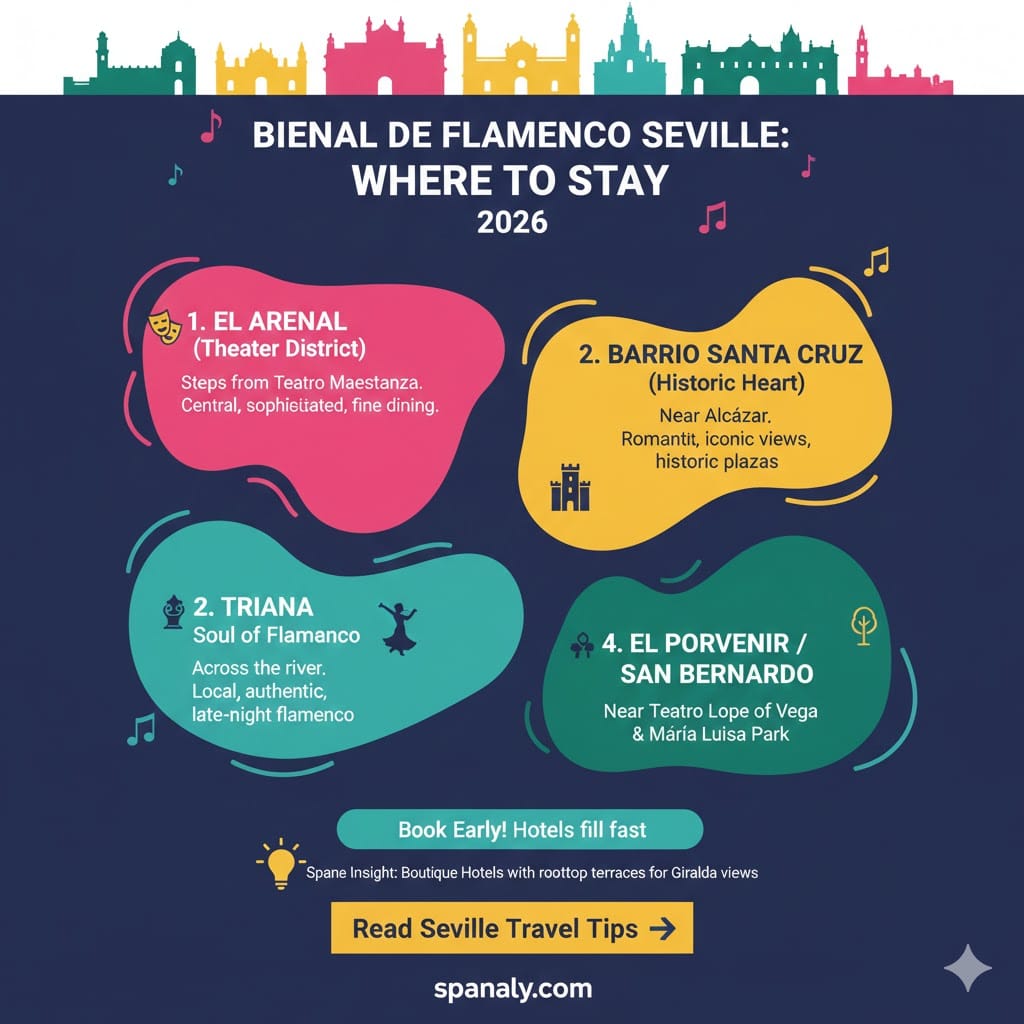
Seville is a compact city, but during the Bienal de Flamenco, choosing the right neighborhood can make the difference between a stressful commute and a magical stroll. Depending on your vibe and budget, here are our top recommendations for 2026:
🎭 El Arenal (The Theater District): This is the “Place to Be” for serious festival-goers. Staying here puts you steps away from Teatro de la Maestranza. It’s central, sophisticated, and filled with top-tier dining.
🏰 Barrio Santa Cruz (The Historic Heart): For those seeking romance and history. You’ll be near the Alcázar performances and surrounded by the city’s most iconic views. Check our guide on the Barrio Santa Cruz Seville to see why it’s a traveler favorite.
💃 Triana (The Soul of Flamenco): Across the river, Triana offers a more local, gritty, and authentic atmosphere. It’s perfect if you want to be near the late-night spontaneous flamenco sessions. Explore the Triana District for a deeper connection to the art.
🌳 El Porvenir / San Bernardo: A quieter, more residential option that is perfectly positioned near Teatro Lope de Vega and the Maria Luisa Park.
Notably, hotels fill up months in advance for the Bienal dates. Consequently, we highly recommend booking as soon as the festival schedule is announced. For a deeper dive into specific hotel recommendations and districts.
💡 Spanaly Insight: If you prefer a modern stay with great views, look for “Boutique Hotels” with rooftop terraces in El Arenal. There’s nothing like watching the Giralda light up after a night of world-class dance.
🎨 Beyond the Stage: Workshops & Cultural Events
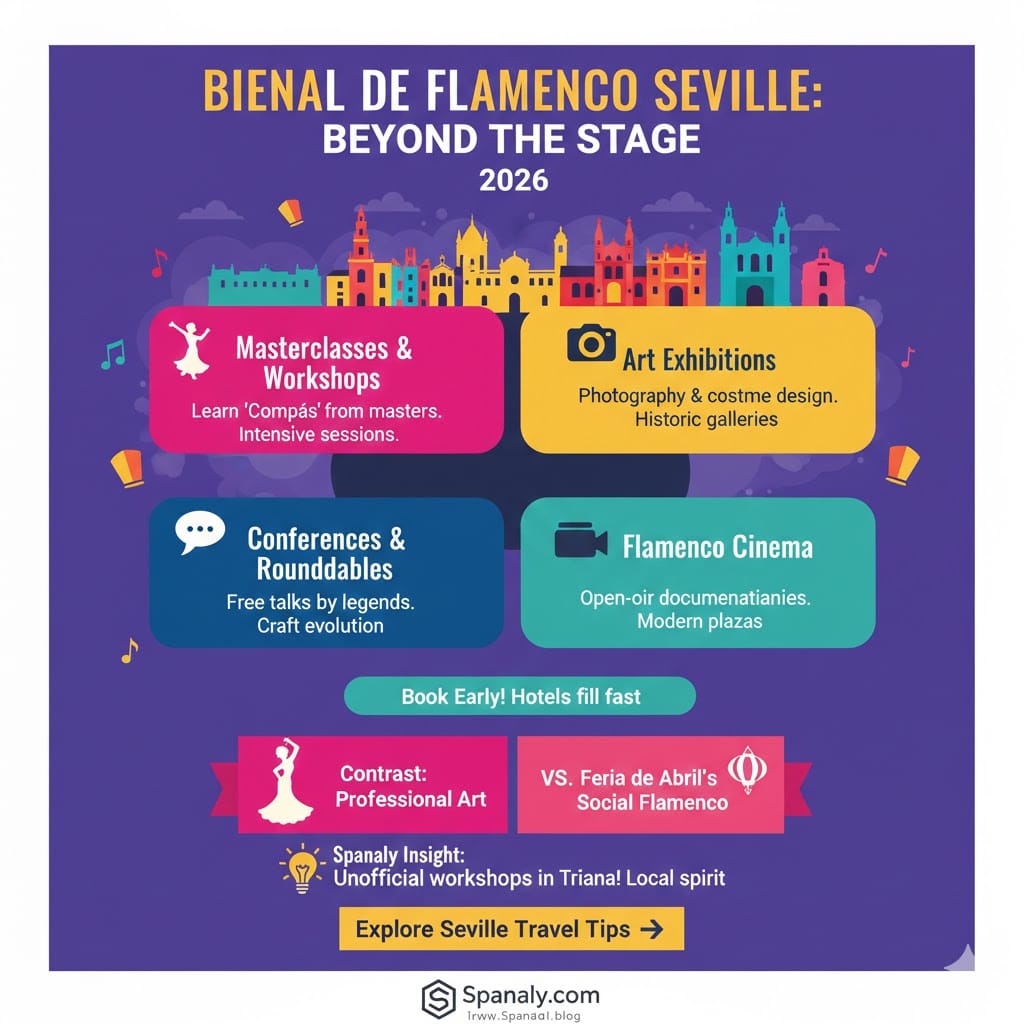
The Bienal de Flamenco is not confined to theater seats. For the 2026 edition, Seville transforms into a living laboratory where visitors can move from being spectators to active participants. Beyond the grand performances, the festival offers a rich fringe program that deepens your connection to the art form.
💃 Masterclasses & Workshops: Many of the world’s leading dancers and guitarists hold intensive sessions during the festival. It is a unique chance to learn the “Compás” (rhythm) from the masters themselves.
📸 Art Exhibitions: Explore temporary galleries showcasing decades of flamenco photography and costume design, often held in historic venues.
🗣️ Conferences & Roundtables: Attend free talks where legendary artists discuss the evolution of their craft, providing a deeper intellectual layer to the music.
🎬 Flamenco Cinema: Open-air screenings of documentaries often take place in Seville’s modern plazas, blending cinema with traditional roots.
Notably, while the Bienal focuses on flamenco as a professional performing art, it offers a fascinating contrast to the spontaneous and social flamenco you would experience during La Feria de Abril – Seville’s Iconic Spring Fair. Consequently, attending these workshops allows you to appreciate both the technical mastery of the stage and the festive spirit of the city’s streets.
💡 Spanaly Insight: Some of the best “unofficial” workshops happen in the small studios of Triana. Don’t be afraid to walk into a local academy; the spirit of the Bienal makes the community more welcoming than ever to international visitors.
🌿 Sustainable Tourism: Respecting the Art & City
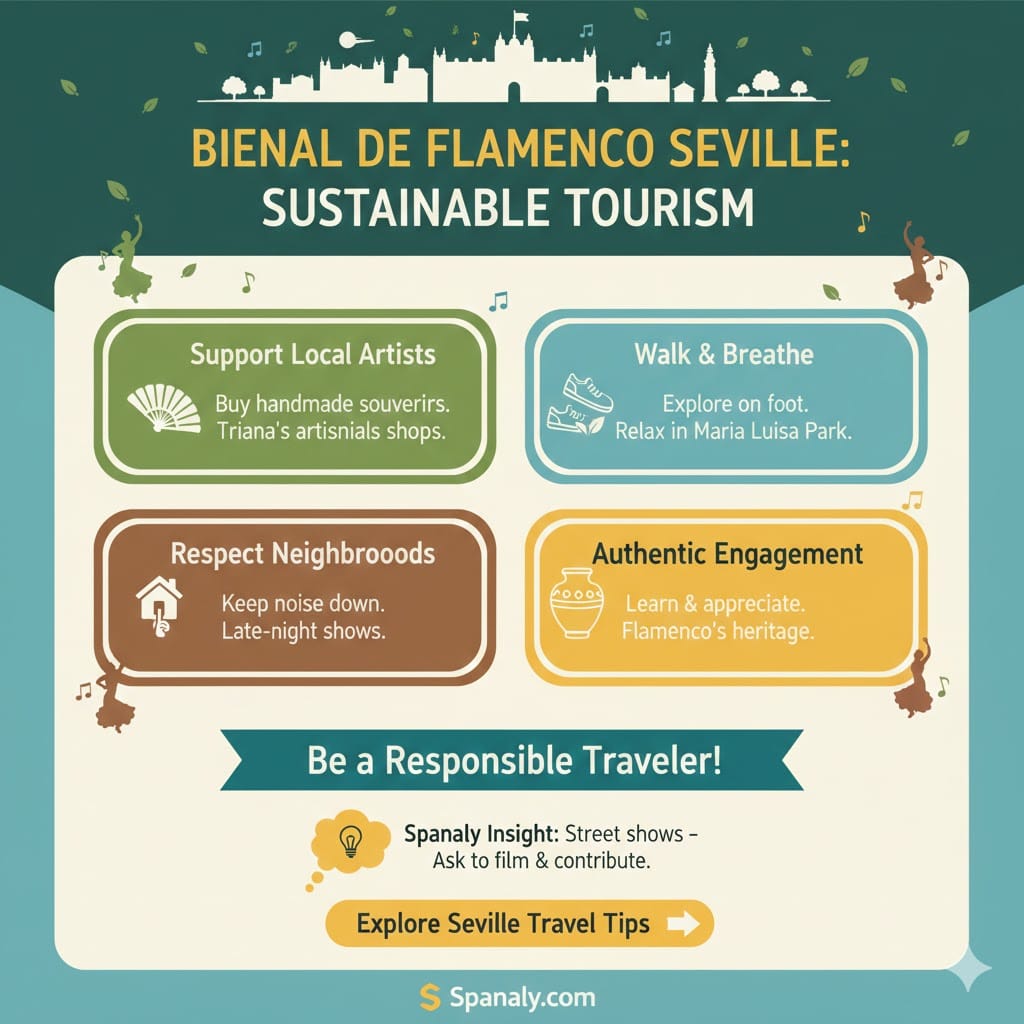
As the Bienal de Flamenco attracts thousands of international visitors, practicing sustainable tourism is essential to ensure that both the art form and the city of Seville continue to thrive. Being a responsible traveler means more than just recycling; it’s about deep respect for the local culture and the natural beauty of the city.
🎭 Support Local Artists: Seek out small workshops and artisanal shops. Buying authentic, handmade souvenirs directly supports the craft’s future and the families behind it.
🚶 Walk & Breathe: Seville is incredibly pedestrian-friendly. Instead of taxis, enjoy a stroll through the city’s historic center or find a moment of quiet reflection in Maria Luisa Park: Seville’s Green Oasis and Top Sights. It’s the perfect place to recharge between performances.
🤝 Respect the Neighborhoods: Remember that many venues are nestled in living residential areas. Keep noise levels down when leaving late-night shows to respect the locals’ rest.
🏺 Authentic Engagement: Approach flamenco with a desire to learn. Understanding the history of the art form makes you a more appreciative and respectful guest in Seville’s cultural home.
Notably, flamenco is an intangible heritage of humanity. Consequently, approaching it with humility and mindfulness enriches your personal journey and ensures the festival remains a positive force for the city.
💡 Spanaly Insight: If you attend a spontaneous street performance, remember that these are often heartfelt expressions of culture. Always ask for permission before filming and, if you enjoyed the art, consider leaving a small contribution to support the performers.
⏱️ The Perfect 24-Hour Bienal Itinerary
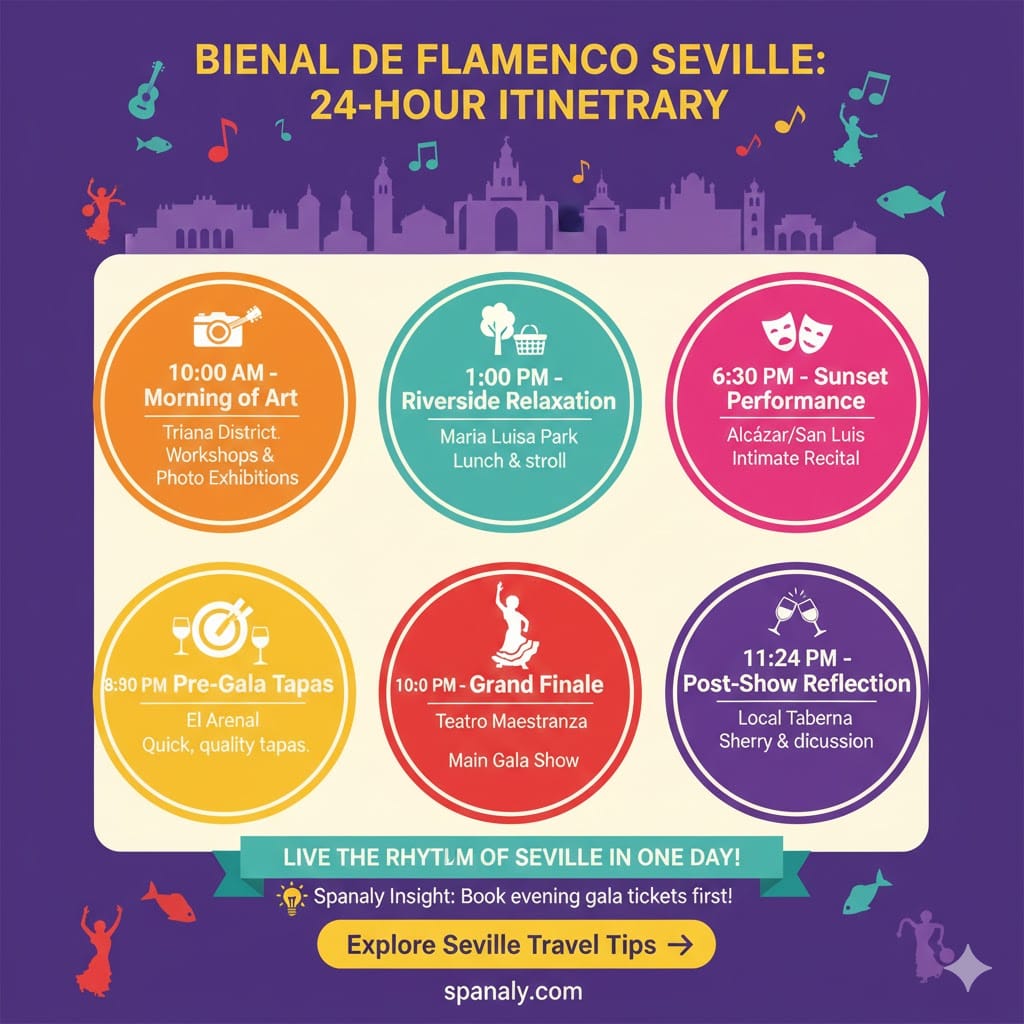
If you only have one day to soak in the magic of the Bienal de Flamenco, efficiency is key. This curated path allows you to experience the city’s history, its gastronomy, and the raw power of the stage in a single, unforgettable cycle.
🌅 10:00 AM – The Morning of Art: Start your day by visiting a flamenco photography exhibition or a guitar-making workshop in the Triana District. It’s the best time to see the artisans at work before the afternoon heat.
🌳 1:00 PM – Riverside Relaxation: Grab a light lunch near the river and take a slow stroll through Maria Luisa Park. It’s your “Green Oasis” to recharge your senses before the emotional intensity of the shows.
🎭 6:30 PM – The Sunset Performance: Head to an intimate venue like the Church of San Luis de los Franceses or the Alcázar for a late-afternoon recital. The lighting at this hour makes the historic stone venues look ethereal.
🥘 8:30 PM – Pre-Gala Tapas: Transition to the El Arenal neighborhood for some quick but high-quality Best Tapas in Seville near the main theater.
💃 10:00 PM – The Grand Finale: Attend the main evening gala at the Teatro de la Maestranza. This is where the biggest stars perform their most ambitious productions.
🍷 11:45 PM – Post-Show Reflection: Join the locals in a nearby taberna to discuss the performance over a glass of Sherry.
Notably, this itinerary balances the high-energy performances with moments of quiet exploration. Consequently, you won’t just “see” the Bienal; you will live the rhythm of Seville for a full day.
💡 Spanaly Insight: Always buy your evening gala tickets first. Once you have your main event secured, you can build the rest of your day around its location to minimize travel time.
💡 Top Tips for an Authentic Experience
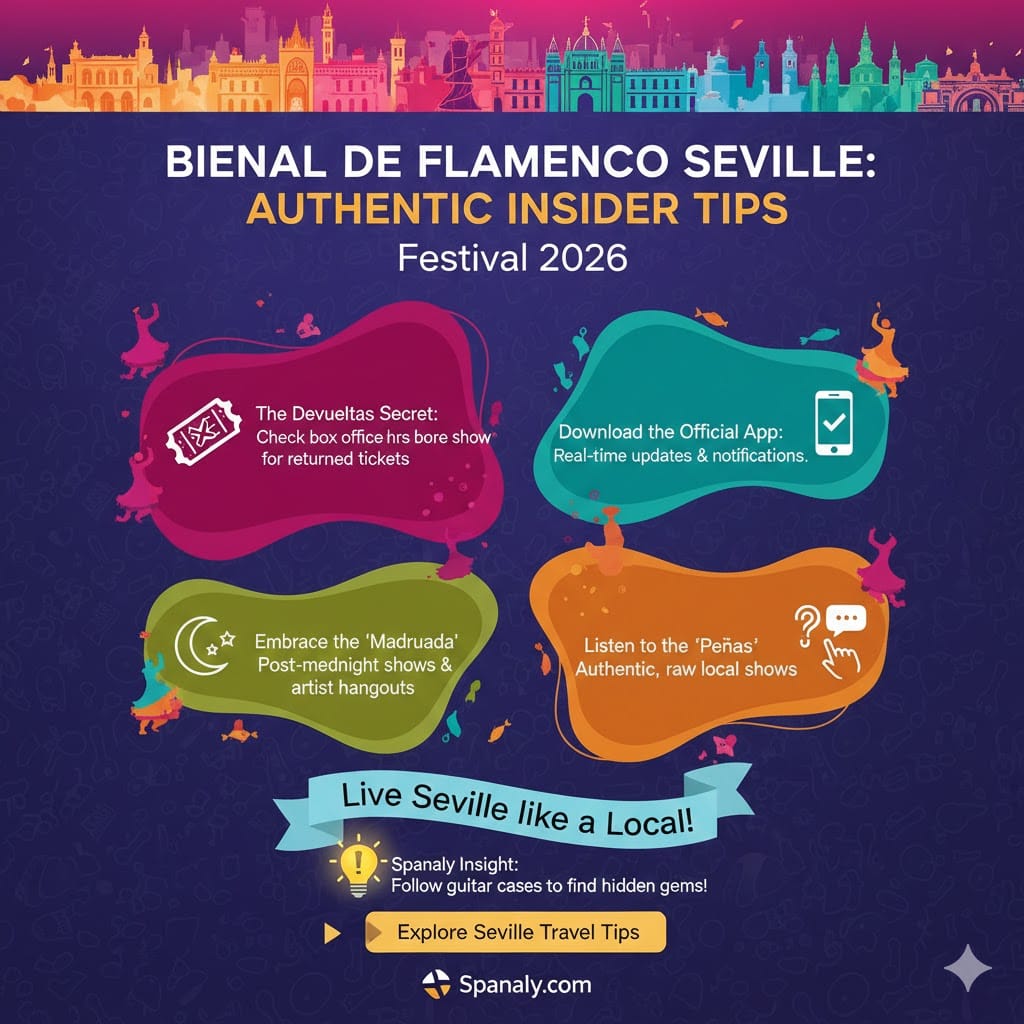
To truly master the Bienal de Flamenco, you need more than just a ticket; you need to understand the rhythm of the city. Here are our exclusive “Insider Tips” to help you navigate the 2026 edition like a local:
🎟️ The “Devueltas” (Returned Tickets) Secret: If a show you love is sold out, don’t lose hope. Check the box office (Taquilla) in person at the Teatro Lope de Vega or Maestranza about 2 hours before the show. Often, production-held seats or last-minute cancellations are released.
📱 Download the Official App Early: The Bienal usually releases a dedicated app for each edition. It’s the fastest way to get real-time notifications about venue changes, added “flash mob” performances, or schedule shifts.
🌙 Embrace the “Madrugada”: In Seville, the best discussions and spontaneous “fin de fiesta” (mini-performances) happen after midnight. Don’t rush back to your hotel; find a small bar near the venue where the artists might stop by for a drink.
👂 Listen to the “Peñas”: While the Bienal hosts grand shows, the local Flamenco Peñas (social clubs) often hold their own parallel recitals. These are the most authentic, raw experiences you can find, often for a fraction of the price.
💧 Hydration is Strategy: Some historic venues like monasteries have limited facilities. Always carry a small bottle of water and a portable fan—Spanish theaters can get “passionate” and warm very quickly!
Notably, flamenco is as much about the silence between the notes as the music itself. Consequently, giving yourself a “rest day” in between heavy show nights will help you process the emotional intensity of the performances.
💡 Spanaly Insight: If you find yourself lost between venues, look for the “Bienal” signage or follow the crowd carrying guitar cases—they are usually heading to the next hidden gem of the festival!
💃 Visitor FAQs – Bienal de Flamenco Seville 2026
🗓️ When exactly is the Bienal 2026 taking place?
The 24th edition of the Bienal is set for September 2026. While the specific daily schedule is released closer to the date, the festival traditionally occupies the entire month, with performances happening every evening across Seville’s most iconic landmarks.
🎫 How early should I purchase my tickets?
As the "Olympics of Flamenco," demand is extremely high. Notably, tickets for world premieres at the Teatro de la Maestranza often sell out within hours. We strongly recommend booking via the official website as soon as the box office opens in early 2026.
🎭 Can beginners enjoy the festival performances?
Absolutely. The Bienal balances traditional roots with modern innovation. If you are new to the art, we suggest starting with a "Baile" (dance) production for its visual energy. For a deeper, more emotional dive, the intimate "Cante" (singing) recitals offer an authentic cultural immersion.
📍 Is it possible to visit multiple venues on foot?
Yes, Seville’s historic center is very walkable. Most venues like the Real Alcázar and Teatro Lope de Vega are centrally located. Consequently, you can easily transition from a sunset performance to a late-night gala while exploring the city's charming streets and tapas bars along the way.
🏨 What is the best area to stay for easy access?
El Arenal and Santa Cruz are the most convenient districts for proximity to the main theaters. However, if you want to experience the "soul" of flamenco after the curtains close, Triana is the best choice for its local atmosphere and spontaneous late-night sessions.
Flamenco Cultural Guide by Spanaly.com
✨ The Heartbeat of Seville Awaits
Attending the Bienal de Flamenco 2026 is more than just a trip; it’s a soul-stirring encounter with the very heart of Andalusia.
💃 The Emotion: Feel the raw power of “Duende” in the city that birthed it.
🏰 The Magic: Watch legends perform under the stars in ancient palaces.
🥘 The Flavors: Transition from a world-class show to the best tapas in the world.
🌟 The Memory: Return home with the rhythm of Seville forever in your step.
Notably, while Seville is the cradle of flamenco, your Spanish journey doesn’t have to end here. Consequently, if you’re planning to explore further north to see the capital’s vibrant energy, don’t miss our Ultimate Madrid Travel Guide to complete your dream itinerary.
💡 Spanaly Insight: Seville doesn’t just show you flamenco; it makes you feel it. We’ll see you in September 2026 for an experience that will stay with you long after the final applause.