
Table of Contents
Toggle🏰 The Ancient Soul of Andalusia
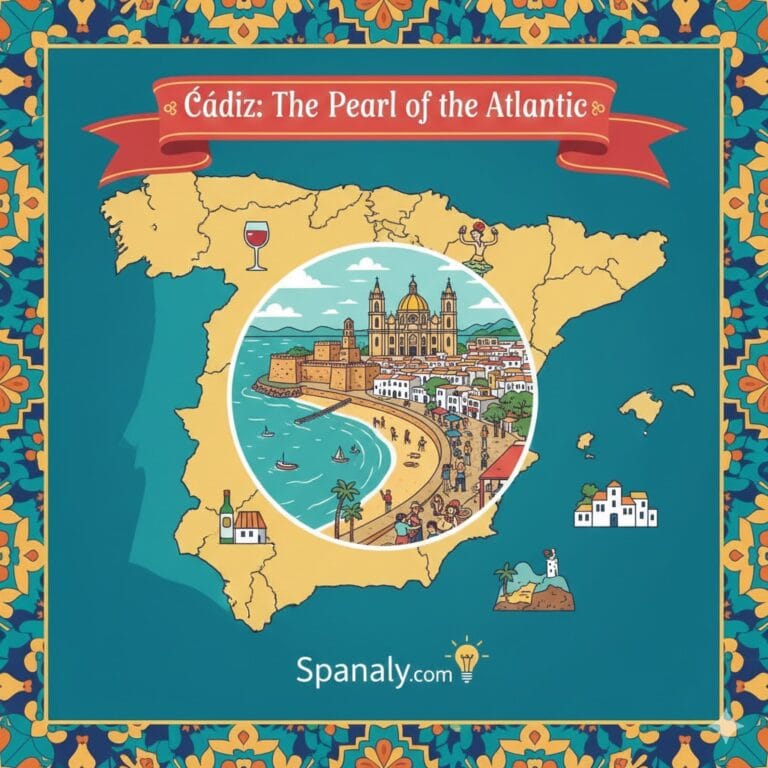
Cádiz sits on a narrow peninsula in southern Spain. Many recognize it as the oldest continuously inhabited city in Western Europe. Notably, Phoenicians founded this white-walled city over 3,000 years ago. The Atlantic Ocean almost entirely surrounds its historic center. Specifically, its unique geography creates a fascinating blend of ancient ruins, maritime history, and vibrant Andalusian culture.
☀️ The Coast of Light: Famous for its golden “Costa de la Luz” beaches and legendary sunsets.
🏛️ A Living Museum: Every corner tells a story, from Roman theaters to baroque cathedrals.
💃 Spirit of Joy: Home to one of Spain’s most eccentric carnivals and deepest flamenco roots.
⚓ Maritime Gateway: A city that fueled the Age of Discovery and the first Spanish Constitution.
Indeed, its historical depth makes it a unique destination. For travelers starting their journey from the capital, Cádiz offers a perfect coastal escape. It completes the experience found in our Madrid City Guide. Ultimately, whether you explore ancient watchtowers or taste fresh seafood, this Cádiz Travel Guide provides everything you need.
💡 Spanaly Insight: Most people think of Seville or Granada when they imagine Andalusia. In fact, Cádiz offers a different vibe—saltier, breezier, and more relaxed. Notably, its locals (known as Gaditanos) have the sharpest wit in all of Spain!
📍 Cádiz History: 3,000 Years of Heritage
To walk through the streets of Cádiz is to walk through layers of time. Notably, its strategic location made it a vital gateway for every major civilization. Specifically, it is a living museum where ancient maritime glory meets modern Spanish life.
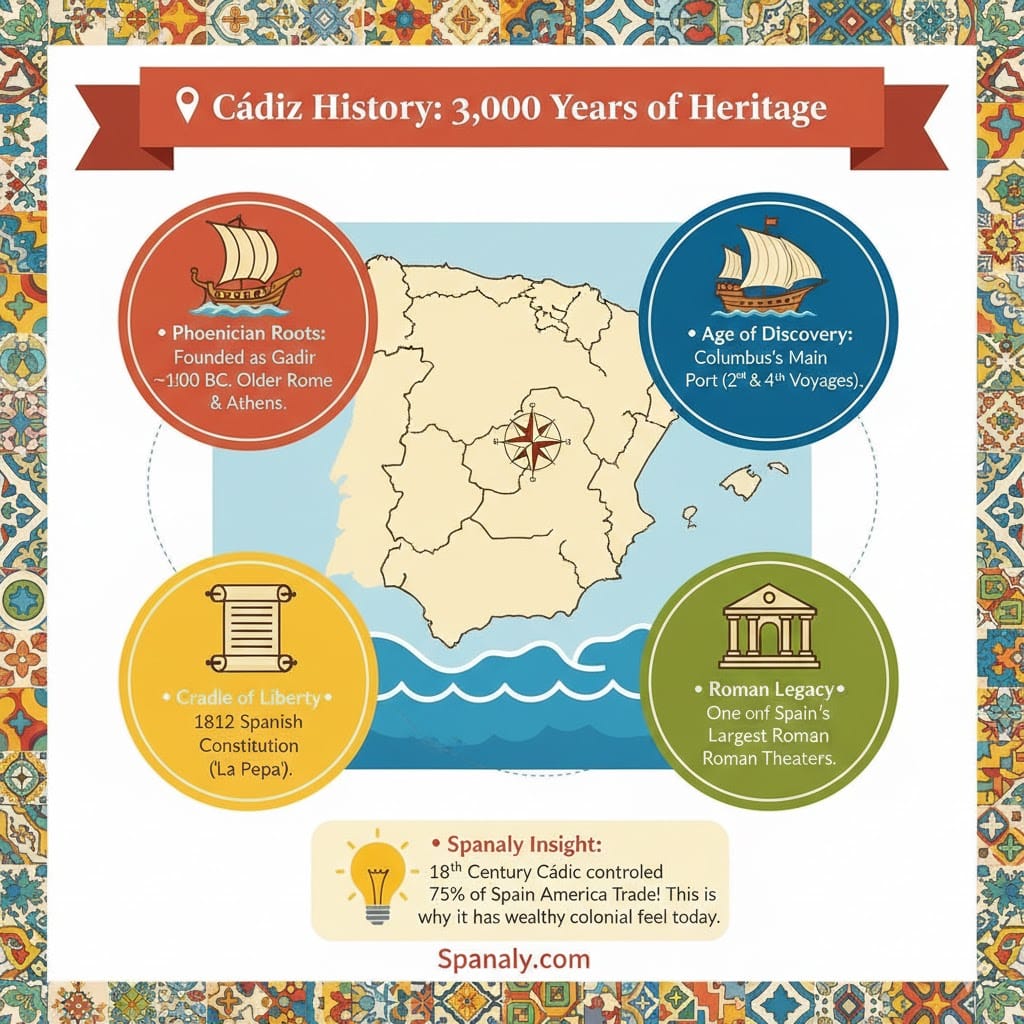
⚓ Phoenician Roots: Founded as Gadir around 1100 BC, making it older than Rome or Athens.
⛵ Age of Discovery: The primary port for Christopher Columbus on his second and fourth voyages.
📜 Cradle of Liberty: Home to the 1812 Spanish Constitution, a global symbol of democracy.
🎭 Roman Legacy: Host to one of the largest Roman theaters ever discovered in Spain.
Indeed, the city’s past ties directly to the wealth of the Spanish Empire. For those exploring the region’s monumental history, Cádiz stands as a powerful peer to the Historic City of Toledo. Ultimately, every chilled pitcher of local wine here honors three millennia of enduring traditions.
💡 Spanaly Insight: Many believe the wealth of the New World went straight to Madrid. In fact, during the 18th century, Cádiz controlled 75% of all Spanish trade with the Americas. Notably, this “Golden Age” created the city’s distinct, wealthy colonial feel.
🏘️ Barrio del Pópulo: The Historic Heart
Stepping into the Barrio del Pópulo feels like traveling back to the 13th century. Notably, this is the oldest neighborhood in Cádiz. It sits tucked behind three medieval stone arches. Specifically, its narrow, winding alleys protect the city from Atlantic winds and historical invasions.
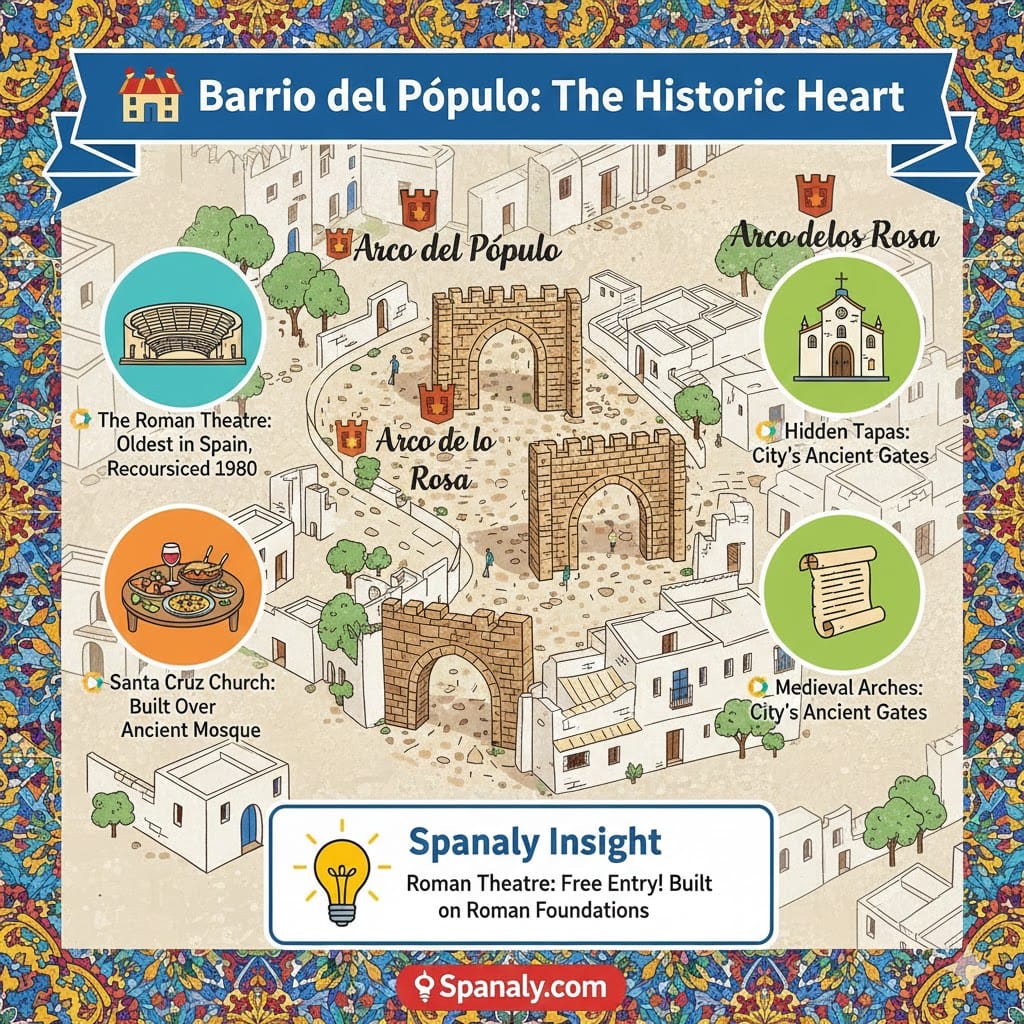
🏛️ The Roman Theatre: Hidden for centuries until 1980, it is one of the largest in Spain.
🏰 Medieval Arches: Enter through Arco del Pópulo, Arco de la Rosa, or Arco de los Blancos.
⛪ Parroquia de Santa Cruz: The original “Old Cathedral,” built over an ancient mosque.
🍷 Hidden Tapas: Tiny squares here offer the city’s most authentic local flavors.
Indeed, wandering through this district is the most atmospheric way to experience the city’s soul. For those who love ancient Spanish quarters, El Pópulo offers a coastal version of the Albaicín of Granada. Ultimately, the magic of this neighborhood lies in its silence, which contrasts beautifully with the roaring ocean nearby.
💡 Spanaly Insight: Many visitors walk right over the Roman Theatre without knowing it. In fact, workers rediscovered it by accident after a fire. Notably, entry is free, and it shows how the medieval city sits directly on top of Roman foundations.
🔭 Cádiz Skyline: The Watchtower Legacy
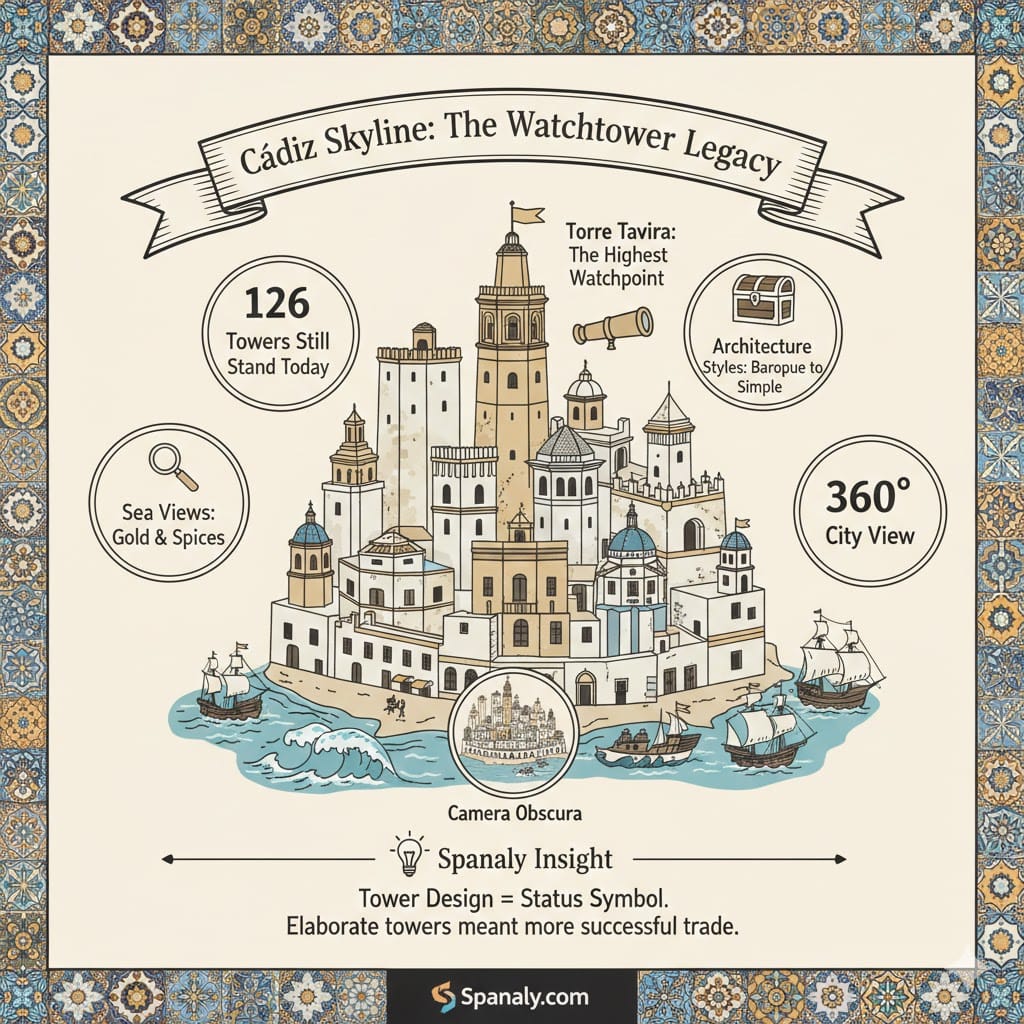
Cádiz possesses a vertical beauty unlike any other city in Spain. Notably, during the 18th-century trade boom, wealthy merchants built private watchtowers on their rooftops. They did this to spot their incoming ships from the Americas. Specifically, while there were once over 160 towers, 126 still stand today. These structures create a unique “stairway to the sky.”
🔭 Torre Tavira: The highest and most famous tower. It serves as the official watchpoint due to its strategic height.
🌀 Camera Obscura: Located inside Torre Tavira, it uses lenses to show a real-time, 360-degree moving image of the city.
🏠 Architecture Styles: Look for various styles, from simple square towers to elaborate baroque designs.
💰 Sea Views: These towers offered the first glimpse of treasures like gold, silver, and exotic spices.
Indeed, climbing these towers is essential for the best panoramic views. For travelers who admire maritime fortifications, these towers are as historically significant as the famous Torre del Oro in Seville. Ultimately, these structures remain a silent tribute to the city’s “Golden Age” of Atlantic commerce.
💡 Spanaly Insight: Notice the different shapes of the towers? In fact, their design was a status symbol. Notably, the more elaborate your tower, the more successful neighbors perceived your trading house to be.
📍 Cádiz Cathedral: The Golden Dome
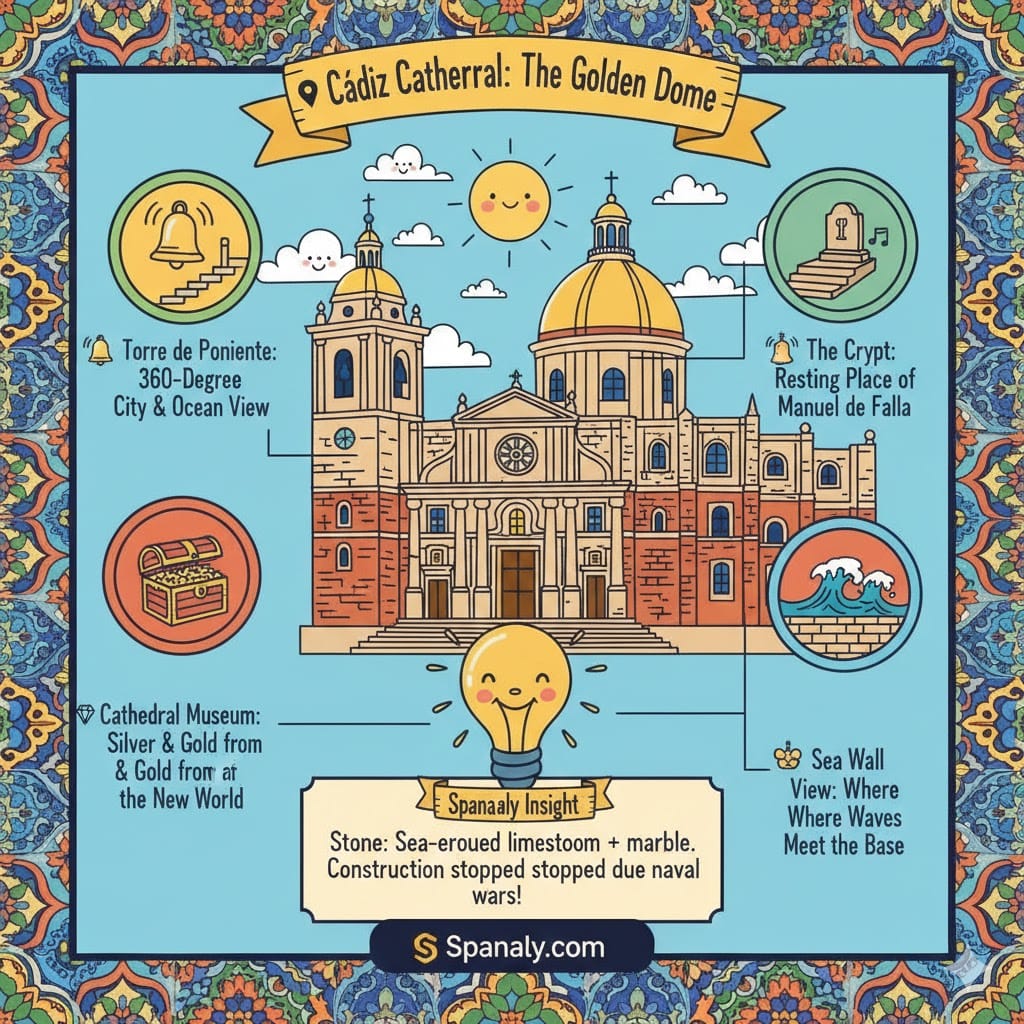
The Cádiz Cathedral, known as the “Cathedral of the Americas,” is an architectural masterpiece. Notably, it took workers 116 years to complete this grand structure. Its famous golden-tiled dome shines under the Andalusian sun and acts as a beacon for sailors. Specifically, it combines Baroque, Neoclassical, and Rococo styles, reflecting Spain’s wealthiest era.
🔔 Torre de Poniente: Climb this bell tower for the most iconic 360-degree view of the city and the ocean.
💀 The Crypt: Visit the final resting place of famous Cádiz natives, including the composer Manuel de Falla.
💎 Cathedral Museum: Home to an impressive collection of silver and gold items from the New World.
🌊 Sea Wall View: The cathedral sits right next to the sea, where waves often crash against its base.
Indeed, its grandeur showcases the city’s maritime prosperity. If you admire monumental religious architecture, this site is as awe-inspiring as the Almudena Cathedral in Madrid. Ultimately, standing in the plaza beneath the golden dome is the quintessential Cádiz experience.
💡 Spanaly Insight: Look closely at the stone. In fact, the bottom half uses sea-eroded limestone (Piedra Ostionera), while the top features fine marble. Notably, construction stopped several times because the city ran out of money during naval wars with Britain!
🏖️ Cádiz Beaches: The Golden Coast
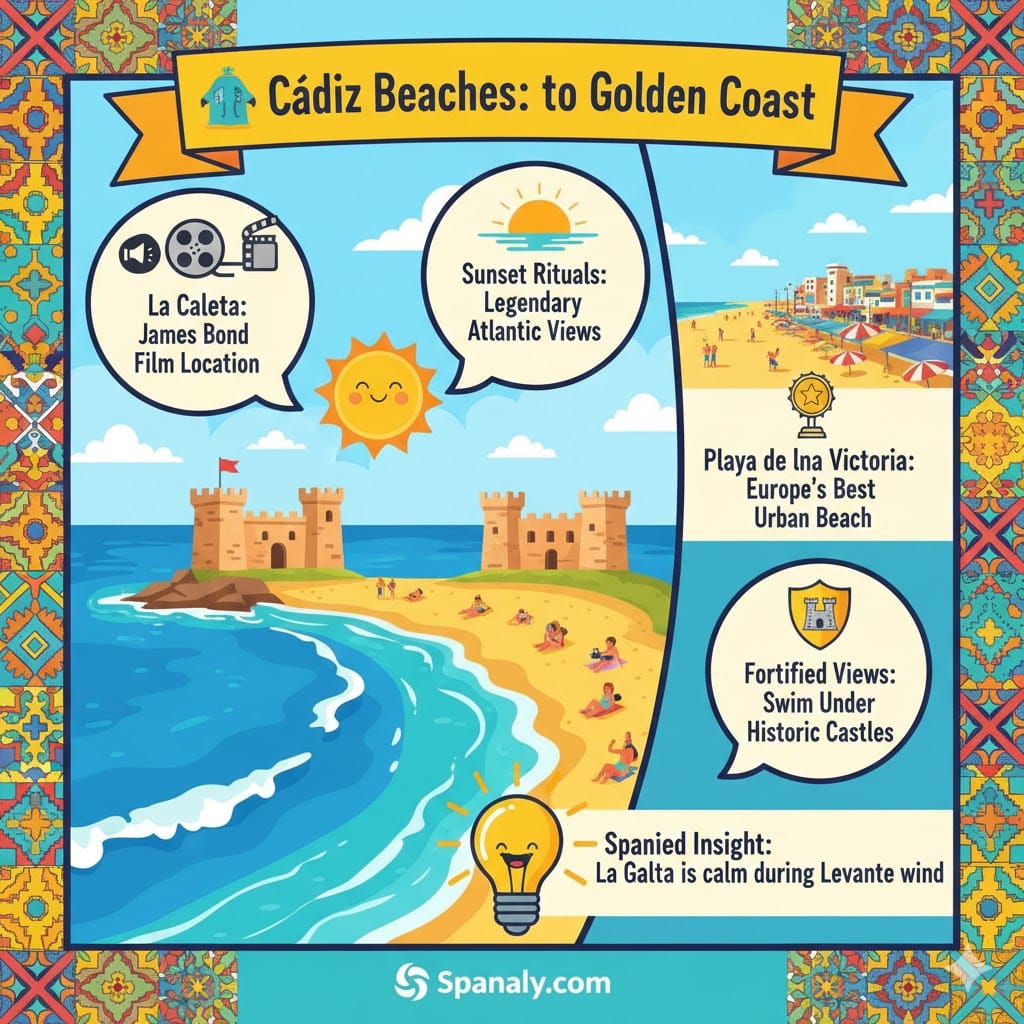
Cádiz is almost entirely surrounded by the Atlantic Ocean. Notably, it offers some of the most diverse urban beaches in Europe. These shores form the heart of the “Costa de la Luz” (Coast of Light). Specifically, this region is famous for having the longest hours of sunshine in Spain. Visitors can enjoy historic fortifications alongside modern seaside amenities.
🌊 La Caleta: The soul of the old town, nestled between two ancient castles. It doubled as Havana in the James Bond movie Die Another Day.
🏆 Playa de la Victoria: Experts frequently rate this as Europe’s best urban beach. It stretches over 3 km with golden sands and a vibrant promenade.
🏰 Fortified Views: Sunbathe under the shadows of San Sebastián and Santa Catalina castles for a truly historic swim.
🌅 Sunset Rituals: The sunsets at La Caleta are legendary. Locals and tourists gather daily to watch the sun sink into the Atlantic.
Indeed, the beach culture here is deeply relaxed and family-friendly. For those who enjoy famous city shores, the beaches of Cádiz offer a sun-drenched experience. It rivals the lively atmosphere found at Barceloneta Beach in Barcelona. Ultimately, whether you seek a romantic cove or a wide stretch of golden sand, Cádiz delivers the perfect coastal escape.
💡 Spanaly Insight: Looking for a local secret? In fact, when the “Levante” wind blows too hard on the main beaches, head to La Caleta. Notably, its unique position between the castles acts as a natural shield. This makes it the calmest spot in the city during windy days!
🎭 Culture: Carnival & Flamenco Spirit
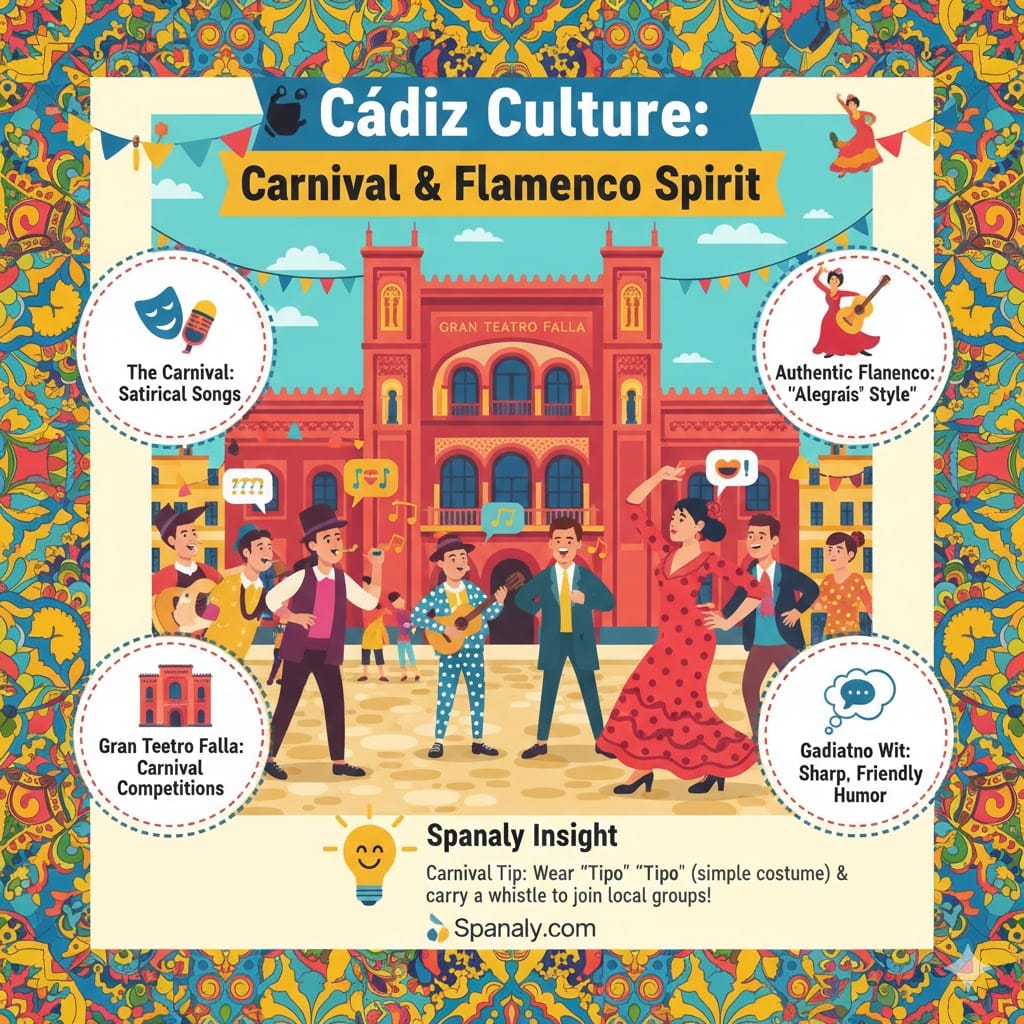
The true essence of Cádiz lies in its laughter, not just its stones. Notably, the city hosts the most famous Carnival in mainland Spain. During this time, the streets transform into a massive theater of satire and music. Specifically, while Seville is known for its solemnity, Cádiz is celebrated for its wit. This makes its culture uniquely approachable and joyful.
🎭 The Carnival: Held every February, it is world-renowned for its “Chirigotas”—musical groups that perform satirical songs.
💃 Authentic Flamenco: Cádiz is the birthplace of “Alegrías,” a flamenco style that is faster and more upbeat than others.
🏛️ Gran Teatro Falla: The temple of Cádiz culture, this Neo-Mudéjar building hosts the prestigious Carnival competitions.
✨ Gaditano Wit: Locals are famous for their “Chispa” (spark)—a sharp, friendly sense of humor that defines every interaction.
Indeed, experiencing a night of local music here is the best way to understand the Andalusian soul. If you love the vibrant energy of Spanish street life, you will find this celebration as essential as the events featured in our Ultimate Spain Festivals Guide. Ultimately, in Cádiz, life is a performance, and everyone is invited to join the chorus.
💡 Spanaly Insight: Planning to visit during Carnival? In fact, you don’t need an expensive costume. Notably, the most authentic way to blend in is to wear a “Tipo” (a simple, creative costume) and carry a whistle to join the musical groups in the El Pópulo district.
🚶 Getting Around Cádiz: A Walkable Island
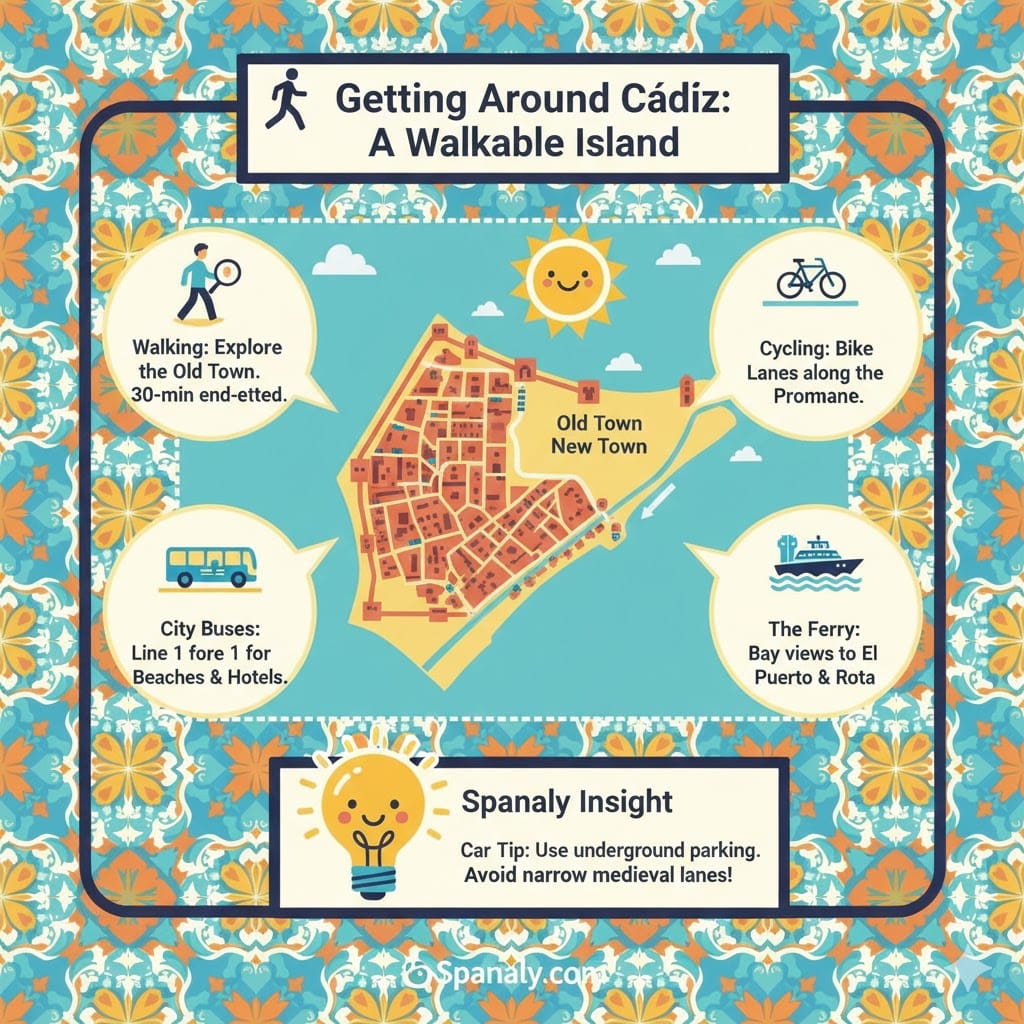
Cádiz is one of the most pedestrian-friendly cities in Europe. Notably, the historic center sits on a narrow peninsula. This means you can reach most main attractions within a short walk. Specifically, the city’s layout encourages slow travel. This allows you to discover hidden plazas that cars simply cannot reach.
👟 Walking: This is the best way to explore the old town (Casco Antiguo). You can walk from one side of the city to the other in less than 30 minutes.
🚲 Cycling: Cádiz offers an extensive network of bike lanes. These lanes run along the modern promenade facing the Atlantic.
🚌 City Buses: Buses are efficient and cheap. Line 1 is particularly useful for traveling between the old town and the newer beach districts.
⛴️ The Ferry: For a unique experience, take the catamaran across the bay. It connects to El Puerto de Santa María and offers stunning sea views.
Indeed, you won’t need a car within the city walls. For travelers used to larger hubs, getting around Cádiz is much simpler than the Public Transport in Barcelona. Ultimately, the joy of Cádiz lies in getting lost in its narrow alleys and finding your way back by following the smell of the ocean.
💡 Spanaly Insight: Arriving by car? In fact, do not try to park in the narrow streets of the old town. Notably, you should use the large underground parking lots near the port or the Cathedral to avoid getting stuck in medieval-width lanes!
🏨 Where to Stay: Best Areas & Stays
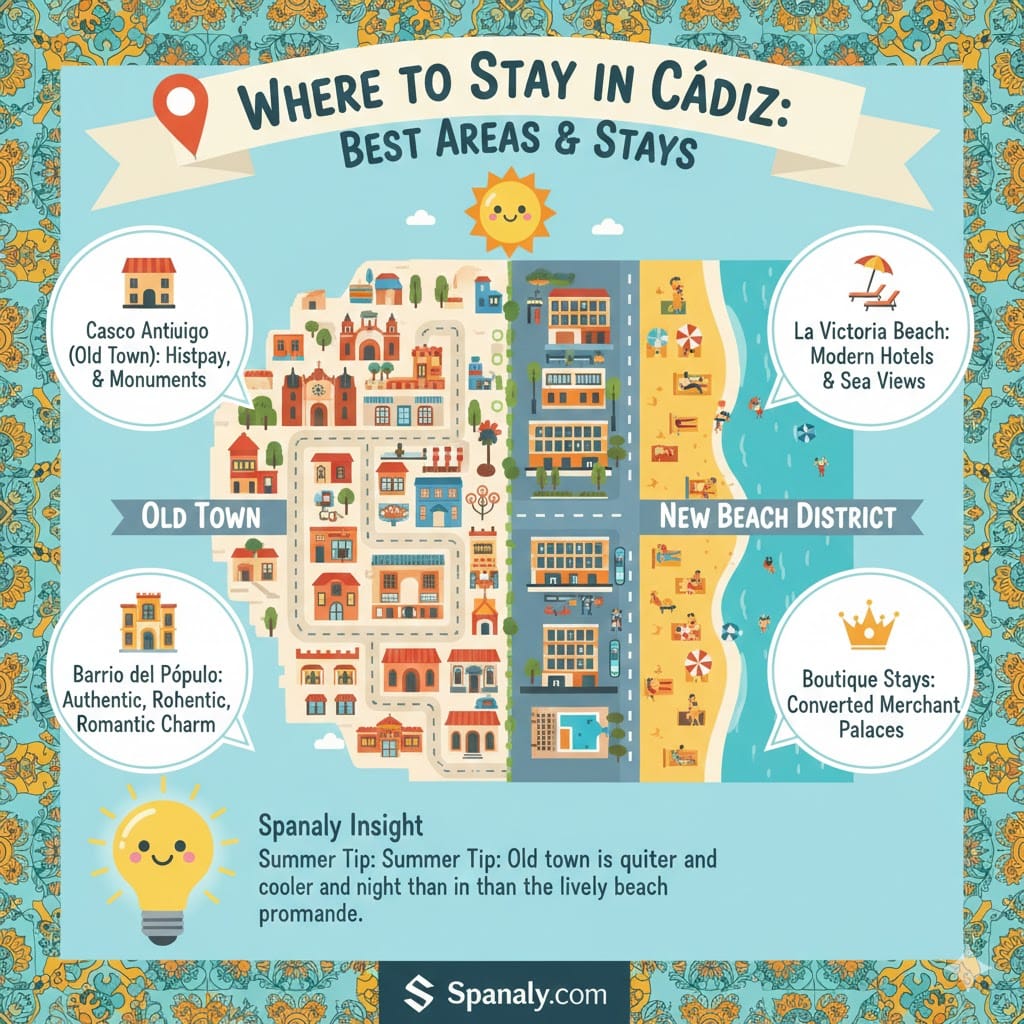
Choosing the right area in Cádiz depends on your morning view. Do you want to hear cathedral bells or crashing Atlantic waves? Notably, the city features two main zones: the historic old town and the modern beach district. Specifically, since the city is small, you are always close to the main attractions by foot or bus.
📍 Casco Antiguo (Old Town): Perfect for first-time visitors. Stay here to be near history, tapas bars, and monuments.
🏖️ La Victoria Beach: Ideal for modern hotels. These venues offer sea views, pools, and easy access to the vibrant promenade.
🏠 Barrio del Pópulo: Choose this area for a romantic experience. It is the city’s oldest and most atmospheric neighborhood.
💎 Boutique Stays: Look for “Casa Palacios.” Owners converted these merchant palaces into luxury stays that showcase 18th-century glory.
Indeed, finding the perfect accommodation is key to a stress-free trip. If you are comparing Spanish destinations, picking a spot here is as vital as finding the Best Areas to Stay in Barcelona. Ultimately, whether you choose a historic balcony or a seaside terrace, Cádiz offers warm Andalusian hospitality.
💡 Spanaly Insight: Visiting during the summer? In fact, hotels in the old town are often quieter than those on the beach. Notably, while the promenade stays lively late at night, the narrow streets of the center offer a peaceful retreat.
🍤 Cádiz Gastronomy: Atlantic Flavors
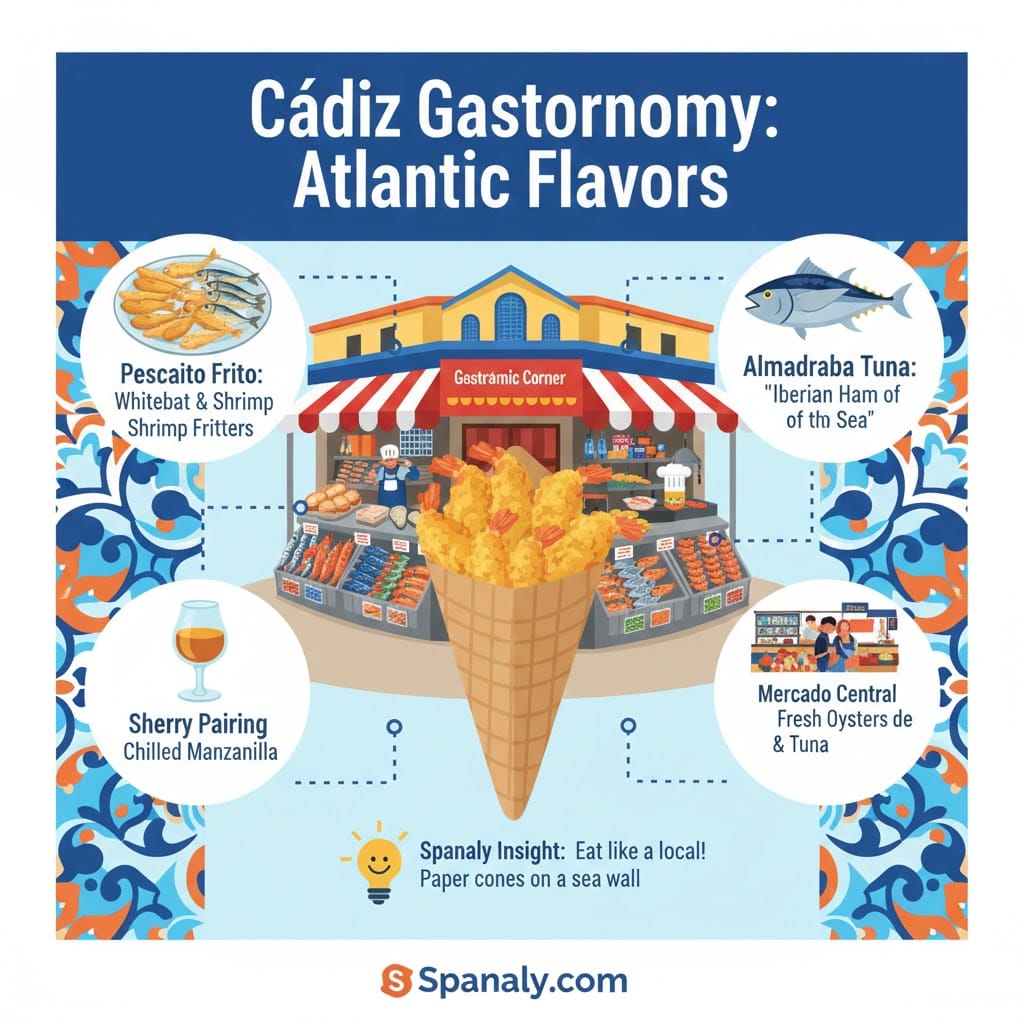
The cuisine of Cádiz directly reflects its geography. Notably, locals treat “Pescaito Frito” (fried fish) as an art form rather than just a dish. Specifically, the mix of ancient salt-preserving techniques and fresh daily catches creates a unique culinary identity. This style is a cornerstone of any Spanish Cuisine Guide.
🐟 Pescaito Frito: Visit a “Freiduría” to try fried whitebait, adobo (marinated dogfish), and crispy shrimp fritters.
🛒 Mercado Central: This is one of Spain’s oldest covered markets. You can buy fresh tuna and have it cooked on the spot at the “Gastronomic Corner.”
🍣 Almadraba Tuna: Locals catch this bluefin tuna using a 3,000-year-old sustainable system. It is so tender that people call it the “Iberian Ham of the sea.”
🍷 Sherry Pairing: Pair your meal with a glass of chilled Manzanilla or Fino sherry from the nearby “Sherry Triangle.”
Indeed, eating in Cádiz is a social ritual performed in sun-drenched plazas. For foodies, understanding these Atlantic flavors is the perfect next step. Explore our comprehensive guide to Spanish flavors for more details. Ultimately, eating fried fish from a paper cone by the sea wall is the city’s most authentic experience.
💡 Spanaly Insight: Want to eat like a local? In fact, look for the “Freidurías” that serve fish in brown paper cones (cartuchos). Notably, this is the traditional way to enjoy your meal while watching the sunset—it’s cheaper, fresher, and offers the best view!
🚗 Day Trips: Jerez & the White Villages
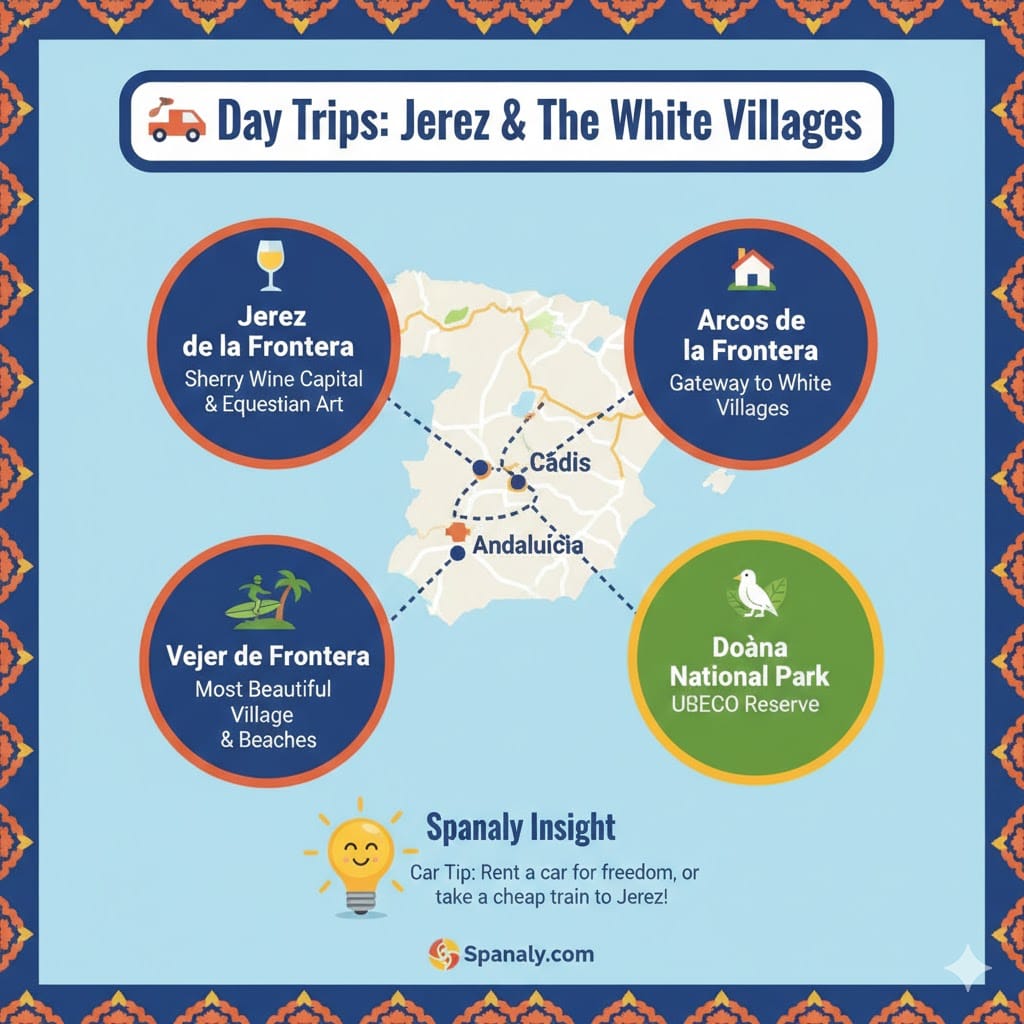
While the city itself is captivating, Cádiz serves as the perfect gateway to explore the wider treasures of Andalusia. Notably, within an hour’s drive, the scenery transforms from Atlantic shores to rolling vineyards and dramatic mountain cliffs. Specifically, these excursions are a fantastic extension for those already following a 3-Day Seville Itinerary, as both cities are perfectly connected for a seamless southern Spanish adventure.
🍷 Jerez de la Frontera: Just 30 minutes away, this is the world capital of Sherry wine and home to the Royal Andalusian School of Equestrian Art.
🏠 Arcos de la Frontera: The gateway to the White Villages, perched precariously on a limestone ridge with breathtaking views of the Guadalete River.
🏄 Vejer de la Frontera: Often called the most beautiful village in Spain, it offers a stunning Moorish old town just minutes from the pristine beaches of El Palmar.
🌿 Doñana National Park: A UNESCO World Heritage site across the bay, essential for nature lovers and birdwatchers.
Indeed, adding a day trip to your travel plans enriches the experience significantly. Combining the coastal charm of Cádiz with a structured visit to the regional capital provides the ultimate balance between urban culture and seaside relaxation. Ultimately, the magic of Cádiz is that it connects the deep blue of the ocean with the brilliant white of the Andalusian mountains.
💡 Spanaly Insight: Travelling without a car? In fact, the local train (Cercanías) connects Cádiz to Jerez in just 35 minutes for a few euros. Notably, for the White Villages like Arcos or Vejer, taking a local bus from the main station is easy, but renting a car for a day gives you the freedom to hop between several villages at your own pace!
💡 Pro Tips for an Unforgettable Cádiz Experience

To truly master your visit to the oldest city in the West, you need more than just a map. Notably, Cádiz has its own rhythm and hidden rules that can make or break your trip. Specifically, following these expert tips will help you avoid the crowds and experience the city like a true “Gaditano.”
🕰️ Embrace the “Siesta” Silence: Between 2:00 PM and 5:00 PM, the old town almost completely shuts down. In fact, this is the perfect time to head to the sea wall or take a nap, as most local shops and smaller museums will be closed.
👟 Watch Your Step (Literally): The limestone streets of Cádiz can be surprisingly slippery, especially when humid or after a light rain. Notably, leave your flip-flops for the beach and wear shoes with a good grip for exploring the Casco Antiguo.
⛪ The Cathedral’s Secret View: While everyone climbs the Torre de Poniente, for a different perspective, visit the Campo del Sur at “blue hour.” The view of the cathedral dome against the ocean is the most photographed spot in the city for a reason.
💧 Stay Hydrated for Free: Cádiz has numerous historic public drinking fountains with fresh, potable water. Look for the ornate stone fountains in the plazas to refill your reusable bottle and save on plastic.
📱 Download the “Cádiz Taxi” App: While the city is walkable, if you need to reach the train station with luggage, Uber isn’t very active here. Notably, the local “Pidetaxi” app is the most reliable way to book a ride.
Indeed, these small details are what separate a tourist from a savvy traveler. Just as you would prepare with specific Travel Tips for Spain before a big trip, knowing the local quirks of Cádiz ensures a seamless adventure. Ultimately, the best advice is to put your phone away for an hour and let the sea breeze guide you through the narrow alleys.
🏖️ Visitor FAQs – Planning Your Trip to Cádiz
Discover essential insights for your Atlantic adventure, from hidden budget tips to local customs in Europe’s oldest city.
💰 Is Cádiz an expensive city for travelers?
Actually, Cádiz is one of the most affordable coastal cities in Spain. Prices for tapas and accommodation are generally 20-30% lower than in Madrid or Barcelona, making it perfect for budget-conscious explorers.
🌉 What is the best way to enter the city for the first time?
If you are driving, use the Constitution of 1812 Bridge (La Pepa). It is one of the highest bridges in Europe and offers a spectacular panoramic view of the bay as you descend into the city.
🛍️ Are shops open on Sundays in Cádiz?
Like most of Andalusia, smaller shops and local markets close on Sundays. However, most restaurants and cafes remain vibrant and full of life, especially in the plazas. Plan your shopping for Saturday morning!
🌍 Is English widely spoken in Cádiz?
While hotel staff and tour guides speak English, the locals primarily speak Spanish. Learning a few basic phrases like "Una caña, por favor" will go a long way in earning a warm smile from the friendly Gaditanos.
🏰 Can I visit the famous "Watchtowers" of the city?
Yes! While there were once over 160 towers, the Torre Tavira is the most famous one open to the public. It features a unique "Camera Obscura" that provides a real-time 360-degree projection of the city.
🌊 Is the ocean water warm enough for swimming?
The Atlantic is cooler than the Mediterranean. The best time for swimming is from July to September when water temperatures are at their peak, though the refreshing breeze makes it pleasant all summer long.
Created by Spanaly.com
🌊 Why Cádiz Stays in Your Heart
Cádiz is more than just a destination; it’s a feeling of freedom, Atlantic salt, and contagious laughter. Ultimately, whether you come for the history or the golden sunsets, you will leave with a piece of the Andalusian soul.
✨ The Vibe: Relaxed, historic, and incredibly welcoming.
📸 Best Memory: Watching the sun sink into the ocean at La Caleta.
🍤 Top Flavor: A fresh “Cartucho” of fried fish by the sea.
🗺️ Next Adventure: Love the Atlantic charm? Notably, you might want to compare this southern gem with the elegant northern shores in our San Sebastián Travel Guide.
Indeed, from the sunny “Coast of Light” in the south to the lush green coast of the north, Spain never stops surprising you. Ultimately, the only question left is: When are you booking your ticket?
💬 Join the Conversation: Have you ever felt the “Levante” wind in Cádiz? Or perhaps you’re planning your first trip? In fact, we’d love to hear your thoughts or questions in the comments below!