
Table of Contents
Toggle🏛️ The Heart of Spanish Pilgrimage
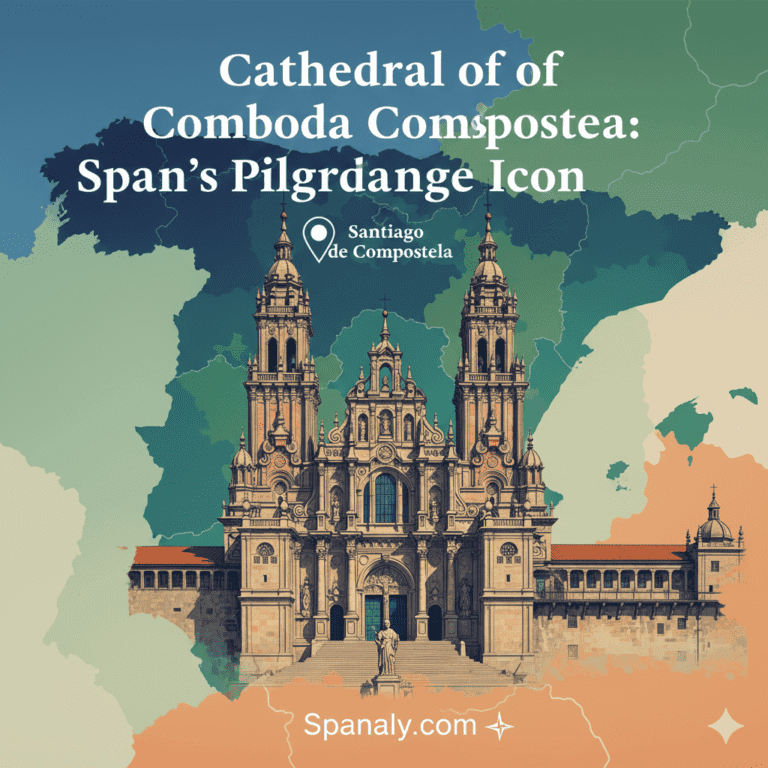
The Cathedral of Santiago de Compostela is more than a building. It is the final destination for thousands of pilgrims. For centuries, people have walked the Camino de Santiago to reach this spot.
What makes it special?
A Spiritual Landmark: It houses the tomb of Saint James the Apostle.
Artistic Wonder: It blends Romanesque, Gothic, and Baroque styles.
Global Icon: It is a UNESCO World Heritage site since 1985.
Visiting this cathedral is a journey back in time. It is a place where faith meets incredible craftsmanship. Every stone tells a story of devotion. Before you start your journey through the north, you might want to learn about other Spanish landmarks like the City Walls of Ávila to see more of Spain’s medieval heritage.
📜 History: From a Hidden Tomb to a Global Icon
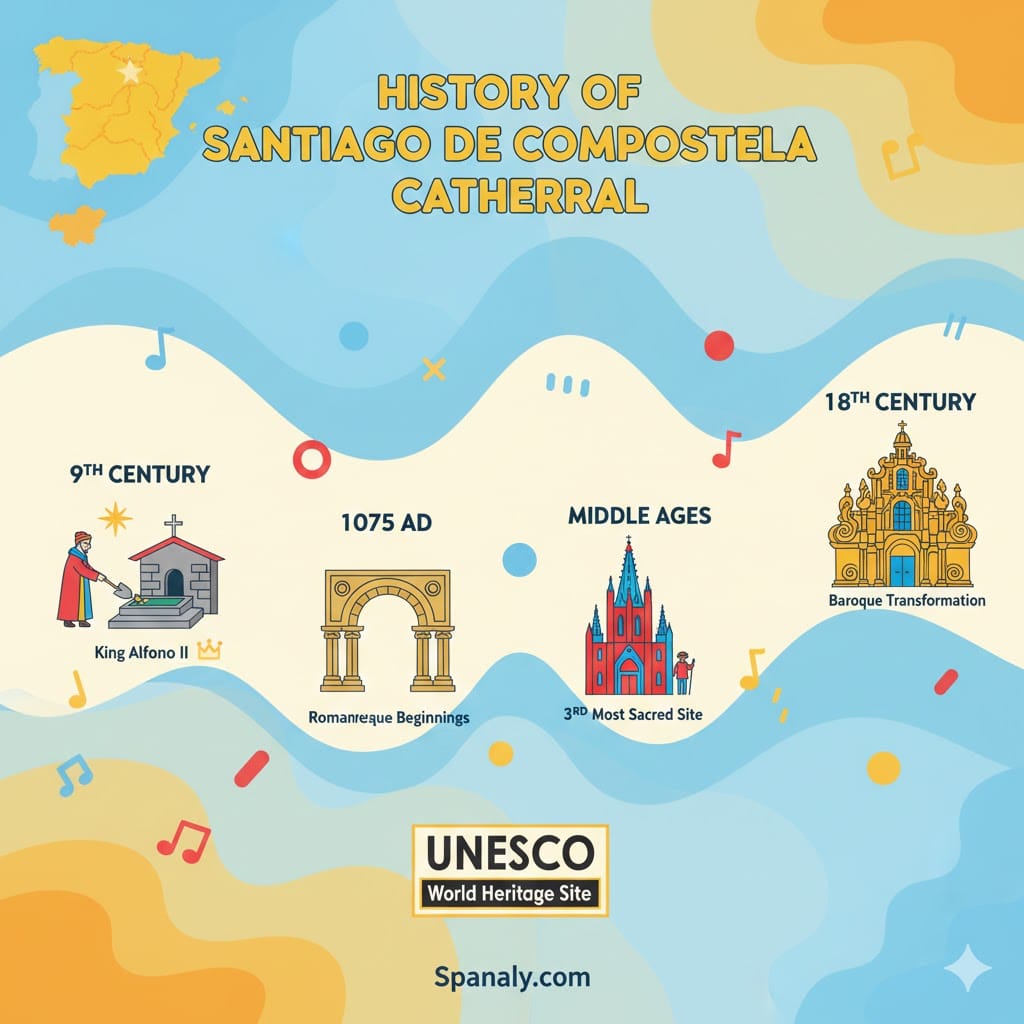
The story of the cathedral began with a miraculous discovery. In the 9th century, a hermit found the tomb of Saint James. This event changed Spanish history forever.
Key Historical Stages:
The First Stone: King Alfonso II built a small chapel over the tomb.
Romanesque Era: Construction of the grand cathedral started in 1075.
The Golden Age: During the Middle Ages, it became the third most important site in Christendom after Rome and Jerusalem.
The building survived many challenges, including raids and wars. Over time, it grew into a massive complex. If you are interested in how Spain protected its historic sites, you can read about the Toledo Alcázar: Spain’s Majestic Fortress which shares a similarly resilient history.
💎 Architectural Highlights: A Masterpiece of Styles
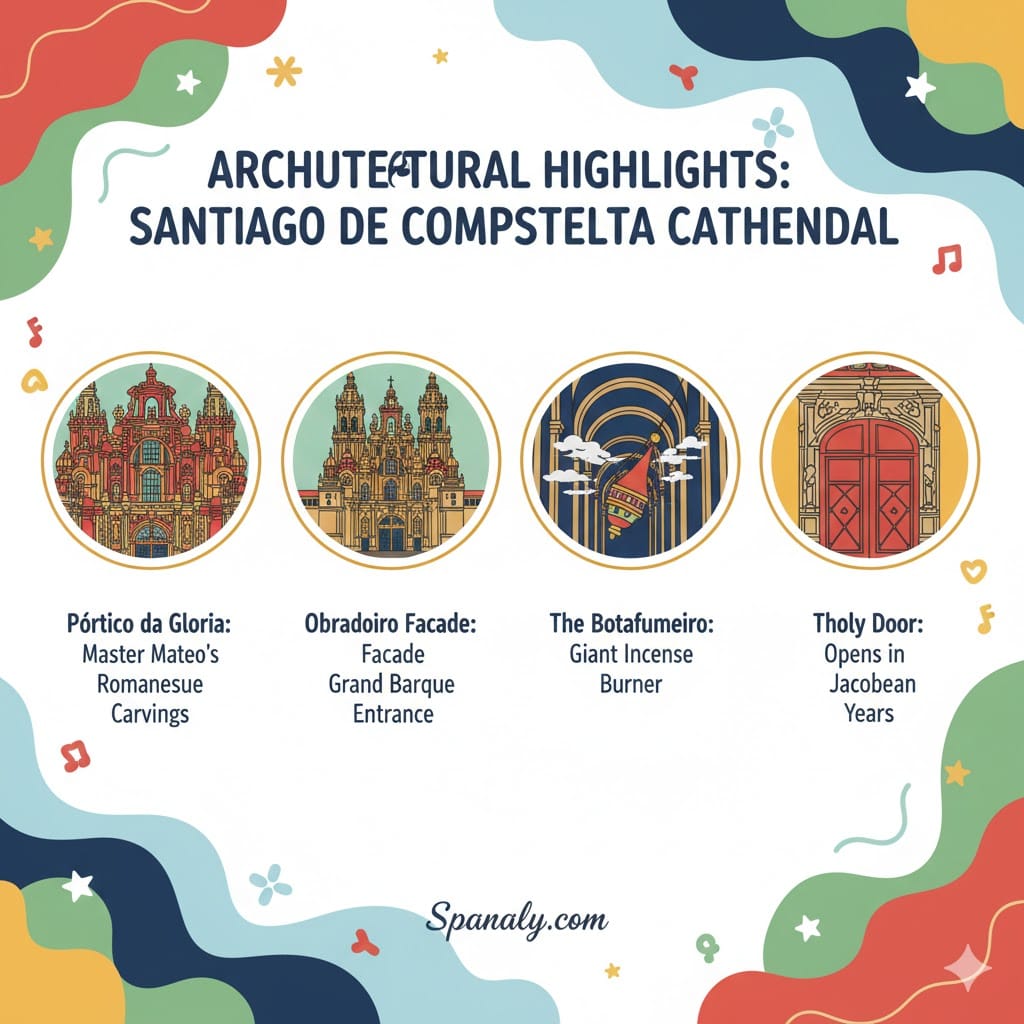
The Cathedral is an architectural treasure. It showcases centuries of artistic evolution in one place. Every corner reflects a different era of Spanish art.
Must-See Architectural Features:
🎨 Pórtico da Gloria: A Romanesque masterpiece by Master Mateo. It features over 200 biblical figures.
⛪ Obradoiro Facade: The iconic Baroque entrance. It welcomes pilgrims with grand towers and intricate stone carvings.
🕯️ The Botafumeiro: A famous giant incense burner. It swings at 68 km/h across the transept during special masses.
🚪 The Holy Door: This door opens only during “Jacobean Years.” It is a symbol of forgiveness and new beginnings.
The interior is equally stunning. The gold-covered main altar is the focal point of the building. If you enjoy visiting massive historic monuments, don’t miss our guide on the Roman Theatre of Mérida to see another architectural wonder of Spain.
👣 The Pilgrim’s Experience: Rituals & Holy Years
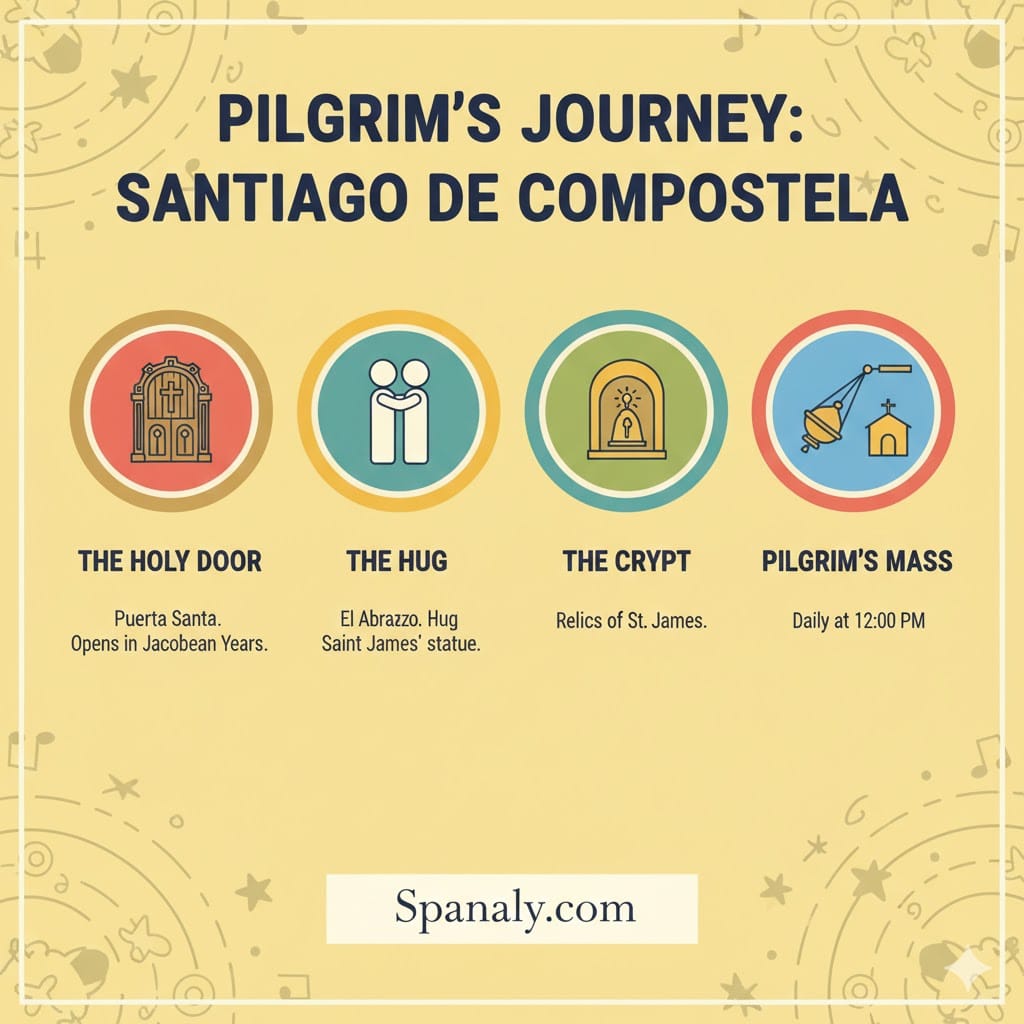
Visiting this cathedral is a spiritual journey. Whether you walk the Camino or arrive by bus, certain rituals are essential. These traditions have connected visitors for over a thousand years.
The Sacred Rituals:
🕊️ The Holy Door (Puerta Santa): This door only opens during a Jacobean Holy Year (when July 25th falls on a Sunday). Passing through it is a unique privilege.
🫂 The Hug (El Abrazo): It is a tradition to climb behind the main altar. There, you can hug the 13th-century statue of Saint James.
⚰️ The Crypt: Beneath the altar lies the silver coffer. It contains the sacred relics of the Apostle.
Planning Your Visit:
Mass Times: The “Pilgrim’s Mass” is held daily at noon.
Dress Code: Respectful attire is required. Shoulders and knees must be covered.
Photography: Allowed for personal use, but strictly forbidden during mass.
This spiritual energy is felt throughout the city. To prepare for your wider travels across the country, check our Spanish Language Tips to help you connect with the locals during your pilgrimage.
📍 Visiting the Cathedral: Beyond the Sanctuary
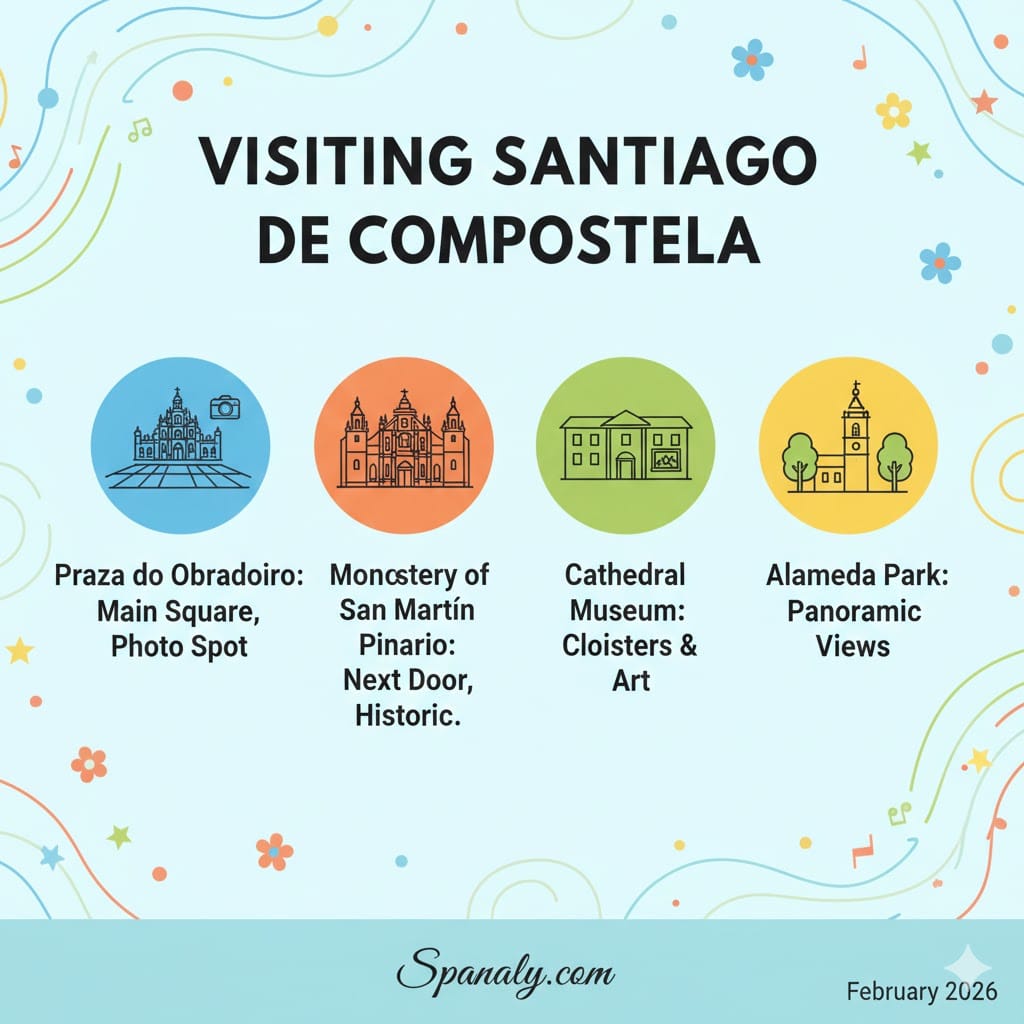
To enjoy your visit, you must explore the area around the cathedral. The building sits in the middle of four grand squares. Each one offers a different perspective of the architecture.
Top Places to See Nearby:
🏛️ Praza do Obradoiro: The most famous square. It is the perfect spot to photograph the main facade.
⛪ Monastery of San Martín Pinario: Located right next door. It is one of the largest and most beautiful monasteries in Spain.
🖼️ Cathedral Museum: A must-visit to see the original stone carvings and the stunning cloisters.
🌿 Alameda Park: Take a short walk here for the best panoramic view of the cathedral towers.
The city of Santiago is a masterpiece of stone. If you want to compare this northern icon with the wonders of the south, we suggest exploring the Alhambra: Spain’s Moorish Palace to see a different side of Spain’s diverse history.
🌍 Cultural Significance: A Living Legacy
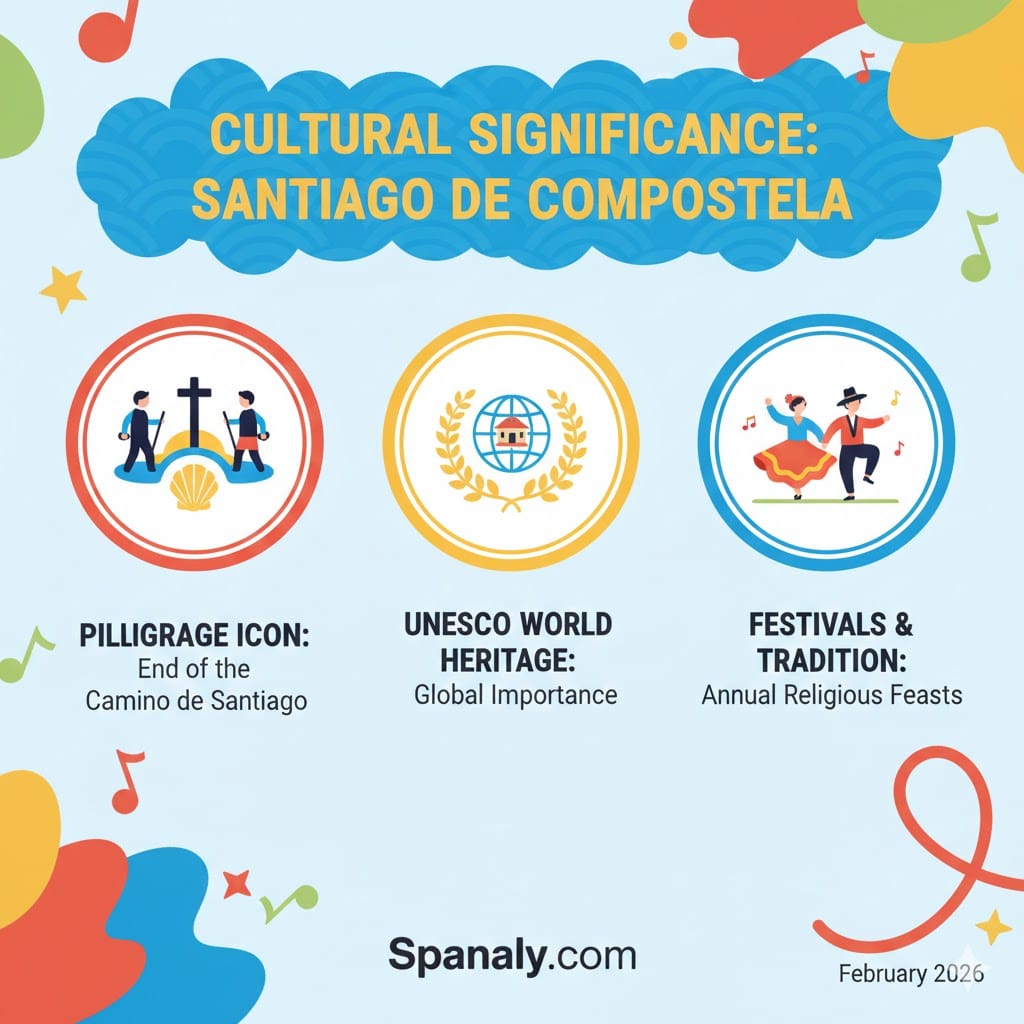
The Cathedral is more than just a religious site. It is a symbol of European unity and cultural exchange. For centuries, it has shaped the identity of Galicia and the entire continent.
Why it matters globally:
🌟 UNESCO Heritage: Recognized since 1985 for its outstanding universal value.
🎭 Living Traditions: Annual festivals like the “Feast of Saint James” keep ancient rituals alive.
🤝 Meeting Point: It serves as a bridge between different cultures and languages from around the world.
This cathedral continues to inspire artists, historians, and travelers every year. It represents the enduring spirit of human creativity and devotion. If you are captivated by Spain’s religious architecture, you should also explore the Burgos Cathedral: A Gothic Masterpiece, which offers another stunning example of Spanish faith and stone.
💡 Expert Tips for a Perfect Visit

To get the most out of your experience, follow these practical suggestions. These small details can make a huge difference in your journey.
Key Recommendations:
🕒 Beat the Crowds: Arrive before 9:00 AM to enjoy the silence of the nave before the tour groups arrive.
🎫 Book in Advance: Tickets for the Pórtico da Gloria and the rooftops sell out weeks ahead. Always book online.
👟 Wear Sturdy Shoes: The stone floors of the cathedral and the surrounding streets can be slippery and uneven.
⛪ Attend the Pilgrim’s Mass: Even if you are not religious, the 12:00 PM mass is a powerful cultural experience.
The energy of Santiago is contagious. If you are planning a longer stay in Spain and need to manage your budget, take a look at our Cost of Living in Spain Guide to help you plan your finances.
⛪ Visitor FAQs – Cathedral of Santiago de Compostela
🎒 What is the best time to see the Botafumeiro ceremony?
The Botafumeiro usually swings during major religious feasts and the Pilgrim’s Mass on Fridays at 7:30 PM. It is highly recommended to check the official website as the schedule can change based on private requests.
🎟️ Do I need a ticket to enter the Cathedral?
General entry to the main nave is free. However, specific tickets are required for the Museum, the Pórtico da Gloria, and the Rooftop tours. Due to high demand, you should book your tickets online at least two weeks in advance.
🚶 Can I still hug the statue of Saint James?
Yes, the traditional "Abrazo" (hug) is permitted. You can access the statue through the stairs located behind the main altar. Note that this area may be closed during official mass services for solemnity.
🛡️ Is there a dress code for visitors?
A respectful dress code is strictly enforced. Shoulders and knees must be covered. You should also remove hats inside. While small bags are okay, you must store large hiking backpacks in external lockers near the cathedral.
Expert Guide by Spanaly.com
Cathedral of Santiago de Compostela: Quick Guide
📍 Location
Santiago de Compostela, Galicia, Spain
📜 Construction
Started in 1075 (9th-century origins)
🏗️ Architecture
Romanesque, Gothic, Baroque mix
🌟 Status
UNESCO World Heritage Site
🖼️ Main Features:
Obradoiro Facade, Pórtico da Gloria, The Botafumeiro, and the Holy Crypt.
🕰️ Visiting Tip:
Free entry to the nave; paid tickets needed for museums and rooftops. Recommended visit: 2 hours.
Verified Information by Spanaly.com
✨ A Journey for the Soul
The Cathedral of Santiago de Compostela is more than a building. It is the finish line of a thousand-year-old journey. Its stones tell stories of faith, art, and human perseverance.
Why You Should Visit:
🏛️ Architectural Wonder: Experience the perfect mix of Romanesque and Baroque styles.
🕯️ Spiritual Peace: Feel the unique energy of the “Pilgrim’s Mass.”
🌍 Historical Connection: Walk through a UNESCO site that shaped European history.
Whether you are a pilgrim, a history lover, or a curious traveler, this cathedral will leave a lasting mark on your heart. It remains a crowning jewel among the many Spanish Attractions that make this country a world-class destination.