SPAIN CITY GUIDE · CASTILLA-LA MANCHA
Cuenca Travel Guide: What to See, Do and Know
Cuenca is a cliffside city of medieval lanes, the famous Hanging Houses, contemporary art and hearty Castilian food. Its historic center is compact, but steep streets and the out-of-center high-speed rail station make a little planning worthwhile.
Is Cuenca right for your trip?
- One day from Madrid: possible if train times line up and you plan the transfer from Fernando Zóbel station.
- Stay overnight: better for the museum, a relaxed dinner and evening light over the gorge.
- Bring grippy shoes: slopes, steps and uneven paving are part of the visit.
- Skip the car for the main sights: parking in the historic center is limited; a car is more useful for the surrounding countryside.
The Best Things to Do in Cuenca
1. See the Hanging Houses (Casas Colgadas)
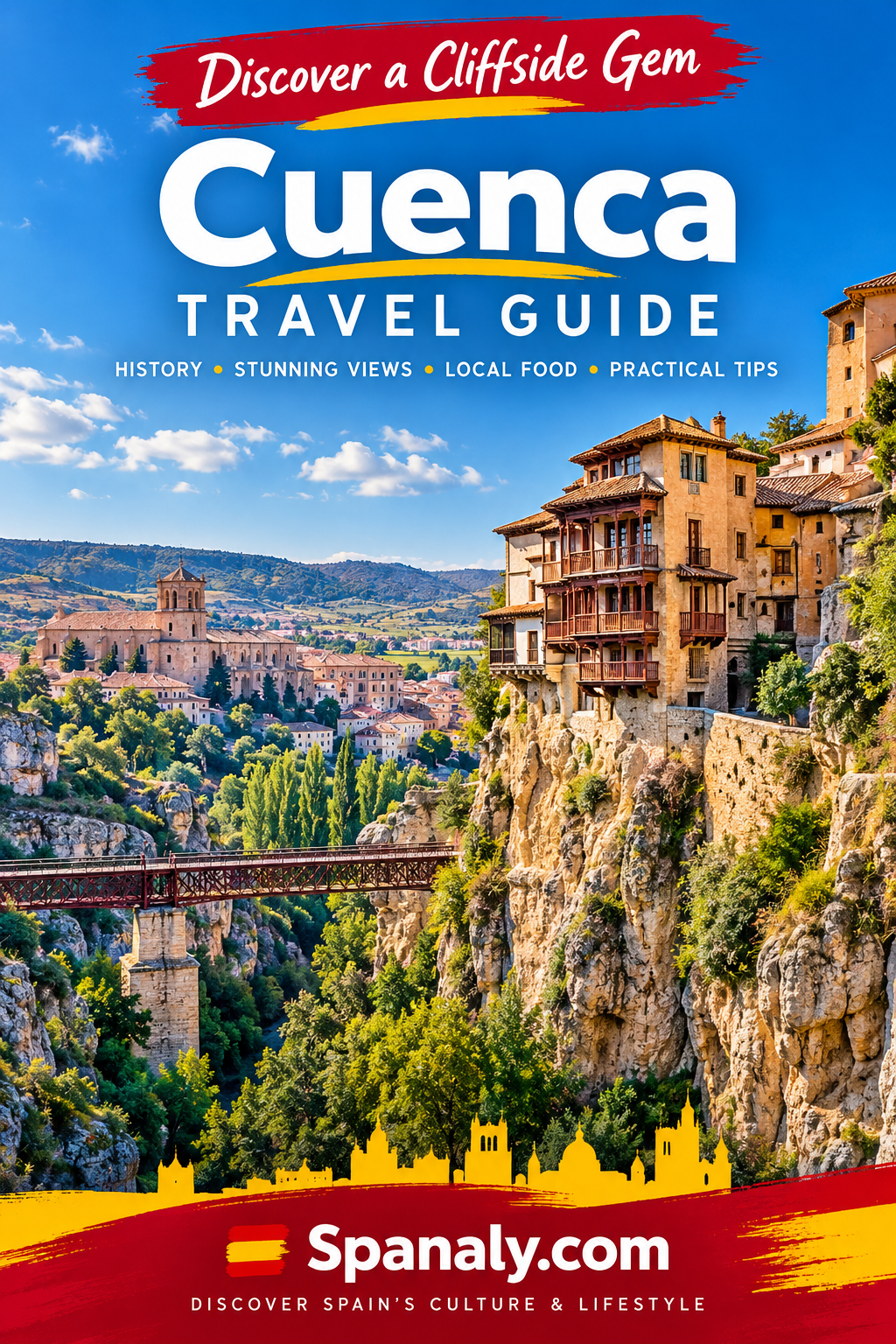
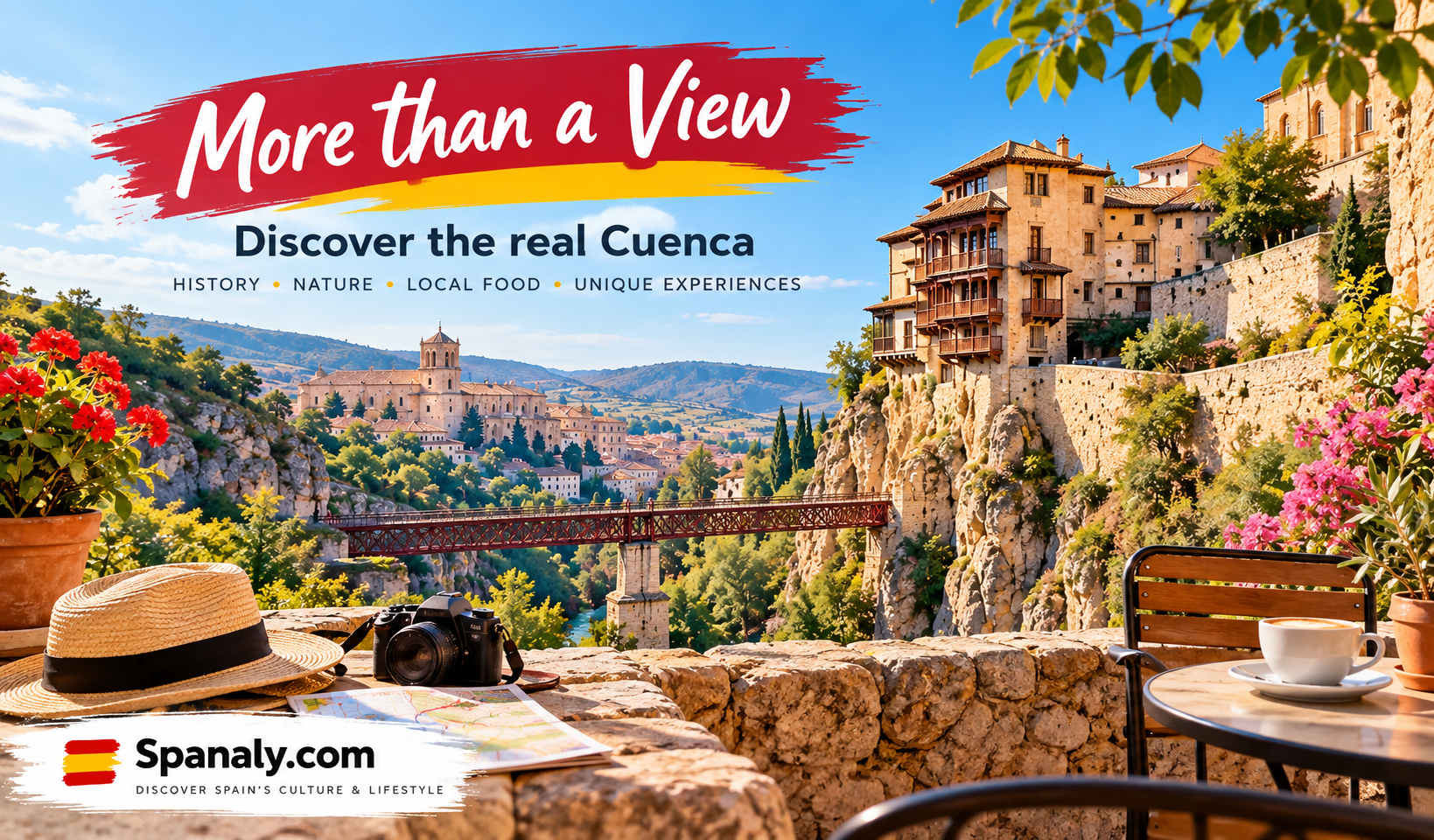
Cuenca’s best-known landmark, the Casas Colgadas, projects over the Huécar gorge. The exterior can be admired from public viewpoints without buying a ticket. The buildings also house the Museum of Spanish Abstract Art, so you can combine the famous view with a collection of modern Spanish art.
2. Cross the San Pablo Bridge
The pedestrian bridge is the classic place to look back at the Hanging Houses and the gorge. The height and open structure can be uncomfortable for visitors who are afraid of heights. Cross at a comfortable pace and keep to the walkway when stopping for photos.
3. Visit Cuenca Cathedral and Plaza Mayor
The cathedral anchors Plaza Mayor, a useful starting point for exploring the old town. If you want to go inside, check the cathedral’s official visitor schedule before travelling; tourist visits may be affected by services or special events.
4. Walk the historic lanes and castle quarter
Beyond the main square, narrow streets climb toward the castle area and elevated viewpoints. The walk offers a better sense of how the old city fits between the Júcar and Huécar gorges. Do the uphill section only if the weather and your energy allow; the main sights are enough for a satisfying visit without adding every viewpoint.
5. Look beyond the postcard view
Cuenca’s landscape is part of the attraction. Choose established paths and marked viewpoints to appreciate the limestone ravines from different angles. Avoid informal shortcuts on steep ground, especially after rain, and allow extra time if you plan to descend toward the river.
How to Get to Cuenca
By train from Madrid
High-speed trains serve Cuenca-Fernando Zóbel station, which is outside the historic center. For broader planning advice, see Spanaly’s Spain high-speed train guide. Journey times and departure stations depend on the service, so check your specific journey with Renfe rather than relying on a single advertised travel time.
After arriving, you still need to reach the old town. Urban buses and shuttle-style services may connect key points, but routes and timetables can change. Check the current official Cuenca urban bus information. A taxi is a practical alternative if you have luggage, limited time or mobility concerns.
By car or coach
A car is not necessary for the central sights, which can be linked on foot, but it is useful for rural destinations outside the city. The historic center has narrow streets and limited parking, so ask your accommodation about access and parking before driving in. For coaches, confirm the operator’s current timetable for your route.
Station transfer
Plan the trip from Fernando Zóbel station to the old town before you set off.
Walking conditions
Expect slopes, stairs and uneven paving; wear shoes with reliable grip.
Time-sensitive details
Recheck train times, bus routes and attraction hours close to your visit.
What to Eat in Cuenca
Try morteruelo, a rich traditional preparation made with game and other meats; ajoarriero, commonly prepared with salt cod, garlic and potatoes; and alajú, a regional sweet made with honey and almonds. For more ideas about regional dishes, explore Spanaly’s Spanish cuisine guide. Recipes vary between kitchens, so ask about ingredients if you have dietary requirements.
Leave a proper lunch break in your schedule rather than squeezing a meal into the gap between two attractions. If you want a particular restaurant, check its current opening hours and reserve when appropriate. The official Cuenca tourism website is a useful starting point for planning.
Where to Stay in Cuenca
Historic center
Best for atmosphere and walking to the main sights. The trade-off is steep terrain, steps and restrictions on vehicle access in some streets.
Lower city
Often more practical for transport, parking and a flatter environment. You will need to plan how to get up to the old town.
Parador de Cuenca
The Parador sits across the bridge from the Hanging Houses, giving it an exceptional position for looking back at the old town. It is worth considering for the view as well as the stay; compare price, access and availability before booking.
Parking tip: if you are driving, confirm whether your accommodation has parking and whether you can reach its entrance by car. Do not assume a historic-center hotel has on-site parking.
A Practical One-Day Itinerary
This route keeps the main sights close together. Treat it as a flexible plan, not a promise that every attraction will be open at the listed time. If you prefer a slower visit, see our three-day Cuenca itinerary for a longer stay.
- Morning — Cathedral and Plaza Mayor. Start in the historic center; visit the cathedral if tourist entry is available.
- Late morning — Casas Colgadas and the museum. Visit the exterior viewpoints and the Museum of Spanish Abstract Art if it is open. Do not build the plan around the museum on a Monday without checking its current schedule.
- Lunch — Eat in the old town. Try a regional dish and allow time to enjoy the meal.
- Afternoon — San Pablo Bridge and gorge views. Cross the bridge for the classic view and explore nearby viewpoints at a comfortable pace.
- Optional — Castle quarter. Add the uphill walk only if the weather is mild and you still have energy; it is not essential to a good first visit.
- Return — Leave a buffer. If travelling by train, allow enough time to get back to Fernando Zóbel station and check your departure again.
Practical Tips Before You Visit
- Wear shoes with grip. Steep streets, steps and uneven stone surfaces are common in the old town.
- Check Monday opening hours. The Museum of Spanish Abstract Art is normally closed on Mondays; verify the current schedule before travelling.
- Plan the station transfer. Fernando Zóbel station is outside the center, so check bus options or arrange a taxi.
- Do not overpack the day. Cuenca’s slopes make short distances slower than they look on a map.
- Check access and parking. Narrow streets and vehicle restrictions can complicate arrival at historic-center accommodation.
- Confirm changing details. Train schedules, bus routes, museum hours and admission arrangements may change; use the official links above before leaving.
Cuenca Travel FAQs
Can you visit Cuenca as a day trip from Madrid?
Yes, if the outbound and return train times leave enough time in the city and you plan the transfer from Fernando Zóbel station to the historic center. If the connections are awkward, an overnight stay is more comfortable.
How long do you need in Cuenca?
Allow around 4–6 hours for the core sights, depending on museum visits, walking pace and transport. An overnight stay is better if you want a relaxed meal and time to enjoy the gorge in the evening.
Are the Hanging Houses free to visit?
The exterior can be viewed from public viewpoints for free. The Museum of Spanish Abstract Art inside the Casas Colgadas currently offers free admission according to the information used for this guide; check Fundación Juan March for current hours and admission details before visiting.
Is Cuenca easy to explore on foot?
The main sights are close enough to connect on foot, but the old town is steep and uneven. It is manageable for many visitors with suitable footwear, but it may not be easy for everyone, especially people with limited mobility.
Do you need a car in Cuenca?
No car is needed for the main sights in the historic center. A car can be useful for rural day trips, but parking and narrow streets make it less convenient in the old town.