

Table of Contents
Toggle✨ A Living Echo of Al-Andalus
You can find El Bañuelo hidden at the foot of the Alhambra hill. It sits peacefully beside the Darro River. This site stands as one of the most authentic Islamic public baths in Spain. Builders constructed it in the 11th century during the Zirid Taifa period. Therefore, these baths are more than just architectural remains. They offer a living testimony to daily life and social traditions in medieval Al-Andalus.
Unlike many other hammams, El Bañuelo preserves its original proportions and atmosphere. It has escaped heavy restoration over the centuries. Consequently, visitors can step directly into Granada’s Islamic past. This space allows you to feel the history of Spanish Attractions in a very intimate way.
🕰️ A Journey Back to the 11th Century
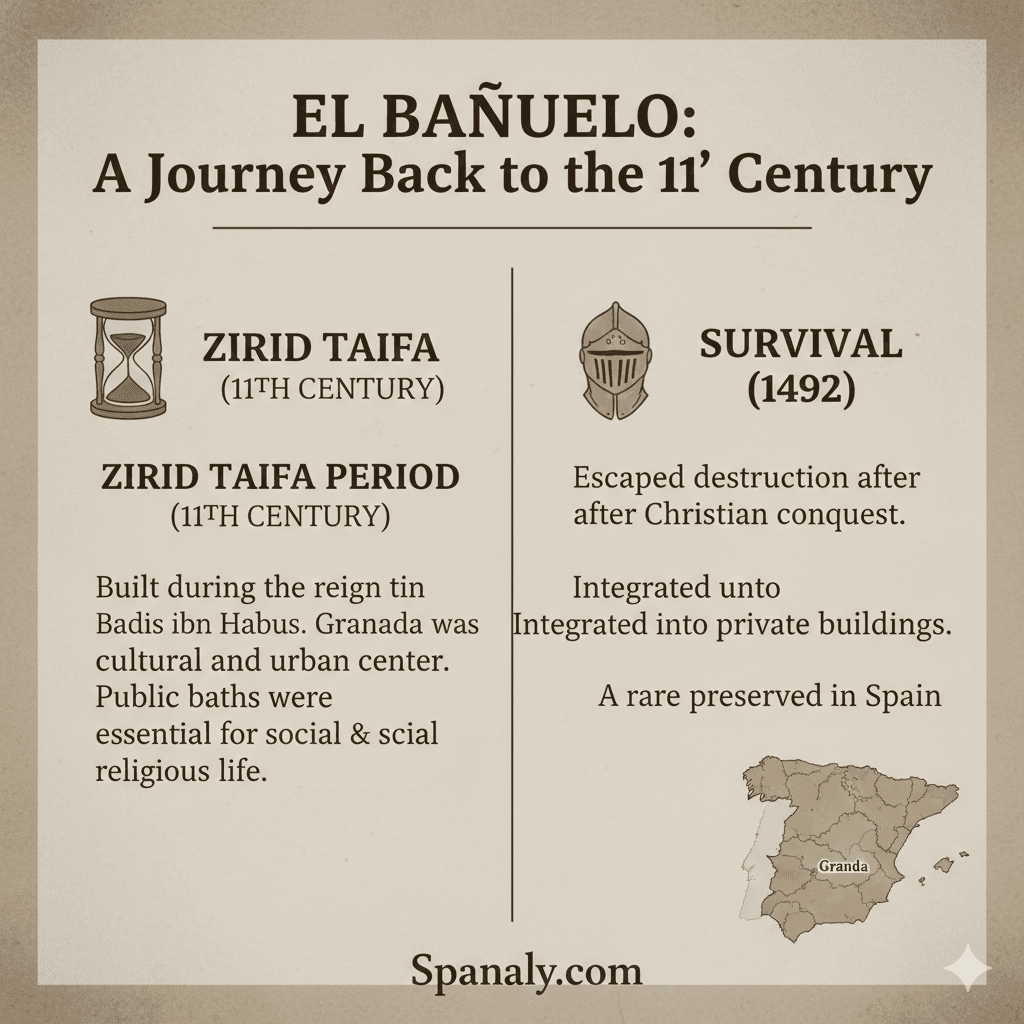
The history of El Bañuelo takes us back to a golden era. During the 11th century, Granada flourished as a major cultural center.
👑 The Royal Origin: Workers built the baths under the reign of Badis ibn Habus.
🏛️ Essential Institutions: In Islamic cities, hammams served religious and social roles. They were vital for both hygiene and community bonding.
🛡️ Miraculous Survival: Remarkably, El Bañuelo survived the Christian conquest in 1492. Most other baths were destroyed during that time.
🏠 Hidden Protection: Later, private buildings grew around the site. These structures protected the ancient stone from destruction for centuries.
Consequently, this site remains a rare example of Spanish Attractions from the Zirid Taifa period. It offers a direct window into the daily life of medieval Al-Andalus.
🏛️ Architecture & Design: Timeless Andalusi Craftsmanship
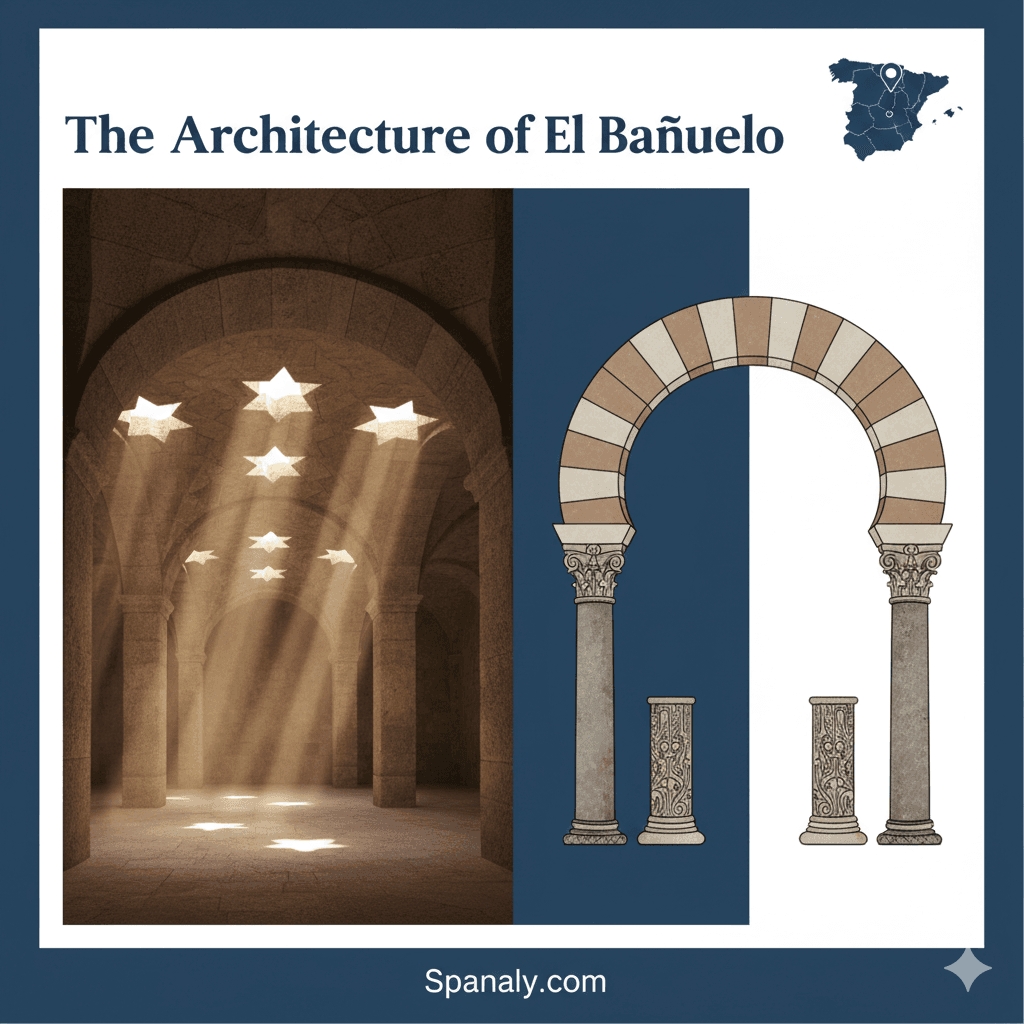
The architecture of El Bañuelo reflects a masterclass in medieval engineering. It follows the classic Islamic hammam layout. This design guides the body through progressive temperature changes.
🔹 Key Architectural Highlights:
🐎 Horseshoe Arches: Beautiful arches stand on reused Roman and Visigothic columns.
✨ Star Skylights: Star- and octagon-shaped skylights (lucernas) filter soft natural light.
🛡️ Stone Vaults: Strong stone vaults regulate the heat and humidity inside.
⚖️ Elegant Balance: The design achieves a perfect harmony between simplicity and beauty.
Each space shows a deep understanding of geometry and physics. These features remain hallmarks of the architectural style you can find in many major Spanish Festivals and historical celebrations.
🔥 Inside the Hammam: The Bathing Sequence
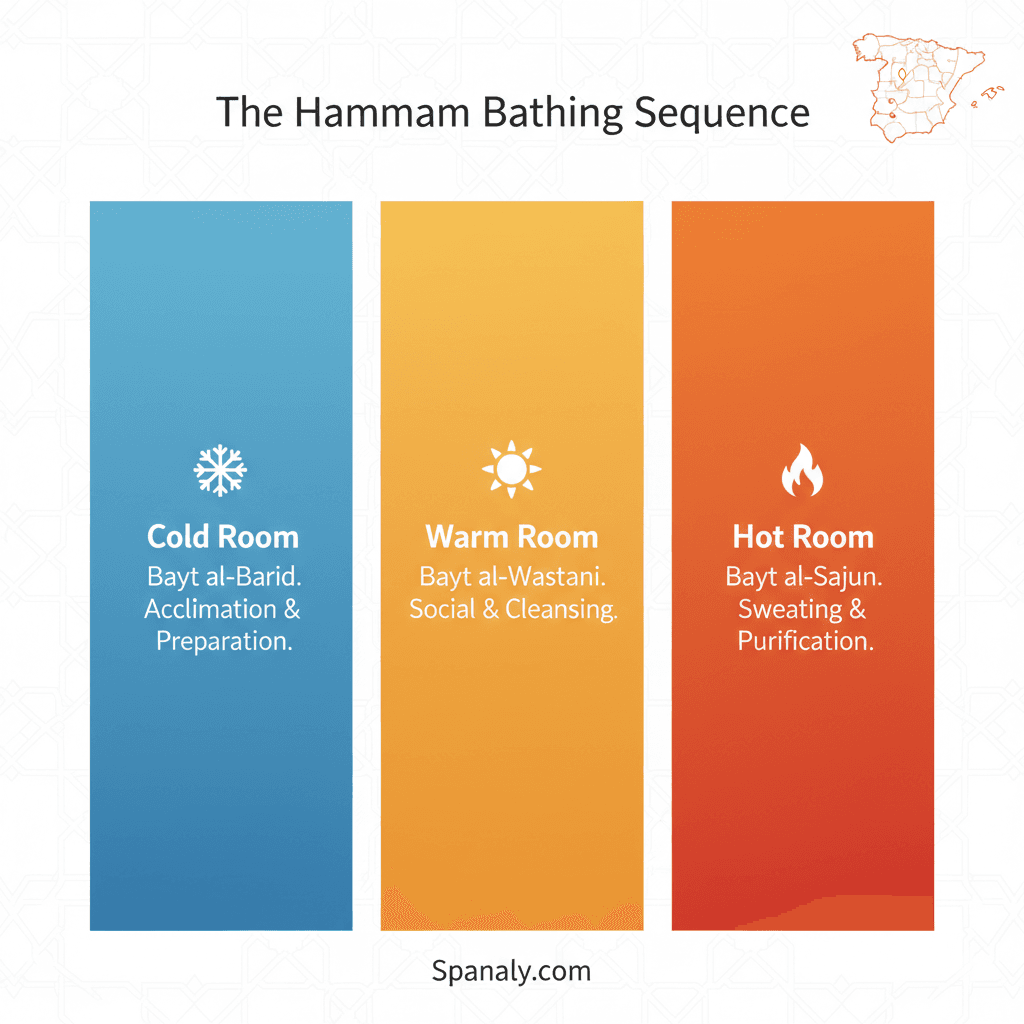
Visitors move through three main chambers in a specific order. This sequence mirrors old Roman traditions. However, Islamic engineers perfected the design for better steam and heat control.
🌿 The Cold Room (Bayt al-Barid): This is the entry space. Bathers acclimated their bodies here and prepared for the ritual.
🌤️ The Warm Room (Bayt al-Wastani): This room is the heart of the hammam. It served as a social space for cleansing and relaxation. In fact, many people gathered here for long conversations.
🔥 The Hot Room (Bayt al-Sajun): An underground furnace heated this area. It encouraged deep sweating and purification of the body.
This layout ensures a healthy transition between temperatures. It is a fascinating part of the heritage you can explore while discovering Spanish Cuisine and traditions in Granada.
🌙 Social & Cultural Significance
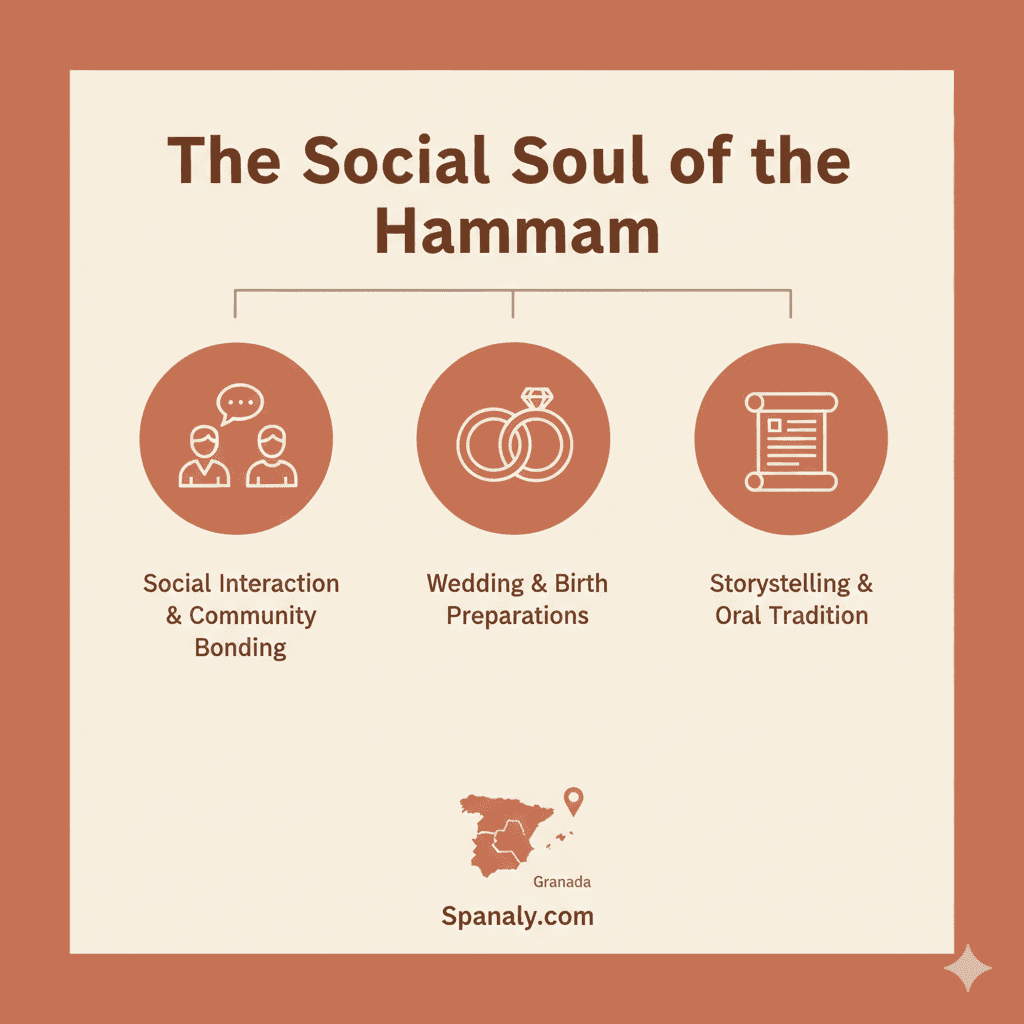
In Al-Andalus, hammams were far more than simple bathing facilities. They served as vital centers for the community. In fact, these spaces played a major role in daily medieval life.
🤝 Social Bonding: People gathered here for interaction and community bonding.
🕌 Ritual Purity: The baths were essential for pre-prayer purification rituals.
🎉 Special Events: Families used the hammam to prepare for weddings and births.
🗣️ Oral Tradition: These rooms echoed with storytelling and shared oral traditions.
Furthermore, hammams offered rare public spaces of privacy for women. This gave them a level of social freedom often overlooked in history. Understanding these traditions is as essential as exploring Spanish Attractions in modern Granada.
✨ The Secret of Star-Shaped Skylights: Natural Engineering
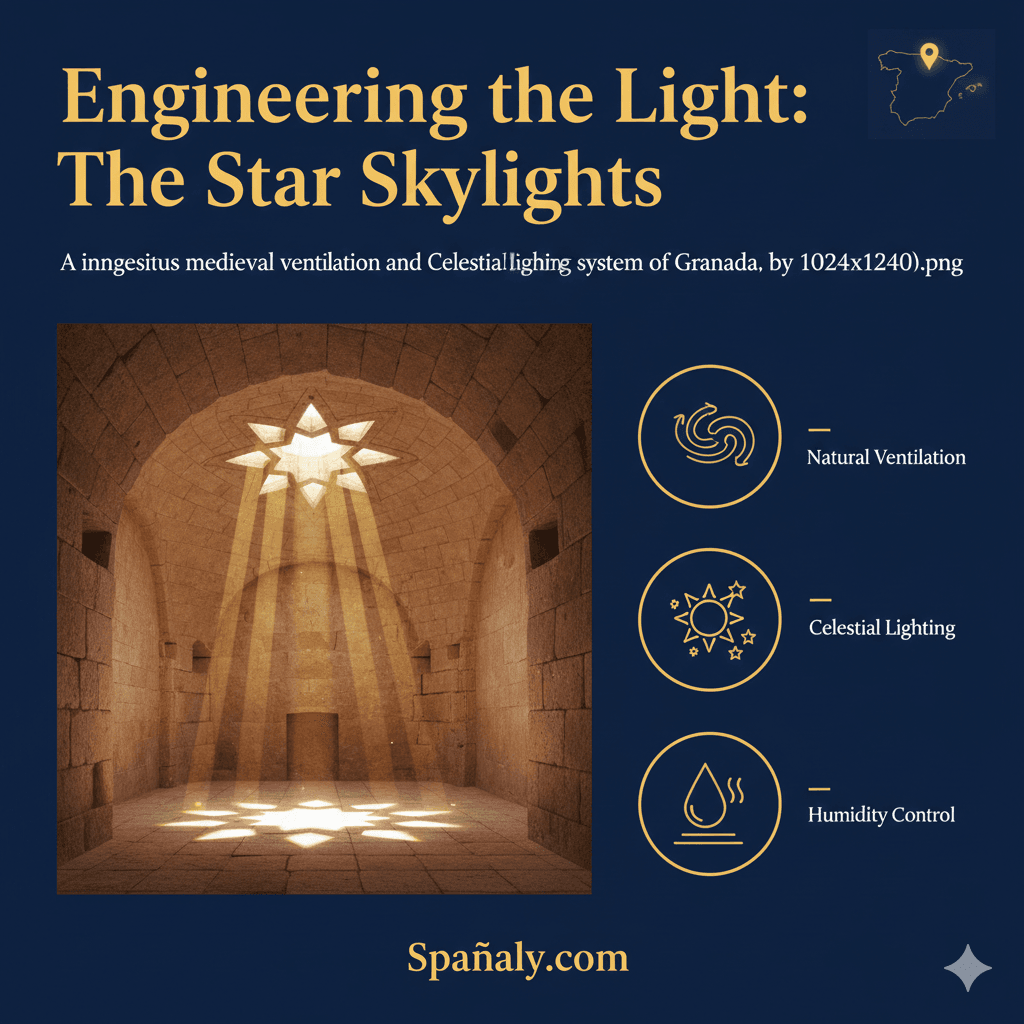
One of the most captivating features of El Bañuelo is the ceiling. It is filled with star-shaped and octagonal holes called lucernas. These are not just decorative elements; they represent a masterpiece of ancient engineering.
🌬️ Natural Ventilation: These holes acted as a smart ventilation system. Attendants could open or close them to regulate steam and heat levels.
💡 Celestial Lighting: The design allowed natural light to filter down in beautiful beams. This created a mystical atmosphere that symbolized the night sky and the stars.
💧 Humidity Control: By allowing hot air to escape, the skylights prevented excessive condensation. This kept the structure dry and preserved the stone for centuries.
This ingenious use of light and air shows the advanced scientific knowledge of the Ultimate Seville Travel Guide and Al-Andalus eras. It transformed a simple bath into a place of celestial beauty.
📍 Location & Setting in Granada
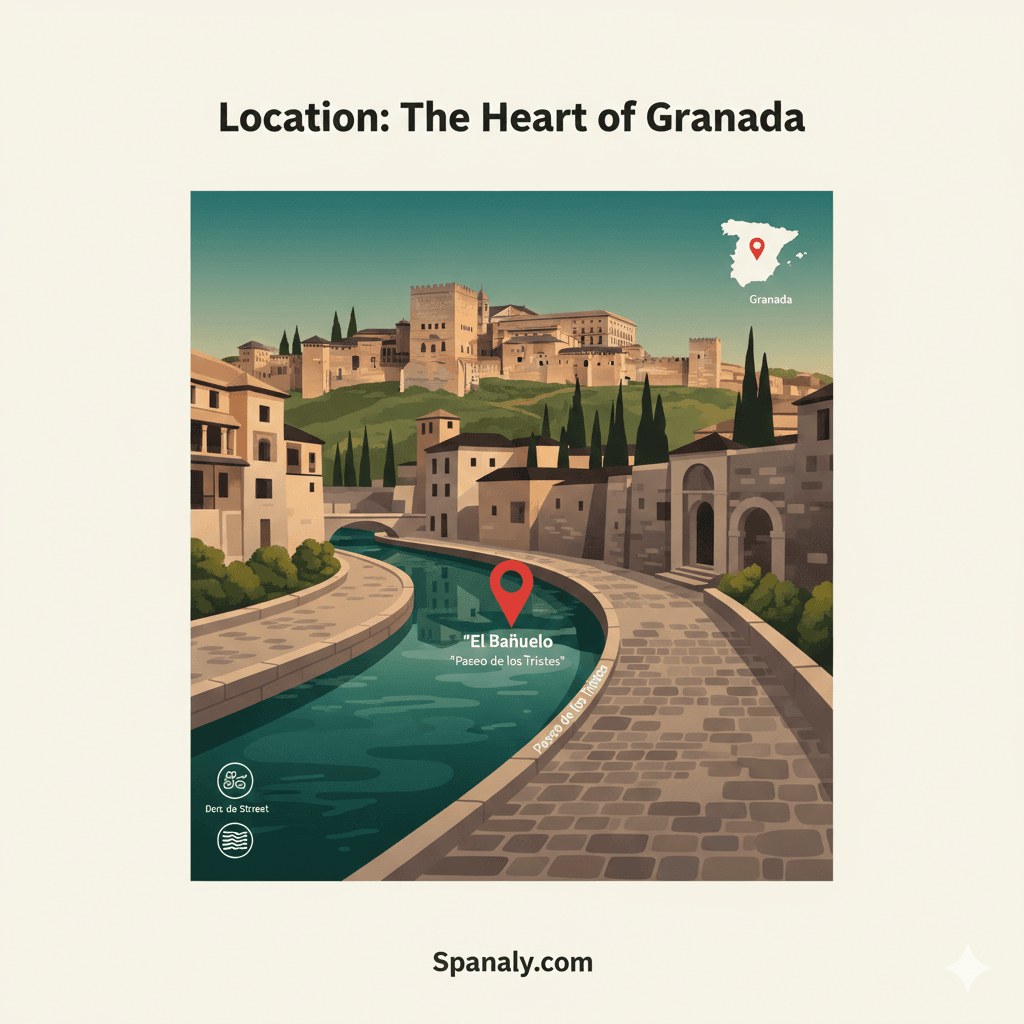
El Bañuelo occupies a prime spot in the heart of historic Granada. You can find it on the Paseo de los Tristes, which many consider the most beautiful street in the city.
🏘️ Atmosphere: The bath sits directly beneath the towering Alhambra palace. This location creates a magical contrast between the hilltop fortress and the riverside district.
🌊 Riverside Views: It lies right beside the Darro River. The sound of water and the cobbled paths enhance the feeling of stepping back in time.
🚶 Walking Route: Because of its central location, it is a perfect stop during a walk through the Albaicín or a visit to the Ultimate Madrid Travel Guide and other Spanish hubs.
The surrounding area is filled with narrow alleys and traditional houses. Consequently, visiting the baths feels like a natural extension of Granada’s ancient soul.
🎟️ Practical Visitor Information
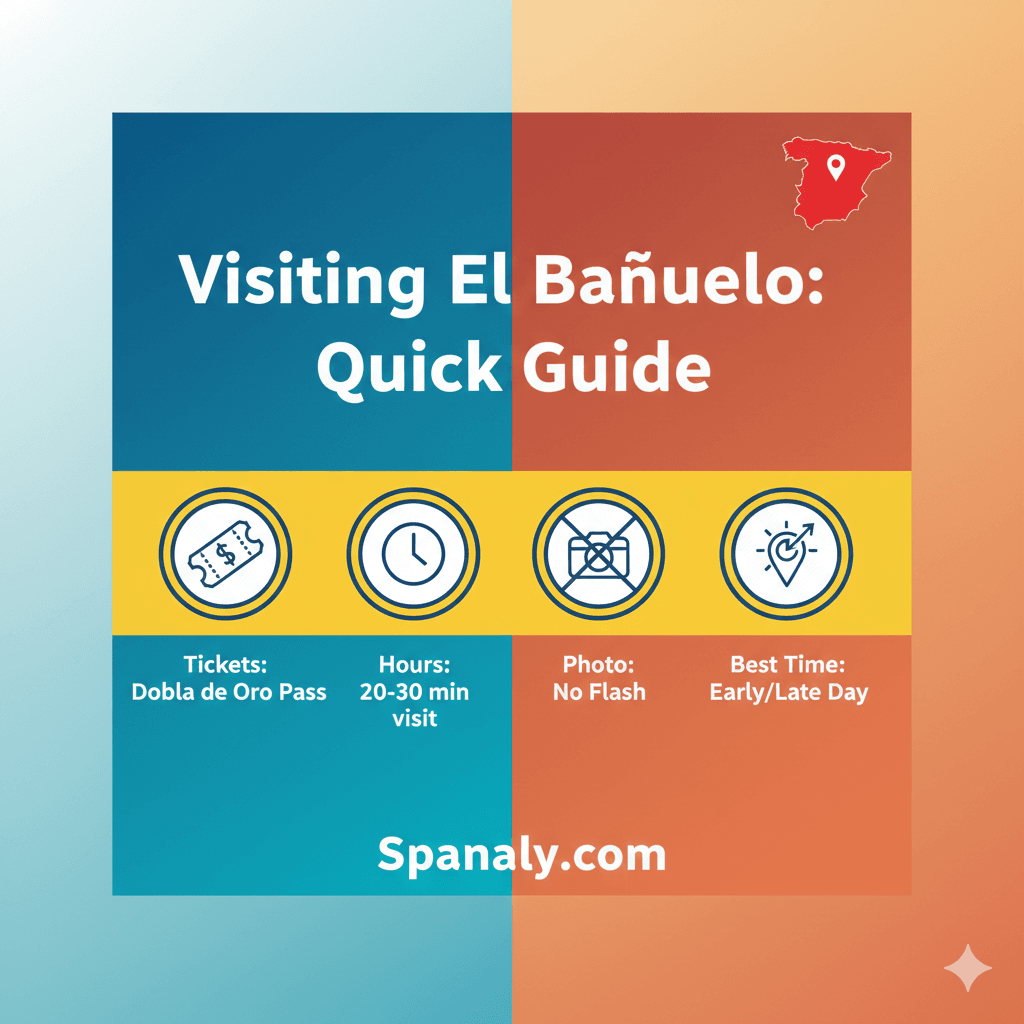
Planning your visit to El Bañuelo is easy with these essential tips. Since it is a small and intimate site, timing your visit can make a big difference in your experience.
⏰ Opening Hours: Most visitors find that 20 to 30 minutes is enough time for a meaningful visit. Generally, it opens during daytime hours, but check seasonal changes.
🎫 Smart Ticketing: Admission is often included in the “Dobla de Oro” pass. This ticket allows you to visit multiple Hispano-Muslim monuments in Granada.
📸 Photography: You can take photos inside the baths. However, please avoid using flash to help preserve the ancient atmosphere and stone.
☀️ Best Time to Visit: We recommend arriving in the early morning or late afternoon. This helps you avoid the crowds and enjoy the quiet spirit of the Ultimate Barcelona Travel Guide and Spain’s historic routes.
🌟 Why El Bañuelo is Unique
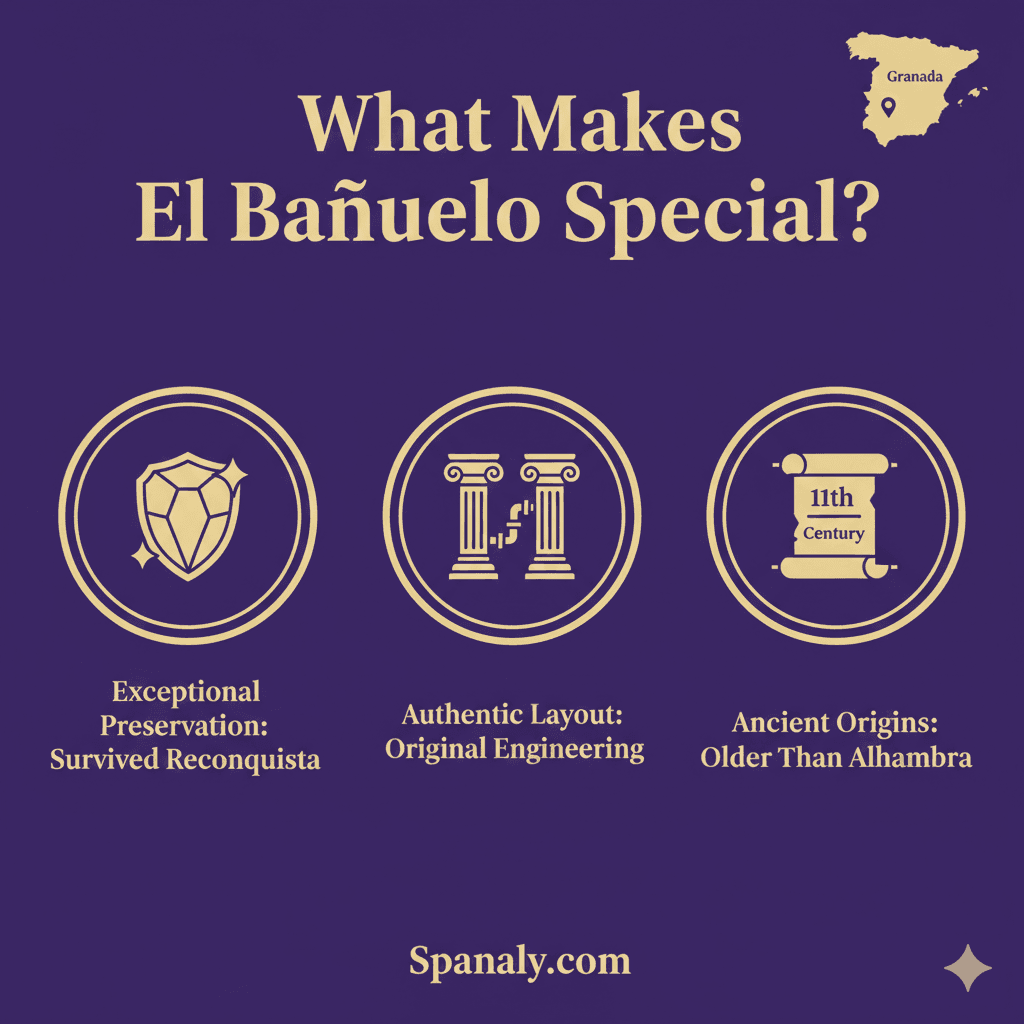
Among the many treasures of Al-Andalus, El Bañuelo stands out for several reasons. It is not just another ruin; it is a miracle of survival that tells a story of cultural transformation.
🧱 Exceptional Preservation: It is one of the few hammams that survived the Reconquista. While many baths were destroyed, this one remained hidden under a private house for centuries.
🏺 Authentic Layout: You can still see the original Roman-style columns and the ingenious heating pipes. These elements provide a raw look at medieval engineering.
📜 Ancient Origins: Dating back to the 11th century (Zirid period), it is older than most of the Alhambra’s palaces. Therefore, it offers a glimpse into an even earlier era of Spanish Festivals and history.
In short, a visit here connects you to the deep roots of Granada. It remains a silent witness to a time when water, light, and community were the pillars of civilization.
🌍 El Bañuelo in the Context of Andalusi Civilization
El Bañuelo serves as a vital window into the daily life of Al-Andalus. It proves that the Zirid dynasty prioritized hygiene, science, and aesthetics long before many other European cities. During this era, Granada was a beacon of knowledge and urban planning.
🚿 Hygiene as a Pillar: In Andalusi society, public baths were as important as mosques. They reflected the Islamic principle that “cleanliness is part of faith.”
📐 Scientific Mastery: The complex heating and water systems demonstrate the advanced hydraulic engineering of the time. This knowledge laid the foundation for future Spanish Attractions and urban designs.
🎨 Artistic Harmony: Even in a functional space like a bath, the builders prioritized beauty. The geometric precision of the arches shows a deep respect for mathematical harmony.
Consequently, this monument is not just a building; it is a symbol of a civilization that valued the balance between the body, the mind, and the spirit.
🗣️ Visitor FAQs – El Bañuelo Granada Guide 2026
🤔 Is El Bañuelo part of the Alhambra?
No, it is a standalone monument. While it is located near the Alhambra in the Albaicín district, it has its own entrance. However, it is part of the "Dobla de Oro" ticket, which allows you to explore multiple Hispano-Muslim sites with one pass.
⏳ How much time should I spend at the baths?
About 20 to 30 minutes is ideal. The site is small but rich in detail. This time allows you to walk through the three main chambers and capture the perfect light filtering through the star-shaped skylights.
🎟️ Is it necessary to buy tickets in advance?
It is highly recommended during peak season. While you can sometimes find tickets at the door, booking online ensures you don't miss out, especially if you plan to visit other attractions like the Ultimate Seville Travel Guide hubs.
📸 Can I take professional photos inside?
Yes, but without flash. Photography for personal use and social media is encouraged. The natural lighting is spectacular, but preserving the 11th-century stone is a priority, so keep your flash turned off.
🌍 Is it worth it if I've already seen other Spanish baths?
Absolutely, because of its age and survival. El Bañuelo is one of the oldest and best-preserved hammams in Spain. Unlike many others, it wasn't destroyed during the Reconquista, offering a truly authentic 11th-century experience.
Travel Tips & Heritage by Spanaly.com
🏛️ A Living Legacy of Al-Andalus
In conclusion, El Bañuelo is much more than just an ancient bathhouse; it is a quiet sanctuary that preserves the spirit of a vanished world. Walking through its horseshoe arches, you can almost hear the echoes of 11th-century Granada and feel the harmony of light, stone, and water.
✨ A Hidden Jewel: No exploration of the Albaicín is complete without stepping inside this survivor of history.
🌍 Cultural Bridge: It stands as a vital link to the Zirid era, reminding us of a civilization that mastered the art of urban living and communal well-being.
📸 A Timeless Memory: The play of golden light through the star-shaped skylights offers one of the most peaceful and photogenic moments in all of Spain.
Whether you are a history enthusiast or a curious traveler, El Bañuelo offers a profound connection to the past. It remains a testament to the enduring beauty of Spanish Attractions that continue to inspire and enchant visitors from every corner of the globe.