
Table of Contents
Toggle🥘 Espinacas con Garbanzos
Espinacas con Garbanzos is more than just a dish; it is the warm, spiced soul of Andalusia captured in a small clay pot. Originating from the winding streets of Seville, this hearty blend of spinach and chickpeas is a masterpiece of Mediterranean simplicity.
While many travelers focus on seafood, this dish stands alone as a symbol of Spanish Gastronomy. It offers a rich, earthy, and comforting experience that has fueled Sevillians for centuries.
Why you’ll love it in 2026:
🌿 Ancient Heritage: A perfect fusion of Moorish spices and Jewish culinary traditions.
🥘 Velvety Texture: The secret “majado” (bread paste) creates a thick, luxurious sauce that demands dipping.
✨ Healthy & Vegan: Naturally plant-based, making it the ultimate choice for healthy travelers.
📍 Iconic Seville: It is as essential to the city’s identity as the Giralda tower itself.
Indeed, whether you are exploring a historic tavern in Seville or cooking at home, this dish is a culinary rite of passage. Specifically, it invites you to slow down and savor the deep, smoky flavors of the south.
💡 Spanaly Insight: Do not rush your first bite. In fact, the true magic of this dish lies in the “Pimentón” (smoked paprika). It provides a depth of flavor that tastes even better on the second day!
🌿 The Heart of Andalusia: Why This Tapa Defines Seville
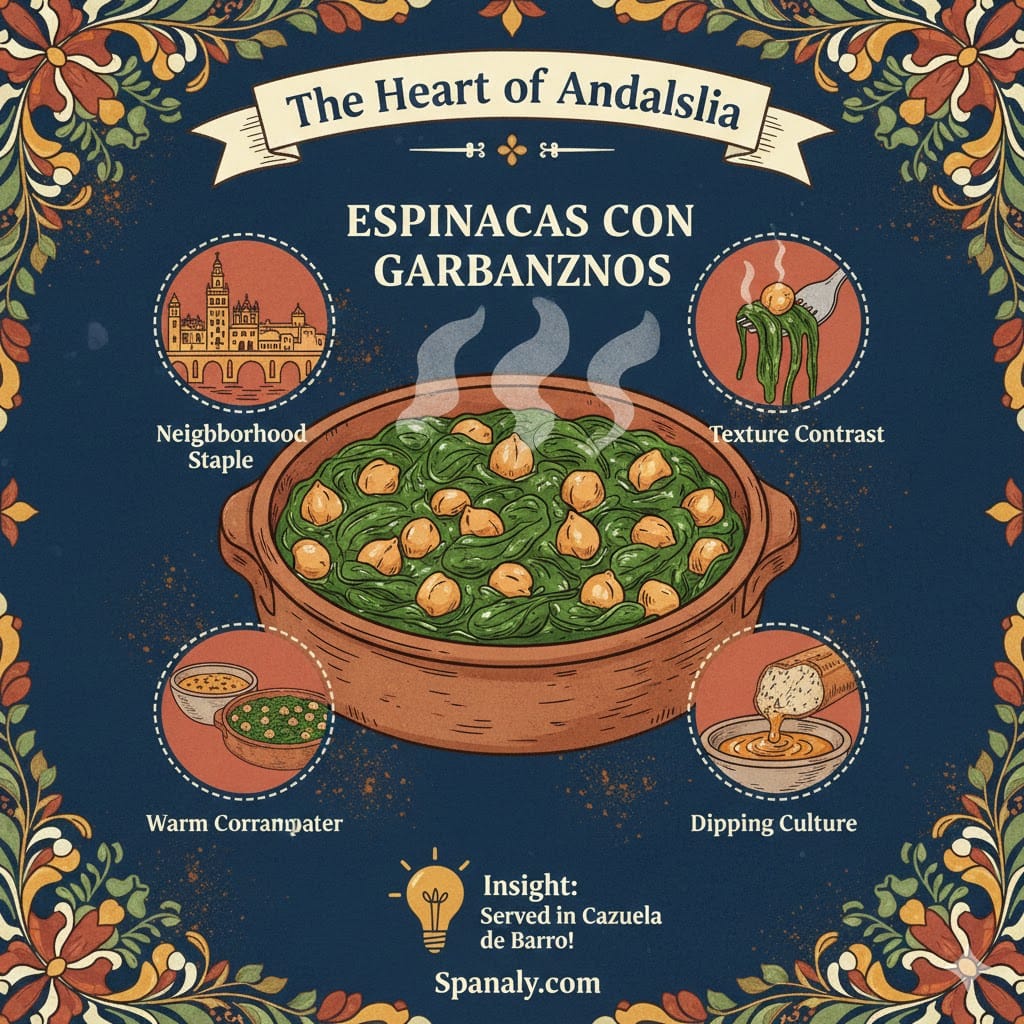
Espinacas con Garbanzos is more than a simple appetizer; it is a culinary heartbeat that echoes through the narrow alleys of Seville. Specifically, it represents the “Cuisine of the Sun”—refreshing enough for summer yet warm enough for an Andalusian winter. Consequently, missing this dish is like visiting the city and never seeing the Cathedral.
🏘️ Neighborhood Staple: From the bohemian vibe of Triana to the historic charm of Santa Cruz, this dish is the common thread.
🥘 Texture Contrast: It offers a unique sensory experience—the silkiness of wilted spinach against the firm, nutty bite of chickpeas.
🥣 The Warm Counterpart: While many travelers start their meal with a velvety Salmorejo Spanish Cold Soup, they often follow it with this warm, spiced classic for a balanced feast.
🥖 The Dipping Culture: It is the ultimate “bread-dipping” dish. Indeed, no local eats it without a basket of crusty Picos.
Notably, this dish proves that you don’t need expensive ingredients to create a gourmet masterpiece. Therefore, it aligns perfectly with the Mediterranean philosophy of simplicity. Ultimately, while the cold Salmorejo cools you down, these warm spinach and chickpeas nourish the soul.
💡 Spanaly Insight: You will often see this dish served in a “Cazuela de Barro” (clay pot). In fact, the clay helps retain the heat and preserves the earthy aroma of the cumin until the very last bite.
📜 History: From Sephardic Kitchens to Sevillian Taverns
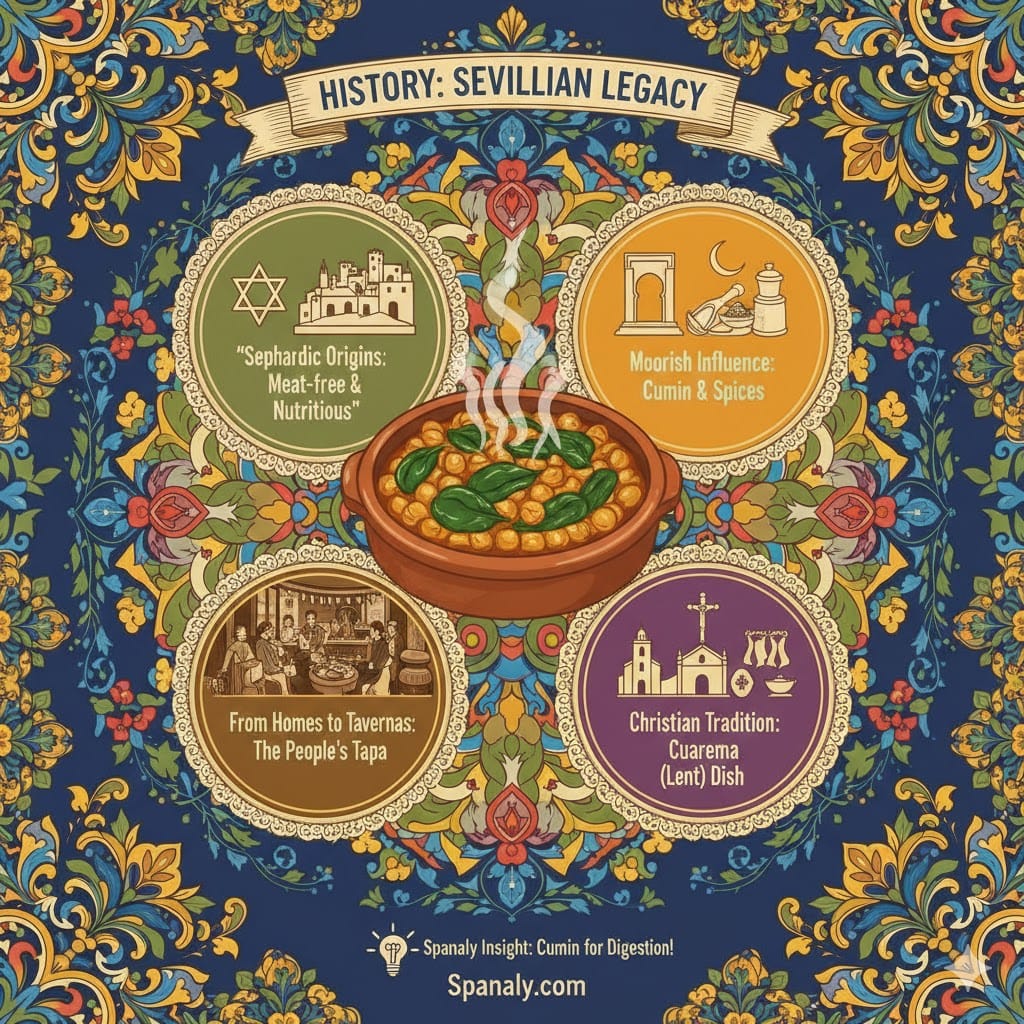
The story of Espinacas con Garbanzos is a fascinating journey through the cultural layers of Spain. Specifically, it is one of the few dishes that perfectly preserves the legacy of the “Three Cultures” (Jewish, Moorish, and Christian) that once thrived in Andalusia. Consequently, every bite is a testament to the city’s diverse heritage, much of which you can explore in our comprehensive Seville Travel Guide.
✡️ Sephardic Origins: In the medieval Jewish quarters (Juderías) of Seville, chickpeas and spinach were dietary staples. Indeed, this combination was loved for being meat-free and highly nutritious.
🕌 Moorish Influence: The arrival of North African flavors introduced spices like cumin. Moreover, the Moors perfected the irrigation systems that allowed spinach to flourish in the fertile Andalusian soil.
✝️ Christian Tradition: After the Reconquista, the dish became a pillar of Christian “Cuaresma” (Lent). Notably, it remains the undisputed king of the Friday menu during the weeks leading up to Easter.
🏺 From Homes to Taverns: What started as a humble home meal eventually found its way into the historic taverns of Seville in the late 19th century, becoming the “People’s Tapa.”
Notably, this dish reflects the soul of the Mediterranean diet. Therefore, it is as essential to the local identity as the historic monuments found in our Traditional Spanish Food Guide. Ultimately, while empires rose and fell, this simple blend of legumes and greens remained a constant on the Sevillian table.
💡 Spanaly Insight: Cumin wasn’t just added for flavor. In fact, ancient cooks added it to help with the digestion of the chickpeas—a bit of “culinary medicine” that we still benefit from today!
🥘 The 4 Pillars of Authenticity: Quality Ingredients

An authentic Espinacas con Garbanzos is a masterclass in Mediterranean minimalism. Specifically, because it uses so few elements, the quality of each one is paramount to achieving that legendary Sevillian flavor. Consequently, knowing what to look for is as essential as the recipe itself.
🌿 Fresh Spinach (Espinacas): Avoid frozen varieties if possible. Indeed, using fresh, tender leaves ensures a vibrant green color and a delicate earthy sweetness.
🏺 Extra Virgin Olive Oil: This is the “liquid gold” of Andalusia. Moreover, choosing one of the Best Spanish Olive Oils provides the rich, silky base needed for a perfect emulsification.
🌶️ Pimentón de la Vera: This smoked paprika is the soul of the dish. Notably, it provides that deep, mystical aroma that defines Spanish Cuisine.
🌰 Nutty Chickpeas: Whether you use dried or jarred, they must be buttery and soft. Therefore, choosing premium legumes is the secret to a satisfying bite.
Notably, finding these ingredients is an adventure in itself. Therefore, we highly recommend visiting the Mercado de Triana Seville to source them directly from local vendors. Ultimately, using authentic ingredients is the only way to recreate the true spirit of Seville in your kitchen.
💡 Spanaly Insight: When shopping, look for “Garbanzo Pedrosillano.” In fact, these smaller, smoother chickpeas are prized by Andalusian chefs for their ability to hold their shape while remaining incredibly creamy inside.
⚱️ The "Majado" Ritual: The Secret to the Perfect Texture
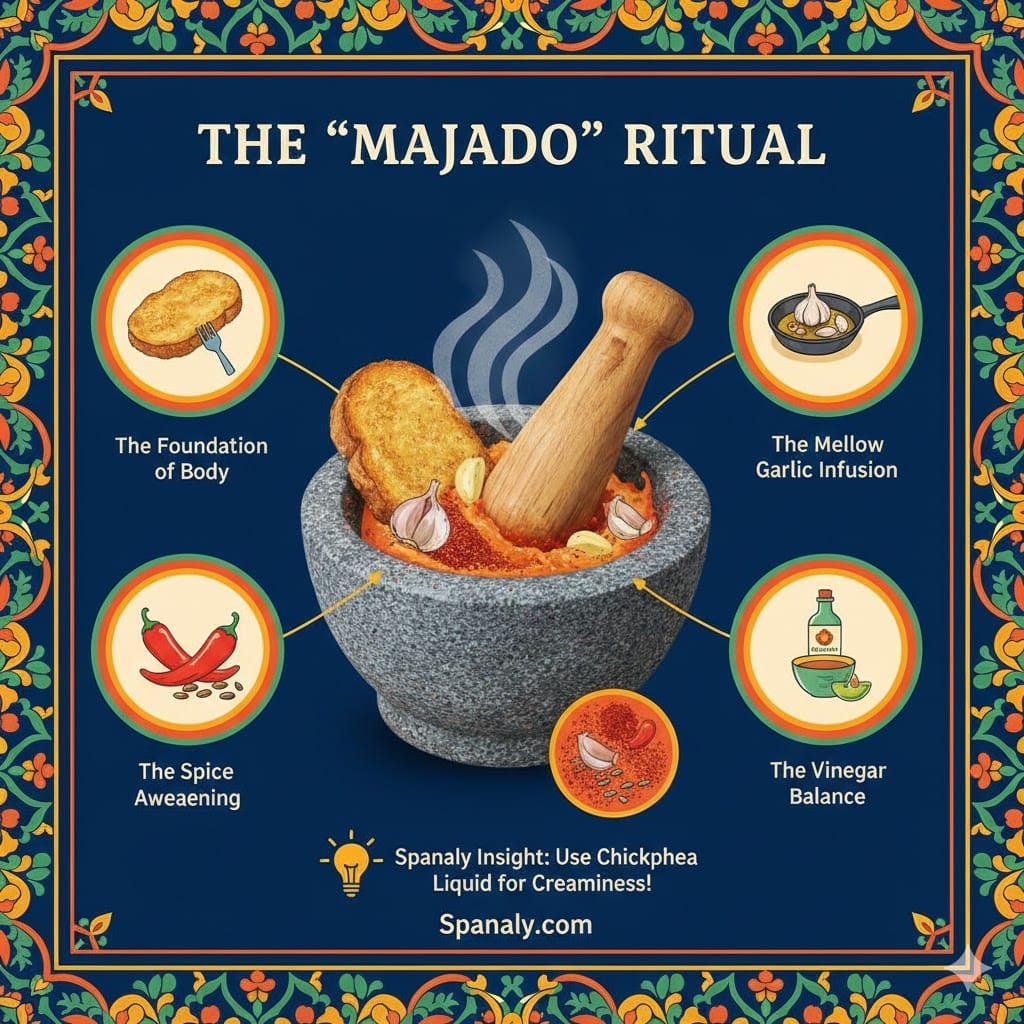
Creating an authentic Sevillian texture requires more than just mixing ingredients; it demands the ancient and sacred art of the Majado. To begin with, this traditional technique acts as the “secret weapon” of Andalusian grandmothers, transforming humble fried bread and garlic into a dense, aromatic paste. By doing so, the dish evolves from a simple vegetable stew into a gourmet tapa with a luxurious, velvety mouthfeel that defines the true Seville experience.
🥖 The Foundation of Body: A thick slice of stale white bread is fried until golden. This step is crucial because the toasted starches provide the structural “body” needed to bind the sauce, ensuring it coats every chickpea perfectly rather than pooling at the bottom of the dish.
🧄 The Mellow Garlic Infusion: Unlike the sharp, aggressive bite of raw garlic, the Majado utilizes cloves sautéed in premium oil. This slow cooking process sweetens the garlic, creating a sophisticated, buttery base that lingers on the palate without overpowering the delicate spinach.
🌶️ The Spice Awakening: Once the cumin seeds and pimentón are crushed in a mortar, the friction releases essential oils that heat alone could never unlock. The result is a deep, mystical, and smoky complexity that captures the very soul of Mediterranean spice craft.
🍷 The Vinegar Balance: A splash of Sherry vinegar is often introduced during the crushing process. This addition provides a bright acidity that cuts through the richness of the fried bread and olive oil, leaving a clean and balanced finish.
In essence, mastering this texture is a skill rooted in patience and respect for history. It is a culinary signature as vital to the city’s identity as the breathtaking arches of the Plaza de España Seville. While a modern blender might save time, only the manual ritual of the Majado preserves the rustic, authentic heart of Spanish Cuisine.
💡 Spanaly Insight: If your sauce feels too thick, never reach for plain water. Instead, use a tablespoon of the liquid from the cooked chickpeas. This “aquafaba” contains natural proteins that enhance the creaminess while keeping the intense flavors of your Majado fully intact.
👨🍳 Step-by-Step Ritual: Bringing Seville to Your Kitchen
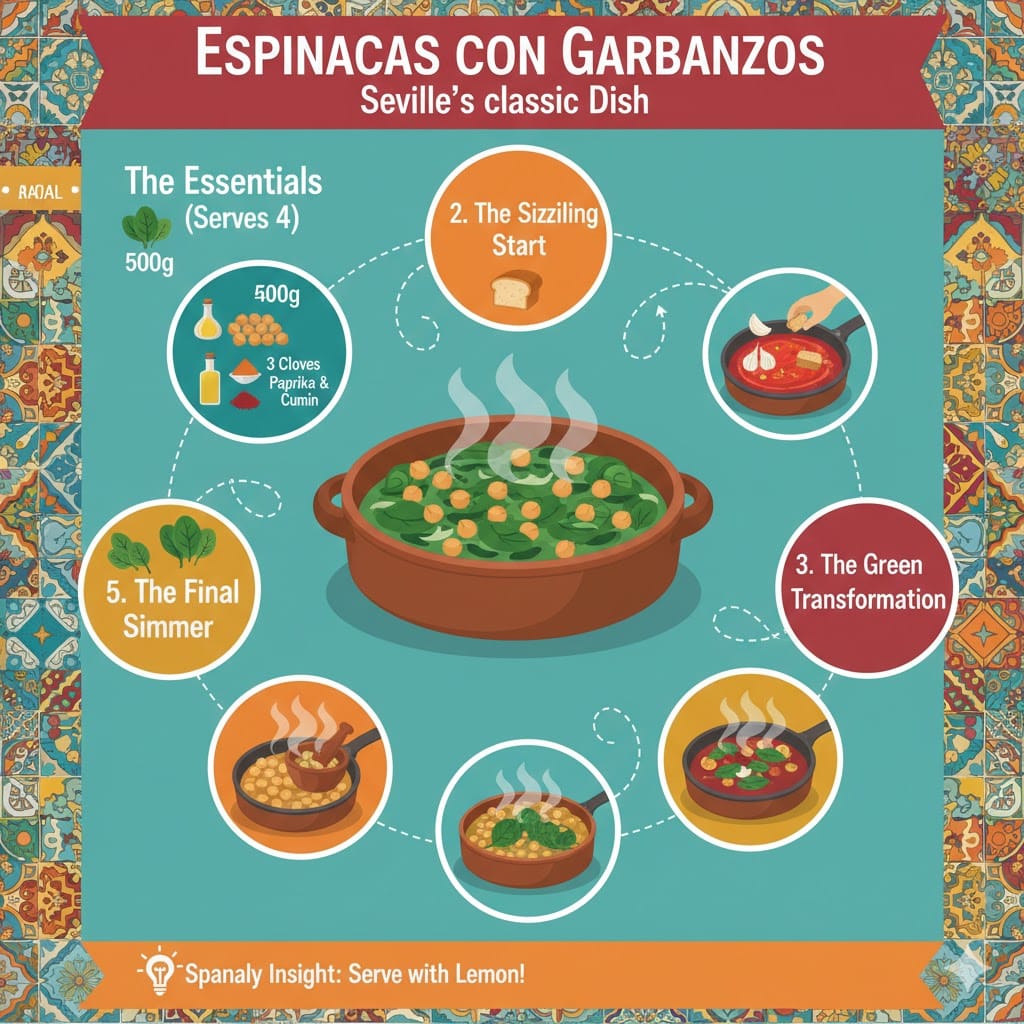
Mastering this Sevillian classic is an exercise in patience and aroma. Specifically, following the correct sequence ensures that the spinach stays vibrant and the chickpeas absorb every drop of the spiced oil. Consequently, your kitchen will soon smell like a historic tavern in the heart of Andalusia.
The Essentials (Serves 4):
🌿 500g Fresh spinach (washed and chopped).
🌰 400g Cooked chickpeas (preferably Pedrosillano).
🧄 3 Cloves of garlic (peeled).
🥖 1 Slice of stale white bread.
🏺 50ml Best Spanish Olive Oils.
🌶️ Spices: 1 tsp Smoked Paprika, 1 tsp Cumin, salt, and a splash of Sherry vinegar.
The Preparation Steps:
The Sizzling Start: Heat the olive oil in a wide skillet. Fry the bread slice and whole garlic cloves until golden brown, then remove them and set aside for your Majado.
The Spice Infusion: Lower the heat. Add the pimentón and cumin to the remaining oil for 30 seconds. Indeed, this “blooms” the spices without burning them.
The Green Transformation: Add the fresh spinach gradually. Moreover, stir until wilted and vibrant green (usually 5 minutes).
The Integration: Add the chickpeas and a splash of their cooking liquid. While they simmer, create your Majado paste (using the fried bread and garlic) and stir it back into the pan.
The Final Simmer: Let everything cook gently for 10 minutes. Ultimately, the sauce should become thick, creamy, and irresistible.
Notably, this process is a beautiful introduction to the Mediterranean lifestyle. Therefore, it is as rewarding as a stroll through the Maria Luisa Park Seville. Ultimately, the result is a dish that tastes like history.
💡 Spanaly Insight: Always serve with a fresh lemon wedge on the side. In fact, the acidity of the lemon brightens the earthy tones of the spinach and cumin, making the flavors “pop.”
🏘️ Seville’s Best Taverns for Espinacas con Garbanzos
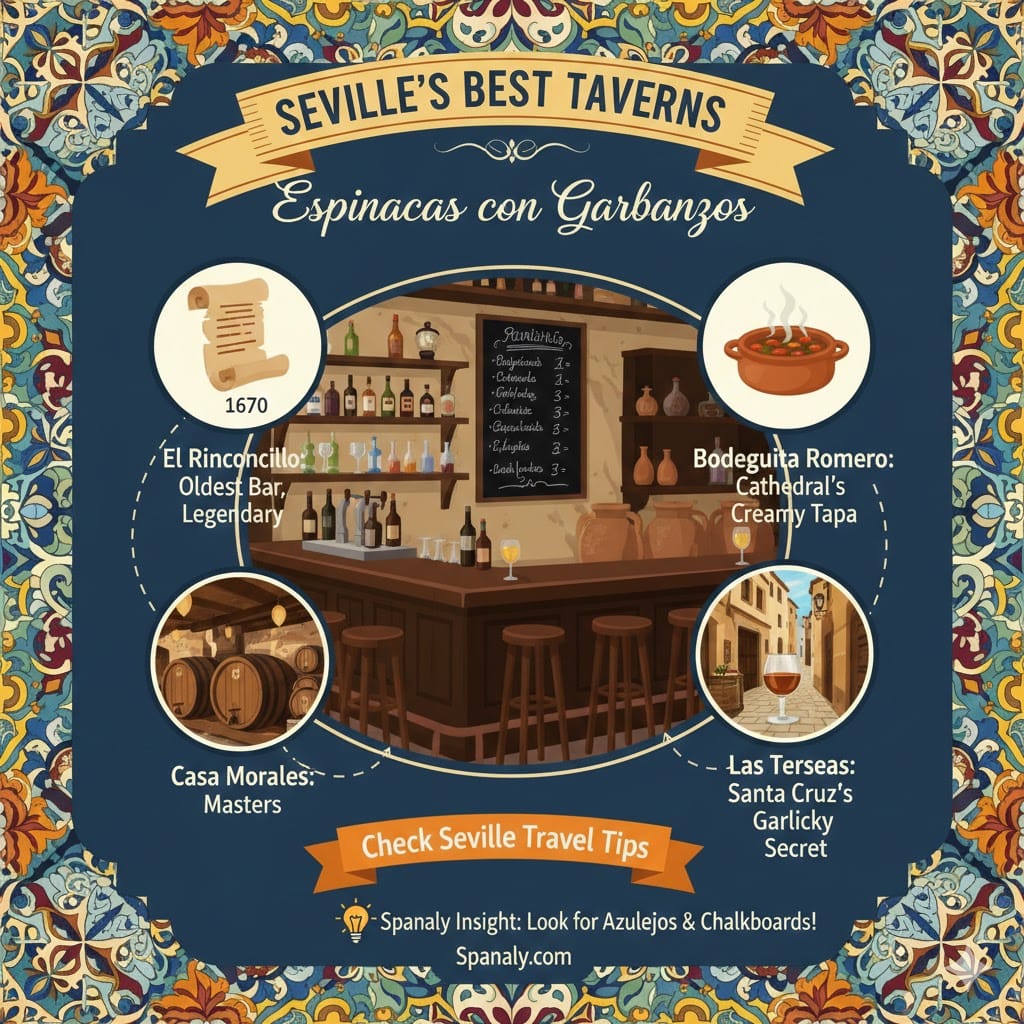
While cooking at home is rewarding, the true magic happens within the walls of a century-old Sevillian tavern. Throughout the city’s labyrinthine streets, you’ll discover historic “Abacerías” and Bodegas where recipes have remained untouched for generations. Stepping into these gems leads you straight to the authentic heart of Andalusia—many of which are featured in our guide to the Best Restaurants in Seville.
📜 El Rinconcillo (Founded 1670): As the oldest bar in Seville, their version is more than food; it’s a legend. Imagine savoring this tapa while leaning on a mahogany bar that has seen three centuries of history—it is a mandatory culinary rite of passage.
🥘 Bodeguita Romero: Just a stone’s throw from the Cathedral, this family-run spot is world-famous for its “Pringá.” However, their spinach and chickpeas are equally elite—remarkably creamy, perfectly spiced, and served in a traditional clay pot.
🍷 Casa Morales: This majestic tavern, famous for its giant clay wine vats, offers an experience like no other. Their specific take on the dish leans heavily on the “Majado,” providing a rich, rustic texture that perfectly defines the soulful neighborhood of El Arenal.
🏺 Las Teresas: Tucked deep within the Santa Cruz quarter, this vibrant tavern serves a garlicky, punchy version. It pairs beautifully with a chilled glass of Manzanilla sherry, cutting through the spices with every sip.
Keep in mind that these iconic spots often draw large crowds, particularly during peak tapas hours. To navigate the scene like a local, we recommend checking our Seville Travel Tips for advice on dining etiquette and timing. In the end, visiting these taverns is about far more than just a meal; it’s about immersing yourself in the living, breathing history of the city.
💡 Spanaly Insight: Look for taverns adorned with “Azulejos” (traditional tiles) and hand-written chalkboard menus. Often, the most extraordinary Espinacas con Garbanzos are found in these unpretentious, local-filled corners away from the main tourist paths.
🌱 Vegan & Gluten-Free: A Modern Take on a Classic
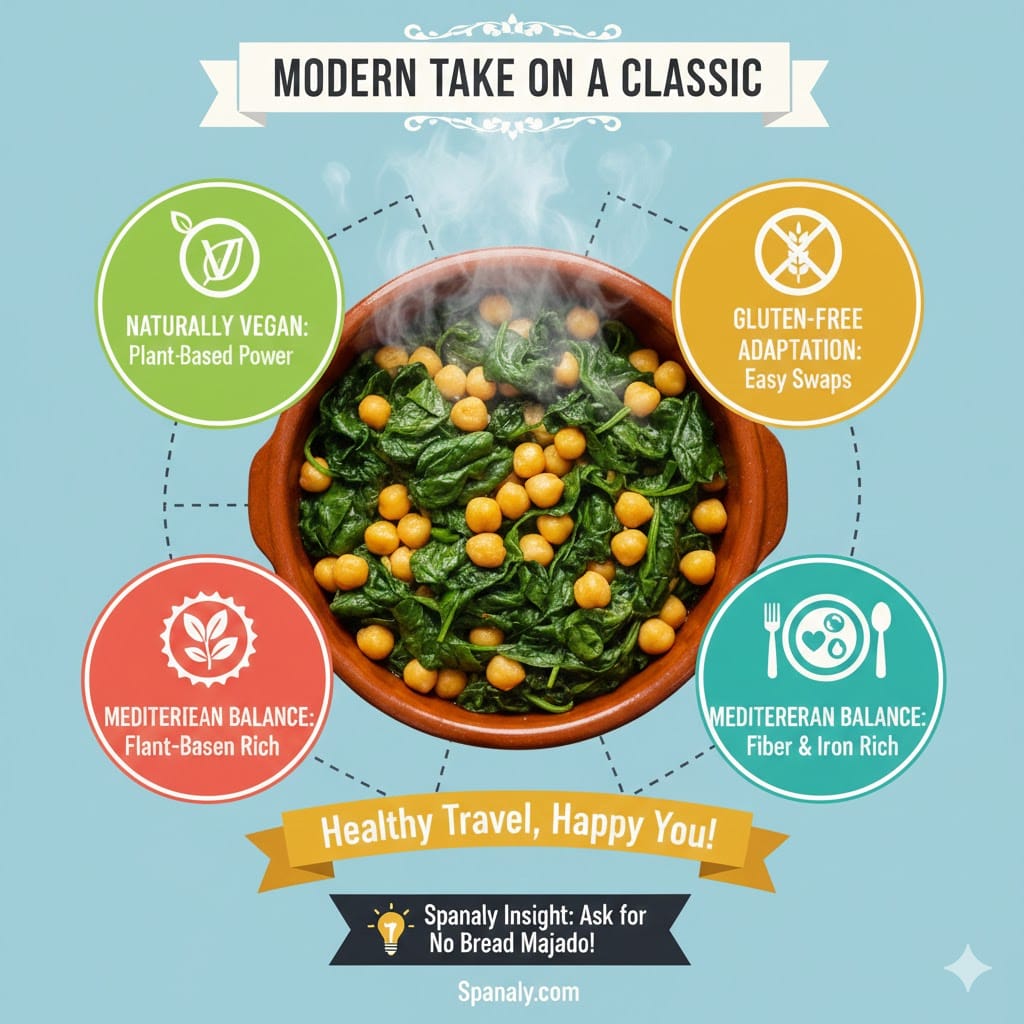
One of the most remarkable aspects of Espinacas con Garbanzos is its natural alignment with modern dietary needs. Specifically, while many historic dishes rely on lard or meat stocks, this Andalusian treasure has remained plant-based for centuries. Consequently, it is the ultimate “safe haven” for travelers looking for healthy, inclusive options without sacrificing authenticity.
🌿 Naturally Vegan: Because it relies on high-quality Best Spanish Olive Oils for richness, it is 100% dairy-free and meat-free. Indeed, it’s a powerhouse of plant protein and iron.
🌾 Gluten-Free Adaptation: The traditional recipe uses a slice of bread for thickness. Moreover, modern kitchens easily swap this for a few mashed chickpeas or almond flour to make the dish entirely gluten-free.
🥗 The Mediterranean Balance: It is low in saturated fats but high in fiber. Notably, it provides a sustained energy boost that is perfect for long days of sightseeing.
Notably, staying healthy while traveling depends on what you eat and how you prepare. Therefore, just as you choose your meals wisely, make sure to check our guide on What to Pack for Spain to ensure you have the right gear for every season. Ultimately, this dish proves that you don’t need meat to enjoy the full, smoky depth of Spanish cuisine.
💡 Spanaly Insight: If you are dining out and have a strict gluten allergy, always ask if they used bread in the “Majado.” In fact, most traditional taverns still do, but many modern spots are happy to offer a gluten-free alternative upon request.
🍷 Pairing & Serving: The Full Tapas Experience
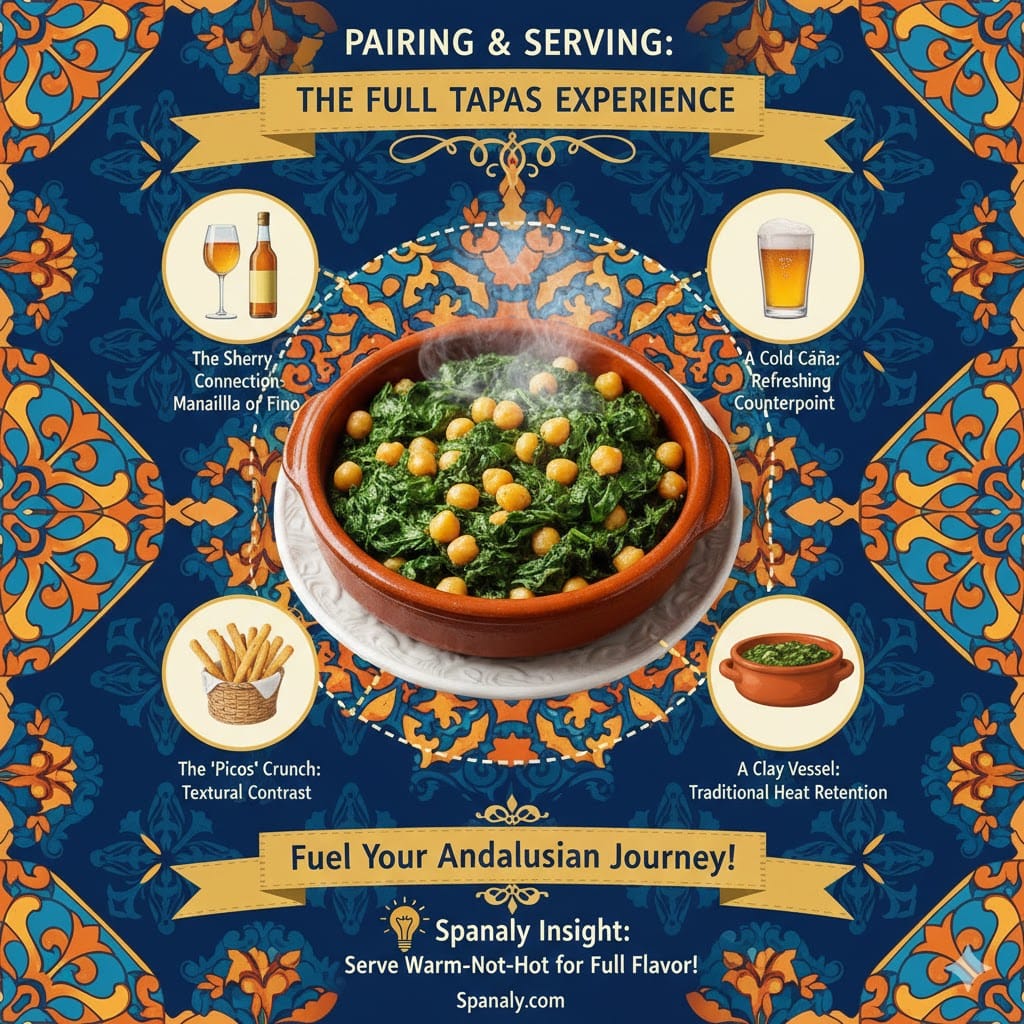
To truly enjoy Espinacas con Garbanzos like a local, you must consider the elements that surround it. Specifically, the right drink and the perfect side can elevate the smoky, earthy flavors of the dish to new heights. Consequently, the experience becomes a ritual that engages all the senses, rather than just a quick meal.
🍇 The Sherry Connection: This dish was born for Sherry wine. Indeed, a dry Manzanilla or a crisp Fino offers a saline acidity that cuts through the richness of the olive oil and fried bread perfectly.
🥖 The “Picos” Crunch: In Seville, no tapa is complete without Picos (small, crunchy breadsticks). Moreover, these provide a textural contrast to the velvety softness of the chickpeas.
🥘 The Clay Vessel: Traditionally, it is served in a Cazuela de Barro (clay pot). Notably, this material retains heat beautifully, ensuring your tapa stays warm while you linger over conversation.
🍺 A Cold Caña: If wine isn’t your preference, a very cold, small draught beer (caña) provides a refreshing counterpoint to the deep spices of the Majado.
Notably, enjoying a long lunch in Seville often inspires a desire for further adventure. Therefore, once you’ve finished your tapas, you might consider planning one of the Best 3 Day Trips from Seville to explore the surrounding white villages or historic Córdoba. Ultimately, the “Tapas Experience” is the fuel for your Andalusian journey.
💡 Spanaly Insight: Never rush. In fact, the best way to serve this dish is at a “warm-not-hot” temperature. This allows the subtle notes of the cumin and the quality of the olive oil to shine without being masked by extreme heat.
⛪ Cultural Significance: The Dish of Lent (Cuaresma)
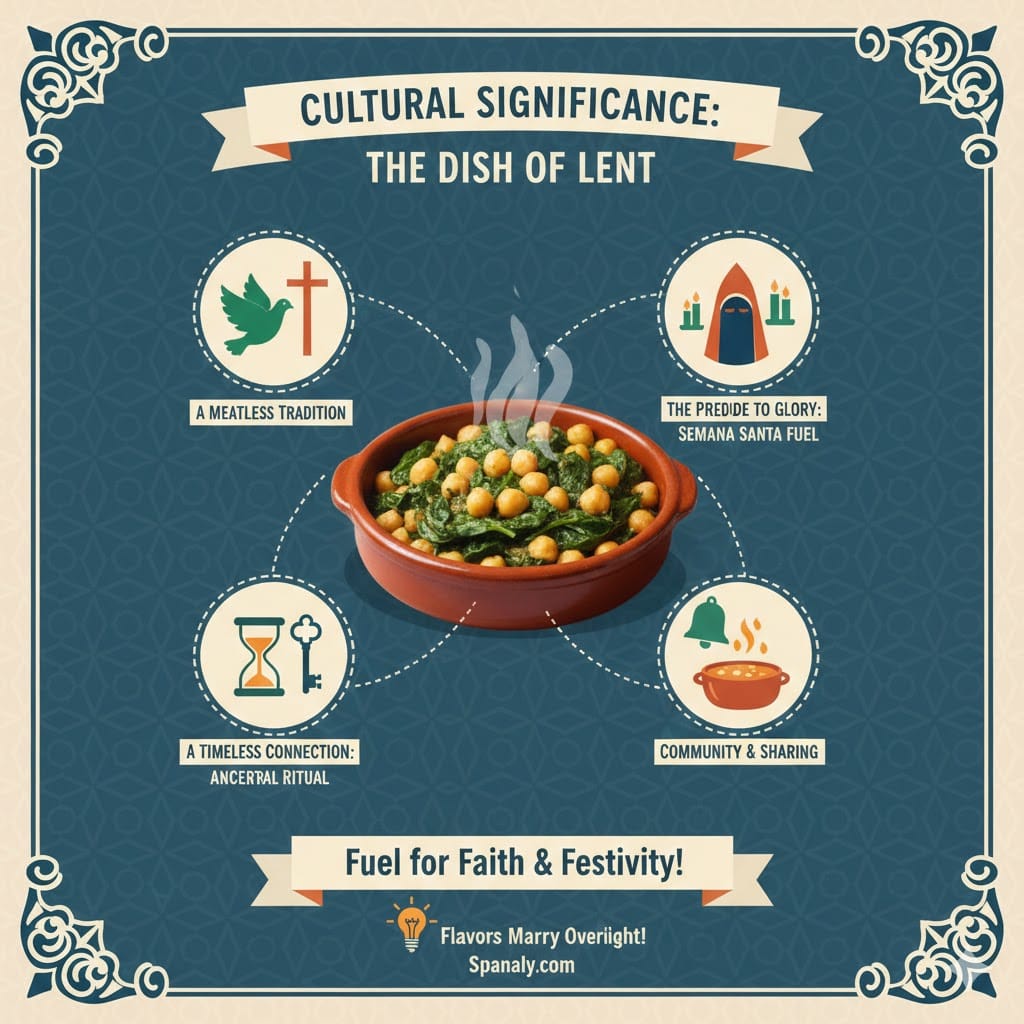
In Seville, food is often a calendar of faith and tradition. Specifically, Espinacas con Garbanzos is the undisputed star of Cuaresma (Lent), the forty days leading up to Easter. Consequently, the aroma of cumin and fried garlic wafting through the narrow streets of the Casco Antiguo is a sensory signal that spring—and the city’s most sacred traditions—are approaching.
🕊️ A Meatless Tradition: Historically, religious laws forbade the consumption of meat on Fridays during Lent. Indeed, this dish became the perfect, protein-packed solution, proving that sacrifice could still taste like a masterclass in flavor.
🕯️ The Prelude to Glory: While it is served year-round, its consumption peaks during the weeks of Semana Santa Seville. Moreover, for many Sevillanos, a small bowl of these chickpeas is the essential fuel before heading out to watch the majestic processions.
🕰️ A Timeless Connection: This dish links modern residents to their ancestors. Notably, it reflects the city’s ability to turn simple, humble ingredients into a cultural icon that transcends social classes.
Notably, understanding the timing of these traditions is key to experiencing the city’s true soul. Therefore, if you visit during this period, you aren’t just eating a meal; you are participating in a living ritual. Ultimately, Espinacas con Garbanzos is more than a recipe; it is the flavor of Sevillian devotion and community.
💡 Spanaly Insight: During the Friday of Sorrows (Viernes de Dolores), many traditional families make a large pot of this dish to share with neighbors. In fact, it is one of the few tapas that tastes even better the next day, as the flavors of the Majado have more time to marry.
🛒 The Market Experience: Triana to Feria Street
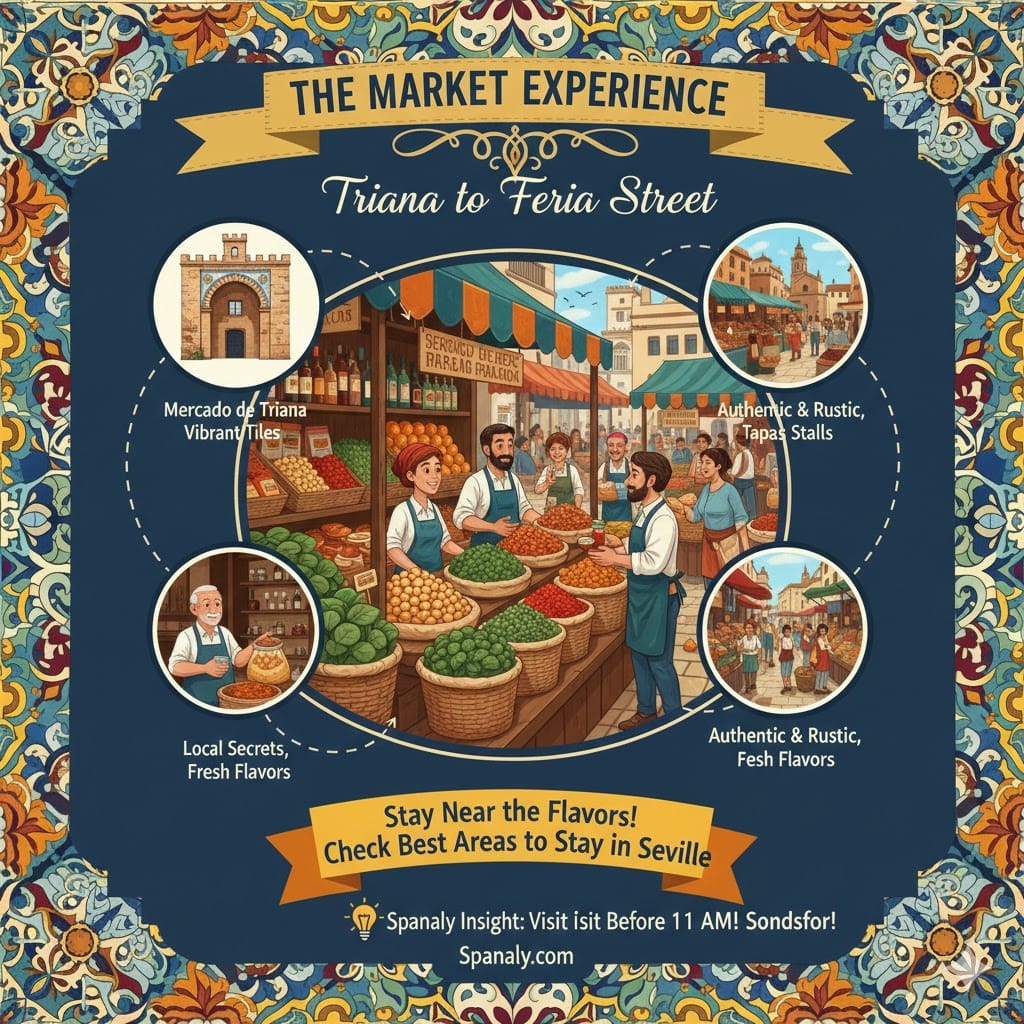
To understand the soul of Espinacas con Garbanzos, you must see where its journey begins. Specifically, visiting the city’s historic markets allows you to witness the locals selecting the freshest spinach and the best “Pedrosillano” chickpeas. Consequently, the market experience is not just a shopping trip; it is an immersion into the Sevillian lifestyle.
🎭 Mercado de Triana: Built over the ruins of the Castillo de San Jorge, this market is the heart of the Triana district. Indeed, sourcing your smoked paprika and olive oil here, amidst the vibrant ceramic tiles, adds a layer of magic to your culinary adventure.
⛪ Mercado de la Feria: Located in one of the city’s oldest streets, this market is rustic and authentic. Moreover, the small tapas stalls surrounding the market serve some of the most honest and traditional versions of the dish you will ever find.
🥖 The Local Connection: Interacting with vendors who have sold legumes for decades is a masterclass in quality. Notably, they will often share their own family “secrets” for the perfect Majado if you show a genuine interest.
Notably, these markets are often located in the most charming neighborhoods. Therefore, if you want to be within walking distance of these fresh flavors, we recommend exploring the Best Areas to Stay in Seville. Ultimately, starting your day at a local market is the best way to transition from a tourist to a local.
💡 Spanaly Insight: Visit the markets before 11:00 AM. In fact, this is when the energy is at its peak and the selection is fresh. After your shopping, stop at a market bar for a “Mediana” (small coffee) and a toasted bread with olive oil.
💪 Nutritional Value: The Iron-Rich Mediterranean Powerhouse
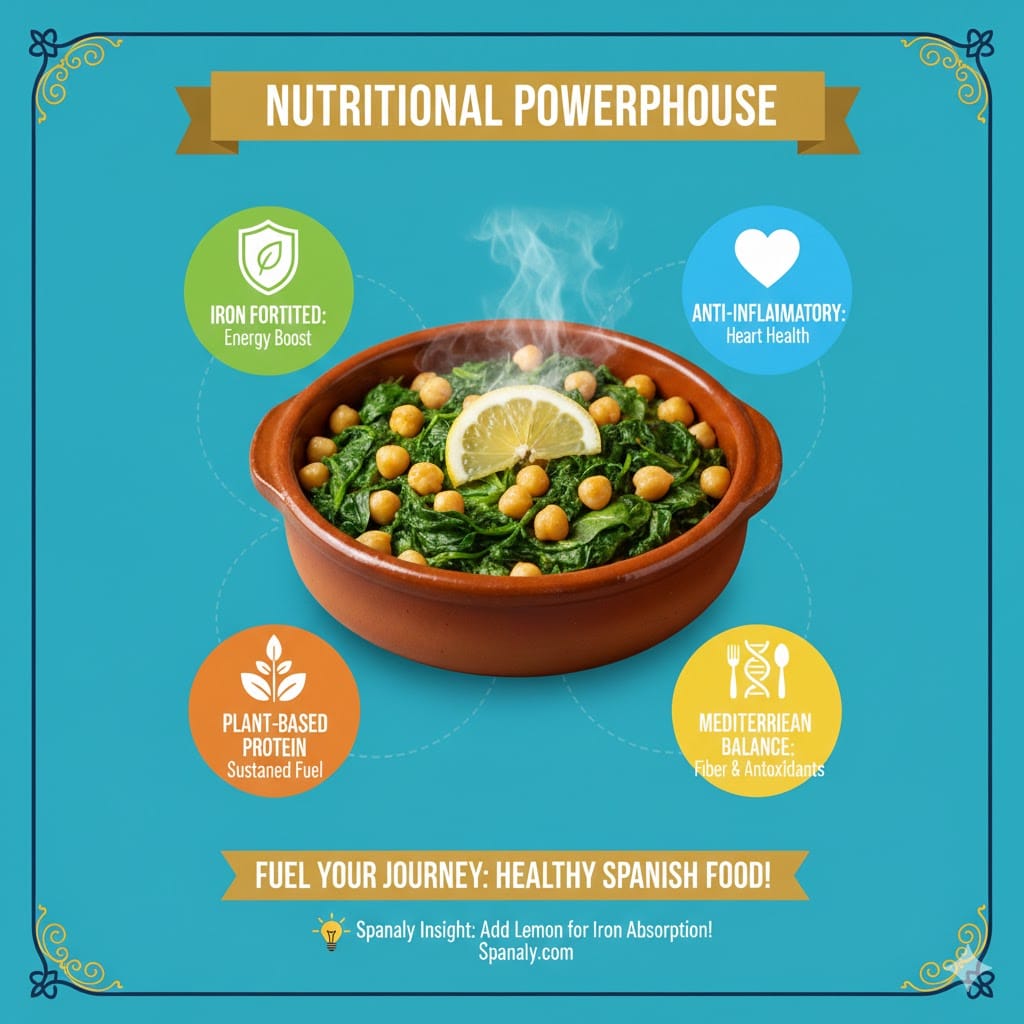
Beyond its cultural depth, Espinacas con Garbanzos stands out as a nutritional masterpiece. By blending the high-fiber protein of legumes with the dense vitamin profile of leafy greens, this dish provides the essential nutrients needed to thrive. This combination serves as a functional fuel, powering your body through the intense sun and active lifestyle of southern Spain.
🛡️ An Iron Fortified Duo: The synergy between spinach and chickpeas delivers a massive boost in iron and folate. Because of this, it is a top recommendation for anyone looking to combat fatigue and maintain high energy levels naturally.
🧘 Plant-Based Protein: For those following a vegetarian or vegan diet, this dish offers a complete and satisfying meal. The advantage here is the complex carbohydrates in chickpeas, which ensure a slow, sustained release of energy rather than a sudden sugar spike.
🧬 Anti-Inflammatory Properties: Thanks to the generous use of extra virgin olive oil and garlic, every bite is packed with antioxidants. These ingredients are the celebrated cornerstones of the Mediterranean diet, widely known for promoting long-term heart health.
Maintaining peak energy is crucial if you plan to experience the vast culinary diversity of the country. Once you have nourished your body with this powerhouse meal, you’ll be perfectly prepared to dive deeper into the world of flavors found in our Traditional Spanish Food Guide. In short, this dish isn’t just a treat for your taste buds; it is a genuine gift to your health.
💡 Spanaly Insight: To maximize iron absorption, always squeeze a bit of fresh lemon over your spinach just before eating. The reason is simple: the Vitamin C in the lemon acts as a key that helps your body unlock and utilize plant-based iron much more efficiently.
✨ Pro Tips for a Flawless Sevillian Experience
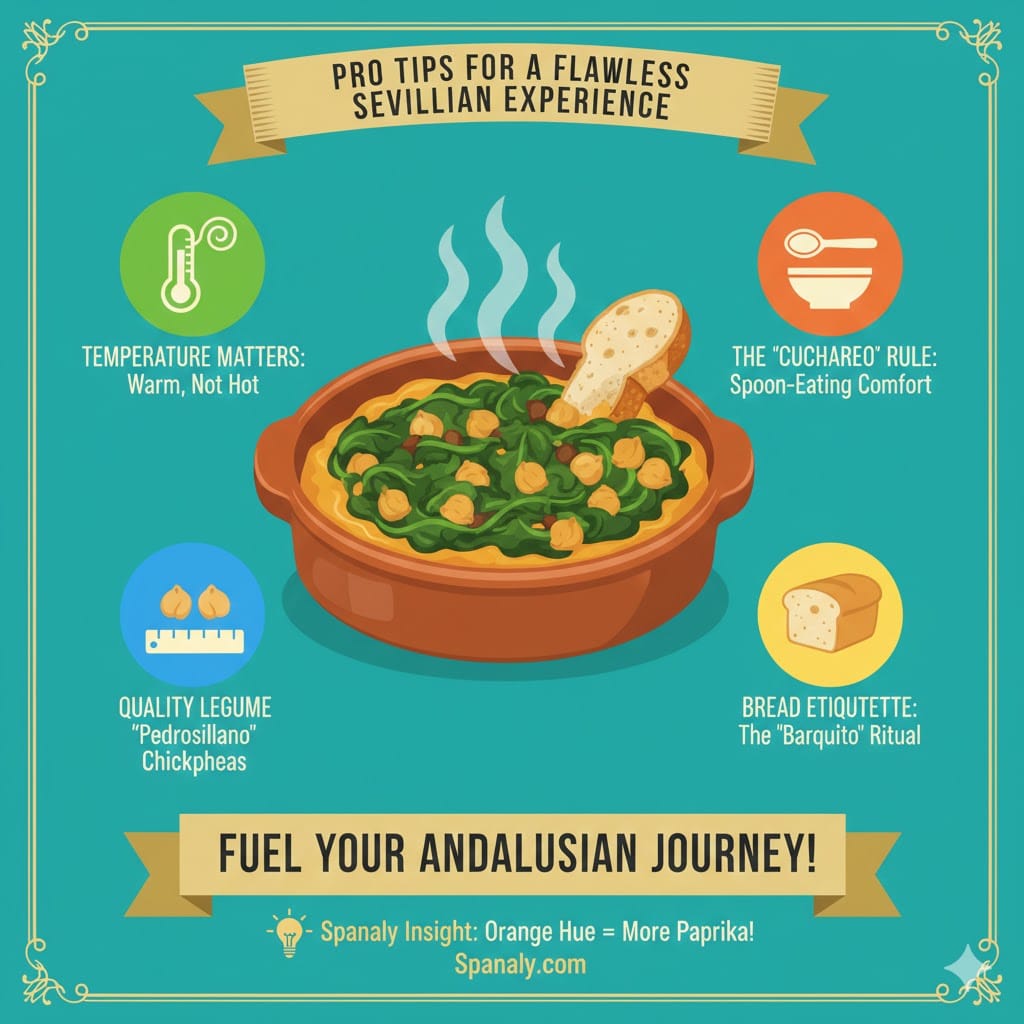
To elevate your encounter with this dish from a mere meal to a cultural masterpiece, keep these insider secrets in mind. Specifically, navigating the subtle nuances of Seville’s dining scene will ensure you enjoy every bite like a true connoisseur. Consequently, you’ll avoid common mistakes and unlock the full potential of Andalusian flavors.
🏺 Temperature Matters: If you are cooking at home, avoid serving the dish piping hot straight from the stove. Indeed, letting it rest for 15 minutes allows the flavors to “settle” and the texture to thicken. Moreover, serving it warm (not boiling) reveals the delicate floral notes of the cumin.
🥄 The “Cuchareo” Rule: While it is often served as a tapa, don’t be afraid to ask for a “Media Ración” (half-portion) if you are hungry. Notably, this dish is part of what locals call Cuchareo (spoon-eating culture), which is the ultimate comfort food during the rare chilly days in Seville.
🧂 Quality of the Legume: If you can, source “Pedrosillano” chickpeas. Indeed, they are smaller and hold their shape better during the simmering process compared to the larger, mushier varieties.
🍞 Bread Etiquette: Never finish the dish without performing the “Barquito” (little boat). Ultimately, using a piece of crusty bread to clean the remaining spiced oil from the bottom of your clay pot is considered a compliment to the chef in Seville.
Notably, these small details are what separate a tourist experience from a local ritual. Therefore, we recommend keeping our Essential Spain Travel Tips handy to navigate other local customs with confidence. Ultimately, mastering the art of the Espinacas con Garbanzos is your gateway to the authentic soul of the city.
💡 Spanaly Insight: If you find a version that looks slightly orange rather than dark green, it means the tavern uses a higher ratio of Pimentón Dulce. In fact, every neighborhood in Seville has its own “color” and secret balance for this legendary dish.
🥘 Savvy Traveler’s Cheat Sheet
🌡️ Is this dish better suited for summer or winter?
While available year-round, its earthy warmth makes it a winter favorite. However, because it isn't a heavy meat stew, it remains a popular light lunch option even during Seville’s intense summer heat.
💎 Is it usually served as a Tapa or a full plate?
Most commonly, it is enjoyed as a Tapa. However, if you are dining in a "Sit-down" restaurant, you can often order a Ración (large platter) to share as a main course for the table.
🧂 Why does the flavor vary so much between bars?
The secret lies in the spice ratio. Some chefs prioritize the smokiness of the Pimentón, while others lean heavily on toasted cumin. This "house style" is a point of pride for every Sevillian tavern.
👨👩👧👦 Is it a kid-friendly option in Spanish taverns?
Yes. Its mild, savory profile and soft texture make it a hit with children. It’s a great way to introduce younger travelers to legumes and greens without any intimidating "spicy" heat.
🍷 What is the best non-alcoholic pairing?
A crisp Sparkling Water with lemon is the perfect palate cleanser. The bubbles and acidity help balance the richness of the olive oil and the creamy texture of the chickpeas.
Seville Culinary Culture by Spanaly.com
✨ More than Just a Recipe
Ultimately, Espinacas con Garbanzos is the edible soul of Seville. It is a dish that tells the story of empires, faith, and the simple joy of sharing a meal in a sun-drenched tavern.
🏺 A Taste of History: Every bite connects you to Seville’s Moorish and Jewish roots.
🌿 Modern & Mindful: It remains the ultimate “safe haven” for vegan and healthy travelers.
🍷 The Full Ritual: Remember, it’s not just food—it’s about the sherry, the Picos, and the conversation.
🗺️ Beyond Seville: While Seville owns this classic, the world of Andalusian tapas is vast. If your journey continues East, don’t miss our Free Tapas Granada Guide to discover how the tradition changes in the shadow of the Alhambra.
Notably, whether you cook it in your kitchen or order it at El Rinconcillo, you are participating in a living Andalusian tradition. Therefore, we invite you to take this smoky, cumin-scented legacy with you wherever you go.
¡Buen provecho! 🥘✨