
Table of Contents
Toggle✨ What Are the Fiestas del Pilar?
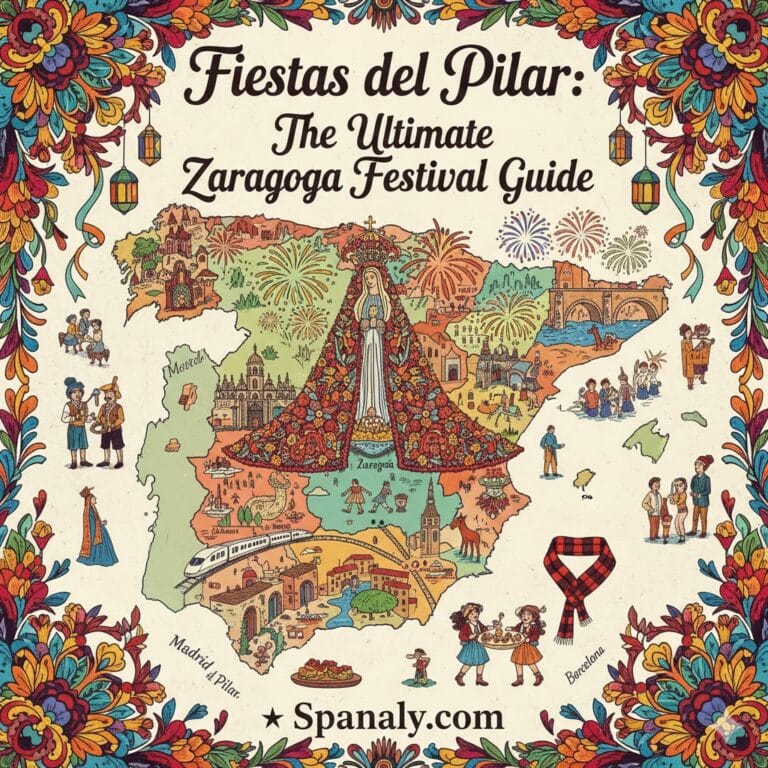
The Fiestas del Pilar stands as one of Spain’s most spectacular and culturally rich celebrations. Every October, Zaragoza transforms into a vibrant world of music, devotion, and color to honor its patron saint. This event is a major highlight among the most iconic festivals in Spain, drawing millions of global visitors.
🌸 Grand Offering: The festival builds a massive mountain of flowers in the heart of Plaza del Pilar.
🎭 Street Magic: Famous “Gigantes y Cabezudos” (Giants and Big-heads) parade through the historic quarters.
🎶 Cultural Pulse: Experience a week filled with free concerts, traditional dances, and street theater.
🏰 Local Pride: A unique blend of religious heritage and the energetic festive spirit of Aragon.
Zaragoza becomes an open-air stage during this magical week. To navigate the city like a local beyond the festival crowds, check our comprehensive Zaragoza travel guide.
🌟 Spanaly Insight: While October 12th is the main event, the city buzzes with energy for nine full days. We recommend arriving two days early to enjoy the opening “Pregón” (proclamation) and catch the street shows before the peak crowds arrive.
⚖️ Fiestas del Pilar vs. Semana Santa
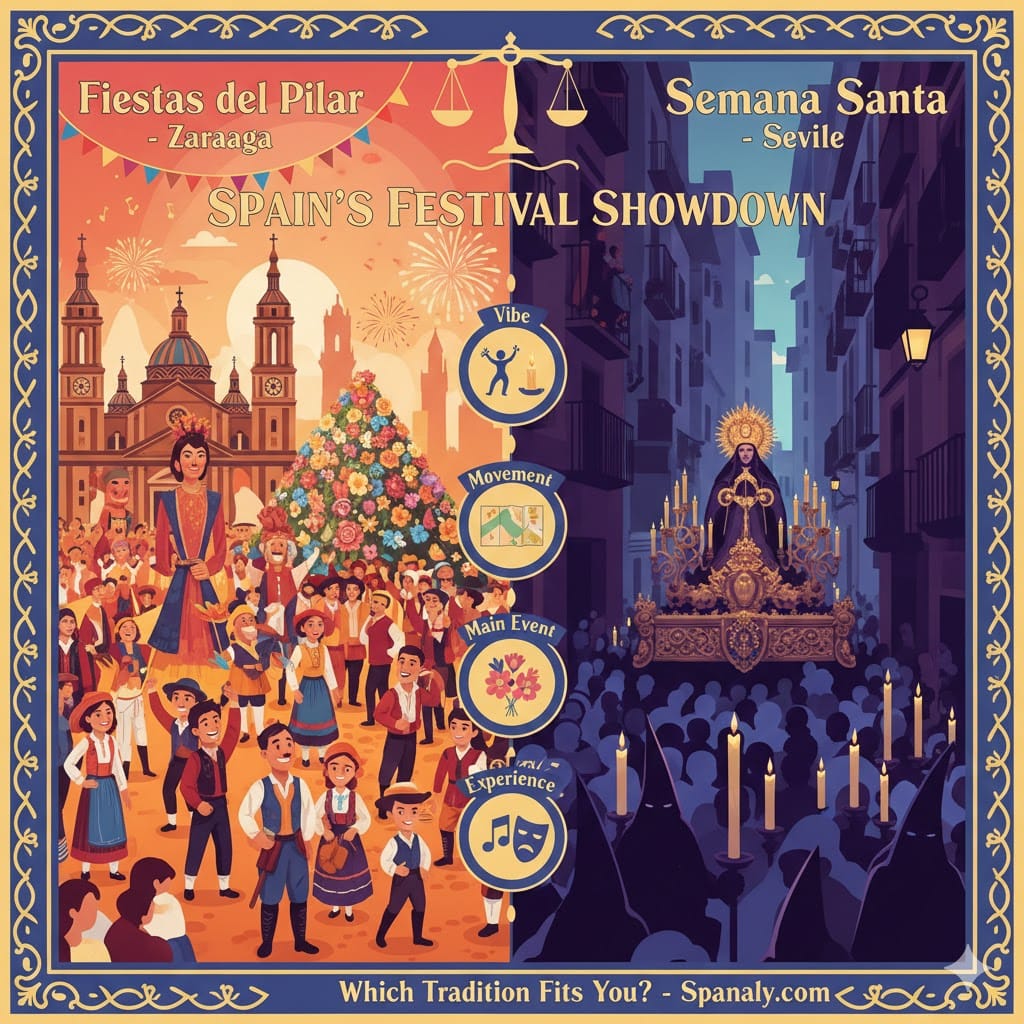
While both events represent the pinnacle of Spanish culture, they offer completely different atmospheres. Choosing between them depends on whether you seek festive joy or solemn tradition.
🎉 The Vibe (Zaragoza): Fiestas del Pilar is a high-energy, colorful street party. It celebrates life with music, flowers, and giant puppets.
🕯️ The Vibe (Seville/Andalusia): Semana Santa in Seville is more dramatic and solemn, focusing on religious processions and silent devotion.
🗺️ Ease of Movement: Zaragoza is flat and the festival is concentrated in open plazas. In contrast, Semana Santa involves navigating narrow alleys packed with crowds waiting for floats.
🎭 Main Attraction: El Pilar features the massive “Flower Offering,” while the Andalusian tradition is famous for its intricate “Pasos” (religious floats).
🌟 Spanaly Insight: If you want to dance, enjoy outdoor concerts, and see a city in full “party mode,” Zaragoza in October is unbeatable. If you prefer a deep, emotional, and artistic experience, then a trip to the south during Easter is a must.
📜 Historical & Cultural Background
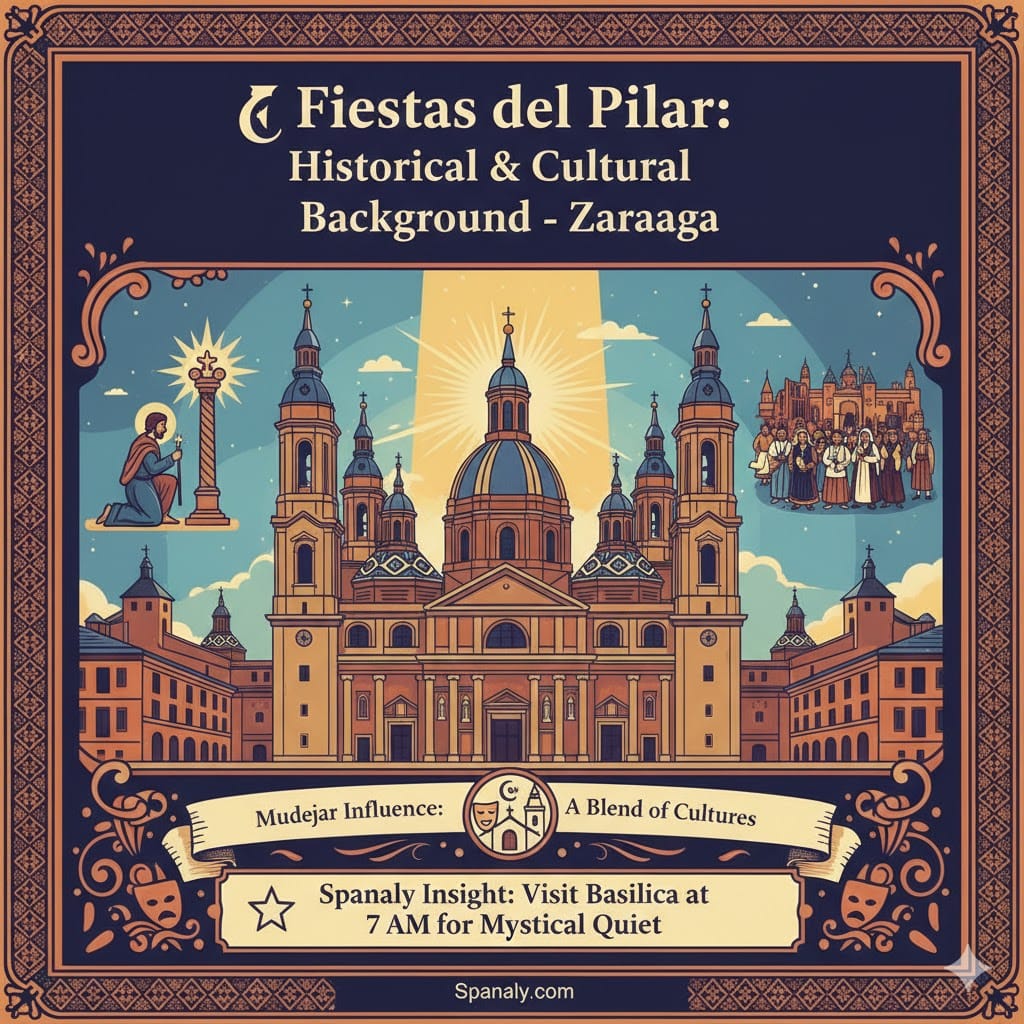
The Fiestas del Pilar dates back to the Middle Ages. Tradition says the Virgin Mary appeared to St. James in Zaragoza, standing on a sacred jasper pillar. This very pillar became the foundation for the Basilica del Pilar, an architectural masterpiece that defines the city’s skyline today.
🕯️ Medieval Origins: The festival evolved from a humble religious pilgrimage into one of the most significant cultural celebrations in Europe.
⛪ Spiritual Symbol: The Basilica acts as the heart of the event, representing centuries of Aragonese devotion and artistic pride.
🎭 Mudejar Influence: Zaragoza’s unique heritage adds a special layer of beauty to every traditional parade, showcasing a blend of Islamic and Christian art.
The Basilica itself is more than just a church; it is part of the grand tapestry of Spain’s historical monuments that every traveler should witness once in their lifetime.
🌟 Spanaly Insight: Don’t just look at the Basilica from the outside! During the festival, the interior takes on a mystical aura with thousands of candles and traditional hymns. We recommend visiting early in the morning (around 7:00 AM) to experience the spiritual quiet before the festive crowds take over the plaza.
🌸 Main Events: The Flower & Fruit Offerings
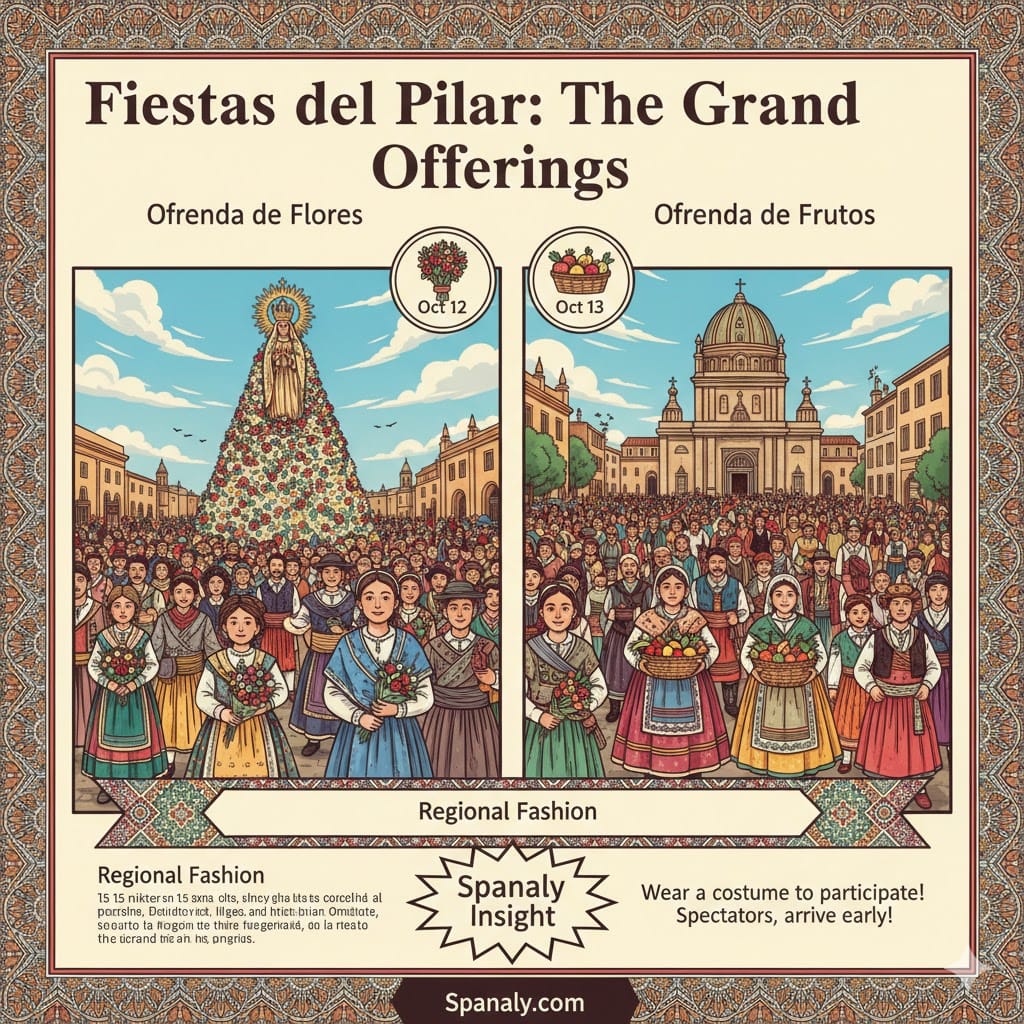
The Fiestas del Pilar centers around two massive, emotional processions that turn the city into a sea of colors and aromas. These events represent the soul of the Aragonese people and their connection to the land.
💐 Ofrenda de Flores (October 12): This is the festival’s most iconic moment. Millions of flowers form a giant, 15-meter-high mantle around the Virgin Mary. Participants from all over the world parade through the streets to deliver their bouquets.
🍎 Ofrenda de Frutos (October 13): A day later, the “Fruit Offering” takes place. Regional groups bring the best agricultural products from their provinces. All this fresh food goes to local soup kitchens and charities.
👗 Regional Fashion: You will see a breathtaking variety of traditional costumes. From the local Aragonese Baturro suits to international delegations, it is a global celebration of heritage.
While Zaragoza’s main square hosts these events, the surrounding region offers even more historic wonders. For those who love medieval architecture, a trip to the nearby Castle of Loarre in Aragon provides a perfect contrast to the city’s festive energy.
🌟 Spanaly Insight: Watching the Flower Offering is free, but if you want to participate and walk the route, you must wear a traditional costume (from any region or country). If you are a spectator, find a spot early at the Plaza del Pilar to see the floral pyramid reach its full glory by sunset.
🕯️ The Crystal Rosary: A Night of Light
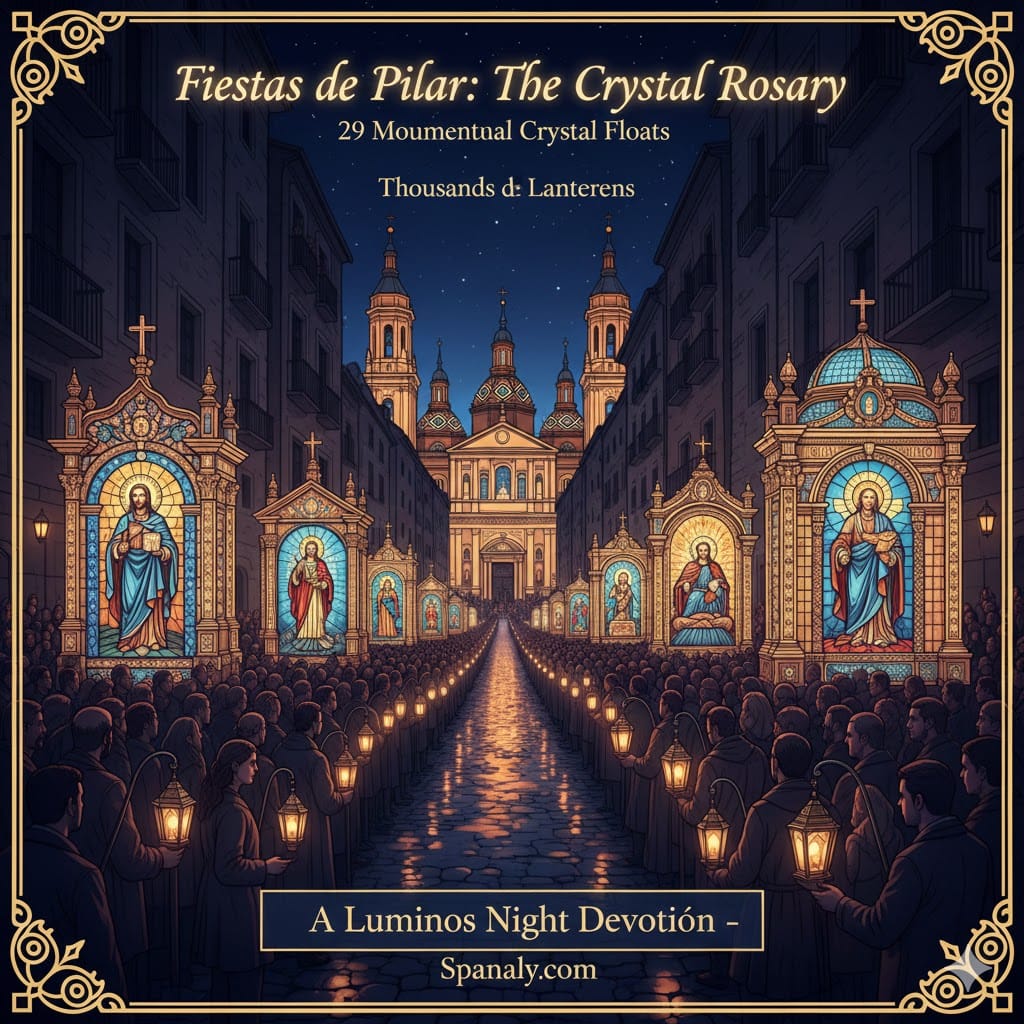
The Rosario de Cristal is a breathtaking evening procession that takes place on the night of October 13th. Unlike the sunny and noisy daytime events, this parade is a serene and luminous spectacle that transforms the streets of Zaragoza into a glowing river of glass and light.
💎 Crystal Floats: The procession features 29 monumental floats made entirely of stained glass and illuminated from within. These “carrozas” represent different parts of the rosary and landmarks of the city.
✨ Historic Lanterns: Thousands of faithful followers carry hand-held glass lanterns, creating a magical flickering effect against the medieval walls of the historic center.
🤫 A Solemn Vibe: The atmosphere is quiet and respectful, offering a peaceful contrast to the high-energy concerts held elsewhere in the city.
This night of lights reminds many visitors of the artistic devotion found in other religious landmarks, such as the grand Cathedral of Santiago de Compostela, where light and stone create a similar sense of awe.
🌟 Spanaly Insight: The best place to watch the Rosario de Cristal is from Calle Alfonso I. The narrowness of the street amplifies the glow of the crystal floats. Be sure to arrive at least 45 minutes before the start, as locals bring their own folding chairs to secure the best front-row views.
🎭 Gigantes y Cabezudos: Street Fun for Everyone
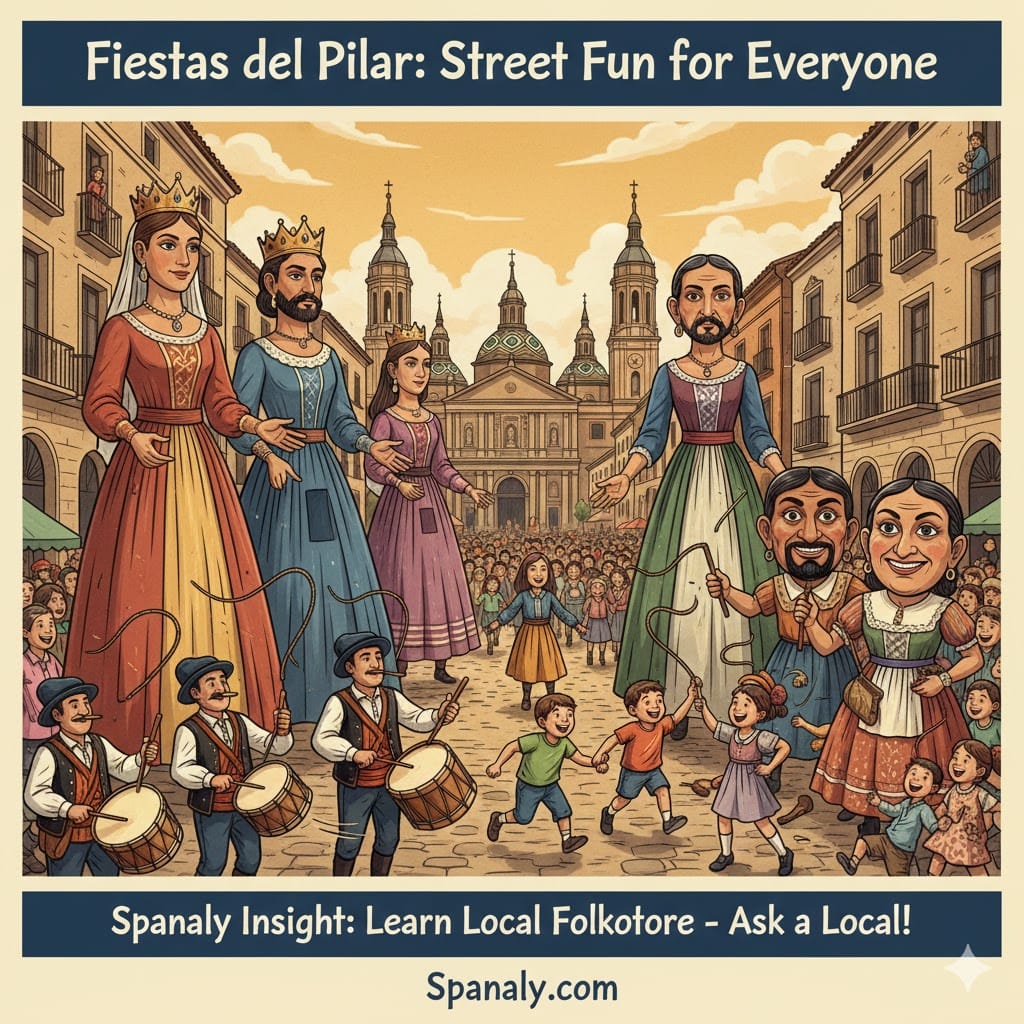
If you hear upbeat music and rhythmic drumming, the Gigantes y Cabezudos (Giants and Big-heads) are nearby! This troupe of oversized characters is a beloved tradition that brings a carnival-like energy to the streets of Zaragoza every single day of the festival.
🤴 The Giants (Gigantes): Towering figures representing historic kings, queens, and diverse cultures. They glide gracefully through the plazas, dancing to traditional woodwind music.
🤡 The Big-heads (Cabezudos): Mischievous characters with oversized heads. They chase children (and brave adults) with soft whips, creating a playful game of “cat and mouse” that keeps the crowd laughing.
🥁 Folk Music: Local musicians accompany the parade with the Dulzaina (a traditional oboe) and drums, filling the historic center with an unmistakable Aragonese rhythm.
This festive street energy is a hallmark of Spain’s biggest celebrations. If you enjoy this type of high-energy street theater, you should also explore the world-famous La Tomatina Guide for another unique Spanish outdoor adventure.
🌟 Spanaly Insight: The “Cabezudos” might look intimidating to small children, but it’s all in good fun. Each character has a specific name and personality (like El Morico or La Pilara). Ask a local for the story behind their favorite character—it’s a great way to start a conversation and learn about Zaragoza’s folklore!
🥘 Festival Flavors: What to Eat
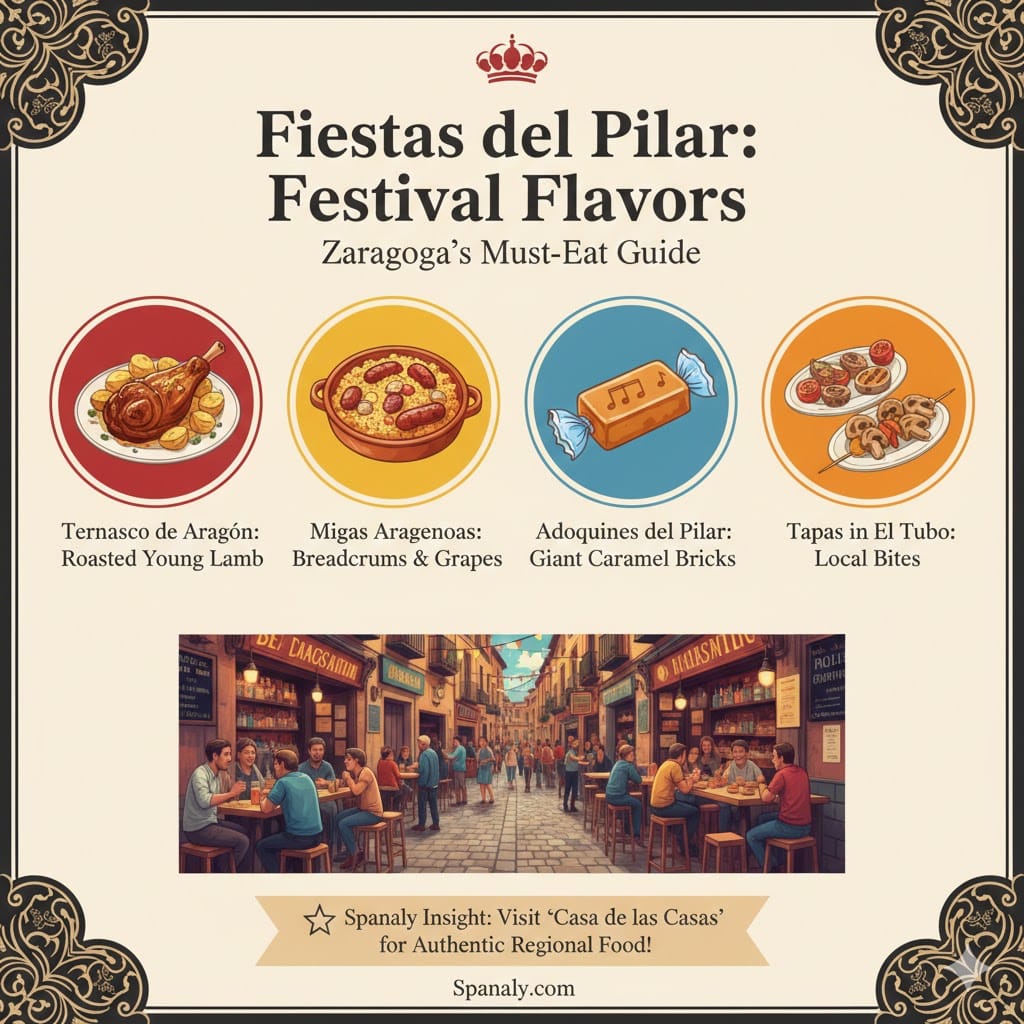
You cannot truly experience the Fiestas del Pilar without diving into the rich Aragonese gastronomy. During this week, the city smells of roasted meats and sweet sugar, offering a feast for every food lover.
🥩 Ternasco de Aragón: The star of the table. This tender, roasted young lamb is a local delicacy, usually served with slow-cooked potatoes.
🥘 Migas Aragonesas: A humble yet delicious dish made from sautéed breadcrumbs, garlic, longaniza (sausage), and topped with fresh grapes for a sweet-salty contrast.
🍬 Adoquines del Pilar: These famous giant caramel bricks are the ultimate festival souvenir. Each wrapper contains a printed “Jota” (traditional song) inside!
🍢 Tapas in El Tubo: Zaragoza’s famous narrow alleys are packed with bars serving everything from grilled mushrooms to innovative seafood bites.
Eating like a local is an essential part of any Spanish journey. If you are a true foodie, you might also want to explore our guide on how to order food like a local in Spain to master the art of the tavern.
🌟 Spanaly Insight: During the festival, the “Casa de las Casas” (regional food stalls) near the river offer authentic dishes from every corner of Spain. It’s the best place to grab a quick, high-quality lunch while moving between concert venues.
🗓️ Fiestas del Pilar 2026: Official Program & Key Dates
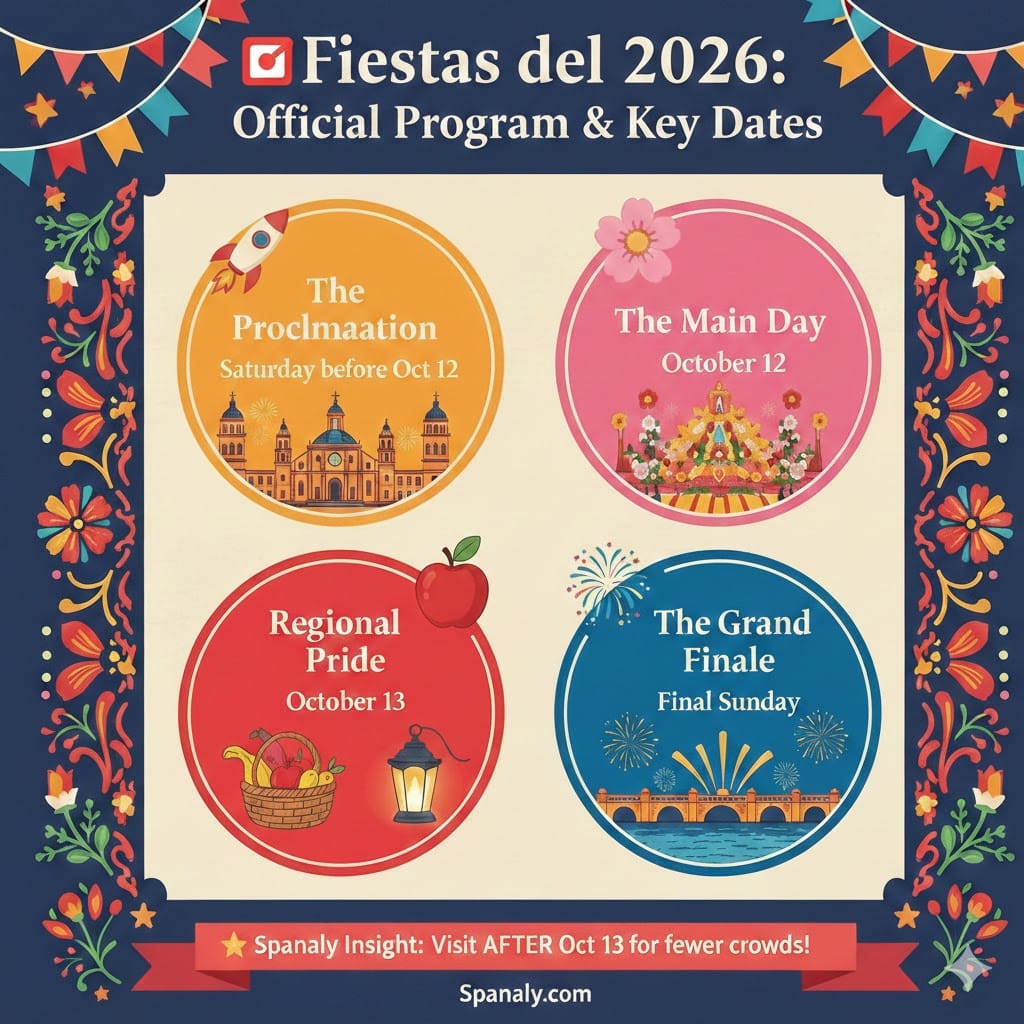
The Fiestas del Pilar usually spans nine days, centered around the week of October 12th. While the schedule changes slightly every year, the core structure remains a steady tradition that locals and tourists follow religiously.
🚀 The Proclamation (Saturday before Oct 12): Known as the Pregón, this official opening ceremony takes place at the Town Hall balcony, followed by massive fireworks.
🌸 The Main Day (October 12): This is the busiest day of the festival, featuring the non-stop Flower Offering from dawn until dusk.
🍎 Regional Pride (October 13): Focuses on the Fruit Offering and the solemn Crystal Rosary in the evening.
🎆 The Grand Finale (Final Sunday): The festival ends with a spectacular light and sound show over the Ebro River.
Planning your trip around these dates is crucial, as October is a peak month for travel. For a broader look at the climate and events across the country, check our guide on the best time to visit Spain.
🌟 Spanaly Insight: If you want to experience the festival without the extreme crowds, aim for the days after October 13th. Most of the floral mantle remains in the plaza for several days, allowing for much better photos and a more relaxed stroll.
📍 Best Locations: Where to Experience the Magic
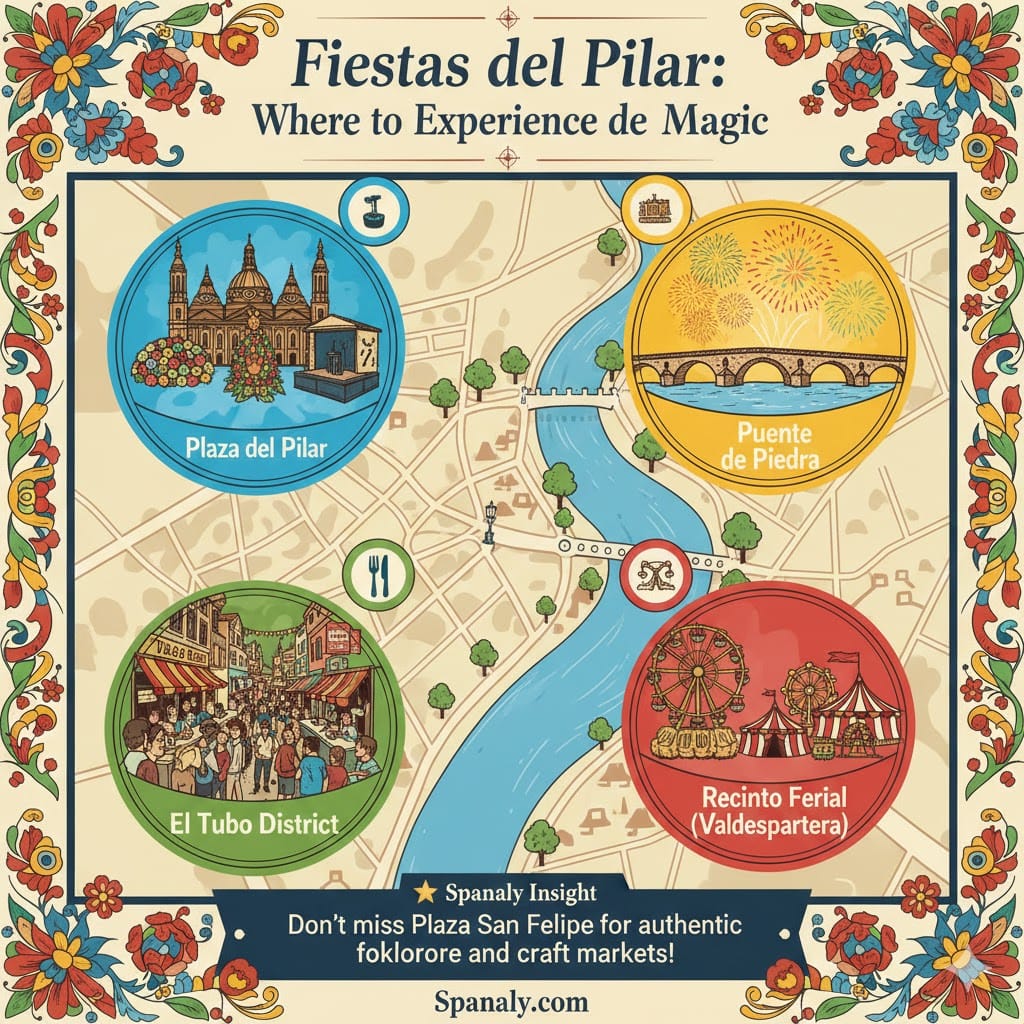
To truly soak up the atmosphere of the Fiestas del Pilar, you need to know where the action happens. Zaragoza transforms into a massive open-air stage, but these specific spots are the epicenter of the celebration:
🏛️ Plaza del Pilar: The “living room” of the city. This is where the giant flower mantle is built, and where most of the free concerts and the Pregón take place. It is one of the largest pedestrian squares in Europe.
🌉 Puente de Piedra: The best vantage point for the closing fireworks. The reflection of the Basilica and the colorful explosions over the Ebro River is a sight you won’t forget.
🍴 El Tubo District: For the best social vibe, head to these narrow streets. It’s the heart of the tapas scene and the perfect place to feel the local “fiesta” energy between events.
🎡 Recinto Ferial (Valdespartera): If you are traveling with family, this area hosts the huge amusement park, circus, and beer tents (Carpa del Ternasco).
Navigating a city during its biggest festival can be a challenge. To help you plan your journey and stay safe, especially if you’re coming from other major hubs, take a look at our travel safety in Spain guide for peace of mind.
🌟 Spanaly Insight: While Plaza del Pilar is the main attraction, don’t miss Plaza San Felipe. It’s a bit smaller and more intimate, often hosting beautiful folklore dances (Jotas) and local craft markets that feel much more authentic and less crowded.
🧣 Dress Code & Local Customs: The Cachirulo Guide
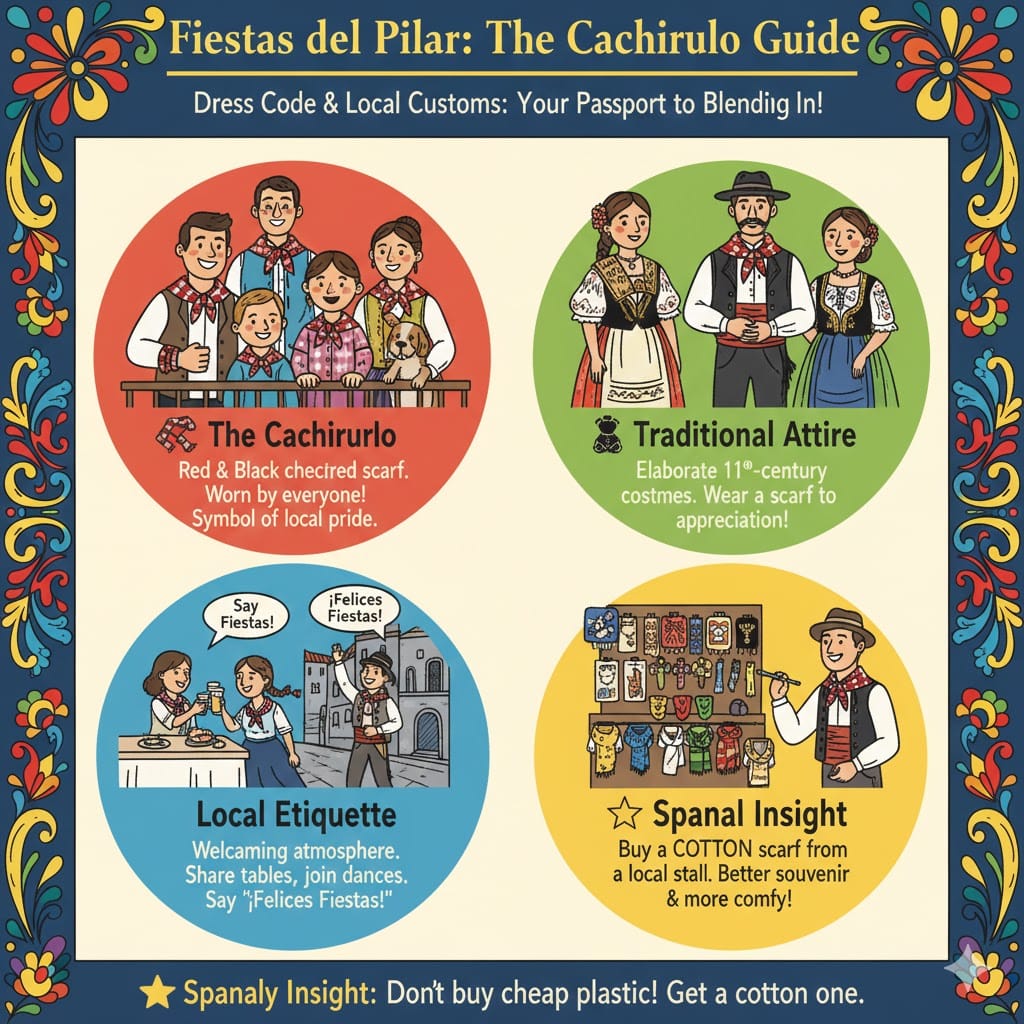
If you want to feel like a true Zaragozano during the festivities, there is one accessory you cannot forget: the Cachirulo. This traditional scarf is the ultimate symbol of regional pride and your “passport” to blending in with the locals.
🔴 The Cachirulo: This red and black checkered scarf is worn by everyone—men, women, children, and even pets! Most people tie it around their necks, but you’ll also see it on wrists or balconies.
👗 Traditional Attire (Traje de Baturro): On the day of the Flower Offering, you will see thousands of locals dressed in elaborate 18th-century regional costumes. While tourists aren’t expected to wear the full outfit, wearing a Cachirulo is a highly respected gesture of appreciation.
🤝 Local Etiquette: The atmosphere is incredibly welcoming. It’s common to share tables at food stalls or join in spontaneous street dances. A simple “¡Felices Fiestas!” (Happy Holidays!) goes a long way in making friends.
Understanding these small cultural nuances is what transforms a trip into an authentic experience. For more tips on how to respect and enjoy local traditions across the country, see our guide on Spanish culture and traditions.
🌟 Spanaly Insight: You can buy a Cachirulo at almost any corner shop or street stall for a few euros. Pro tip: Don’t buy the ultra-cheap plastic ones; look for a cotton one—it’s more comfortable in the Zaragoza sun and makes for a better long-term souvenir!
🚆 Getting There & Navigating the Crowds
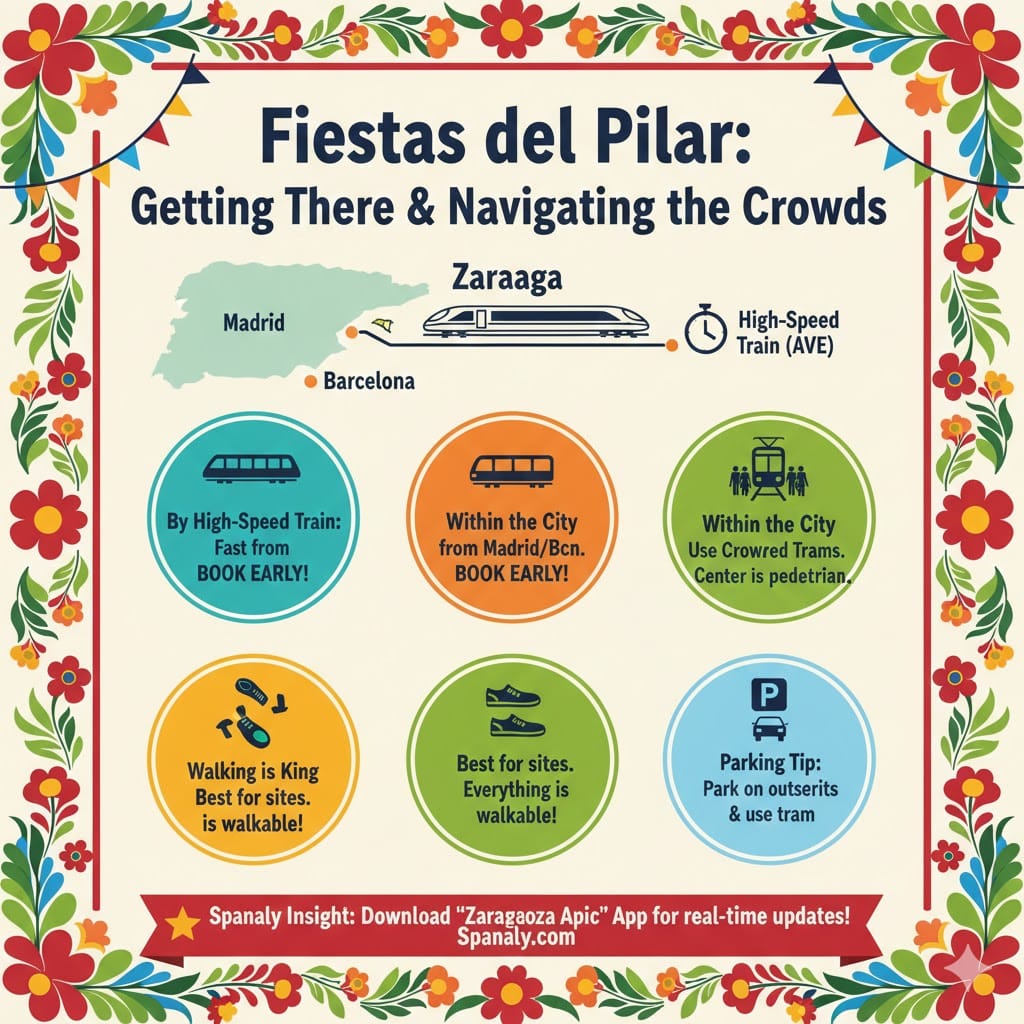
Zaragoza is strategically located between Madrid and Barcelona, making it incredibly accessible. However, during the Fiestas del Pilar, the city’s population triples, so having a solid logistics plan is essential.
🚄 By High-Speed Train (AVE): The fastest way to arrive. It takes about 1 hour and 15 minutes from either Madrid or Barcelona. Book your tickets weeks in advance, as they sell out rapidly during festival dates.
🚌 Within the City: Forget about cars or taxis in the historic center—most streets are pedestrian-only during the events. Zaragoza has an excellent Tram system that connects the outskirts to the center, but expect it to be very crowded.
👟 Walking is King: The best way to navigate the festival is on foot. Most major sites (Plaza del Pilar, El Tubo, Puente de Piedra) are within walking distance of each other.
🅿️ Parking Tip: If you must drive, park in the outskirts near a tram station (like Valdespartera or Parque Goya) and take public transport in.
Navigating through massive crowds requires a bit of patience and planning. For more general advice on moving around the country efficiently, don’t miss our guide on transportation in Spain.
🌟 Spanaly Insight: Download the official “Zaragoza Apic” or “Avanza” app on your phone. They provide real-time updates on bus and tram frequencies, and more importantly, they notify you of any last-minute changes to the parade routes or concert schedules.
🏰 Escape the Crowds: Best Day Trips
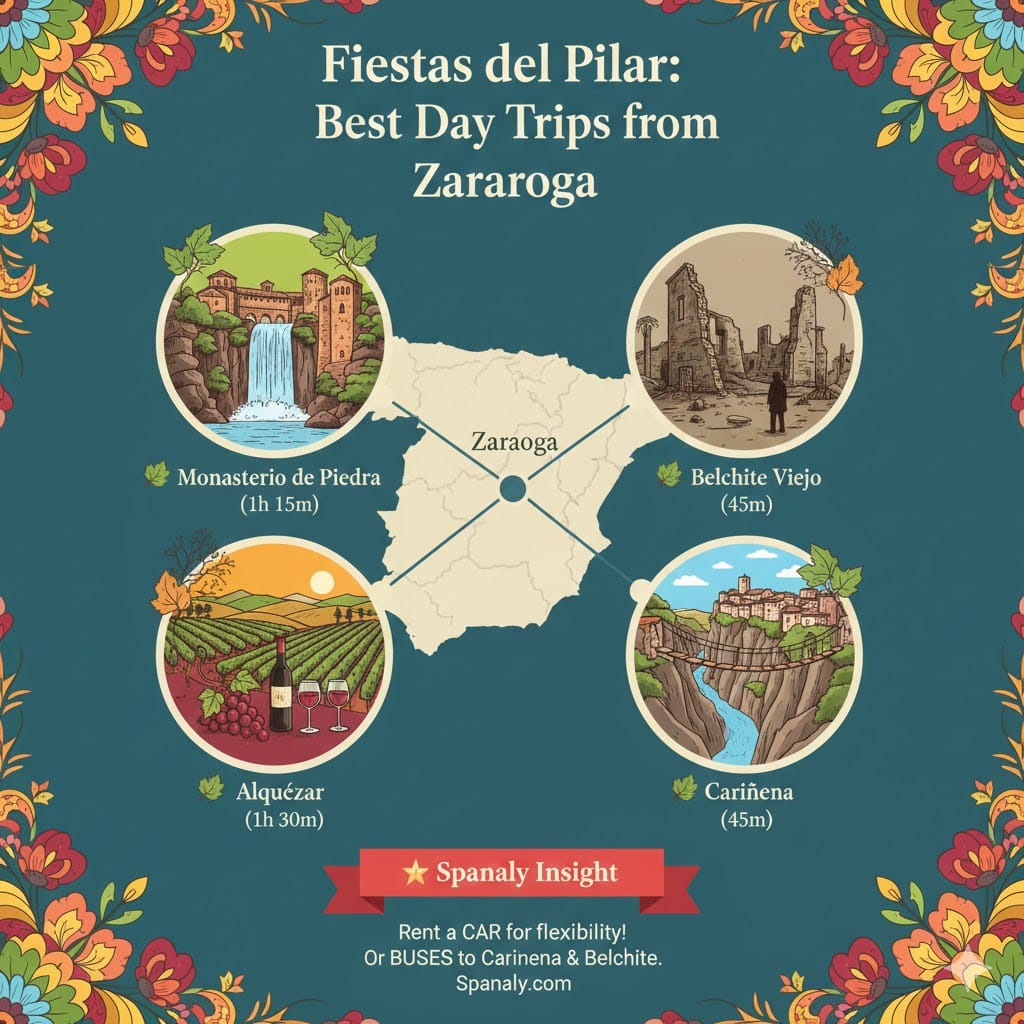
While Zaragoza’s energy is infectious, the surrounding region offers a perfect escape if you need a break from the festival buzz. These nearby gems showcase the diverse beauty of Aragon, from natural wonders to haunting history:
🌿 Monasterio de Piedra (1h 15m): A lush natural park filled with spectacular waterfalls and a stunning medieval monastery. It’s the ultimate contrast to the city’s crowded plazas.
🏚️ Belchite Viejo (45m): A haunting “ghost town” left as a memorial to the Spanish Civil War. Its ruins offer a powerful and silent look into Spain’s complex history.
🧗 Alquézar (1h 30m): One of Spain’s most picturesque medieval villages, famous for its canyon views and the thrilling Vero River footbridge walk.
🍷 Cariñena (45m): The perfect spot for wine enthusiasts to explore deep-rooted vineyards and taste the region’s world-class Garnacha.
Exploring these local treasures is the best way to see the “authentic” Spain beyond the main tourist routes. If you enjoy discovering places off the beaten path, you’ll also love our guide to Barcelona’s hidden gems for more inspiration on secret spots across the country.
🌟 Spanaly Insight: For the most flexibility, renting a car for a day is highly recommended to visit these spots. However, Cariñena and Belchite are also accessible via local buses departing from Zaragoza’s “Estación Delicias.”
💡 Expert Tips for a Seamless Experience
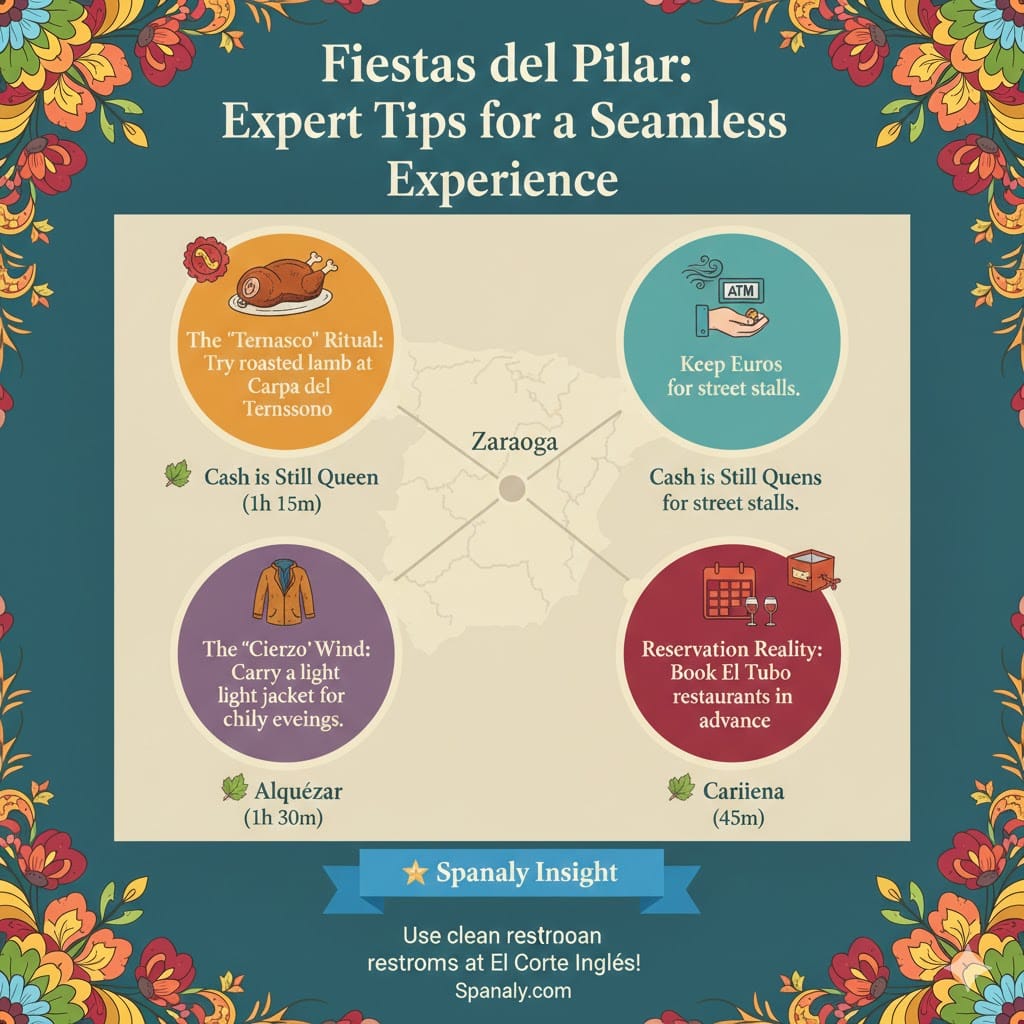
To make the most of your visit to the Fiestas del Pilar, these insider “hacks” will help you navigate the festival like a pro, ensuring you avoid common tourist pitfalls:
🥨 The “Ternasco” Ritual: Don’t leave without trying Ternasco de Aragón (roasted lamb). During the festival, head to the Carpa del Ternasco for affordable, high-quality local bites and a great atmosphere.
🏧 Cash is Still Queen: While most places accept cards, the small street stalls selling Cachirulos, traditional sweets, or crafts often prefer cash. Keep some Euros handy to avoid hunting for ATMs in crowded areas.
🧥 The “Cierzo” Wind: Zaragoza is famous for its cold, dry wind called Cierzo. Even if the day is sunny, the evenings can get chilly very quickly. Always carry a light jacket or your Cachirulo to stay warm.
📱 Reservation Reality: If you plan to dine at a specific famous restaurant in El Tubo, book weeks in advance. For casual tapas, arrive early (around 1:00 PM for lunch or 8:00 PM for dinner) to snag a spot before the local rush.
Mastering these small details will elevate your trip from a standard holiday to an authentic Spanish adventure. If you’re looking for more ways to optimize your travel budget while enjoying the best of Spain, check out our budget travel in Spain guide.
🌟 Spanaly Insight: Looking for a clean restroom? The large department stores like El Corte Inglés near the city center are your best bet. They are generally cleaner and more accessible than the portable toilets found in the high-traffic festival zones.
🤔 Expert Q&A: Master the Fiestas del Pilar 2026
🛍️ Are shops and museums open during the festival week?
Most museums remain open with special hours, often offering free entry on October 12th. However, expect local shops and supermarkets to close on the 12th (National Day) and have limited hours on Sundays. High-street stores on Calle Alfonso I usually stay open to cater to the festive crowds.
🎭 What exactly is the "Gigantes y Cabezudos" parade?
This is a quirky, centuries-old tradition where Giants (representing historical figures) and Big-heads (characters in masks) parade through the streets. The Big-heads playfully "chase" children with sponges—it’s a hilarious, high-energy event that happens almost daily and is a local favorite for all ages.
🎶 Where can I watch authentic "Jota" folk dancing for free?
The Plaza del Pilar hosts a large stage dedicated to Jota Aragonesa throughout the week. You can see world-class dancers and singers performing this energetic folk style in traditional costumes. Best of all, these performances are usually completely free and run multiple times a day.
🎟️ Do I need tickets for the concerts and shows?
It depends. While the massive concerts in Plaza del Pilar are free, major international acts at the Espacio Zity (Valdespartera) or theater plays at Teatro Principal require pre-purchased tickets. We recommend checking the official Zaragoza Cultural website by September to snag yours before they vanish.
🕍 Is it possible to enter the Basilica during the Offering?
Yes, the Basílica del Pilar remains open for religious services. However, due to the massive influx of people on October 12th, access is strictly regulated for safety. If you wish to see the Goya frescoes or the Holy Pillar quietly, it is best to go early in the morning on the 14th or 15th.
Zaragoza Cultural Insights by Spanaly.com
✨ Your Zaragoza Adventure Awaits!
The Fiestas del Pilar is more than just a festival; it’s the beating heart of Spanish tradition. Whether you are there for the flowers, the fireworks, or the tapas, you’re in for an unforgettable experience.
🌸 Feel the Tradition: Witness the world’s largest floral mantle.
🥖 Taste the Soul: Dive into the tapas scene in El Tubo.
💃 Share the Joy: Wear your Cachirulo and dance with the locals.
📸 Capture the Magic: From the Ebro river to the ancient plazas.
Zaragoza is just the beginning of your journey through the history of Aragon. If you love stories of tradition and romance, don’t miss the legendary tale of Isabel de Segura, another iconic piece of the region’s cultural soul.
¡Nos vemos en Zaragoza! (See you in Zaragoza!) 🇪🇸