
✈️ Exploring Spain is a dream for many travelers—and moving between its stunning regions is easier and faster in 2026 than ever before. Whether you are gliding on futuristic high-speed trains, taking scenic buses through Andalusia, or hopping on short domestic flights to the islands, Spain offers every traveler an ideal way to explore.
This detailed guide, part of our Essential Spain Travel Tips 2026, will help you master every option—trains, buses, flights, and car rentals—so you can navigate the country like a local.
Table of Contents
Toggle🚄 Traveling by Train: Spain’s Pride and Joy
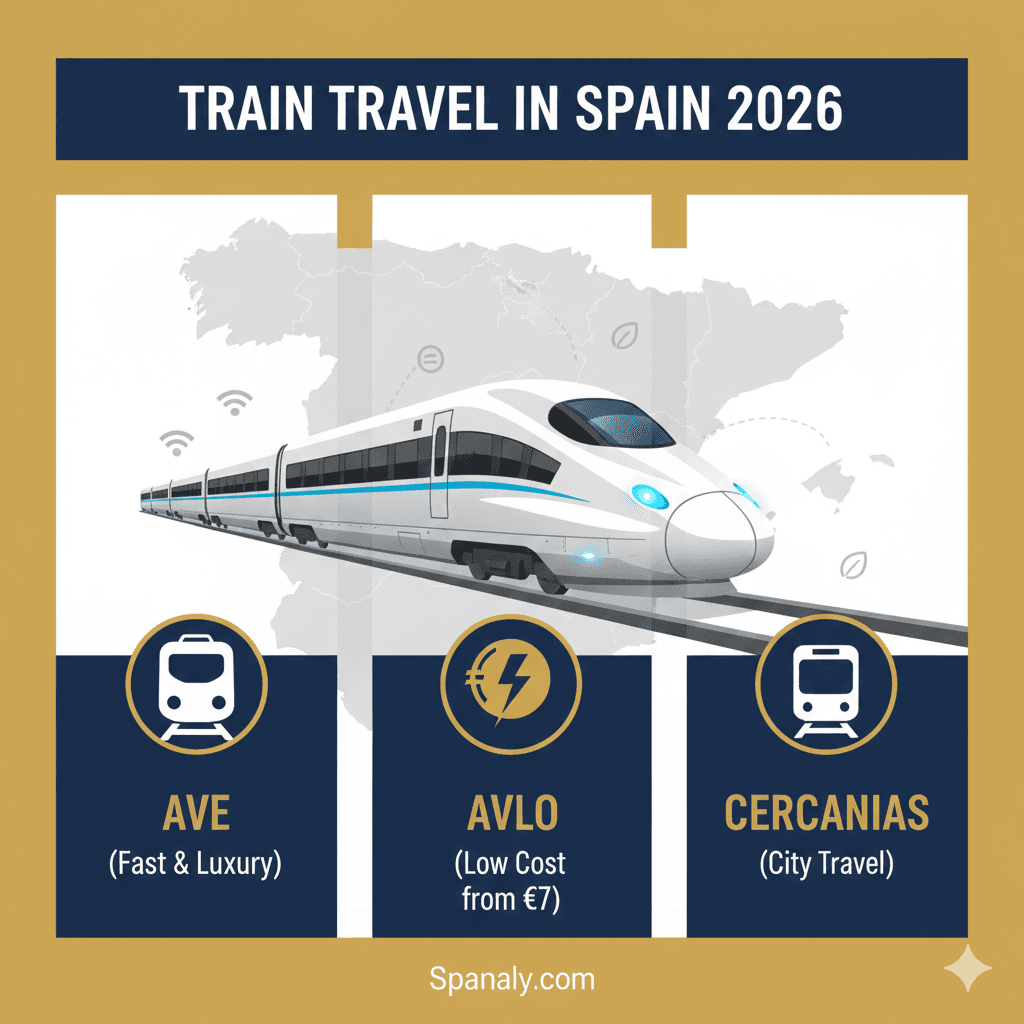
Spain’s rail system, run primarily by Renfe, is legendary for its comfort, punctuality, and speed. In 2026, the network has expanded to include even more competitive low-cost options, making train travel accessible for every budget.
Types of Trains
AVE (Alta Velocidad Española): The flagship high-speed train connecting major hubs like Madrid, Barcelona, Seville, and Valencia. In 2026, AVE International also connects Spain to France with record speeds.
Avlo: Renfe’s low-cost high-speed service. For 2026, you can find tickets starting as low as €7, making it a fantastic alternative for budget travelers.
Avant and Alvia: Versatile trains that combine high-speed and regional tracks, perfect for reaching cities like Segovia, Bilbao, or Cádiz.
Cercanías: Essential commuter trains for moving within large metropolitan areas and their outskirts.
💡 Travel Tips for 2026
Early Booking: High-speed tickets (AVE) are much cheaper when booked in advance. For 2026, keep an eye on “Super Prices” starting from €15 for AVE and €7 for Avlo.
Booking Platforms: While you can use Renfe.com, apps like Trainline and Omio offer a smoother user experience and English translations for travelers.
Discounts: Check for the “Tarjeta Dorada” if you are over 60 (up to 40% off) or the “Más Renfe Joven” for travelers under 26 (up to 30% off).
Sustainability: Choosing the train in 2026 is the most eco-friendly way to travel, which aligns with Spain’s commitment to sustainable tourism.
🚌 Traveling by Bus: Affordable and Far-Reaching
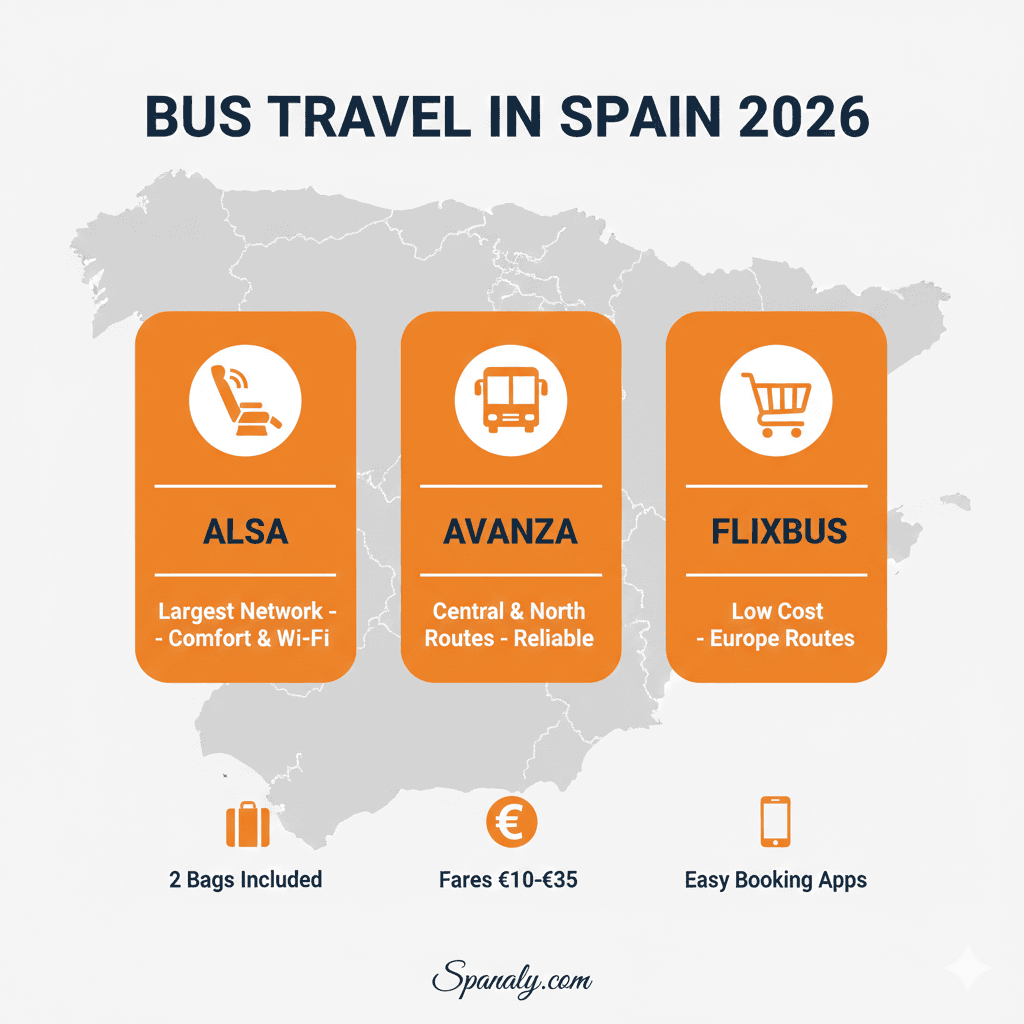
Buses in Spain are the unsung heroes of travel, ideal for those on a budget or heading to hidden gems not reached by train. In 2026, the bus network has become even more luxurious, offering a great alternative for long-distance travel.
Main Bus Operators:
ALSA: The giant of Spanish roads, covering almost every corner of the country.
Avanza: Reliable for central and northern routes.
FlixBus: Perfect for budget-friendly international connections.
💡 Travel Tips for 2026:
Comfort: Modern buses now feature reclining seats, high-speed Wi-Fi, and USB ports. If you’re traveling from Madrid to see Spanish Attractions in smaller towns, the bus is often your best bet.
Prices: Typically between €10 and €35.
Scenic Routes: The bus is the perfect way to enjoy the landscapes while heading to celebrate Spanish Festivals in regional villages.
Luggage: Unlike low-cost flights, buses usually include two suitcases and a carry-on in the base fare.
✈️ Domestic Flights: Best for Long Distances
For travelers short on time, Spain’s domestic flights are efficient and highly competitive in 2026. While the train is king for medium distances, flying is the best way to connect the mainland with the islands or cover the north-to-south stretch.
Main Airlines:
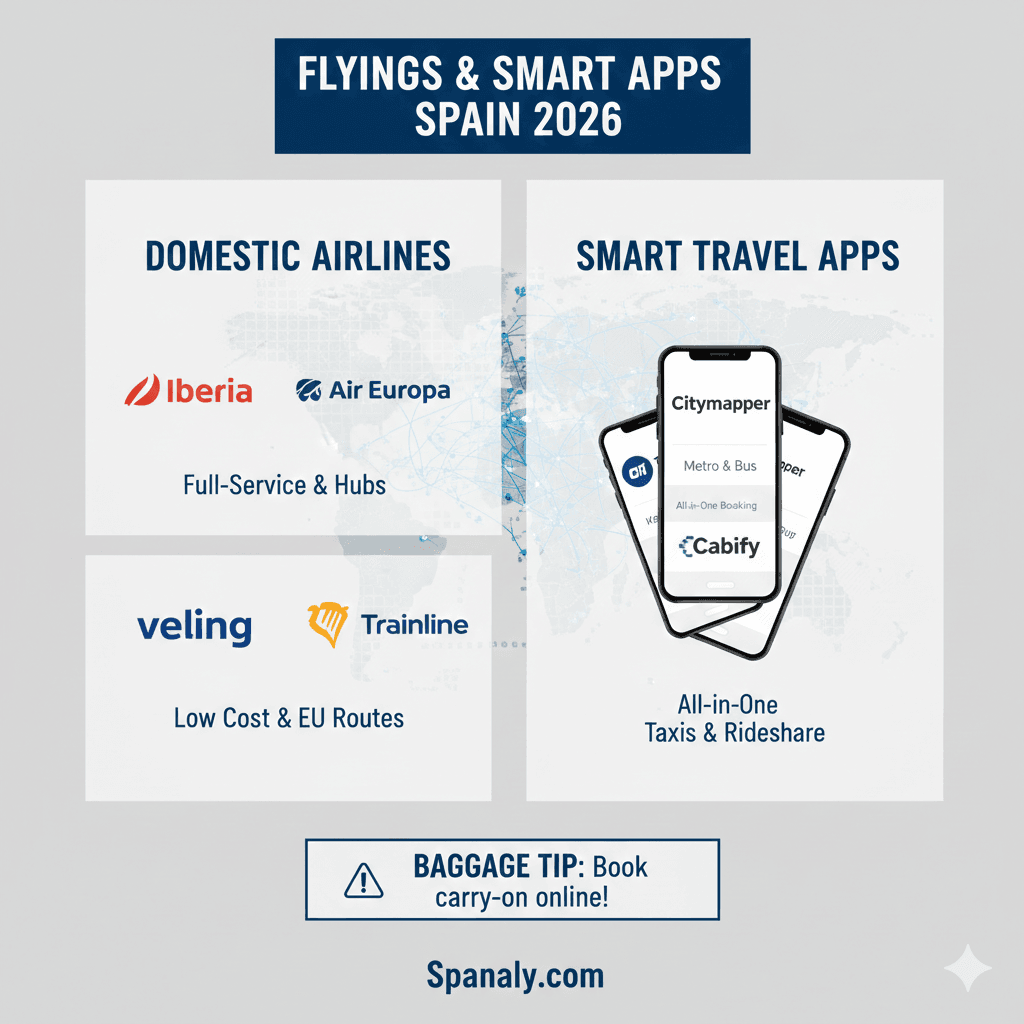
Iberia & Air Europa: Full-service carriers offering the best connections between Ultimate Madrid Travel Guide and regional hubs.
Vueling & Ryanair: The go-to low-cost carriers for budget travelers. In 2026, Vueling has expanded its digital hub in Barcelona, making travel through the Ultimate Barcelona Travel Guide smoother.
Binter Canarias: Essential for hopping between the Canary Islands.
💡 Travel Tips for 2026:
Flight Trends: For 2026, airfares to cities like Santiago de Compostela have seen significant drops, making it a great year for northern exploration.
Baggage Alert: Low-cost airlines in 2026 are strict. A free “underseat” bag is usually 40x30x20 cm. If you’re carrying more, book your 10kg cabin bag online to save up to 50% compared to airport fees.
When to Fly: It’s most worth it for routes like Madrid–Tenerife (3h) or Seville–Mallorca.
📱 Smart Traveler Apps: The 2026 Digital Kit
To navigate Spain like a pro in 2026, these apps are your best co-pilot:
For Transit: Citymapper for navigating metro systems in Madrid and Barcelona.
For Booking: Trainline and Omio to compare trains, buses, and flights in one screen.
For Ridesharing: Cabify is the top choice in Ultimate Seville Travel Guide, while Uber is widely available.
🚗 Car Rentals: Freedom to Explore
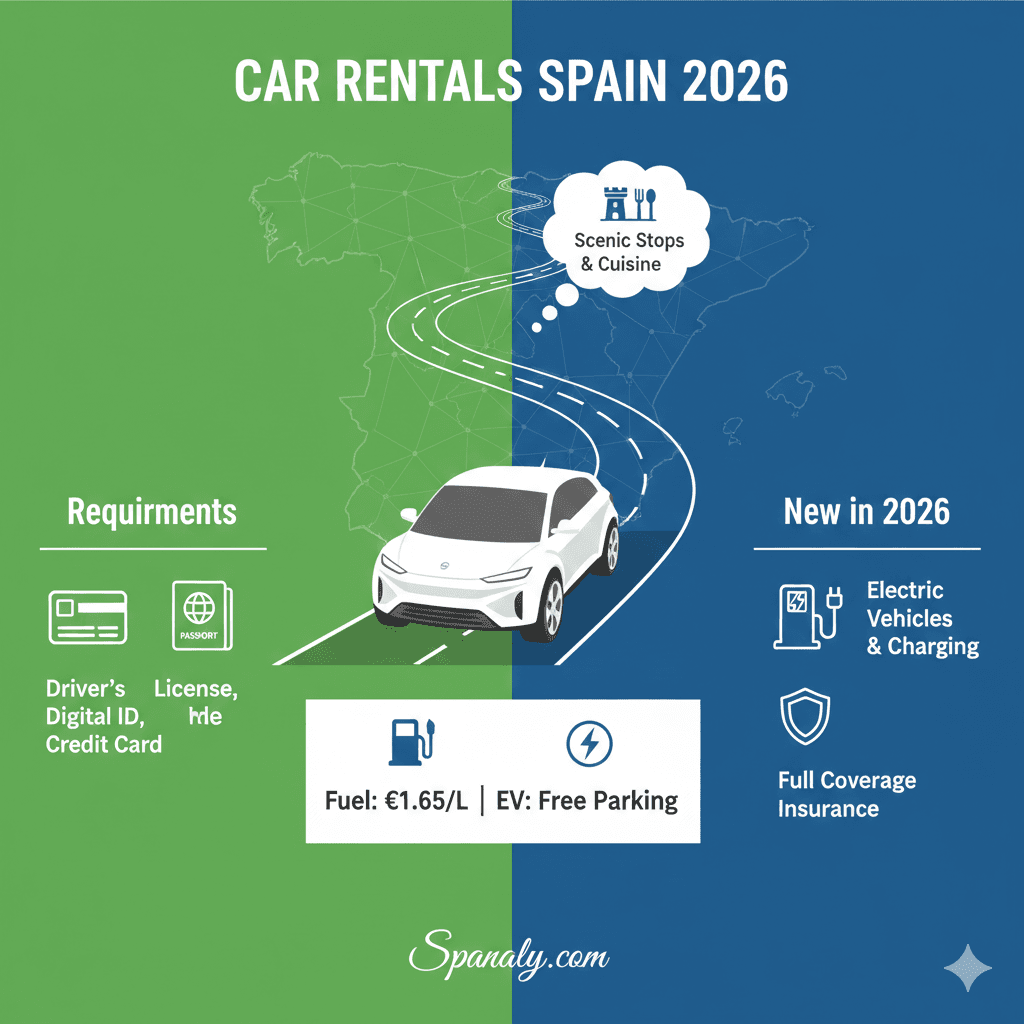
If you prefer total flexibility, renting a car is the best way to uncover rural Spain—from Andalusian white villages to the rugged Basque coast. In 2026, there is a strong shift towards electric vehicle (EV) rentals, with thousands of new charging points across the country.
What You Need to Know:
Requirements: A valid driver’s license, passport, and a credit card are essential. In 2026, most companies also accept digital ID apps for faster pick-up.
Insurance: We strongly recommend “Full Coverage” for peace of mind, especially when driving through narrow village streets.
Scenic Stops: Having a car allows you to stop at famous Spanish Attractions that are hard to reach by train, such as the remote castles of Castile or hidden coves in Costa Brava.
Fuel & EVs: Petrol prices average around €1.65 per liter. However, renting an EV can save you money on “Blue Zone” parking fees in many cities.
💡 Tip for Foodies: Driving is the ultimate way to embark on a culinary road trip. Use your car to explore regional Spanish Cuisine, stopping at local vineyards and traditional “Ventas” (roadside restaurants) that offer the most authentic flavors.
🚇 Getting Around Cities: Metro, Trams, and Taxis
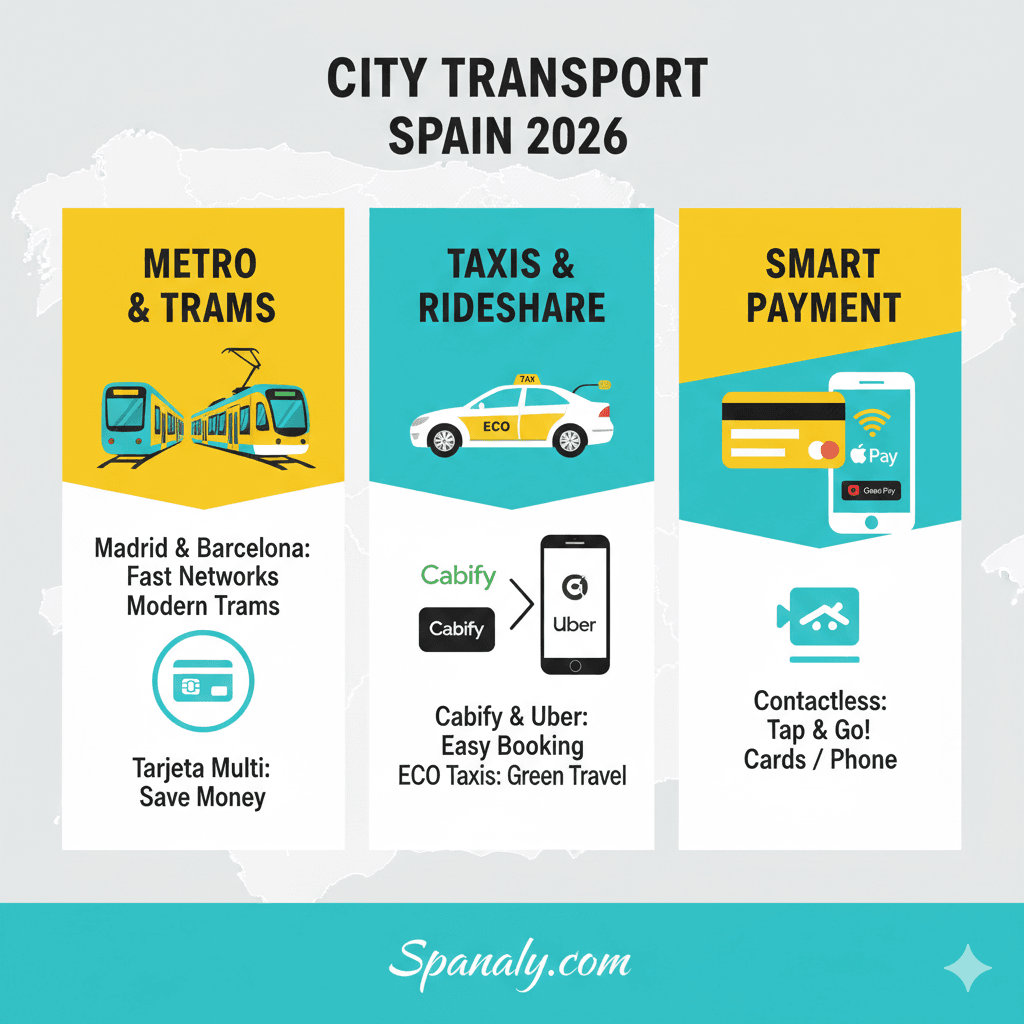
Spanish cities are a model of efficiency when it comes to urban transport. In 2026, most major hubs have completed their “Green Zone” expansions, making city centers more pedestrian-friendly and encouraging the use of public transit.
Main City Options:
Metro: Ultimate Madrid Travel Guide and Ultimate Barcelona Travel Guide boast vast, clean, and safe metro networks. They are the fastest way to hop between major landmarks.
Trams: Cities like Valencia, Zaragoza, and Seville (check our Ultimate Seville Travel Guide) offer modern tram systems that provide a scenic way to move through the city.
Taxis & Ridesharing: Taxis are regulated and reliable. For apps, Cabify is often preferred by locals, though Uber and Bolt are highly active.
💡 Smart Traveler Tips for 2026:
Rechargeable Cards: Don’t buy single tickets. Use rechargeable cards like Madrid’s Tarjeta Multi or Barcelona’s T-Usual to save over 50%.
Contactless Payment: In 2026, almost all buses and trams in Spain now accept direct contactless payment via credit card or Apple/Google Pay.
🚢 Ferries: Linking Spain’s Islands and Beyond

Spain’s ferry network offers a captivating way to explore, connecting the mainland to the stunning Balearic and Canary Islands, and even reaching Morocco. In 2026, new high-speed catamaran services have significantly reduced travel times.
Main Operators:
Balearia & Trasmediterranea: The dominant operators for routes to the Balearic Islands (Mallorca, Ibiza, Menorca).
Fred Olsen Express & Naviera Armas: Essential for inter-island travel and connections from mainland Spain to the Canary Islands.
Popular Routes & Tips for 2026:
Barcelona ↔ Mallorca: A popular overnight journey (7-8 hours) that allows you to wake up in paradise. Book cabins well in advance, especially during the summer high season.
Cádiz ↔ Canary Islands: A longer journey (around 30 hours) that feels like a mini-cruise, often including stops at multiple islands.
Price Range: Fares start from €45 for a basic passenger ticket. Bringing a car or booking a private cabin can increase the cost.
Eco-Ferries: In 2026, many operators are introducing LNG-powered (Liquefied Natural Gas) ferries, offering a more sustainable travel option for island hopping.
🎫 Visitor FAQs – Getting Around Spain Guide 2026 🇪🇸
Is it cheaper to travel by train or bus in Spain in 2026?
Can I use a single transport card for all cities in Spain?
What is the fastest train route in Spain for 2026?
How far in advance should I book my transport?
Getting around Spain in 2026 is not just about transportation—it’s about discovering the country’s soul with ease. Whether you’re racing across the plains on an AVE train, enjoying a scenic road trip to taste authentic Spanish Cuisine, or hopping between islands on an eco-ferry, the system is designed for your comfort.
By planning ahead and using the right apps, your travel days will be as rewarding as the destinations themselves. From the vibrant streets in our Ultimate Madrid Travel Guide to the sun-soaked plazas of Seville, Spain is waiting for you to explore it confidently.
For more expert insights, visit Spanaly.com—your local companion for a perfect Spanish adventure.