
Table of Contents
Toggle📍 Where Barcelona’s Story Begins
The Gothic Quarter (Barri Gòtic) is much more than a neighborhood. It represents the ancient, beating heart of Barcelona’s identity. Walking through its narrow streets feels like a journey back in time, where every stone has a secret to tell.
Why this area is essential for your 2026 trip:
📜 Ancient Roots: Home to 2,000 years of history, from Roman Barcino to the Middle Ages.
🎭 Living Museum: A stunning maze of Gothic spires, hidden plazas, and candle-lit bars.
✨ Unique Vibe: Where the echoes of the past meet the vibrant energy of modern Catalonia.
Nestled between La Rambla and Via Laietana, this district invites you to feel rather than just see. Whether you are a history buff or a casual wanderer, this ancient maze is where your true Barcelona adventure starts.
💡 Spanaly Pro Tip: For a complete overview of the city, including transport and accommodation, don’t forget to check our Ultimate Barcelona Guide.
🏛️ Top Attractions – Must-See Icons of the Quarter
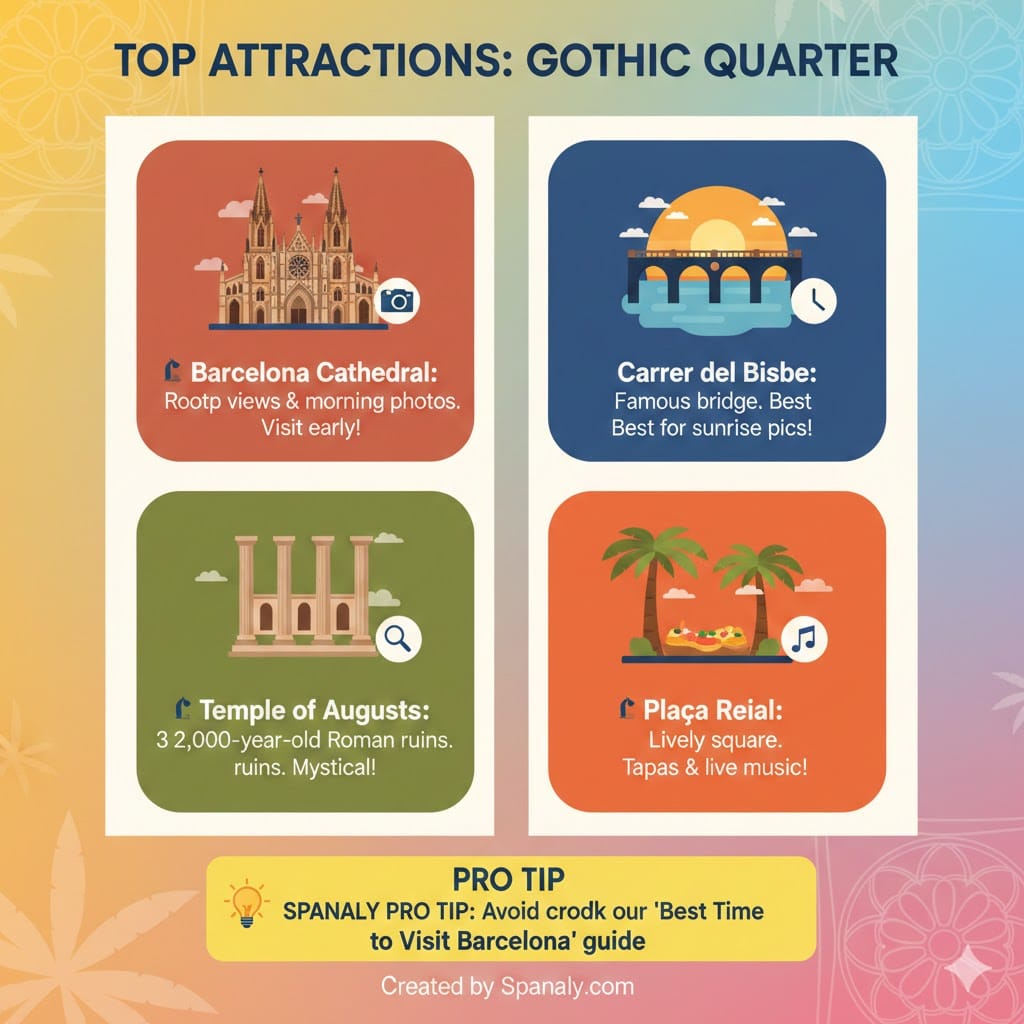
The Gothic Quarter is a treasure trove of architectural marvels. To make the most of your visit, focus on these iconic landmarks that define Barcelona’s historic skyline.
Highlights you cannot miss:
⛪ Barcelona Cathedral: A Gothic masterpiece featuring a stunning rooftop terrace. For the best photography lighting, try to visit during the early morning hours.
🌉 Carrer del Bisbe: Home to the most famous Neo-Gothic bridge in the city. It is the perfect spot for a quick sunrise photo before the crowds arrive.
🏛️ Temple of Augustus: Discover four hidden Roman columns tucked away in a quiet courtyard. This site offers a mystical glimpse into the city’s 2,000-year-old origins.
🌴 Plaça Reial: A vibrant square framed by palm trees and Gaudí-designed lampposts. It is an ideal location for enjoying evening tapas and live music.
💡 Spanaly Pro Tip: Navigating these historic sites is much easier when you know the city’s rhythm. Check out our Best Time to Visit Barcelona guide to avoid the largest crowds at these popular icons.
👣 A Walk Through History
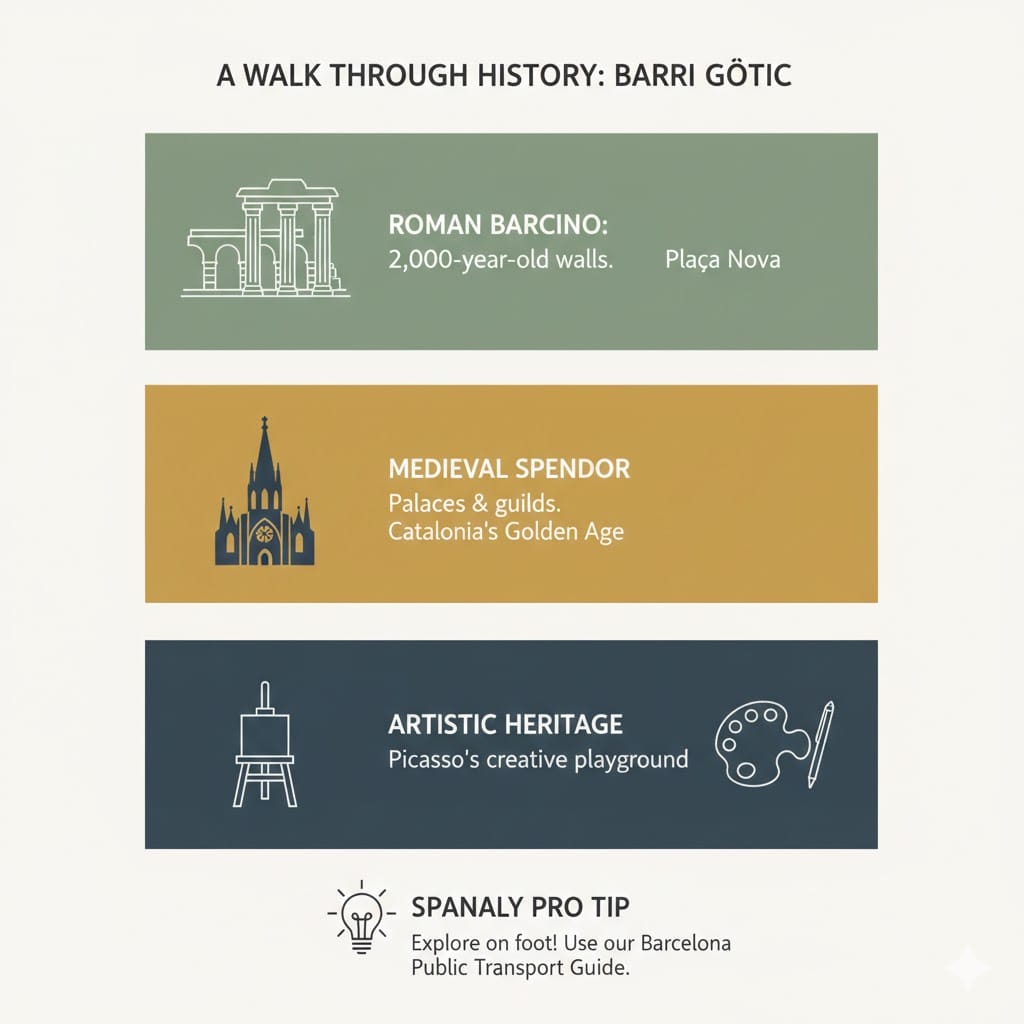
Imagine walking where Roman soldiers once marched, medieval merchants traded spices, and modern artists like Picasso found their muse. The Gothic Quarter has been continuously inhabited for over two millennia, making it one of the most layered urban centers in Europe.
Key Eras of the Barri Gòtic:
🏛️ Roman Barcino: Fragments of 2,000-year-old walls and aqueducts still stand near Plaça Nova.
🏰 Medieval Splendor: Most of the towering palaces and guilds rose during Catalonia’s golden age (13th–15th centuries).
🎨 Artistic Heritage: Beyond history, the area served as a creative playground for legendary artists seeking inspiration.
Because these streets were designed for horses and carts, not cars, the best way to experience this history is on foot. To navigate the narrow alleys and reach the Quarter comfortably from other parts of the city, we recommend checking our Barcelona Public Transport Guide for the nearest Metro stops.
🏘️ Local Life – Feel the Pulse of the Quarter
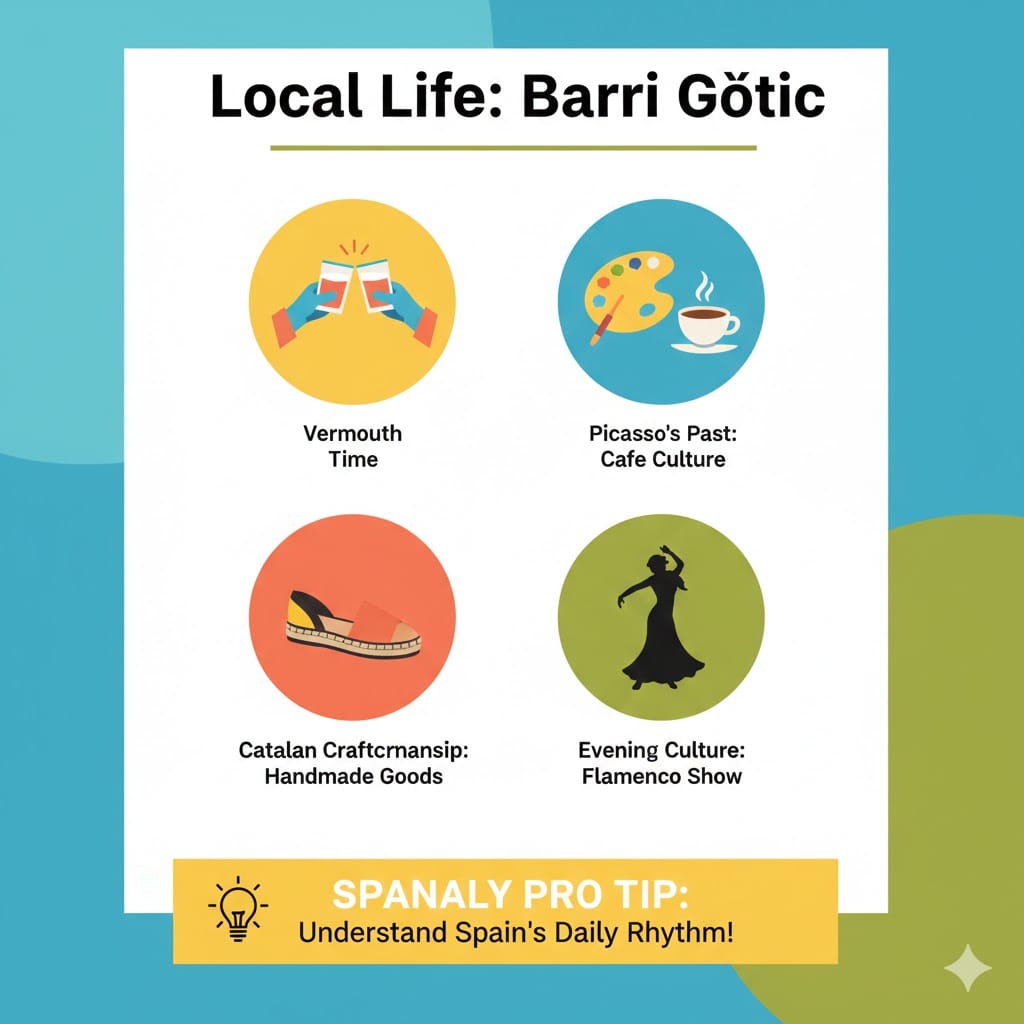
The Gothic Quarter is a living neighborhood, far more than just a historical museum. As you wander its ancient alleys, pause and listen. You will hear laughter from hidden balconies and smell fresh paella at lunchtime. This is where modern Catalan life intersects seamlessly with history.
Top Local Experiences:
🍷 Vermouth Time: Sip a traditional Catalan vermouth at an authentic spot like Bodega Biarritz 1881. It is a local ritual you cannot miss.
🎨 Picasso’s Past: Visit the modernist café Els Quatre Gats, where a young Picasso once socialized with the city’s intellectual elite.
👟 Catalan Craftsmanship: Shop for unique, handmade items like traditional espadrilles at local institutions like La Manual Alpargatera.
💃 Evening Culture: Catch a powerful flamenco performance housed inside a dramatic 15th-century palace for a taste of Spanish passion.
To truly enjoy these experiences, it helps to understand the local schedule. Many shops and traditional eateries follow specific hours that might surprise first-time visitors. We recommend checking our guide to Spain’s Daily Rhythm: Siesta & Mealtimes to plan your tapas tour like a true local.
📸 Best Photo Spots & Where to Stay
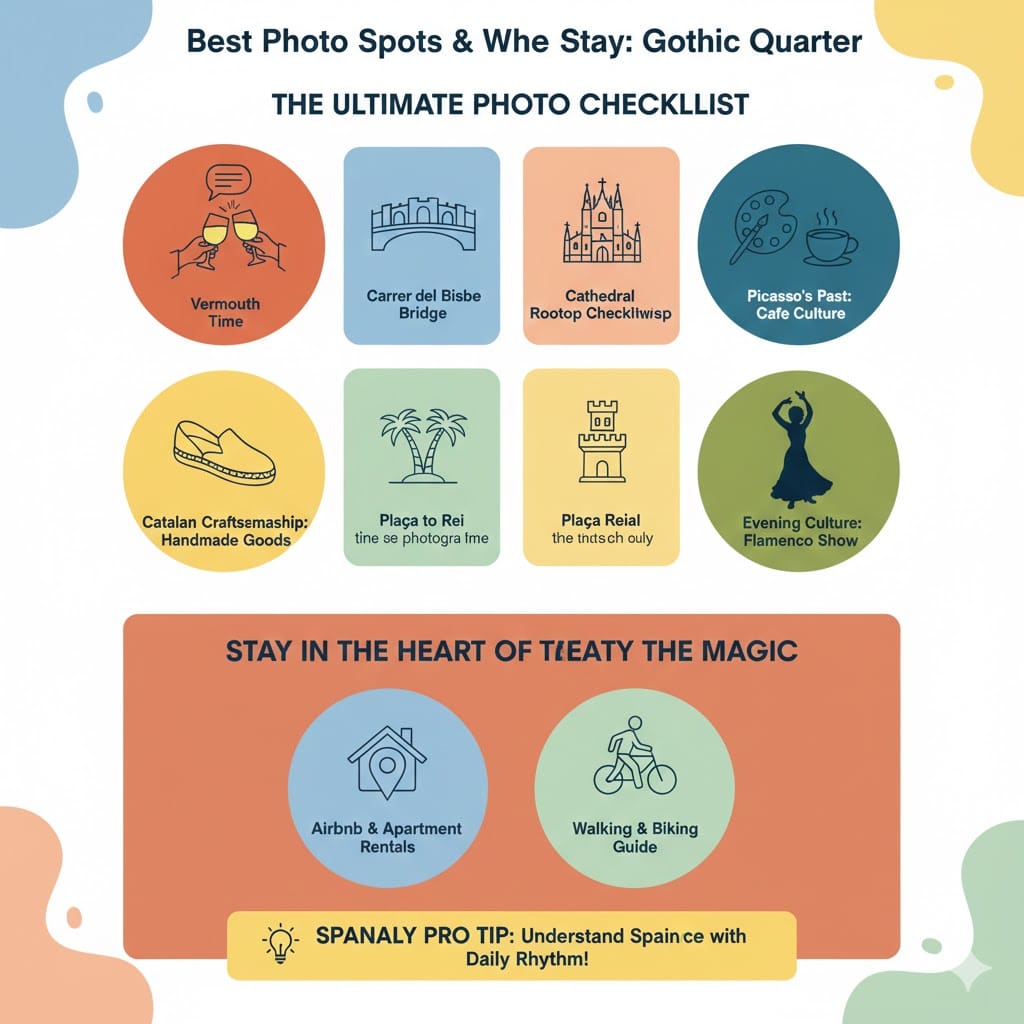
The Gothic Quarter is a visual playground. Every corner offers a perfect backdrop, from dramatic Gothic arches to sun-drenched plazas. To capture the best shots without the crowds, timing is everything.
The Ultimate Photo Checklist:
🌉 Carrer del Bisbe Bridge: The most iconic Neo-Gothic bridge. Arrive at sunrise for a clean, mystical shot.
⛪ Cathedral Rooftop: Offers sweeping city panoramas. It is the best spot for golden hour photography.
🏰 Plaça del Rei: A historic square where the past feels frozen in stone. Ideal for architectural photography.
🌴 Plaça Reial: Famous for its palm trees and elegant yellow buildings. Stunning during the blue hour.
Stay in the Heart of the Magic: Capturing these spots at dawn is much easier if you are staying nearby. The Quarter offers everything from historic boutique hotels to modern rentals. If you are planning your stay, explore our guide to the Best Airbnb & Apartment Rentals in Barcelona to find a balcony overlooking these historic streets.
For those who prefer to explore every corner by foot or on two wheels, our Barcelona Walking and Biking Guide will show you the best routes between these photo-worthy locations.
🎭 Cultural Significance & Traditions
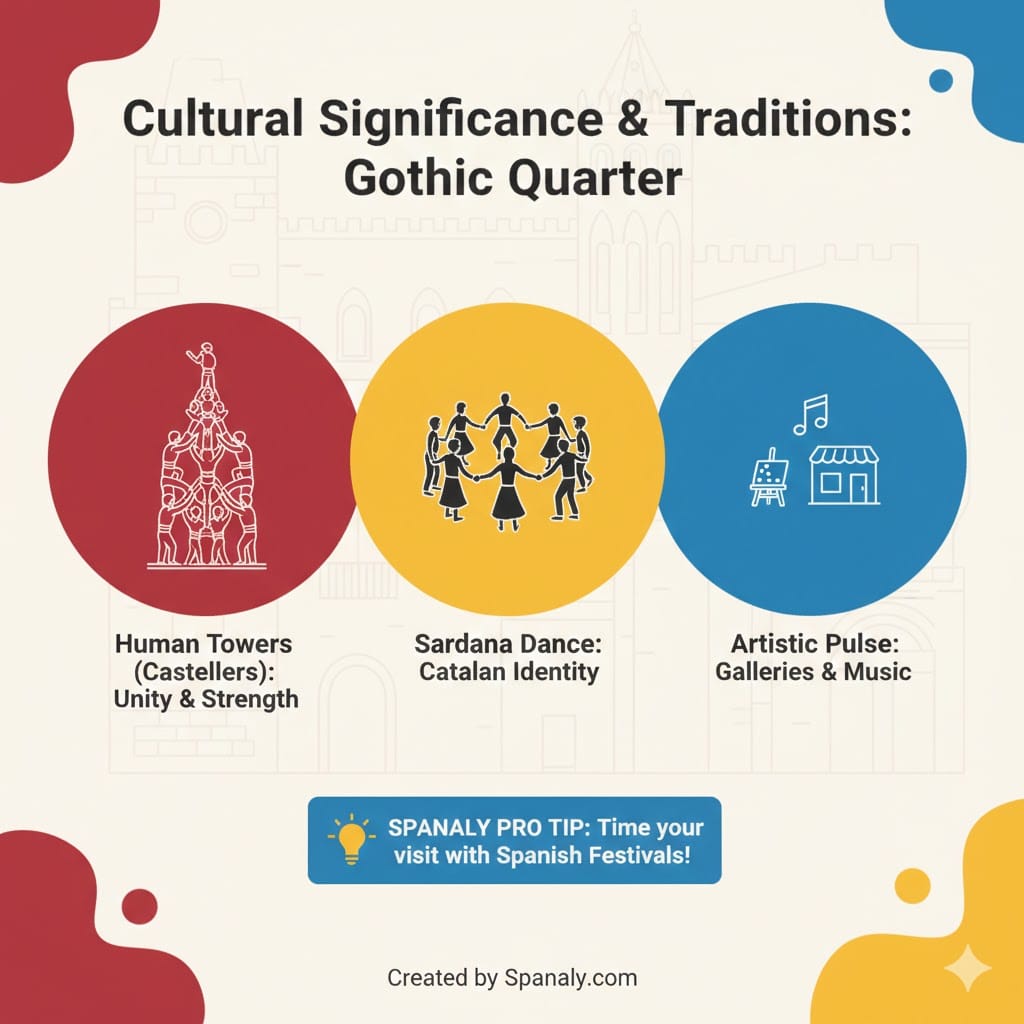
The Gothic Quarter is where Catalonia’s soul was shaped. Beyond its Roman temples and royal palaces, this district preserves the living legacy of Barcelona’s civic pride. Its narrow alleys are lined with legends of saints and kings, yet today the area feels vibrant and creative.
The Heart of Catalan Traditions:
🏰 Human Towers (Castellers): Plaça Sant Jaume often hosts these breathtaking displays of strength and unity.
🎶 Sardana Dance: Watch locals gather in front of the Cathedral to perform this traditional circle dance—a true symbol of Catalan identity.
🎨 Artistic Pulse: The area is filled with contemporary galleries and street musicians that celebrate the city’s modern creative spirit.
To fully immerse yourself in these local traditions, it is helpful to know when they happen. From the giant parades of La Mercè to smaller neighborhood feasts, checking our guide to Spanish Festivals will help you time your visit with these unforgettable cultural events.
🛡️ Security Note: Navigate the Crowds Safely
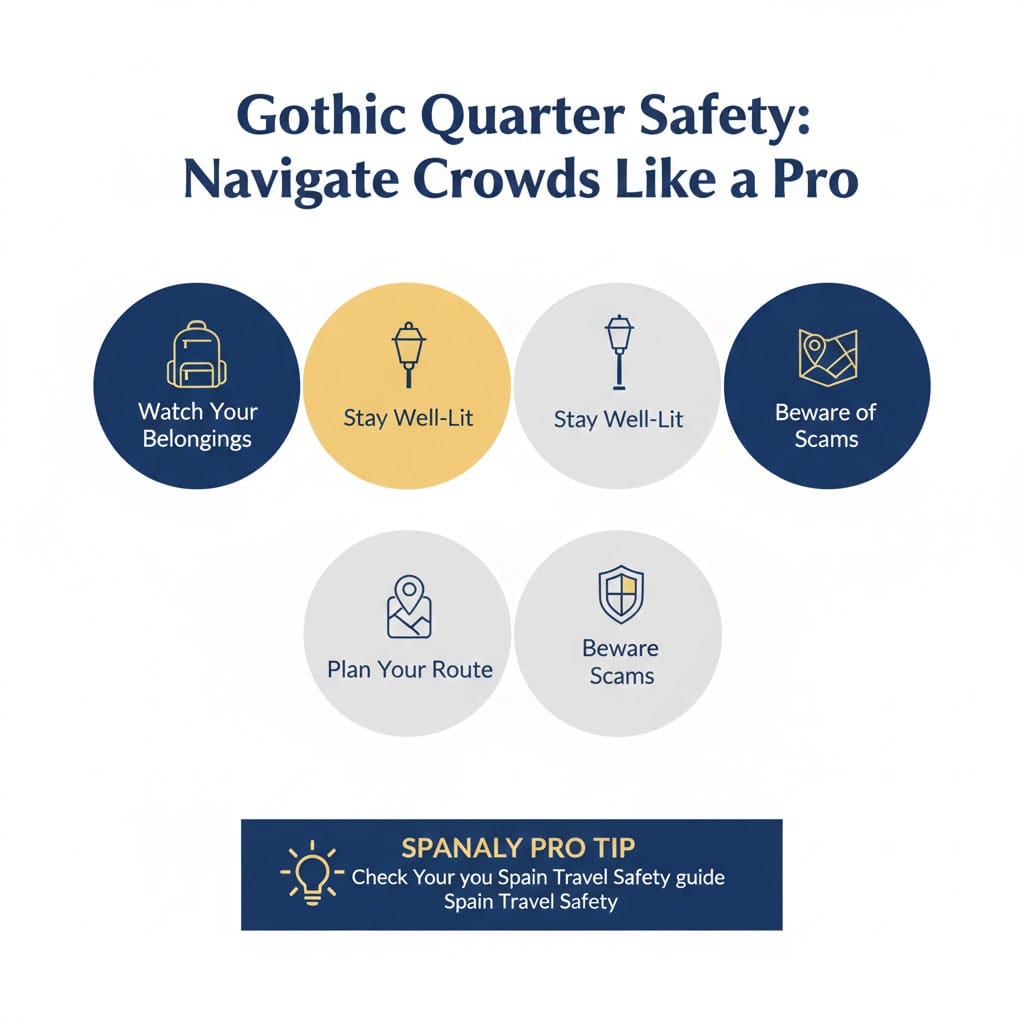
The Gothic Quarter is one of Barcelona’s most popular areas. While it is generally safe, the narrow streets and large crowds can attract pickpockets. To ensure a worry-free visit, staying alert and prepared is key.
How to Stay Safe in the Barri Gòtic:
🎒 Watch Your Belongings: Keep your bags in front of you and avoid leaving phones or wallets on café tables.
🚶 Stick to Well-Lit Areas: At night, the main streets are lively and safe. It is best to avoid poorly lit, deserted alleys after dark.
📱 Plan Your Route: Know your path ahead of time to avoid looking lost in the maze of narrow streets.
⚠️ Be Aware of Scams: Be cautious of overly persistent street vendors or strangers approaching you with distractions.
Barcelona is a beautiful city, and with a little common sense, you can focus entirely on its magic. For a deeper dive into protecting yourself and your valuables across the country, read our comprehensive guide on Spain Travel Safety 2026: Avoid Scams & Stay Safe.
💰 Budget Tips: Explore the Quarter Without Breaking the Bank
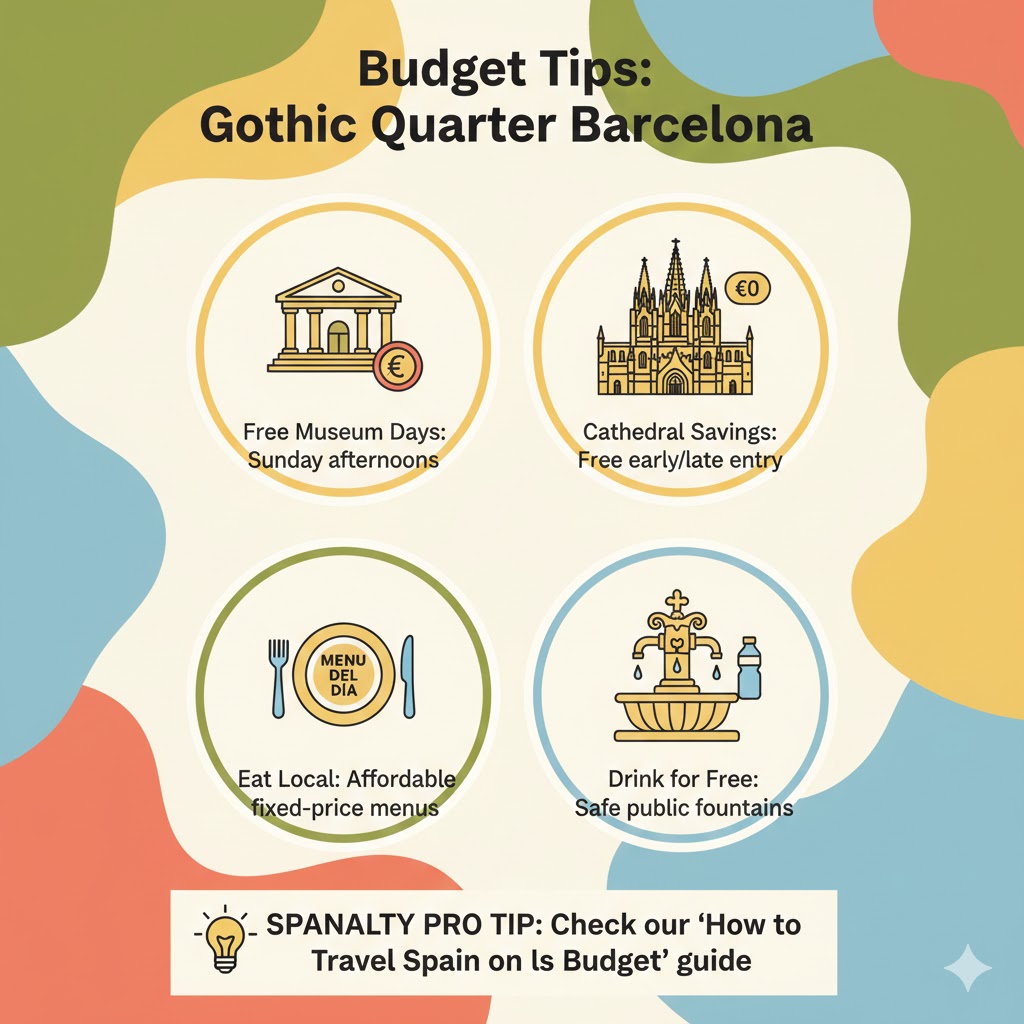
The Gothic Quarter may be the heart of tourism, but it doesn’t have to drain your wallet. With a few local insider secrets, you can enjoy the majestic atmosphere of the Barri Gòtic while keeping your budget intact.
Smart Saving Strategies:
🏛️ Free Museum Days: Many historic sites, including the MUHBA (Museum of the History of Barcelona), offer free entry on Sunday afternoons (usually after 3:00 PM) and all day on the first Sunday of every month.
⛪ Cathedral Savings: While there is a fee to visit the choir and rooftop during tourist hours, entry to the main floor of the Barcelona Cathedral is often free for prayer and worship during specific early morning or late evening slots.
🍽️ The “Menu del Día” Rule: Avoid eating directly on Plaça Reial or Carrer de Ferran where prices are inflated. Instead, duck into the smaller side streets to find a “Menu del Día” (Menu of the Day), offering three courses and a drink for a fixed, affordable price.
🚰 Drink for Free: Keep your water bottle! The quarter is dotted with historic, beautiful stone fountains (like the Font de Canaletes) where the water is fresh, cold, and perfectly safe to drink.
Navigating prices in a major European city can be tricky if you aren’t prepared. To master the art of the affordable getaway, check out our ultimate guide on How to Travel Spain on a Budget for more tips on saving on food, transport, and attractions.
🏰 Visitor FAQs – Exploring Barcelona’s Gothic Quarter
🕒 When is the best time to visit the Gothic Quarter to avoid crowds?
The best time is early morning (between 8:00 AM and 10:00 AM). You can enjoy the narrow streets in peace and get the perfect shot of Pont del Bisbe without the crowds. Late evenings are also magical, as the Gothic lanterns create a mysterious and romantic atmosphere.
🗺️ Is it easy to get lost in the Barri Gòtic?
Yes, and that is part of the charm! The Quarter is a medieval maze of narrow, winding streets. While Google Maps works, we recommend putting your phone away for a while and just wandering. You’ll likely stumble upon hidden plazas like Plaça de Sant Felip Neri that you might otherwise miss.
⛪ Do I need to pay to enter the Barcelona Cathedral?
Entrance for worship and prayer is free, but there is a fee (around €9) for a cultural visit, which includes access to the choir, the museum, and the rooftop terrace. The views from the roof are some of the best in the city and well worth the small cost.
🎒 How safe is the Gothic Quarter regarding pickpockets?
Like any historic center, it is safe but requires vigilance. Pickpockets often work in crowded areas like Plaça Sant Jaume. Keep your bag zipped and in front of you, and avoid leaving your phone on café tables while enjoying tapas.
🏺 Are there Roman ruins inside the Gothic Quarter?
Yes! You can see the remains of the Roman walls near the Cathedral. For a deeper dive, visit the MUHBA (Museum of History of Barcelona) in Plaça del Rei, where you can walk through excavated Roman streets beneath the modern city level.
🗣️ Do I need to speak Spanish to get around the Gothic Quarter?
While English is widely understood in tourist areas, locals truly appreciate a "Hola" or "Gracias." Learning a few basics will enrich your interactions in traditional bodegas. Check out our Essential Spanish Language Tips to feel more confident during your visit.
Barcelona Heritage Guide by Spanaly.com
✨ Your Barcelona Adventure Starts Here
The Gothic Quarter is the true soul of Barcelona. It is a place where every stone tells a story. From Roman walls to Gothic spires, the history here is alive. You will find magic in every hidden alley.
Final Thoughts for Your Visit:
Explore with curiosity. The “maze” is meant to be enjoyed slowly.
Respect the rhythm. Local traditions are what make this area unique.
Capture the memories. The beauty of the Barri Gòtic is timeless.
Barcelona is waiting for you. Planning your trip is the first step toward an unforgettable experience. To make your journey even smoother, check out our Ultimate Barcelona Travel Planning Guide for expert tips and local secrets.