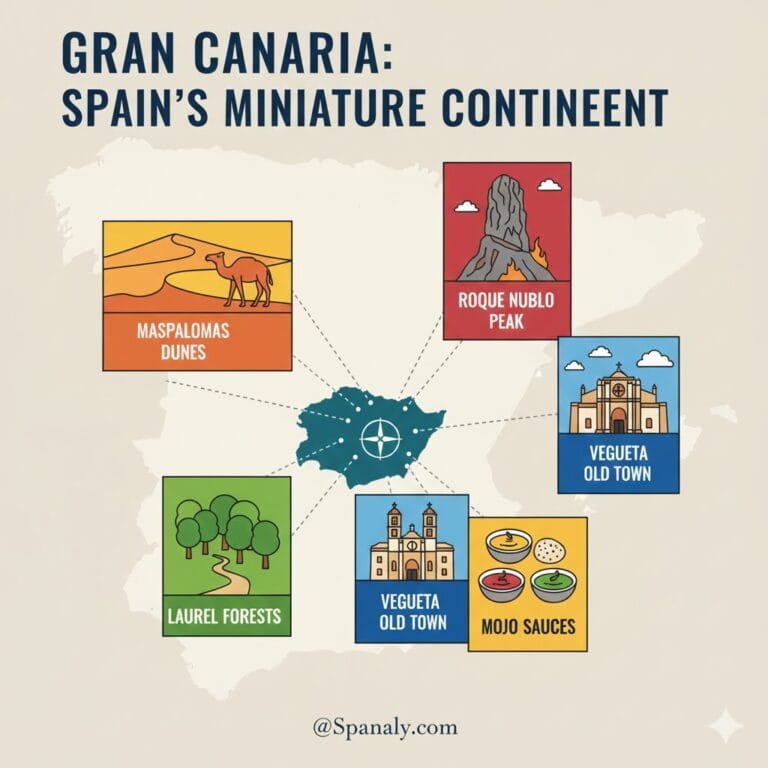

Gran Canaria, the heart of the Canary Islands, is famously known as a “miniature continent.” Within a single day, you can traverse Saharan-like sand dunes, misty volcanic peaks, and lush laurel forests. If you have already explored the mainland using our Ultimate Madrid Travel Guide or the Ultimate Barcelona Travel Guide, you will find that Gran Canaria offers a completely different, exotic side of Spain that blends Atlantic freshness with volcanic energy.
Official Gran Canaria Tourism Website
💡 Quick Tip: To witness the most iconic view on the island, start your journey at dawn at the Maspalomas Dunes—the sunrise over the golden sand is a bucket-list experience.
Table of Contents
Toggle🧭 Map
🌊 Nature Wonders: From Dunes to Volcanic Peaks
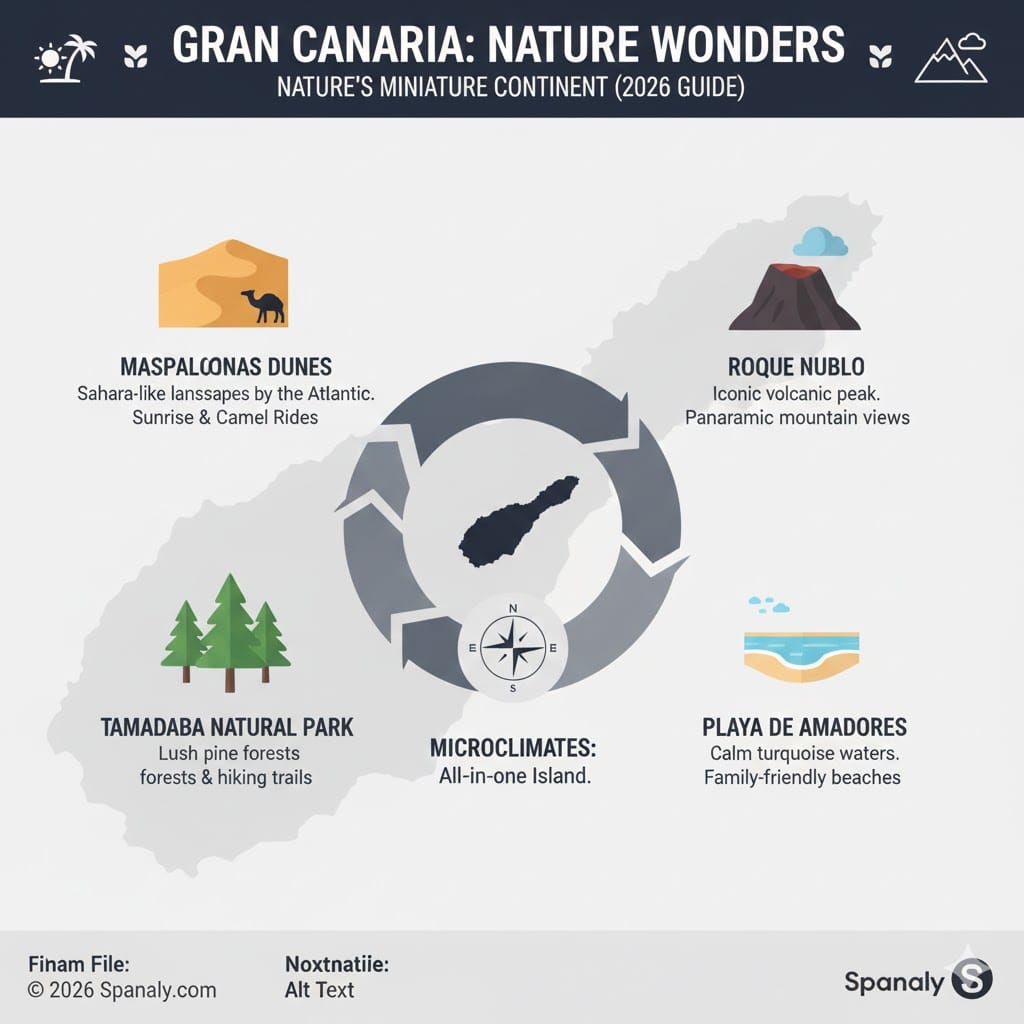
The island’s landscape is a masterpiece of diversity, making it one of the most unique Spanish Attractions in the Atlantic. Unlike the Mediterranean coasts, Gran Canaria offers a dramatic contrast between its golden south and its rugged, green heart.
🏜️ Maspalomas Dunes: A protected nature reserve where 400 hectares of desert sands meet the blue ocean. It’s perfect for camel rides or a meditative walk through the rolling dunes.
🌋 Roque Nublo & Pico de las Nieves: Rising to 1,813 meters, Roque Nublo is an iconic volcanic monolith. Standing at the nearby Pico de las Nieves, the island’s highest point, allows you to look down upon a “sea of clouds” that often covers the central valleys.
🏝️ Hidden Coves & Beaches: From the family-friendly turquoise waters of Playa de Amadores to the wild, untouched cliffs of Guayedra, the coastline caters to every type of traveler.
🏛️ Culture, History & The Soul of the Island
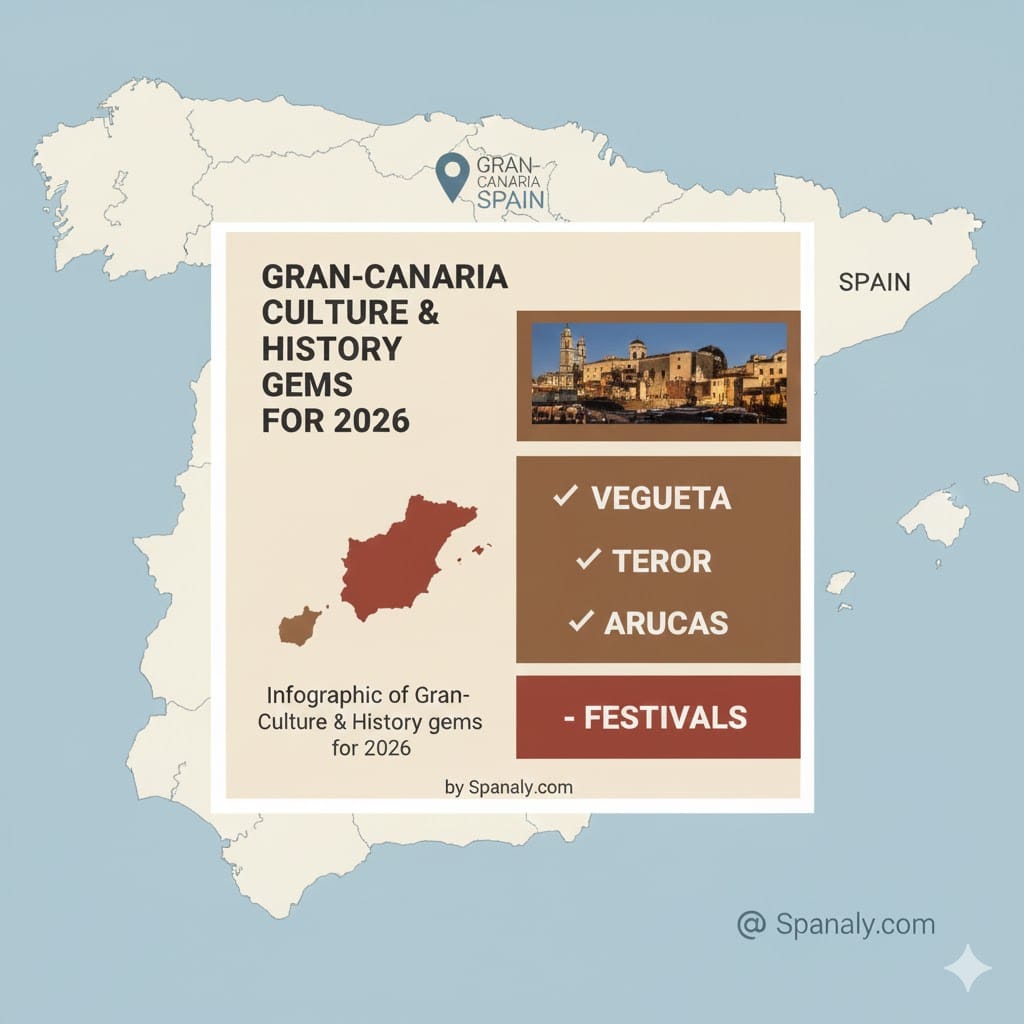
Beyond its natural beauty, Gran Canaria hides a rich colonial history that served as a bridge between Europe and the Americas. If you enjoyed the historic charm found in our Ultimate Seville Travel Guide, you will find a similar colonial echo in the island’s capital.
🏘️ Vegueta (The Old Quarter): The capital, Las Palmas, is home to Vegueta’s cobbled streets. Here, you can visit Casa de Colón, where Christopher Columbus stayed during his voyages, and the majestic Santa Ana Cathedral.
⛪ Traditional Towns (Teror & Arucas): Teror is famous for its 17th-century wooden balconies and religious heritage. In contrast, Arucas boasts the “Black Cathedral,” a Neo-Gothic masterpiece carved entirely from dark volcanic stone.
🎉 Traditions & Life: The island is a hub of celebration; check our guide to Spanish Festivals to understand the deep-rooted passion of the Canary Carnival, which rivals Rio de Janeiro in energy.
🍽️ Canarian Cuisine: A Journey of Volcanic Flavors
The food here is a distinct and essential branch of Spanish Cuisine. Shaped by the island’s unique microclimates and volcanic soil, every dish tells a story of survival and celebration.
🥔 Papas Arrugadas con Mojo: Small, salt-crusted potatoes served with the legendary Mojo Rojo (spicy) or Mojo Verde (herbal) sauces. No meal is complete without them.
🥣 Gofio: This ancient toasted grain flour is the soul of Canarian nutrition, used in soups, desserts, and even ice cream, linking modern meals back to the island’s indigenous Guanche ancestors.
🧀 Award-Winning Cheeses: Visit the highlands to try Flor de Guía, a unique cheese curdled with thistle flower, best paired with a local Malvasía volcanic wine.
🚀 What to Do and See: Endless Atlantic Adventures
Whether you are looking for adrenaline-pumping sports or serene moments in nature, Gran Canaria offers a diverse range of activities that go far beyond typical sunbathing:
🐬 Dolphin & Whale Watching: Set sail from Puerto Rico or Puerto de Mogán. These Atlantic waters are a permanent home to several species, offering you a high chance of spotting playful pods in their natural habitat year-round.
🥾 Epic Hiking Trails: Explore the island’s rugged interior through volcanic ridges and deep ravines. A visit to Tamadaba Natural Park or the climb to Roque Nublo is essential for anyone wanting to see the island’s wilder side.
🎉 Cultural Festivals: Immerse yourself in local traditions by joining the Carnaval de Las Palmas (one of the biggest in the world) or the summer fiestas patronales, where music, traditional costumes, and food fill the streets.
🏄 Adventure & Water Sports: The island is a playground for thrill-seekers. You can surf the waves at Playa del Inglés, explore the underwater volcanic reefs at El Cabrón Marine Reserve, or try paragliding near the cliffs of Agaete.
💡 Essential Visitor Tips for 2026

To help you navigate this ‘miniature continent’ with ease, we’ve put together these essential, practical tips—ensuring you choose the perfect base and the best way to explore Gran Canaria’s hidden gems in 2026:
🚗 Transportation: Renting a car is highly recommended. While buses (Global) are reliable for main routes, a car is the only way to navigate the breathtaking mountain roads like the GC-200 at your own pace and reach secluded spots.
🏨 Where to Stay: Choose the South (Maspalomas or Meloneras) for luxury resorts and guaranteed sunshine. Opt for the North (Las Palmas) if you prefer a vibrant, authentic urban vibe and excellent local dining experiences.
📅 Timing Your Visit: Gran Canaria is truly a year-round destination. However, May to October is prime for beach enthusiasts, while November to April offers the mildest temperatures, perfect for hiking the island’s extensive trail network.
🔹 Get ready for an unforgettable trip – discover Spain’s best cities.
🏝️ Visitor FAQs – Gran Canaria Travel Guide
🌍 Why is Gran Canaria called a "Miniature Continent"?
It earns this name due to its incredible microclimates and diverse landscapes. Within hours, you can travel from the Saharan-like Maspalomas Dunes to misty volcanic peaks (Roque Nublo) and lush pine forests in the center.
☀️ Where is the best place to stay: North or South?
The South (Maspalomas, Playa del Inglés) is sunnier and famous for resorts and beaches. The North (Las Palmas) offers a more authentic urban vibe, historic culture in Vegueta, and cooler, greener landscapes.
🚗 Do I need to rent a car in Gran Canaria?
Yes, renting a car is highly recommended to reach hidden gems like Tejeda or the central highlands. While buses (Global) are efficient between main towns, a car allows you to navigate the spectacular mountain roads at your own pace.
🥔 What is the most famous Canarian dish to try?
You cannot leave without trying Papas Arrugadas con Mojo (wrinkly salt-crusted potatoes with spicy sauce). Also, look for Chorizo de Teror and fresh local cheese paired with a glass of Canarian Malvasía wine.
🐋 Can you see dolphins and whales in Gran Canaria?
Yes! Boat tours depart daily from Puerto Rico and Puerto de Mogán. The Atlantic waters around the island are home to various species of dolphins and whales, making it one of the best spots in Europe for year-round sightings.
Created by Spanaly.com
Gran Canaria is truly a “miniature continent” that captures the wild spirit of the Atlantic and the warm soul of Spain. From its golden Saharan dunes to its prehistoric volcanic peaks, the island offers a diversity that few places on earth can match. Whether you come for the serene landscapes or to immerse yourself in vibrant Spanish Festivals like the world-famous Canary Carnival, this island promises an unforgettable journey.
It is the perfect destination for those who seek adventure, history, and authentic flavors all in one place. Gran Canaria doesn’t just offer a holiday; it offers a world of discovery that will leave you planning your return before you even leave its shores.