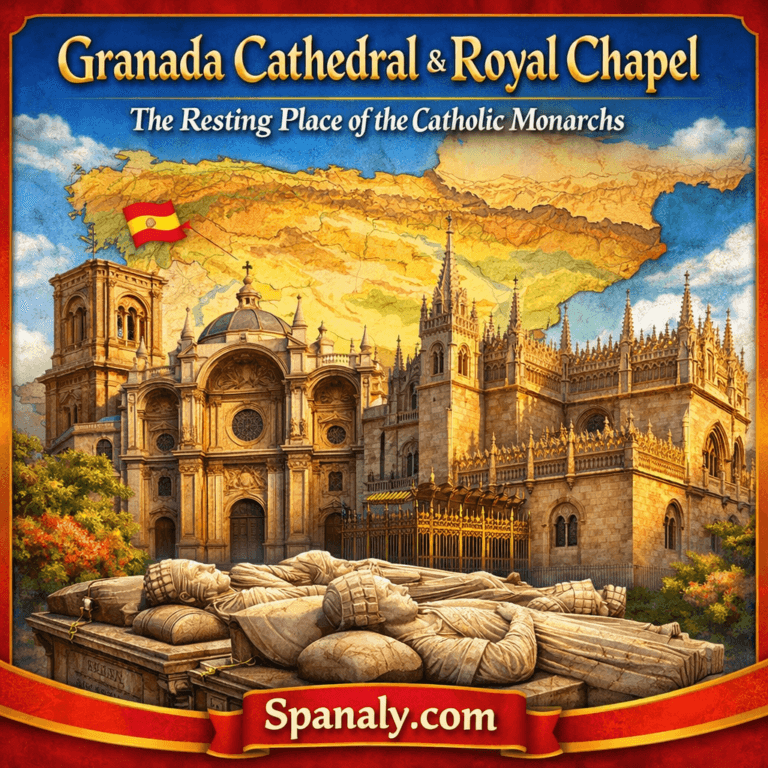

🏛️ Standing at the spiritual heart of the city, Granada Cathedral and the Royal Chapel (Capilla Real) form one of Spain’s most historically powerful ensembles. More than just religious monuments, they symbolize the definitive turning point of Spanish History after the Reconquista and preserve the eternal legacy of the Catholic Monarchs who unified the nation.
While the Alhambra showcases the city’s Islamic splendor, this site tells the story of what came next—a new era of Renaissance grandeur and imperial ambition. This guide explores their breathtaking architecture, the sacred royal tombs, and essential tips for a journey through the soul of Granada.
Table of Contents
Toggle🎨 Alonso Cano’s Legacy & The Sacred Squares
To truly appreciate the Granada Cathedral, one must understand the genius of Alonso Cano, often referred to as the “Michelangelo of Spain.” As a painter, sculptor, and architect, Cano’s vision gave the cathedral its soul, particularly its magnificent triple-arched facade.
A Master’s Touch: Cano is buried within the cathedral he helped perfect. His influence extends to the delicate carvings and the overall sense of light that defines the interior. For those exploring the artistic heritage of Andalusia, this is as significant as the monuments found in our Spanish Attractions guide.
Plaza de las Pasiegas: This stunning square facing the cathedral’s main entrance serves as an open-air theater of Baroque beauty. It is the perfect spot to sit and admire Cano’s work while soaking in the local atmosphere.
The Lead Books Connection: The cathedral’s history is also tied to the mysterious “Lead Books of Sacromonte” discovered in the late 16th century, which attempted to link early Christianity with Islamic Granada—a story that still fascinates historians today.
Whether you are coming from the bustling streets described in our Ultimate Madrid Travel Guide or the artistic corners of Seville, this part of Granada offers a unique spiritual and artistic harmony.
📜 Historical Background: Faith, Power, and a New Spain
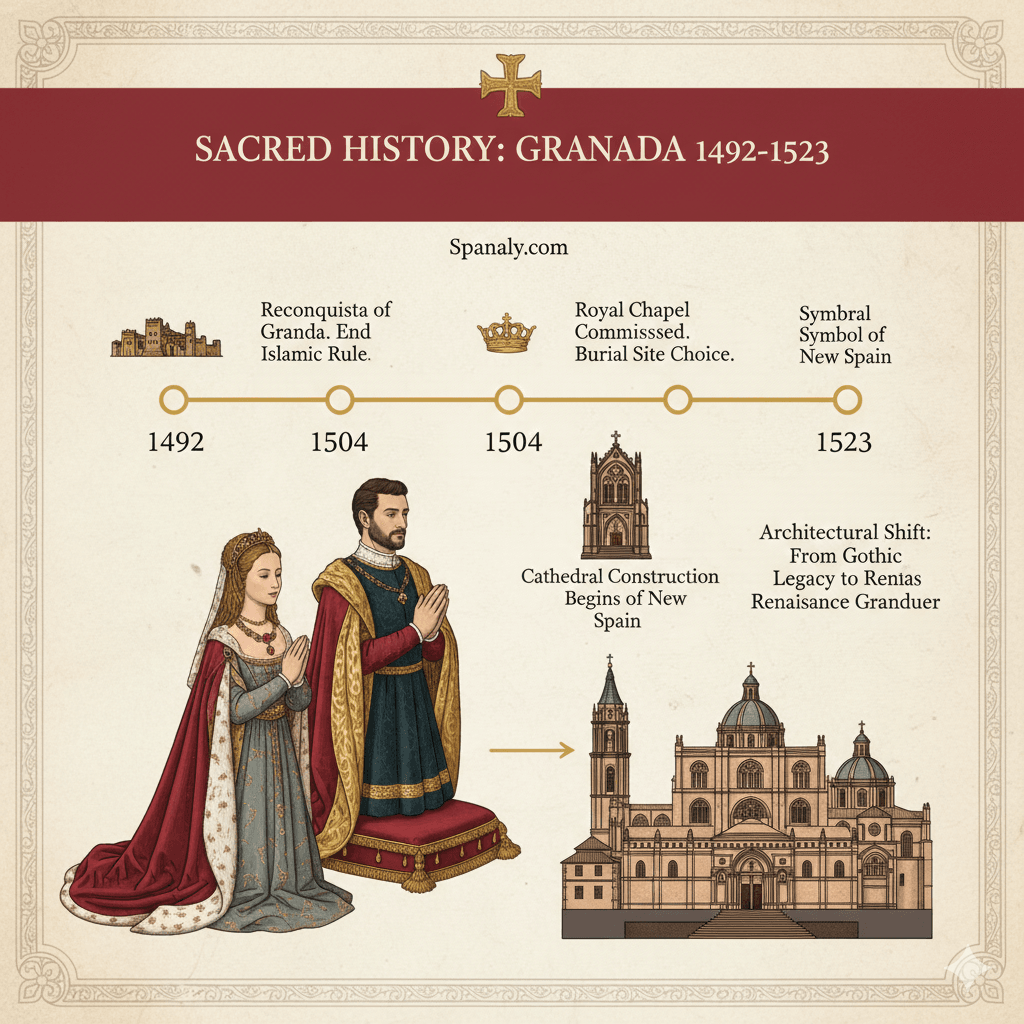
The story of these monuments is the story of the birth of modern Spain. After the fall of Granada in 1492, the Catholic Monarchs sought to transform the city into the spiritual and political anchor of their new empire.
The Royal Choice: In 1504, Isabella I of Castile and Ferdinand II of Aragon commissioned the Royal Chapel. They chose Granada as their final resting place over their traditional dynastic burial sites to solidify the city’s symbolic importance in the Spanish Cuisine and culture-rich landscape of the newly unified kingdom.
The Transformation: In 1523, construction began on the Granada Cathedral. It was built on the site of the former Great Mosque, a common practice during the Spanish Festivals of architectural reconversion, symbolizing the spiritual shift from Islam to Christianity.
A Shift in Style: While the Royal Chapel remains Gothic in spirit, the Cathedral was designed to be a “new light” of the Renaissance, marking Spain’s transition from the Middle Ages to the Imperial age.
🏛️ Granada Cathedral: Renaissance Grandeur in Andalusia
Unlike many of the dark, narrow Gothic cathedrals found elsewhere in Spain, the Granada Cathedral is a masterpiece of light and space. It stands as one of the finest examples of pure Renaissance design, inspired by Italian classical ideals but executed with Spanish passion.
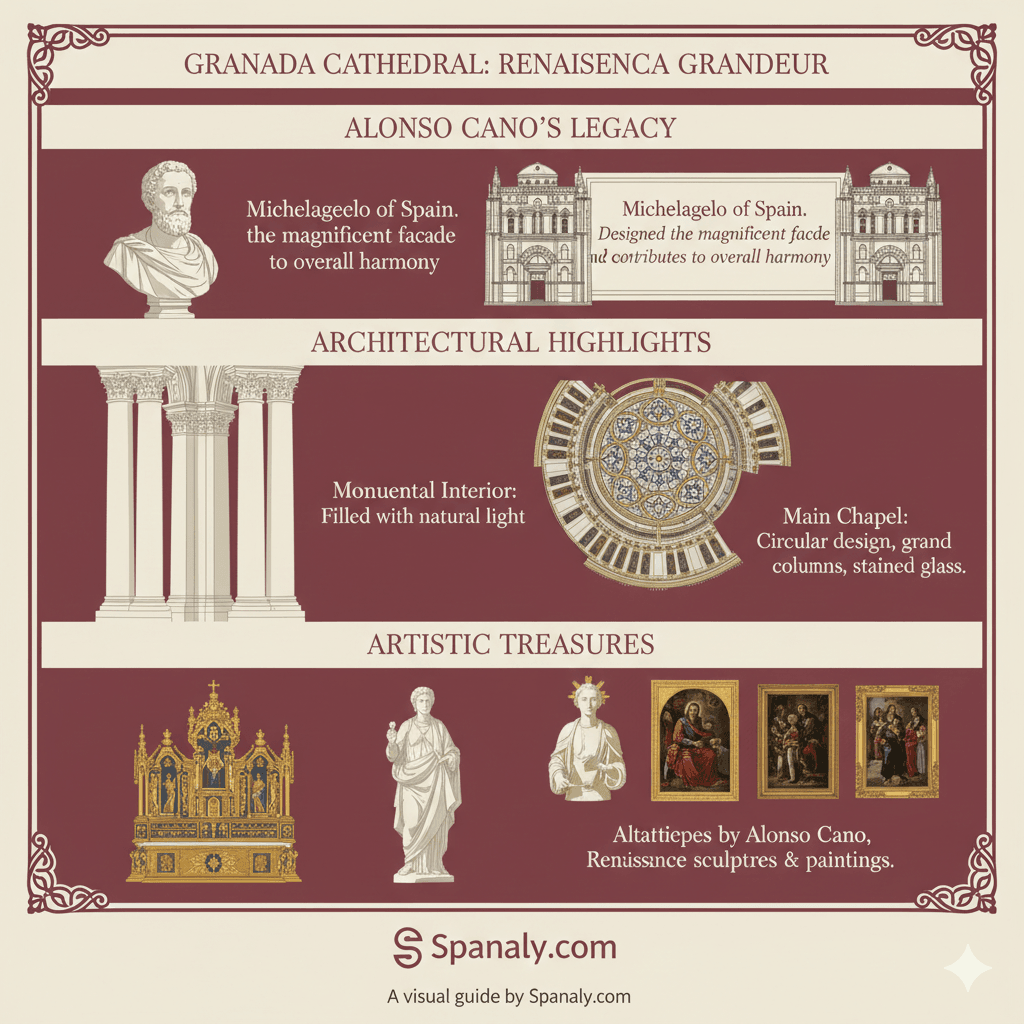
Alonso Cano’s Legacy: Often called the “Michelangelo of Spain,” Alonso Cano designed the magnificent main facade. His influence is everywhere, from the delicate sculptures to the overall sense of harmony that makes this one of the most beautiful Spanish Attractions in the south.
Architectural Highlights:
Monumental Interior: A soaring white stone interior filled with natural light, creating an atmosphere of divine peace.
The Main Chapel (Capilla Mayor): A circular masterpiece with massive columns and stained-glass windows that symbolize the glory of the heavens.
Artistic Treasures: The cathedral houses incredible altarpieces, Renaissance paintings, and sculptures that reflect the peak of Spanish religious art.
The cathedral isn’t just a building; it reflects the confidence and order of a new era. If you are exploring the north, you might notice the contrast with the styles found in our Ultimate Barcelona Travel Guide, highlighting Spain’s incredible regional diversity.
👑 Royal Chapel: The Eternal Rest of the Monarchs
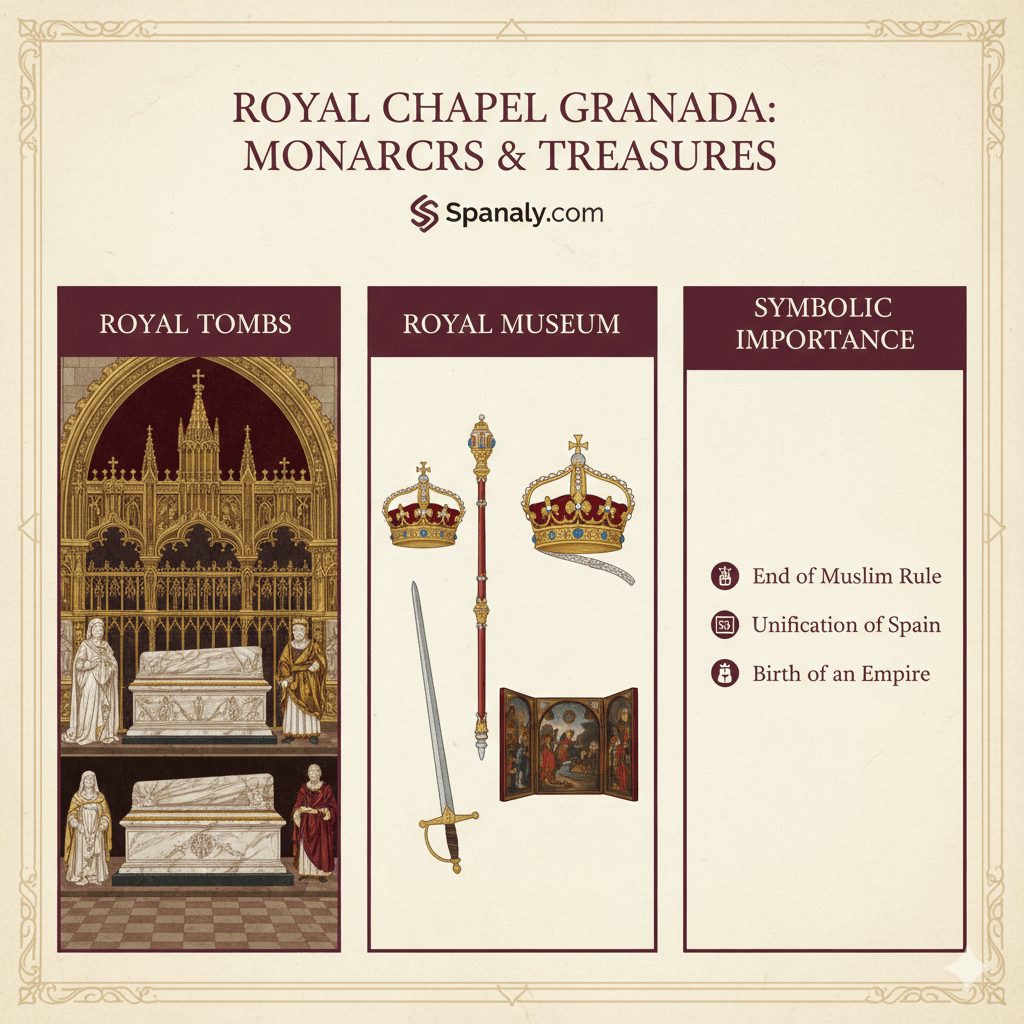
The Royal Chapel (Capilla Real) is a masterpiece of Isabelline Gothic style, standing as an intimate yet emotionally powerful sanctuary. While the Cathedral represents the grandeur of the church, the Chapel is a personal monument to the figures who forged the Spanish Empire.
The Royal Tombs: Beneath the stunning gilded iron screen (Reja), you will find the magnificent marble tombs of Isabella I of Castile and Ferdinand II of Aragon. Their effigies lie side by side, symbolizing the union of their kingdoms. Beside them rest their daughter, Joanna the Mad, and her husband, Philip the Handsome.
The Museum of Treasures: The sacristy houses one of Spain’s most important art collections. Here, you can see Queen Isabella’s personal crown and scepter, King Ferdinand’s sword, and a priceless collection of Flemish paintings that the Queen personally cherished.
A Symbolic Site: This is the place where the Middle Ages ended and the Modern Age began. For travelers following the trail of Spanish history, this site is as essential as the landmarks found in our Ultimate Seville Travel Guide.
⛲ The Surrounding Squares: The Soul of the City
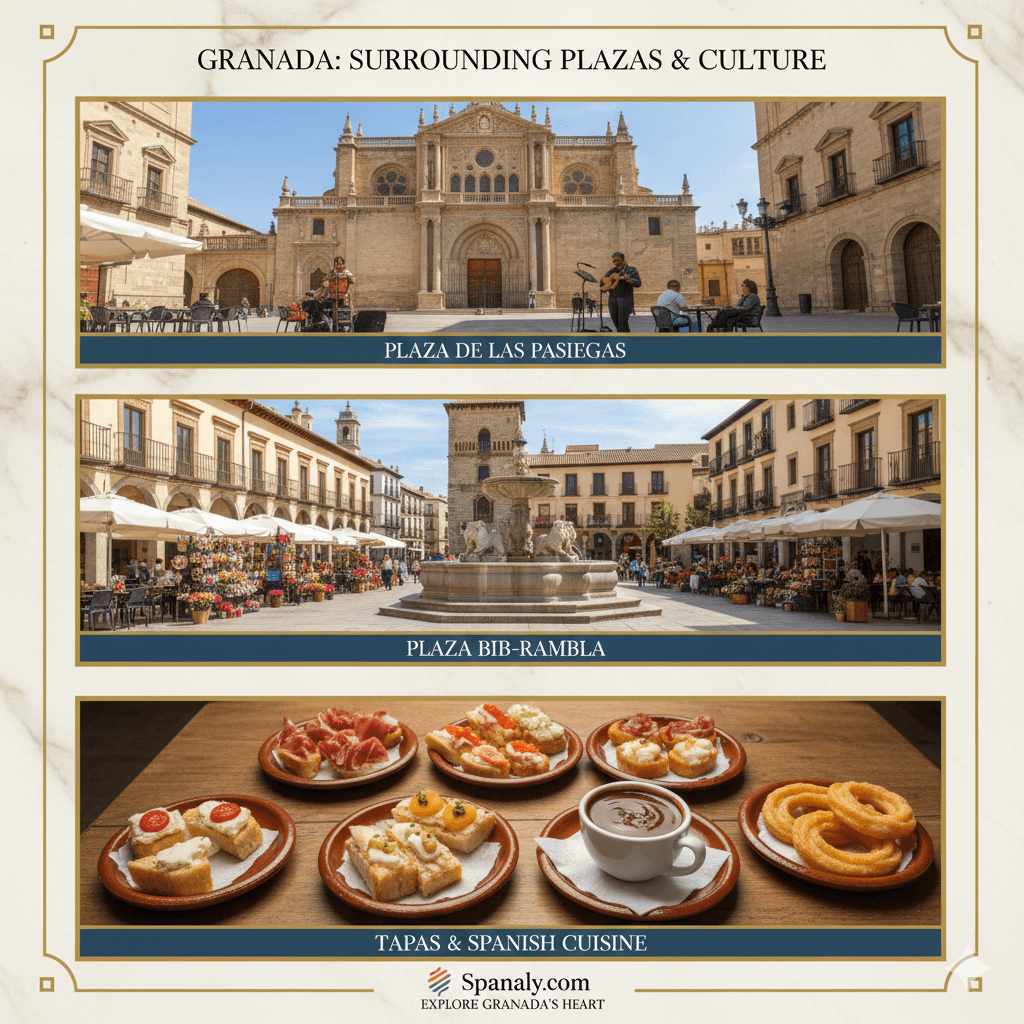
The experience of the Granada Cathedral doesn’t end at its doors; it spills out into the sun-drenched squares that surround it. These plazas are the social heart of the city, where history meets the vibrant daily life of Andalusia.
Plaza de las Pasiegas: Located directly in front of the cathedral’s main facade, this square offers the most dramatic view of Alonso Cano’s masterpiece. It is a favorite spot for street musicians, creating a magical acoustic backdrop for your visit.
Plaza de Bib-Rambla: Just a few steps away, this historic square—once the site of medieval tournaments—is now lined with cafes and flower stalls. It is the perfect place to dive into Spanish Cuisine, where you can enjoy traditional “Churros con Chocolate” or the famous Granada tapas.
The Alcaicería: Adjacent to the squares, this former silk market allows you to wander through narrow, exotic alleys that feel like a journey back to the city’s Moorish past.
Taking a moment to sit in these squares allows you to process the grandeur of the monuments while feeling the true pulse of Granada. This blend of social life and history is a highlight of Spanish Festivals and daily culture.
🌟 Cultural and Symbolic Importance: The Birth of an Empire
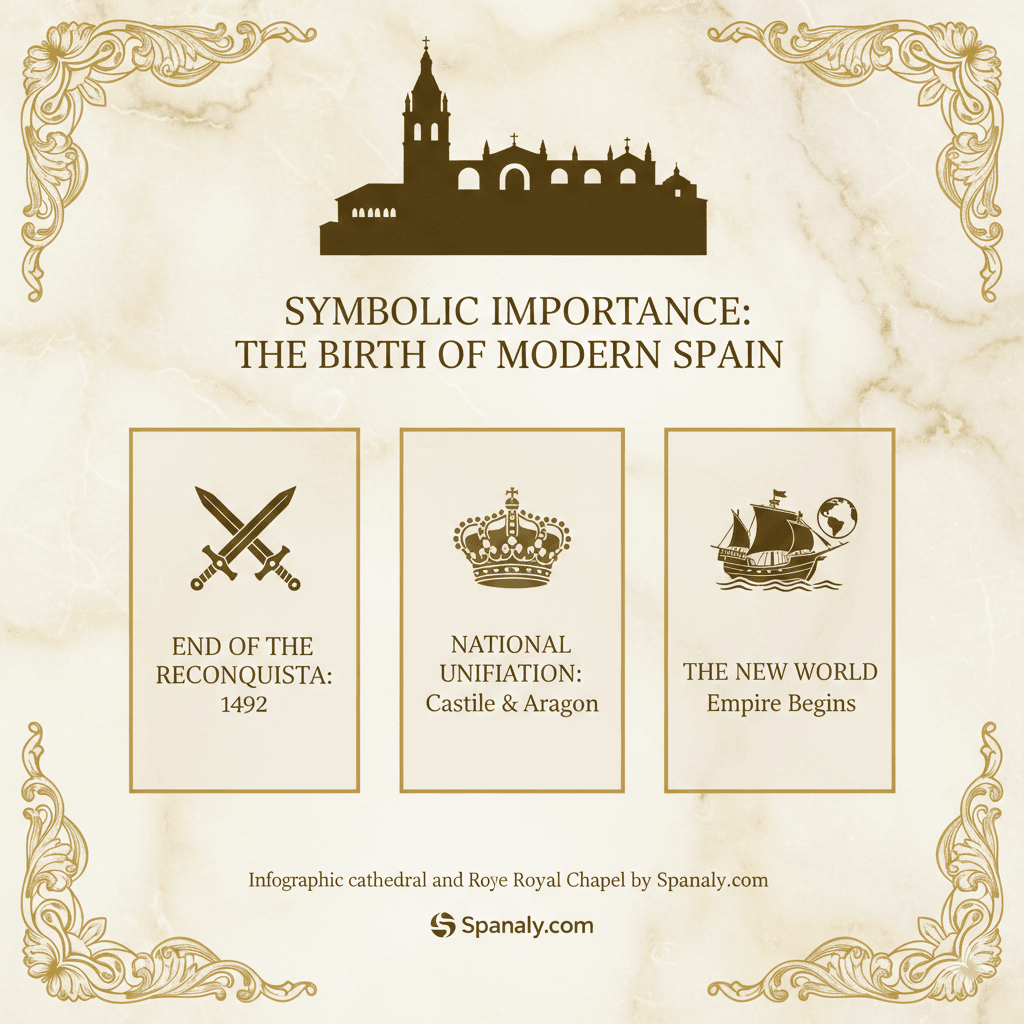
The Granada Cathedral and the Royal Chapel are more than just architectural feats; they are the physical manifestation of Spain’s transformation. Visiting these sites provides a deep understanding of Spanish Identity and its global historical footprint.
The End of an Era: Their construction marked the official end of nearly 800 years of Muslim rule in the Iberian Peninsula, closing the chapter of the Reconquista.
National Unification: The tombs of Isabella and Ferdinand represent the political marriage of Castile and Aragon, the foundation upon which the modern Spanish state was built.
Global Legacy: It was here, in Granada, where the monarchs made the pivotal decisions that led to the discovery of the New World, forever linking the city to the beginning of the Spanish Empire.
If you are planning a broader trip to see how this history unfolded across the country, don’t miss our Ultimate Madrid Travel Guide to see the evolution of royal power in the capital.
📜 The Lead Books: A Mystery Within the Walls
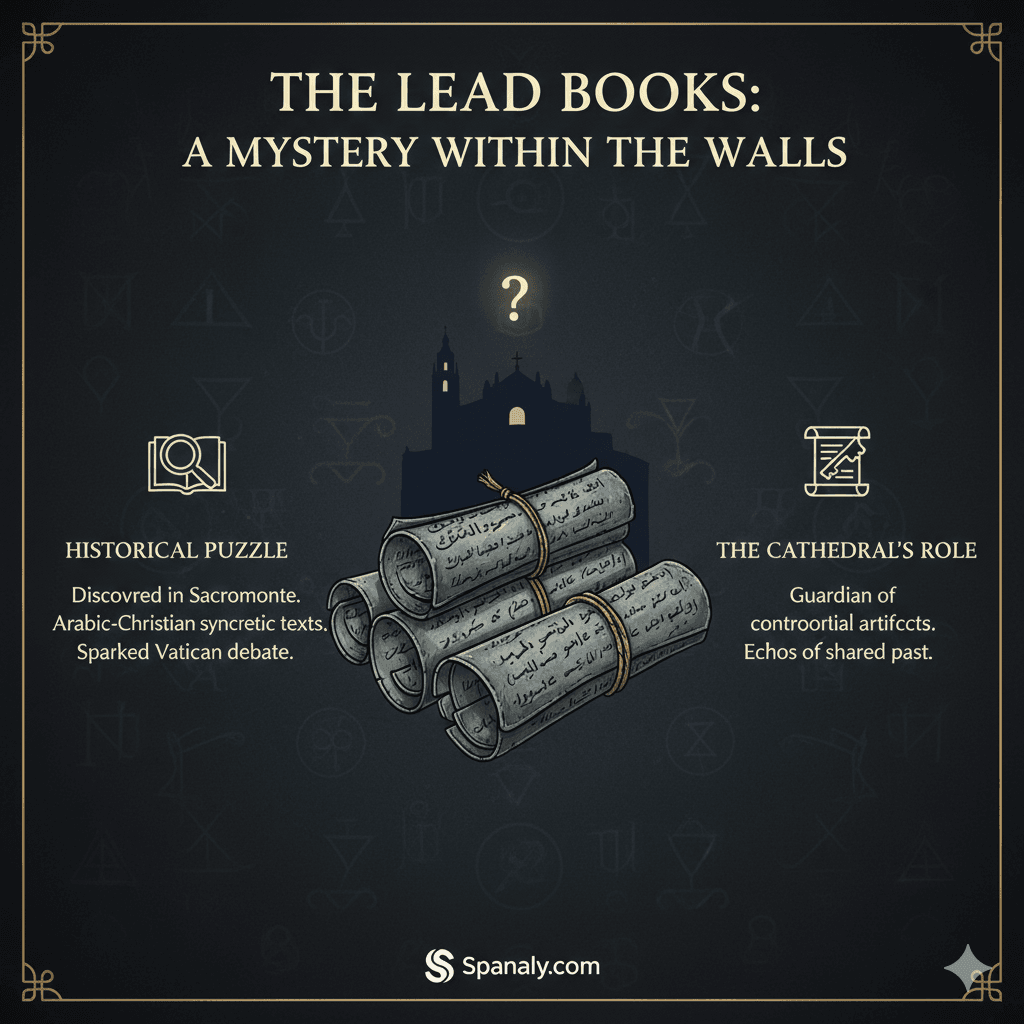
One of the most intriguing chapters in the history of the Granada Cathedral is its connection to the Lead Books of Sacromonte (Libros Plúmbeos). These mysterious relics, discovered in the late 16th century, left a lasting mark on the city’s spiritual identity.
A Historical Puzzle: These lead plates, inscribed in Arabic but telling Christian stories, were once thought to be the work of early Arab Christians in Granada. They sparked a massive theological debate that eventually reached the Vatican.
The Cathedral’s Role: For a long time, the Cathedral was the primary guardian of these controversial artifacts. Today, while the originals are kept elsewhere, the symbols and stories they inspired still echo in the cathedral’s history.
Beyond the Cathedral: This mystery bridges the gap between the city’s Islamic past and its Christian present. If you are captivated by such historical layers, exploring this site is as essential as following our Ultimate Seville Travel Guide to see how different cultures shaped Spain’s soul.
Understanding this connection adds a layer of depth to your visit, making the cathedral not just a monument of stone, but a guardian of secrets.
📅 Visitor Guide: Planning Your Visit to Granada’s Landmarks
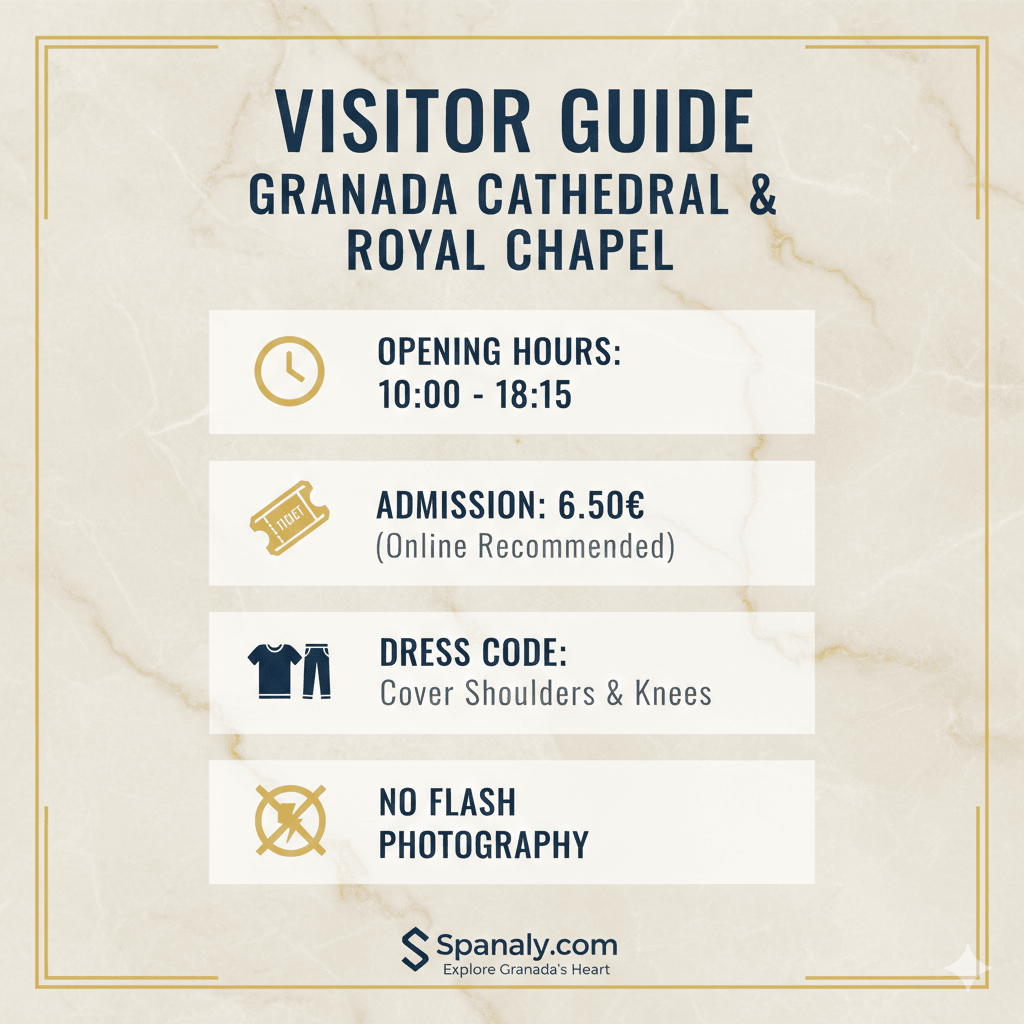
To ensure you make the most of your visit to the Granada Cathedral and the Royal Chapel, practical planning is key. These monuments are located in the heart of the city, and timing can make all the difference.
Opening Hours: Generally, the Cathedral and Royal Chapel are open Monday to Saturday from 10:00 to 18:15, and Sundays from 15:00 to 18:15. Always check for local holidays, as Spanish Festivals often lead to special ceremonies or temporary closures.
Ticket Information: It is highly recommended to buy your tickets online in advance to skip the long queues, especially during peak season. You can purchase combined tickets for both sites.
Dress Code: Remember that these are active religious sites. Modest dress is required (shoulders and knees should be covered) to show respect for the sanctity of the buildings.
Audio Guides: Both sites offer excellent audio guides in multiple languages (including English), which are essential for understanding the intricate details of the artwork and the royal tombs.
By following these tips, you will have a seamless experience as you explore one of the most significant Spanish Attractions in the world.
📅 Best Time to Visit

To fully experience the majesty of the Granada Cathedral and the Royal Chapel without the stress of large crowds, timing is everything:
Spring & Autumn: These are the golden seasons for Granada. The weather is ideal for walking between the monuments, and you avoid the intense summer heat of Andalusia.
Morning Hours: We recommend arriving right at opening time (10:00 AM). The morning light filtering through the stained glass is breathtaking, and the atmosphere is much quieter before the tour groups arrive.
Festivals & Holidays: Keep in mind that during Spanish Festivals, such as Holy Week (Semana Santa), the areas around the cathedral become the center of celebrations, which is beautiful but very crowded.
🏛️ Why This Site Matters Today: A Bridge Between Eras
While the Alhambra tells the majestic story of Islamic Granada, the Cathedral and Royal Chapel represent the definitive transition of Spain into a unified world power. Understanding this site is key to understanding the soul of modern Spain.
A Complete Narrative: Visiting these monuments offers a complete story of the city’s layered past—Muslim, Christian, royal, and modern. You aren’t just visiting a church; you are standing at the crossroads of two eras.
Cultural Significance: This site is not just an architectural feat; it is one of the most culturally significant Spanish Attractions you will ever visit. It symbolizes the end of the Reconquista and the beginning of the Spanish Golden Age.
The Living Legacy: Today, the cathedral remains a vibrant part of the city, anchoring the historic center and reminding every visitor of the complex, beautiful history that shaped Andalusia.
🗺️ Visitor FAQs – Granada Cathedral & Royal Chapel 2026
🎫 How do I buy tickets and what is the cost?
Tickets cost €6.50 for each monument (Cathedral and Royal Chapel are separate). You can buy them at the entrance, but booking online via the official website is highly recommended to avoid long queues. If you plan to visit multiple Spanish Attractions, consider the Granada Card for better value.
👗 Is there a strict dress code for entry?
Yes, modest attire is required. As these are active religious and historical sites, your shoulders and knees must be covered. Hats should be removed inside. This respect for tradition is common across most major Spanish Festivals and religious landmarks.
📸 Are photography and filming allowed inside?
Photography without flash is permitted inside the Granada Cathedral. However, photography is strictly prohibited inside the Royal Chapel to protect the delicate artworks and maintain the solemnity of the Royal Tombs.
⌛ How much time should I spend at both sites?
We recommend allocating at least 90 minutes for the Cathedral and 60 minutes for the Royal Chapel. If you are a fan of Spanish Cuisine, plan your visit so you can enjoy tapas in the nearby Plaza Bib-Rambla immediately after your tour.
🚶 Is the site accessible for visitors with reduced mobility?
Yes, both monuments are largely accessible. The Cathedral has ramp access at the main entrance, and the Royal Chapel is ground-level. While the city center has cobblestones, the interiors are well-maintained for wheelchairs, similar to the standards in our Ultimate Barcelona Travel Guide.
Expert Travel Insights by Spanaly.com
🏛️ The Echoes of Spanish History
Visiting the Granada Cathedral and the Royal Chapel is more than just a sightseeing stop; it is a profound journey through the soul of Spain. Standing before the tombs of the Catholic Monarchs and looking up at the monumental Renaissance arches of the cathedral allows you to witness the moment Granada transformed from a Moorish stronghold into a Christian powerhouse.
Whether you are here to admire the artistic genius of Alonso Cano or to seek the quiet mystery of the Lead Books, these monuments offer a unique window into the past. As you step back out into the sun-drenched plazas of Granada, you carry with you the echoes of centuries of history—a story that continues to shape every corner of this magical city.
Ready to explore more of Andalusia? Don’t forget to check our Ultimate Seville Travel Guide or dive deeper into the local culture with our guide to Spanish Festivals.