
Table of Contents
Toggle🌐 Staying Connected: Spain 2026 Guide
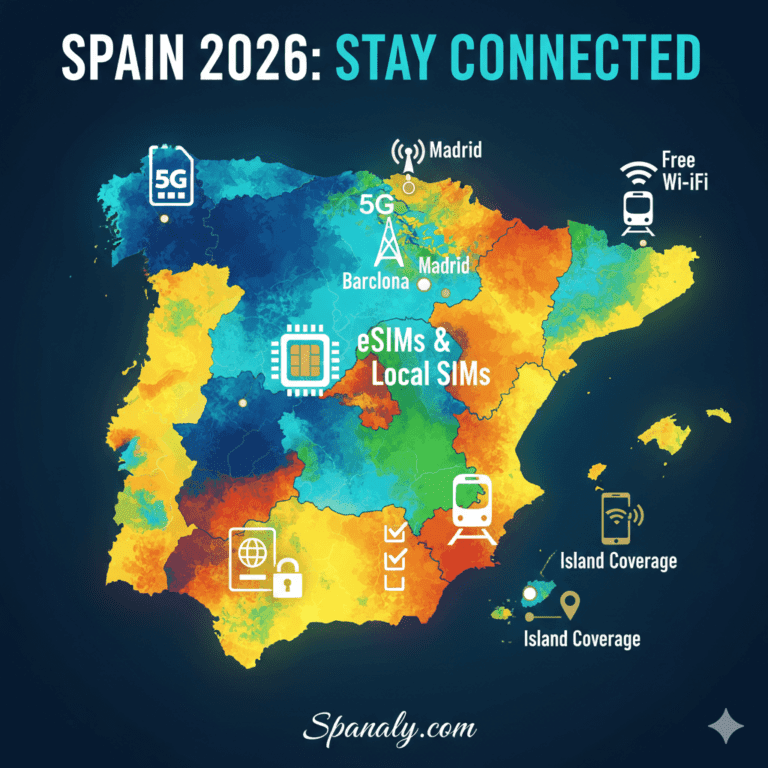
Staying online while traveling in Spain is no longer a luxury—it’s a necessity. Whether you are navigating Madrid’s metro or booking a last-minute ticket to the Alhambra, here is what you need to know for 2026:
⚡ Ultra-Fast Connectivity: 5G is now the standard in all major Spanish cities.
📲 eSIM Revolution: No more searching for tiny pins; activate your plan before you land.
💰 Budget Friendly: Spain offers some of the cheapest mobile data in Western Europe.
🌍 Seamless Roaming: Use your Spanish SIM across the entire EU at no extra cost.
In this guide by Spanaly.com, we simplify the “tech side” of your trip so you can focus on the “travel side.” 🇪🇸📶
📊 Overview: Internet Landscape in Spain 2026
Spain boasts one of the most advanced digital infrastructures in Europe. Here is the quick breakdown of what to expect:
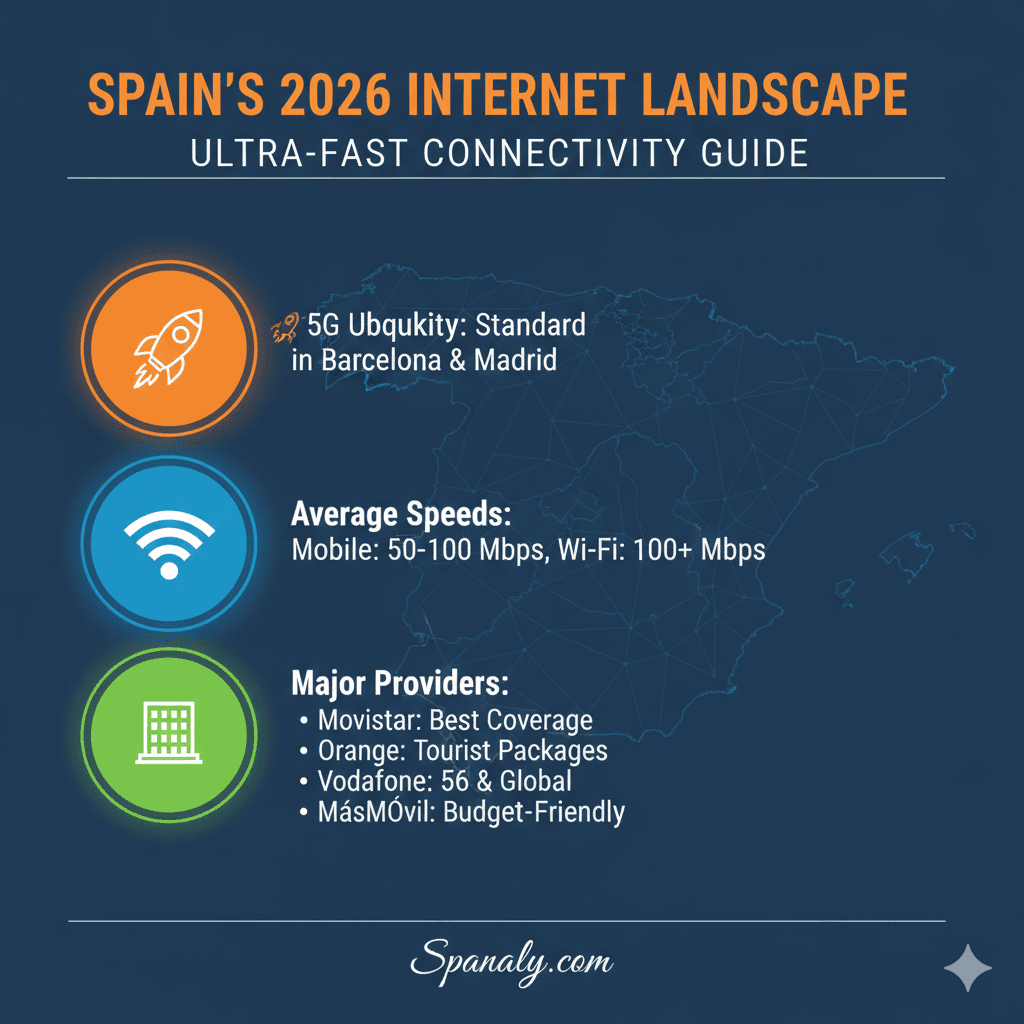
🚀 5G Ubiquity: High-speed 5G is now standard in major hubs like Barcelona and Madrid.
📶 Average Speeds: * Mobile Data: 50–100 Mbps (5G can hit much higher).
Public Wi-Fi: 100+ Mbps in most urban tourist spots.
🏢 Major Providers: The “Big Four” that dominate the market are:
Movistar: Best overall coverage (even in rural areas).
Orange: Excellent tourist-specific packages.
Vodafone: Great 5G performance and international options.
MásMóvil: The budget-friendly choice for city travelers.
🛒 Buying a Local SIM Card: What You Need to Know
If you prefer a physical SIM card, the process is straightforward but regulated.
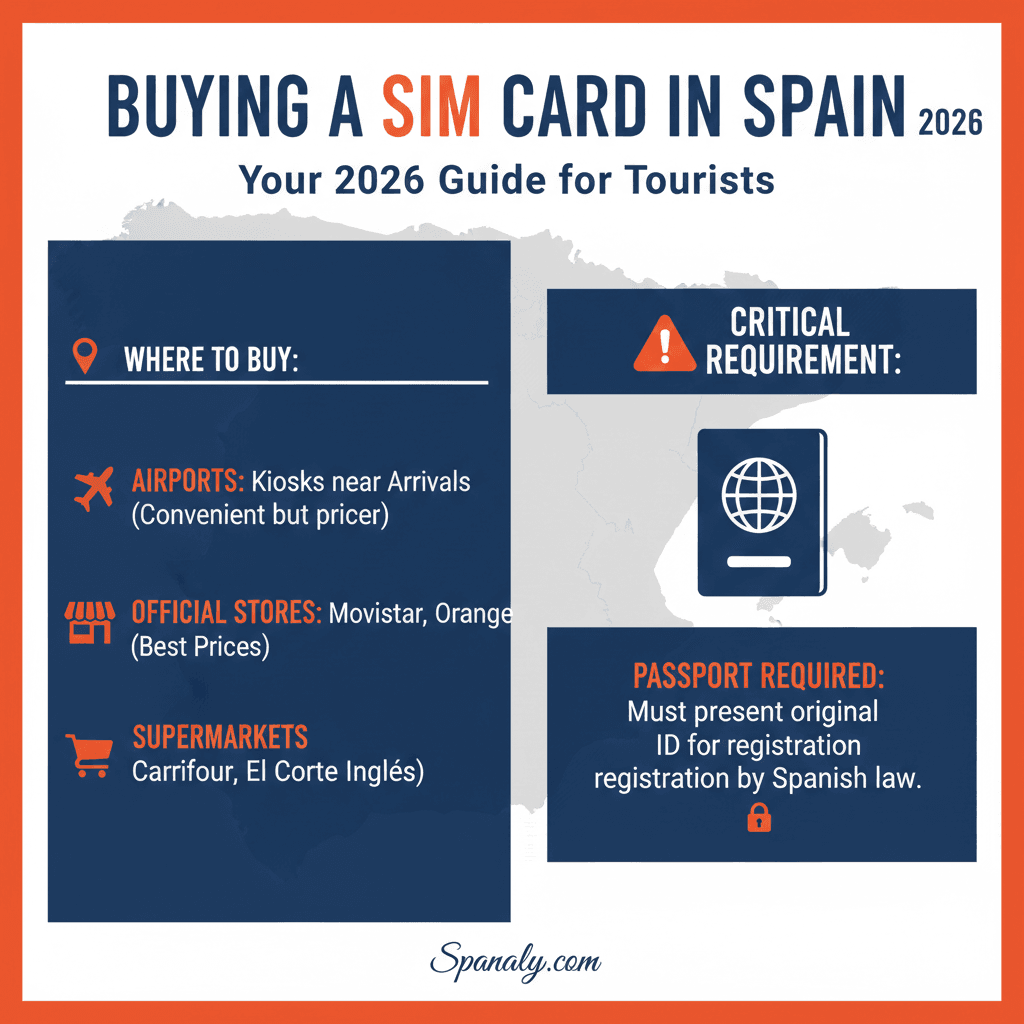
📍 Where to Buy:
Airports: Kiosks near arrivals (Convenient but slightly pricier).
Official Stores: Visit Movistar or Orange shops in city centers (Best prices).
Supermarkets: Available at El Corte Inglés or Carrefour.
⚠️ Critical Requirement:
Passport Required: By Spanish law, you cannot buy a SIM card anonymously. You must present your original passport (or EU ID) for registration at the time of purchase.
📶 eSIM: The Modern Choice for 2026
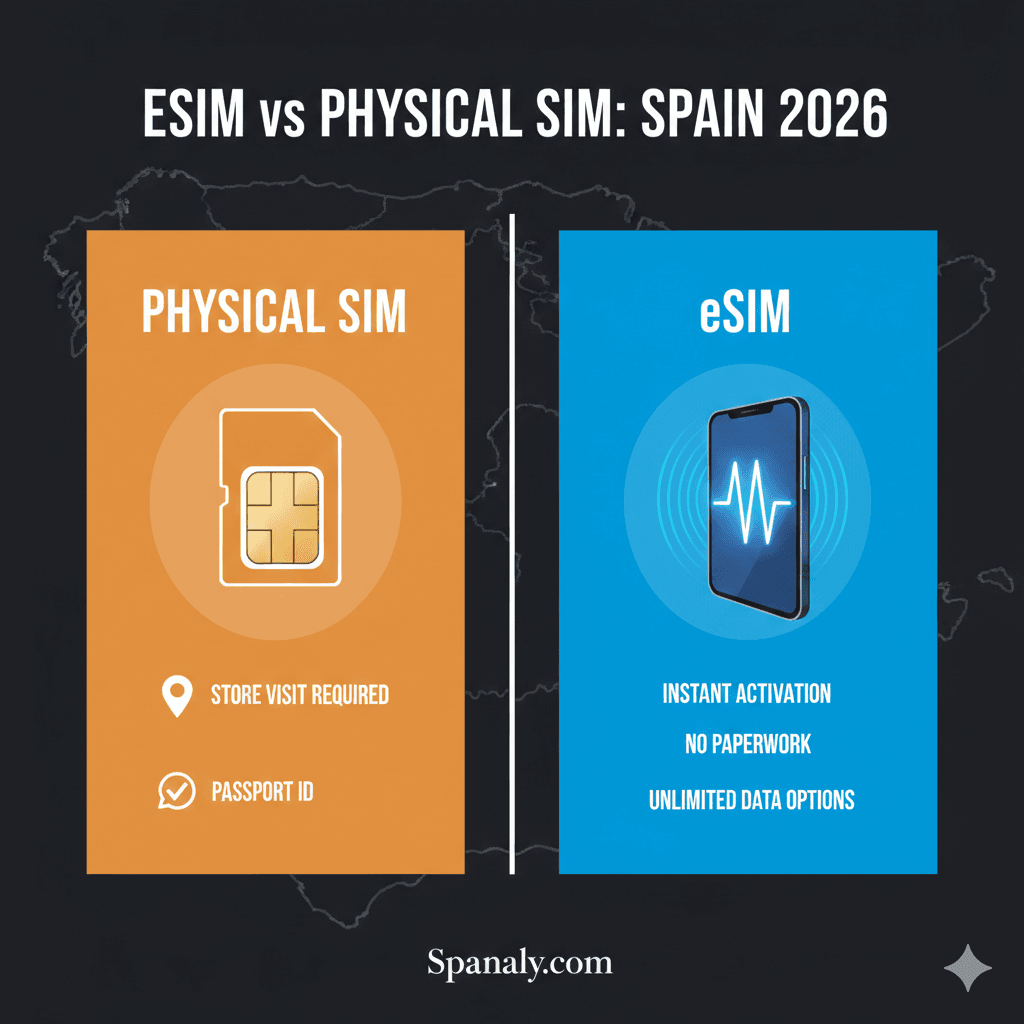
If your phone supports eSIM technology (most phones from 2021 onwards), this is by far the most convenient way to stay connected.
Why choose an eSIM for Spain?
⚡ Instant Activation: Purchase online and get connected the moment your plane touches down.
🛡️ Stay Secure: Keep your home SIM in your phone to receive 2G/SMS (like banking OTPs) while using eSIM for data.
🚫 No Paperwork: No need to find a store or show a physical passport at a counter.
Top Recommended eSIM Providers for 2026:
Airalo (Spain Plan): Best for reliable, mid-range data (5GB to 20GB).
Holafly: Best for Unlimited Data (ideal for heavy users and families).
Nomad: Often provides the cheapest rates for short 7-day trips.
💰 Comparison: Best Prepaid Plans for 2026

Prices have become very competitive in 2026, with huge data bonuses for tourists. Here are the top picks:
| Provider | Best Plan | Data Allowance | Price | Key Feature |
| Vodafone | Prepago M | 270 GB (5G) | €15 | Best for heavy data users |
| Orange | Go Fly | 320 GB (5G) | €20 | Maximum data for a month |
| Movistar | Prepago Plus | 140 GB (5G) | €10 | Most reliable rural coverage |
| MásMóvil | Tourist Deal | 100 GB | €10 | Cheapest city option |
🛡️ Security Alert: Public Wi-Fi & Safety
While free Wi-Fi is everywhere—from Barcelona’s plazas to Seville’s cafes—it comes with risks in 2026.
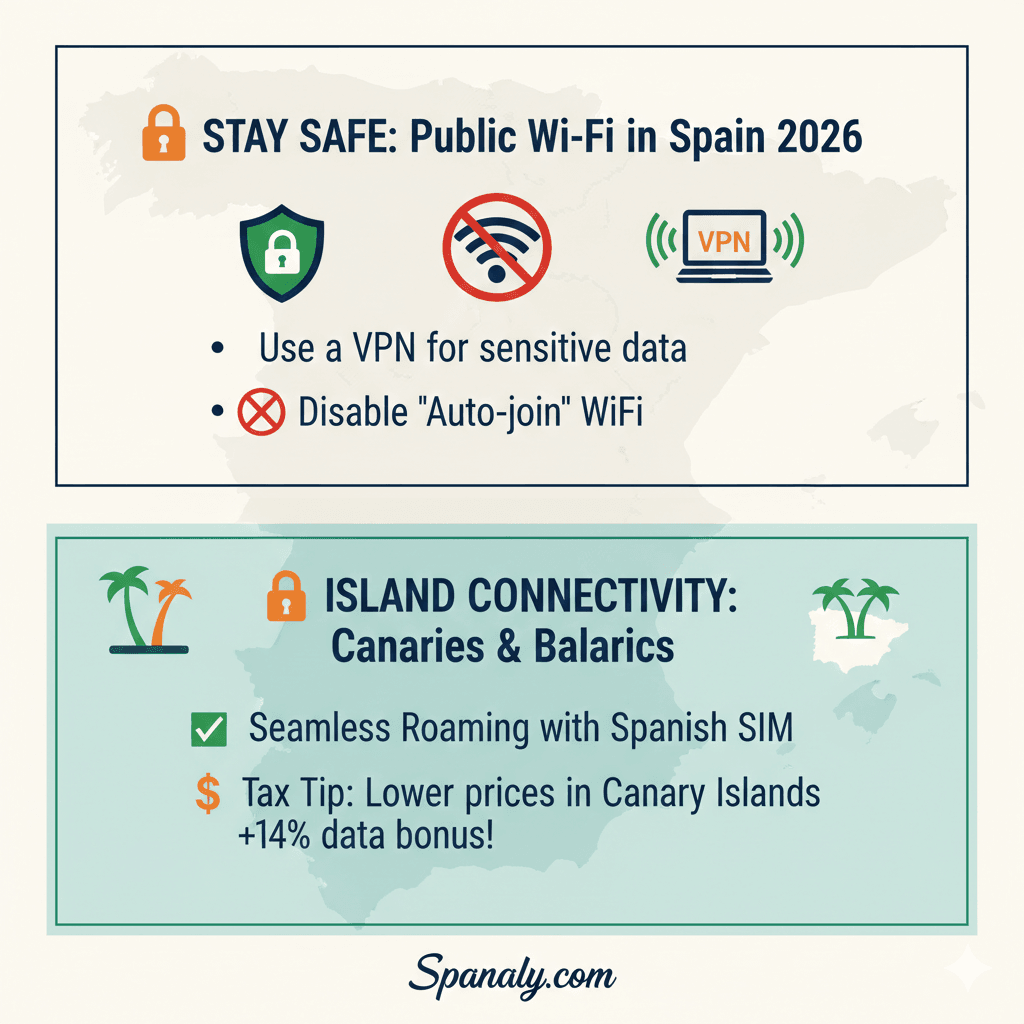
🔒 Use a VPN: Public networks in tourist spots are targets for data theft. We recommend using a VPN (like NordVPN or Surfshark) for banking or sensitive logins.
🚫 Avoid Auto-Connect: Turn off “Auto-join networks” to prevent your phone from connecting to malicious “honeypot” hotspots.
🏝️ Connectivity in the Islands (Canaries & Balearics)
A common question for 2026 travelers: Will my SIM work in Tenerife or Ibiza?
✅ Seamless Roaming: Your Spanish SIM card works perfectly in the Canary Islands and Balearic Islands with no extra roaming fees.
💸 Tax Tip: In the Canary Islands (Tenerife, Gran Canaria, etc.), prices are often lower because of a different tax rate (IGIC instead of VAT). You might get a 14% data bonus on top-ups!
✈️ Airport SIM Cards: Quick but Costly
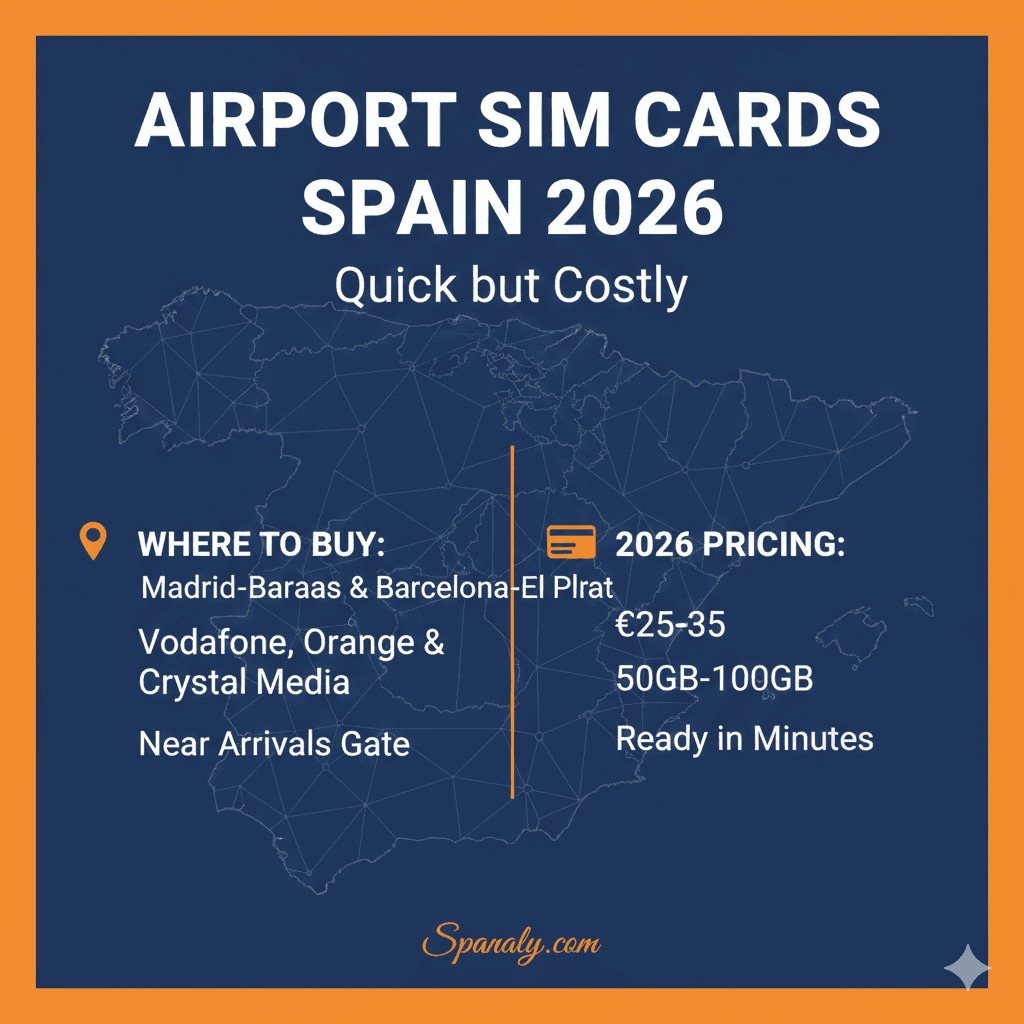
If you need internet the second you land at Madrid-Barajas or Barcelona-El Prat:
📍 Locations: Look for Vodafone, Orange, or Crystal Media booths near the arrivals gate.
⏳ Speed: Ready in minutes; the staff will even help you install the SIM.
💳 2026 Pricing: Expect to pay €25–€35 for 50GB–100GB.
⚖️ Pros/Cons: * Pros: Instant connection, no city searching.
Cons: You pay a “convenience fee” (around €5-€10 more than city shops).
📶 Free Wi-Fi: Where to Find It
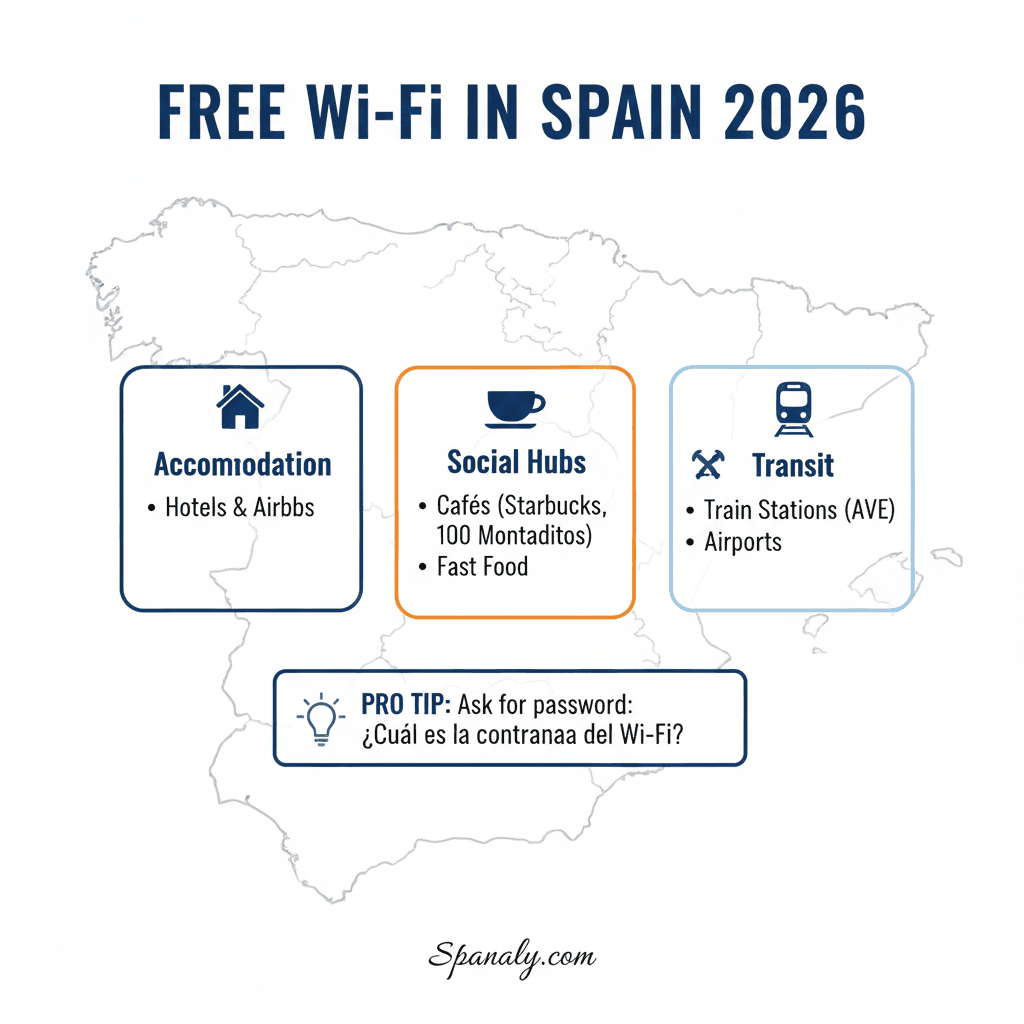
Free connectivity is everywhere in Spain, but quality varies:
🏠 Accommodation: Standard in almost all hotels and Airbnbs.
☕ Social Hubs: Starbucks, McDonald’s, and local chains like 100 Montaditos.
🚉 Transit: Available at major train stations (AVE) and airports.
💡 Pro Tip: In smaller villages, speed might drop. Always ask: “¿Cuál es la contraseña del Wi-Fi?”
📉 Smart Data-Saving Tips
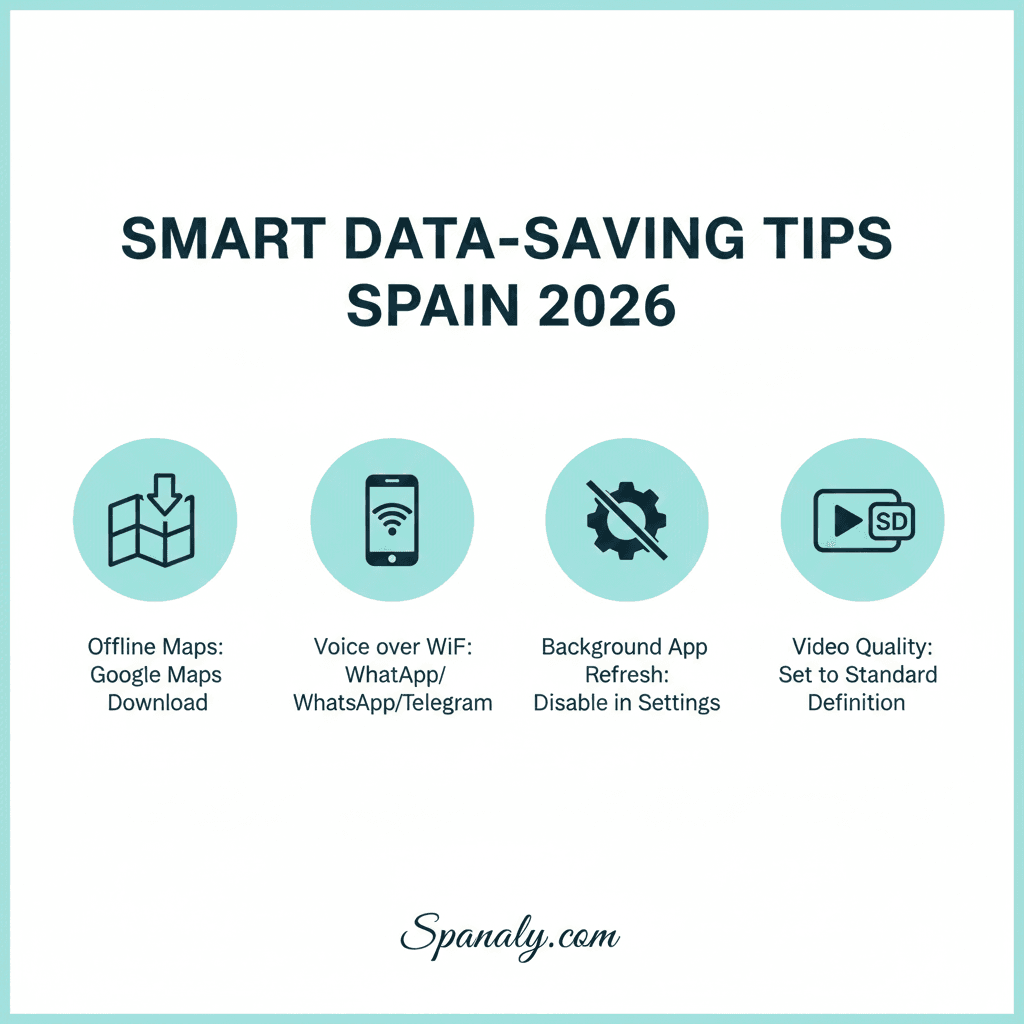
Make your 2026 data plan last longer with these quick hacks:
🗺️ Offline Maps: Download Google Maps for your city while on hotel Wi-Fi.
📞 Voice over Wi-Fi: Use WhatsApp or Telegram for calls to save your plan’s minutes.
⚙️ Background Check: Disable “Background App Refresh” in your settings.
🎬 Video Quality: Set YouTube or Netflix to Standard Definition (480p) when on mobile data.
🌱 Eco-Friendly & Accessible Connectivity
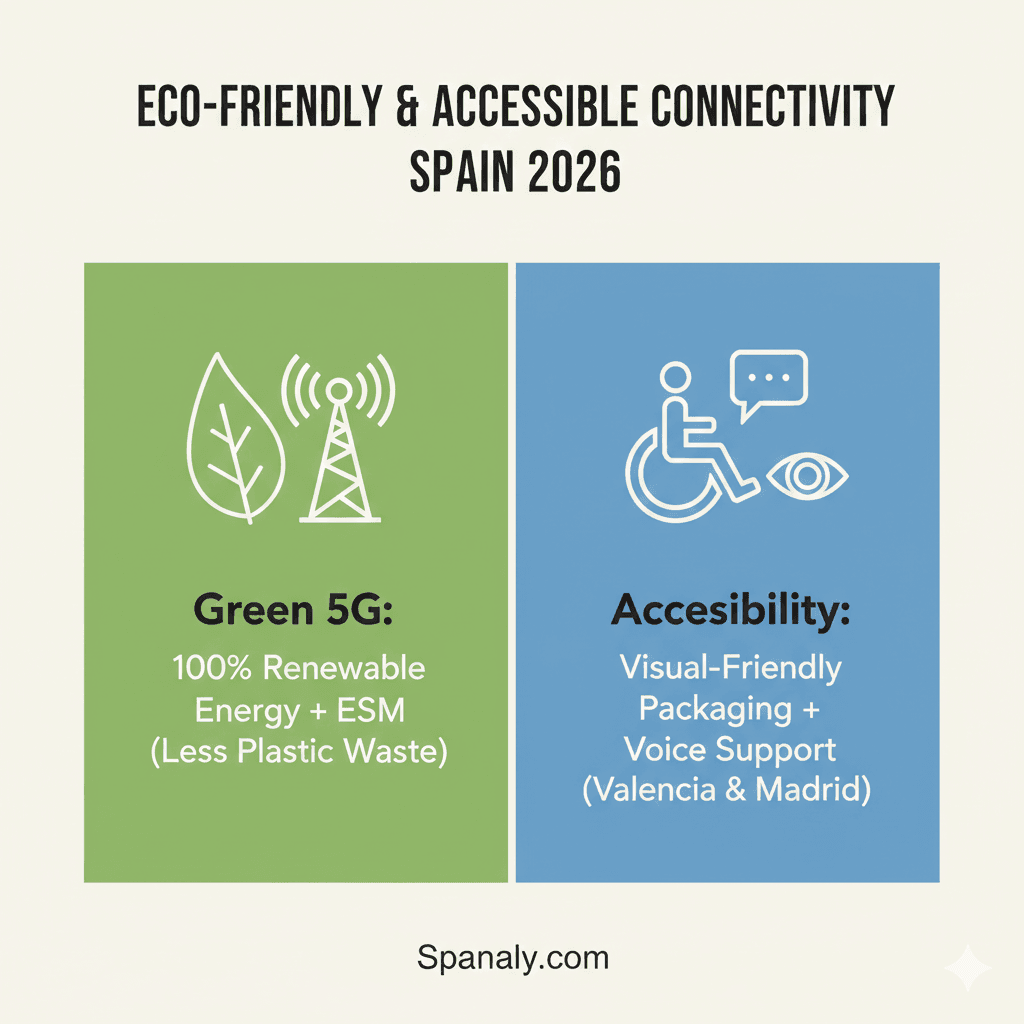
Spain is leading the way in Inclusive Digitalization for 2026:
♻️ Green 5G: Most providers now use 100% renewable energy to power their towers. Choosing an eSIM further reduces plastic waste.
♿ Accessibility: Major shops in Valencia and Madrid offer visual-friendly packaging and voice support for travelers with disabilities.
🚉 Staying Connected on the Move (Trains & Buses)

When traveling between Madrid and Barcelona via high-speed trains (AVE), connectivity has changed in 2026:
🚅 Free Train Wi-Fi: Renfe’s PlayRenfe service now offers high-speed 5G streaming. Always register with your ticket number for a premium connection.
📱 Dead Zones: While 5G is excellent in cities, expect short signal drops when passing through tunnels in the Sierra Morena or Pyrenees regions.
🚌 Long-Distance Buses: Alsa and Avanza buses now provide individual USB-C charging ports and free Wi-Fi as a standard service in 2026.
💡 Pro Tips for a Seamless Connection in Spain (2026)
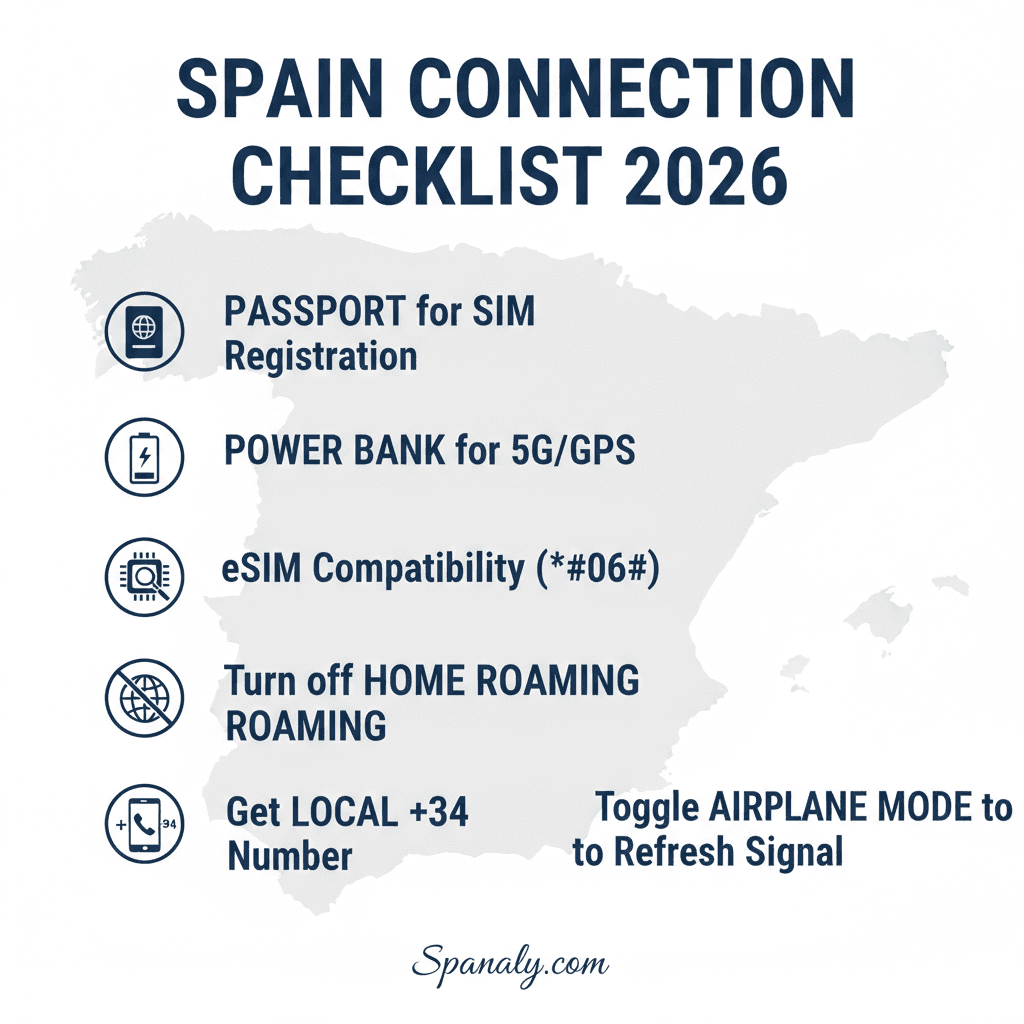
To ensure you stay connected without headaches or hidden costs, follow these expert recommendations:
📱 Check eSIM Compatibility Early: Before buying a digital SIM, dial
*#06#on your phone. If you see an EID number, your phone is eSIM-ready.🆔 Keep Your Passport Handy: Spanish law requires identity registration for all SIM cards (physical or digital). If buying in a store, you must have your physical passport.
🔋 The “Power” Factor: 5G and GPS drain battery quickly. Always carry a small power bank while exploring cities like Madrid or Barcelona.
🌍 Avoid Home Roaming: Turn off “Data Roaming” for your primary home SIM the moment you land to avoid accidental (and massive) charges from your home provider.
📞 Local Numbers Matter: Even if you use an eSIM for data, having a local Spanish number (starting with +34) is vital for restaurant reservations and using apps like Glovo or Cabify.
📡 Refresh Your Signal: If your data feels slow in a crowded area, toggle Airplane Mode on and off. This forces your phone to reconnect to the nearest 2026 5G tower.
🌍 Visitor FAQs – Internet & SIM Cards in Spain Guide 2026
📱 Is an eSIM better than a physical SIM card for Spain in 2026?
🛂 Is a passport mandatory to buy a SIM in Spain?
⚡ Does 5G work everywhere in Spain during 2026?
🏝️ Will my SIM work in Tenerife, Ibiza, or Mallorca?
🇪🇺 Can I use this SIM in other European countries?
SIM Cards & Connectivity Guide by Spanaly.com
🏁 Stay Connected, Stay Inspired
In 2026, internet access in Spain is more than a luxury—it’s your ultimate travel companion. Whether you’re uploading photos from Madrid or navigating the hidden tapas bars of Seville, the right connection makes the difference.
Quick Recap for Your Trip:
🚀 Best for Speed: 5G local SIM (Orange/Vodafone).
📲 Best for Ease: eSIM (Airalo/Holafly).
💡 Pro Tip: Download your maps offline before heading to rural areas.
Ready to explore? Don’t forget to check our guide on Spanish Festivals and Spanish Cuisine to make the most of your data!
Safe travels! ✈️