
Table of Contents
Toggle🏰The Medieval Romance of Teruel
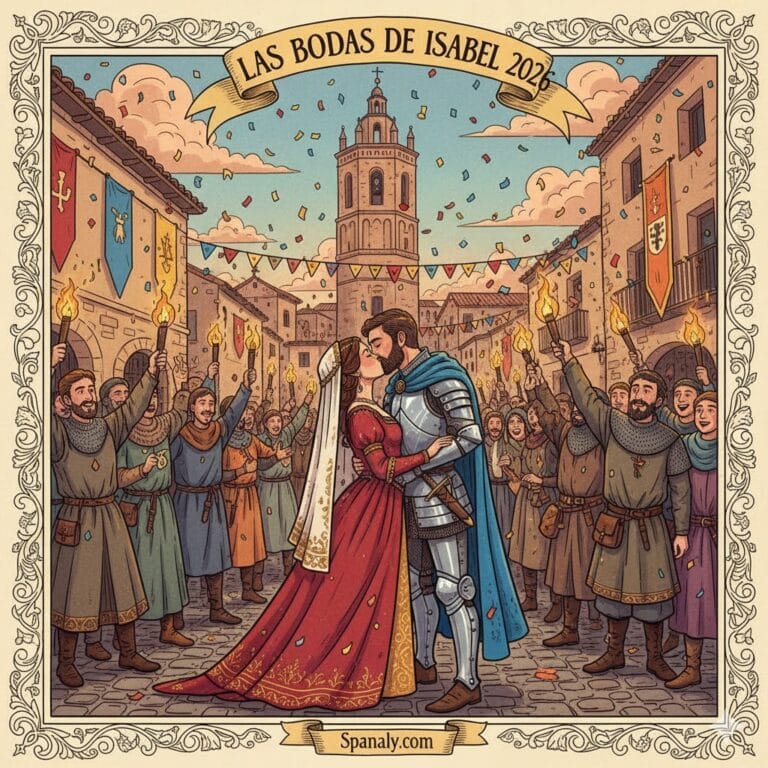
Every February, the quiet streets of Teruel vanish, replaced by a living 13th-century stage. Imagine echoes of ancient drums and flickering torches as nobles and peasants roam the cobblestones side by side. Las Bodas de Isabel de Segura is more than just a reenactment; it is a profound emotional journey into the heart of medieval Aragón.
Why Las Bodas de Isabel is a 2026 Must-Visit:
Medieval Immersion: The entire city transforms, making you feel like you’ve stepped back into 1217.
Living Legend: It brings the tragic story of Spain’s “Romeo and Juliet” to life in the very squares where it happened.
Cultural Heritage: It is a cornerstone of Spanish Festivals, blending theater, history, and community pride.
Authentic Atmosphere: From knightly tournaments to bustling markets, the immersion is total and raw.
In fact, in 2026, this iconic event once again blends legend, theater, and gastronomy into one unforgettable celebration. Furthermore, while many visit for the sun, those seeking Spain’s medieval soul will find Teruel an unmissable winter gem. Ultimately, “Las Bodas” offers a multi-sensory journey where you don’t just watch history—you live it.
💡 Spanaly Pro Tip: Teruel is one of the coldest cities in Spain in February. To survive the “Medieval Chill,” dress in layers under your costume and visit the local “Haimas” (tents) for a cup of warm traditional broth!
📜 The Legend: A Love Story Stronger Than Death

A Love Against All Odds The heart of this festival beats for the tragic tale of Isabel de Segura and Diego de Marcilla, often whispered as Spain’s Romeo and Juliet. Born into a wealthy family, Isabel fell in love with Diego, who lacked the fortune her father demanded. In a desperate bid for love, Diego requested five years to seek wealth in the wars. Isabel promised to wait, but destiny had other plans.
The Tragic Pillars of the Legend:
💔 The Broken Promise: Diego returned exactly one day after his deadline, only to find Isabel already married to a wealthy nobleman.
💋 The Fatal Kiss: Heartbroken, Diego asked for one last kiss. Isabel refused out of honor, and he died instantly at her feet from sorrow.
🕊️ Death by Love: At Diego’s funeral, Isabel approached his body to give him that denied kiss, dying instantly as her lips touched his.
🏛️ Eternal Union: The lovers were buried together, becoming the eternal symbol of the city’s romantic identity.
In fact, this legend is more than just a story; it is one of the most emotional Spanish Attractions that transcends brick and mortar. Furthermore, visiting their mausoleum today allows you to see their tombs, where their marble hands almost touch. Ultimately, the story of Diego and Isabel provides the spiritual foundation for every drumbeat you will hear in Teruel.
💡 Spanaly Pro Tip: When visiting the Mausoleum of the Lovers, look closely at the statues’ hands. They are intentionally sculpted not to touch—symbolizing a love that could only be fully realized in the afterlife.
📅 Festival Dates & 2026 Schedule
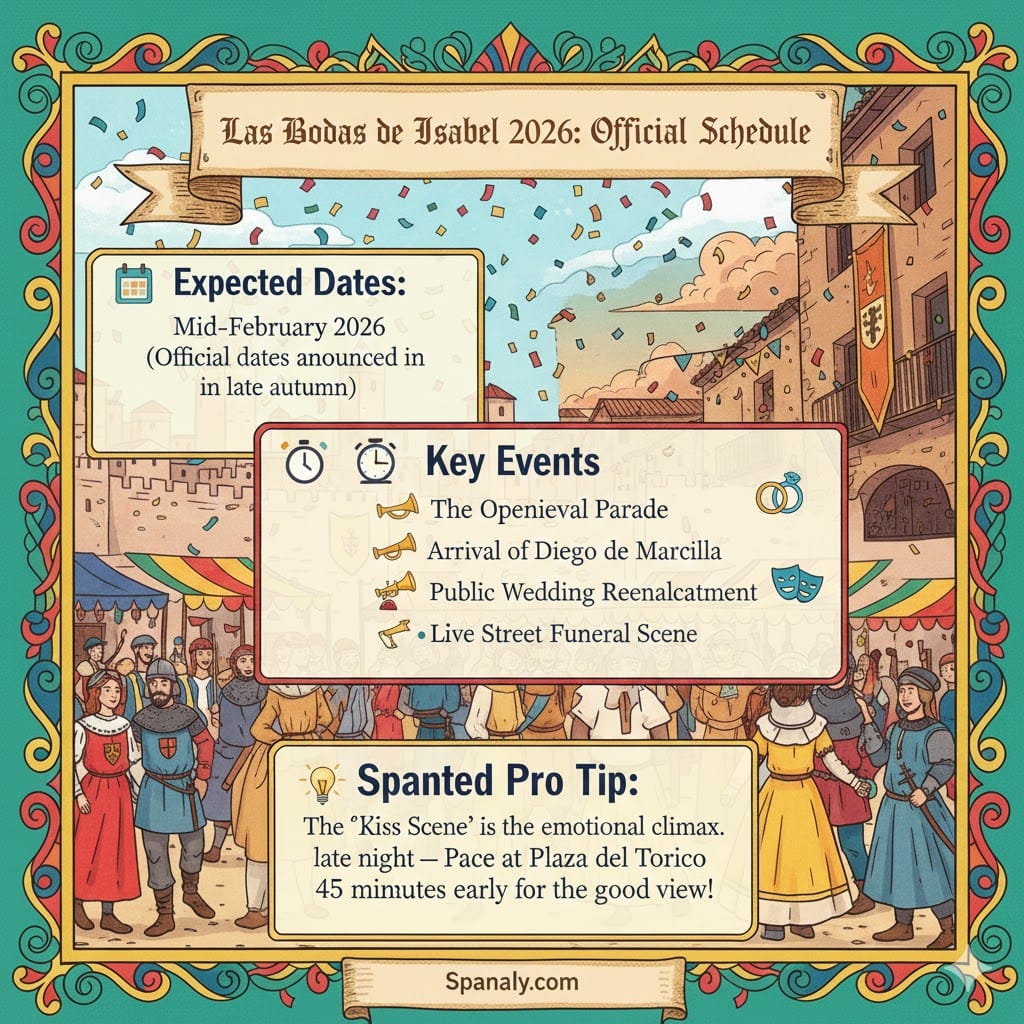
Mark Your 2026 Calendar The magic of Teruel peaks during the third weekend of February. For 2026, while the City Council officially confirms exact days in late autumn, the festivities are expected to run from February 19th to February 22nd. Choosing this time to visit perfectly aligns with the Best Time to Visit Spain for cultural enthusiasts who prefer authentic local traditions over summer crowds.
Key Highlights of the 2026 Program:
🎭 The Opening Parade: A massive medieval procession through the historic center to kick off the weekend.
🐎 The Arrival of Diego: The dramatic moment Diego de Marcilla enters the city, only to find his beloved married.
💍 The Public Wedding: A theatrical reenactment of Isabel’s marriage in the Plaza de la Catedral.
🕊️ The Tragic Finale: The emotional funeral of the lovers, usually held on Sunday afternoon, drawing thousands of silent spectators.
In fact, the entire weekend is packed with non-stop street theater and musical performances. Furthermore, the schedule is designed so you can wander between different squares to catch various “chapters” of the story. Ultimately, staying for the full four days ensures you don’t miss the subtle details that make Las Bodas de Isabel so unique.
💡 Spanaly Pro Tip: The “Kiss Scene” (El Beso) is the festival’s emotional climax and gets extremely crowded. To get a good view, arrive at the Plaza del Torico at least 45 minutes before the performance starts!
📍 Traveler’s Logistics: How to Get to Teruel
The Hidden Gem of Aragon Teruel is often described as a city that “exists” against all odds, tucked away in the rugged landscapes of Aragon. While it doesn’t have its own airport, it is strategically located between major hubs. For many travelers, the journey starts after following our Ultimate Madrid Travel Guide or arriving from the coast.
Best Ways to Reach the Medieval Stage:
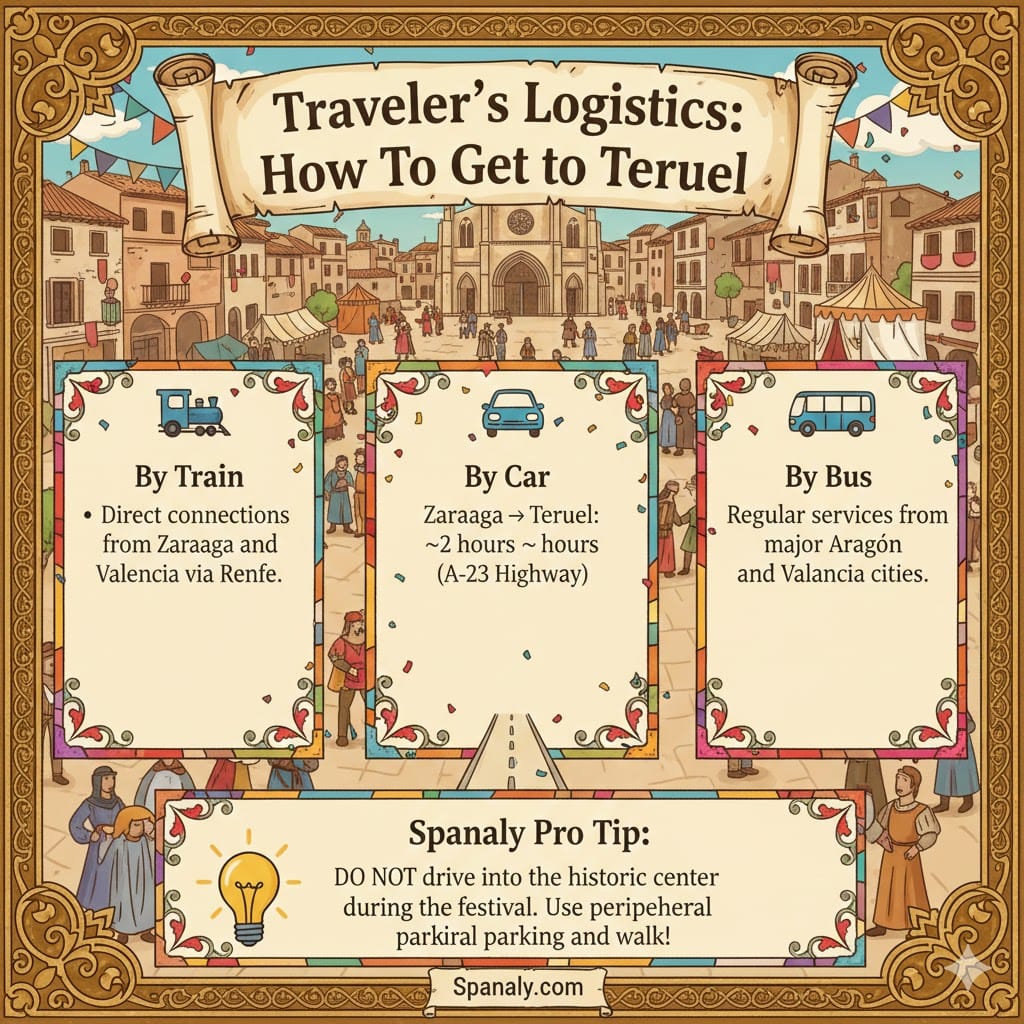
🚆 By Train: Direct connections are available from Zaragoza and Valencia via Renfe. The train ride offers stunning views of the Spanish countryside.
🚗 By Car: This is the most flexible option. From Zaragoza or Valencia, it is a smooth 2-hour drive via the A-23 highway (Autovía Mudéjar).
🚌 By Bus: Regular services run from major cities across Aragon and the Valencian Community, often arriving at the central station near the historic center.
In fact, once you arrive in Teruel, the historic center is fully pedestrianized during the festival. Furthermore, navigating the city is simple as most Spanish Attractions are within walking distance. Ultimately, getting there is the first step in a 2026 adventure that feels like a true pilgrimage through time.
💡 Spanaly Pro Tip: If you are driving, do not attempt to park in the historic center. The city becomes a “No-Drive Zone” during the festival. Use the large peripheral parking lots near the train station or the Dinópolis area and take a short shuttle or walk to the heart of the action.
🏨 Where to Stay: Best Areas & Booking Tips

🏨 The Accommodation Challenge Finding a bed in Teruel during Las Bodas is like finding a knight in shining armor—it requires strategy. Because the city’s population triples over one weekend, hotels often sell out six to eight months in advance. Understanding the layout of the city is crucial to ensuring your visit aligns with the Essential Spain Travel Tips 2026.
Best Areas to Base Your Stay:
🏰 The Historic Center (Casco Antiguo): Stay here if you want to be in the heart of the action. You’ll wake up to the sound of drums, but be prepared for high prices and noisy nights until dawn.
🚶 Ensanche District: Located just across the Viaduct, this modern area offers more conventional hotels. It is only a 10-minute walk to the medieval markets but provides a much-needed quiet escape.
🚗 Peripheral Options (Fuenfresca/Dinópolis): Best for budget travelers or those with cars. These areas are quieter and offer better parking, with shuttle buses connecting you to the festivities.
In fact, many visitors choose to stay in nearby towns like Albarracín or even Zaragoza and commute for the day. Furthermore, booking platforms often hide smaller local guesthouses, so checking official local tourism sites can reveal hidden gems. Ultimately, securing your spot early is the difference between a magical experience and a logistics nightmare.
💡 Spanaly Pro Tip: If you find everything booked, look for “Apartamentos Turísticos” instead of traditional hotels. Many locals rent out their homes during the festival, providing a more authentic (and often more affordable) experience in the heart of the medieval madness!
🎪 Medieval Immersion: The "Haimas" & Markets
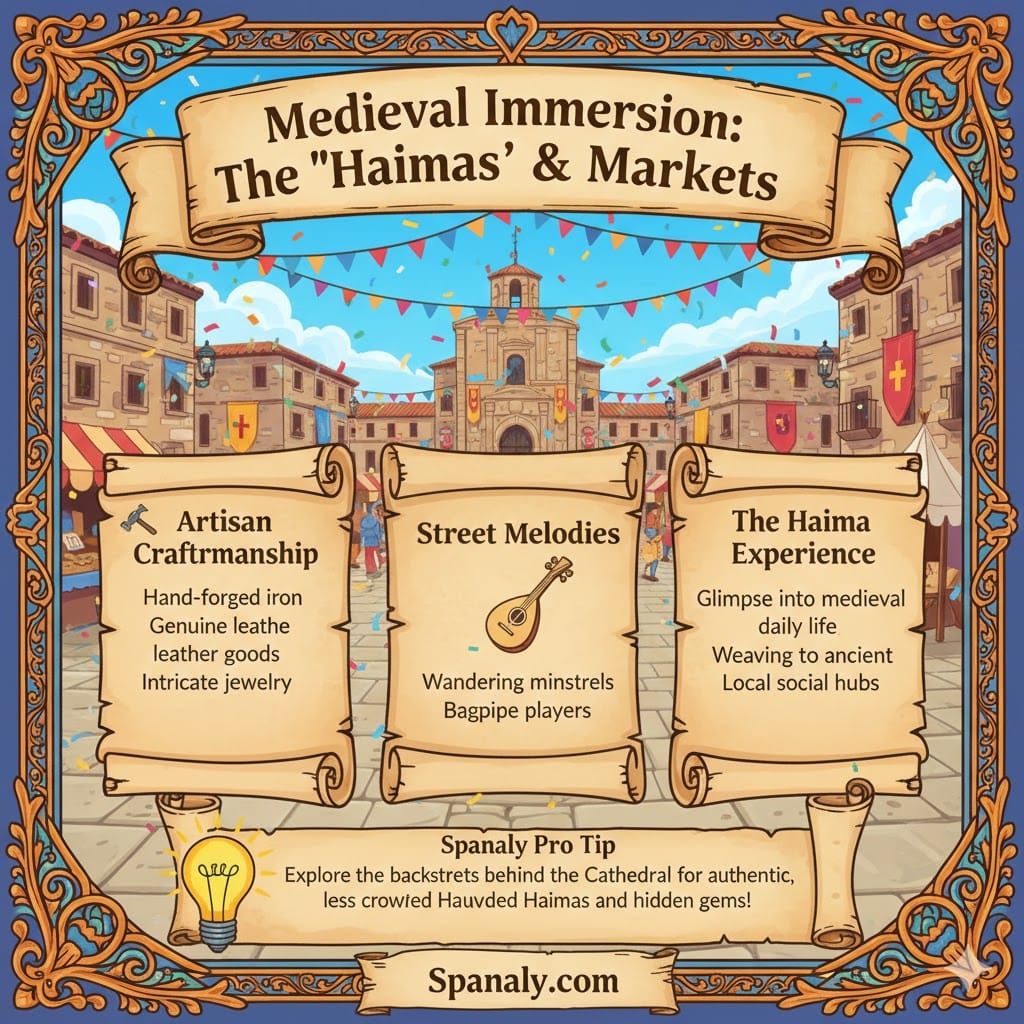
The Heartbeat of the Streets Once you step into the city center, the modern world disappears. The air is thick with the scent of woodsmoke and roasting meats, while hundreds of Haimas (medieval tents) line the squares. These are not just decorations; they are the social hubs where local groups, or Grupos Las Bodas, live out their medieval fantasies.
What to Explore in the Markets:
🛠️ Artisan Craftsmanship: Rows of stalls selling hand-forged iron, genuine leather goods, and intricate jewelry that mirror the Spanish Attractions of the era.
🎶 Street Melodies: Wandering minstrels and bagpipe players provide a constant soundtrack to your walk through the market.
🏺 The Haima Experience: While many tents are private for local groups, many others are open to the public, offering a glimpse into medieval daily life, from weaving to ancient games.
In fact, the market is the perfect place to find authentic souvenirs that you won’t find in typical gift shops. Furthermore, the interactive nature of the stalls means you can often watch blacksmiths or potters at work. Ultimately, the immersion is so total that you’ll quickly forget you’re in the 21st century.
💡 Spanaly Pro Tip: Don’t just stay in the main square (Plaza del Torico). Some of the most authentic and less crowded Haimas are tucked away in the smaller plazas behind the Cathedral—explore the backstreets for the best hidden gems!
🎭 Dressing the Part: Costume Etiquette for Visitors

Join the Medieval Ranks In Teruel, costumes are more than just a dress-up; they are a ticket to full immersion. While not mandatory, you will find that over 90% of the locals are dressed in period-accurate 13th-century attire. Wearing a costume allows you to blend into the sea of history, making your experience feel less like watching a play and more like living it.
How to Dress Like a Local:
✔ Recommended Outfits: Opt for simple medieval peasant tunics, noble capes, or monk robes. Stick to “earthy” tones like brown, forest green, and burgundy to match the historical vibe of Spanish Festivals.
❌ Avoid Fantasy: This is a historical reenactment, not a fantasy convention. Leave the wizard hats, elf ears, and fairy wings at home to respect the 1217 setting.
👟 The Footwear Struggle: While authentic leather boots are ideal, prioritize comfort. If you must wear sneakers, try to find dark, simple ones that don’t scream “21st century.”
In fact, many local shops in Teruel offer costume rentals or sell affordable basic tunics specifically for visitors. Furthermore, even a simple medieval-style cloak or a wool scarf can transform your look instantly. Ultimately, the more effort you put into your attire, the more you will feel the true magic of the “Lovers of Teruel” atmosphere.
💡 Spanaly Pro Tip: If you don’t want to buy a full outfit, just get a “Tabardo” (a simple sleeveless tunic). It fits over your warm winter jacket, keeping you cozy while maintaining the medieval aesthetic for all your photos!
🍖 Gastronomy: What to Eat in Teruel During the Festival
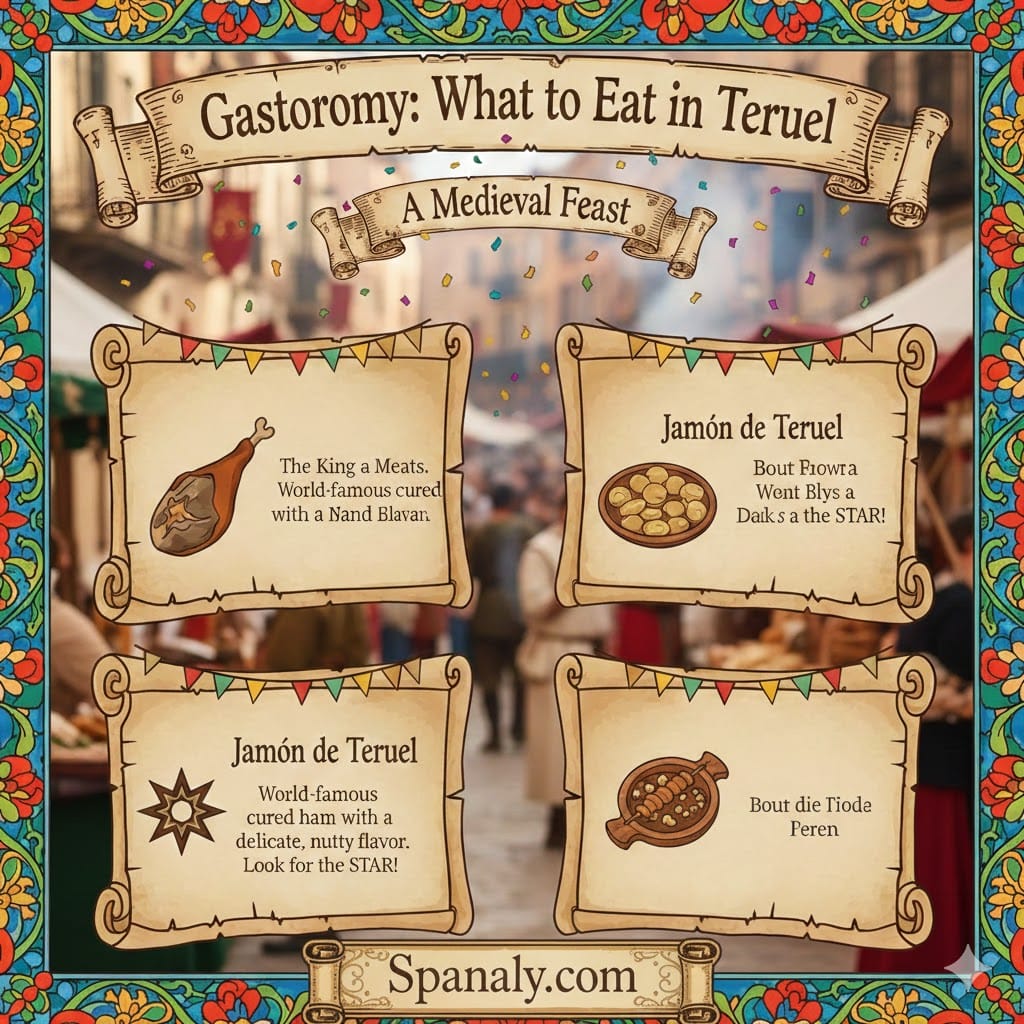
A Medieval Feast for the Senses When the cold February winds blow through the Mudéjar towers, local Aragonese cuisine becomes the ultimate comfort. During Las Bodas de Isabel, the city’s food scene transforms into a rustic banquet. The focus is on open-fire cooking and traditional recipes. These flavors are a highlight of any trip, offering a taste of the authentic heritage found in our Spanish Food Guide.
Must-Try Local Delicacies in Teruel:
🥓 Jamón de Teruel (D.O.P): The undisputed star of the region. This premium cured ham is famous for its smooth texture and nutty flavor. Look for the eight-pointed star branded on the rind for authenticity.
🍲 Migas Terulenses: Originally a humble shepherd’s meal. These sautéed breadcrumbs are mixed with garlic, olive oil, and local chorizo. They are often served with fresh grapes for a perfect sweet-and-salty balance.
🥩 Ternasco de Aragón: This P.G.I. roasted lamb is exceptionally tender. It is the centerpiece of every medieval banquet in the city.
🥐 Suspiros de Amante: You cannot leave without trying these “Lover’s Sighs.” These small, creamy cheese tartlets are the sweetest tribute to the legend of Isabel and Diego.
In fact, the most immersive way to eat is at the street-side puestos (stalls). Here, you can grab a quick bocadillo filled with smoky longaniza. Furthermore, many local taverns offer specialized “Medieval Menus” using 13th-century ingredients. Ultimately, every bite in Teruel is a delicious layer of the city’s living history.
💡 Spanaly Pro Tip: Planning to eat at a restaurant? Lunch is the main event in Spain, and tables are booked months in advance. If you missed out, head to the Mercado Medieval stalls. The food is high-quality, fast, and full of festival energy!
🏛️ Must-See Sites: Beyond the Festival
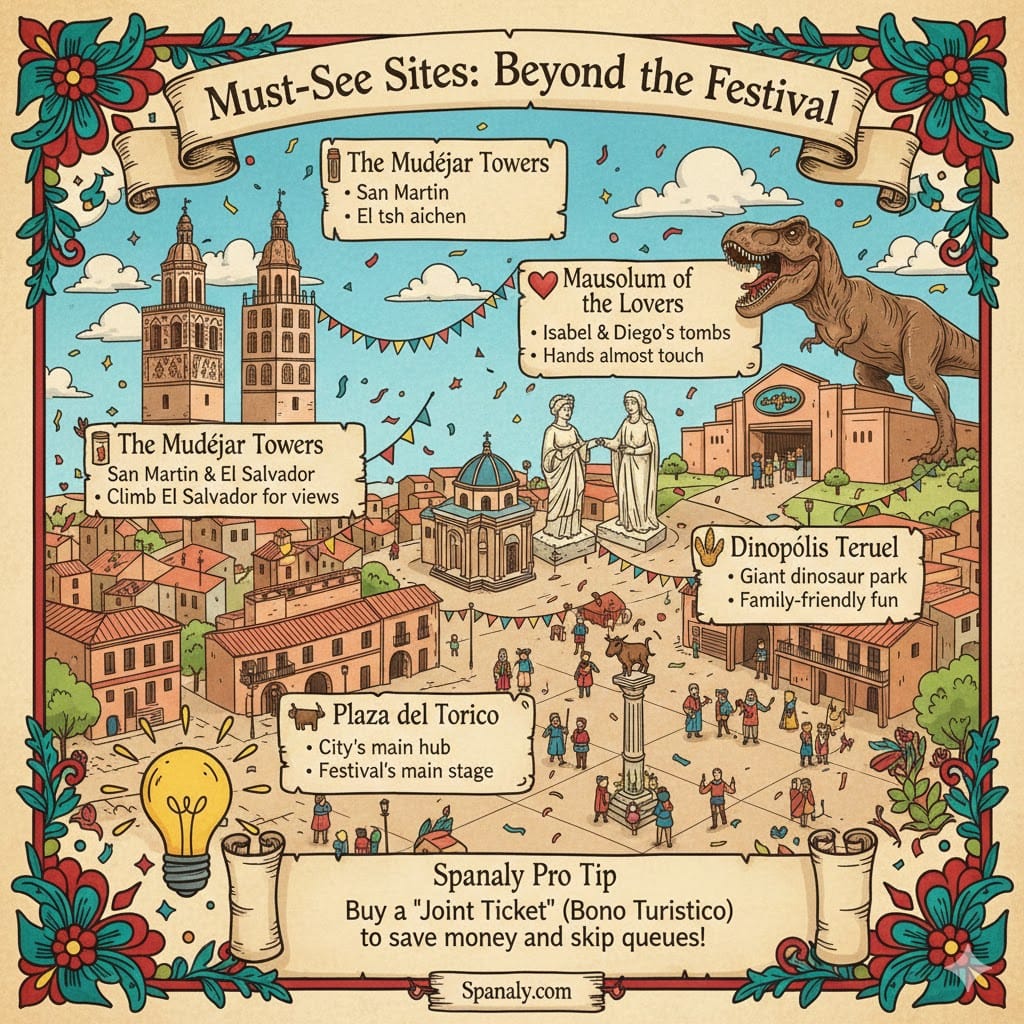
The Mudéjar Jewels & Giants Teruel is a city that whispers history from every brick. While the festival is the main draw, the city’s architectural heritage is a year-round masterpiece. In fact, Teruel is home to some of the finest examples of Mudéjar architecture in the world. These sites are essential for anyone following our Spain Historical Monuments Guide.
Essential Stops for Your Itinerary:
⛪ The Mudéjar Towers: Do not miss the towers of San Martín and El Salvador. Their intricate ceramic decorations are breathtaking. You can even climb El Salvador for a panoramic view of the medieval festivities.
🏛️ Mausoleum of the Lovers: This is the spiritual heart of the city. Here, you can see the alabaster tombs of Isabel and Diego. Their hands almost touch, symbolizing their eternal bond.
🦕 Dinópolis Teruel: Perfect for families! This is one of the world’s largest paleontological parks. It combines science with fun, featuring life-sized dinosaurs that roamed this region millions of years ago.
⛲ Plaza del Torico: The city’s social hub. Look for the tiny bull statue atop the central column. During the festival, this square becomes the stage for the most emotional scenes.
Furthermore, the Cathedral of Santa María de Teruel boasts a stunning medieval ceiling often called the “Sistine Chapel of Mudéjar art.” Ultimately, Teruel offers a perfect blend of tragic romance, ancient history, and family-friendly adventure.
💡 Spanaly Pro Tip: If you plan to visit the Mudéjar towers and the Mausoleum, buy a “Joint Ticket” (Bono Turístico). It saves you money and time, allowing you to bypass some of the longer queues during the busy festival weekend!
🚀 Insider Tips: How to Survive the Crowds
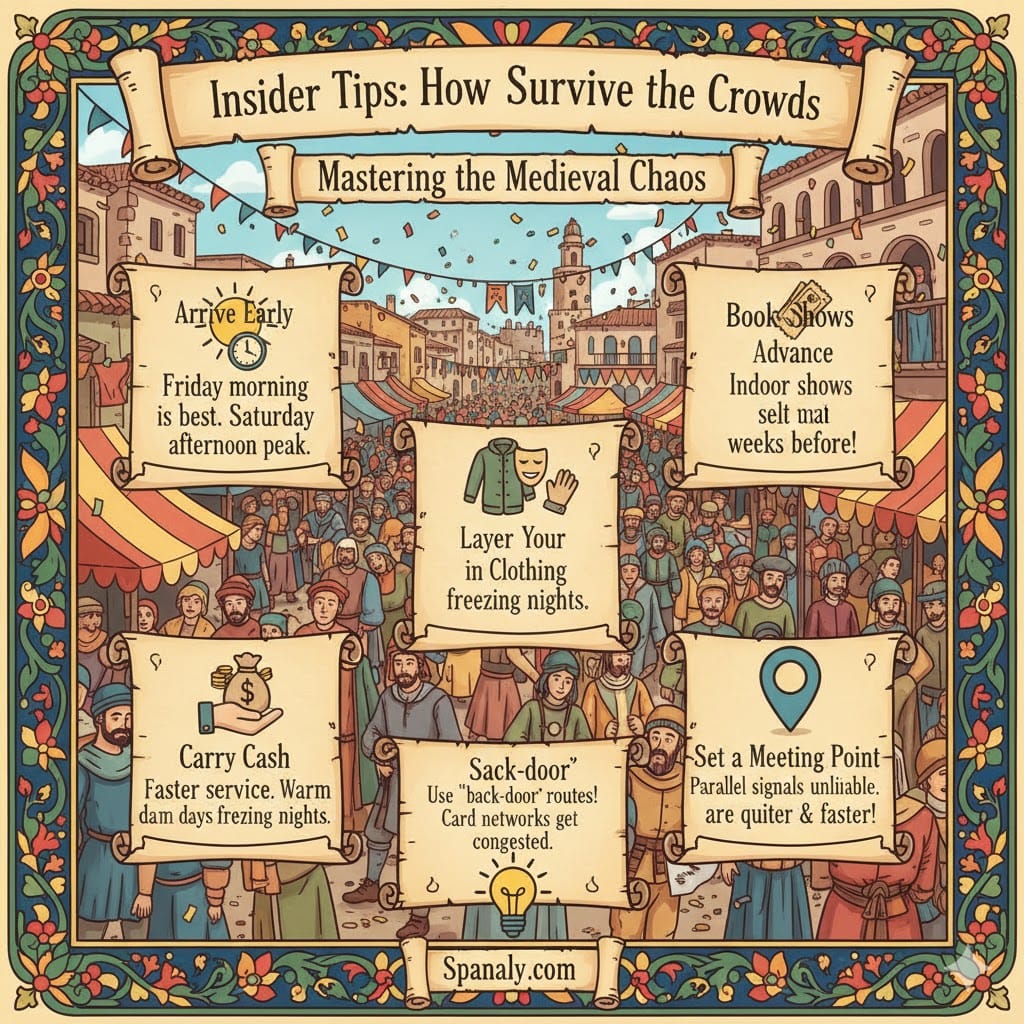
Mastering the Medieval Chaos Visiting Teruel during Las Bodas de Isabel is an unforgettable adventure. However, the large crowds can be overwhelming if you are not prepared. To enjoy the experience like a local, you need a solid strategy. These tips will help you navigate the busy streets while following our Essential Spain Travel Tips.
Expert Advice for a Smooth Visit:
⏰ Arrive Early: The best time to explore the medieval markets is Friday morning. By Saturday afternoon, the main plazas reach peak capacity.
🎫 Book Shows in Advance: Many theatrical performances take place in small indoor venues. Tickets sell out weeks before the festival starts.
🧤 Layer Your Clothing: Teruel is one of the coldest cities in Spain. It might be sunny during the day, but temperatures drop below freezing at night.
🏧 Carry Cash: While many stalls now accept cards, the local networks often get congested. Small artisans and food stands usually prefer cash for faster service.
📍 Set a Meeting Point: If you are traveling with a group, pick a landmark (like the Train Station) as a meeting spot. Cell phone signals can become unreliable in crowded areas.
Furthermore, always keep a digital copy of the festival program on your phone. This helps you avoid carrying paper maps through the crowds. Ultimately, a little bit of planning ensures that you focus on the romance of the legend rather than the stress of the crowd.
💡 Spanaly Pro Tip: Use the “back-door” routes! Instead of walking through the main Calle Nueva, use the smaller parallel alleys. You will discover quieter Haimas and get to your destination twice as fast!
🎭 Visitor FAQs – Lovers of Teruel 2026 Guide
📸 Are there any restrictions for photography during the event?
Photography is encouraged throughout the city! However, for the most emotional scenes (like the death of the lovers), we recommend avoiding flash photography to maintain the solemn 13th-century atmosphere. For professional drone use in 2026, you must obtain a permit due to the narrow streets and large crowds.
🐾 Is the festival suitable for pets (dog-friendly)?
While Teruel is a pet-friendly city, the festival involves loud drums, pyrotechnics, and very dense crowds. This can be extremely stressful for dogs. If you bring your pet, it's best to keep them in the quieter Ensanche area or stick to the parks away from the main medieval market.
🥗 Are there vegetarian or vegan food options available?
Traditional Aragonese food is meat-centric, but the 2026 market stalls have evolved. You can find high-quality artisan cheese, giant wood-fired pizzas, and roasted chestnuts. Look for the "Pan de Hogaza" stalls which often offer delicious vegetable-based fillings and local honey.
🏥 Where can I find medical assistance or first aid?
During the festival, a dedicated Red Cross (Cruz Roja) station is usually located near the Plaza de San Juan. For minor issues, local pharmacies (Farmacias) take turns staying open 24 hours. Always check the official 2026 festival map for the "Punto de Socorro" icon.
📶 How is the mobile signal and Wi-Fi in the city center?
With thousands of visitors, mobile networks can become congested. Many cafés in the Plaza del Torico offer Wi-Fi, but the signal may be weak during peak parade hours. We recommend downloading your tickets and the festival schedule for offline access before heading into the crowds.
🚻 What is the situation with public restrooms?
The city installs portable toilets in key areas like the Park of Los Fueros. However, they get busy quickly. A great insider tip is to use the facilities at the Teruel Museum or the Train Station, which are often cleaner and managed more frequently throughout the weekend.
Created by Spanaly.com
🏛️ Your 2026 Teruel Checklist
Visiting the Las Bodas de Isabel festival is a bucket-list experience that blends history with deep emotion. To make the most of your 2026 trip, keep these final takeaways in mind:
❤️ The Romance: You aren’t just visiting a city; you are stepping into a living 13th-century love story.
🎭 The Atmosphere: Full immersion is key—wear a tunic, join a Haima, and let the medieval drums guide you.
🍽️ The Flavors: Don’t leave without tasting the authentic Jamón de Teruel and a warm plate of Migas.
📸 The Memories: Capture the Mudéjar towers at sunset—they are the silent witnesses of Isabel and Diego’s legend.
Teruel is waiting for you. Whether it’s the tragedy of the lovers or the vibrant energy of the markets, your medieval escape in 2026 will be nothing short of legendary.
✨ Spanaly Verdict: If you love history, romance, and authentic Spanish culture, Teruel in February is the only place you need to be. Nos vemos en Teruel!