
Table of Contents
Toggle💎Top 7 Hidden Gems to Explore in Madrid
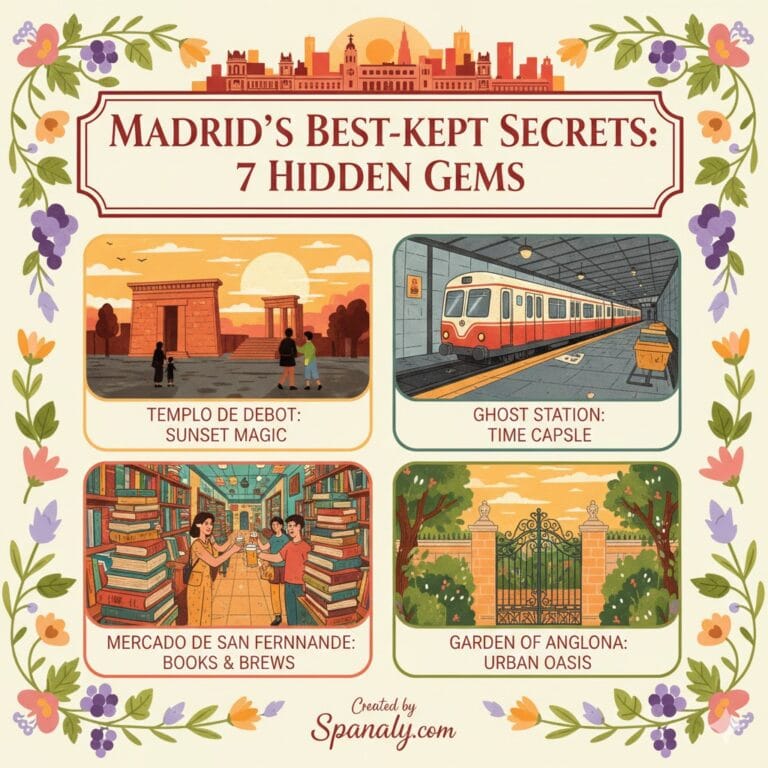
Madrid is much more than the Royal Palace or the Prado Museum. Beneath its bustling streets, the city hides charming spots full of history, culture, and local life. For instance, these locations offer a peaceful escape from the usual tourist crowds. If you want a complete experience, we recommend exploring both the famous attractions and these unique hidden gems. Consequently, you will discover a side of Madrid that most travelers never see.
Why you should explore these secret spots:
🌿 Romantic Escapes: Discover 18th-century gardens that feel like a journey back in time.
🎨 Artistic Spirit: Witness how vibrant street art mixes with historical architecture.
🥖 Authentic Flavors: Taste traditional delicacies in local markets away from the tourist traps.
🌅 Golden Views: Enjoy the most serene sunsets in the heart of the city for free.
💡 Spanaly Pro Tip: Most tourists stay in the “Golden Triangle of Art,” but the true soul of Madrid lives in its neighborhoods like Lavapiés and Arganzuela. To see the city like a local, always carry a few coins for the traditional markets and wear comfortable shoes for the cobblestone alleys of the historic quarters.
🌿 El Capricho Park: The 18th-Century Secret
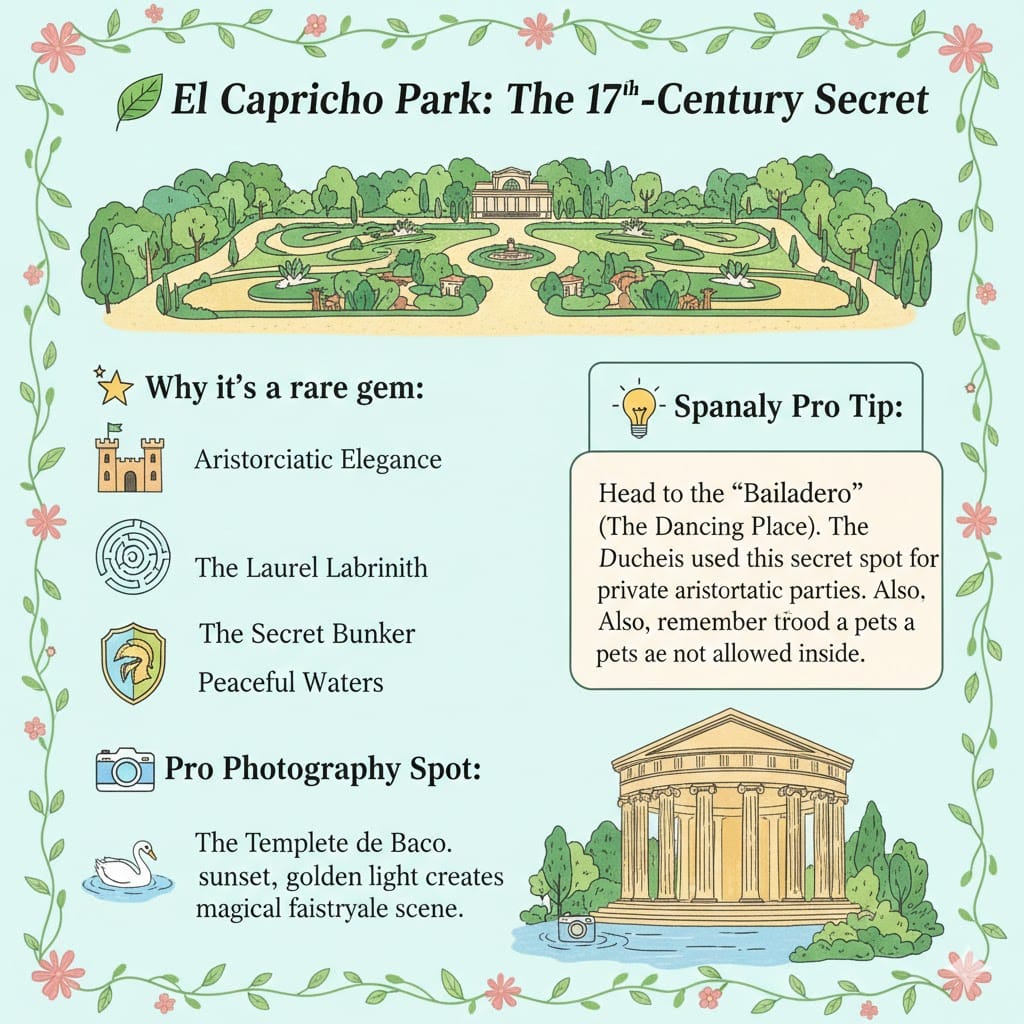
Step into the most exclusive sanctuary in Madrid. Created in 1784 by the Duchess of Osuna, El Capricho remains a hidden treasure because it only opens on weekends. For instance, the park blends French, English, and Italian garden styles into one masterpiece. Consequently, a stroll here feels like walking through a living painting away from the city’s noise.
✨ Why it’s a rare gem:
🏰 Aristocratic Elegance: Explore romantic pavilions, fountains, and a stunning 18th-century palace.
🌀 The Laurel Labyrinth: Get lost in a historic hedge maze designed for royal hide-and-seek.
🛡️ The Secret Bunker: Discover a hidden Civil War fortress located 15 meters underground.
🦢 Peaceful Waters: Relax by the “Casino del Baile” overlooking a serene lake with swans.
💡 Spanaly Pro Tip: Most visitors ignore the “Bailadero” (The Dancing Place). The Duchess used this secret spot for private aristocratic parties. Also, remember that food and pets are not allowed inside. This strict rule keeps the park in pristine condition, so plan your picnic for the nearby Juan Carlos I Park instead.
📸 Pro Photography Spot:
Head to the Templete de Baco. This small circular temple with Ionic columns offers the most romantic frame for your photos. At sunset, the golden light hits the white marble, creating a magical atmosphere that looks like a fairytale scene.
⛪ Real Basílica de San Francisco el Grande: The Giant Dome
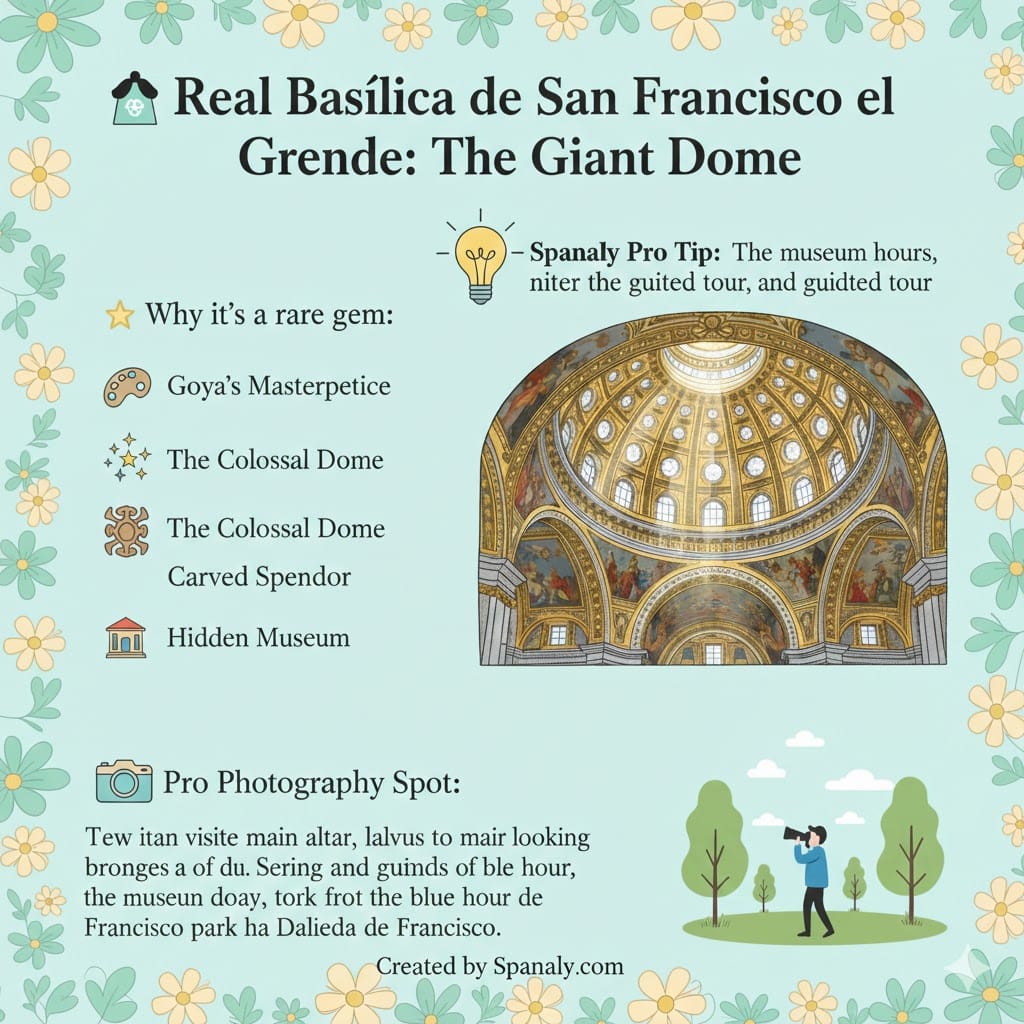
Welcome to a world of silent grandeur. This basilica is home to the fourth-largest dome in Christendom—larger even than St. Paul’s in London. Although its neoclassical exterior is impressive, the interior is where the true magic happens. For instance, the light filtering through the massive dome illuminates a collection of masterpieces that rival many museums. Consequently, visiting this church feels like discovering a secret art gallery in the heart of Madrid.
✨ Why it’s a rare gem:
🎨 Goya’s Masterpiece: Admire the famous painting “The Sermon of San Bernardino of Siena” by Francisco de Goya, located in one of the side chapels.
🌌 The Colossal Dome: Stand beneath the 33-meter diameter dome and look up at its intricate frescoes and gold detailing.
🪵 Carved Splendor: Explore the choir stalls, which feature some of the most detailed 16th-century wood carvings in Spain.
💎 Hidden Museum: The basilica houses an incredible collection of 17th to 19th-century Spanish and Italian paintings.
💡 Spanaly Pro Tip: Most people visit during mass hours when they can’t explore freely. We recommend visiting during the museum hours (usually Tuesday to Saturday mornings). This allows you to access the hidden chapels and the museum rooms for a small fee, which often includes a guided tour that reveals the basilica’s deepest secrets.
📸 Pro Photography Spot:
Position yourself at the main altar and aim your lens directly upwards. The symmetrical beauty of the dome against the golden altarpiece creates a powerful, wide-angle shot. For an exterior perspective, wait for the blue hour and photograph the basilica from the Dalieda de San Francisco park next door—the illuminated dome looks spectacular against the deep blue sky.
📖 Chamberí Ghost Station: A Time Capsule Underground
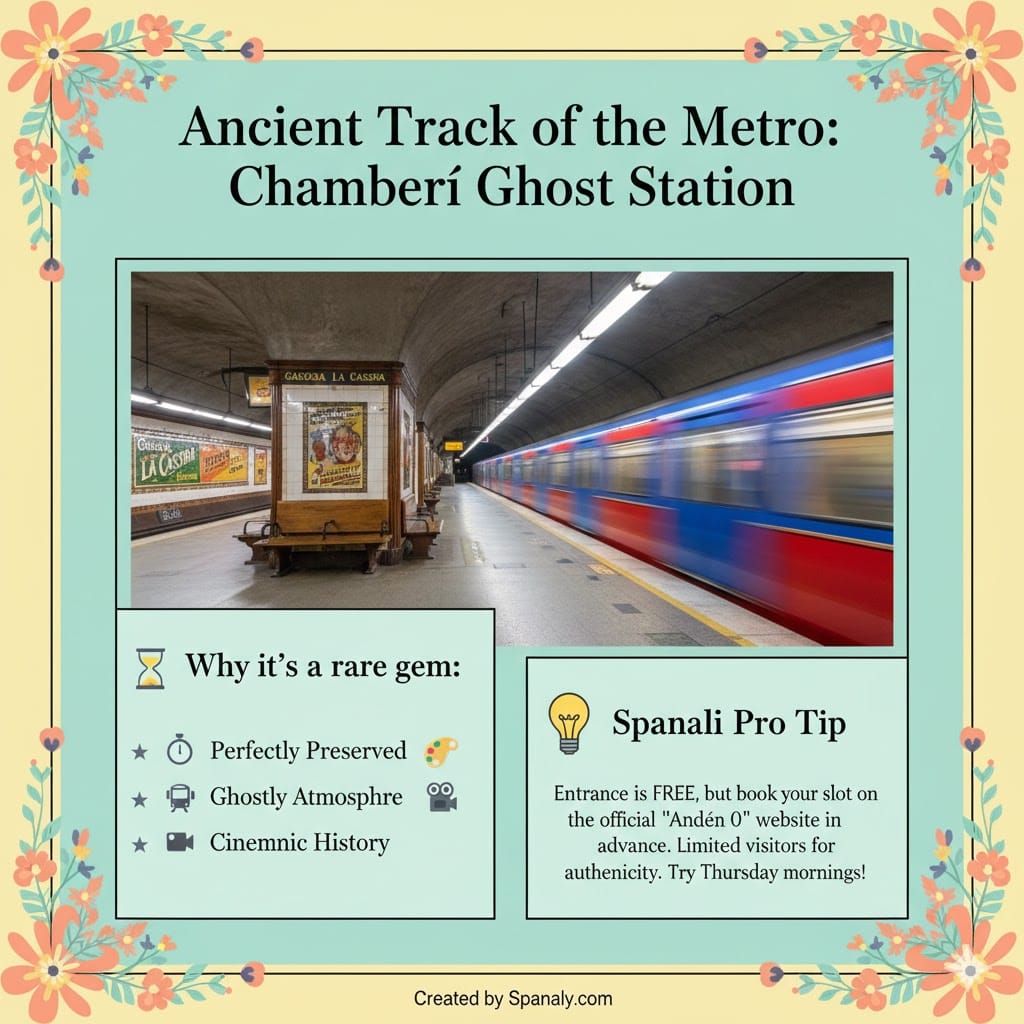
Imagine walking into a metro station where time stopped sixty years ago. Chamberí Station, also known as “Andén 0,” was closed in 1966 but remains perfectly preserved. Because the station was never modernized, it still features original tiled advertisements and vintage ticket booths. For instance, you can see hand-painted posters for mineral water and lightbulbs from the early 20th century. Consequently, descending its stairs feels like stepping directly into a classic Spanish film. To understand how this fits into the modern network, you can learn more about getting around Madrid to navigate the city like a pro.
✨ Why it’s a rare gem:
⏳ Perfectly Preserved: Explore the platforms just as they were when the last passengers left decades ago.
🎨 Vintage Advertising: Admire the beautiful mosaic-style ads made of tiny ceramic tiles, a lost art form.
🚉 Ghostly Atmosphere: Experience the thrill of standing on the platform while modern trains still zoom past on the tracks without stopping.
🎥 Cinematic History: Learn about the station’s role during the Civil War, when it served as a bomb shelter for local residents.
💡 Spanaly Pro Tip: Entrance to this “Ghost Station” is completely free, but you must book your time slot on the official Madrid Metro website (Andén 0) in advance. The station is small, and they limit the number of visitors to keep the atmosphere authentic. Try to book a slot for Thursday mornings when it is least crowded.
🏛️ Panteón de los Hombres Ilustres: A Silent Marble Masterpiece

Located near the Atocha station, this Neo-Byzantine monument is one of Madrid’s best-kept secrets. It serves as a funeral cloister for Spain’s most influential political and military figures. Because it is tucked away behind a modest exterior, most tourists walk right past it. However, the interior houses a stunning collection of marble sculptures. Consequently, visiting this site offers a profound sense of peace and a deep connection to Spanish history.
✨ Why it’s a rare gem:
🗿 Stunning Sculptures: Marvel at the intricate funeral monuments carved by famous artists like Mariano Benlliure.
⛪ Neo-Byzantine Architecture: Admire the unique mosaics and the beautiful bell tower that stands out against the Madrid skyline.
🌿 The Silent Cloister: Walk through the open-air gallery where the atmosphere remains untouched by the city’s bustle.
📜 History Without Crowds: Learn about the figures who shaped modern Spain in a space that feels entirely your own.
💡 Spanaly Pro Tip: Entry is free, but the hours can be tricky as it often closes for “siesta.” We recommend arriving right when it opens at 10:00 AM. The morning light reflects off the white marble monuments, creating a glow that makes the sculptures look almost alive.
🎨 Tabacalera: The Underground Art Labyrinth
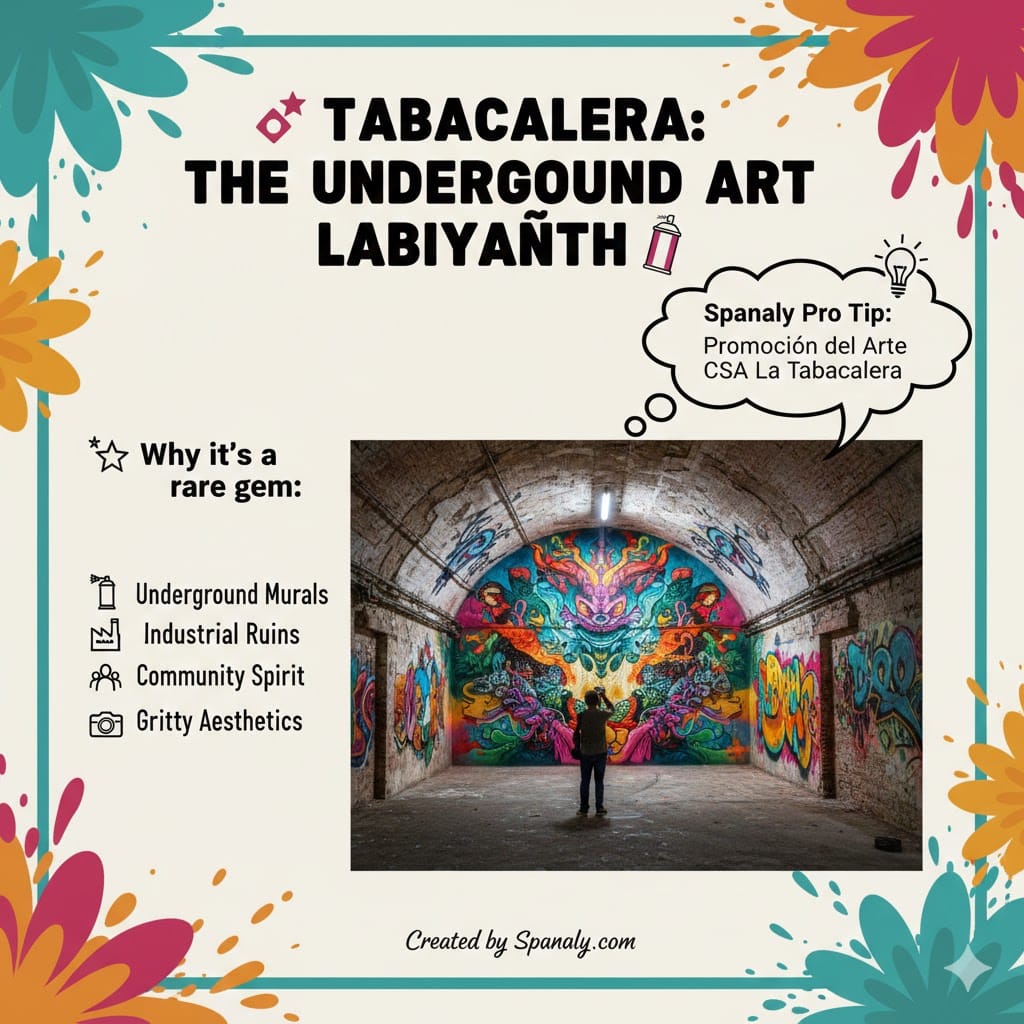
Once a massive tobacco factory built in the 18th century, Tabacalera has transformed into Madrid’s most vibrant center for contemporary and street art. Unlike the polished halls of the Prado, this space is raw, authentic, and constantly evolving. Because it is a self-managed cultural space, the walls are covered in ever-changing murals and graffiti. Consequently, walking through its underground tunnels feels like exploring the beating heart of Madrid’s alternative soul.
✨ Why it’s a rare gem:
🧪 Underground Murals: Explore the “Muros Tabacalera,” a series of tunnels where world-class street artists leave their mark.
🏭 Industrial Ruins: Admire the contrast between the decaying industrial architecture and the vibrant, modern colors.
🎭 Community Spirit: Witness live workshops, photography exhibitions, and community projects in action.
📸 Gritty Aesthetics: Perfect for those seeking an “urban” and edgy backdrop for their travel photos.
💡 Spanaly Pro Tip: There are actually two parts: the Promoción del Arte (managed by the Ministry of Culture) and the CSA La Tabacalera (the self-managed community part). Check the schedule before you go, as the community side often hosts free concerts and artisan markets on weekends that aren’t advertised in mainstream tourist guides.
🌅 Templo de Debod: Secrets Inside the Sanctuary
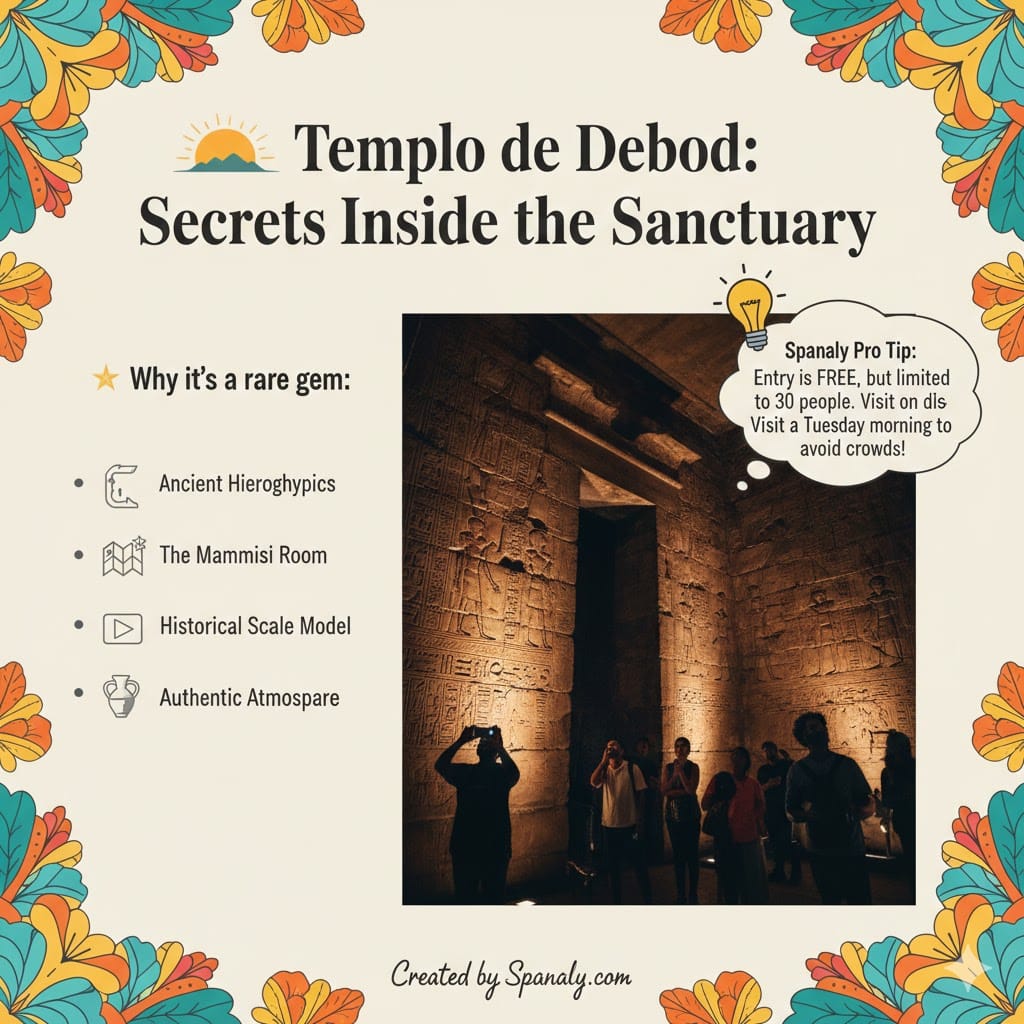
While everyone gathers outside to witness Madrid’s most famous sunset, the true treasure lies within the stone walls of this 2,200-year-old Egyptian temple. Gifted to Spain in 1968, the Templo de Debod is not just a monument; it is a portal to ancient Nubia. For instance, the interior rooms house original relief carvings and a scale model that explains its journey from the Nile to the Manzanares. Consequently, step inside to experience a mystical silence that contrasts with the lively crowds outdoors.
✨ Why it’s a rare gem:
📜 Ancient Hieroglyphics: Discover hidden carvings and inscriptions dedicated to the gods Amun and Isis inside the main halls.
🗺️ The “Mammisi” Room: Explore the “birth house” of the temple, which remains remarkably preserved despite its long journey.
🎥 Historical Scale Model: See the fascinating miniature reconstruction of how the temple originally looked in Egypt before the Aswan Dam project.
🏺 Authentic Atmosphere: Feel the cool, ancient stone and the sacred geometry that has survived for over two millennia.
💡 Spanaly Pro Tip: Entry to the interior is free, but only 30 people are allowed inside at a time to preserve the humidity and temperature. There is often a line, so we recommend visiting on a Tuesday morning when most people are at work. Also, note that the interior is closed during extreme heat or maintenance, so check the official Madrid City Council website before your visit.
🍷 Mercado de San Fernando: The Book & Beer Stall

Forget the polished counters of Mercado de San Miguel; Mercado de San Fernando in the Lavapiés neighborhood is where the real soul of Madrid lives. This is a community-driven market where traditional butcher shops sit next to artisanal craft stalls. The highlight is the legendary “La Casquería,” where you don’t buy books by the title, but by the weight. For instance, you can grab a kilo of literature and then head to a neighboring stall for a fresh craft beer. Consequently, spending an afternoon here feels like being part of a local secret society.
✨ Why it’s a rare gem:
📚 Books by the Kilo: Experience the most unique way to buy books—on a vintage scale, priced by weight just like fruit.
🍻 Craft Beer Haven: Sample local Madrid brews that you won’t find in the big supermarket chains.
🧀 Authentic Flavors: Enjoy artisanal cheeses and organic local produce in a vibrant, non-touristy atmosphere.
🎷 Weekend Vibes: On Sundays, the market often fills with live music, creating an electric, neighborhood-party feel.
💡 Spanaly Pro Tip: While many tourists flock to the Rastro flea market on Sunday mornings, the Mercado de San Fernando gets incredibly lively right after. Our advice? Visit on a Friday evening. You’ll avoid the massive Rastro crowds and get to experience the “Tardeo” (afternoon drinks) culture with the locals in its most authentic form.
📍 How to Visit Madrid’s Hidden Gems in One Perfect Day

If you want to maximize your time and see as many of these secrets as possible, follow this “insider loop” designed for efficiency. This route minimizes travel time and maximizes discovery:
🌅 Morning (10:00 AM – 12:00 PM): Begin with Ancient Egypt Start your day at the Templo de Debod (interior). Arrive precisely at 10:00 AM to be among the first 30 people allowed inside. From there, it’s a short 15-minute walk or a quick metro ride to the Ancient Track (Chamberí Ghost Station) for your pre-booked slot. Experience the preserved history before the crowds gather.
🏛️ Midday (12:30 PM – 2:00 PM): Reflective History & Grandeur Next, take the metro to Atocha. Tucked away nearby, the Panteón de los Hombres Ilustres offers a serene escape. Its quiet cloisters and stunning sculptures provide a reflective break before the city’s lively afternoon. This timing helps you visit before its typical “siesta” closure.
🎨 Afternoon (3:00 PM – 6:00 PM): Art, Books & Brews From the Panteón, walk over to the vibrant Lavapiés neighborhood. Dive into the dynamic world of Tabacalera Promoción del Arte, exploring its ever-changing street art. Afterwards, immerse yourself in local culture at Mercado de San Fernando, where you can buy books by weight and sample artisanal craft beers.
🌳 Evening (6:30 PM onwards): Serenity & Sunset Conclude your journey with a peaceful stroll through the Garden of the Prince of Anglona, a romantic 18th-century garden perfect for unwinding. If you started early, you might even catch the last glimpses of sunset light here, a beautiful end to a day of hidden discoveries.
💡 Spanaly Pro Tip: This itinerary assumes you’re comfortable with walking and using Madrid’s efficient metro system. Purchase a “Tarjeta Multi” for easy tap-and-go travel on all public transport, saving you time at ticket machines.
💡 Extra Pro Tips (The "Spanaly" Secret Handbook)

To truly master your Madrid city tour and explore like a local, you need more than just a map. These exclusive travel hacks will help you navigate the city’s best-kept secrets while saving time and money. Here is the Spanaly secret handbook for an unforgettable Spanish adventure:
🗝️ Unlock the “Open House” Secrets: Beyond the main sites, Madrid hosts an annual “Open House” event and several “Patrimonio Abierto” days. During these times, dozens of private palaces and hidden gardens that are usually closed to the public open their doors for free. If your visit aligns with these dates, it’s the ultimate way to see secret Madrid architecture.
📱 Use the “Cercanías” for Faster Travel: While everyone uses the Metro, the Cercanías (commuter trains) are often faster for crossing the city (e.g., from Atocha to Sol or Chamartín). Your “Tarjeta Multi” or tourist pass usually works here too. It’s a great way to reach gems on the city’s edge without the long underground stops.
💧 The “Botijo” Spirit (Free Water): Madrid has some of the best tap water in Europe. Instead of buying plastic bottles, look for the historic “Fuentes de Agua” (ornate stone water fountains) scattered around the city. They are safe, free, and eco-friendly—perfect for staying hydrated during your walking tour of Lavapiés.
🎭 Book “Last Minute” Cultural Tickets: If you want to catch a show near Tabacalera or a performance in a historic theater, check the “Entradas de Último Minuto” kiosks. You can often find discounts of up to 50% for same-day cultural events that aren’t advertised to tourists.
✨ Spanaly Golden Pro Tip: Master the “Spanish Nap” Strategy: Remember that Madrid’s rhythm is unique. Between 2:00 PM and 5:00 PM, the city “breathes.” Use this time for a long, slow lunch (Menú del Día) or to relax in a park like the Garden of Anglona. Trying to rush or shop during these hours is a rookie mistake, as many local businesses and smaller hidden gems take their traditional break. Align your energy with the city’s heartbeat!
📍 Visitor FAQs – Madrid's Secret Hidden Gems
🎫 Can I use the same ticket for all these hidden spots?
Yes, most of these locations are within the Zone A of Madrid's transport network. We recommend the 10-journey "Tarjeta Multi", which can be shared between two people. It's the most cost-effective way to hop between Lavapiés (for markets) and Moncloa (for the temple).
📸 Are there any photo restrictions in these secret locations?
While street art in Tabacalera is a photographer's dream, places like the Panteón de los Hombres Ilustres strictly forbid flash to protect the marble. In the Ghost Station, tripods are generally not allowed due to space—so bring a lens with a wide aperture for those low-light shots.
🗣️ Do I need to speak Spanish to visit these neighborhood gems?
In tourist spots like the Prado, English is everywhere, but in Mercado de San Fernando, it’s less common. However, locals are very welcoming! Having a few basic Spanish phrases or a translation app ready will significantly enhance your experience when buying books or ordering craft beer.
🔒 Is the Lavapiés district safe for solo night exploration?
Absolutely. Lavapiés is a vibrant, multicultural hub that is very active at night. While you should always exercise standard urban "street smarts," the area around Tabacalera and the market is well-lit and filled with locals enjoying tapas well into the midnight hours.
⏳ How far in advance should I book the Ghost Station?
For the Chamberí Ghost Station (Andén 0), slots open on the official website several weeks in advance. During peak season, weekend slots disappear within hours. We recommend checking the site at least 14 days before your planned visit to secure your preferred time.
Created by Spanaly.com
✨ Madrid is Waiting for You!
Madrid’s true magic isn’t found in the guidebooks—it’s hidden in the quiet corners we’ve explored together. From “Ghost Stations” to secret gardens, you’re now ready to see the city like a true local.
🚶 Explore: Step off the beaten path and let the city surprise you.
📸 Capture: Every hidden gem is a story waiting to be told.
🍷 Savour: Don’t forget to dive into the world of Spanish Cuisine between your adventures.
🎉 Celebrate: Timing is everything! Check if your trip aligns with a vibrant Spanish Festival for the ultimate experience.
💡 Spanaly’s Heart: > The best travel memories are the ones you didn’t plan for. Enjoy the discovery!