
Table of Contents
Toggle📍 Madrid to Alicante
Swapping the majestic architecture of Madrid for the golden sands of Alicante is a traveler’s dream come true. Whether you are chasing the high-speed thrill of the train or the budget-friendly ease of the bus, reaching the Mediterranean coast has never been simpler. 🏖️
The Quick Answer (Search Intent):
The Fastest Way: The AVE or Ouigo high-speed trains will whisk you from the capital to the coast in just 2 hours and 15 minutes. 🚄
The Cheapest Way: The ALSA bus is your budget hero, with fares starting as low as €7 if booked in advance. 🎫
Why Make the Trip?
Madrid: Explore the world-class museums and royal palaces of Spain’s beating heart. 👑
The Journey: Cross the vast plains of Castile-La Mancha, the land of Don Quixote. 🏰
Alicante: Arrive at the iconic Postiguet Beach and climb the Santa Bárbara Castle for breathtaking sea views. 🌊
✨ Spanaly Expert Insight
Don’t just arrive and wander aimlessly! To truly experience the magic of the Costa Blanca, make sure to follow our Ultimate Alicante Itinerary. It’s designed to help you discover hidden tapas bars and secret coastal spots that most tourists miss.
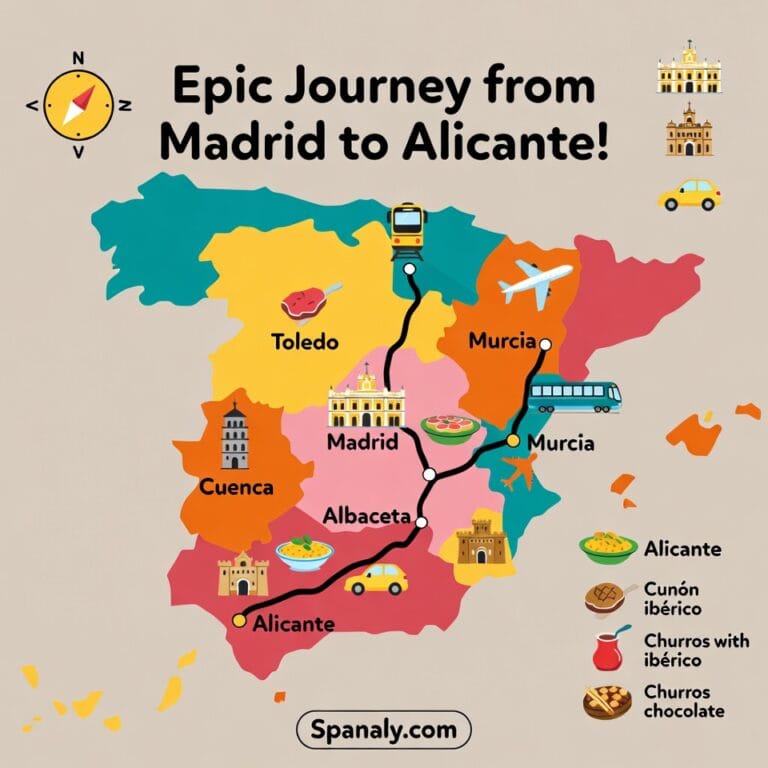
📍 Route Snapshot: Madrid to Alicante
📍 Madrid to Alicante: Interactive Route Guide - Spanaly.com
Live MapSource: Spanaly.com
🗺️ How to Travel from Madrid to Alicante (Step-by-Step)
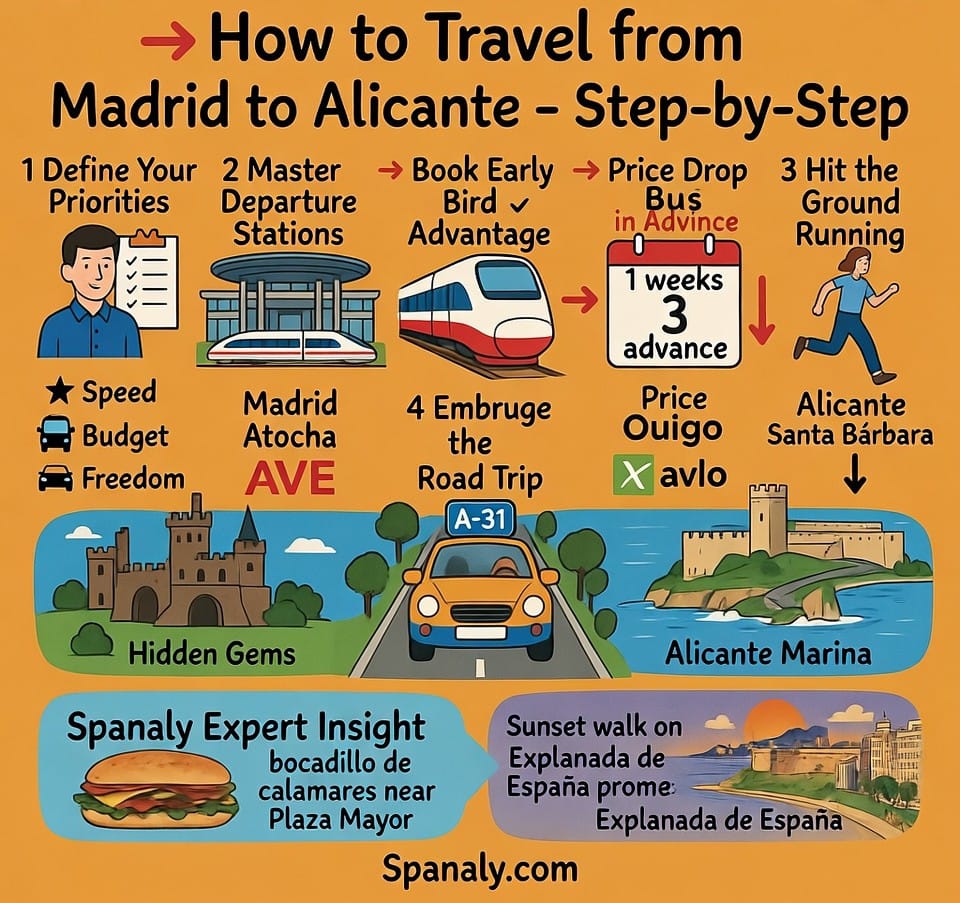
Mastering the 420 km route from the grand avenues of the capital to the sparkling Mediterranean shores requires a touch of local “Savoir-faire.” Follow these steps to ensure a seamless transition:
🎯 Define Your Priorities: Decide what matters most—speed, budget, or freedom. If you value time, the high-speed rail is unbeatable. If you are on a tight budget, the long-distance bus offers the best value.
🚉 Master the Departure Stations: Most high-speed trains depart from the iconic Atocha Station. For more details on navigating the city’s transport hubs, check our Ultimate Madrid Travel Guide.
🎫 Book the “Early Bird” Advantage: For all train operators (AVE, Ouigo, Avlo), tickets are significantly cheaper when booked at least 3 weeks in advance. Prices can jump significantly as the travel date approaches.
🚗 Embrace the Road Trip: If you choose to drive, the A-31 highway is your main path. Driving allows you to discover hidden gems and inland castles that public transport simply cannot reach.
🌊 Hit the Ground Running: Once you arrive at Alicante Terminal, you are just a short walk from the marina. To see the city’s most iconic landmark immediately, head straight to the Castillo de Santa Bárbara for breathtaking views.
✨ Spanaly Expert Insight
Before leaving the capital, make sure you’ve enjoyed a classic “Bocadillo de Calamares” near Plaza Mayor. Once in Alicante, don’t forget that the Mediterranean rhythm is slower—take your time and enjoy a sunset walk along the Explanada de España.
⚖️ Transport Comparison: Time, Cost & Comfort
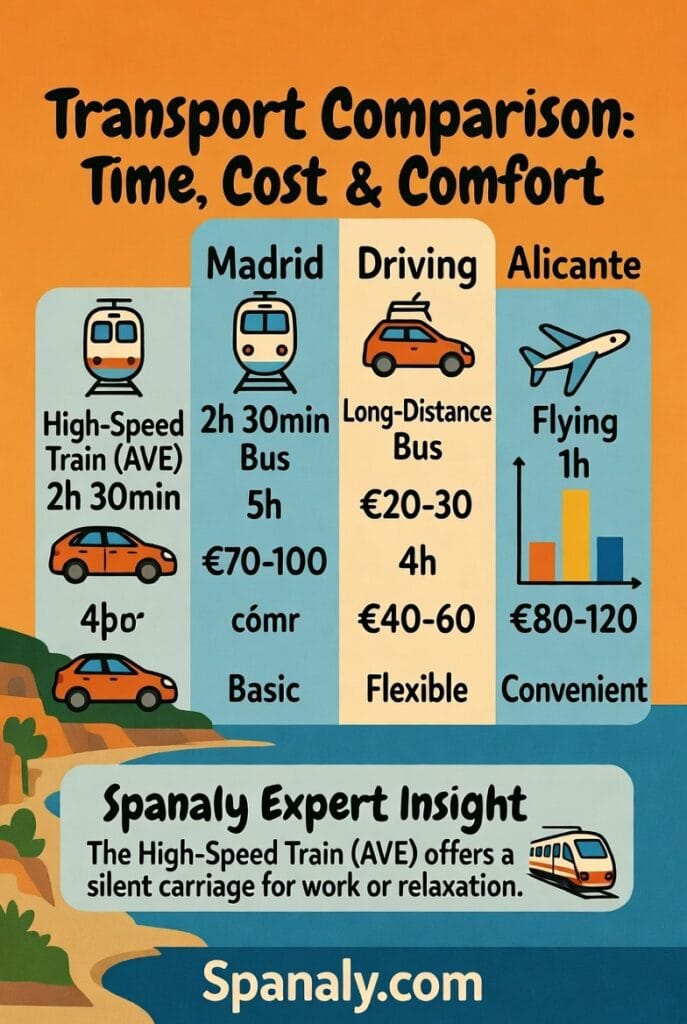
Choosing the right way to travel from Madrid to Alicante depends on whether you prioritize reaching the beach in record time or keeping your euros for more tapas by the sea. Here is how the main options stack up:
| Transport Mode | Travel Time | Starting Cost | Comfort Level | Best For… |
| High-Speed Train (AVE/Ouigo) | 🚄 2h 15m | €9 – €15 | ⭐⭐⭐⭐⭐ | Speed & Business Travel |
| Long-Distance Bus (ALSA) | 🚌 4h 30m – 5h | €7 – €12 | ⭐⭐⭐ | Budget Backpackers |
| Driving (Rental Car) | 🚗 ~4h 00m | €40 + Gas/Tolls | ⭐⭐⭐⭐ | Families & Road Trippers |
| Flying (Iberia/Air Europa) | ✈️ 1h 05m* | €45 – €80 | ⭐⭐⭐ | Connecting Passengers |
*Note: Flying takes 1 hour in the air, but total travel time (including airport security and transfers) often exceeds 3.5 hours.
🔍 Breaking Down the Options
The Speed Winner: High-speed rail is the undisputed king of this route. Since the arrival of low-cost competitors like Ouigo and Avlo, you can often find train tickets that are cheaper than the bus, making it a “no-brainer” for most.
The Budget King: If you are traveling last-minute and train prices have spiked, the ALSA bus remains a steady and affordable alternative.
The Scenic Route: Driving allows you to explore the Castilian plateau and make a pitstop in the historic city of Albacete or visit the vineyards along the way.
✨ Spanaly Expert Insight
If you choose the train, try to book a seat in the “Silent Carriage” (Coche Silencio) on Renfe trains. It’s perfect if you want to catch up on some work or take a nap before hitting the Alicante nightlife!
🚅 Madrid to Alicante Train (AVE, Ouigo & Avlo)
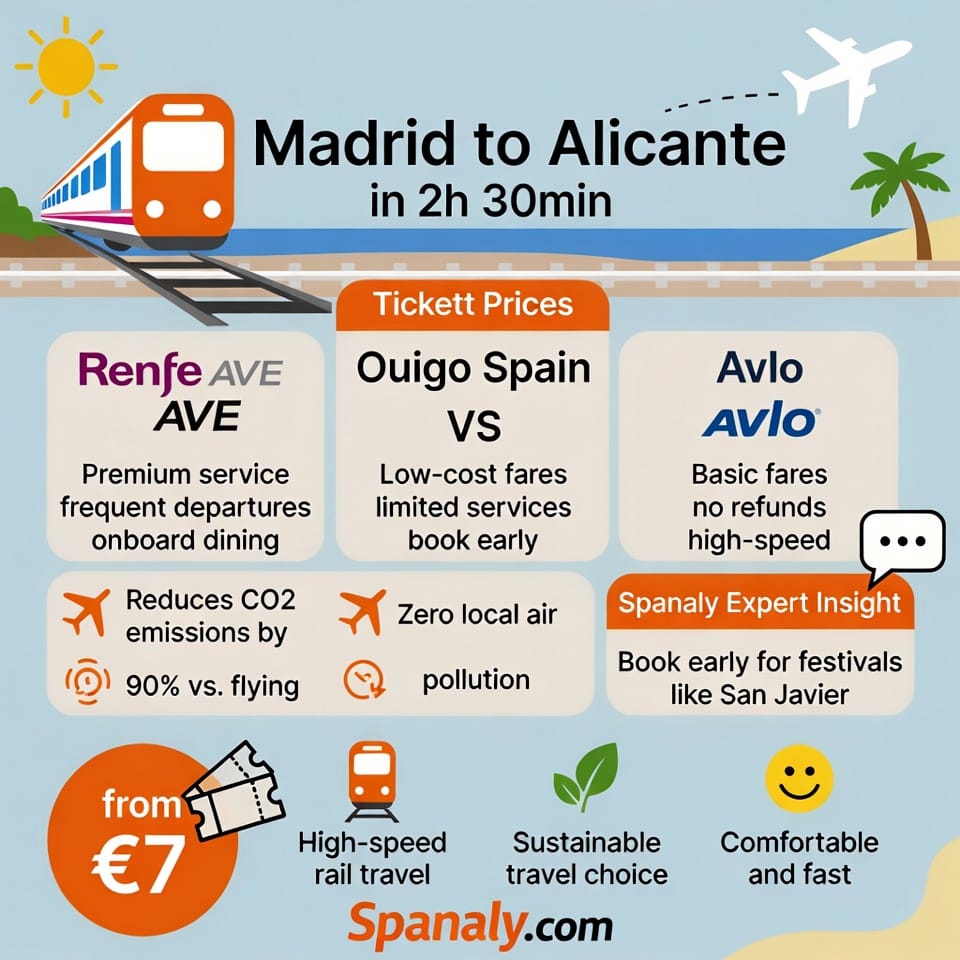
If you want to travel like a local expert, the high-speed rail is the undisputed winner for the Madrid to Alicante route. Since the liberalization of the Spanish rail market, this journey has become a “price war” zone, which is fantastic news for your travel budget. You can now choose between premium comfort and ultra-low-cost fares that sometimes start as low as €7.
Choosing Your Operator: AVE, Ouigo & Avlo
Renfe AVE: The classic choice for those who value premium service and the most frequent schedules. It’s the gold standard of Spanish rail. You can book directly via the official Renfe website.
Ouigo Spain: A stylish French low-cost option featuring double-decker trains. It’s a great middle-ground for comfort and price. Check their latest deals at Ouigo.com.
Avlo: Renfe’s no-frills budget brand. If you are traveling light and just want to get to the beach fast, this is your best bet for snagging the cheapest tickets.
Why the Train Wins
Traveling by train allows you to skip the long security lines of the airport and the traffic jams of the highway. It’s the most sustainable way to cross the Castilian plains, and since it’s a direct route, you can spend those 2 hours catching up on our Ultimate Madrid Travel Guide to ensure you didn’t miss any capital secrets before heading to the coast.
✨ Spanaly Expert Insight
Keep an eye on the calendar! If your trip coincides with major Spanish Festivals, train tickets will sell out weeks in advance. For this specific route, the “Early Bird” doesn’t just get the worm; they get the €9 seats that jump to €70 on the day of travel.
✈️ Madrid to Alicante Flight Options
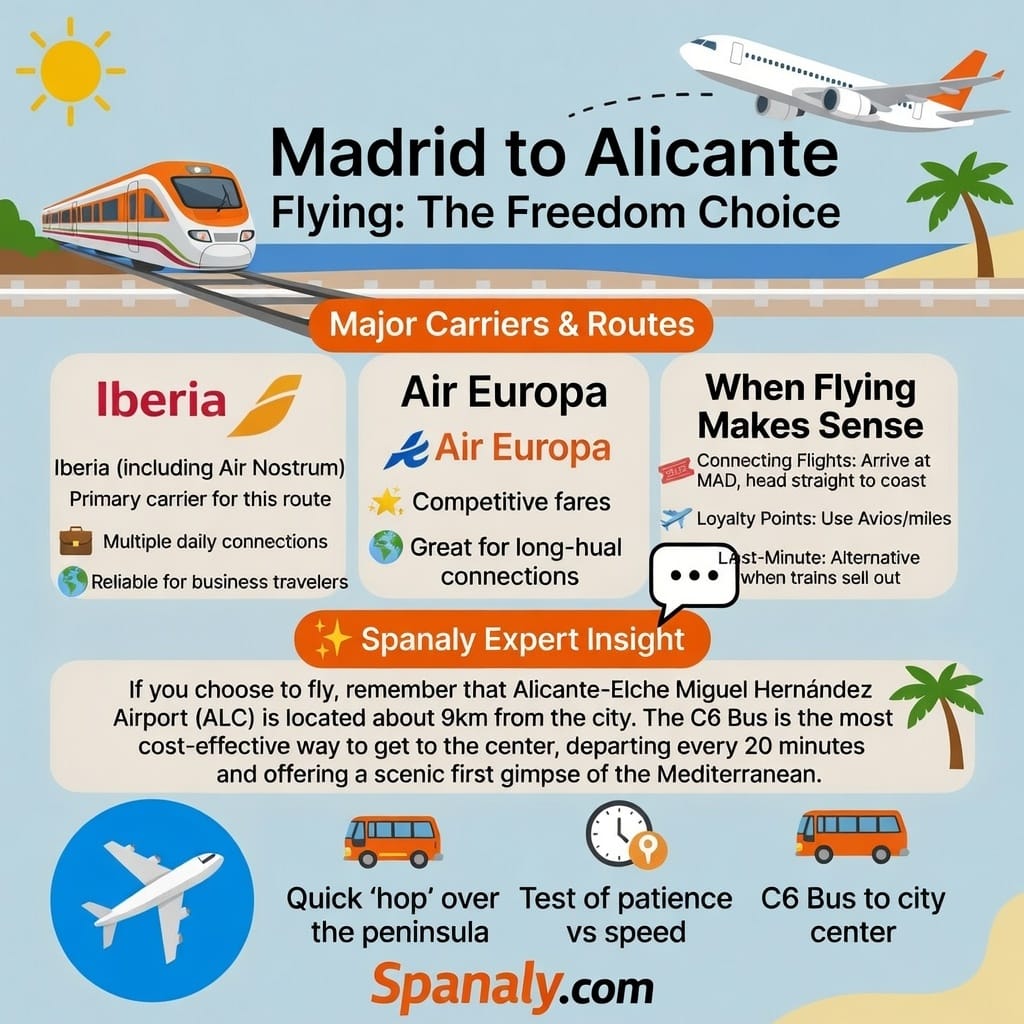
While the train is the king of this route, flying from Madrid to Alicante remains a relevant option for specific types of travelers. The flight itself is a quick “hop” over the Iberian Peninsula, but when you factor in the commute to the airport and security checks, it’s often a test of patience versus speed.
Major Carriers & Routes
Iberia (including Air Nostrum): The primary carrier for this route, offering multiple daily connections. It’s the most reliable choice for business travelers or those with international connections. You can check schedules on the Iberia Official Website.
Air Europa: Often provides competitive fares, especially if you are connecting from their long-haul network.
When Does Flying Make Sense?
Flying is rarely faster than the high-speed train for those staying in Madrid’s city center. However, it is the “Freedom Choice” if:
Connecting Flights: You are arriving at Madrid-Barajas Airport (MAD) from an international destination and want to head straight to the coast without changing stations.
Loyalty Points: You are a frequent flyer looking to maintain your status or use Avios/miles for a nearly free ticket.
Last-Minute Rail Spikes: On rare occasions during peak Semana Santa, train seats sell out completely, leaving the “Air Bridge” as your only fast alternative.
✨ Spanaly Expert Insight
If you choose to fly, remember that Alicante-Elche Miguel Hernández Airport (ALC) is located about 9km from the city. The C6 Bus is the most cost-effective way to get to the center, departing every 20 minutes and offering a scenic first glimpse of the Mediterranean.
🚌 Long-Distance Bus: The Budget King
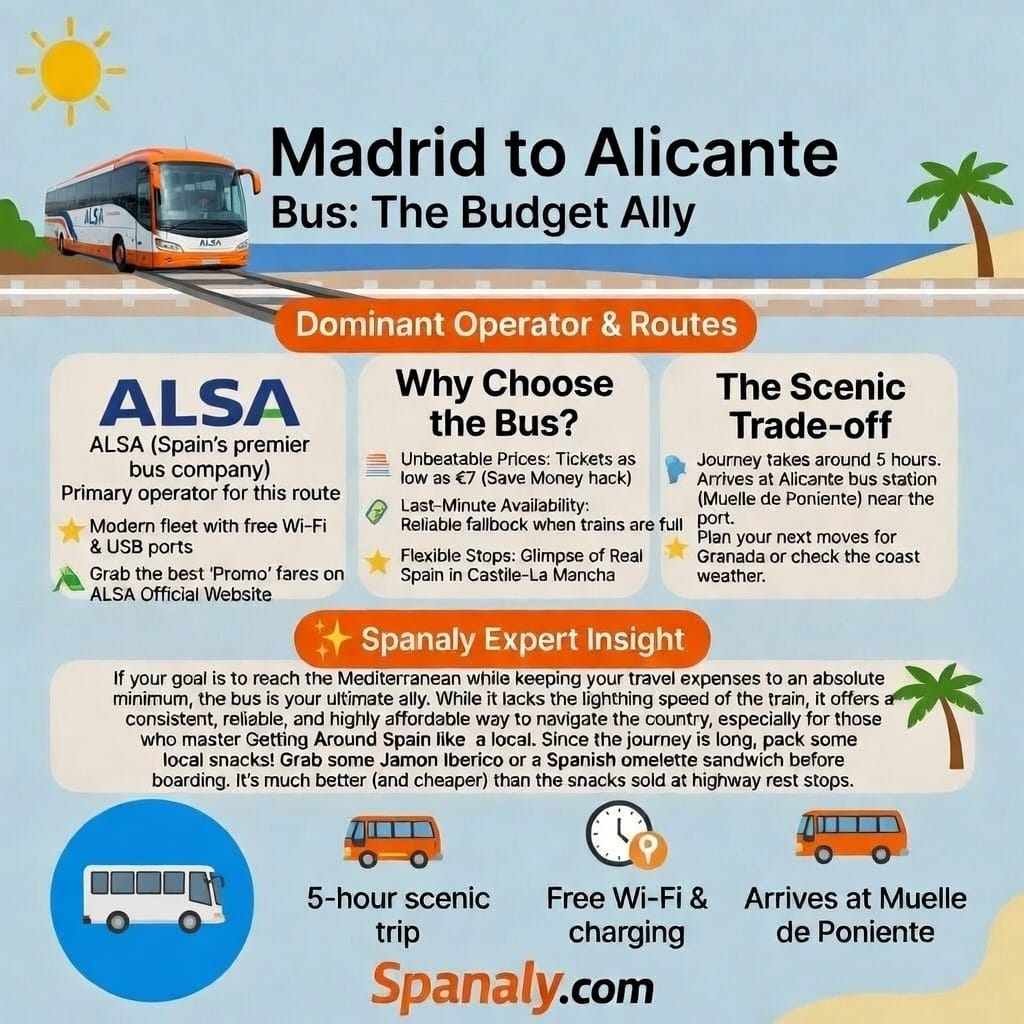
If your goal is to reach the Mediterranean while keeping your travel expenses to an absolute minimum, the bus is your ultimate ally. While it lacks the lightning speed of the train, it offers a consistent, reliable, and highly affordable way to navigate the country, especially for those who master Getting Around Spain like a local.
The Dominant Operator: ALSA
The route is almost exclusively managed by ALSA, Spain’s premier bus company. Their modern fleet ensures that even a 5-hour journey is comfortable, featuring free Wi-Fi and USB charging ports. You can grab the best “Promo” fares directly on the ALSA Official Website.
Why Choose the Bus?
Unbeatable Prices: While high-speed trains fluctuate wildly, bus tickets remain stable, often starting as low as €7. This is the ultimate “Save Money” hack, allowing you to spend more on Traditional Spanish Food once you arrive.
Last-Minute Availability: When trains are fully booked, the bus remains a reliable fallback. If you are coming from other coastal cities, you might even compare this with the Valencia to Malaga routes for a broader Mediterranean tour.
Flexible Stops: The bus often stops at smaller towns in the Castile-La Mancha region, giving you a glimpse of the “Real Spain” beyond the tourist hubs.
The Scenic Trade-off
The journey takes around 5 hours. It’s the perfect time to sit back and plan your next moves—perhaps looking ahead to a visit to the Alhambra in Granada or checking the weather for the coast. The bus arrives at the Alicante bus station (Muelle de Poniente), which is conveniently located near the port.
✨ Spanaly Expert Insight
Since the journey is long, pack some local snacks! Grab some Jamon Iberico or a Spanish omelette sandwich before boarding. It’s much better (and cheaper) than the snacks sold at highway rest stops.
🚗 Driving & Road Trip: The Freedom Choice
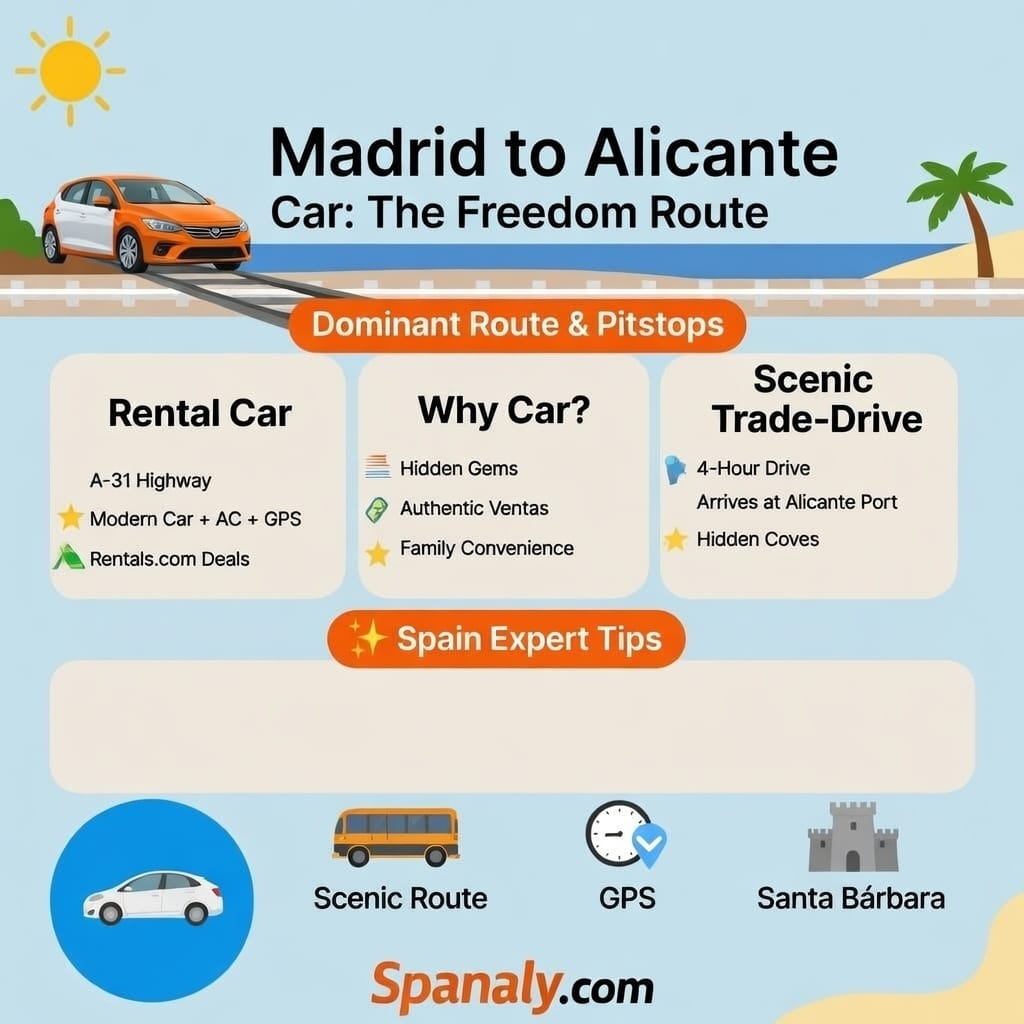
For those who believe the journey is just as important as the destination, driving from Madrid to Alicante is an invitation to explore the rugged heart of Spain. This 420 km (261-mile) trip primarily follows the A-31 highway, cutting through the vast plains of La Mancha—the legendary land of windmills and castles.
The Route at a Glance
The drive typically takes about 4 hours, but “Spanaly style” means making the most of your freedom. If you haven’t yet mastered the local rules, our guide on Driving in Spain is an essential read before you hit the ignition.
Must-See Pitstops Along the A-31
Chinchón: Just a short detour from Madrid, this town features one of the most beautiful plazas in Spain.
Albacete: Known as the “New York of La Mancha,” it’s the perfect spot to stretch your legs and perhaps pick up some famous Toledo Steel inspired cutlery.
Almansa Castle: An imposing fortress that sits on a cliff, offering a spectacular view that signals you are leaving the plateau and approaching the coast.
Why Choose the Car?
Hidden Gems: Having a car allows you to visit “off-the-beaten-path” spots like the pink salt lakes near the coast or secluded coves that buses can’t reach.
Culinary Freedom: You can stop at authentic roadside “Ventas” to try Tortilla Española that tastes exactly like a Spanish grandmother made it.
Family Convenience: If you are traveling with heavy luggage or a large group, the cost of a rental often beats buying multiple individual train tickets.
✨ Spanaly Expert Insight
Parking in Alicante city center can be both tricky and expensive. If your accommodation doesn’t provide a garage, look for public parking near the Alicante Port. Alternatively, consider a day trip to the Castle of Santa Bárbara where you can park at the base and take the elevator up for those iconic Mediterranean vistas!
📍 Logistics: Where the Journey Starts & Ends
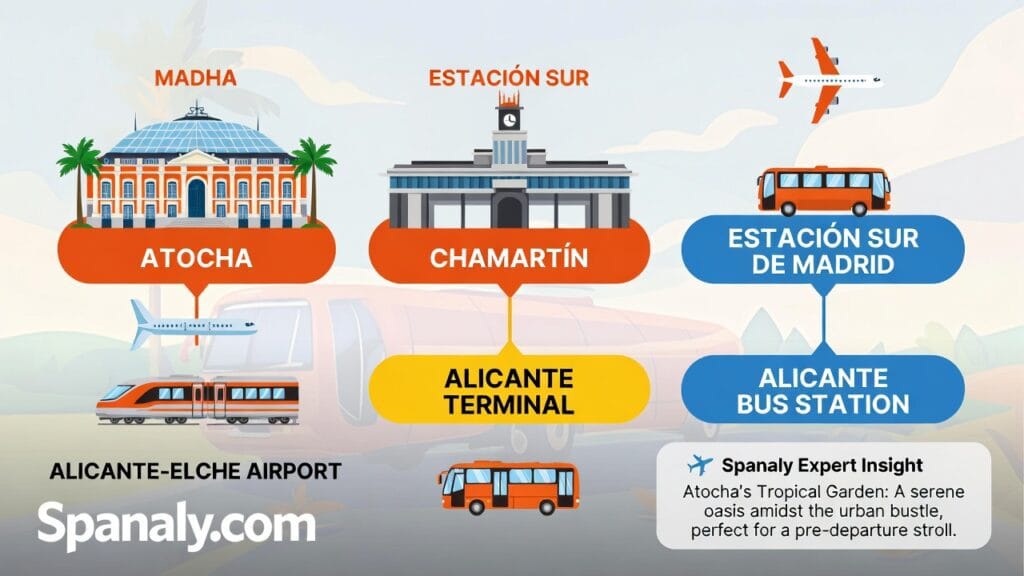
Understanding the transport hubs is key to a smooth transition. Madrid is a massive city with multiple stations, so “double-checking” your ticket is the first rule of Spanish travel.
🚉 Departing from Madrid
Atocha Station (Puerta de Atocha): The main hub for high-speed trains (AVE/Avlo/Ouigo) heading east. It is centrally located and connected by Metro Line 1.
Chamartín Station: Located in the north, some low-cost rail operators now use this as their base. Always verify your departure point!
Estación Sur (Méndez Álvaro): The primary terminal for ALSA buses. If you’re coming from the airport, it’s easily accessible via the Cercanías train (Line C-1).
🏁 Arriving in Alicante
Alicante Terminal (Train): Located right in the city center (Avenida de Salamanca). You can walk to most central hotels or hop on the Alicante Tram at the nearby “Luceros” station.
Alicante Bus Station (Muelle de Poniente): Situated near the port area. It offers a great first view of the sea and is a short taxi ride from the historic district.
Alicante-Elche Airport (ALC): If you arrive by air, the C6 Bus will take you from the terminal to the city center in about 20 minutes.
✨ Spanaly Expert Insight
If you arrive early at Atocha, don’t just wait by the platform. Head inside to the Tropical Garden—a lush jungle right inside the station. It’s the perfect, calm place to relax before your high-speed dash to the Mediterranean coast!
🏆 Verdict: Which Option is Best for You?
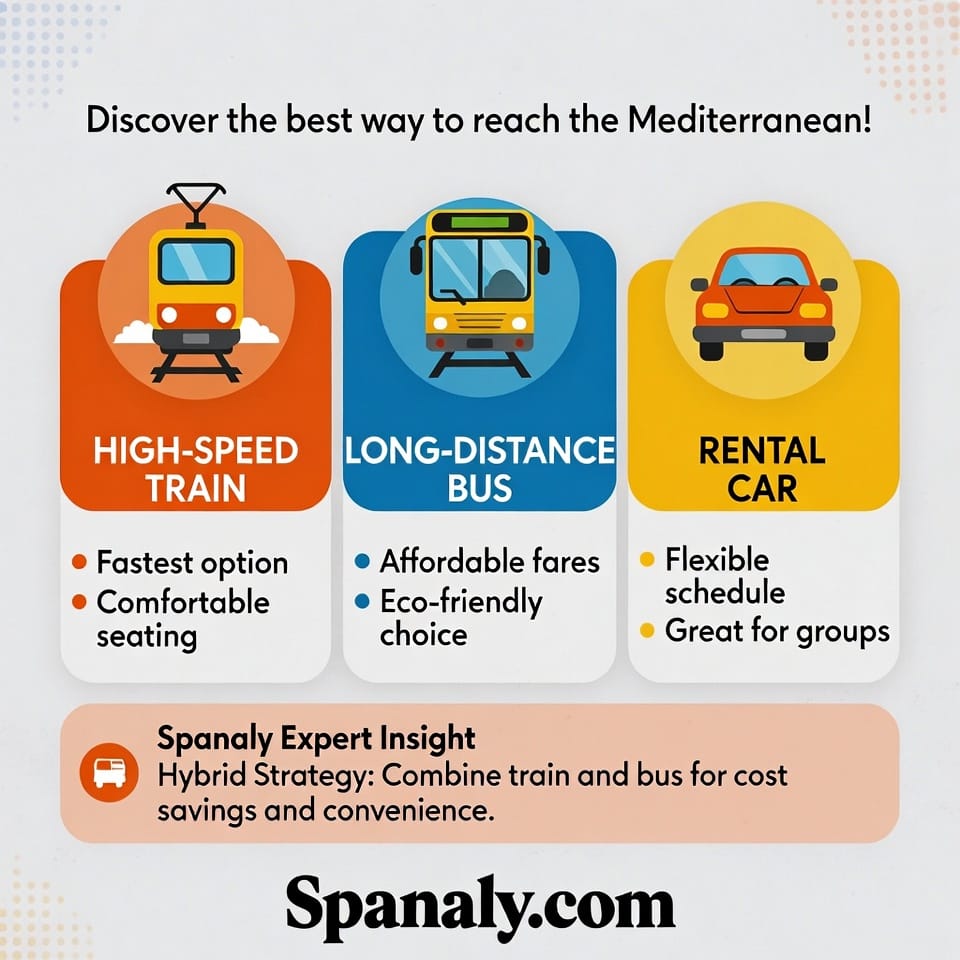
After analyzing speed, cost, and comfort, here is the Spanaly Verdict to help you decide on the best way to reach the Mediterranean:
🥇 The Speed & Comfort Champion: High-Speed Train If you want the best overall experience, the train is unbeatable. You get the luxury of reaching the coast in just over 2 hours, allowing you more time to dive into the local culture and the world-famous Spanish Cuisine by the sea.
Best for: Most travelers, couples, and those on a tight schedule.
🥈 The Budget Warrior: Long-Distance Bus If train prices have spiked and you are watching every euro, the bus is your reliable backup. It’s consistent and perfect for those who want to Save Money while traveling across Spain without sacrificing comfort.
Best for: Backpackers, last-minute travelers, and students.
🥉 The Explorer’s Choice: Rental Car If you are traveling as a family or planning to explore the hidden coves of the Costa Blanca at your own pace, renting a car is the way to go. It offers total freedom that public transport simply cannot match.
Best for: Families, groups, and road-trip enthusiasts.
Final Thought
Regardless of how you get there, the transition from the capital to the coast is one of the most classic Spanish journeys. Once you arrive, the Mediterranean rhythm will take over, offering a perfect contrast to the bustling streets of Madrid.
✨ Spanaly Expert Insight
Our “Pro Tip” for 2026: The Hybrid Strategy. Take the high-speed train to Alicante to save time and energy, then use the local tram or a short-term car rental to explore nearby coastal gems. It’s the ultimate way to combine high-speed efficiency with the total freedom of the open road!
💡 Insider Tips for a Pro Journey
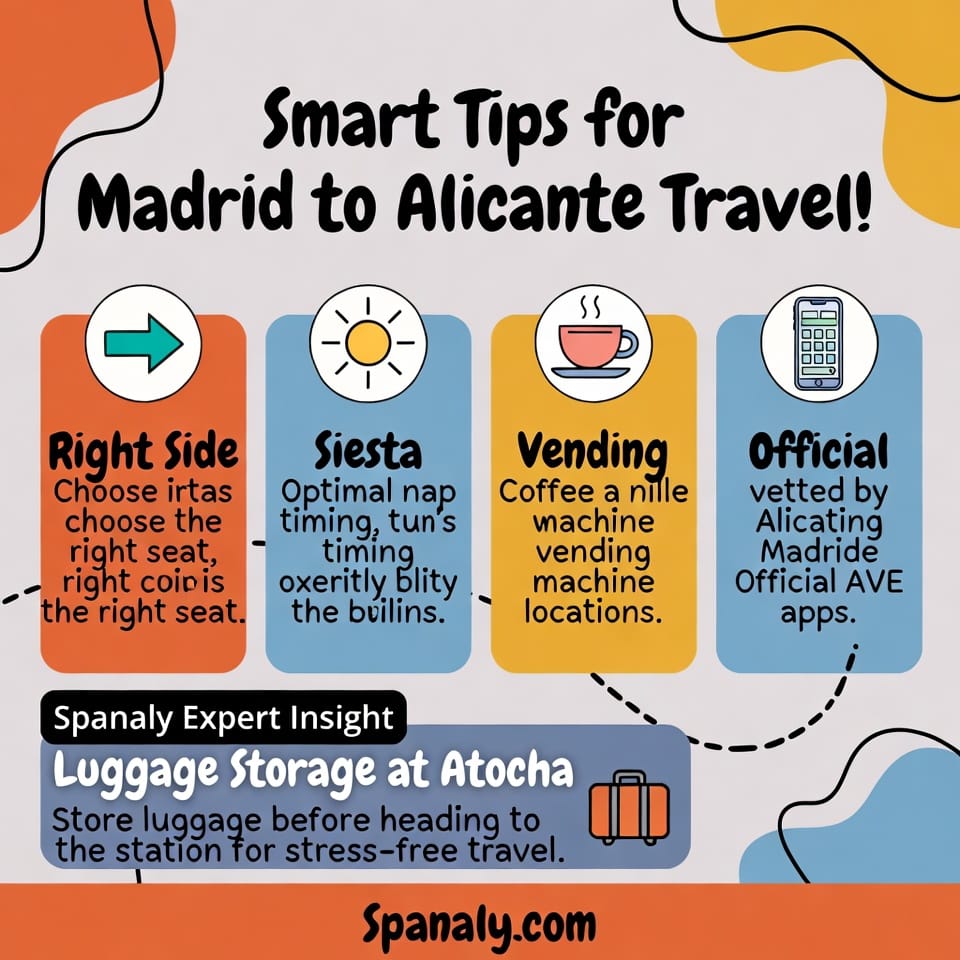
Beyond just booking a ticket, these “Spanaly-vetted” tips will help you navigate the route from Madrid to Alicante with total ease and local savvy:
The “Right Side” Strategy: If you are traveling by train, try to book a seat on the left side of the carriage (facing the direction of travel). As you approach the Mediterranean, you’ll catch the first breathtaking glimpses of the blue horizon and the palm groves long before you pull into the station.
Master the “Siesta” Schedule: Keep in mind the Spain Daily Rhythm. If you arrive in Alicante between 2:00 PM and 5:00 PM, many smaller local shops and traditional eateries might be closed. Plan your arrival meal accordingly—head straight to the larger restaurants along the marina which usually stay open.
The “Vending” Hack: Train station food in Madrid can be pricey. Before boarding at Atocha, visit a local “Supermercado” nearby to grab some fresh fruit or Spanish Snacks. You are allowed to bring your own food and drinks (including a bottle of wine!) on all Spanish trains.
Download the “Official” Apps: Don’t rely solely on Google Maps. Download the Renfe or ALSA apps. They often provide “Flash Sales” not visible on third-party booking sites and will give you real-time updates on platform (Vía) changes.
Dress for a “Thermal Shock”: Madrid can be bone-chilling in winter or scorching in summer, while Alicante stays mild. Always layer your clothing. You might leave Madrid in a heavy coat and find yourself wanting a light t-shirt the moment you step off the train in the Mediterranean sun.
✨ Spanaly Expert Insight
If you have a few hours to kill in Madrid before your departure, don’t lug your suitcases around. Use the Luggage Storage (Consigna) at Atocha station. It’s safe and affordable, giving you the freedom to take one last stroll through Retiro Park before heading to the coast!
🛡️ Visitor FAQs – Madrid to Alicante Travel & Logistics
🛡️ Is it safe to leave my luggage in the train's overhead racks?
Yes, high-speed trains in Spain are very safe. Large suitcases are usually kept in racks at the end of each carriage, while smaller bags go overhead. While theft is extremely rare on board, we recommend keeping your valuables (passport, wallet, electronics) in a smaller bag at your seat for total peace of mind.
🎫 Can I buy my train or bus ticket at the station on the day of travel?
Technically yes, but it is not recommended. High-speed trains to the coast often sell out or the prices triple on the day of departure. Booking online via official apps not only guarantees you a seat but also secures the "Promo" fares which are significantly cheaper than walk-up prices at the ticket window.
💧 Is the tap water in Alicante different from Madrid?
Both are perfectly safe to drink. However, there is a taste difference: Madrid has some of the best-tasting tap water in the world. In Alicante, the water is "harder" (higher mineral content) due to its coastal location. If you have a sensitive palate, you might prefer bottled water for drinking, but the tap water is fine for everything else.
🚑 Are there pharmacies open 24/7 in Alicante?
Yes. Look for the Farmacia de Guardia. While most pharmacies close at 8:00 PM, every district has a designated "duty pharmacy" open all night. You can find the list posted on the window of any pharmacy or via a quick search on your phone. For any major emergency, 112 is the universal number to call.
🚉 Is there a limit on how much luggage I can take on the train?
Standard Renfe/AVE tickets allow up to 3 pieces of luggage. However, low-cost carriers like Ouigo or Avlo have stricter rules similar to budget airlines; you usually get one cabin bag and one small personal item for free. If you have a large suitcase, make sure to add it to your booking online to avoid heavy fees at the boarding gate.
Expertly curated by Spanaly.com
Traveling from Madrid to Alicante is more than just a transit; it’s the gateway to your Mediterranean escape. Whether you choose speed, budget, or adventure, you are now equipped to make the best choice.
🚀 The Winner: High-speed rail (AVE/Ouigo) for a stress-free 2-hour dash.
💰 The Saver: The ALSA bus for consistent, low-cost travel.
🚗 The Explorer: A Rental car for freedom and hidden inland gems.
🗺️ Beyond the Coast: If your Spanish adventure continues South, don’t miss our detailed guide on the Seville to Granada route to master the heart of Andalusia.
✨ Spanaly Final Verdict
Don’t overthink it—book that train ticket early! The joy of watching the Spanish sunrise from a high-speed train while sipping a coffee is the perfect prelude to a plate of authentic paella in Alicante. Enjoy every mile!