
Table of Contents
Toggle🌅 Málaga: Jewel of the Costa del Sol
Few places in Spain embody the Mediterranean soul as beautifully as Málaga. Notably, bathed in sunshine for more than 300 days a year, this vibrant Andalusian city blends ancient civilizations, artistic brilliance, and a golden coastal lifestyle. Specifically, located on the legendary Costa del Sol, Málaga is a city of fascinating contrasts:
🏛️ Ancient yet Modern: Phoenician foundations meeting futuristic port designs.
🎨 Artistic yet Traditional: The birthplace of Picasso mixed with deep-rooted flamenco rhythms.
🌊 Relaxed yet Energetic: Lazy beach days followed by an electric tapas scene at night.
Indeed, from its historic fortresses to the scent of seaside “espetos” (grilled sardines), Málaga invites travelers to discover the true essence of southern Spain. Much like the coastal charm found in our Cádiz Travel Guide, this city serves as a sun-drenched gateway to Andalusian culture. Ultimately, Málaga is more than just a transit point; it is a destination where history and modern leisure live in perfect harmony.
💡 Spanaly Insight: Many travelers only see the airport on their way to other resorts. In fact, Málaga’s city center has undergone a massive cultural transformation. Notably, it is now home to more museums per square inch than almost any other city in Andalusia!
🏰 Málaga History: 3,000 Years of Civilizations
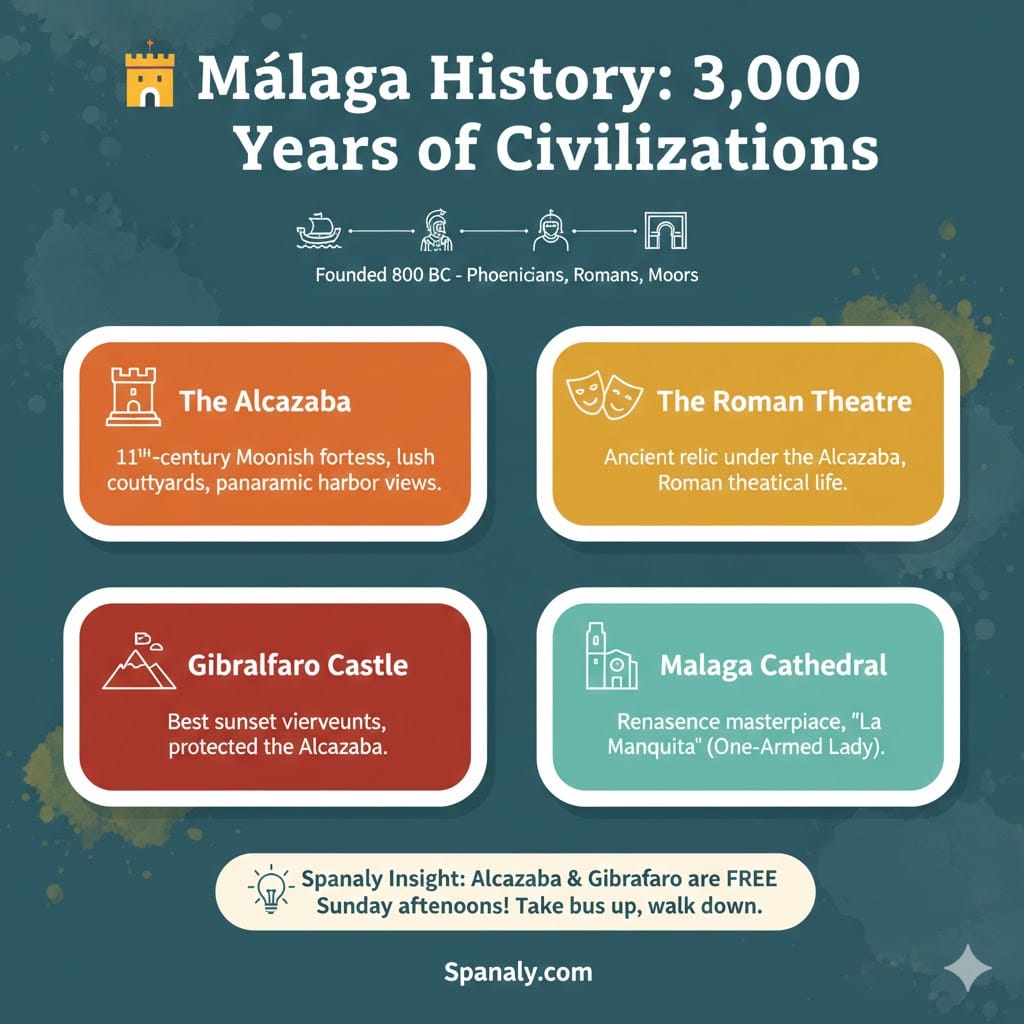
Founded by the Phoenicians around 800 BC, Málaga is among the oldest continuously inhabited cities in Europe. Notably, Romans, Visigoths, and Moors all shaped its identity, leaving behind a layered landscape. Specifically, walking through the historic center feels like turning the pages of a living history book.
🏰 The Alcazaba: An 11th-century Moorish fortress rising above the city. It features lush courtyards, horseshoe arches, and panoramic harbor views.
🎭 The Roman Theatre: Discovered beneath the Alcazaba, this ancient relic reveals Málaga’s theatrical life during the Roman Empire.
⛰️ Gibralfaro Castle: Built to protect the Alcazaba, it offers the best sunset viewpoints in all of Andalusia.
⛪ Málaga Cathedral: Nicknamed “La Manquita” (The One-Armed Lady) due to its unfinished tower, it is a Renaissance masterpiece.
Indeed, the architectural fusion here is as impressive as the landmarks in our Toledo Travel Guide. Ultimately, these monuments are not just stones; they are the soul of the city, connecting the ancient Mediterranean to the modern Spanish spirit.
💡 Spanaly Insight: Want to save money? In fact, the Alcazaba and Gibralfaro Castle are free to visit on Sunday afternoons (usually after 2:00 PM). Notably, the climb to the castle is steep, so take the bus up and walk down for the best views without the sweat!
🎨 Málaga Art: Picasso & Beyond
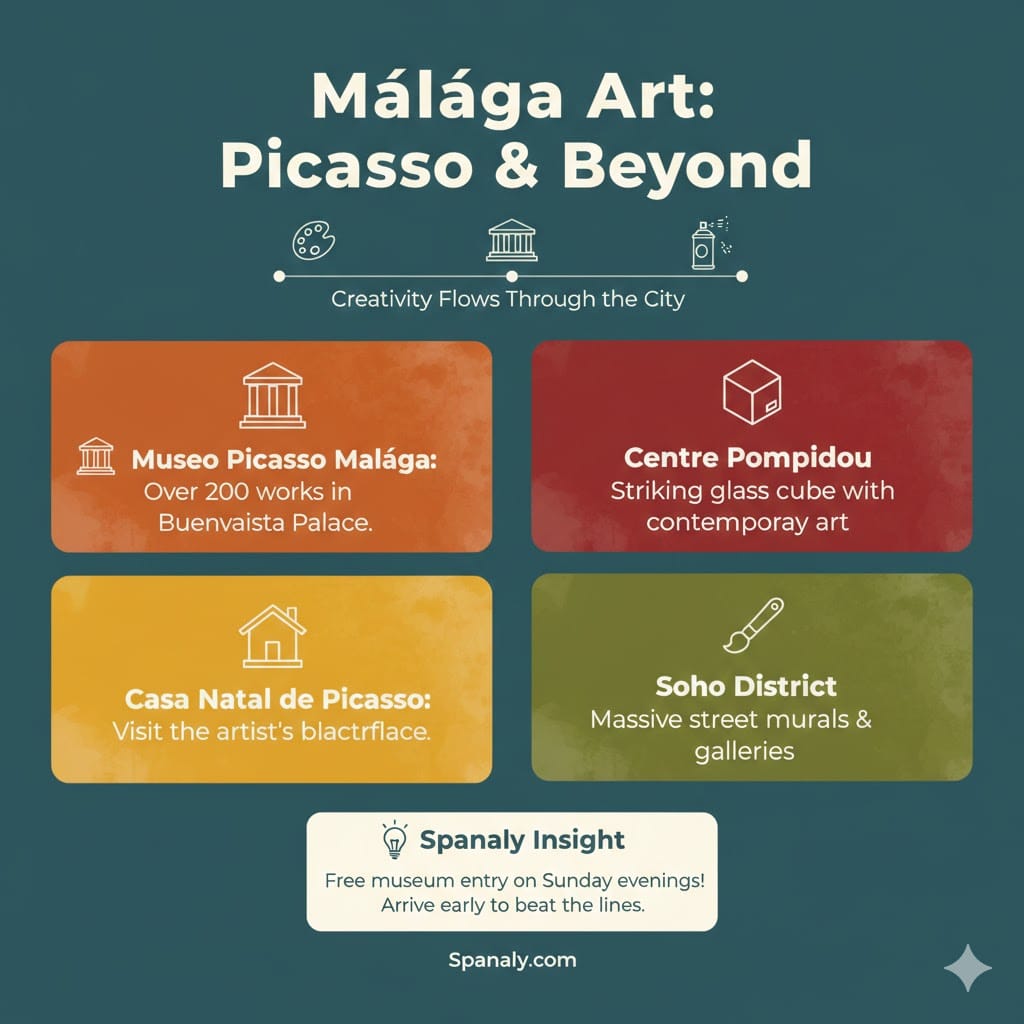
Málaga is the proud birthplace of Pablo Picasso, and today, creativity flows through its historic streets and modern galleries. Notably, the city has reinvented itself as a major European art hub. Specifically, from world-class museums to vibrant street murals, the artistic energy is palpable in every corner.
🏛️ Museo Picasso Málaga: Housed in the stunning Buenavista Palace, featuring over 200 works that trace the artist’s lifelong evolution.
🏠 Casa Natal de Picasso: Visit the very house where the master was born to gain personal insight into his early childhood and family life.
📦 Centre Pompidou: A striking glass cube at the port, serving as a contemporary icon and home to avant-garde Mediterranean art.
🖌️ Soho District: Málaga’s “Neighborhood of the Arts,” where massive street murals and independent galleries create an open-air museum.
Indeed, the city’s transformation into an art capital is as inspiring as the cultural revival found in our Barcelona Travel Guide. Ultimately, whether you prefer classical mastery or gritty urban art, Málaga offers a visual feast that rivals the world’s most famous creative centers.
💡 Spanaly Insight: Looking for a budget-friendly art crawl? In fact, many museums, including the Picasso Museum, offer free entry on Sunday evenings (usually the last two hours of opening). Notably, lines can be long, so arrive 30 minutes before the free window starts!
🏖️ Málaga Beaches: Sun & Costa del Sol Lifestyle
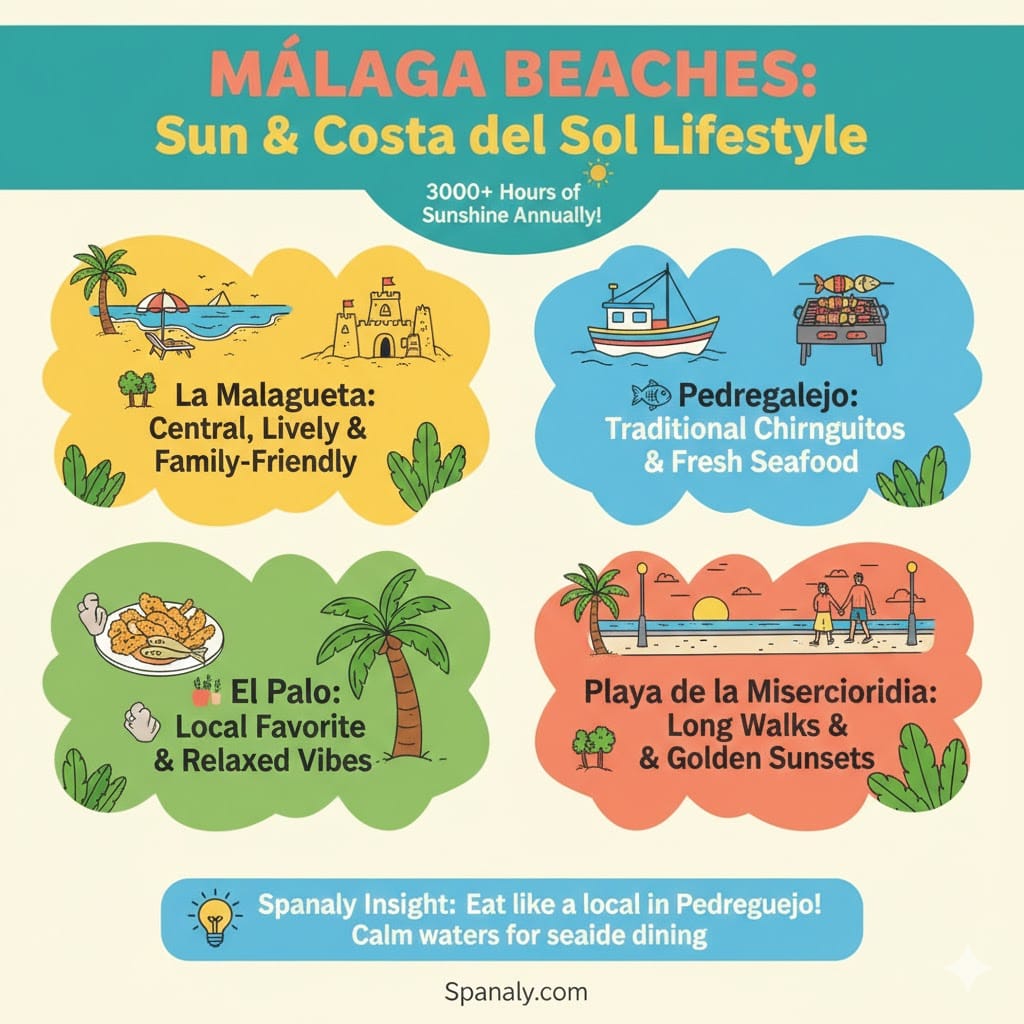
With over 3,000 hours of sunshine annually, Málaga is a city designed for outdoor living. Notably, its coastline offers a diverse range of experiences, from bustling urban sands to traditional fishing quarters. Specifically, whether you are looking for family fun or a quiet sunset stroll, the city’s beaches provide the perfect backdrop.
🏖️ La Malagueta: The most famous urban beach, just a short walk from the center. It is lively, family-friendly, and perfect for a quick dip.
🐟 Pedregalejo: A traditional fishing quarter where you can find iconic “chiringuitos” (beach bars) serving fresh seafood.
🐚 El Palo: A local favorite, offering a more relaxed atmosphere and some of the best fried fish in the province.
🌅 Playa de la Misericordia: A long, clean stretch of sand ideal for sunset walks along its modern promenade.
Indeed, while the vibe is unique to the south, it shares the energetic spirit of the famous Barceloneta Beach in Barcelona. Ultimately, at dusk, joining the locals for a “paseo marítimo” as the Mediterranean turns golden is an essential Malagueño experience.
💡 Spanaly Insight: Want to eat like a local? In fact, head to Pedregalejo for lunch. Notably, the small, curved bays protect the water from waves, making it the perfect spot to enjoy a meal with your toes almost touching the sea!
🍢 Taste of Málaga: Espetos & Market Flavors
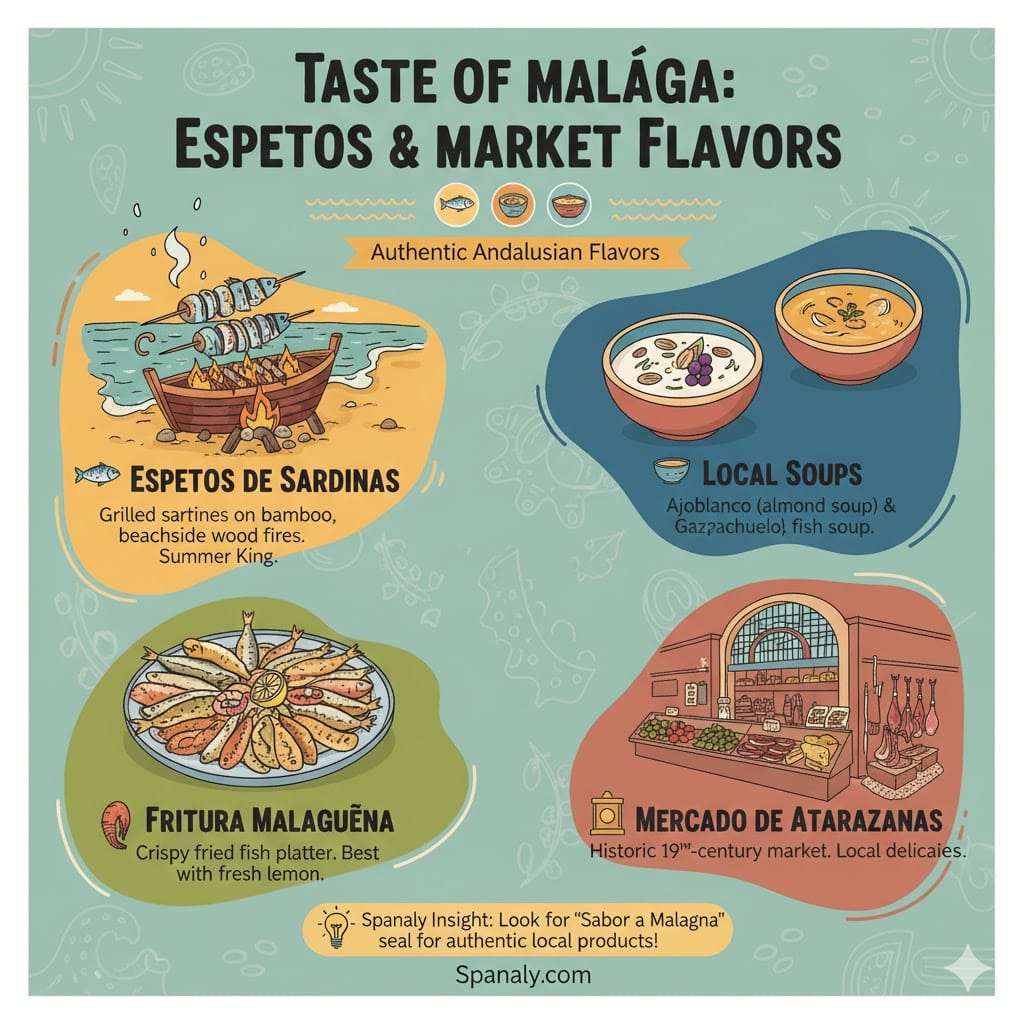
Málaga’s cuisine reflects its geography: sea, sun, and simplicity. Notably, the city’s culinary scene is rooted in the rustic traditions of Andalusia but with a unique coastal twist. Specifically, you cannot truly say you have visited Málaga without experiencing its three culinary pillars.
🐟 Espetos de Sardinas: Grilled sardines skewered on bamboo canes and cooked over wood fires on the beach. It is the undisputed king of Malagueño summer.
🥣 Local Soups: Try Ajoblanco (a refreshing almond and garlic soup) or Gazpachuelo, a comforting warm fish soup loved by locals.
🍤 Fritura Malagueña: A platter of perfectly crispy, light-fried local fish, usually enjoyed with a squeeze of fresh lemon.
🏛️ Mercado de Atarazanas: A stunning 19th-century market built in a former Moorish shipyard. It is the best place to sample fresh olives, local cheeses, and artisanal snacks.
Indeed, tasting these flavors is as essential as following our Traditional Spanish Food Guide. Ultimately, whether you are dining at a high-end restaurant or a humble beach chiringuito, the quality of fresh ingredients remains the star of the show.
💡 Spanaly Insight: Want to eat like a local? In fact, look for the “Sabor a Málaga” seal in restaurants and shops. Notably, this guarantee ensures you are consuming high-quality, authentic products grown or made right in the province of Málaga!
🛍️ Shopping: Calle Larios & Artisan Crafts
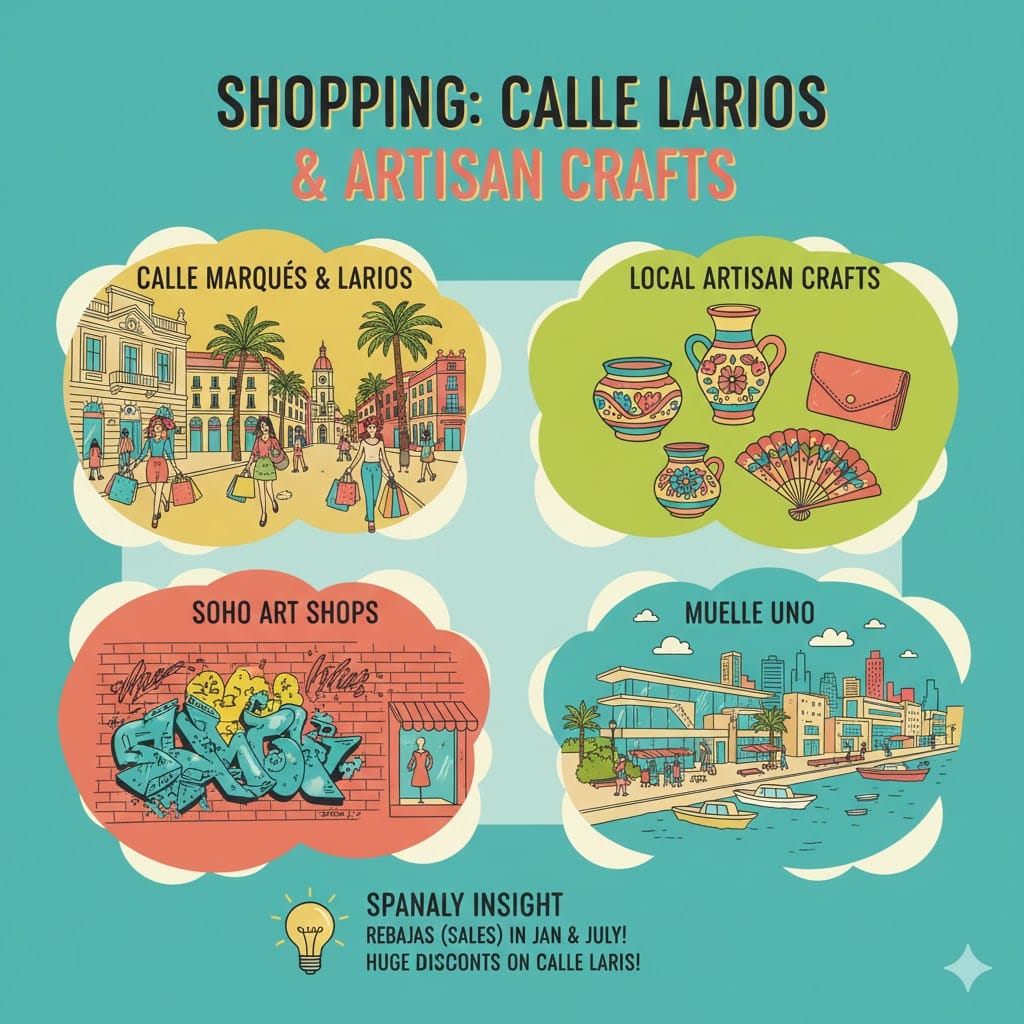
Málaga is a paradise for shoppers, offering a seamless blend of high-end fashion and authentic Mediterranean craftsmanship. Notably, the city’s shopping districts are among the most beautiful in Spain. Specifically, whether you are looking for luxury brands or a unique handmade souvenir, Málaga provides a vibrant and scenic retail experience.
✨ Calle Marqués de Larios: One of the most elegant shopping streets in Europe. It is famous for its stunning marble floors, high-end boutiques, and spectacular seasonal decorations.
🏺 Local Artisan Crafts: Explore the narrow side streets for traditional Andalusian ceramics, intricate leather goods, and handmade fans—perfect for an authentic gift.
🎨 Soho Art Shops: For those seeking something modern, the Soho district is filled with independent galleries and “concept stores” featuring local designers.
🛍️ Muelle Uno: A modern open-air shopping center at the port, where you can shop with a sea breeze and a perfect view of the skyline.
Indeed, exploring these bustling streets is as exciting as discovering the Madrid Hidden Gems tucked away from the main tourist paths. Ultimately, shopping in Málaga is not just about the purchase; it is about enjoying the architecture and the lively atmosphere of the historic center.
💡 Spanaly Insight: Planning to visit in January or July? In fact, these are the “Rebajas” (sales) months in Spain. Notably, you can find massive discounts even at major brands on Calle Larios, making it the perfect time for a stylish wardrobe upgrade!
🍷 Sweet Traditions: Málaga Wines & Bodegas
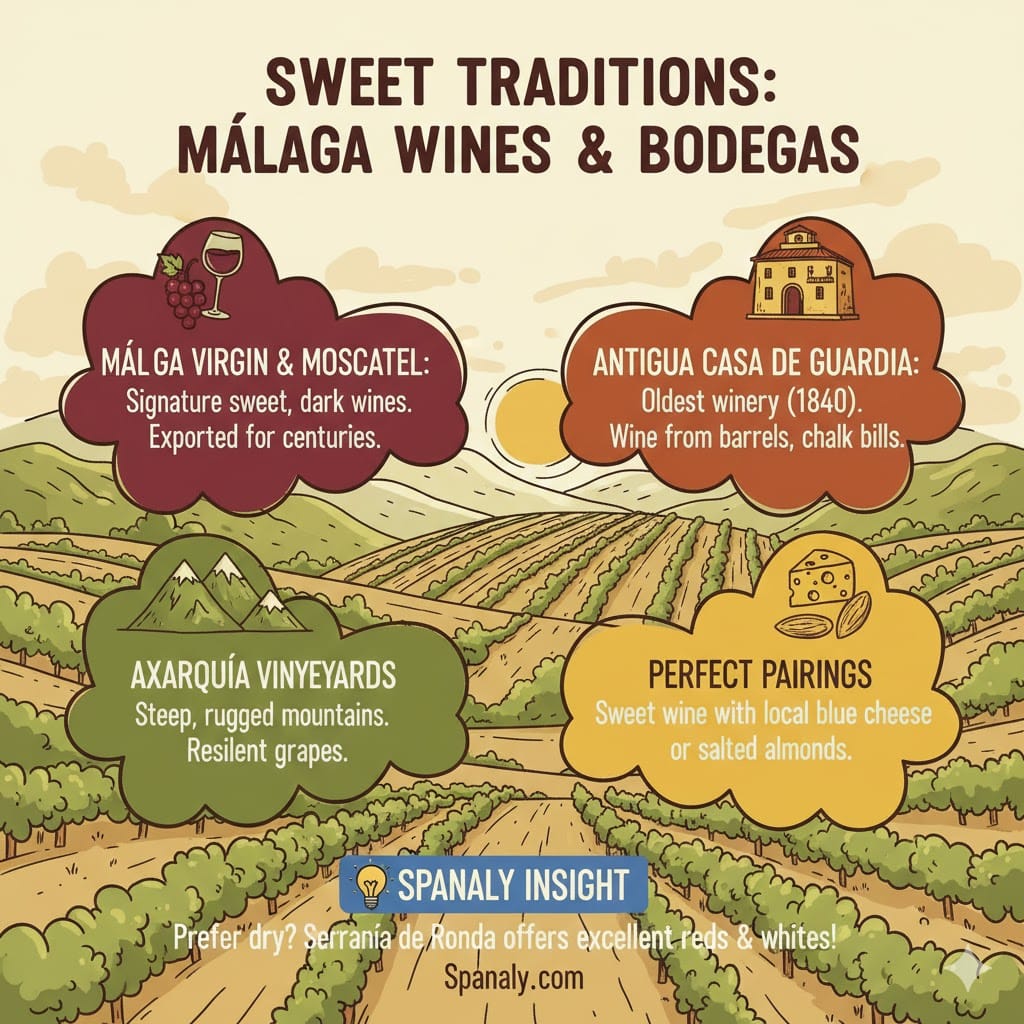
The history of wine in Málaga stretches back over 2,000 years, making it one of the oldest wine-producing regions in Europe. Notably, the province is world-famous for its sweet wines made from Moscatel and Pedro Ximénez grapes. Specifically, visiting a traditional bodega is not just about tasting; it is about stepping back into the city’s liquid history.
🍷 Málaga Virgin & Moscatel: The signature sweet, dark wines that have been exported to royal courts for centuries.
🏛️ Antigua Casa de Guardia: Founded in 1840, this is the oldest winery in the city. Here, wine is still poured directly from old wooden barrels, and your bill is written in chalk on the wooden bar.
🍇 Axarquía Vineyards: The steep, rugged mountains surrounding the city where these resilient grapes are grown under the Mediterranean sun.
🧀 Perfect Pairings: While traditionally a dessert wine, try pairing Málaga’s sweet wines with local blue cheese or salted almonds for a surprising contrast.
Indeed, while Málaga’s sweet varieties are legendary, they represent just one facet of the diverse Spanish Wine Regions that define the country’s viticulture. Ultimately, spending an hour in a sun-dappled tavern with a small glass of “Pajarete” is the ultimate Malagueño ritual.
💡 Spanaly Insight: If you prefer dry wines, in fact, don’t worry! Notably, the nearby Serranía de Ronda produces excellent, award-winning reds and whites that are increasingly popular in Málaga’s modern wine bars.
🌙 Málaga at Night: Rooftops & Nightlife
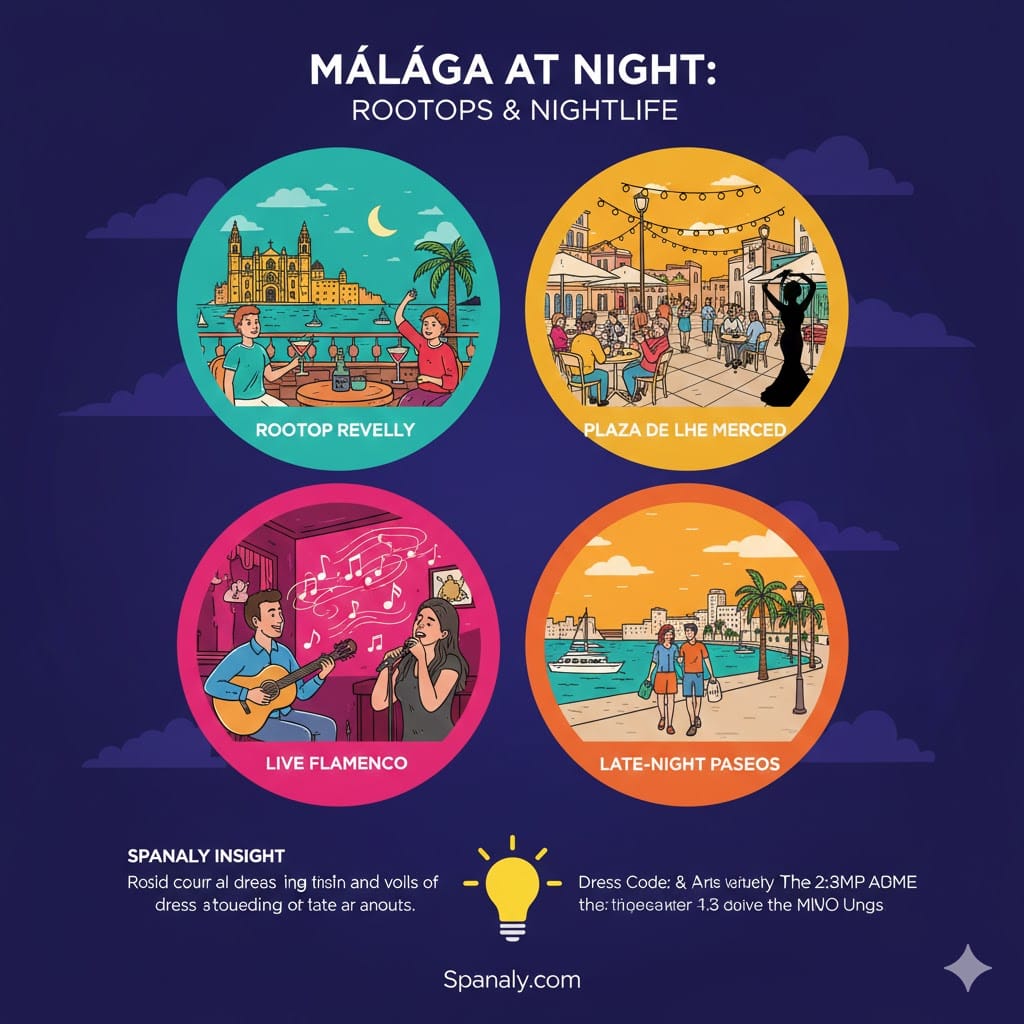
When the sun sets over the Mediterranean, Málaga transforms into a luminous playground of social energy. Notably, the city is famous for its “terrazas” (rooftop bars) that offer bird’s-eye views of the illuminated Cathedral. Specifically, the nightlife here is a perfect blend of sophisticated cocktails and traditional late-night tapas crawls.
🍸 Rooftop Revelry: Visit terraces like The AC Hotel or Batik for stunning views of the Alcazaba and the harbor while enjoying a sunset drink.
🥘 Plaza de la Merced: A bustling hub where locals gather at outdoor tables to share plates of tapas and enjoy the lively Andalusian atmosphere.
🎶 Live Flamenco: Experience the raw passion of southern Spain in intimate “tablaos” tucked away in the historic center’s narrow alleys.
🚶 Late-Night Paseos: Join the locals for a walk along the moonlit Muelle Uno port, where the sea breeze complements the city’s golden glow.
Indeed, the electric atmosphere of Málaga after dark rivals the famous Madrid Nightlife Guide. Ultimately, whether you are looking for a quiet glass of wine or a vibrant dance floor, Málaga’s night scene ensures the Mediterranean magic continues long after the sun has set.
💡 Spanaly Insight: Dress code tip? In fact, Málaga is quite relaxed, but for the higher-end rooftop bars, “smart casual” is the way to go. Notably, don’t be surprised by the timing—locals rarely start dinner before 9:00 PM, and the bars stay lively until the early hours!
💃 Festivals & Traditions: Passion and Color
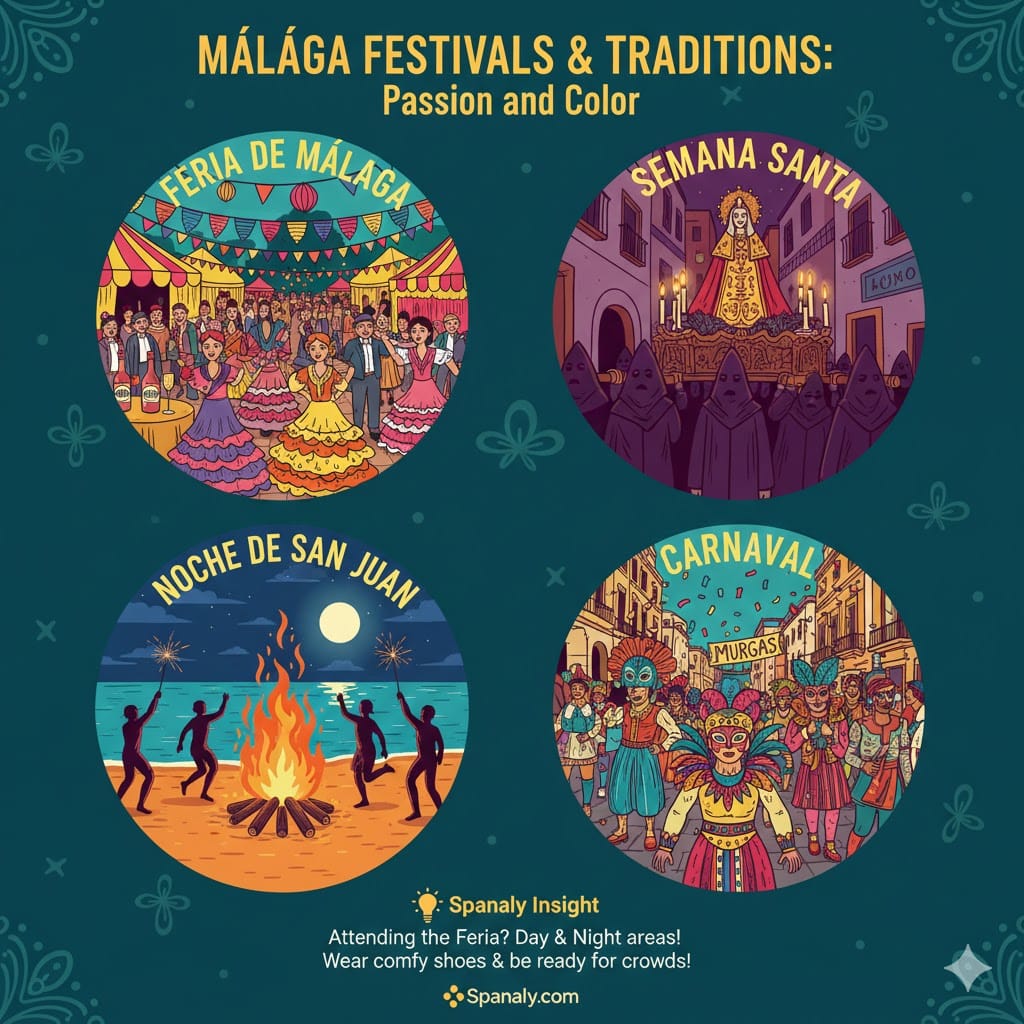
Málaga is a city that loves to celebrate, where ancient traditions meet vibrant street parties. Notably, its festivals are deep-rooted in Andalusian culture, offering a sensory explosion of music, dance, and devotion. Specifically, experiencing one of these events is the best way to witness the city’s true soul and contagious energy.
🎡 Feria de Málaga: Held in August, this is the city’s biggest party. The daytime celebration fills the historic center with dancing and “Cartojal” (sweet wine), while the nighttime fair offers rides and concerts.
🙏 Semana Santa (Holy Week): One of the most spectacular in Spain. Massive, ornate “tronos” (thrones) carrying religious statues are carried through the streets by hundreds of locals.
🔥 Noche de San Juan: A magical midsummer night (June 23rd) where locals gather on the beaches to light bonfires, jump over flames, and dip their feet in the sea at midnight.
🎭 Carnaval: A colorful explosion of creativity in February, featuring satirical singing groups (murgas) and elaborate parades through Calle Larios.
Indeed, the scale of celebration during the Feria de Malaga is a testament to the city’s festive spirit. Ultimately, whether it is the solemnity of Holy Week or the joy of the summer fair, Málaga’s traditions are a bridge between its historic past and its lively present.
💡 Spanaly Insight: Attending the Feria? In fact, there are two distinct areas: the Feria de Día (in the city center) and the Feria de Noche (at the Real fairgrounds). Notably, wear comfortable shoes and be prepared for crowds—the energy is high, and the dancing never stops!
🏨 Where to Stay in Málaga: Best Neighborhoods
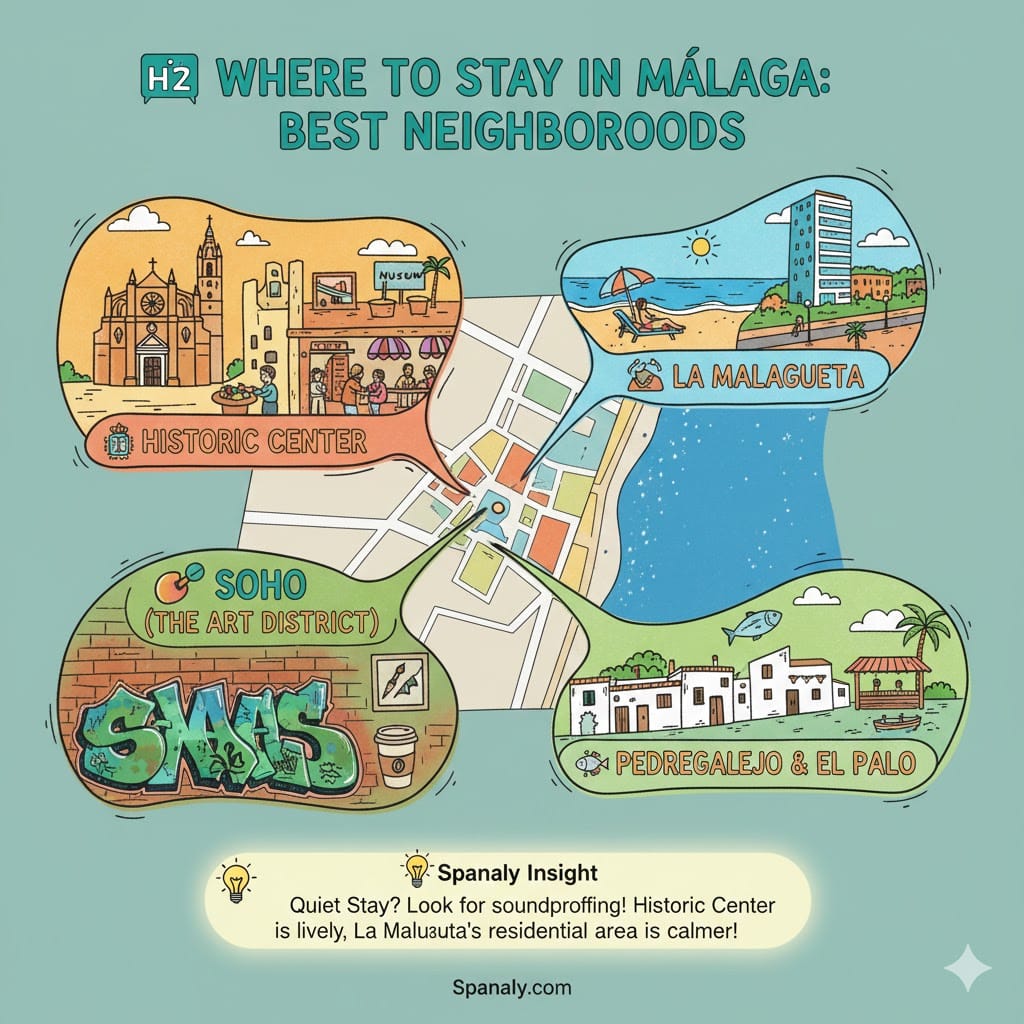
Choosing the right area to stay can define your experience in this Mediterranean gem. Notably, Málaga offers everything from historic charm to modern beachfront luxury. Specifically, depending on whether you are a first-time visitor or a beach lover, here are the top neighborhoods to consider.
🏛️ Historic Center (Centro Histórico): Perfect for first-time visitors. You will be steps away from the Cathedral, Picasso Museum, and the best tapas bars. It is the heart of the action.
🏖️ La Malagueta: Ideal for those who want to wake up to sea views. It’s a modern area located right by the most famous urban beach, yet still close to the city center.
🎨 Soho (The Art District): A trendy, creative neighborhood perfect for younger travelers and art lovers, featuring boutique hotels and industrial-style lofts.
🐟 Pedregalejo & El Palo: For a more authentic, local experience. These former fishing villages offer charming guesthouses and a relaxed, bohemian vibe by the sea.
Indeed, finding the perfect accommodation in Málaga is just as important as choosing between Luxury Hotels vs Boutique Stays in Barcelona for a high-end experience. Ultimately, Málaga’s compact size makes it easy to explore, regardless of where you choose to rest your head.
💡 Spanaly Insight: Looking for a quiet stay? In fact, the streets in the Historic Center can be very lively (and loud) until late at night. Notably, if you are a light sleeper, look for hotels with soundproofing or choose a stay in the residential parts of La Malagueta!
⛰️ Beyond the City: Unforgettable Day Trips

While the city itself is captivating, Málaga serves as the perfect gateway to some of Andalusia’s most iconic landscapes. Notably, within a short drive or train ride, you can transition from sunny coastlines to dramatic mountain gorges. Specifically, these day trips offer a deeper look into the region’s rugged beauty and white-washed charm.
🌉 Ronda: Famous for its breathtaking “El Tajo” gorge and the stone bridge that spans it. It is one of Spain’s oldest and most photogenic towns.
🧗 Caminito del Rey: Once known as the world’s most dangerous walkway, this pinned path along steep canyon walls now offers a safe but thrilling hike for nature lovers.
🐚 Nerja & Frigiliana: Visit the prehistoric caves in Nerja and then wander through Frigiliana, often voted the most beautiful white village (Pueblo Blanco) in Andalusia.
🏰 Antequera: Home to the stunning El Torcal limestone formations and ancient dolmens that are now a UNESCO World Heritage site.
Indeed, these excursions provide a historical depth similar to exploring the Alhambra in Granada. Ultimately, whether you crave mountain adventures or sleepy village squares, Málaga’s surroundings never fail to impress.
💡 Spanaly Insight: Transportation tip? In fact, for Ronda and Nerja, the public bus and train systems are excellent. Notably, if you plan to conquer the Caminito del Rey, you must book your tickets weeks (or even months) in advance, as they sell out incredibly fast!
🚇 Practical Travel Information: Planning Your Stay
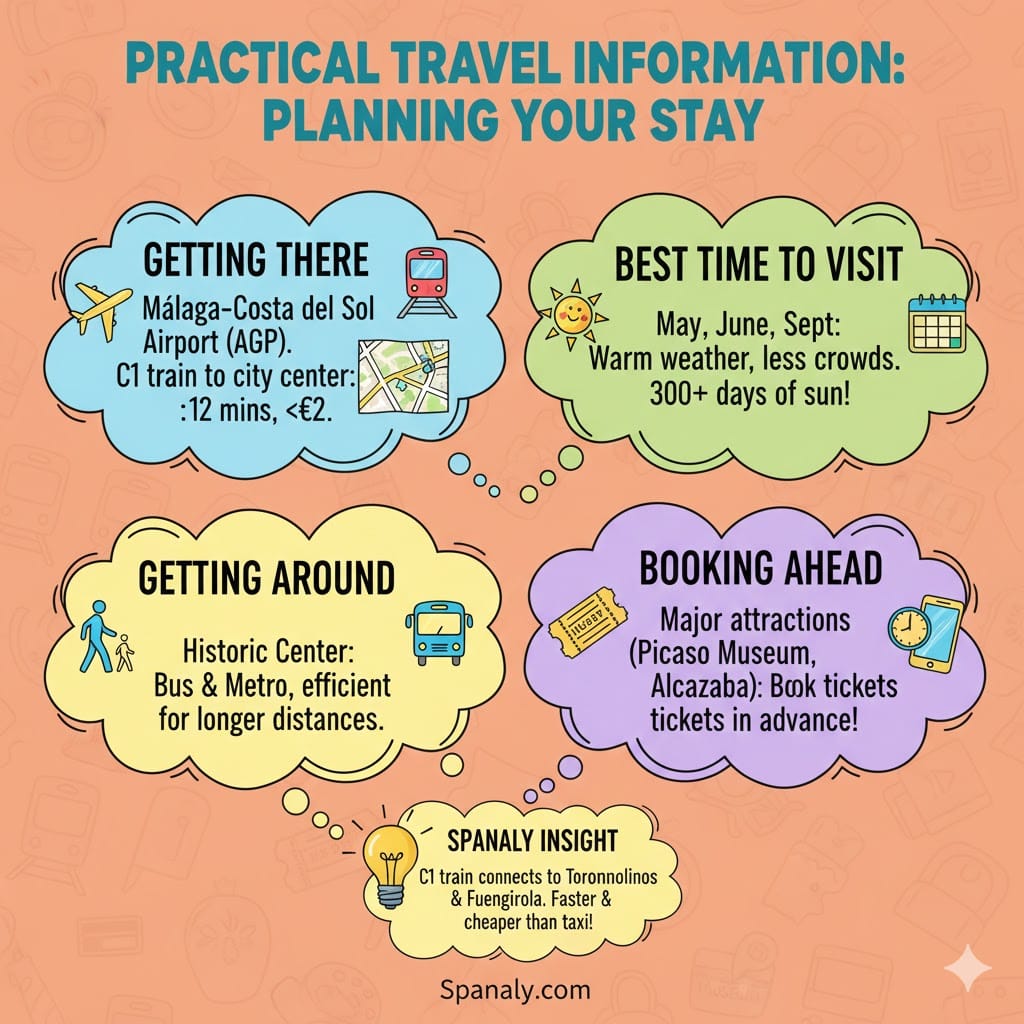
Planning a trip to Málaga is remarkably straightforward thanks to its modern infrastructure. Notably, the city serves as the main transport hub for southern Spain. Specifically, understanding a few key logistics will help you navigate the Costa del Sol with ease and confidence.
✈️ Getting There: Málaga-Costa del Sol Airport (AGP) is the fourth busiest in Spain. From there, the “Cercanías” C1 train takes you to the city center in just 12 minutes for less than €2.
☀️ Best Time to Visit: May, June, and September offer the perfect balance of warm weather and manageable crowds. However, Málaga’s 300+ days of sun make it a year-round destination.
👟 Getting Around: The historic center is mostly pedestrian-friendly. For longer distances, the city’s clean and efficient bus and metro systems are excellent.
📅 Booking Ahead: Just as you would when planning The Best Time to Visit Spain, remember to book tickets for major attractions like the Picasso Museum or the Alcazaba in advance to avoid long queues.
Indeed, Málaga is one of the most accessible cities in the Mediterranean. Ultimately, whether you arrive by high-speed train (AVE) from Madrid or by sea at the modern cruise terminal, the city welcomes you with open arms and clear signs.
💡 Spanaly Insight: Using the train? In fact, the C1 train line also connects Málaga to popular coastal towns like Torremolinos and Fuengirola. Notably, it’s often faster and cheaper than taking a taxi or renting a car for coastal day trips!
💡 Pro Tips for an Authentic Málaga Experience
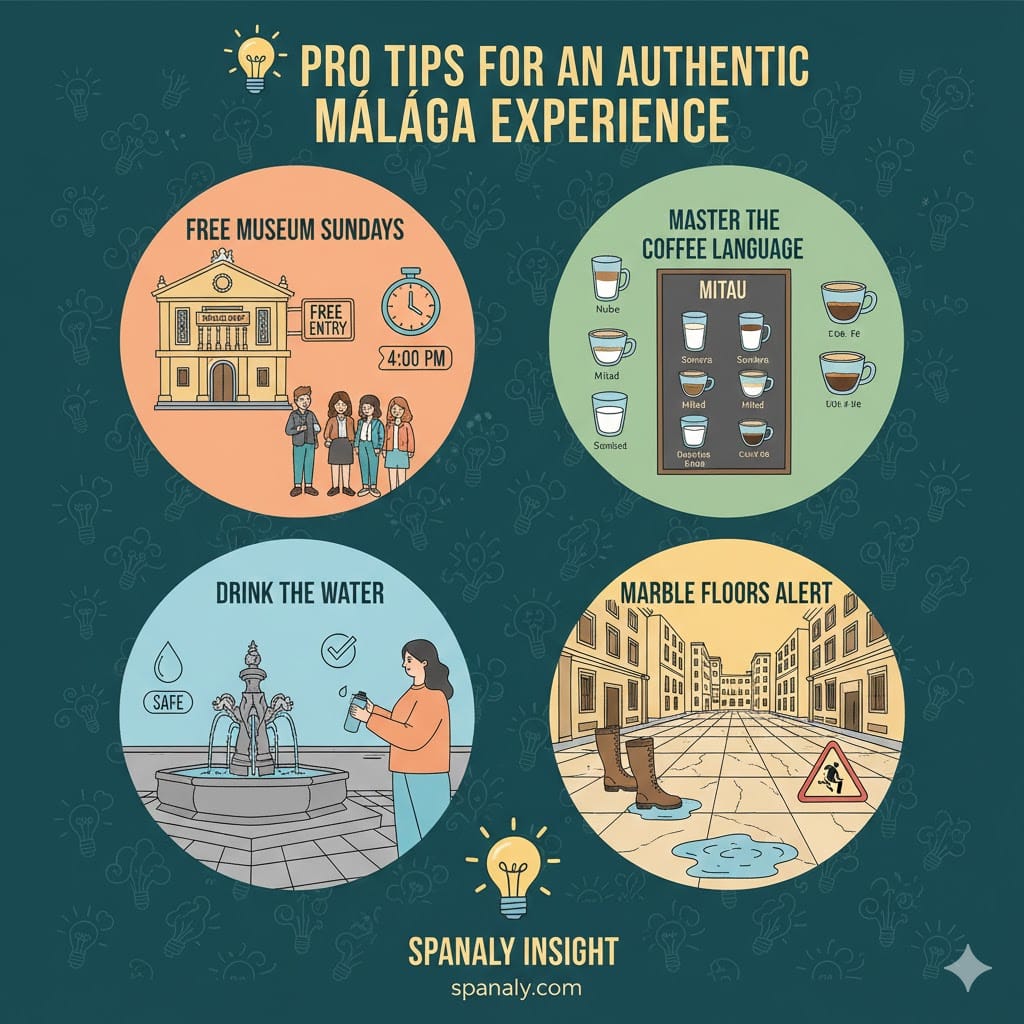
To truly master your visit, you need to know the little details that only locals and frequent travelers understand. Notably, these small adjustments to your itinerary can save you time, money, and offer a much deeper connection to the city. Specifically, here are the “Insider Secrets” of Málaga.
🏛️ Free Museum Sundays: Most major museums, including the Picasso Museum and the Alcazaba, offer free entry on Sunday afternoons (usually after 4:00 PM). It’s a great way to save, but arrive early to beat the queue!
☕ Master the Coffee Language: Ordering coffee in Málaga is an art. From a “Nube” (mostly milk) to a “Sombra” or a “Mitad”, there are nine different ways to name your cup. Don’t just ask for a “latte”!
💧 Drink the Water: Unlike some coastal cities, Málaga’s tap water is perfectly safe and tastes good. Bring a reusable bottle and refill it at the historic fountains (fuentes) scattered around the city.
👟 Marble Floors Alert: The beautiful marble floors of Calle Larios are stunning, but they become incredibly slippery when it rains (even a light drizzle). Wear shoes with good grip if the clouds gather.
Indeed, these local nuances are what make Spanish travel so rewarding, much like knowing the Tipping in Spain Etiquette before you sit down at a terrace. Ultimately, small local insights transform a standard vacation into a seamless cultural immersion.
💡 Spanaly Insight: Looking for the best sunset? In fact, skip the crowded spots and head to the Gibralfaro Viewpoint (Mirador de Gibralfaro). Notably, it offers the most iconic view of the bullring, the park, and the port all glowing in the golden hour light—for free!
☀️ Visitor FAQs – Essential Málaga Travel Guide
🛡️ Is Málaga safe for solo travelers?
Yes, absolutely. Málaga is considered one of the safest cities in Spain. Even late at night, the historic center is lively and well-lit. As in any popular destination, just maintain basic awareness of your belongings in crowded spots like Calle Larios.
🗣️ Can I get by with English in Málaga?
Notably, yes. Due to its international tourism, English is widely spoken in hotels, restaurants, and main attractions. However, learning a few basic Spanish phrases like "¡Hola!" or "La cuenta, por favor" is always appreciated by the friendly locals.
💰 Is Málaga expensive compared to Madrid or Barcelona?
In fact, it is quite affordable. Málaga offers excellent value for money. Tapas and drinks are generally cheaper than in Madrid or Barcelona, and many of its best experiences, like the beach and sunset viewpoints, are completely free.
🥤 Can you drink tap water in Málaga?
Yes, the tap water is safe. It meets all health standards, although some visitors prefer the taste of bottled water due to the mineral content common in coastal areas. For eco-conscious travelers, refilling a reusable bottle is perfectly fine.
🛒 Are shops open on Sundays in Málaga?
Generally, most shops close on Sundays. However, Muelle Uno (the port area) is a special zone where many shops remain open. During peak summer months and Christmas, some larger stores in the center may also open on specific Sundays.
Expertly curated by Spanaly.com
✨ Your Málaga Adventure Awaits!
Málaga is more than just a gateway to the Costa del Sol; it’s a city that captures your heart with its light, flavor, and history. Ultimately, whether you come for the art, the sardines, or the sunsets, you’ll leave with memories that last a lifetime.
🌊 Feel the Breeze: Take that sunset stroll along the modern Muelle Uno.
🍷 Taste the History: Sip a glass of Moscatel in a 100-year-old bodega.
🖼️ Embrace the Art: Let Picasso’s legacy inspire your creative side.
💃 Live the Moment: Join a local “Feria” and dance like a true Malagueño.
Indeed, while Málaga offers an unbeatable urban buzz, those seeking a different kind of island elegance might find Palma de Mallorca equally captivating. Notably, both cities represent the very best of Spain’s Mediterranean soul.
👋 Hasta Luego! We hope this guide makes your Málaga stay unforgettable. Safe travels, and enjoy every second of the Andalusian sun!