

Medina Azahara (Madinat al-Zahra) is one of the most extraordinary archaeological sites in Spain and a powerful symbol of the Umayyad Caliphate at its zenith. Built in the 10th century by Caliph Abd al-Rahman III, this vast “palace-city” was designed to project political power, cultural refinement, and imperial prestige.
Although only about 10% of the original city has been excavated, it remains a breathtaking open-air museum. Visitors can walk through caliphal halls and ceremonial courtyards that once hosted the elite of the Islamic world. Many travelers include this site as a cornerstone of their itinerary, often pairing it with the vibrant culture found in our Ultimate Seville Travel Guide due to their shared Andalusian history.
Table of Contents
Toggle📋 Quick Facts: Medina Azahara at a Glance
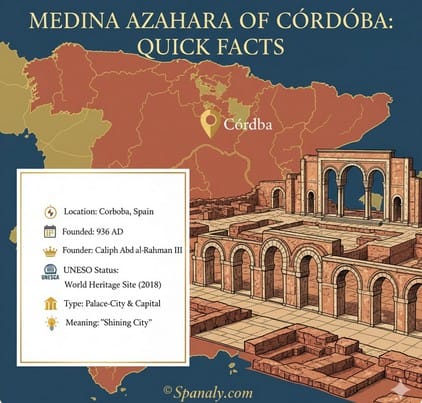
To help you plan your visit to this UNESCO World Heritage site, here is a snapshot of its historical profile:
📍 Location: 8 km west of Córdoba, Andalusia, Spain.
📅 Founded: 936 AD.
👑 Founder: Caliph Abd al-Rahman III.
🌍 UNESCO Status: Inscribed in 2018.
🏗️ Site Type: Royal palace-city and administrative capital.
✨ Meaning: The name translates to “The Shining City” or “The City of the Flower.”
This royal complex was not a typical urban center; it was a carefully planned administrative heart built on terraced slopes, allowing the Caliph to overlook the Guadalquivir valley—a strategic positioning similar to the defensive heights mentioned in our Spanish Attractions guide.
📜 The Rise and Fall of the Shining City
Abd al-Rahman III began the construction of Medina Azahara in 936 AD following his proclamation as the first Caliph of Córdoba. He envisioned a capital that would outshine the greatness of Baghdad and Cairo.
For nearly 70 years, the city functioned as the beating heart of Al-Andalus. However, fierce civil wars (Fitna) looted and destroyed the city during the early 11th century. Many travelers who start their journey in Madrid often feel surprised to find such a massive “forgotten city” just a short train ride away in the south.
🏗️ Architectural Brilliance: Defying the Medieval Era
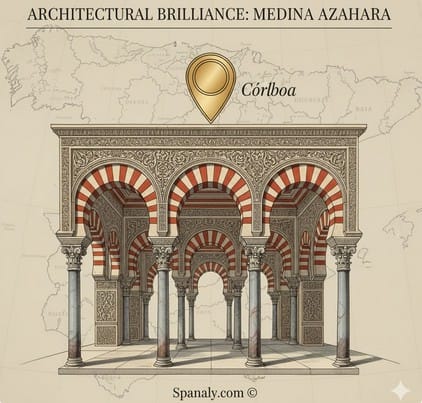
The city’s designers showcased a masterpiece of Hydraulic Engineering and Artistic Design, arranging the complex into three magnificent terraces:
The High Terrace: This area contained the private residence of the Caliph (Alcázar).
The Middle Terrace: This level held the administrative buildings and the breathtaking Salón Rico.
The Lower Terrace: This section featured the Great Mosque and lush gardens that mimicked paradise.
If you visit during certain Spanish Festivals, you might find special cultural events in Córdoba that celebrate this rich Umayyad heritage, bringing the ancient stone carvings back to life with music and light.
💡 Essential Visitor Tips for Medina Azahara
To make the most of your journey back to the 10th century, follow these expert recommendations:
👟 Wear Sturdy Shoes: The site is an archaeological ruin with uneven stone paths. Avoid sandals or heels.
🌞 Hydration is Key: There is very little shade at the site. Bring a reusable water bottle and wear a hat, especially if visiting in the afternoon.
🎧 The Museum First: Always visit the Interpretation Center (Museum) before heading to the ruins. The 15-minute movie and the artifacts will give you the context needed to understand what you are looking at.
📸 Photography: Tripods are generally not allowed without a permit, but handheld photography is encouraged. The light on the red horseshoe arches is best in the late morning.
🚌 How to Get There (From Córdoba)
Medina Azahara is located about 8 kilometers outside the city center. You have three main options:
The Tourist Shuttle Bus: The most popular choice. It departs from Paseo de la Victoria and includes the round-trip bus and the shuttle to the ruins.
By Car: There is a large parking lot at the Museum. Note: You cannot drive your private car to the ruins; you must take the official shuttle from the museum parking.
By Taxi: A convenient option (approx. €15-€20) if you miss the bus schedule.
🏛️ Official Program & Museum Experience
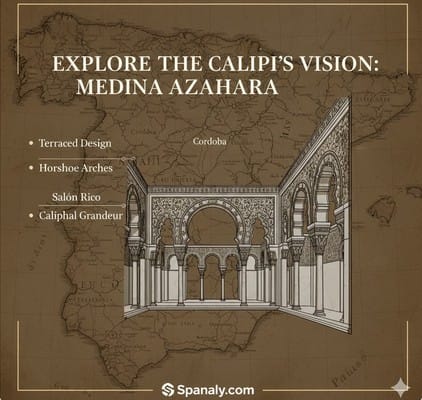
The Medina Azahara visitor program offers a two-part journey designed to bridge the gap between ancient ruins and historical glory. This program ensures that every visitor understands the site’s significance before stepping onto the archaeological grounds.
1. The Interpretation Center (The Museum)
You should start your journey at the Museum of Medina Azahara. We recommend this because:
The Documentary: A high-definition film recreates the city’s 10th-century appearance.
The Artifacts: The museum houses the “jewels” of the site, including intricate marble carvings and ceramics.
Global Context: The museum explains why this site ranks among the top Spanish Attractions.
🏛️ Visitor FAQs – Medina Azahara Cordoba 2026
🚌 How do I get to Medina Azahara from Cordoba city center?
The site is 8km away. The best way is the Official Tourist Bus from Paseo de la Victoria. If you drive, you must park at the Museum first. From there, a Green Shuttle Bus (Lanzadera) is the only way to reach the actual ruins, as private cars are strictly prohibited from driving up to the archaeological site.
🎟️ Should I book tickets for the shuttle bus in advance?
Yes, absolutely. While entrance to the site is free for many, the shuttle bus has limited seats and often sells out 48 hours in advance during weekends and spring. In 2026, we highly recommend booking your bus slot online to avoid being stranded at the museum reception without a way to see the ruins.
🏛️ What is the "Salón Rico" and is it open to the public?
The Salón Rico (Abd al-Rahman III's reception hall) is the crown jewel of the city, famous for its intricate carved marble. After years of restoration, it is now open for limited visits. It is the most photographed spot, but remember that access can sometimes be restricted for preservation work—check the daily notice at the museum.
♿ Is the archaeological site accessible for wheelchairs?
The Museum is fully accessible. However, the ruins are built on a hillside with original 10th-century stone paths that are very uneven and steep. While there are designated paths for limited mobility, they only cover a small portion of the city. Sturdy walking shoes are essential for all visitors.
⏳ How much time should I allocate for the full visit?
Allow at least 3 hours. You need 1 hour for the Museum (to watch the essential 3D movie about the city's history) and 2 hours to explore the ruins and gardens. Including the bus commute from Cordoba, it’s a perfect half-day trip starting early in the morning to avoid the Andalusian heat.
Andalusian History Guide by Spanaly.com
🏛️ A Journey Through Time
Medina Azahara is more than just a collection of ruins; it is a profound testament to the ambition and artistry of Al-Andalus. Walking through its terraces offers a rare opportunity to experience the grandeur of a caliphal city that once rivaled the greatest capitals of the medieval world.
Today, the “Shining City” stands as an essential stop for anyone seeking to understand the soul of Southern Spain. Its blend of innovative engineering and breathtaking beauty makes it a highlight of any Andalusian itinerary. Don’t miss the chance to witness this UNESCO marvel and uncover the secrets of Spain’s golden past.