
Table of Contents
Toggle✨ Granada’s Hidden Baroque Treasure
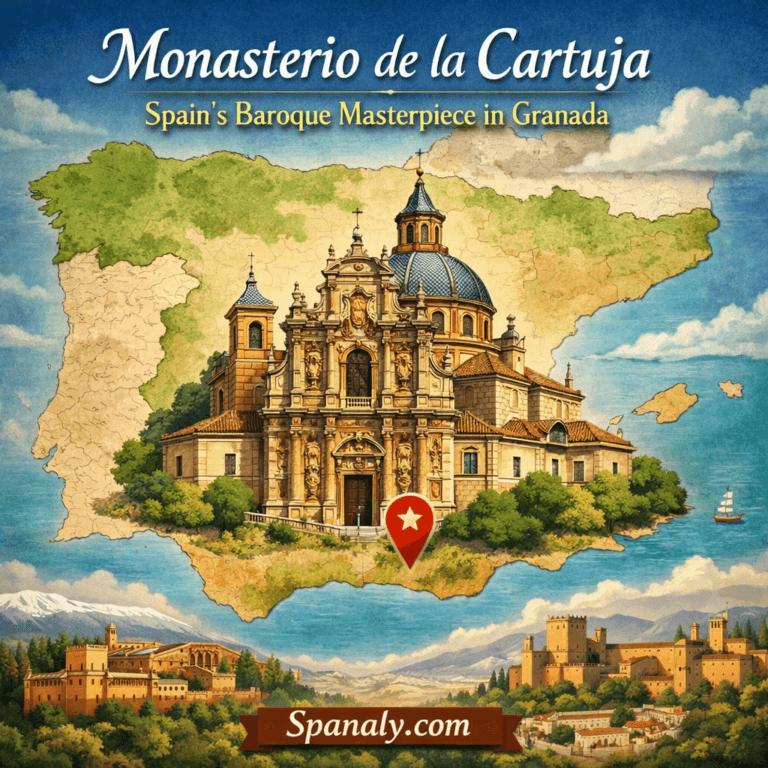
While most travelers rush to the Alhambra, a quieter masterpiece waits nearby. The Monasterio de la Cartuja is one of Spain’s most extraordinary monuments. It offers an explosion of art and symbolism. This former monastery is not just a building; it is a spiritual retreat frozen in time.
As you explore, you will notice that every corridor tells a story. The design rivals the grandest Spanish Attractions. Furthermore, it represents a unique side of Granada. Here, monastic austerity meets the excess of Baroque decoration. Entering this space feels like stepping into another era. Consequently, beauty becomes a form of prayer.
📍 Where Is Monasterio de la Cartuja Located?
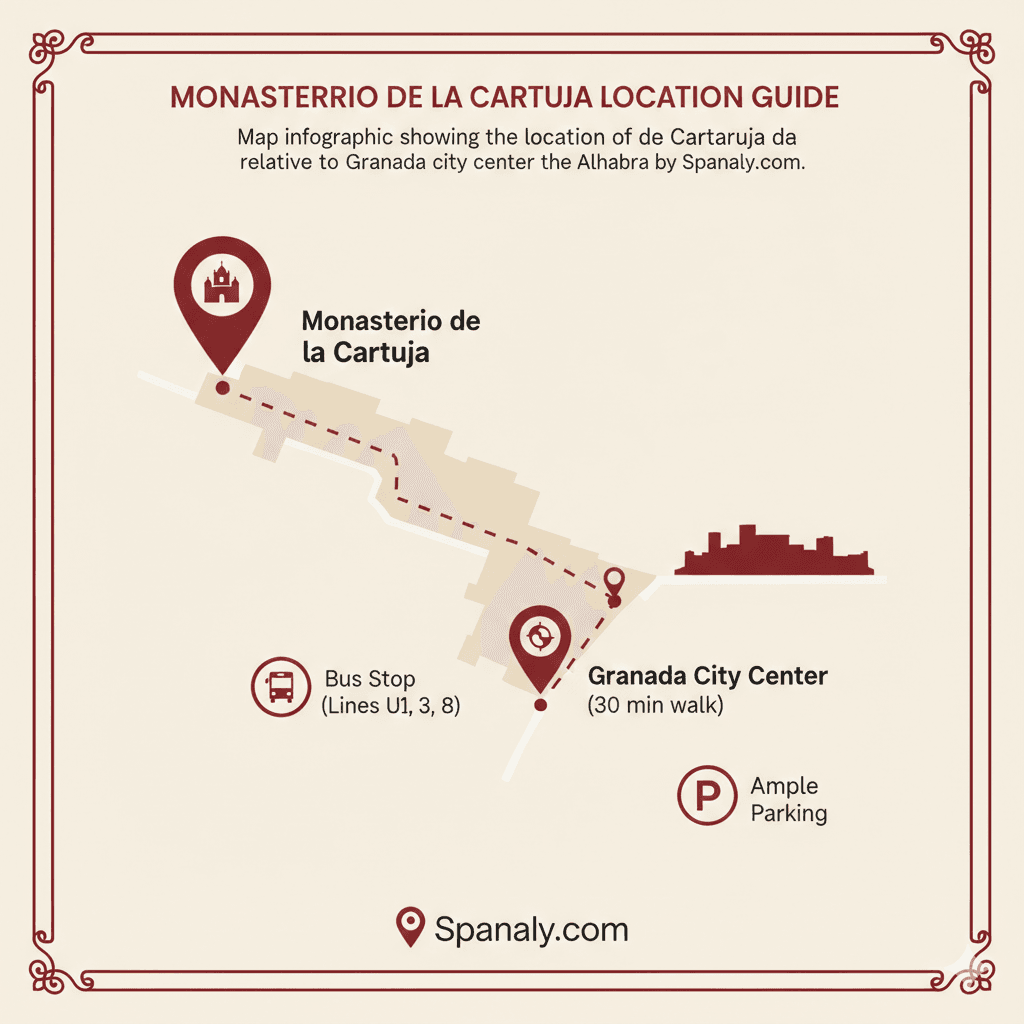
The Monasterio de la Cartuja sits on the northern outskirts of Granada. It is slightly removed from the busy city center. This isolated position was intentional. Carthusian monks sought solitude to focus on their spiritual path.
🗺️ City: Granada, Andalusia.
🚶 Distance: Around a 30-minute walk from the city center (Plaza Nueva).
🚌 Access: You can take local buses (Lines U1, U3, 8) or a short taxi ride.
🚗 Parking: Unlike the narrow streets of the Albaicín, there is usually ample parking nearby if you are driving.
In addition, this separation makes the visit feel deeply personal. It offers a peaceful contrast to the crowded Spanish Festivals downtown.
⛪ A Brief History of the Monastery
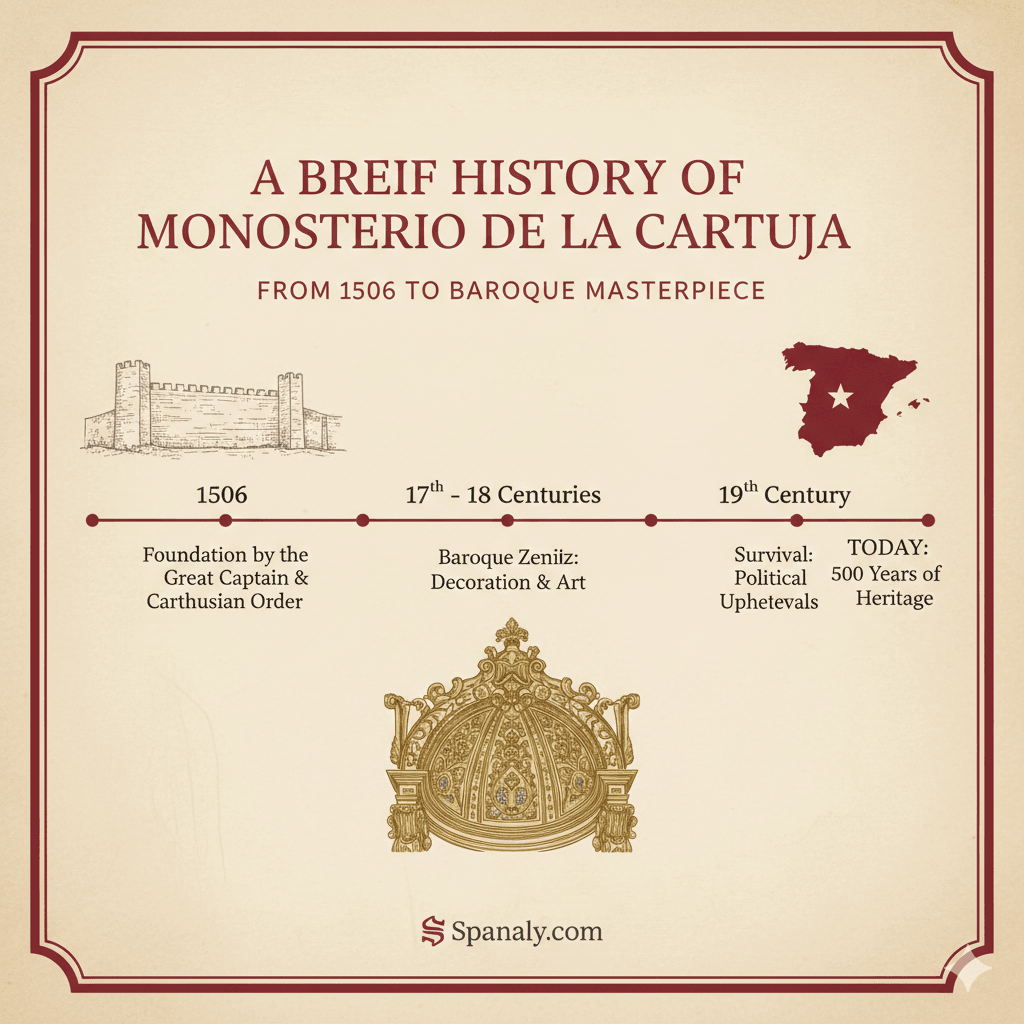
The construction of the Monasterio de la Cartuja began in 1506, shortly after the Christian Reconquest of Granada. It was commissioned by the Great Captain, Gonzalo Fernández de Córdoba, and entrusted to the Carthusian Order, who were famous for their extreme austerity and vow of silence.
Centuries of Evolution: While the foundation is early Renaissance, the monastery we see today is a visual spectacle of the 17th and 18th centuries, when Baroque decoration reached its zenith in Andalusia.
Survival Against the Odds: Despite political upheavals and the Napoleonic invasions in the 19th century, the monastery survived remarkably intact. It remains a primary example of how the Spanish Attractions evolved from medieval fortresses into decorative religious masterpieces.
Today, walking through its gates is like opening a history book that has been perfectly preserved for over 500 years.
🎨 The Sacristy: The Christian Alhambra
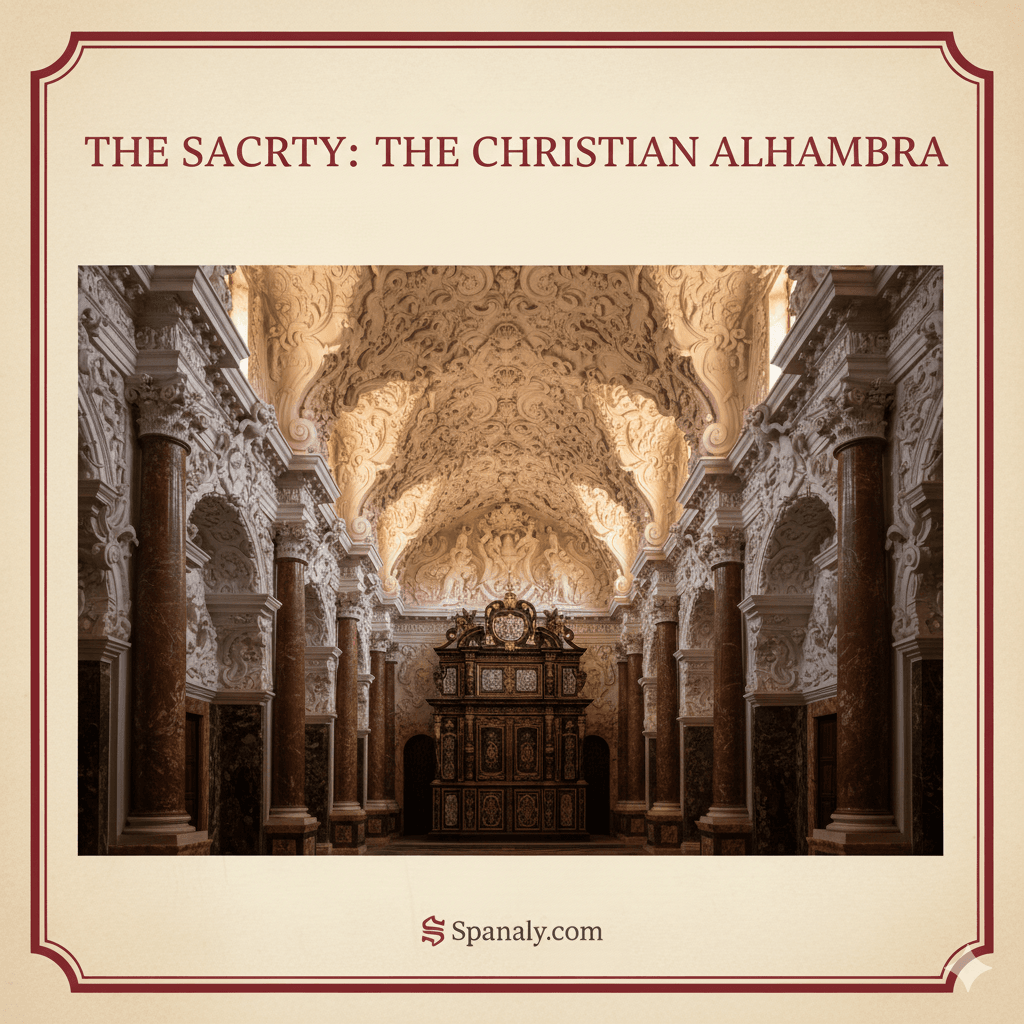
Art historians and travelers alike often refer to the Sacristy of the Monasterio de la Cartuja as “The Christian Alhambra.” While the Alhambra represents the peak of Moorish art, this sacristy represents the absolute zenith of Spanish Baroque.
A Visual Explosion: The contrast between the monastery’s simple exterior and this room is staggering. Every inch is covered in intricate white stucco, swirling marble, and gilded details that create a sense of heavenly movement.
Symbolism & Light: The way light enters the space makes the intricate carvings appear to dance. It is a masterpiece of Spanish Architecture that aims to overwhelm the senses, much like the intense experience of Spanish Festivals.
The Masterpiece Cabinet: Look closely at the drawers and doors made of precious woods, ebony, and mother-of-pearl—crafted by the monks themselves as a form of silent meditation.
This space proves that Granada’s artistic heritage didn’t end with the Nasrids; it evolved into a new, equally breathtaking form of expression.
🎨 Baroque Architecture at Its Absolute Peak
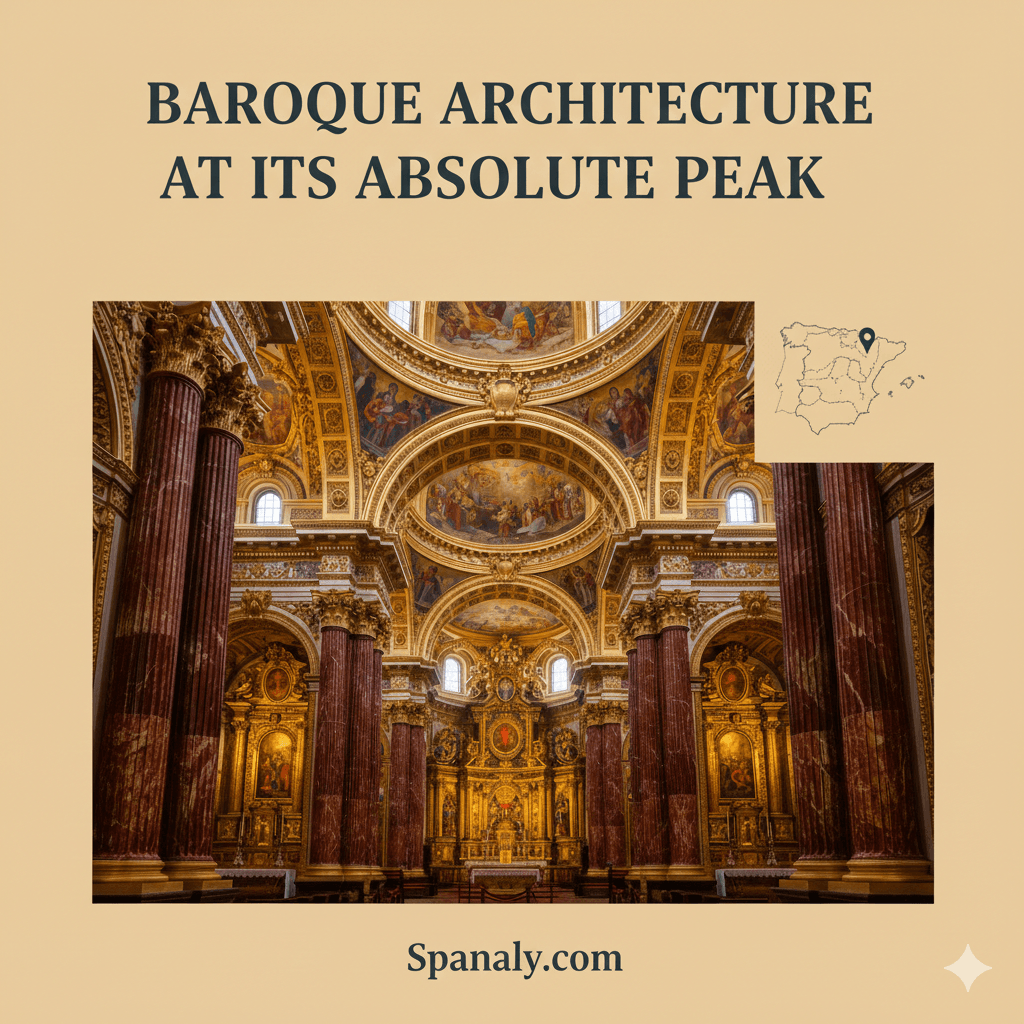
While many Spanish Attractions showcase Gothic or Renaissance styles, the Monasterio de la Cartuja is the ultimate temple of the Spanish Baroque (also known as Churrigueresque). This style is defined by an “ordered chaos”—a dense, theatrical decoration that leaves no space untouched.
The Church’s Nave: The main church is a masterpiece of geometry and ornamentation. Look up at the dome, where the paintings and stucco work create an optical illusion of the heavens opening up.
The Fusion of Materials: The use of local Granada marble, combined with intricate wood carvings and red jasper, creates a color palette that is both earthy and divine.
Contrast of Styles: It is fascinating to see how the early, sober Renaissance lines of the exterior serve as a shell for the explosive, emotional Baroque art found inside.
This architectural style was designed to evoke deep emotion and awe, making it a must-visit for anyone who wants to see the most decorative side of Spanish history.
🤫 The Carthusian Way of Life: Silence and Solitude
To truly understand the architecture of the Monasterio de la Cartuja, one must understand the monks who lived there. The Carthusian Order is one of the most austere in the Catholic Church, built on the pillars of silence, manual labor, and perpetual prayer.
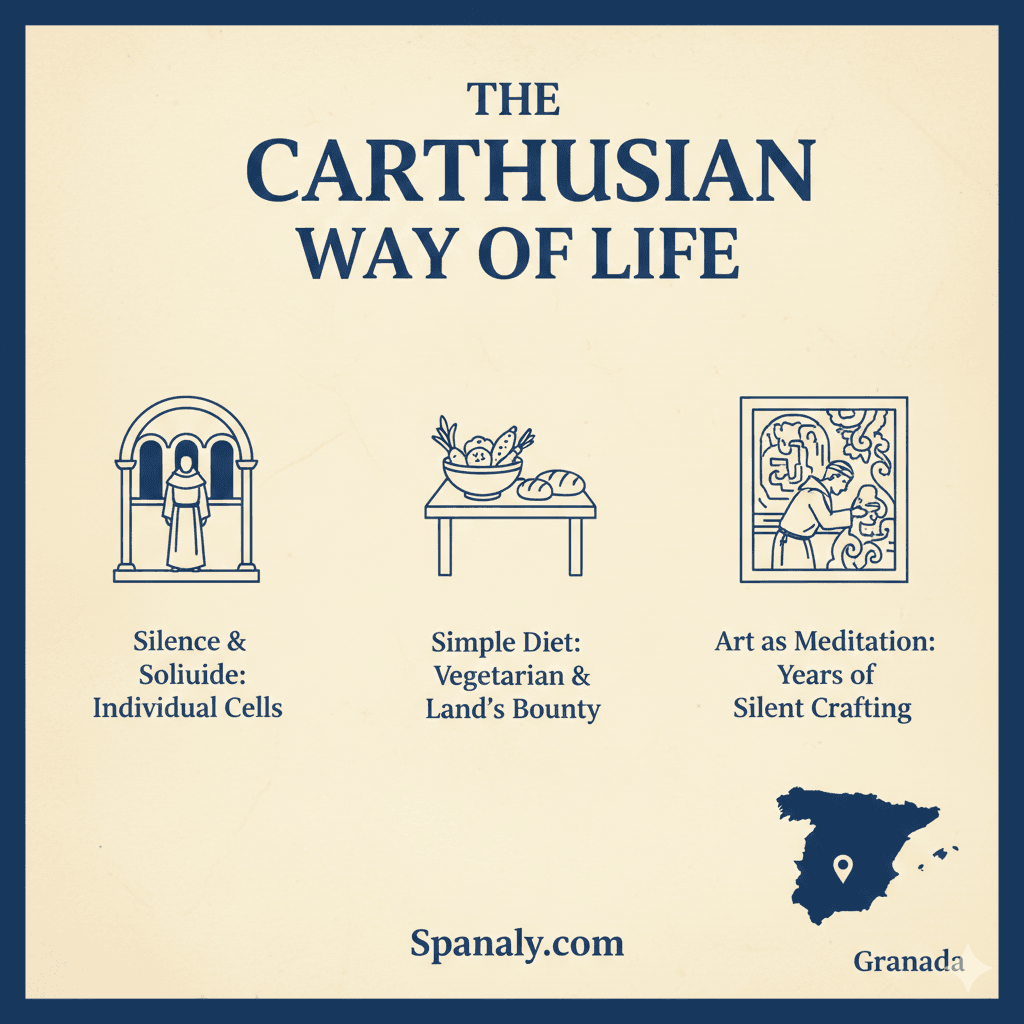
The Cloister of Life: The monks lived in individual cells, meeting only for communal prayers and Sunday meals. This solitude is reflected in the layout of the monastery, designed to minimize contact and maximize reflection.
A Simple Diet: Their lifestyle was also reflected in their food. They followed a strict vegetarian diet, focusing on what the land provided. This tradition of simplicity is a fascinating contrast to the rich and diverse world of Spanish Cuisine we celebrate today.
Art as Meditation: For these monks, creating the intricate “Christian Alhambra” was not for fame, but a form of silent worship—spending years carving wood and stucco in absolute silence.
Visiting the cells and the refectory (dining hall) offers a rare glimpse into a world where time seems to have stood still for centuries.
🖼️ Key Spaces to Explore
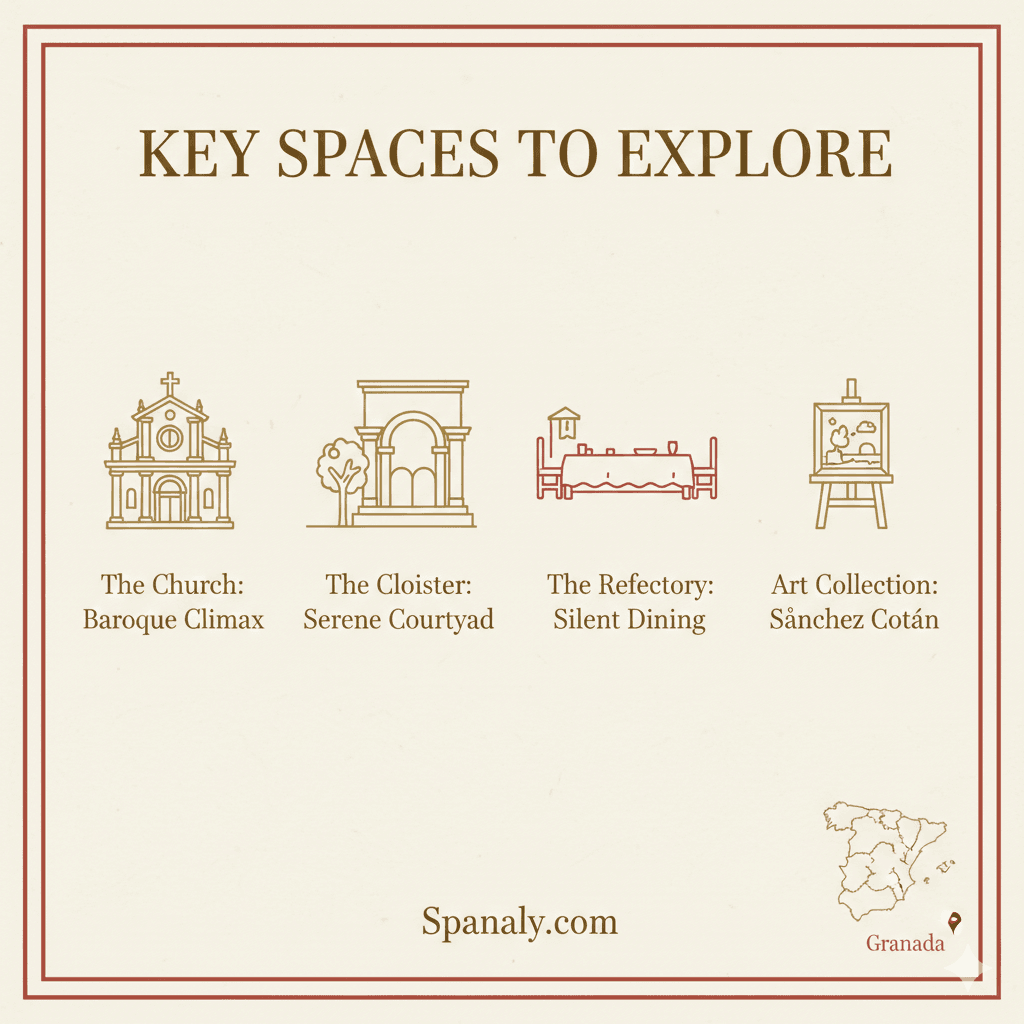
Beyond the famous Sacristy, the Monasterio de la Cartuja is a complex of artistic treasures. Each room tells a different story of the monks’ devotion and the artistic shifts of the time.
The Church (La Iglesia): A breathtaking space where the Baroque decoration reaches its peak. The altar is a marvel of red jasper and silver, standing as one of the most important in Spanish Attractions.
The Cloister (El Claustro): A serene courtyard lined with orange trees. It offers a moment of peace and a perfect view of the monastery’s architectural harmony.
The Refectory: The communal dining hall, where you can see the pulpit from which a monk would read sacred texts while the others ate in absolute silence.
The Collection of Paintings: The monastery houses a significant collection by Juan Sánchez Cotán, one of Spain’s greatest Baroque painters, depicting the history and martyrdom of the Carthusian Order.
Walking through these spaces is like experiencing one of the grand Spanish Festivals—not through noise, but through a visual celebration of faith and art.
📍 Practical Tips for Your Visit
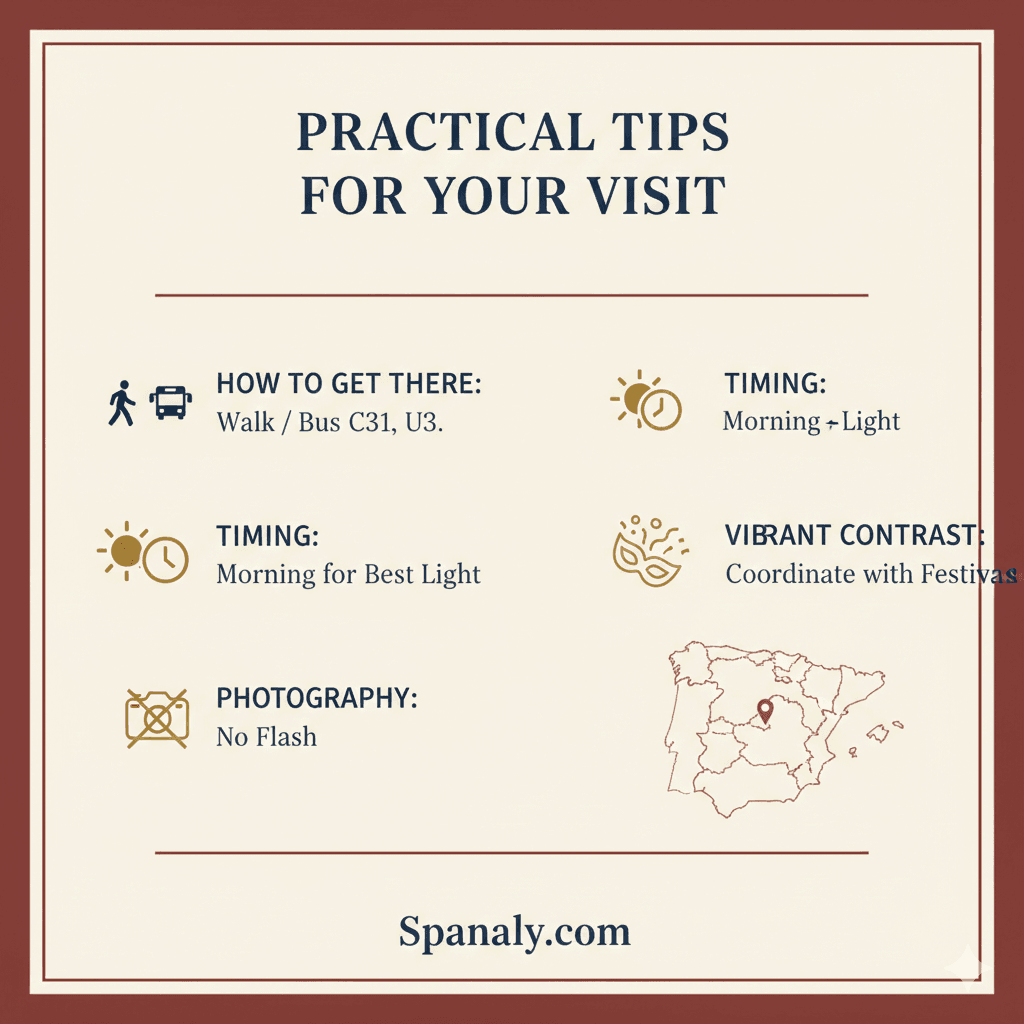
To make the most of your trip to the Monasterio de la Cartuja, a little planning goes a long way. This monument is located slightly outside the main city center, offering a peaceful escape from the bustling crowds.
How to Get There: You can take a scenic 20-minute walk from the city center or use the local bus lines (C31 or U3). The journey itself offers beautiful views of the northern part of Granada.
Timing is Everything: Visit during the morning to see the sun illuminate the white stucco in the Sacristy. It is much quieter than other major landmarks, allowing for a more spiritual experience.
A Vibrant Contrast: While the monastery is a temple of silence, coordinating your visit with famous Spanish Festivals in Granada, like Corpus Christi, allows you to experience the full spectrum of Andalusian culture.
Photography: Remember to turn off your flash to protect the delicate centuries-old paintings and carvings. Every corner here is a masterpiece of Spanish Attractions.
A visit here is the perfect way to complete your Granada itinerary, showing you a side of Spanish history that is as opulent as it is serene.
🌍 Why Monasterio de la Cartuja Matters
This monastery is more than just a monument; it represents the soul of an era. Art historians and travelers value it because it captures:
The Spiritual Intensity: It reflects the atmosphere of post-Reconquest Spain, where faith was expressed through grand and emotional art.
Artistic Confidence: It is the absolute zenith of Andalusian Baroque, showing a level of detail that rivals any of the major Spanish Attractions.
A Rare Union: It masterfully balances silence and excess, combining the austerity of the monks’ lives with the overwhelming ornament of their place of worship.
🧠 Cultural & Artistic Significance
Often overlooked in favor of the Alhambra, the Monasterio de la Cartuja is regarded as a benchmark for religious interior design. Its significance lies in being:
A Masterclass in Symbolism: Every carving and painting was designed to lead the mind from the earthly to the divine.
Emotionally Powerful: Unlike many museums, this space allows you to experience Baroque art exactly as intended—immersive, overwhelming, and deeply spiritual.
Preserved History: Walking through its halls is like stepping back into a 17th-century masterpiece that has remained untouched by time.
🗺️ Visitor FAQs – Monasterio de la Cartuja Granada 2026
🎫 How much are the tickets and where can I buy them?
Tickets cost €6.00 per person, which includes an informative audio guide. You can purchase them directly at the monastery entrance. If you are exploring multiple Spanish Attractions, this site is also included in the Granada Card, offering excellent value for your itinerary.
⏳ Is it worth the trip from the city center?
Absolutely. While it is located about 2km from the center, the "Christian Alhambra" offers a level of Baroque detail that is unmatched in Europe. It is a peaceful contrast to the high-energy crowds you might find during Spanish Festivals, providing a more reflective and spiritual atmosphere.
📸 Are photography and filming permitted?
Photography is allowed without flash. Capturing the intricate white stucco of the Sacristy is a highlight for many visitors. We recommend visiting in the morning when the natural light is best, a tip we also emphasize in our Ultimate Madrid Travel Guide for similar interior landmarks.
🍽️ Are there places to eat nearby?
The area around the monastery is primarily residential and university-focused, meaning you can find authentic and affordable Spanish Cuisine. There are several local "tabernas" within a 5-minute walk where you can enjoy traditional Granada tapas far from the tourist prices of the city center.
🚶 How do I get there using public transport?
The easiest way is taking the local bus lines C31 or U3 from the center. The ride takes about 10-15 minutes. If you enjoy walking, it’s a steady 25-minute uphill stroll from the Cathedral, similar to the walking tours suggested in our Ultimate Barcelona Travel Guide.
Expert Travel Insights by Spanaly.com
✨ A Masterpiece Beyond the Alhambra
The Monasterio de la Cartuja is a true masterpiece. It reveals the deep history of Granada. While the Alhambra shows Islamic splendor, this monastery highlights Baroque art. It is often called the “Christian Alhambra” for its beauty.
This site is essential for history lovers. It is also perfect for those seeking peace. The monastery shows how Spanish art evolved over centuries. It remains one of the most emotional spaces in the city.
Plan your visit today to see this hidden gem. After exploring Granada, you might want to see more. Check our Ultimate Seville Travel Guide to continue your journey through Andalusia.