
Table of Contents
Toggle🌄 Introduction
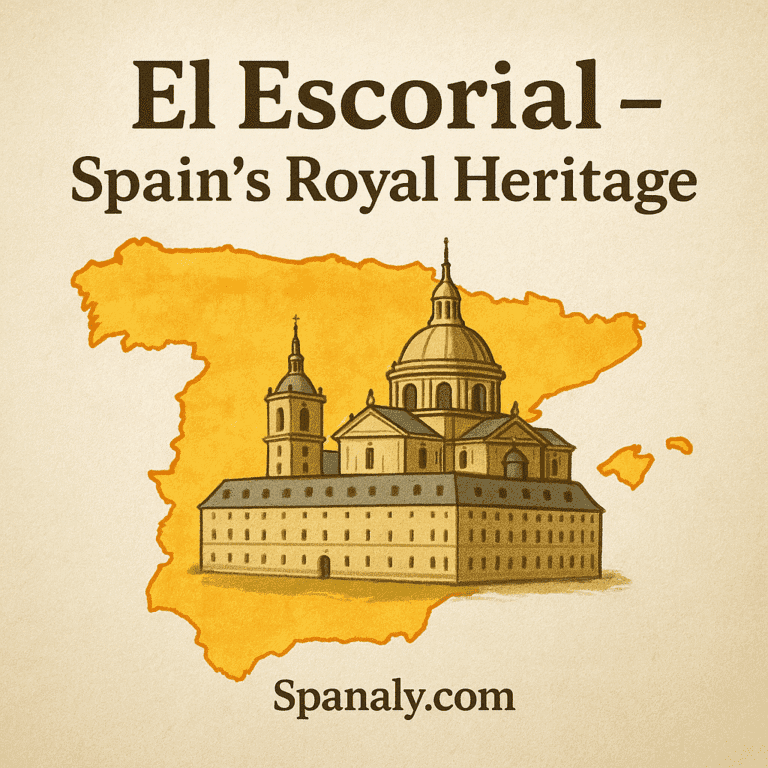
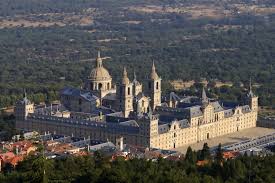
Perched in the foothills of the Sierra de Guadarrama, just 45 km northwest of Madrid, the Monastery of El Escorial rises like a solemn guardian of Spain’s past.
Built in the 16th century by King Philip II, this vast complex served as a royal palace, a monastery, a library, and a mausoleum — a perfect fusion of faith and power that defined Spain’s Golden Age.
As you walk through its echoing corridors, you can almost hear the monks chanting — the sound of devotion carved in stone
👑 A Monument Born from Faith and Power
The story of El Escorial begins with a vow. After his victory at the Battle of Saint Quentin (1557) on Saint Lawrence’s Day, Philip II promised to build a monastery honoring the saint.
Key Facts
Construction began: 1563
Completed: 1584
Architects: Juan Bautista de Toledo and Juan de Herrera
Purpose: Royal residence, monastery, basilica, and royal pantheon
El Escorial became the spiritual center of the Spanish Empire, where Philip II ruled his global dominions while maintaining a strict religious routine.
The king’s desk, positioned to hear Mass directly from his study, symbolizes the union of power and piety
🕍 Architecture and Design
The structure is a masterpiece of Renaissance geometry, designed to reflect divine order and human discipline.
Highlights of the Architecture
🧱 Symmetrical Grid Layout: Symbolizing the grill on which Saint Lawrence was martyred.
⛪ Central Basilica: Its dome, inspired by St. Peter’s in Rome, crowns the entire complex.
🏰 The Royal Apartments: Simple yet majestic, mirroring Philip II’s austere lifestyle.
⚰️ Pantheon of the Kings: Marble crypt where most Spanish monarchs since Charles I rest eternally.
Every wall and courtyard reflects Herrera’s pure geometric vision — an architecture of silence, balance, and spirituality
📚 The Library of Knowledge
At the heart of the monastery lies one of Europe’s greatest treasures: the Royal Library.
What Makes It Special
Holds over 40,000 volumes in Latin, Greek, Arabic, and Hebrew.
Features ancient manuscripts on medicine, astronomy, theology, and philosophy.
Ceiling frescoes depict the seven liberal arts — a celebration of knowledge and divine harmony.
The scent of old parchment still lingers here, and sunlight spilling across golden shelves makes this library a living cathedral of human thought
🎨 Art and Heritage
El Escorial is not only a monument to architecture but also a sanctuary for Spanish art.
Notable Works
🎨 Titian: The Last Supper
🎨 El Greco: expressive saints and biblical scenes
🎨 Velázquez and Ribera: royal portraits and religious paintings
Beyond paintings, you’ll find illuminated manuscripts, sculptures, relics, and gardens cultivated by monks since the 16th century — fragrant with rosemary, lavender, and thyme.
The art of El Escorial captures Spain’s eternal dialogue between faith and beauty
🗺️ Visiting El Escorial Today
Today, El Escorial welcomes travelers seeking both history and serenity.
Visitor Information
🕰️ Hours: 10:00 a.m. – 6:00 p.m. (varies by season)
🎟️ Tickets: Around €12 (discounts for students and EU citizens)
🚆 How to Get There: Take the C-3 train from Madrid’s Atocha station to San Lorenzo de El Escorial.
🌍 UNESCO Status: World Heritage Site since 1984
What to See
The Royal Apartments
The Courtyard of Evangelists
The Pantheon of the Kings
The Library and Basilica
Panoramic gardens with mountain views
Arrive early in the morning for the best light and quietest atmosphere
💡 Visitor Tips
🌅 Arrive early to enjoy the quiet before tour groups arrive.
🧭 Combine your visit with a short hike up Mount Abantos for breathtaking views of the entire complex.
🎟️ Tickets: around €12; free entry on Wednesdays and Sundays for EU citizens.
🚆 Getting there: Take the C-3 train from Madrid’s Atocha station — the journey through the Spanish countryside is half the experience.
🍷 After your visit, reward yourself with local wine and tapas in the charming town square.
🇪🇸 Cultural Significance
El Escorial is more than stone and history — it’s Spain’s conscience in granite.
It represents the country’s struggle between earthly might and spiritual devotion. Its style influenced monasteries and cathedrals across Europe and Latin America, shaping the look of Spanish faith abroad.
Even today, royal ceremonies and memorials take place here — proof that El Escorial remains the beating heart of Spanish monarchy and memory
Internal Links Suggestions :
🏛️ Visitor FAQs – El Escorial Monastery
🚆 What is the best way to get to El Escorial from Madrid?
The most convenient way is by train. Take the C-3 Cercanías line from Madrid’s Atocha, Sol, or Chamartín stations. The journey takes about an hour, followed by a pleasant 15-minute walk uphill through the park to reach the monastery.
👑 Can you see the tombs of the Spanish Kings?
Yes, the Pantheon of the Kings is one of the highlights. It is a stunning octagonal chamber made of marble and jasper where almost all Spanish monarchs from Charles I to the present rest. It is a deeply solemn and beautiful part of the visit.
📚 Is the Royal Library open to visitors?
Yes! The Royal Library is one of the most breathtaking rooms in the complex. You can walk through the grand hall to admire the frescoed ceilings and see some of the 40,000 ancient volumes on display in their original 16th-century shelves.
🎟️ Do I need to book tickets in advance?
While not always mandatory, booking online is highly recommended, especially on weekends and holidays. El Escorial is a popular day trip from Madrid, and pre-booking ensures you get your preferred time slot and avoid long ticket queues.
📸 Is photography allowed inside the Monastery?
Photography is strictly prohibited inside most of the monastery, including the Royal Library and the Pantheon. However, you are free to take as many photos as you like of the impressive exterior, the courtyards, and the beautiful manicured gardens.
Created by Spanaly.com
✨ Conclusion
Visiting the Monastery of El Escorial is like walking through a living chronicle of Spain. From royal intrigue to monastic silence, from artistic brilliance to mountain solitude — every corner reveals a different echo of history.
In the stillness of its courtyards, one understands Philip II’s dream:
to build not just a palace, but a temple of eternity.
Whether you come for art, architecture, or reflection, El Escorial will leave you with a rare feeling — that some places truly hold time itself.