
Table of Contents
Toggle🏛️ A Renaissance Masterpiece in Granada
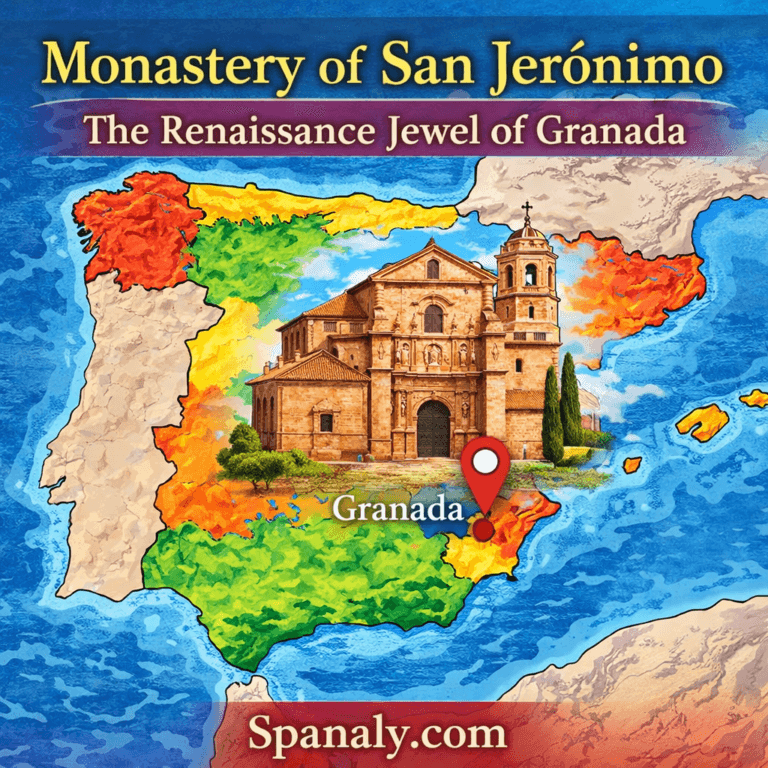
Nestled just outside Granada’s historic city center, the Monastery of San Jerónimo stands as one of the finest examples of Renaissance architecture in southern Spain. Built shortly after the Catholic Monarchs’ conquest of Granada in 1492, the monastery reflects a pivotal moment. This was when medieval Andalusia gave way to a new artistic vision inspired by Italy.
✨ Artistic Shift: It represents the transition from Gothic traditions to Renaissance harmony.
⛪ Hidden Gem: Often overlooked in favor of the Alhambra, it rewards visitors with breathtaking interiors.
📜 Imperial Narrative: The site is deeply tied to Spain’s imperial age and the Ultimate Madrid Travel Guide historic routes.
The monastery offers a powerful historical narrative. Consequently, it remains a must-visit for those seeking the soul of 2026 Granada.
📜 Historical Background: Shaping a New Kingdom
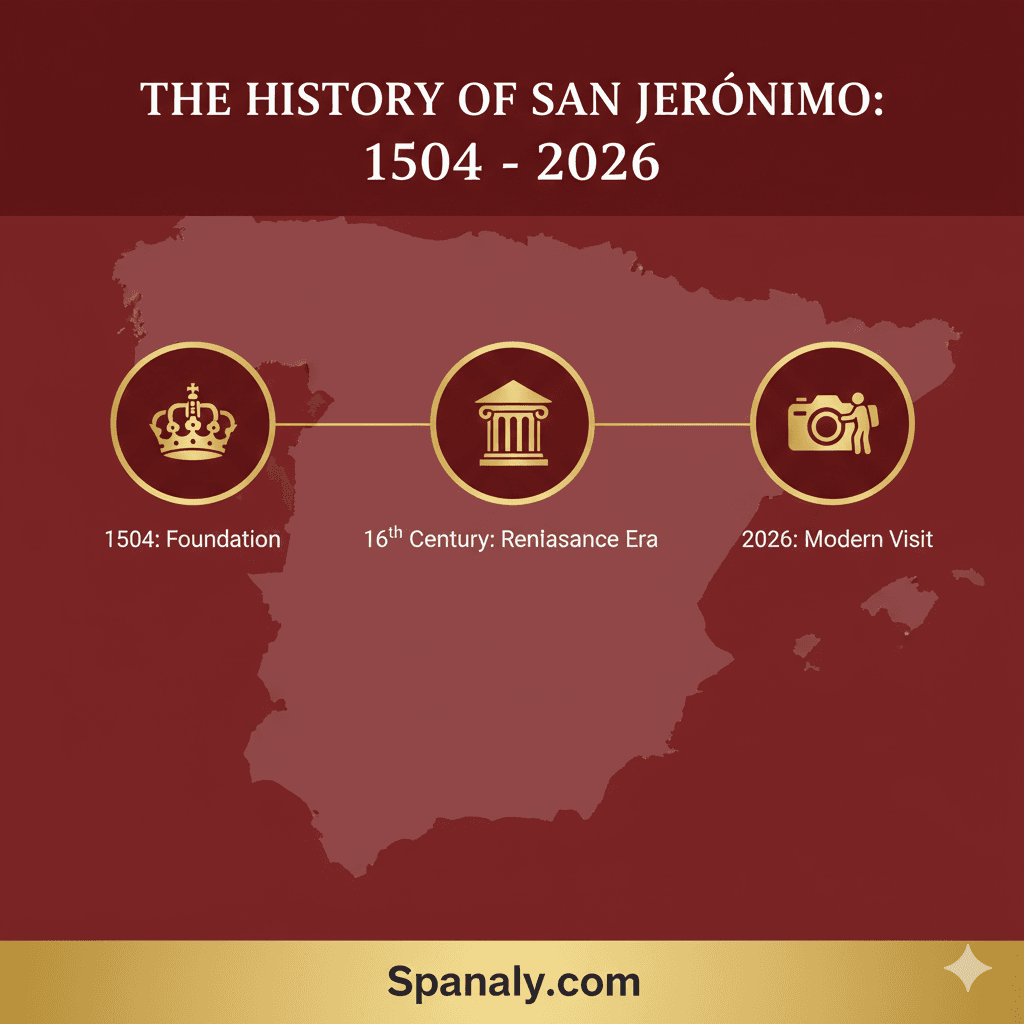
The construction of the monastery began in 1504, commissioned by the Catholic Monarchs, Ferdinand II of Aragon and Isabella I of Castile. This project was a crucial part of their broader plan to Christianize and reshape Granada following the fall of the Nasrid Kingdom.
🙏 The Hieronymite Order: The monarchs entrusted the site to this contemplative religious community, known for their scholarship and spiritual rigor.
🏛️ A Symbol of Change: Over the 16th century, San Jerónimo evolved into a symbol of Spain’s emerging Renaissance identity. It perfectly blended religious devotion with humanist ideals.
🌍 Cultural Shift: This period marked a transformation that connects the history of Granada to the wider heritage found in the Ultimate Barcelona Travel Guide and across the Iberian Peninsula.
By the mid-1500s, the monastery had become a center of artistic refinement. Therefore, it stands today as a testament to the dramatic shifts in 2026 Spanish history.
🎨 Renaissance Architecture & Artistic Splendor
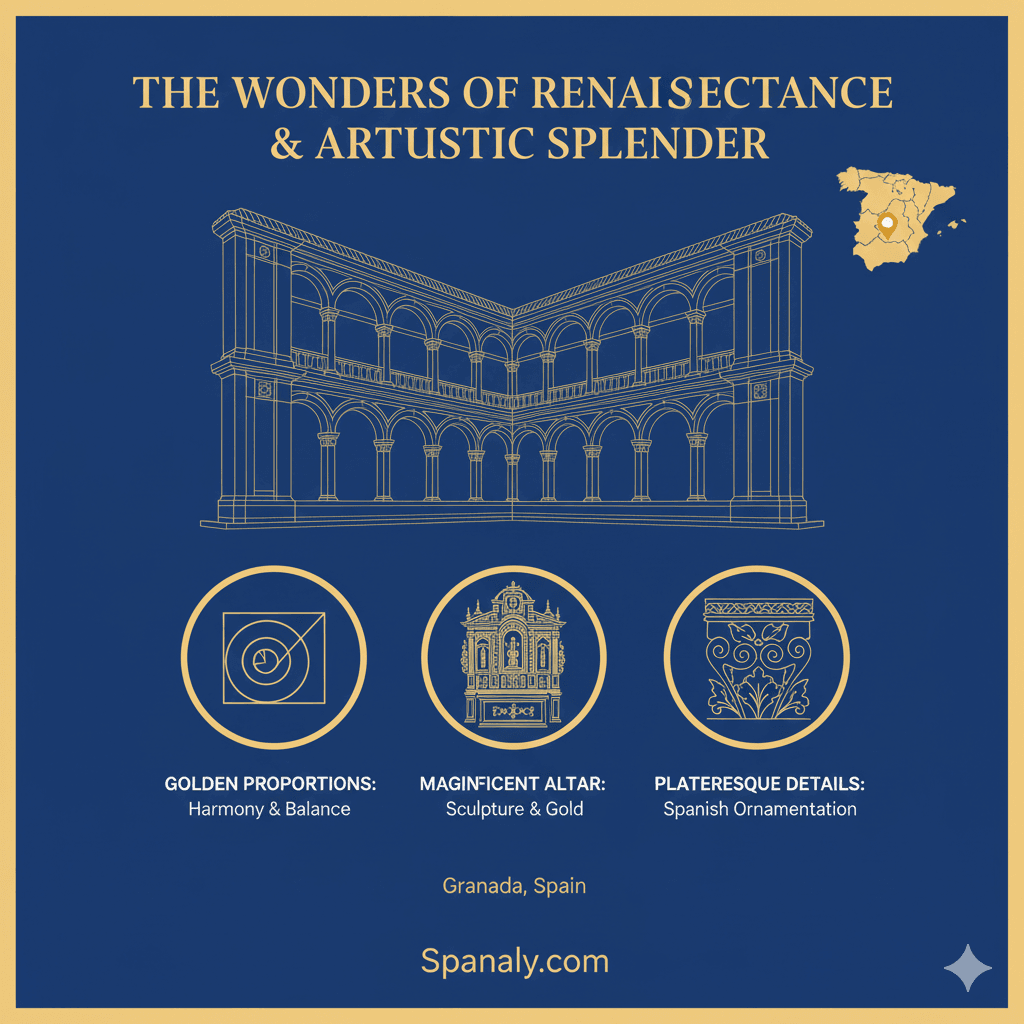
Experts consider San Jerónimo the first fully Renaissance-style church in Andalusia. This monument marks a decisive break from Gothic and Mudéjar traditions. This architectural shift reflected a new worldview focused on order and proportion.
⛪ Grand Church Interior: Soaring proportions and classical columns create a luminous altar space. The Italian Renaissance masters heavily inspired this majestic design.
🖼️ Magnificent High Altar: This richly decorated masterpiece combines intricate sculpture and gilded reliefs. These elements work together to tell a celestial story.
🌿 The Cloister: This peaceful two-story courtyard features symmetrical arcades. The monks designed it specifically for meditation and the appreciation of Spanish Attractions in their most serene form.
🗿 Plateresque Details: You will find intricate stone carvings throughout the site. These details blend Renaissance classicism with a uniquely Spanish ornamental flair.
Every element in the monastery emphasizes balance, harmony, and clarity. These core values define our 2026 perspective on 16th-century art.
💎 The Hidden Symbolism of the Altar Retable
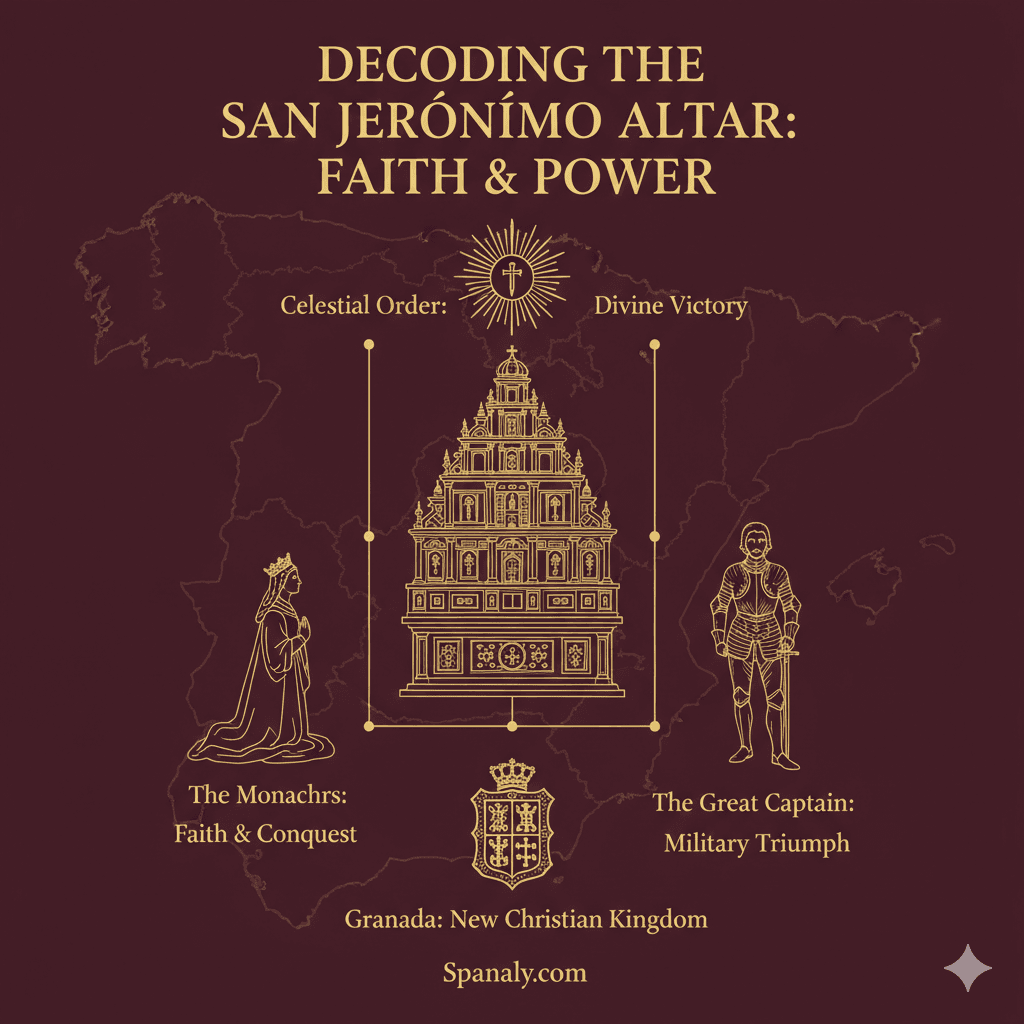
The Retablo Mayor of San Jerónimo is more than just a decorative wall; it is a complex narrative carved in stone and wood. It serves as a visual bridge between spiritual devotion and the military triumph of the Spanish Empire.
⚔️ Union of Faith and Power: The altar features images of the Catholic Monarchs and the Great Captain alongside saints, symbolizing that their earthly victories were divinely inspired.
🌟 Celestial Order: The tiers of the retable follow a strict Renaissance hierarchy, moving from earthly foundations to divine glory, reflecting the structured worldview of 2026 historians.
🎨 Artistic Fusion: It is a rare example where Italian classical influence meets the intense spiritual expression of the Spanish Festivals and traditions of the time.
Understanding these “hidden” messages transforms a simple visit into an immersive historical experience.
⚔️ The Tomb of the Great Captain: A National Monument
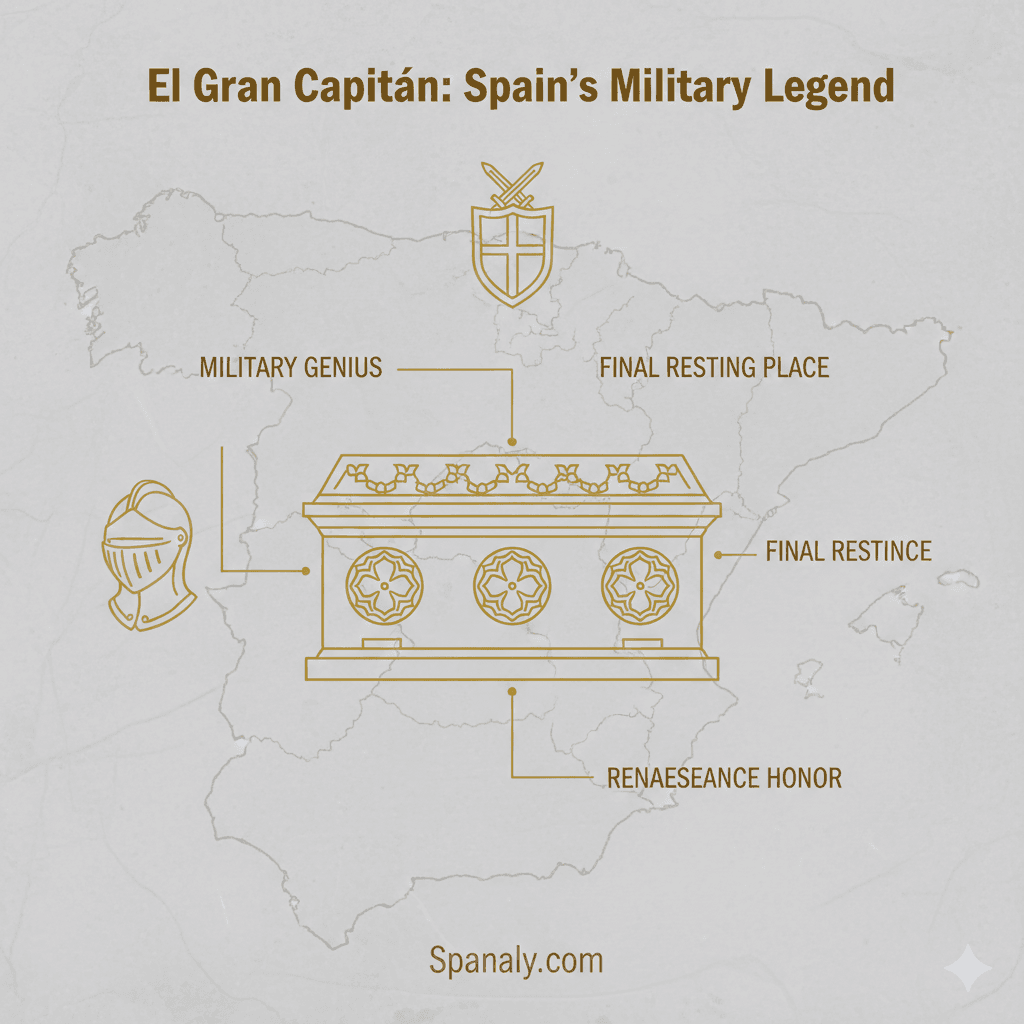
The Monastery of San Jerónimo holds immense historical weight as the burial site of Gonzalo Fernández de Córdoba. History honors him as “El Gran Capitán,” the brilliant military strategist who revolutionized European warfare. His final resting place at the foot of the high altar signifies his legendary status in Spanish history.
🎖️ Military Legacy: Gonzalo transformed the Spanish army into a dominant global force through innovative tactics.
🛡️ Heroic Presence: Standing before his tomb allows you to connect with the era of the Catholic Monarchs.
⛪ Shared History: His wife, Maria Manrique, rests beside him, completing this monument of love and power.
Visitors in 2026 often find this section the most moving part of the tour. It blends personal history with the grand narrative of Spanish Attractions. This site is not just a grave; it is a tribute to a man who changed the course of history.
🕯️ Spiritual Life & Monastic Atmosphere
The Monastery of San Jerónimo offers more than just architectural beauty; it provides a deep spiritual journey. Even today, the monastery maintains a sacred atmosphere that encourages reflection. Visitors often escape the city’s noise to find peace within these historic walls.
🤫 The Power of Silence: The “Silentium” rule still influences the energy of the cloisters. It creates a rare sense of calm.
⛪ Living Devotion: A community of Hieronymite nuns still lives here. Their presence keeps the monastery’s original purpose alive in 2026.
🌿 Inner Courtyard: The orange trees and symmetrical paths offer a physical representation of spiritual order.
This site connects you with centuries of prayer and devotion. It remains one of the most authentic Spanish Attractions for those seeking a quiet moment of clarity.
🕰️ The Visitor Experience in 2026: What to Expect
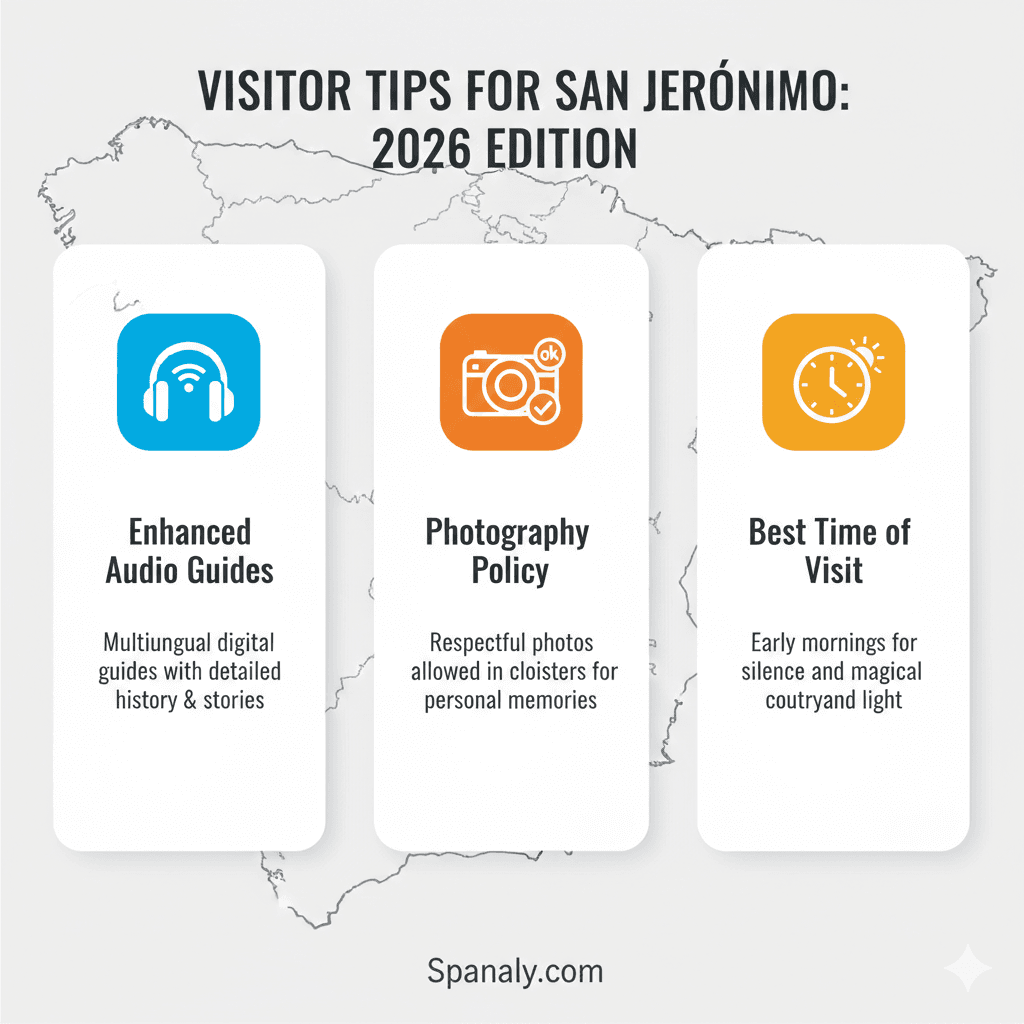
Visiting the Monastery of San Jerónimo in 2026 offers a unique blend of historical immersion and modern accessibility. Unlike the more crowded Spanish Attractions, this site provides a contemplative atmosphere that allows for a deeper connection with Granada’s Golden Age.
🎧 Enhanced Audio Guides: The 2026 tour includes updated digital guides that explain the complex iconography of the retable and the life of El Gran Capitán in multiple languages.
📸 Photography Policy: Respectful photography is permitted in the cloisters, capturing the interplay of light and shadow on the Renaissance stone—perfect for your travel memories.
🕒 Best Time to Visit: Early mornings remain the best time to experience the monastery’s silence, especially before the midday sun hits the orange trees in the courtyard.
Whether you are a history buff or an architecture lover, the current 2026 experience is designed to be both educational and soul-stirring.
📅 Plan Your Visit: Essential Information

To ensure your 2026 trip remains seamless, keep these practical details in mind for your Granada itinerary. This site sits in the heart of the city, making it easy to reach on foot or by local bus.
📍 Location: You can find the monastery near the lively city center. It is a perfect stop before exploring local spots to enjoy Spanish Cuisine.
🎫 Tickets: We recommend checking for combined passes. These often include other major sites mentioned in our Ultimate Madrid Travel Guide and regional tours.
⛪ Dress Code: As a functioning religious site, you must wear modest attire. This respect ensures the monastery remains a peaceful sanctuary for everyone.
🕒 Timing: Visit during the early morning for the best light. This timing also allows you to plan your afternoon around other Spanish Festivals or cultural events.
🏛️ Visitor FAQs – Monastery of San Jerónimo Granada 2026
💎 Is the Monastery of San Jerónimo worth visiting in 2026?
Absolutely. While many focus only on the Alhambra, our Ultimate Madrid Travel Guide experts suggest that San Jerónimo is the ultimate Renaissance masterpiece in Granada. It offers a peaceful retreat and houses the magnificent tomb of El Gran Capitán, making it one of the most underrated Spanish Attractions.
⚔️ Who is buried in the Monastery of San Jerónimo?
The monastery is the final resting place of Gonzalo Fernández de Córdoba (El Gran Capitán) and his wife, Maria Manrique. Similar to the historical figures found in our Ultimate Seville Travel Guide, his presence elevates the site to a monument of national military and spiritual importance.
🕒 What are the best hours to visit in 2026?
To experience the "Silentium" of the cloisters, early morning (10:00 AM) is ideal. After your visit, you can explore the local area to enjoy Spanish Cuisine at the nearby tapas bars, which are famous in the Granada 2026 food scene.
📸 Is photography allowed inside the cloisters?
Yes, respectful photography without flash is permitted in 2026. The two-story cloister and the orange tree courtyard provide perfect visuals for travelers capturing Spanish Festivals and religious heritage moments during their tour.
2026 Monastery Expert Insights by Spanaly.com
The Monastery of San Jerónimo stands as a timeless monument to Granada’s history. In 2026, it offers a rare escape into the pure grandeur of the Spanish Renaissance. Every stone and altar tells a powerful story of faith and military glory.
✨ Beyond the Alhambra: Plan your journey beyond the famous landmarks to discover this hidden gem.
📜 Artistic Legacy: This site connects you directly to the 16th-century golden era of Spain.
🌿 Cultural Context: To fully understand this period, we recommend exploring our Ultimate Seville Travel Guide for more historical insights.
Granada continues to surprise those who seek its deepest secrets. After your visit, dive into the local traditions we highlight in our Spanish Festivals coverage. By stepping into San Jerónimo, you become a witness to five centuries of unbroken beauty.