
Table of Contents
Toggle🌟 The Scent of a Spanish Morning
Imagine a sunlit terrace in Barcelona, the clinking of coffee cups, and the irresistible aroma of toasted sourdough. A plate arrives: rustic bread glistening with “liquid gold,” topped with a vibrant ruby-red tomato pulp. This is Pan con Tomate (or Pa amb tomàquet).
It is not just a dish; it is the soul of Spanish Cuisine. Based on the philosophy of “less is more,” this humble combination of five ingredients is a testament to the Mediterranean lifestyle—where the quality of the land defines the flavor of the table.
🧐 What Exactly Is Pan con Tomate?
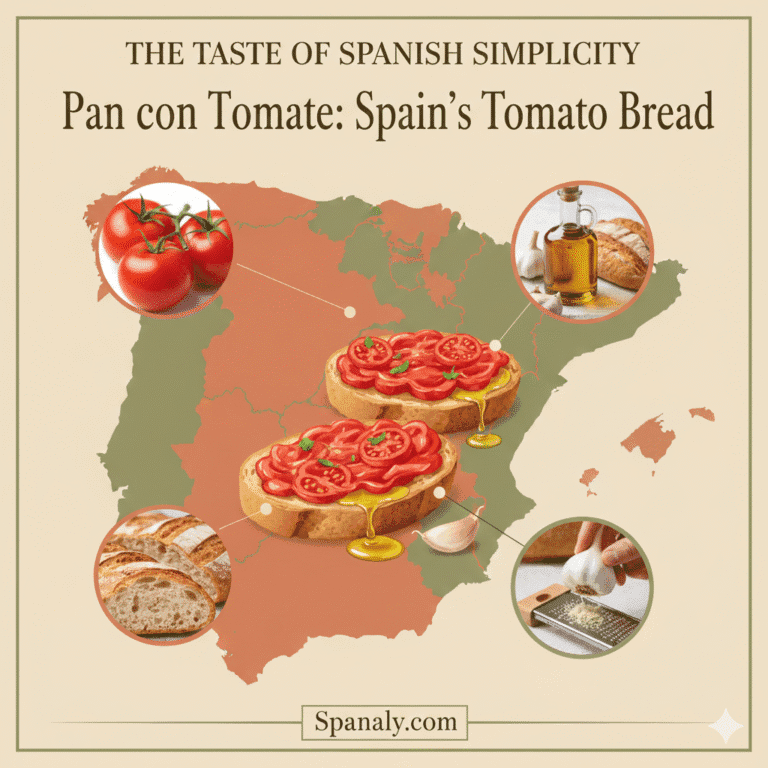
At its core, Pan con Tomate means “bread with tomato.” But don’t let the name fool you—this dish is more than a simple combination; it’s a performance.
The Foundation: Thick slices of rustic, country-style bread are toasted until golden and firm.
The Infusion: A peeled garlic clove is optionally rubbed over the hot crust to release its oils.
The Paint: Ripe tomato pulp is layered carefully, painting the bread with freshness.
The Soul: A drizzle of golden olive oil and a pinch of sea salt unite the flavors.
The result? A perfect harmony of crunch, freshness, and richness—a dish that speaks of sunny Spanish mornings and the generosity of the Mediterranean soil.
At its core, Pan con Tomate means “bread with tomato.” But don’t let the name fool you—this dish is more than a simple combination; it’s a performance.
Start with the Foundation: Thick slices of rustic, country-style bread are toasted until golden and firm.
For the perfect Infusion: A peeled garlic clove is optionally rubbed over the hot crust to release its oils. Next, apply the Paint: Ripe tomato pulp is layered carefully, painting the bread with freshness. Finally, awaken the Soul: A drizzle of golden olive oil and a pinch of sea salt unite the flavors.
🏺 Origins: From Farmer’s Fields to National Pride
The story of Pan con Tomate began in the rural fields of Catalonia. In the late 19th century, farmers discovered that rubbing overripe tomatoes on stale, hard bread was a delicious way to soften and revive it.
Today, what started as a humble peasant tradition has become a symbol of Spanish identity. Whether you are enjoying a luxury breakfast after exploring the landmarks in our Ultimate Barcelona Travel Guide or a quick snack during Spanish Festivals, you are tasting a piece of living history.
👨🍳 The Art of Creation: Ingredients & Steps
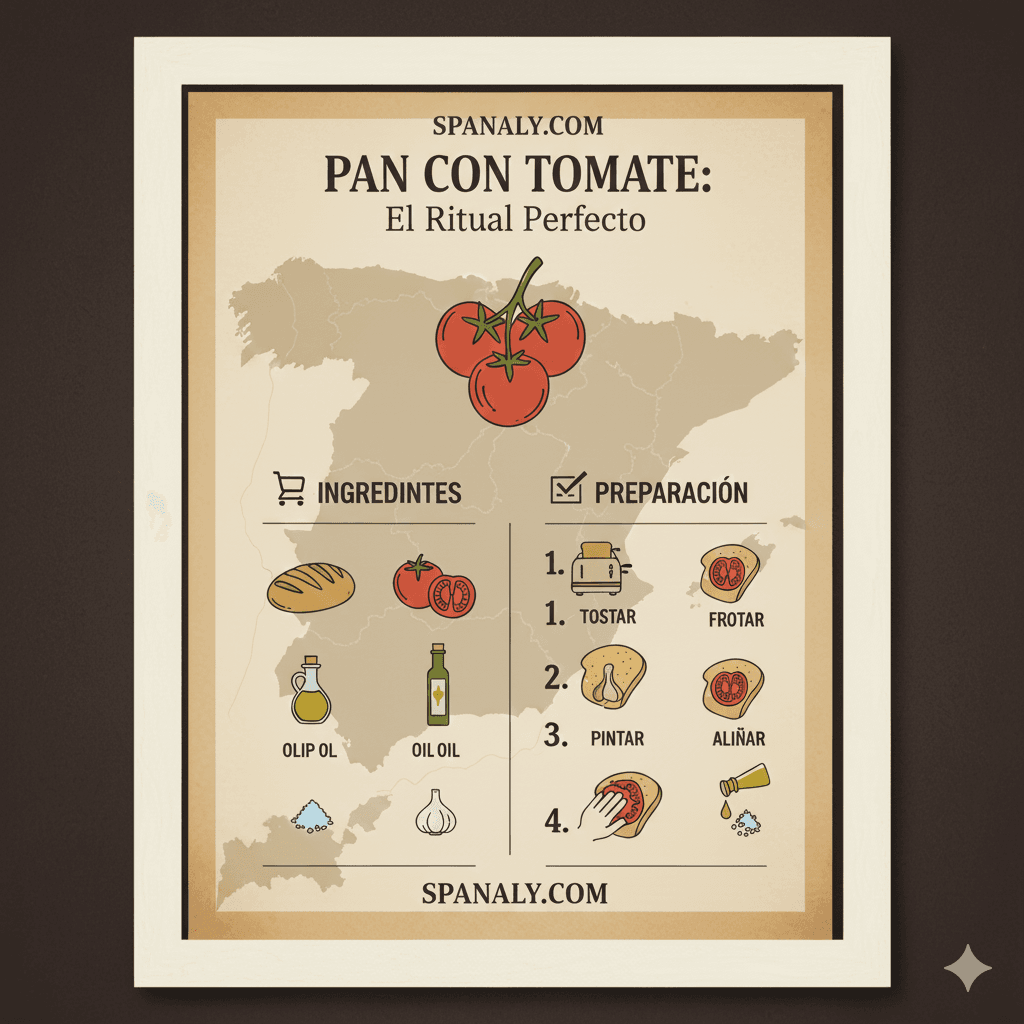
Making an authentic Pan con Tomate is about the quality of the ingredients and the order of the ritual. Here is how to master it :
🛒 Traditional Ingredients:
The Bread: 4 thick slices of rustic sourdough or Pan de Cristal (the airier, the better).
The Tomato: 2 vine-ripened tomatoes—look for the legendary Tomàquet de penjar for the most authentic juice.
The Garlic: 1 peeled clove (the “secret brush” that adds depth).
The Oil: Premium Extra Virgin Olive Oil (your liquid gold).
The Salt: Flaky sea salt to add that final, essential crunch.
📝 Preparation Steps: The Ritual
The Golden Toast: Toast your bread slices until they are deeply golden and crisp. The surface needs to be firm enough to act as a natural grater for the tomato.
The Garlic Whisper: While the bread is still hot, rub the garlic clove lightly over the crust. The heat will melt the garlic’s essence into the bread without overpowering it.
The Tomato Paint: Halve your tomatoes and rub them vigorously onto the bread. Watch as the pulp is absorbed, leaving only the thin skin in your hand.
The Liquid Gold: Drizzle the olive oil generously in a circular motion, letting it seep into the tomato-soaked bread.
The Finishing Touch: Sprinkle with sea salt and serve immediately. The contrast between the warm, crunchy bread and the cool, fresh tomato is where the magic happens.
⚠️ Common Mistakes to Avoid: Don't Ruin the Ritual!
Even a dish as simple as Pan con Tomate can go wrong if you ignore the fundamentals. To ensure an authentic experience, avoid these four common traps:
🚫 Using the Wrong Bread: Never use soft sandwich bread or processed sliced bread. It will turn into a soggy sponge. The Rule: Rustic, crusty bread (like Sourdough) is essential to “grate” the tomato and hold the oil.
🚫 Unripe Tomatoes: If the tomato isn’t deep red and soft to the touch, the flavor will be acidic and weak. The Rule: The flavor depends entirely on ripeness; if it’s not ripe, don’t use it.
🚫 Over-Soaking the Bread: While we love olive oil, you want to drizzle, not drown. The bread should stay crunchy at its core.
🚫 Making It Too Early: Pan con Tomate waits for no one! If it sits for more than 10 minutes, the moisture from the tomato will kill the crunch. The Rule: Always serve and eat immediately.
💡 Pro Tip: Remember, the tomato should paint the bread with its essence, not flood it with juice. Balance is everything.
🫒 Olive Oil: The Regional Heartbeat
The flavor of your Pan con Tomate changes depending on where you are:
In the South: If you follow our Ultimate Seville Travel Guide, you’ll find robust, peppery oils from Andalusia that add a rustic kick.
In the Center: While walking through the vibrant streets mentioned in our Ultimate Madrid Travel Guide, you’ll often find it served as Tostada con Tomate, where the tomato is pre-grated for a mess-free city breakfast.
🗺️ Regional Variations: A Journey Across Spain
Spanish Cuisine lies in its diversity. Each region adds its own unique signature to the humble “bread with tomato”:
Catalonia (Pa amb Tomàquet): The purist version. Minimalist and elegant, focusing on the quality of the bread and tomato. It is often served alongside Jamón Ibérico or Fuet (Catalan cured sausage).
Andalusia (Tostada con Tomate): As you will discover in our Ultimate Seville Travel Guide, Southerners often prefer pre-grated tomato pulp drizzled with intense Andalusian olive oil and topped with salty Jamón Serrano.
✨ Discovering More Unique Flavors Around the Country
Valencia: Here, the garlic is non-negotiable, and they often use a very fine tomato pulp to ensure every corner of the bread is covered.
Basque Country: In the North, it transforms into a Pintxo. You’ll find it topped with high-quality anchovies or roasted peppers, creating a sophisticated small bite.
Canary Islands: A modern twist often includes a touch of Mojo Rojo for an extra kick of spice and Atlantic flavor.
Balearic Islands: They use local oils with a distinct aroma, and it’s not uncommon to find it paired with Mahón cheese for a creamy finish.
🏛️ Cultural Significance: More Than Just Food
Deeply rooted in the country’s identity, this dish is embedded in Spain’s cultural DNA. It represents honesty, sharing, and a deep connection to the land. Whether it’s served at a family dinner, during Spanish Festivals, or even at political events, it stands as a symbol of unity—especially in Catalonia during La Diada or Sant Jordi. It aligns perfectly with the Slow Food movement, celebrating regional produce and the art of savoring the moment alongside icons like Paella and Tortilla Española.
📍 Where to Eat the Best Pan con Tomate in Spain
If you are traveling soon, don’t miss these legendary spots to experience the authentic “crunch”:
Barcelona: Visit Bar Pinotxo in the famous La Boqueria Market or the historic Els 4 Gats. (See more in our Ultimate Barcelona Travel Guide).
Madrid: Explore the vibrant tapas bars in Malasaña and La Latina for a modern city twist. (Check our Ultimate Madrid Travel Guide).
Seville: Look for breakfast bars serving it with premium Jamón Ibérico and Jaén olive oil. (Details in our Ultimate Seville Travel Guide).
Girona: Find local cafés that exclusively use the authentic Tomàquet de penjar.
“Have you tried Pan con Tomate in a hidden gem we missed? Share your favorite spot in the comments below!”
🥗 Nutrition & How to Pair It Like a Local
Not only is it delicious, but it is also a health powerhouse. Rich in antioxidants (lycopene) from tomatoes and healthy fats from olive oil, it is 100% vegan-friendly and a pillar of the Mediterranean diet.
To eat like a true Spaniard, pair it according to the time of day:
☀️ Breakfast: Pair with a Café con Leche and a slice of Tortilla Española.
🍴 Lunch/Dinner: Use it as a base for Jamón Ibérico or aged Manchego Cheese—the saltiness perfectly complements the tomato’s sweetness.
🍷 Evening Tapas: Enjoy it with a cold glass of Cava, a refreshing Tinto de Verano, or a young Rioja wine.
🍅 Visitor FAQs – Authentic Pan con Tomate
🥖 Pan con Tomate vs. Pa amb tomàquet: What is the difference?
They are the same dish! Pa amb tomàquet is the Catalan name, while Pan con Tomate is the Spanish translation. In Catalonia, the tomato is rubbed directly onto the bread, while other regions may serve it as a grated pulp.
🧄 Is garlic mandatory in the traditional recipe?
Garlic is optional but recommended. Rub a peeled clove lightly over the bread immediately after toasting. The heat infuses the garlic's subtle aroma into the bread without overpowering the fresh tomato flavor.
🍅 Can I use any type of tomato?
The gold standard is the Tomàquet de Penjar (Hanging Tomato), prized for its thin skin and juicy interior. If unavailable, use the ripest vine tomatoes possible—they must be soft and full of juice to rub properly.
⏳ How can I prevent the bread from getting soggy?
Toast the bread until it is very firm and serve immediately. Once the tomato and olive oil are added, the bread will lose its signature crunch within 10-15 minutes, so it is best enjoyed fresh.
🌿 Is Pan con Tomate healthy?
Absolutely. It is a pillar of the Mediterranean diet, providing healthy fats from olive oil, antioxidants from tomatoes, and energy from rustic bread. It is naturally vegan, dairy-free, and highly nutritious.
Created by Spanaly.com
This simple delicacy is more than a dish — it’s a story told through flavor. It represents Spain’s respect for simplicity, nature, and the art of savoring the moment. With just four ingredients, it expresses centuries of tradition, the warmth of the Mediterranean sun, and the generosity of Spanish culture. When you spread tomato on bread and drizzle it with olive oil, you’re not just preparing food — you’re joining a living tradition that unites Spain’s regions, generations, and hearts. Because in Spain, food is never just about eating — it’s about sharing life itself.